Crew Ends Week with Science-Packed Day

Crew Ends Week with Science-Packed Day
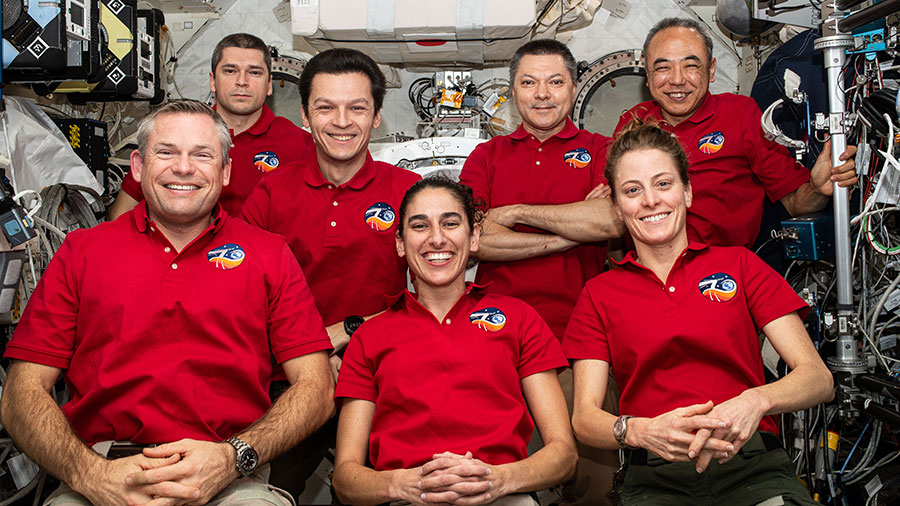
The seven-member Expedition 70 crew poses for a portrait inside the International Space Station's Kibo laboratory module. In the front row (from left) are, Commander Andreas Mogensen from ESA (European Space Agency) and NASA Flight Engineers Jasmin Moghbeli and Loral O'Hara. In the back are, Roscosmos Flight Engineers Nikolai Chub, Konstantin Borisov, and Oleg Kononenko; and JAXA (Japan Aerospace Exploration Agency) Flight Engineer Satoshi Furukawa.
The seven-member Expedition 70 crew poses for a portrait inside the International Space Station’s Kibo laboratory module. In the front row (from left) are, Commander Andreas Mogensen from ESA (European Space Agency) and NASA Flight Engineers Jasmin Moghbeli and Loral O’Hara. In the back are, Roscosmos Flight Engineers Nikolai Chub, Konstantin Borisov, and Oleg Kononenko; and JAXA (Japan Aerospace Exploration Agency) Flight Engineer Satoshi Furukawa.

The Expedition 70 crew wrapped up the work week with microbiology, bioprinting, and ultrasound scans aboard the International Space Station. Cardiac research and fluid physics also rounded out the microgravity science schedule for the orbital septet.

Uncontrolled microbial growth is a potential threat to spacecraft possibly contaminating and corroding systems and affecting the health of space crews. Researchers are exploring how to identify and disinfect microbes to protect spacecraft and crews traveling longer and farther away from Earth.

NASA Flight Engineers Jasmin Moghbeli and Loral O’Hara partnered together and researched ways to control microbial growth inside the Kibo laboratory module. The duo took turns treating bacteria samples in Kibo’s Life Science Glovebox helping scientists learn how to promote successful long-term spaceflights and protect extreme environments on Earth.

Moghbeli also assisted Commander Andreas Mogensen of ESA (European Space Agency) as he removed tissue cassettes containing cardiac cells from the BioFabrication Facility. The 3D bioprinter is demonstrating the potential to manufacture human organs in space from existing patient cells. The samples are then stowed in an advanced sample processor for incubation allowing the tissues to cohesively form on a cellular level. Mogensen earlier studied water recovery and purification techniques under microgravity conditions.

O’Hara began her day conducting ultrasound scans and collecting blood pressure measurements with Flight Engineer Satoshi Furukawa from JAXA (Japan Aerospace Exploration Agency). The biomedical work was done in conjunction with doctors on the ground and is part of the CIPHER suite of 14 human research experiments. Afterward, Furukawa swapped cargo in and out of the SpaceX Dragon cargo spacecraft as it counts down to undocking from the station later this month and returning to important research samples to Earth.

Working in the Roscosmos segment of the orbiting lab, three cosmonauts began their morning conducting cardiac research. The trio of flight engineers, Oleg Kononenko, Nikolai Chub, and Konstantin Borisov, participated in the study that measures the bioelectrical activity of the heart as it rests in weightlessness. Afterward, the cosmonauts each participated in a computerized test solving problems for a study exploring how crews and mission controllers can communicate better.

Kononenko later examined eggs in an incubator for a space biology study then checked ventilation systems in the Nauka science module. Chub moved on and investigated how magnetic and electrical fields affect fluid systems in microgravity. Finally, Borisov worked on a variety of science tasks throughout the day including watering and photographing plants and configuring an array of research hardware.


Learn more about station activities by following the space station blog, @space_station and @ISS_Research on X, as well as the ISS Facebook and ISS Instagram accounts.

Get weekly video highlights at: https://roundupreads.jsc.nasa.gov/videoupdate/

Get the latest from NASA delivered every week. Subscribe here: www.nasa.gov/subscribe

Powered by WPeMatico

Get The Details…

Mark Garcia

Advanced Botany, Biology Promoting Health on Earth and in Space

Advanced Botany, Biology Promoting Health on Earth and in Space

NASA astronauts (from left) Jasmin Moghbeli and Loral O'Hara pose for a portrait while working inside the Destiny laboratory module.
NASA astronauts (from left) Jasmin Moghbeli and Loral O’Hara pose for a portrait while working inside the Destiny laboratory module.

Space botany, human research, and bioprinting were the dominant science topics aboard the International Space Station on Thursday. The Expedition 70 septet also focused on lab hardware and cargo operations throughout the day.

Growing plants in space is critical as astronauts prepare for longer missions farther away from Earth. Space agriculture may help feed crews and provide a cleaner breathing environment aboard spacecraft and space habitats. Crews will have to be self-sustainable relying less on cargo missions packed with food, fuel, and supplies from Earth.

NASA astronauts Loral O’Hara and Andreas Mogensen from ESA (European Space Agency) took turns servicing the Advanced Plant Habitat replacing environmental control components on the research device. NASA Flight Engineer Jasmin Moghbeli assisted the duo reconfiguring the botany facility that has grown a variety of vegetables in the Kibo laboratory module.

O’Hara and Moghbeli then joined Flight Engineer Satoshi Furukawa from JAXA (Japan Aerospace Exploration Agency) for eye checks that are part of the CIPHER suite of 14 human research experiments. O’Hara first measured the electrical response of Furukawa’s retinas to light using specialized sensors. Next, O’Hara used standard medical imaging hardware to view the optic nerves and retinas inside Moghbeli’s eyes. Investigators are exploring how weightlessness affects vision and the condition of the eye.

Mogensen wrapped up his day in the Columbus laboratory module printing cardiac tissue samples using the BioFabrication Facility (BFF). Moghbeli helped the ESA station commander inserting tissue cassettes inside the 3D bioprinter and photographing the research activities. The BFF is demonstrating the potential of manufacturing human organs in space from existing patient cells.

Cosmonauts Oleg Kononenko and Konstantin Borisov joined each other Thursday morning checking and photographing eggs being incubated for a Roscosmos biology investigation. Kononenko then studied ways to improve communication between international crews and mission controllers from around the world. Borisov wore a cap packed with sensors and researched futuristic spacecraft and robotic piloting techniques. Flight Engineer Nikolai Chub continued unpacking the Progress 86 cargo craft then tested power supply components inside the Zarya module.

Powered by WPeMatico

Get The Details…

Mark Garcia

Station Reaches 25 Years in Orbit, Crew Continues Advanced Space Research

Station Reaches 25 Years in Orbit, Crew Continues Advanced Space Research

Space shuttle Endeavour's Canadarm robotic arm was used to grapple the Zarya module and connect it to the Unity module stowed in the shuttle's payload bay on Dec. 6, 1998.
Space shuttle Endeavour’s Canadarm robotic arm was used to grapple the Zarya module and connect it to the Unity module stowed in the shuttle’s payload bay on Dec. 6, 1998.

25 years ago today, the first two modules of the International Space Station – Zarya and Unity – were mated during the STS-88 mission of space shuttle Endeavour. The shuttle’s Canadarm robotic arm reached out and grappled Zarya, which had been on orbit just over two weeks, and attached it to the Unity module stowed inside Endeavour’s payload bay. Endeavour would undock from the young dual-module station one week later beginning the space station assembly era.

The seven-member Expedition 70 crew called down to Earth today and discussed with NASA Associate Administrator Bob Cabana and International Space Station Program Manager Joel Montalbano the orbital outpost’s accomplishments since the assembly era began on Dec. 6, 1998. Cabana was the commander of Endeavour when both modules were robotically mated then outfitted during a series of spacewalks. Montalbano, NASA’s sixth station leader since the program’s inception, remarked today, “We want to celebrate today all the people who designed, built, and operate the International Space Station.”

Meanwhile, a host of space biology work continued aboard the orbital lab on Wednesday to improve human health on Earth and in space. Cargo operations and lab maintenance rounded out the day keeping the four astronauts and three cosmonauts busy during the middle of the week.

Aging studies are taking place on the orbital lab helping researchers understand space-caused accelerated aging symptoms at the molecular and cellular level. NASA Flight Engineers Loral O’Hara and Jasmin Moghbeli took turns processing liver stem samples for the Space AGE study taking place in the Kibo laboratory module. Kibo’s Life Science Glovebox is hosting the research operation that is exploring aging-like properties of immune cells and the regenerative capacity of liver cells.

Mental health and cognition are key concerns for NASA and its international partners as the space agencies plan longer human missions farther away from Earth. Commander Andreas Mogensen wore virtual reality goggles for the VR Mental Care experiment today and watched a 360-degree movie to understand its stabilizing effect on the nervous system. Flight Engineer Satoshi Furukawa took a computerized robotics test for a CIPHER investigation studying how in microgravity affects brain structure, sleep quality, stress, and immune function.

Mogensen from ESA (European Space Agency) and Furukawa from JAXA (Japan Aerospace Exploration Agency) also partnered with O’Hara and Moghbeli transferring payloads in and out of the SpaceX Dragon cargo spacecraft throughout the day. The foursome then spent the rest of Wednesday supporting a variety of other ongoing space research and life support activities.

Veteran cosmonaut Oleg Kononenko tended to eggs being incubated for a Roscosmos space biology study, deployed carbon dioxide monitors, and practiced using emergency masks. Flight Engineer Nikolai Chub worked on an immunity study and continued unpacking cargo from the Progress 86 resupply ship. Flight Engineer Konstantin Borisov started his morning replacing electrical plumbing gear then worked in the afternoon checking smoke detectors and charging a science laptop computer.


Learn more about station activities by following the space station blog, @space_station and @ISS_Research on X, as well as the ISS Facebook and ISS Instagram accounts.

Get weekly video highlights at: https://roundupreads.jsc.nasa.gov/videoupdate/

Get the latest from NASA delivered every week. Subscribe here: www.nasa.gov/subscribe

Powered by WPeMatico

Get The Details…

Mark Garcia

Health, Manufacturing Science Day Before Station’s 25th Anniversary

Health, Manufacturing Science Day Before Station’s 25th Anniversary

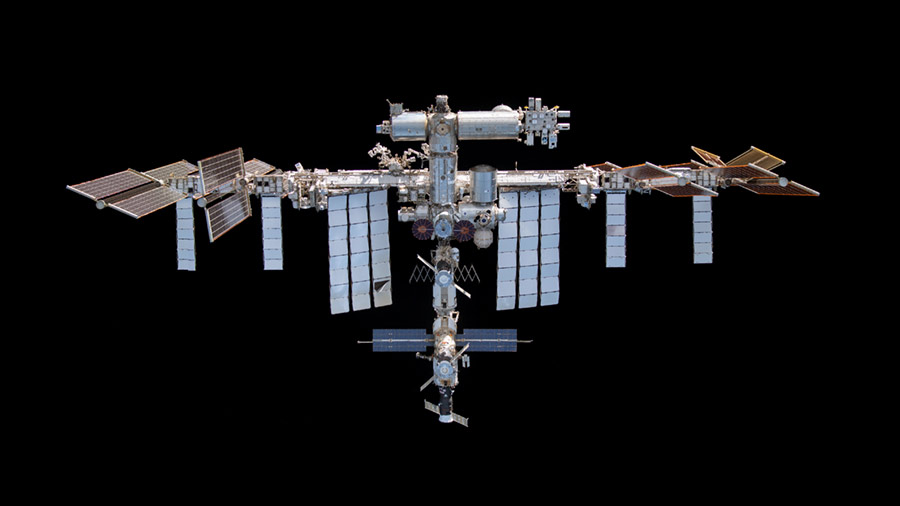
The space station is pictured from the SpaceX Crew Dragon Endeavour during its departure and flyaround on Nov. 8, 2021.

Research to promote health and advance manufacturing were the top science activities aboard the International Space Station on Tuesday. The Expedition 70 crew will also commemorate 25 years since the first two station modules were connected on orbit.

NASA Flight Engineer Jasmin Moghbeli began her day in the Kibo laboratory module working on the Cerebral Aging study that is exploring neurodegenerative processes. She processed brain cell-like samples inside Kibo’s Life Science Glovebox to understand the effects of microgravity at a molecular and cellular level. Results may advance research techniques, reduce drug development costs, and improve health on Earth and in space.

Moghbeli later joined astronaut Satoshi Furukawa on Wednesday afternoon transferring cargo in and out of the SpaceX Dragon cargo spacecraft. Furukawa from JAXA (Japan Aerospace Exploration Agency) finalized his day checking the performance of a spherical robot camera that can operate remotely or autonomously inside Kibo.

Commander Andreas Mogensen worked in the Destiny laboratory module on fiber optics research installing experiment hardware in the Microgravity Science Glovebox. The advanced physics study may benefit Earth and space-based applications such as laser surgery, remote-sensing, atmospheric monitoring, and optical data communications. Mogensen from ESA (European Space Agency) wrapped up his day cleaning orbital plumbing hardware.

NASA Flight Engineer Loral O’Hara from NASA began her day inside the Columbus laboratory module removing electronic components from life science hardware. Afterward, she spent the rest of the day inside Kibo supporting more space biology work.

In the orbital outpost’s Roscosmos segment, veteran cosmonaut Oleg Kononenko serviced a carbon dioxide removal device then repositioned eggs in an incubator for a new biology experiment. Flight Engineer Nikolai Chub worked on cargo and water transfers from the newly docked Progress 86 cargo craft. Flight Engineer Konstantin Borisov worked on an oxygen generator, cleaned ventilation systems, then watered and photographed plants growing for a Roscosmos space botany study.

At 12:25 p.m. EST on Wednesday, all seven space station crew members will gather in the Harmony module for a live television conference commemorating 25 years of space station assembly. The orbital septet will receive a call from NASA Associate Administrator Bob Cabana and International Space Station Program Manager Joel Montalbano discussing the station’s evolution and its impact on Earth and space industries. Cabana commanded space shuttle Endeavour during the STS-88 mission on Dec. 6, 1998, when the Zarya and Unity modules were mated. The shuttle’s Canadarm robotic arm grappled Zarya and mated it to Unity stowed in Endeavour’s payload bay.

Watch live on the NASA+ streaming service via the web or the NASA app. Coverage also will air live on NASA Television,  YouTube, and on the agency’s website. Learn how to stream NASA TV through a variety of platforms including social media.


Learn more about station activities by following the space station blog, @space_station and @ISS_Research on X, as well as the ISS Facebook and ISS Instagram accounts.

Get weekly video highlights at: https://roundupreads.jsc.nasa.gov/videoupdate/

Get the latest from NASA delivered every week. Subscribe here: www.nasa.gov/subscribe

Powered by WPeMatico

Get The Details…

Mark Garcia

Space Research, Cargo Craft Operations Kick Off Week

Space Research, Cargo Craft Operations Kick Off Week

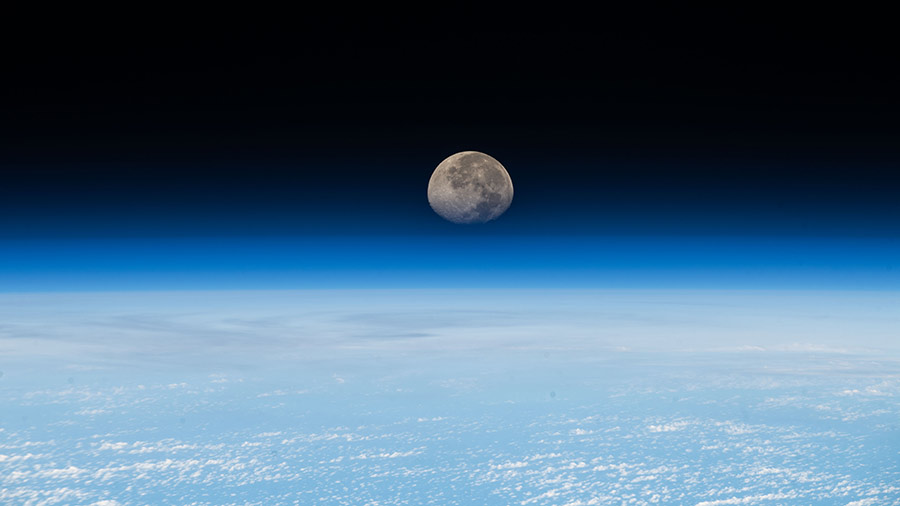
A waning gibbous moon sets just beyond Earth's horizon in this photograph from the space station soared above the South Pacific Ocean.
A waning gibbous moon sets just beyond Earth’s horizon in this photograph from the space station soared above the South Pacific Ocean.

Science hardware, microbiology, and eye checks topped the research schedule aboard the International Space Station on Monday. The Expedition 70 crew also serviced a spacesuit and began unpacking a new cargo craft.

NASA astronauts Loral O’Hara and Jasmin Moghbeli took turns working in the Life Science Glovebox on Monday morning. O’Hara first disconnected cables and cameras that record activities inside the biology research facility located in the Kibo laboratory module. Moghbeli then swapped out the gloves that crew members wear when conducting science operations inside the device.

O’Hara also configured and stowed hardware supporting a space physics experiment that observes how microgravity affects the properties of metal alloys. Moghbeli inoculated cell samples for the Bacteria Adhesion and Corrosion study that is exploring how to identify and disinfect microbes that can contaminate spacecraft systems and affect crew heath.

Astronaut Satoshi Furukawa started his day servicing a pair of science freezers before cleaning and connecting cables that support a 3D organ culture study. Furukawa from JAXA (Japan Aerospace Exploration Agency) then joined the NASA duo for eye exams at the end of the day with support from doctors on the ground. O’Hara operated the standard medical imaging gear viewing the optic nerves and retinas of Furukawa and Moghbeli.

Commander Andreas Mogensen of ESA (European Space Agency) reviewed procedures for an upcoming study to manufacture superior fiber optic cables in microgravity. Afterward, he uninstalled components on a spacesuit and prepared them for return to Earth aboard the SpaceX Dragon cargo spacecraft.

Roscosmos cosmonauts Oleg Kononenko and Nikolai Chub began Monday unpacking the Progress 86 space freighter that docked to the Poisk module at 6:18 a.m. EST. on Sunday. Kononenko unloaded a new space biology experiment delivered inside the Progress and installed its egg samples inside a Nauka science module incubator. Chub worked on and photographed docking hardware inside Poisk. Flight Engineer Konstantin Borisov updated data files documenting operations with the newly docked vehicle.


Learn more about station activities by following the space station blog, @space_station and @ISS_Research on X, as well as the ISS Facebook and ISS Instagram accounts.

Get weekly video highlights at: https://roundupreads.jsc.nasa.gov/videoupdate/

Get the latest from NASA delivered every week. Subscribe here: www.nasa.gov/subscribe

Powered by WPeMatico

Get The Details…

Mark Garcia