Crew Continues Spacewalk Preps, Axiom Announces Ax-4 Launch Update

Crew Continues Spacewalk Preps, Axiom Announces Ax-4 Launch Update

Astronaut Jasmin Moghbeli is suited up testing her spacesuit's components with assistance from astronaut Andreas Mogensen.
Astronaut Jasmin Moghbeli is suited up testing her spacesuit’s components with assistance from astronaut Andreas Mogensen.

The Expedition 70 crew reached the end of the week focusing primarily on a pair of upcoming spacewalks. There was also time aboard the International Space Station for research and cargo operations as Axiom Space announced future private missions dates.

NASA astronauts Loral O’Hara and Jasmin Moghbeli partnered together Friday afternoon organizing the tools they will use on a spacewalk planned for Oct. 30. The pair will exit the Quest airlock and spend about six-and-a-half hours removing electronics gear and replacing solar array hardware on the orbital lab.

Before the spacewalk preparations, O’Hara inspected hardware on the Human Research Facility, documented her daily food and medicine intake, and downlinked medical data to researchers on the ground. Moghbeli began her day collecting blood pressure measurements, moved on to life support maintenance, then swapped a vest and headband packed with sensors to comfortably measure her health as she worked throughout the day.

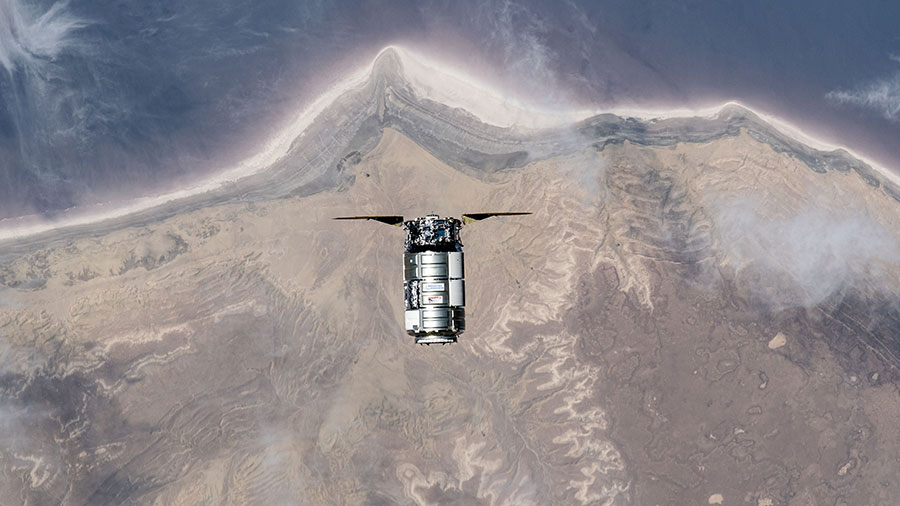
Astronaut Satoshi Furukawa of JAXA (Japan Aerospace Exploration Agency) studied the maneuvers he will use to operate the Canadarm2 robotic arm when O’Hara and Moghbeli go on their maintenance spacewalk at the end of the month. He also packed the Cygnus space freighter with trash and discarded gear before staging cargo for loading and return on the next SpaceX Dragon cargo mission scheduled for launch on Nov. 5.

Commander Andreas Mogensen of ESA (European Space Agency) continued testing a specialized camera that can capture imagery at 100,000 frames per second. He worked in the cupola pointing the camera toward Earth and photographing thunderstorms and their electrical activity to improve atmospheric knowledge and promote future space applications.

Cosmonauts Oleg Kononenko and Nikolai Chub spent all day Friday getting ready for their spacewalk scheduled on Oct. 25. The flight engineers put on their Orlan spacesuits inside the Poisk airlock and practiced the spacewalking tasks they will use next week. During the excursion, the pair from Roscosmos will install science hardware, deploy a nanosatellite, and inspect a backup radiator that leaked coolant. Flight Engineer Konstantin Borisov joined the duo assisting the cosmonauts in and out of their spacesuits and reviewing their spacewalk procedures.

NASA, Axiom Space, and SpaceX teams are targeting no earlier than October 2024 to launch Axiom Mission 4, a private astronaut mission, to the orbiting laboratory. The next private astronaut mission, Axiom Mission 3 with former NASA astronaut and Commander Michael Lopez-Alegria leading again, is scheduled to liftoff from Florida no earlier than January 2024.


Learn more about station activities by following the space station blog@space_station and @ISS_Research on X, as well as the ISS Facebook and ISS Instagram accounts.

Get weekly video highlights at: https://roundupreads.jsc.nasa.gov/videoupdate/

Get the latest from NASA delivered every week. Subscribe here: www.nasa.gov/subscribe

Powered by WPeMatico

Get The Details…

Mark Garcia

More Space Health and Earth Science as Station Orbits Higher

More Space Health and Earth Science as Station Orbits Higher

Astronaut Loral O'Hara is pictured trimming her hair aboard the International Space Station.
Astronaut Loral O’Hara is pictured trimming her hair aboard the International Space Station.

The Expedition 70 crew continued its space health and Earth science studies while servicing a variety of research hardware on Thursday. The International Space Station is orbiting higher today as its residents also inspected emergency gear and reviewed tasks for an upcoming spacewalk.

DNA analysis was back on the schedule as NASA astronaut Jasmin Moghbeli used a portable DNA sequencer to identify bacteria extracted from station water samples. The technology study will help keep crews and spacecraft safe with less dependence on Earth as NASA plans missions to the Moon, Mars, and beyond. She also wore the Bio-Monitor vest and headband for a 48-hour session testing the wearables’ ability to monitor an astronaut’s health comfortably while minimally interfering with their daily activities.

Commander Andreas Mogensen of ESA (European Space Agency) worked inside the cupola again testing the ability of an advanced camera to observe Earth’s thunderstorms  and their electrical activity at 100,000 frames per second. Results may improve atmospheric knowledge and promote future space applications. The two-time station visitor from Denmark also transferred cargo and trash in and out of the Northrop Grumman Cygnus cargo craft attached to the Unity module’s Earth-facing port.

NASA Flight Engineer Loral O’Hara photographed emergency hardware for inspection, then checked her blood pressure, and uninstalled components on a spacesuit. Astronaut Satoshi Furukawa of JAXA (Japan Aerospace Exploration Agency) replaced filters inside the Life Science Glovebox then swapped sample cassettes inside the Materials Science Laboratory.

Cosmonauts Oleg Kononenko and Nikolai have been busy the last several days preparing for a spacewalk scheduled for 2:10 p.m. EDT on Oct. 25. The duo reviewed an updated spacewalking task list that includes installing science hardware, deploying a nanosatellite, and inspecting a backup radiator on the Nauka science module that leaked coolant.

Both cosmonauts also took turns practicing futuristic piloting techniques on a computer while wearing a cap filled with sensors that measured their responses. Researchers will use the data to understand how future crews may respond to flying spacecraft and controlling robots on planetary missions.

Flight Engineer Konstantin Borisov joined the pair from Roscosmos for the spacewalk review before lunchtime. He also transferred water stored inside the Progress 85 (85P) cargo craft into tanks aboard the station then checked electronics systems in the Zvezda service module.

The space laboratory is orbiting slightly higher today after the 85P fired its thruster engines for over 18 minutes late Wednesday night. The orbital reboost raises the station to the correct altitude for the rendezvous and docking of the next Roscosmos cargo craft, the Progress 86, in early December.


Learn more about station activities by following the space station blog@space_station and @ISS_Research on X, as well as the ISS Facebook and ISS Instagram accounts.

Get weekly video highlights at: https://roundupreads.jsc.nasa.gov/videoupdate/

Get the latest from NASA delivered every week. Subscribe here: www.nasa.gov/subscribe

Powered by WPeMatico

Get The Details…

Mark Garcia

Health and Earth Studies, More Spacewalk Preps Continue on Station

Health and Earth Studies, More Spacewalk Preps Continue on Station

The waning gibbous Moon is pictured from the space station as it soared into an orbital nighttime above the Atlantic Ocean.

Space biology and Earth science were the main research objectives aboard the International Space Station on Wednesday. The Expedition 70 crew also continued its ongoing cargo operations and spacewalk preparations.

NASA astronauts Jasmin Moghbeli and Loral O’Hara focused on a pair of different life science experiments to help keep crews healthy during long-term missions. The research contributes not only to the knowledge of microgravity’s affect on humans but also informs countermeasures and innovations to protect future crews exploring farther away from Earth.

Moghbeli began her day using a portable DNA detection device that can be found in laboratories and classrooms on Earth to identify bacteria extracted from water samples collected aboard the orbital outpost. Known as BioMole, the study is demonstrating the ability to monitor the spacecraft’s microbial environment without sending samples back to Earth for analysis. O’Hara continued her CIPHER studies, a suite of 14 human research experiments, wearing a vest and headband packed with sensors measuring heart rate, blood pressure, temperature, and more. The Bio-Monitor wearables from CSA (Canadian Space Agency) comfortably track an astronaut’s health while minimally interfering with their daily activities.

Commander Andreas Mogensen of ESA (European Space Agency) worked in the cupola Wednesday pointing a digital camera toward the Moon for the Earthshine experiment. He was photographing the lunar surface to image sunlight reflecting off Earth, also known as albedo, for insights into our planet’s changing climate. Next, he tested a unique camera and its ability to observe thunderstorms and their electrical activity at 100,000 frames per second. Results may improve atmospheric knowledge and promote future space applications.

Flight Engineer Satoshi Furukawa of JAXA (Japan Aerospace Exploration Agency) continued unpacking supplies and loading trash inside the Cygnus space freighter. At the end of the day, he joined O’Hara in the Quest airlock and inspected spacesuit arm and leg components.

Cosmonauts Oleg Kononenko and Nikolai Chub kept up their preparations for a spacewalk scheduled on Oct. 25. The duo first reviewed the steps necessary to transfer their pressurized Orlan suits in the Poisk airlock. Afterward, both flight engineers pedaled on an exercise cycle to evaluate their physical fitness ahead of next week’s spacewalk. The two cosmonauts are expected to spend about seven hours conducting external maintenance on the Roscosmos segment of the space station.

Flight Engineer Konstantin Borisov began his day with orbital plumbing duties inside the Nauka science module. In the afternoon, Borisov inspected surfaces on the inside of the Zvezda service module before closing Roscosmos module windows and finalizing the plumbing work in Nauka.


Learn more about station activities by following the space station blog@space_station and @ISS_Research on X, as well as the ISS Facebook and ISS Instagram accounts.

Get weekly video highlights at: https://roundupreads.jsc.nasa.gov/videoupdate/

Get the latest from NASA delivered every week. Subscribe here: www.nasa.gov/subscribe

Powered by WPeMatico

Get The Details…

Mark Garcia

Research, Robotics, and Spacesuits Top Schedule as Spacewalk Times Adjusted

Research, Robotics, and Spacesuits Top Schedule as Spacewalk Times Adjusted

(From left) Astronauts Andreas Mogensen, Loral O'Hara, Jasmin Moghbeli, and Satoshi Furukawa show off dosimeters that monitor the amount of radiation the crew is exposed to in space.
(From left) Astronauts Andreas Mogensen, Loral O’Hara, Jasmin Moghbeli, and Satoshi Furukawa show off dosimeters that monitor the amount of radiation the crew is exposed to in space.

Four Expedition 70 astronauts had a light-duty day on Tuesday fitting in biology research and robotics during the afternoon. The International Space Station’s three cosmonauts continued focusing on an upcoming spacewalk while also working on their own slate of research and robotics.

NASA astronauts Loral O’Hara and Jasmin Moghbeli partnered together for a couple of hours on cardiac research for the CIPHER study. Moghbeli operated the Ultrasound 2 device with support from ground doctors and scanned O’Hara’s chest to assess cardiovascular risks in microgravity. CIPHER is comprised of 14 studies exploring a range of psychological and physiological conditions astronauts may experience during long-term space missions. The duo also took turns unpacking cargo and loading trash inside Northrop Grumman’s Cygnus resupply ship.

Read more about how the broad suite of experiments, known as CIPHER, or Complement of Integrated Protocols for Human Exploration Research, is helping researchers understand how living and working in space affects the human body.

Commander Andreas Mogensen from ESA (European Space Agency) set up a digital camera in the cupola for the Earthshine experiment and photographed the Moon to image sunshine reflected from the Earth. Flight Engineer Satoshi Furukawa checked the performance of a spherical robot camera that can operate remotely or autonomously inside the Kibo laboratory module.

O’Hara and Mogensen had been planning to conduct a spacewalk this month to collect samples and examine the possibility of microbes living on the outside of the orbital laboratory. However, mission managers have decided to defer that spacewalk to no earlier than December as they review data from a backup radiator leak that has since ceased.

In the meantime, two other spacewalks are still on the schedule for October. Two cosmonauts from Roscosmos are gearing up for a spacewalk planned for Oct. 25. The duo is scheduled to exit the Poisk airlock at 2:30 p.m. EDT and spend about six hours and 45 minutes on external Roscosmos maintenance tasks. Flight Engineers Oleg Kononenko and Nikolai Chub worked throughout Tuesday testing their Orlan spacesuits’ life support and communications components.

Kononenko also configured Poisk to support next week’s spacewalk activities. Chub began and ended his day studying how weightlessness affects the heart and exploring how international crews and mission controllers can communicate more effectively.

Roscosmos Flight Engineer Konstantin Borisov assisted Chub with the heart study during the morning. Borisov would then spend the rest of the day testing operations with the European robotic arm attached to the outside of the Nauka science module.

The next NASA spacewalk will see Moghbeli and O’Hara set their spacesuits to battery power at 8:05 a.m. on Oct. 30 signifying the start of their first excursion together. The duo will spend about six-and-a-half hours removing electronics gear and replacing solar array hardware on the outside of the station.

NASA and SpaceX now are targeting no earlier than 10:01 p.m. EST Sunday, Nov. 5, for the launch of the company’s 29th commercial resupply services mission to the International Space Station. The date shift takes into account required time for teams to complete pad readiness after the agency’s Psyche launch on SpaceX’s Falcon Heavy rocket, which lifted off on October 13 from Launch Complex 39A at NASA’s Kennedy Space Center.


Learn more about station activities by following the space station blog@space_station and @ISS_Research on X, as well as the ISS Facebook and ISS Instagram accounts.

Get weekly video highlights at: https://roundupreads.jsc.nasa.gov/videoupdate/

Get the latest from NASA delivered every week. Subscribe here: www.nasa.gov/subscribe

Powered by WPeMatico

Get The Details…

Mark Garcia

Spacewalk Dates Adjusted; Cargo Operations Begin the Crew’s Week

Spacewalk Dates Adjusted; Cargo Operations Begin the Crew’s Week

Four Expedition 70 crew members pose for a portrait inside their crew quarters. Clockwise from bottom are, astronauts Jasmin Moghbeli, Andreas Mogensen, Satoshi Furukawa, and Loral O'Hara.
Four Expedition 70 crew members pose for a portrait inside their crew quarters. Clockwise from bottom are, astronauts Jasmin Moghbeli, Andreas Mogensen, Satoshi Furukawa, and Loral O’Hara.

As a result of the ongoing review by NASA managers and engineers after a coolant leak from a backup radiator on the International Space Station’s Nauka multipurpose laboratory module, a spacewalk that was targeted for no earlier than Thursday, Oct. 19 now is deferred until later this year.

The spacewalk date was adjusted to allow engineers additional time to complete analysis of the coolant leak, which occurred and stopped on Oct. 9. The coolant is not toxic or hazardous for the crew, but experts are discussing how to best keep small traces of the substance from getting into some internal systems to avoid equipment degradation over time. The tasks planned for this spacewalk are not time-sensitive and the schedule adjustment has no impact on space station operations.

A spacewalk scheduled for Monday, Oct. 30, now becomes U.S. Spacewalk 89. During that spacewalk, NASA astronauts Loral O’Hara  and Jasmin Moghbeli will exit the station’s Quest airlock to complete the removal of a faulty electronics box, called a Radio Frequency Group, from a communications antenna bracket and replace one of twelve Trundle Bearing Assemblies on the port truss Solar Alpha Rotary Joint. The bearings enable the station’s solar arrays to rotate properly to track the Sun as the station orbits the Earth. During this spacewalk, Moghbeli will serve as EVA crew member 1 and O’Hara will serve as EVA crew member 2. This will be the first spacewalk for both O’Hara and Moghbeli.

Later this year, O’Hara and ESA (European Space Agency) astronaut Andreas Mogensen will conduct what will become U.S. Spacewalk 90, to collect samples for analysis to see whether microorganisms may exist on the exterior of the orbital complex. They also will replace a high-definition camera on the port truss of the station and conduct other maintenance work to prepare for future spacewalks.

Meanwhile, a spacewalk by Roscosmos cosmonauts Oleg Kononenko and Nikolai Chub remains scheduled for Wednesday, Oct. 25. During that spacewalk, Kononenko and Chub will install a synthetic radar communications system on the Russian segment of the orbiting laboratory and deploy a nanosatellite to test solar sail technology. In addition, they plan to inspect and photograph the backup radiator that leaked on the Nauka multipurpose laboratory module.

Spacewalk preparations continued aboard the International Space Station as the Expedition 70 astronauts and cosmonauts serviced their individual spacesuits on Monday. Cargo operations are also underway as the orbital residents work inside the Cygnus space freighter and look ahead to the next SpaceX Dragon cargo mission.

Mogensen began Monday emptying and refilling water tanks and cleaning cooling loops inside a pair of spacesuits. Moghbeli completed the maintenance in the afternoon terminating the cooling loop work then deconfiguring the spacesuits.

Mogensen then spent the rest of the afternoon partnering with O’Hara unpacking supplies and loading trash inside Northrop Grumman’s Cygnus cargo craft. Moghbeli joined Flight Engineer Satoshi Furukawa of JAXA (Japan Aerospace Exploration Agency) pre-packing cargo bags that will be loaded aboard the next SpaceX Dragon cargo spacecraft to visit the orbiting lab. Furukawa began his day processing samples and swapping gas bottles inside the Electrostatic Levitation Furnace, a high temperature thermophysics research device.

Kononenko and Chub spent Monday morning preparing for their upcoming spacewalk as they charged batteries and inspected life support components inside their Orlan spacesuits. Following that, Kononenko moved on to cardiac research while Chub checked and closed hatches between the Poisk airlock and the Roscosmos Progress 84 resupply ship.

Roscosmos Flight Engineer Konstantin Borisov began his day working on the Elektron oxygen generator and other life support components. In the afternoon, he assisted Kononenko with his cardiac work and inspected portions of the Zvezda service module.

Powered by WPeMatico

Get The Details…

Mark Garcia