Biology, Physics Research Progress as Crews Hand Over Responsibilities

Biology, Physics Research Progress as Crews Hand Over Responsibilities
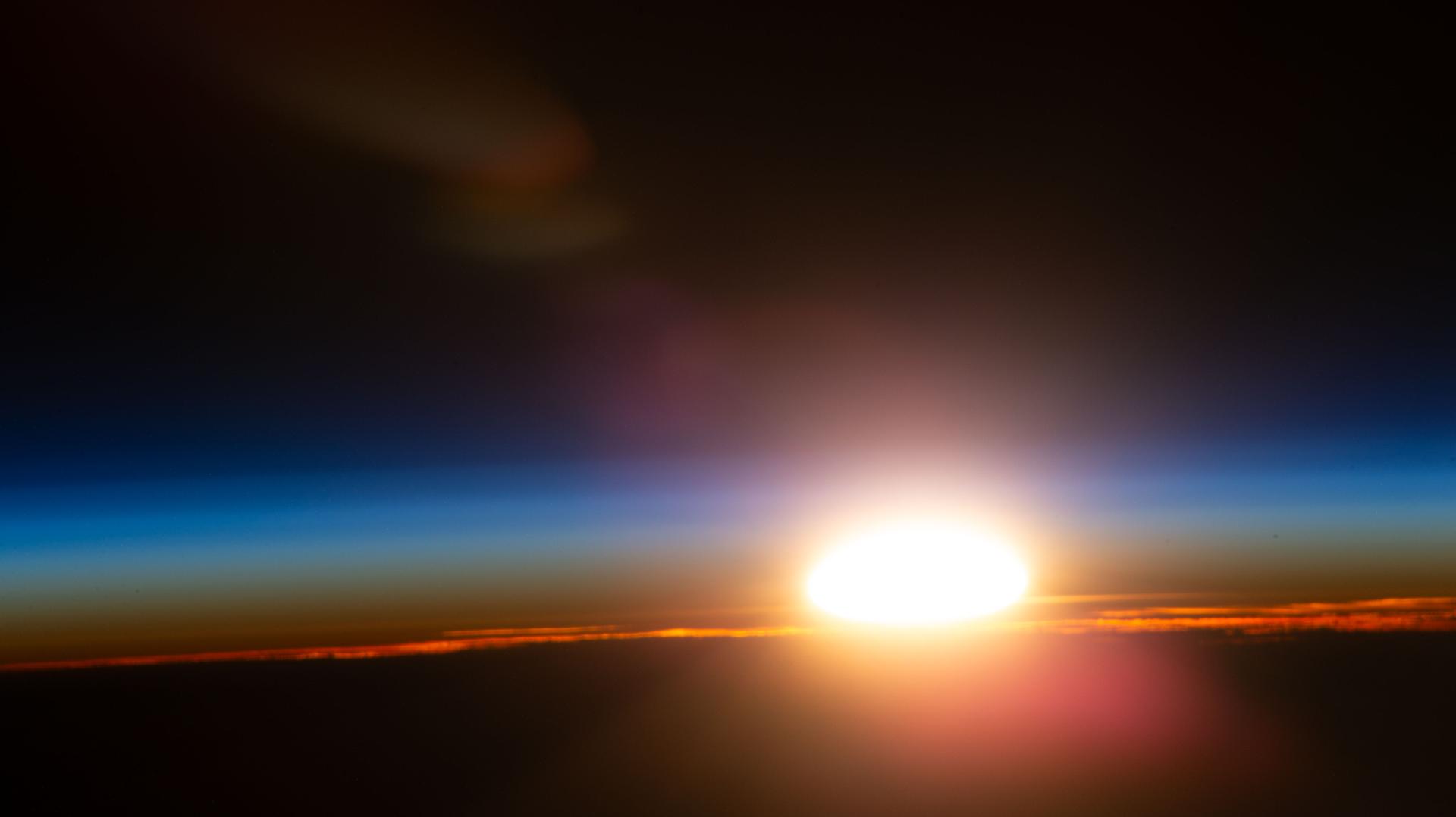
An orbital sunrise illuminates Earth's atmosphere and cloud tops in this photograph captured from the International Space Station as it orbited 264 miles above the Czech Republic in Eastern Europe.
An orbital sunrise illuminates Earth’s atmosphere and cloud tops in this photograph captured from the International Space Station as it orbited 264 miles above the Czech Republic in Eastern Europe.
NASA

Space biology and physics topped the research schedule aboard the International Space Station on Wednesday to improve human health and the space industry. The Expedition 73 residents also helped three new crewmates adapt to orbital life as another trio turns its attention to returning to Earth next week.

NASA Flight Engineer Zena Cardman spent her day processing blood samples, testing her cognition, and exercising for research. She first performed a blood draw with assistance from NASA Flight Engineer Jonny Kim. Afterward, she spun the samples in a centrifuge then stowed them inside a science freezer for future analysis. Next, she took a computerized test measuring how she understands and navigates the microgravity environment, also called spatial cognition. Both activities were for the CIPHER human research study tracking astronaut health before, during, and after a spaceflight. Finally, she worked out on the advanced resistive exercise device (ARED) and pedaled on the exercise cycle while wearing the sensor-packed Bio-Monitor headband and vest measuring her aerobic and cardiovascular health.

Kim configured the Astrobee robotic free-flying assistants for ground controlled remote operations. Scientists are studying Astrobee’s ability to operate both autonomously and remotely freeing astronauts to conduct more research. He then trained Roscosmos Flight Engineer Sergey Kud-Sverchkov, who just began his second space station mission, on how to operate and exercise on the ARED. Kim also continued packing his personal items as he gets ready to return to Earth inside the Soyuz MS-27 crew spacecraft on Dec. 8 with Roscosmos cosmonauts Sergey Ryzhikov and Alexey Zubritsky.

Ryzhikov helped Kud-Sverchkov and new Roscosmos cosmonaut Sergei Mikaev get up to speed with life on orbit showing the duo tools, operations, and procedures in the station’s Roscosmos segment. Ryzhikov was also back inside the Soyuz MS-27 stowing cargo, while Zubritsky continued packing his gear inside the spacecraft and cleaning his crew quarters.

NASA Flight Engineer Mike Fincke swapped cameras inside the Microgravity Science Glovebox to photograph how cryogenic fluids behave in microgravity to improve the design of spacecraft fuel tanks. Later, he helped new NASA Flight Engineer Chris Williams familiarize himself with station hardware, operations, and systems. At the end of his shift, Fincke inspected the condition of thermal insulation throughout the Tranquility module.

JAXA (Japan Aerospace Exploration Agency) astronaut Kimiya Yui started his shift inside the Kibo laboratory module troubleshooting an experimental carbon dioxide removal device that is informing the development of Artemis spacecraft life support systems. Afterward, he continued cargo operations inside the Cygnus XL space freighter unpacking and stowing new science experiments and crew supplies.

Roscosmos Flight Engineer Oleg Platonov began his shift downloading Earth imagery captured automatically while the crew was asleep. Afterward, he wore acoustic sensors that measured his airflow and lung function as he exhaled rapidly for a Roscosmos breathing in space investigation. Finally, he collected station radiation exposure data then analyzed station air samples for ammonia and carbon dioxide.

Learn more about station activities by following the space station blog, @space_station on X, as well as the ISS Facebook and ISS Instagram accounts.

Get the latest from NASA delivered every week. Subscribe here.

Powered by WPeMatico

Get The Details…

Mark A. Garcia

New Trio Gets Up to Speed With Station Life as Space Biology Continues

New Trio Gets Up to Speed With Station Life as Space Biology Continues

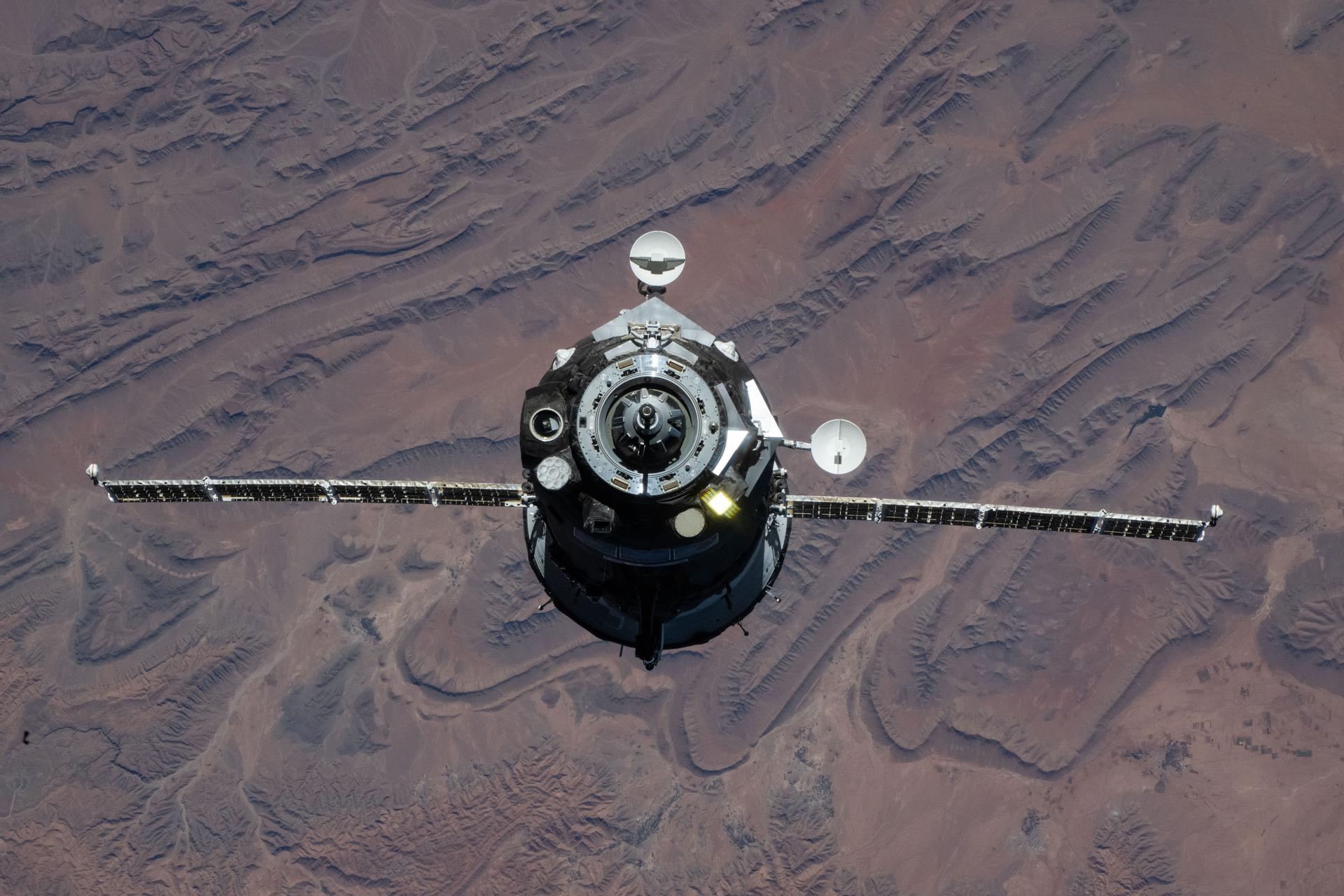
The Soyuz MS-28 crew spacecraft carrying NASA astronaut Chris Williams and Roscosmos cosmonauts Sergey Kud-Sverchkov and Sergei Mikaev approaches the International Space Station. Both spacecraft were orbiting 263 miles above the mountainous region in southern Morocco at the time of this photograph.
NASA

The International Space Station’s three newest crewmembers are getting used to living and working in microgravity. The rest of the Expedition 73 crew assisted the new trio while continuing an array of space biology research and orbital maintenance on Tuesday.

New Flight Engineer Chris Williams from NASA spent his shift on a variety of cargo and maintenance activities as he gets up to speed with life in weightlessness. The first-time space flyer joined veteran NASA astronaut Mike Fincke inside the Cygnus XL space freighter unpacking new science experiments and crew supplies and learning where to stow and how to organize the cargo throughout the station. He also joined NASA Flight Engineer Jonny Kim and inspected and cleaned the Enhanced European Exploration Exercise Device (E4D) located in the Columbus laboratory module. The E4D is being tested on the orbital outpost for its ability to provide bicycling, rowing, and resistance exercises to protect a crewmember’s muscles, bones, and heart health in microgravity.

Roscosmos Flight Engineers Sergey Kud-Sverchkov and Sergei Mikaev, who launched to space with Williams on Nov. 27 aboard the Soyuz MS-28 crew spacecraft, took turns wearing sensors and cuffs measuring how their microcirculatory system is adapting to low Earth orbit. The cosmonauts also collected their blood and saliva samples for processing, stowage, and analysis. Kud-Sverchkov, whose first spaceflight was on Oct. 14, 2021, also recorded his breathing rate and familiarized himself with station systems. Mikaev learned how to operate the advanced resistive exercise device (ARED), located in the Tranquility module, with assistance from veteran JAXA (Japan Aerospace Exploration Agency) astronaut Kimiya Yui.

Fincke also checked out hardware that analyzes oxygen and carbon dioxide in the station’s environment and compared it to readings from other analytical devices. Kim photographed CubeSats that were deployed into Earth orbit from the NanoRacks CubeSat deployer for space technology research. Yui photographed and inspected biomedical hardware including ultrasound gear that uses augmented reality software and a muscle measurement device.

NASA Flight Engineer Zena Cardman started her shift working out on the ARED and exercise cycle while wearing the Bio-Monitor outfit consisting of a sensor-packed vest and headband that tracked her aerobic and cardiovascular activity. Next, she processed and stowed scientific samples in a science freezer for the CIPHER human research study that tracks an astronaut’s health before, during, and after a space mission.

The next crew to return to Earth — Kim and Roscosmos cosmonauts Sergey Ryzhikov and Alexey Zubritsky — is due to undock from the Rassvet module inside the Soyuz MS-27 crew spacecraft on Dec. 8. The trio will parachute to a landing inside the Soyuz descent module in Kazakhstan about three-and-a-half hours later ending an eight-month-long space research mission. Kim spent about an hour on Tuesday packing his personal items for return inside the Soyuz while Ryzhikov and Zubritsky practiced Soyuz descent maneuvers ahead of their departure. The two cosmonauts also tested the lower body negative pressure suit that may help their bodies adjust quicker to Earth’s gravity.

Roscosmos cosmonaut Oleg Platonov assisted his two crewmates with the lower body negative pressure suit operations. He also spent some time photographing other crew activities going on aboard the station before configuring a camera to automatically photograph Earth landmarks during the crew’s sleep period.

Learn more about station activities by following the space station blog, @space_station on X, as well as the ISS Facebook and ISS Instagram accounts.

Get the latest from NASA delivered every week. Subscribe here.

Powered by WPeMatico

Get The Details…

Mark A. Garcia

Space Station First: All Docking Ports Fully Occupied, 8 Spacecraft on Orbit

Space Station First: All Docking Ports Fully Occupied, 8 Spacecraft on Orbit

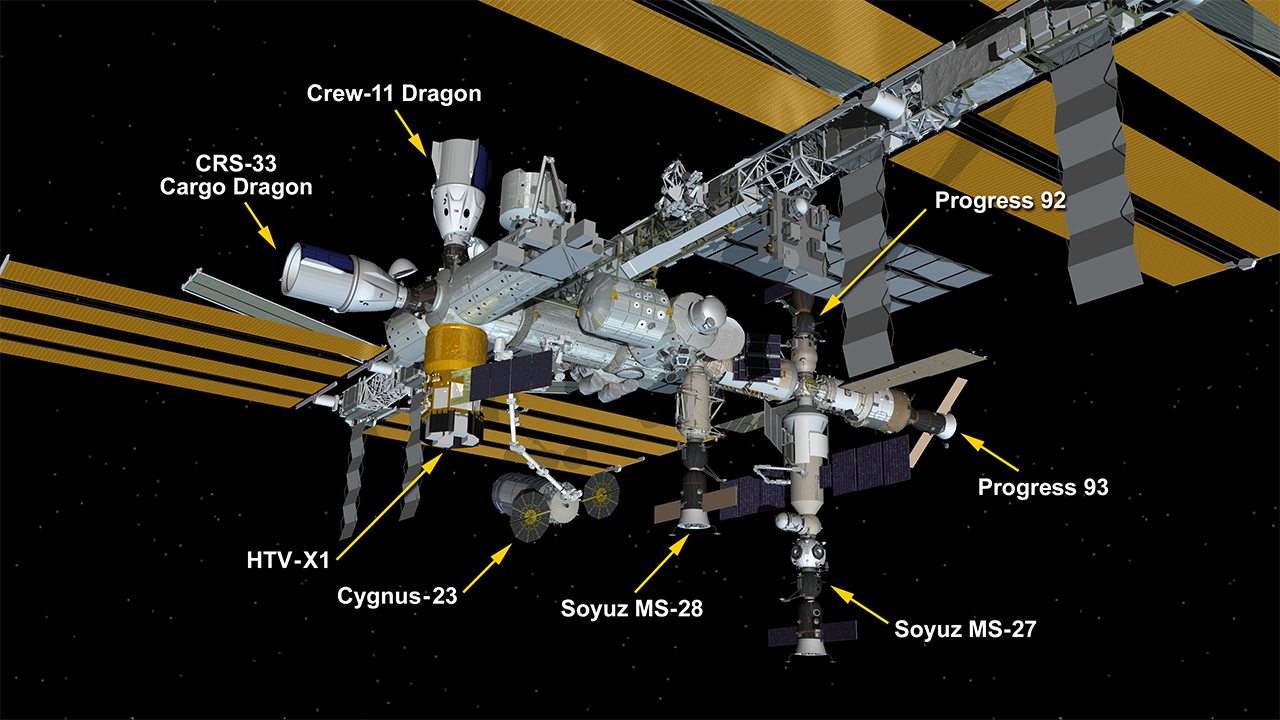
Dec. 1, 2025: International Space Station Configuration. Seven spaceships are parked at the space station including the SpaceX Dragon cargo craft, the SpaceX Crew-11 Dragon spacecraft, JAXA's HTV-X1 cargo craft, Northrop Grumman's Cygnus cargo craft, the Soyuz MS-27 crew ship, and the Progress 92 and 93 resupply ships.
Dec. 1, 2025: International Space Station Configuration. Seven spaceships are parked at the space station including the SpaceX Dragon cargo craft, the SpaceX Crew-11 Dragon spacecraft, JAXA’s HTV-X1 cargo craft, Northrop Grumman’s Cygnus cargo craft, the Soyuz MS-27 crew ship, and the Progress 92 and 93 resupply ships.
NASA

For the first time in International Space Station history, all eight docking ports aboard the orbital outpost are occupied following the reinstallation of Northrop Grumman’s Cygnus XL cargo spacecraft to the Earth-facing port of the station’s Unity module. The eight spacecraft attached to the complex are: two SpaceX Dragons, Cygnus XL, JAXA’s (Japan Aerospace Exploration Agency) HTV-X1, two Roscosmos Soyuz crew spacecraft, and two Progress cargo ships.

This milestone follows the reattachment of the Cygnus XL spacecraft, supporting the Northrop Grumman-23 commercial resupply services mission for NASA, which was removed last week by the robotics officer at the agency’s Mission Control Center in Houston using the space station’s Canadarm2 robotic arm. The Cygnus XL movement was coordinated between NASA, Northrop Grumman, and Roscosmos to provide appropriate clearance for the arriving crewed Soyuz MS-28 spacecraft on Nov. 27.  

Cygnus will remain attached to the orbiting laboratory until no earlier than March 2026, when it is scheduled to safely depart and dispose of up to 11,000 pounds of trash and unneeded cargo when it harmlessly burns up in Earth’s atmosphere.

Meanwhile, the 10-person Expedition 73 crew filled its day with biology and physics research while preparing to split up early next week.

Three new residents are living aboard the space station following the arrival of the Soyuz MS-28 spacecraft on Thursday, Nov. 27, 2025. NASA astronaut Chris Williams and Roscosmos cosmonauts Sergey Kud-Sverchkov and Sergei Mikaev will stay in space until July 2026, conducting advanced space research benefiting humans living on and off Earth. Kud-Sverchkov and Mikaev have already begun studying how living in space affects the microcirculatory system in their hands, fingers, feet, and toes. Williams has been assisting his NASA crewmates with cargo activities.

On Dec. 8, the orbital outpost will return to seven members and become the Expedition 74 crew when NASA astronaut Jonny Kim and Roscosmos cosmonauts Sergey Ryzhikov and Alexey Zubritsky enter the Soyuz MS-27 spacecraft, undock from the Prichal module, and parachute to a landing in Kazakhstan. The trio performed pressure and leak checks on the Sokol launch and entry suits they will wear next week for the ride back to Earth. Ryzhikov continued packing cargo inside the Earth-bound Soyuz, while Zubritsky began handing over his responsibilities to his new Roscosmos crewmates. Kim, Ryzhikov, and Zubritsky are nearing the end of an eight-month space science mission that began on April 8, 2025.

Kim also joined his new crewmate Williams and NASA Flight Engineer Zena Cardman to open the Cygnus XL hatch following its reattachment Monday morning. The crew will continue unpacking some of the several tons of new science and supplies Cygnus XL delivered on Sept. 18.

Flight Engineers Mike Fincke and Kimiya Yui spent their day focusing on space research to learn about phenomena that can only be studied in the weightless environment of microgravity. Fincke, from NASA, first swapped computer hardware supporting a physics experiment that is studying ways to preserve cryogenic fluids in spacecraft fuel tanks. Next, he configured the new NanoRacks Thailand Liquid Crystals experiment, which will observe changes in the formation of flat liquid crystal films in microgravity. Yui, from JAXA, studied how the brain regulates its blood flow. He measured both his cerebral artery blood flow and blood pressure to help doctors understand potential space-related issues.

Flight Engineer Oleg Platonov spent Monday collecting, processing, and photographing microbe samples gathered throughout the station’s Roscosmos segment for analysis. He also transferred data highlighting the vibrations the station experiences while orbiting Earth to a laptop computer.

Learn more about station activities by following the space station blog, @space_station on X, as well as the ISS Facebook and ISS Instagram accounts.Get the latest from NASA delivered every week. Subscribe here.

Powered by WPeMatico

Get The Details…

Mark A. Garcia

Hatches Open, Station Crew Expands to 10

Hatches Open, Station Crew Expands to 10

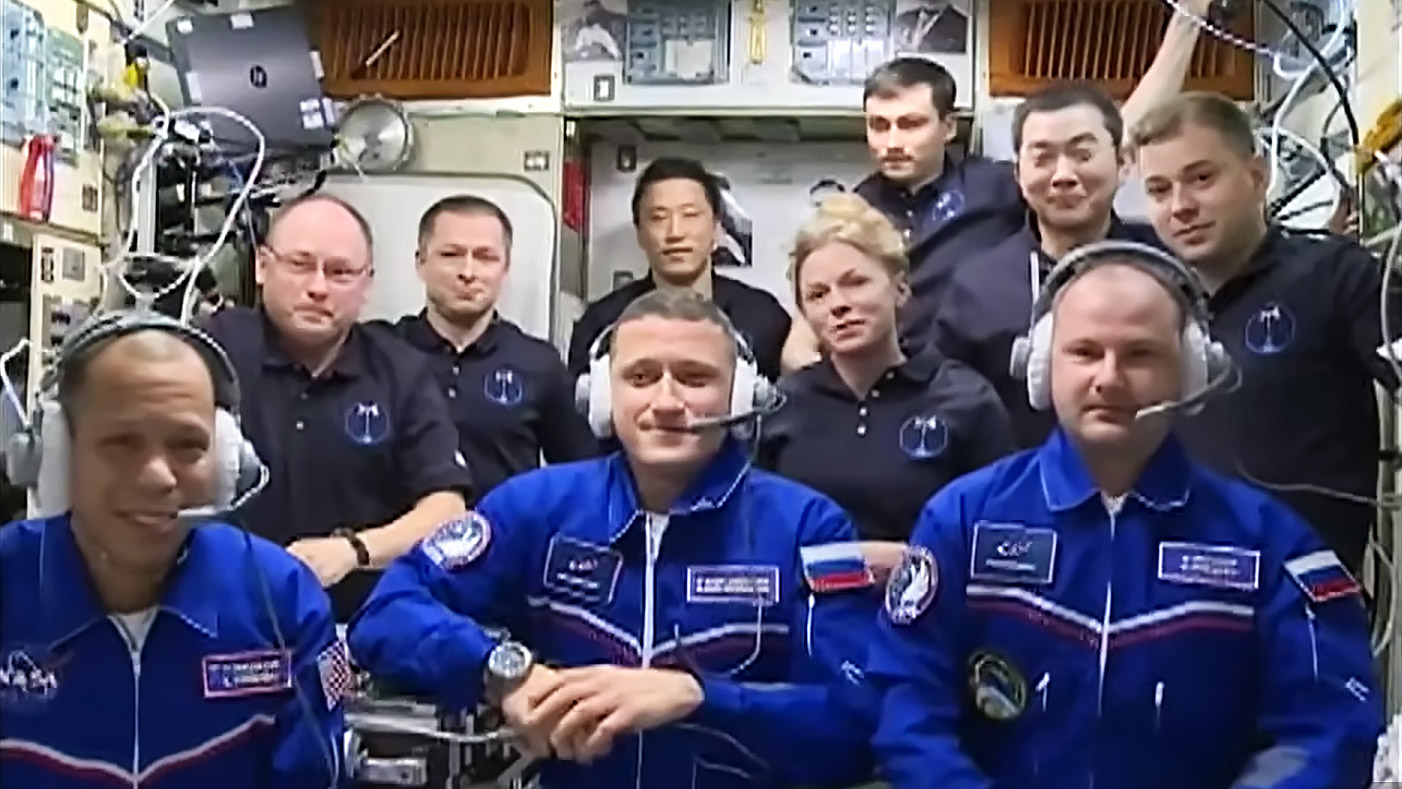
The newly-expanded Expedition 73 crew. In the front row (from left) are the newest crew members Chris Williams from NASA and Roscosmos cosmonauts Sergey Kud-Sverchkov and Sergei Mikaev. In the back are, NASA astronaut Mike Fincke, Roscosmos cosmonaut Sergey Ryzhikov, NASA astronauts Jonny Kim and Zena Cardman, Roscosmos cosmonaut Alexey Zubritsky, JAXA (Japan Aerospace Exploration Agency) astronaut Kimiya Yui, and Roscosmos cosmonaut Oleg Platonov.
NASA

Expedition 73 wrapped up the work week At 10:16 a.m. EST, the hatch opened between the International Space Station and the Soyuz MS-28 spacecraft. 

The spacecraft arrived at the orbiting laboratory’s Rassvet module at 7:34 a.m., after launching at 4:27 a.m. (2:27 p.m. Baikonur time) from the Baikonur Cosmodrome in Kazakhstan with NASA astronaut Chris Williams and Roscosmos cosmonauts Sergey Kud-Sverchkov and Sergei Mikaev aboard. The trio will spend approximately eight months aboard the space station before returning to Earth in summer 2026.

Learn more about station activities by following the space station blog, @space_station on X, as well as the ISS Facebook and ISS Instagram accounts.

Get the latest from NASA delivered every week. Subscribe here.

Powered by WPeMatico

Get The Details…

Mark A. Garcia

Station Waits to Welcome to New Crew; Hatches Open Soon

Station Waits to Welcome to New Crew; Hatches Open Soon

Nov. 27, 2025: International Space Station Configuration. Seven spaceships are parked at the space station including the SpaceX Dragon cargo craft, the SpaceX Crew-11 Dragon spacecraft, JAXA's HTV-X1 cargo craft, the Soyuz MS-27 crew ship, and the Progress 92 and 93 resupply ships. Northrop Grumman's Cygnus cargo craft was temporarily uninstalled from the Harmony module with the Canadarm2 robotic arm until Dec. 1.
Nov. 27, 2025: International Space Station Configuration. Seven spaceships are parked at the space station including the SpaceX Dragon cargo craft, the SpaceX Crew-11 Dragon spacecraft, JAXA’s HTV-X1 cargo craft, the Soyuz MS-27 crew ship, and the Progress 92 and 93 resupply ships. Northrop Grumman’s Cygnus cargo craft was temporarily uninstalled from the Harmony module with the Canadarm2 robotic arm until Dec. 1.
NASA

NASA’s live hatch opening coverage is underway on NASA+, Amazon Prime, YouTube, and more. Hatch opening is scheduled to begin at 10:10 a.m. EST. 

Learn how to watch NASA content through a variety of platforms, including social media. 

The Soyuz MS-28 spacecraft arrived at the orbiting laboratory’s Rassvet module at 7:34 a.m., after launching from the Baikonur Cosmodrome in Kazakhstan at 4:27 a.m. (2:27 p.m. Baikonur time) with NASA astronaut Chris Williams and Roscosmos cosmonauts Sergey Kud-Sverchkov and Sergei Mikaev. The trio will spend approximately eight months aboard the orbital laboratory before returning to Earth in summer 2026. 

Learn more about station activities by following the space station blog, @space_station on X, as well as the ISS Facebook and ISS Instagram accounts.

Get the latest from NASA delivered every week. Subscribe here.

Powered by WPeMatico

Get The Details…

Mark A. Garcia