Exercise, Science Gear, and Robotics Top Station Research Schedule

Exercise, Science Gear, and Robotics Top Station Research Schedule

Astronaut Matthew Dominick works in the Kibo laboratory module removing CubeSat hardware from Kibo's airlock.
Astronaut Matthew Dominick works in the Kibo laboratory module removing CubeSat hardware from Kibo’s airlock.

Human research, combustion, and robotics were the scientific priorities aboard the International Space Station on Tuesday. The seven-member Expedition 71 crew also continued ongoing cargo operations and hardware maintenance.

Exercising daily in weightlessness counteracts space-caused bone and muscle loss preserving crew health during long-term missions. Researchers frequently monitor a crew members exercise sessions to learn how microgravity affects a variety of physiological parameters. On Tuesday morning, NASA Flight Engineers Matthew Dominick and Mike Barratt attached sensors to their chests and strapped on breathing gear then took turns pedaling on an exercise cycle. Doctors will use the data from the periodic fitness test that measures oxygen uptake and heart activity and evaluate the astronauts’ aerobic capacity.

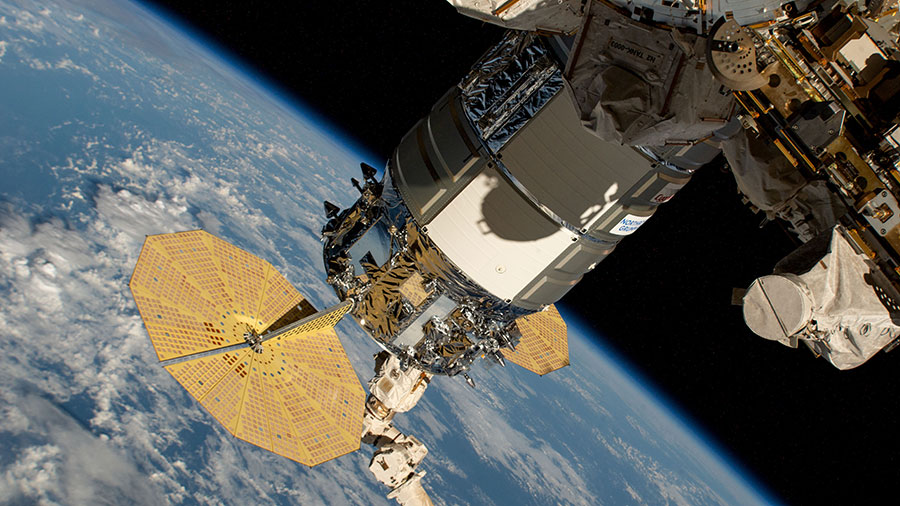
After the exercise session, Dominick powered down the workout gear and partially stowed the biomedical hardware. The pair then joined each other and tested the installation of a helmet on a spacesuit. Barratt also worked on cargo operations inside the Cygnus space freighter berthed to the Unity module since Feb. 1.

NASA Flight Engineer Tracy C. Dyson split her day between combustion hardware and a robotics demonstration. She spent her morning in the Kibo laboratory module swapping samples and replacing hardware inside the Solid Combustion Experiment Module. The research device is located in Kibo’s Multi-Purpose Small Payload Rack and enables flame and fuel research to promote fire safety on spacecraft. Next, she tested the operations of the Astrobee free-flying robotic assistant for a competition that uses student-written algorithms to control and maneuver the devices.

NASA astronaut Jeanette Epps began her day setting up Actiwatches that monitor crew sleep-wake cycles. Then she spent the afternoon stowing sample collection hardware and servicing a pair of Kubik incubators that can house small organisms for space biology investigations.

In the Roscosmos segment of orbital outpost, Commander Oleg Kononenko and Flight Engineer Nikolai Chub tested communications with the Progress 86 resupply ship then conducted seat fit checks in the Soyuz MS-25 crew ship. Kononenko then tested a 3D printer and configured cameras while Chub spent the rest of his day on life support maintenance. Flight Engineer Alexander Grebenkin was back on robotics duty operating the European robotic arm and scanning the Rassvet module’s docking port.


Learn more about station activities by following the space station blog@space_station and @ISS_Research on X, as well as the ISS Facebook and ISS Instagram accounts.

Get weekly video highlights at: https://roundupreads.jsc.nasa.gov/videoupdate/

Get the latest from NASA delivered every week. Subscribe here: www.nasa.gov/subscribe

Powered by WPeMatico

Get The Details…

Mark Garcia

Crew Starts Week with Space Biology, Robotics, and Medical Skills

Crew Starts Week with Space Biology, Robotics, and Medical Skills

An atmosphreric glow blankets Earth's horizon and a web of city lights interconnect across India in this photograph from the space station.
An atmosphreric glow blankets Earth’s horizon and a web of city lights interconnect across India in this photograph from the space station.

The week kicked off with a multitude of space biology activities as the Expedition 71 crew studied microgravity’s effect on humans and serviced research hardware. Robotics and lab maintenance rounded out Monday’s schedule aboard the International Space Station.

NASA Flight Engineer Jeanette Epps worked throughout Monday on biomedical activities processing her blood, saliva, and urine samples for analysis. After her blood draws, she spun the samples inside a centrifuge then stowed them in a science freezer. The biological specimens are then compared to astronaut samples collected both pre-flight and post-flight to understand how the human body adapts to long-term weightlessness.

In the afternoon, NASA astronaut Mike Barratt operated the Ultrasound 2 device and scanned the neck, shoulder, and leg veins of NASA Flight Engineer Tracy C. Dyson. Doctors on the ground remotely provided guidance and monitored the vein scans. The ultrasound converts the echo scans into a video signal that is downlinked to Earth and viewed as part of periodic crew health exams.

Earlier, Barratt measured the airflow in the Harmony module crew quarters then reorganized combustion research components to enable a space fire safety experiment. Dyson investigated ways to improve the delivery of respiratory system drugs potentially offering benefits to both the health care and food industries.

NASA Flight Engineer Matthew Dominick spent his day servicing science gear throughout the orbital lab. He started the day checking out and configuring hardware supporting the Rodent Research-28 investigation that is exploring a gene therapy to maintain eye health in microgravity. In the afternoon, he opened up the Life Science Glovebox and audited its systems and components to ensure ongoing advanced biology research operations.

Roscosmos Mission Specialist Alexander Grebenkin powered up the European robotic arm attached to the Nauka science module and practiced maneuvering it in basic operator mode. Cosmonaut Nikolai Chub brushed up on his medical skills familiarizing himself with emergency hardware and procedures onboard the station. Station Commander Oleg Kononenko inspected components inside the Zarya module, photographed the condition of windows in the Nauka and Zvezda modules, then worked on an oxygen generator.

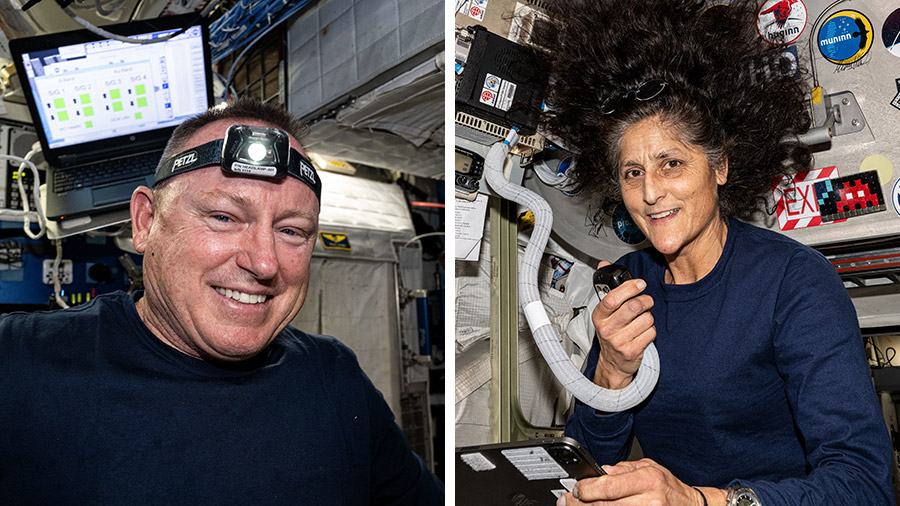
NASA, Boeing, and ULA (United Launch Alliance) teams now are targeting a launch no earlier than 3:09 p.m. EDT Saturday, May 25, for the agency’s Crew Flight Test carrying NASA astronauts Butch Wilmore and Suni Williams to the International Space Station.


Learn more about station activities by following the space station blog@space_station and @ISS_Research on X, as well as the ISS Facebook and ISS Instagram accounts.

Get weekly video highlights at: https://roundupreads.jsc.nasa.gov/videoupdate/

Get the latest from NASA delivered every week. Subscribe here: www.nasa.gov/subscribe

Powered by WPeMatico

Get The Details…

Mark Garcia

Robotics, Health Research, and Cleaning to End Week

Robotics, Health Research, and Cleaning to End Week


One of the International Space Station's free-flying robots, Astrobee.
One of the International Space Station’s free-flying robots, Astrobee.

Expedition 71 wrapped up a week of maintenance and health investigations aboard the International Space Station on Friday. The septet worked robotics, two human health studies, and finished some cleaning in the cupola.

NASA Flight Engineer Jeanette Epps started her day in the Japanese Experiment Module to power on Astrobee, the station’s free-flying robots, to later rehearse the device’s flight and tech operations for an upcoming Kibo Robot Programming Challenge. The challenge is an educational program designed for students to solve various given problems by using the free-flying robots, moving and controlling them remotely.

Afterward, Epps removed yesterday’s Immunity Assay samples from Kubik, then incubated them in the Human Research Facility’s centrifuge. The device is designed to separate biological substances from the samples by spinning at high rates in microgravity. Once completed, Epps stowed the samples in MELFI, an ultra-cold freezer, to preserve them for future analysis on Earth.

As part of the CIPHER study, NASA Flight Engineer Mike Barratt set up tomography hardware in the morning and later received an eye examine. In microgravity, body fluids shift toward a crew member’s head, which can cause one of the most visible symptoms of living in space, known as “puffy face.” As fluids shift upward, this can alter the structure and function of the eyes and brain. Astronauts routinely perform eye examines aboard the orbiting complex to help scientist on Earth study these changes.

Barratt then moved onto some spacesuit work, manually removing gasses from the Contingency Water Containers, then filling the water tanks in preparation for a round of spacewalks this summer.

Astronauts often use the station’s cupola to capture photos of Earth or complete robotics activities, among other tasks. NASA Flight Engineers Matthew Dominick and Tracy C. Dyson spent the morning in the “window to the world” to remove and replace some acrylic scratch panes on a few of the windows, work that began earlier in the week, then cleaned the primary pressure panes.

In the Roscosmos segment, Flight Engineer Nikolai Chub and current station Commander Oleg Kononenko spent the day replacing a belt on one of the treadmills. Meanwhile, their crewmate, Alexander Grebenkin, completed some robotic arm simulation training.

NASA, Boeing, and ULA (United Launch Alliance) teams will take additional time to work through spacecraft closeout processes and flight rationale before proceeding with the launch of the agency’s Boeing Crew Flight Test. The teams now are targeting a launch no earlier than 3:09 p.m. EDT Saturday, May 25, for the flight test carrying NASA astronauts Butch Wilmore and Suni Williams to the International Space Station.

The additional time allows teams to further assess a small helium leak in the Boeing Starliner spacecraft’s service module traced to a flange on a single reaction control system thruster. Pressure testing performed on May 15 on the spacecraft’s helium system showed the leak in the flange is stable and would not pose a risk at that level during the flight. The testing also indicated the rest of the thruster system is sealed effectively across the entire service module. Boeing teams are working to develop operational procedures to ensure the system retains sufficient performance capability and appropriate redundancy during the flight. As that work proceeds, NASA’s Commercial Crew Program and the International Space Station Program will take the next few days to review the data and procedures to make a final determination before proceeding to flight countdown.

The ULA Atlas V rocket and Boeing’s Starliner remain in the Vertical Integration Facility at Space Launch Complex-41 on Cape Canaveral Space Force Station in Florida. The NASA, Boeing, and ULA teams remain committed to ensuring a safe Starliner flight test.

Wilmore and Williams will remain quarantined in Houston as prelaunch operations progress. They will fly back to NASA’s Kennedy Space Center in Florida closer to the new launch date. The duo is the first to launch aboard Starliner to the space station as part of the agency’s Commercial Crew Program. The astronauts will spend about a week at the orbiting laboratory before returning to Earth and making a parachute and airbag-assisted landing in the southwestern United States.

After successful completion of the mission, NASA will begin the final process of certifying Starliner and its systems for crewed rotation missions to the space station.


Learn more about station activities by following the space station blog, @space_station and @ISS_Research on X, as well as the ISS Facebook and ISS Instagram accounts.

Get weekly updates from NASA Johnson Space Center at: https://roundupreads.jsc.nasa.gov/

Get the latest from NASA delivered every week. Subscribe here: www.nasa.gov/subscribe

Powered by WPeMatico

Get The Details…

Abby Graf

NASA, Boeing Now Working Toward May 25 Launch of Crew Flight Test

NASA, Boeing Now Working Toward May 25 Launch of Crew Flight Test

A United Launch Alliance Atlas V rocket with Boeing’s Starliner spacecraft aboard is seen on the launch pad illuminated by spotlights at Space Launch Complex 41 on Sunday, May 5, 2024. Photo Credit: NASA/Joel Kowsky

NASA, Boeing, and ULA (United Launch Alliance) teams will take additional time to work through spacecraft closeout processes and flight rationale before proceeding with the launch of the agency’s Boeing Crew Flight Test. The teams now are targeting a launch no earlier than 3:09 p.m. EDT Saturday, May 25, for the flight test carrying NASA astronauts Butch Wilmore and Suni Williams to the International Space Station.

The additional time allows teams to further assess a small helium leak in the Boeing Starliner spacecraft’s service module traced to a flange on a single reaction control system thruster. Pressure testing performed on May 15 on the spacecraft’s helium system showed the leak in the flange is stable and would not pose a risk at that level during the flight. The testing also indicated the rest of the thruster system is sealed effectively across the entire service module. Boeing teams are working to develop operational procedures to ensure the system retains sufficient performance capability and appropriate redundancy during the flight. As that work proceeds, NASA’s Commercial Crew Program and the International Space Station Program will take the next few days to review the data and procedures to make a final determination before proceeding to flight countdown.

The ULA Atlas V rocket and Boeing’s Starliner remain in the Vertical Integration Facility at Space Launch Complex-41 on Cape Canaveral Space Force Station in Florida. The NASA, Boeing, and ULA teams remain committed to ensuring a safe Starliner flight test.

Wilmore and Williams will remain quarantined in Houston as prelaunch operations progress. They will fly back to NASA’s Kennedy Space Center in Florida closer to the new launch date. The duo is the first to launch aboard Starliner to the space station as part of the agency’s Commercial Crew Program. The astronauts will spend about a week at the orbiting laboratory before returning to Earth and making a parachute and airbag-assisted landing in the southwestern United States.

After successful completion of the mission, NASA will begin the final process of certifying Starliner and its systems for crewed rotation missions to the space station.

Powered by WPeMatico

Get The Details…

Danielle Sempsrott

Immunology, Space Biology, and Cleaning for Crew on Thursday

Immunology, Space Biology, and Cleaning for Crew on Thursday


The southern coast of Africa is pictured from the International Space Station's
The southern coast of Africa is pictured from the International Space Station’s “window to the world,” or cupola, as it soared 265 miles above.

Expedition 71 continued microgravity research on Thursday as the crew spent the day on immunology work and space biology. Two crew members also worked on the orbital upkeep tasks that began earlier in the week.

Aboard the International Space Station, one investigation, Immunity Assay, takes a closer look at immune changes that happen in flight through the processing of biological samples. NASA Flight Engineer Matthew Dominick started the day by collecting samples for Immunity Assay, then NASA Flight Engineer Jeanette Epps processed and installed the sample tubes into Kubik. Understanding how the human body reacts to spaceflight is one step in ensuring spacefarers stay safe and healthy on future long-duration missions in low Earth orbit, to the Moon, and eventually, to Mars.

After immunology work wrapped, Epps moved into the Kibo Laboratory to assemble Hicari sample cartridges for upcoming operations. Hicari, an experiment led by the JAXA (Japanese Aerospace Exploration Agency), investigates high-quality crystal growth of semiconductors.

Meanwhile, Dominick worked with NASA Flight Engineer Tracy C. Dyson to charge and prep batteries and install data recorders in two spacesuits for a round of upcoming spacewalks this summer. The duo then spent the rest of the afternoon inside the station’s cupola, detailing and cleaning its seven windows.

In the Columbus Laboratory Module, NASA Flight Engineer Mike Barratt collected water samples from the water processing tank, then spent the day extracting and sequencing DNA from the samples to identify bacteria and fungi as part of the GiSMOS investigation. Characterizing microbial communities in the water system is critical to sustaining the health of crew members and vehicles on future missions aboard the orbiting complex.

Human health research continued in the Roscosmos segment as two cosmonauts—Oleg Kononenko and Nikolai Chub—spent part of their day donning a device that assesses cardiovascular function in microgravity. Chub then reconfigured some of the cameras used by crewmembers in space and practiced his piloting techniques during a Pilot-T session, while his crewmate, Alexander Grebenkin, completed some maintenance in the Nauka module.

On Earth, NASA, Boeing, and ULA (United Launch Alliance) teams continue working toward the agency’s Boeing Crew Flight Test to the International Space Station. The teams are targeting launch no earlier than 4:43 p.m. EDT Tuesday, May 21. For more information, please visit the Crew Flight Test blog.


Learn more about station activities by following the space station blog, @space_station and @ISS_Research on X, as well as the ISS Facebook and ISS Instagram accounts.

Get weekly updates from NASA Johnson Space Center at: https://roundupreads.jsc.nasa.gov/

Get the latest from NASA delivered every week. Subscribe here: www.nasa.gov/subscribe

Powered by WPeMatico

Get The Details…

Abby Graf