Crew Stays Busy with Spacewalk Preps and Advanced Research

Crew Stays Busy with Spacewalk Preps and Advanced Research

The NICER X-ray telescope is reflected on NASA astronaut Nick Hague's spacesuit helmet visor in this high-flying
The NICER X-ray telescope is reflected on NASA astronaut Nick Hague’s spacesuit helmet visor in this high-flying “space-selfie” taken on Jan. 16, 2025.

The Expedition 72 crew members began the day preparing for the second spacewalk of 2025 outside the International Space Station, this time to remove communications gear and search for potential microbes. The orbital residents also kept up ongoing research studying advanced space navigation, analyzing microbial DNA, and exploring futuristic piloting techniques.

Station Commander Suni Williams and Flight Engineer Butch Wilmore worked throughout Tuesday organizing spacewalk tools such as tethers, stowage bags, foot restraints, and more inside the Quest airlock. The duo also reviewed procedures they will use to remove and stow a radio frequency group antenna assembly and swab external station surfaces to test whether microbes can live outside the orbital outpost. They are scheduled to set their spacesuits to battery power signifying the start of their spacewalk at 8 a.m. EST on Thursday, Jan. 30.

Flight Engineers Nick Hague and Don Pettit also took part in the spacewalk preparations. Hague started first as he studied the steps he will take when he helps the spacewalkers in and out of their spacesuits, guides them in and out of Quest, and monitors the duo during the science and maintenance excursion. Later, he joined Pettit and practiced installing the spacesuits’ jetpacks a spacewalker would use to maneuver back to the station in the unlikely event they became untethered from the orbital outpost.

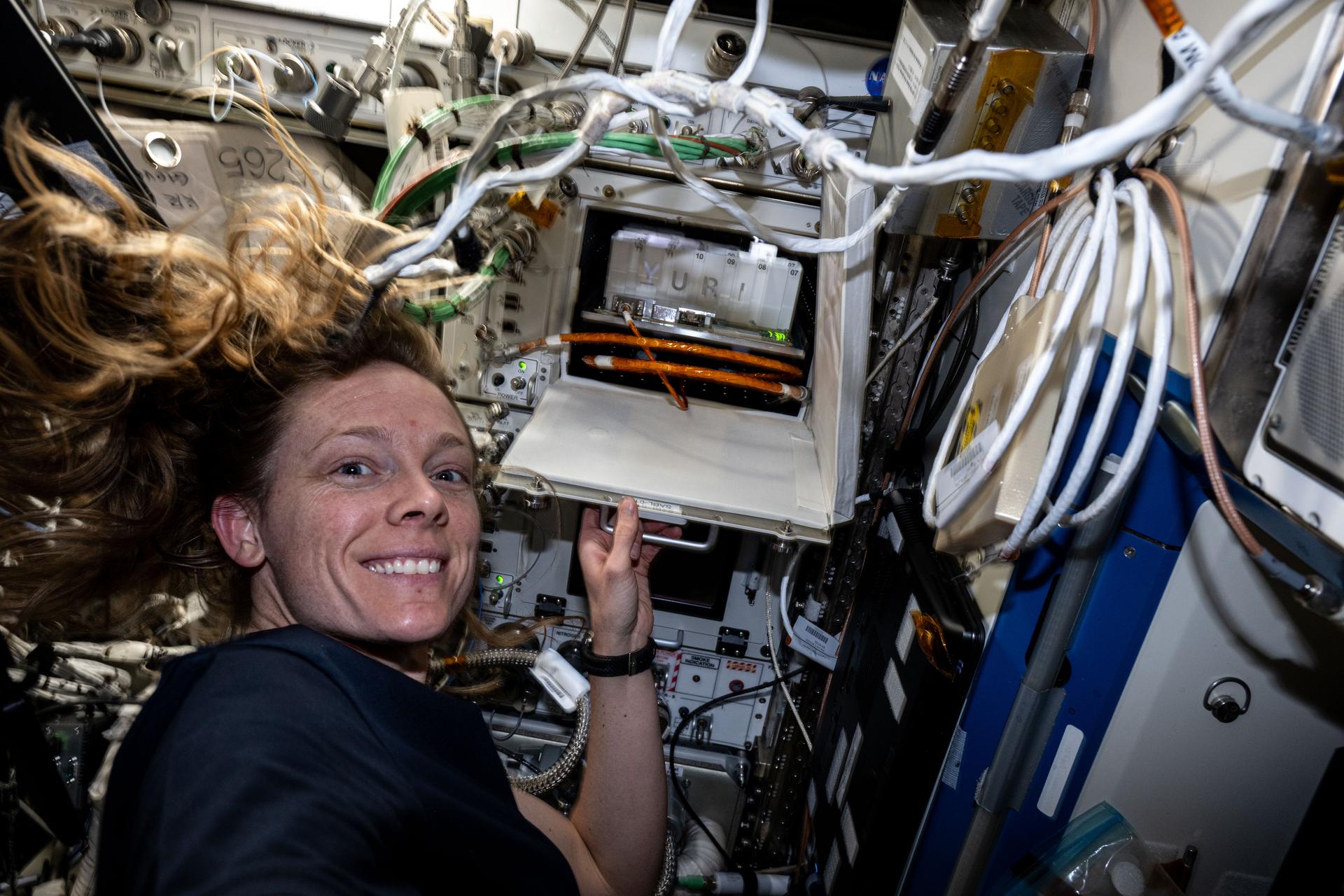
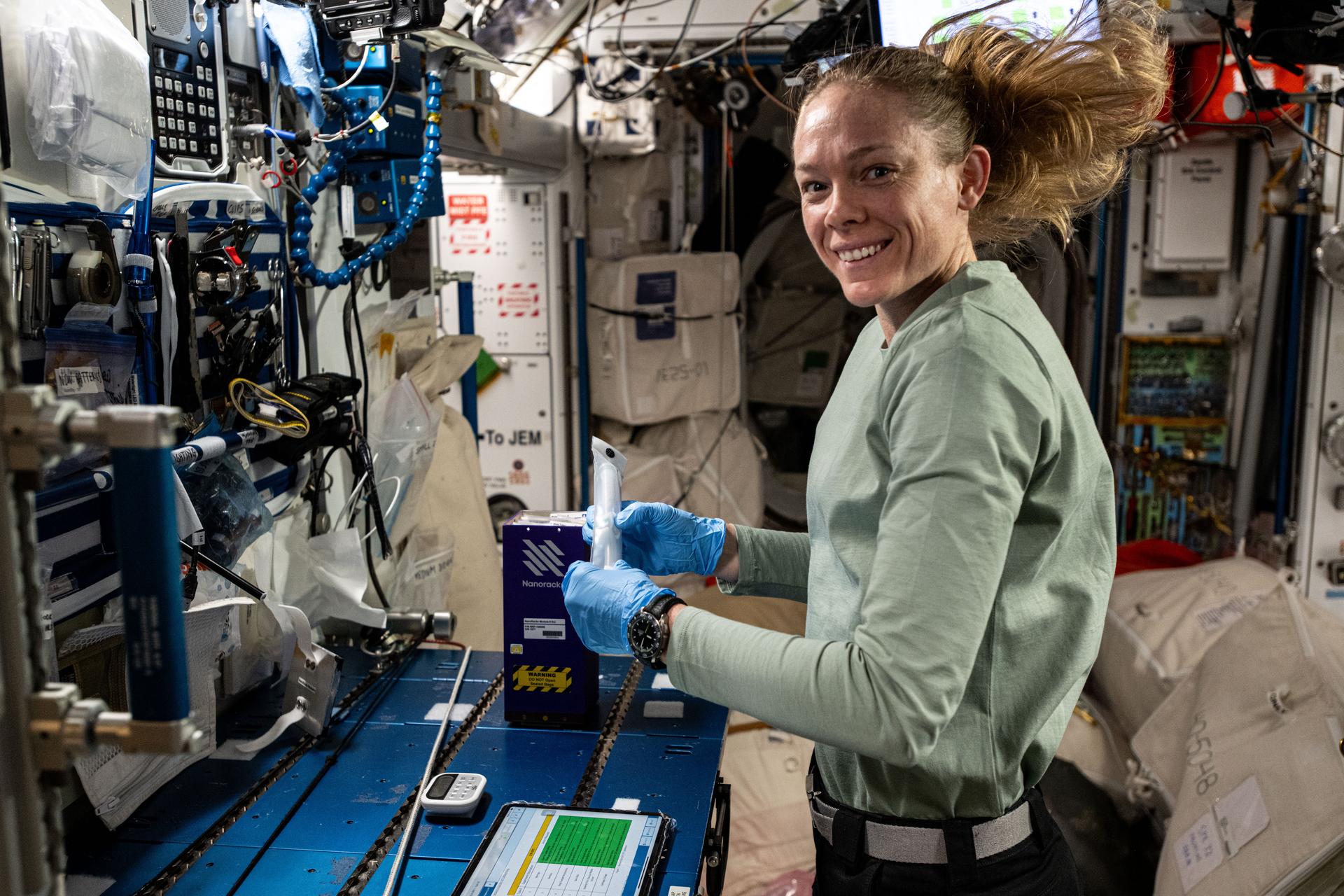
Hague and Pettit were also on science duty keeping up advanced research benefitting humans living on and off the Earth. Hague worked inside the Columbus laboratory module installing the NAVCOM technology demonstration. The space navigation hardware is being tested as a backup solution to the Global Navigation Satellite System in support of future lunar missions. Pettit, in the Harmony module’s maintenance work area, sequenced the DNA of bacteria samples to quickly analyze and identify the microbes that live in space station water systems. The GISMOS biotechnology study increases DNA research on orbit without returning the samples to Earth for analysis and is critical to protecting crew health on spacecraft.

Working in the orbiting lab’s Roscosmos segment, Flight Engineer Alexey Ovchinin wore a sensor-packed cap and explored on a computer how crews may operate spacecraft and robots on future planetary missions. Flight Engineer Ivan Vagner spent his day servicing electronics hardware and unplugging cables inside the Zarya module. Flight Engineer Aleksandr Gorbunov pointed a camera installed with a spectrometer out a window in the Zvezda service module and photographed the effects of natural and man-made disasters on Earth in a variety of wavelengths.


Learn more about station activities by following the space station blog@space_station and @ISS_Research on X, as well as the ISS Facebook and ISS Instagram accounts.

Get the latest from NASA delivered every week. Subscribe here: www.nasa.gov/subscribe

Powered by WPeMatico

Get The Details…

Mark Garcia

Post-Spacewalk Cleanup, Physics and Biology Research Wrap Up Week

Post-Spacewalk Cleanup, Physics and Biology Research Wrap Up Week

Astronaut Suni Williams is pictured during a spacewalk outside the space station where she replaced a rate gyro assembly that helps maintain the orientation of the orbital outpost on Jan. 16, 2025.

Two NASA astronauts took a half-a-day off on Friday following a spacewalk the previous day then cleaned up spacesuit gear and held a conference with specialists on the ground. Meanwhile, science continued aboard the International Space Station as the Expedition 72 crew studied space physics and biology.

Flight Engineer Nick Hague and Commander Suni Williams worked six hours in the vacuum of space on Thursday servicing astrophysics hardware and replacing orientation and navigation components. The duo relaxed a few hours on Friday before packing gear removed from the outside of the station and recharging spacesuit water tanks and lithium-ion batteries.

Williams also worked with NASA Flight Engineer Don Pettit in the Quest airlock stowing a rate gyro assembly and planar reflector that she had removed and replaced the day before on the outside of the orbital outpost. The rate gyro assembly, which provides data on the space station’s orientation, and the planar reflector, which provides navigational data, will both be returned to Earth for examination.

NASA Flight Engineer Butch Wilmore assisted Williams and recharged water tanks and the lithium-ion batteries that power the spacesuits during spacewalks. The day before, Wilmore photographed the spacesuit gloves following the completion of the spacewalk for inspection by engineers in Mission Control. At the end of his shift on Friday, Wilmore joined Pettit, Williams, and Hague and held a standard debriefing session with mission controllers and discussed their experiences before, during, and after Thursday’s spacewalk.

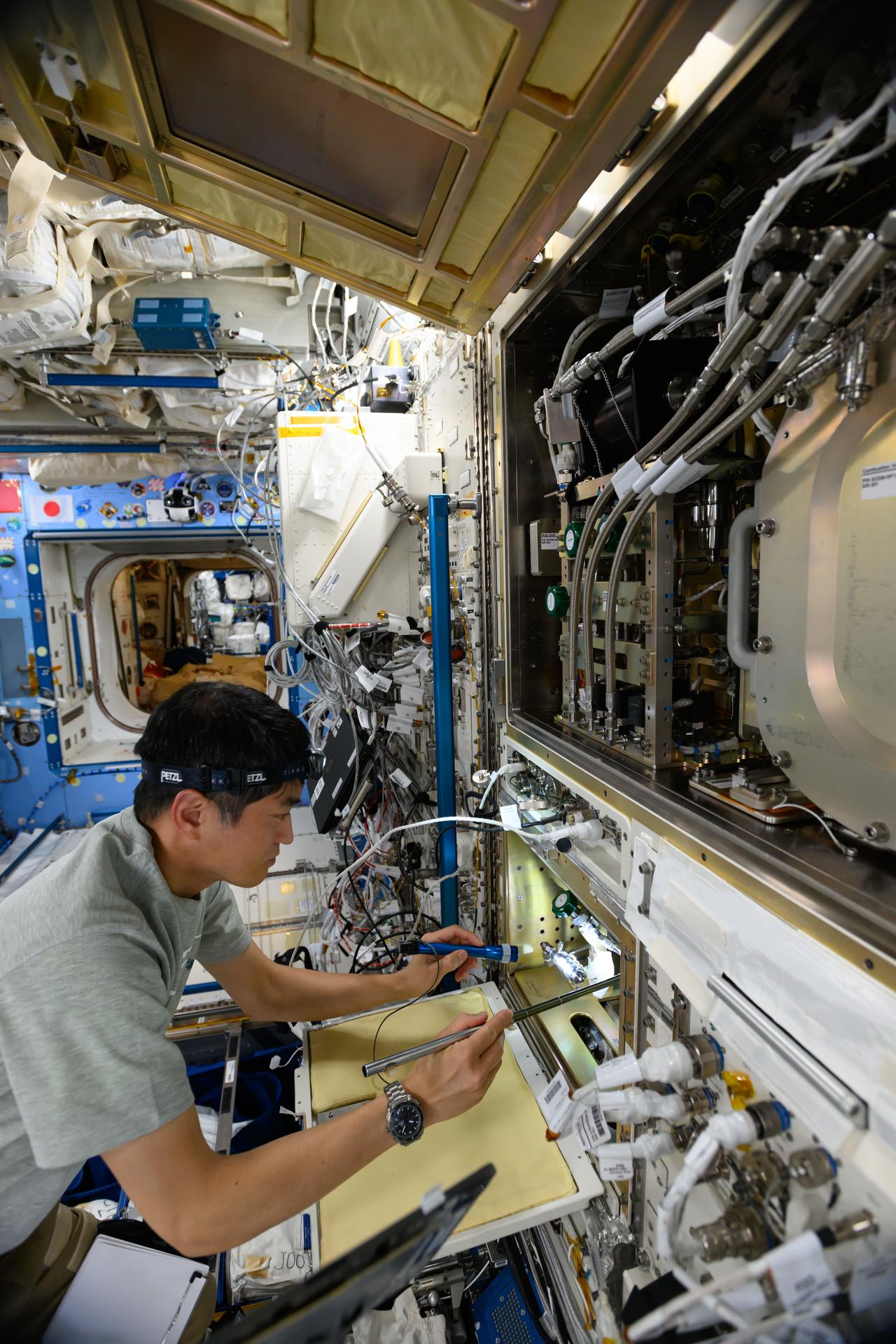
Hague and Wilmore also had time for science as they swapped physics hardware inside the Destiny laboratory module. The advanced research gear supports a physics furnace that operates in Destiny’s Microgravity Science Glovebox for an experiment that is exploring semiconductor crystal manufacturing in space.

Roscosmos Flight Engineers Alexey Ovchinin and Ivan Vagner once again joined each other and explored how microgravity affects blood flow to the human circulatory system’s tiniest vessels. The pair attached sensors to their forehead, fingers, and toes providing data researchers studying how blood circulates to crew member’s limbs in space. Cosmonaut Aleksandr Gorbunov inventoried hardware in the Zarya and Zvezda modules then activated Earth observation gear that monitors man-made and natural disaster in a variety of wavelengths.


Learn more about station activities by following the space station blog@space_station and @ISS_Research on X, as well as the ISS Facebook and ISS Instagram accounts.

Get the latest from NASA delivered every week. Subscribe here: www.nasa.gov/subscribe

Powered by WPeMatico

Get The Details…

Mark Garcia

Spacewalkers Wrap Up X-Ray Telescope Repair Job and More

Spacewalkers Wrap Up X-Ray Telescope Repair Job and More

Astronaut Suni Williams replaces a planar reflector, a visiting vehicles navigation device, near the SpaceX Dragon crew spacecraft docked to the Harmony module's space-facing port during her eighth spacewalk.
Astronaut Suni Williams replaces a planar reflector, a visiting vehicles navigation device, near the SpaceX Dragon crew spacecraft docked to the Harmony module’s space-facing port during her eighth spacewalk. Credit: NASA+

NASA astronauts Suni Williams and Nick Hague concluded their spacewalk at 2:01 p.m. EST on Jan. 16. It was the fourth spacewalk for Hague and the eighth for Williams, and it was the 273rd spacewalk in support of space station assembly, maintenance, and upgrades.

Williams and Hague completed their primary objectives, including removing and replacing a rate gyro assembly, installing patches to cover damaged areas of light filters on the NICER (Neutron star Interior Composition Explorer) x-ray telescope, and replacing a reflector device on one of the international docking adapters. The pair also checked access areas and connector tools that astronauts will use for future Alpha Magnetic Spectrometer maintenance.


Learn more about station activities by following the space station blog@space_station and @ISS_Research on X, as well as the ISS Facebook and ISS Instagram accounts.

Get the latest from NASA delivered every week. Subscribe here: www.nasa.gov/subscribe

Powered by WPeMatico

Get The Details…

Mark Garcia

Two Astronauts Start Spacewalk for Astrophysics Hardware Work

Two Astronauts Start Spacewalk for Astrophysics Hardware Work

NASA astronauts Nick Hague and Suni Williams, both NASA astronauts, are pictured evaluating their spacesuits in a pressurized configuration in the Quest airlock.

NASA astronauts Nick Hague and Suni Williams began a spacewalk at 8:01 a.m. EST at the International Space Station.

The duo will remove and replace a rate gyro assembly that helps provide orientation control for the station, install patches to cover damaged areas of light filters for an X-ray telescope called NICER (Neutron star Interior Composition Explorer), and replace a reflector device used for navigational data on one of the international docking adapters. The pair also will check access areas and connector tools that will be used for future maintenance work on the Alpha Magnetic Spectrometer.

Hague is crew member 1 wearing a suit with red stripes. Williams is spacewalk crew member 2, wearing an unmarked suit.

NASA’s coverage continues on NASA+. Learn how to watch NASA content through a variety of platforms, including social media.


Learn more about station activities by following the space station blog@space_station and @ISS_Research on X, as well as the ISS Facebook and ISS Instagram accounts.

Get the latest from NASA delivered every week. Subscribe here: www.nasa.gov/subscribe

Powered by WPeMatico

Get The Details…

Mark Garcia

NASA+ Spacewalk Coverage Begins for X-Ray Telescope Repair

NASA+ Spacewalk Coverage Begins for X-Ray Telescope Repair

NASA astronaut Nick Hague takes an out-of-this-world "space-selfie" during a spacewalk on Aug. 21, 2019.
NASA astronaut Nick Hague takes an out-of-this-world “space-selfie” during a spacewalk on Aug. 21, 2019.

NASA’s coverage is underway on NASA+ as two astronauts will conduct a spacewalk outside the International Space Station. The spacewalk is scheduled to begin at approximately 8 a.m. EST and last about six and a half hours.

Learn how to watch NASA content through a variety of platforms, including social media.

NASA astronauts Suni Williams and Nick Hague will exit the station’s Quest airlock to remove and replace a rate gyro assembly that helps provide orientation control for the station, install patches to cover damaged areas of light filters for an X-ray telescope called NICER (Neutron star Interior Composition Explorer), and replace a reflector device used for navigational data on one of the international docking adapters.

Additionally, the pair will check access areas and connector tools astronauts will use for future maintenance work on the Alpha Magnetic Spectrometer.

Hague will serve as spacewalk crew member 1 and wear a suit with red stripes. Williams will serve as spacewalk crew member 2 and wear an unmarked suit. This will be the fourth for Hague and the eighth for Williams. It will be the 273rd spacewalk in support of space station assembly, maintenance, and upgrades.


Learn more about station activities by following the space station blog@space_station and @ISS_Research on X, as well as the ISS Facebook and ISS Instagram accounts.

Get the latest from NASA delivered every week. Subscribe here: www.nasa.gov/subscribe

Powered by WPeMatico

Get The Details…

Mark Garcia