Crew Unloads Dragon and Kicks Off New Space Experiments

Crew Unloads Dragon and Kicks Off New Space Experiments

The SpaceX Dragon cargo craft, with its nosecone open, approaches the International Space Station for an automated docking to the Harmony module's space-facing port. Dragon delivered about 6,700 pounds of new science experiments and crew supplies replenishing the Expedition 73 crew.
The SpaceX Dragon cargo craft, with its nosecone open, approaches the International Space Station for an automated docking to the Harmony module’s space-facing port on April 22, 2025.
NASA

The Expedition 73 crew is beginning its first full week together unpacking the SpaceX Dragon cargo craft and activating new science experiments. The International Space Station residents are also gearing up for next week’s spacewalk while ensuring the ongoing operations of the orbiting laboratory.

The SpaceX Dragon cargo spacecraft delivered 6,700 pounds of science and supplies to the orbital residents after docking to the Harmony module’s space-facing port at 8:40 a.m. EDT on Tuesday. NASA astronaut Jonny Kim opened Dragon’s hatch shortly afterward and entered to begin unloading critical science experiments for installation and activation.

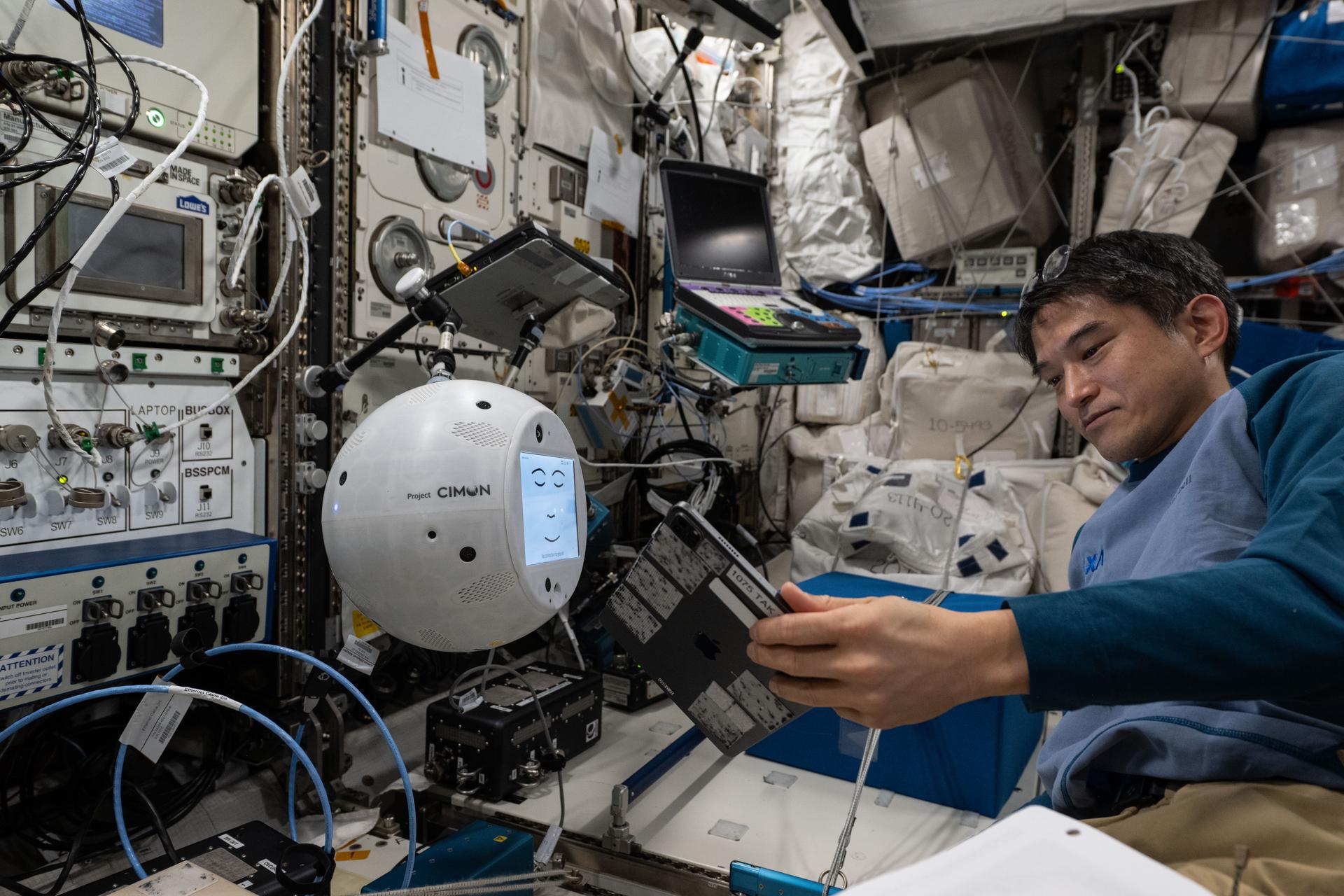
Commander Takuya Onishi of JAXA (Japan Aerospace Exploration Agency) kicked off the new Cell Gravisensing 3 experiment on Wednesday after removing the research gear from Dragon. He set up the hardware inside the Kibo laboratory module and began treating cell samples in Kibo’s Cell Biology Experiment Facility. The investigation will observe the cells’ molecular mechanisms and measure how the cells respond to microgravity. Results may lead to treatments for space-caused muscle and bone issues as well as similar conditions on Earth.

Kim began his day with NASA Flight Engineer Nichole Ayers removing research samples from inside Dragon’s science freezers and loading them inside space station science freezers. Kim then installed the Biofilms experiment containers in a pair of Kubik incubators in the Columbus laboratory module to begin studying antimicrobial surfaces that may keep spacecraft safe. Next, Kim photographed genetically modified tomato plants for a new space agriculture experiment studying if crops can grow without photosynthesis in space.

Ayers later joined NASA astronaut Anne McClain and configured the cables they will use when they go on a spacewalk planned for May 1. The cables will be used to install a modification kit on the station’s port side truss structure preparing it for a new rollout solar array that will be installed on a future date.

Roscosmos cosmonauts Sergey Ryzhikov and Alexey Zubritsky partnered together on Wednesday wearing virtual reality glasses displaying imagery while electrodes measured how their vision, balance, and spatial orientation is adjusting to microgravity. Flight Engineer Kirill Peskov wrapped up a 24-hour session wearing biomedical hardware that measured his heart rate and blood pressure wile he worked and exercised aboard the orbital outpost.

Learn more about station activities by following the space station blog, @space_station and @ISS_Research on X, as well as the ISS Facebook and ISS Instagram accounts.

Get the latest from NASA delivered every week. Subscribe here: https://www.nasa.gov/subscribe

Powered by WPeMatico

Get The Details…

Mark A. Garcia

Dragon Docks to Station Delivering Science, Supplies to Crew

Dragon Docks to Station Delivering Science, Supplies to Crew

The SpaceX Dragon cargo craft with its nose cone open approaches the International Space Station's Harmony module for a docking.
The SpaceX Dragon cargo craft with its nose cone open approaches the International Space Station’s Harmony module for a docking.
NASA

At 8:40 a.m. EDT, the SpaceX Dragon spacecraft docked to the zenith, space-facing port of the International Space Station’s Harmony module. 

The spacecraft carried about 6,700 pounds of scientific investigations and cargo to the orbiting laboratory on SpaceX’s 32nd commercial resupply services mission for NASA. The mission launched at 4:15 a.m. April 21 on a SpaceX Falcon 9 rocket from Launch Complex 39A at NASA’s Kennedy Space Center in Florida.

Learn more about station activities by following the space station blog, @space_station and @ISS_Research on X, as well as the ISS Facebook and ISS Instagram accounts.

Get the latest from NASA delivered every week. Subscribe here: https://www.nasa.gov/subscribe

Powered by WPeMatico

Get The Details…

Mark A. Garcia

SpaceX Dragon Approaching Station with New Science, Supplies

SpaceX Dragon Approaching Station with New Science, Supplies

A white Dragon spacecraft approaches the station against the blackness of space. Its top hatch is open, revealing the docking ring, and jets of propulsion fuel are visible shooting from its top and bottom on the left side. A portion of the station is visible at the bottom left of the image.
Thrusters on the SpaceX Dragon cargo spacecraft fire automatically while adjusting the vehicle’s slow, methodical approach toward the International Space Station on Nov. 11, 2023.
NASA

NASA’s coverage is underway for arrival of the SpaceX Dragon spacecraft to the International Space Station on NASA+. Learn how to watch NASA content through a variety of platforms. 

At approximately 8:38 a.m. EDT, Dragon will dock autonomously to the zenith, space-facing port of the space station’s Harmony module. 

The spacecraft is carrying about 6,700 pounds of scientific investigations and cargo to the orbiting laboratory on SpaceX’s 32nd commercial resupply services mission for NASA. The mission launched at 4:15 a.m. April 21 on a SpaceX Falcon 9 rocket from Launch Complex 39A at NASA’s Kennedy Space Center in Florida. 

Learn more about station activities by following the space station blog, @space_station and @ISS_Research on X, as well as the ISS Facebook and ISS Instagram accounts.

Get the latest from NASA delivered every week. Subscribe here: https://www.nasa.gov/subscribe

Powered by WPeMatico

Get The Details…

Mark A. Garcia

Seven-Member Expedition 73 Crew Awaits Dragon and Preps for Spacewalk

Seven-Member Expedition 73 Crew Awaits Dragon and Preps for Spacewalk

The SpaceX Falcon 9 rocket with the Dragon cargo spacecraft atop lifts off from NASA's Kennedy Space Center to resupply the Expedition 73 crew aboard the International Space Station.
The SpaceX Falcon 9 rocket with the Dragon cargo spacecraft atop lifts off from NASA’s Kennedy Space Center to resupply the Expedition 73 crew aboard the International Space Station.
NASA+

A cargo-packed SpaceX Dragon spacecraft is orbiting Earth today heading toward the International Space Station for a docking on Tuesday. The Expedition 73 crew prepared on Monday for Dragon’s arrival and also reviewed procedures for an upcoming spacewalk.

Approximately 6,700 pounds of new science experiments and supplies are on the way to the orbital lab following Dragon’s launch at 4:15 a.m. EDT on Monday from NASA’s Kennedy Space Center in Florida. Astronauts Jonny Kim of NASA and Takuya Onishi of JAXA (Japan Aerospace Exploration Agency) will be on duty monitoring Dragon when it automatically docks to the station’s space-facing port on the Harmony module at around 8:20 a.m. on Tuesday live on NASA+. The duo joined NASA Flight Engineers Anne McClain and Nichole Ayers on Monday and studied plans to retrieve critical research investigations for activation and crew food packs and more for stowage aboard the orbital outpost.

McClain and Ayers are also getting ready for a May 1 spacewalk when they will prepare the station for a new rollout solar array and relocate an antenna that communicates with commercial vehicles. The NASA pair reviewed on Monday standard safety procedures, their tool configurations, and the spacewalking maneuvers and paths they will use to access their worksites. They also joined Kim and Onishi and called down to mission controllers at the end of their shift and discussed spacewalk operations. Mission managers will provide an overview of the upcoming spacewalk during a news conference from NASA’s Johnson Space Center at 2 p.m. on Thursday.

Kim earlier set up two student-controlled computers for a European Space Agency educational event. One computer outfitted with a camera was pointed out a window toward Earth for students with intermediate coding skills to remotely capture imagery and accurately calculate the space station’s speed. The second computer was targeted to younger students with beginner coding skills and tested their ability to create pixel-art images on the computer’s LED screen.

Onishi, the station’s commander, started his day recording a video for Japanese students to inspire them as they decide on space-related careers. Next, he conducted leak checks on combustion science hardware then set up the Internal Ball Camera-2 for remote operations, both located inside the Kibo laboratory module. Finally, the two-time space station resident worked inside the Destiny laboratory module adjusting science hardware in the Combustion Integrated Rack.

The orbiting lab’s three cosmonauts took a well-deserved break on Monday following two weeks of Soyuz crew swap activities. Roscosmos Flight Engineers Sergey Ryzhikov and Ivan Vagner have adjusted to life in space after arriving at the station with Jonny Kim on April 8 inside the Soyuz MS-27 spacecraft. Flight Engineer Kirill Peskov has been aboard the station since March 15 arriving with the SpaceX Crew-10 mission and helped his cosmonaut crewmates get oriented to microgravity. Kirill and his crewmates also said goodbye to three Expedition 72 crew members, NASA astronaut Don Pettit and Roscosmos cosmonauts Alexey Ovchinin and Ivan Vagner, when they undocked from the station and returned to Earth on April 19 inside the Soyuz MS-26 spacecraft.

Learn more about station activities by following the space station blog, @space_station and @ISS_Research on X, as well as the ISS Facebook and ISS Instagram accounts.

Get the latest from NASA delivered every week. Subscribe here: https://www.nasa.gov/subscribe

Powered by WPeMatico

Get The Details…

Mark A. Garcia
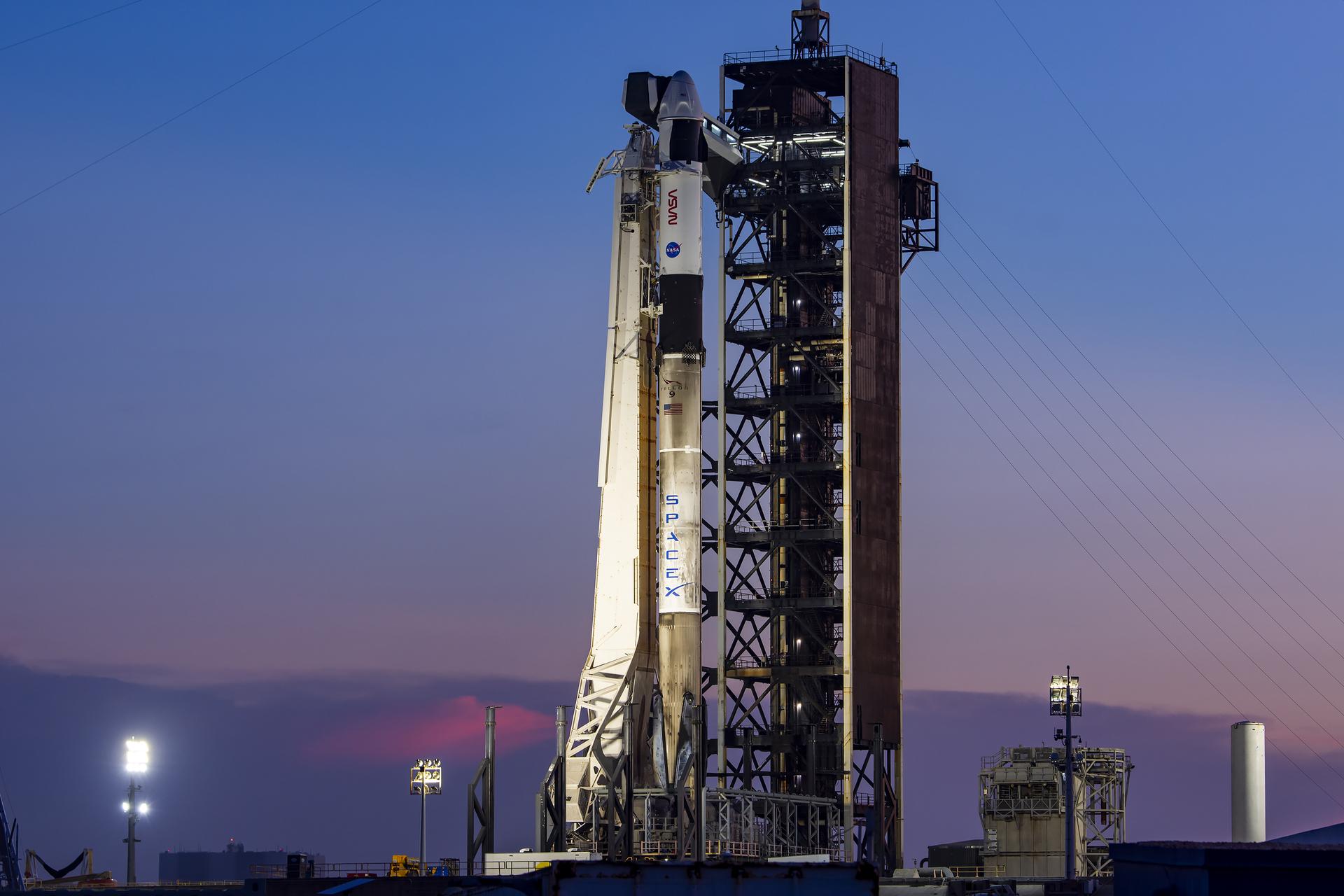
NASA’s SpaceX CRS-32: Dragon Launches at 4:15 a.m. EDT

NASA’s SpaceX CRS-32: Dragon Launches at 4:15 a.m. EDT

The SpaceX Falcon 9 rocket carrying the Dragon spacecraft lifts off from Launch Complex 39A at NASA’s Kennedy Space Center in Florida on Monday, April 21, on the company’s 32nd commercial resupply services mission for the agency to the International Space Station. Liftoff was at 4:15 a.m. EDT.
NASA

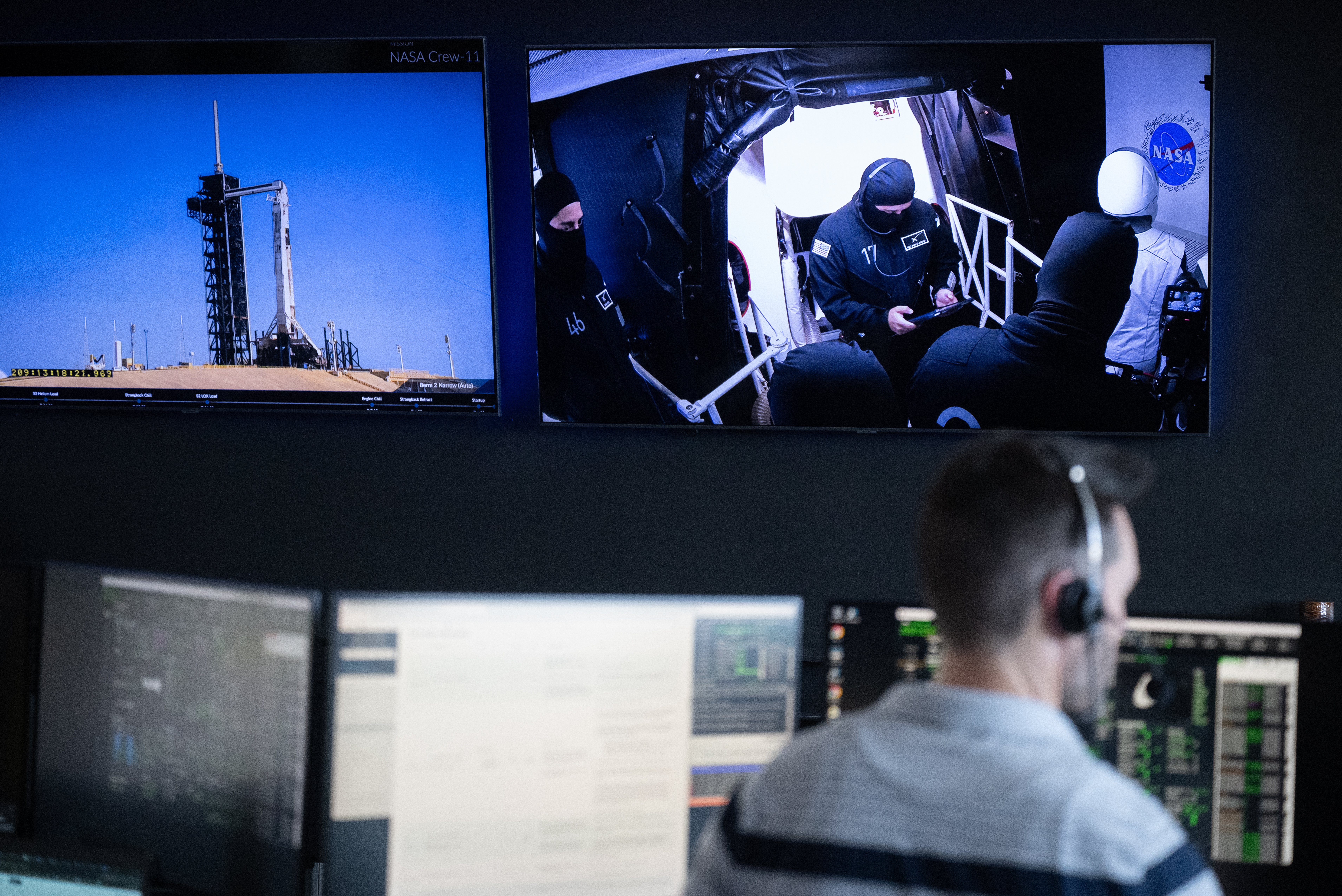
At 4:15 a.m. EDT, about 6,700 pounds of scientific investigations and cargo launched to the International Space Station on the SpaceX Dragon spacecraft for the company’s 32nd commercial resupply services mission for NASA. The spacecraft lifted off on a SpaceX Falcon 9 rocket from Launch Complex 39A at NASA’s Kennedy Space Center in Florida. 
 
About 9 minutes after launch, Dragon will separate from the rocket’s second stage, open its nosecone, and begin a carefully choreographed series of thruster firings to reach the space station. 
 

Dragon will arrive at the orbiting outpost at 8:20 a.m. Tuesday, April 22, and dock autonomously to the zenith, space-facing port of the space station’s Harmony module. 

NASA will provide live coverage of the spacecraft’s arrival beginning at 6:45 a.m. April 22 on NASA+. Learn how to watch NASA content through a variety of platforms. 
Learn more about station activities by following the space station blog, @space_station and @ISS_Research on X as well as the ISS Facebook and ISS Instagram accounts. 

Powered by WPeMatico

Get The Details…

Stephanie Plucinsky