Space Station First: All Docking Ports Fully Occupied, 8 Spacecraft on Orbit

Space Station First: All Docking Ports Fully Occupied, 8 Spacecraft on Orbit

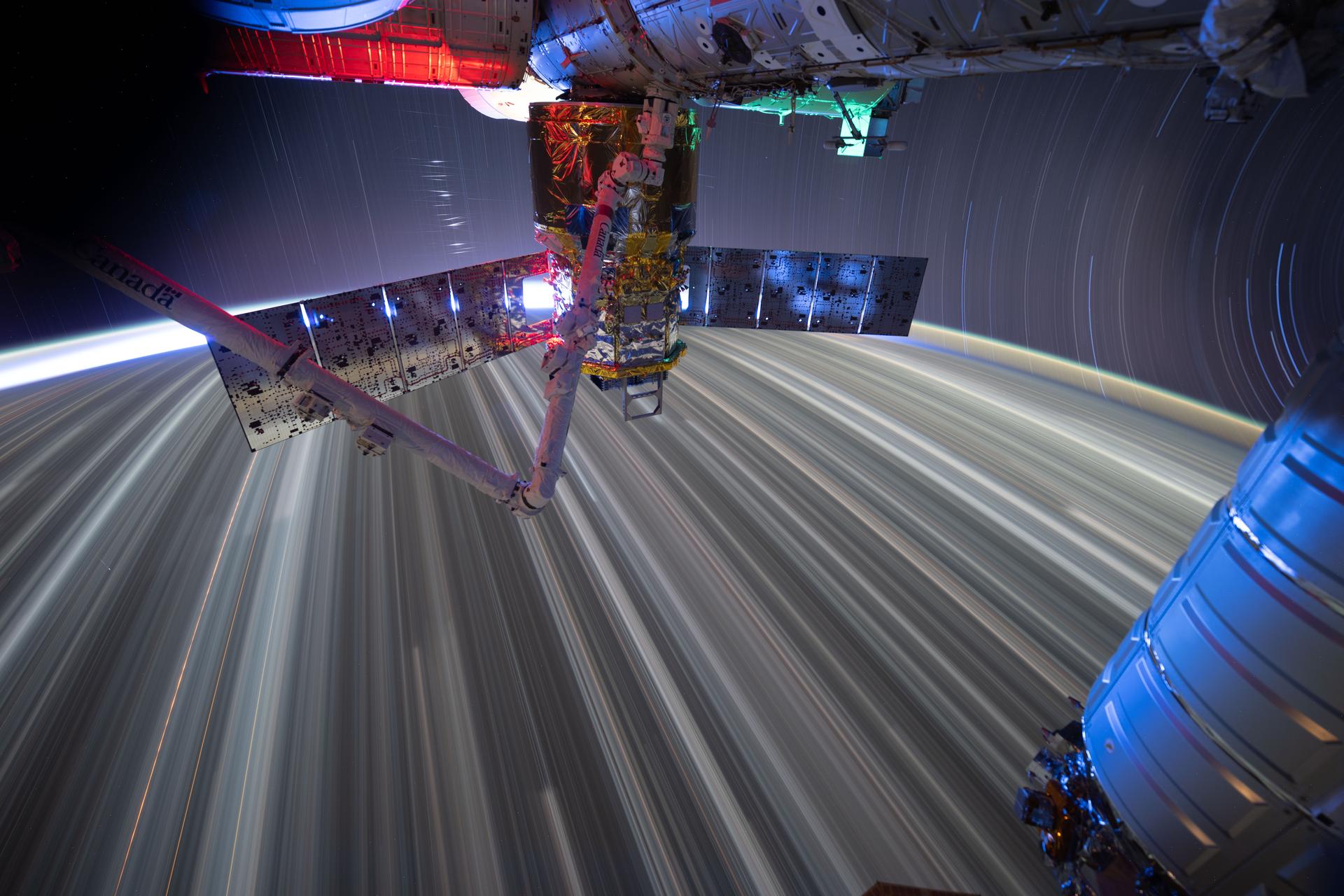
Dec. 1, 2025: International Space Station Configuration. Seven spaceships are parked at the space station including the SpaceX Dragon cargo craft, the SpaceX Crew-11 Dragon spacecraft, JAXA's HTV-X1 cargo craft, Northrop Grumman's Cygnus cargo craft, the Soyuz MS-27 crew ship, and the Progress 92 and 93 resupply ships.
Dec. 1, 2025: International Space Station Configuration. Seven spaceships are parked at the space station including the SpaceX Dragon cargo craft, the SpaceX Crew-11 Dragon spacecraft, JAXA’s HTV-X1 cargo craft, Northrop Grumman’s Cygnus cargo craft, the Soyuz MS-27 crew ship, and the Progress 92 and 93 resupply ships.
NASA

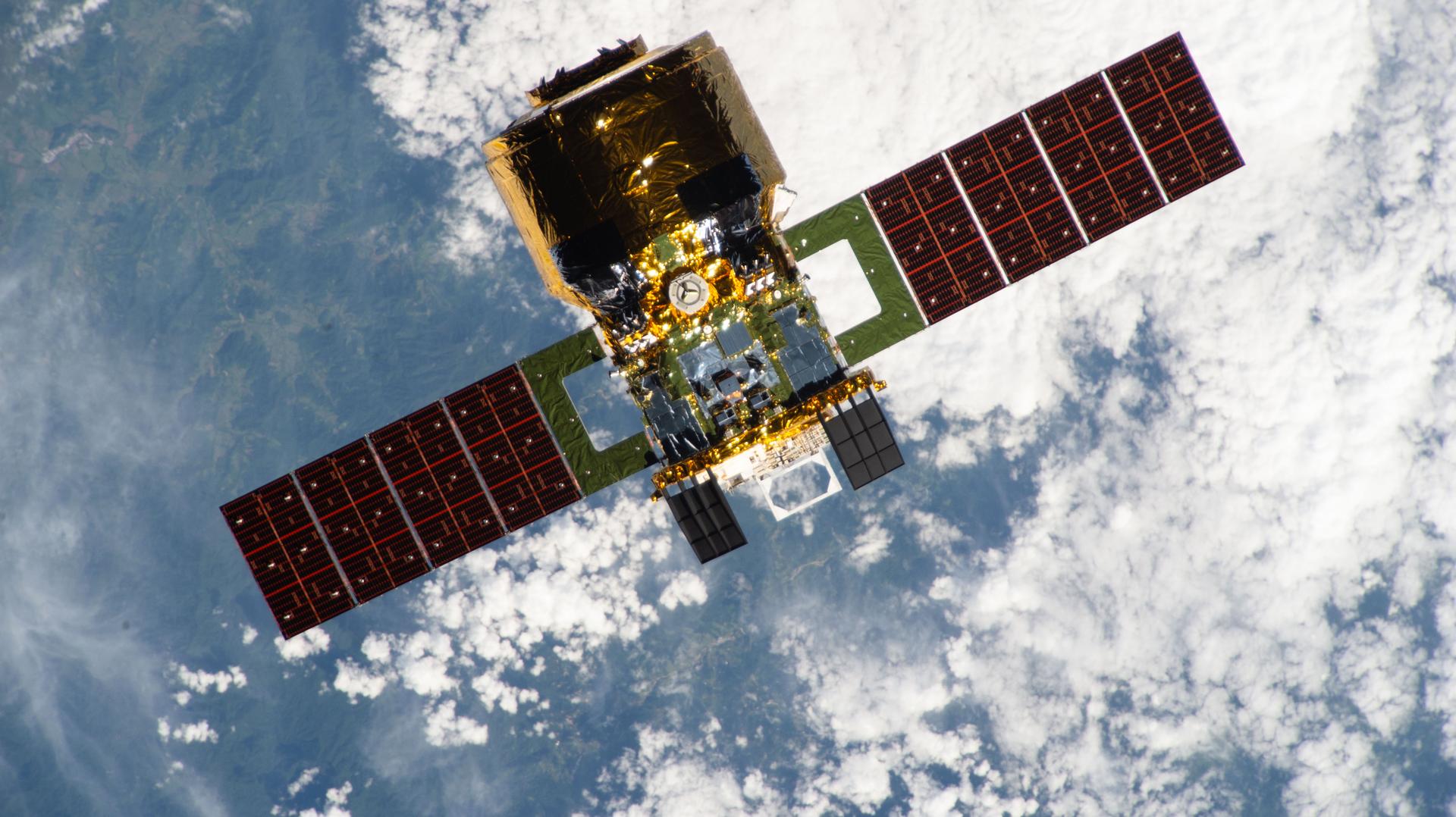
For the first time in International Space Station history, all eight docking ports aboard the orbital outpost are occupied following the reinstallation of Northrop Grumman’s Cygnus XL cargo spacecraft to the Earth-facing port of the station’s Unity module. The eight spacecraft attached to the complex are: two SpaceX Dragons, Cygnus XL, JAXA’s (Japan Aerospace Exploration Agency) HTV-X1, two Roscosmos Soyuz crew spacecraft, and two Progress cargo ships.

This milestone follows the reattachment of the Cygnus XL spacecraft, supporting the Northrop Grumman-23 commercial resupply services mission for NASA, which was removed last week by the robotics officer at the agency’s Mission Control Center in Houston using the space station’s Canadarm2 robotic arm. The Cygnus XL movement was coordinated between NASA, Northrop Grumman, and Roscosmos to provide appropriate clearance for the arriving crewed Soyuz MS-28 spacecraft on Nov. 27.  

Cygnus will remain attached to the orbiting laboratory until no earlier than March 2026, when it is scheduled to safely depart and dispose of up to 11,000 pounds of trash and unneeded cargo when it harmlessly burns up in Earth’s atmosphere.

Meanwhile, the 10-person Expedition 73 crew filled its day with biology and physics research while preparing to split up early next week.

Three new residents are living aboard the space station following the arrival of the Soyuz MS-28 spacecraft on Thursday, Nov. 27, 2025. NASA astronaut Chris Williams and Roscosmos cosmonauts Sergey Kud-Sverchkov and Sergei Mikaev will stay in space until July 2026, conducting advanced space research benefiting humans living on and off Earth. Kud-Sverchkov and Mikaev have already begun studying how living in space affects the microcirculatory system in their hands, fingers, feet, and toes. Williams has been assisting his NASA crewmates with cargo activities.

On Dec. 8, the orbital outpost will return to seven members and become the Expedition 74 crew when NASA astronaut Jonny Kim and Roscosmos cosmonauts Sergey Ryzhikov and Alexey Zubritsky enter the Soyuz MS-27 spacecraft, undock from the Prichal module, and parachute to a landing in Kazakhstan. The trio performed pressure and leak checks on the Sokol launch and entry suits they will wear next week for the ride back to Earth. Ryzhikov continued packing cargo inside the Earth-bound Soyuz, while Zubritsky began handing over his responsibilities to his new Roscosmos crewmates. Kim, Ryzhikov, and Zubritsky are nearing the end of an eight-month space science mission that began on April 8, 2025.

Kim also joined his new crewmate Williams and NASA Flight Engineer Zena Cardman to open the Cygnus XL hatch following its reattachment Monday morning. The crew will continue unpacking some of the several tons of new science and supplies Cygnus XL delivered on Sept. 18.

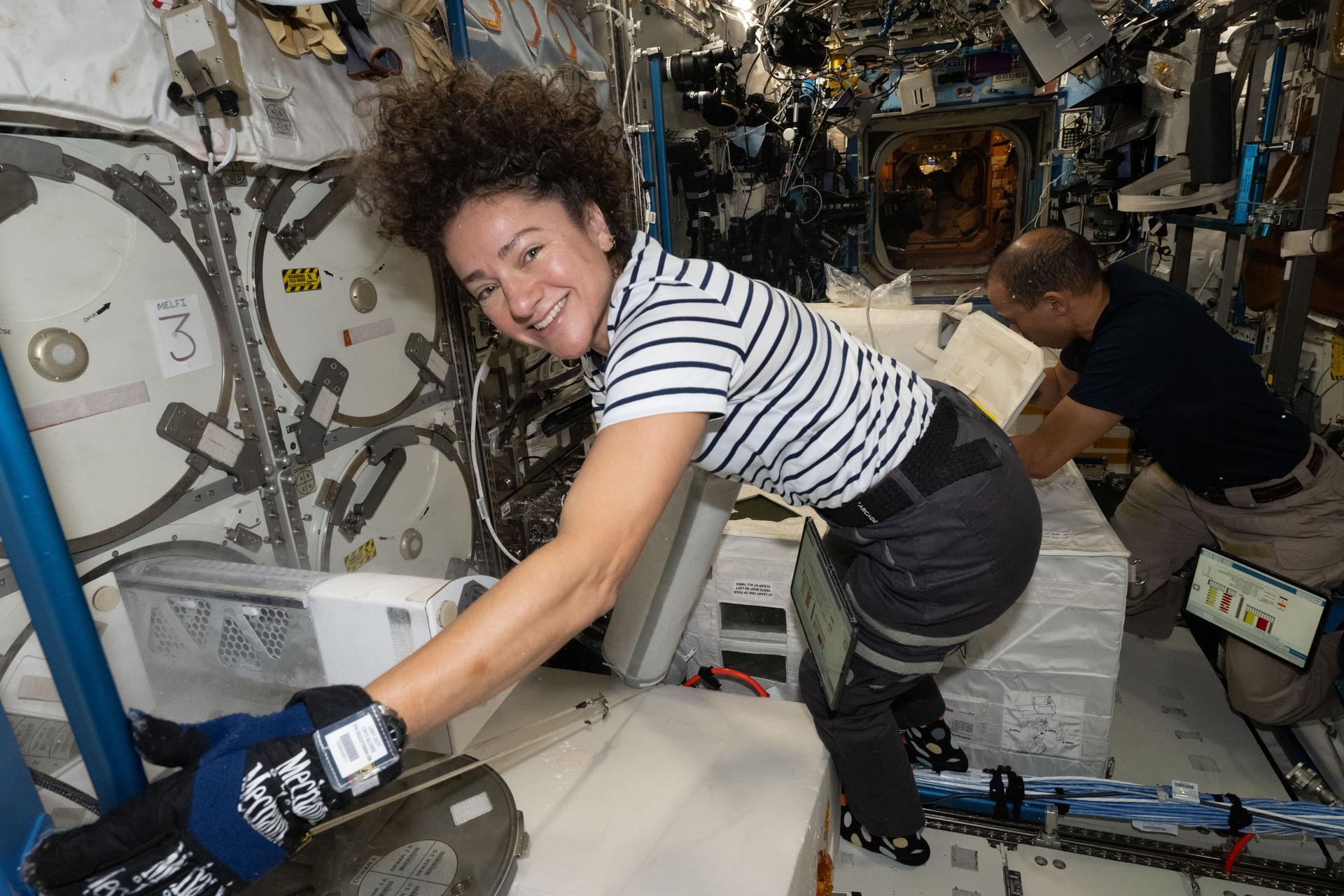
Flight Engineers Mike Fincke and Kimiya Yui spent their day focusing on space research to learn about phenomena that can only be studied in the weightless environment of microgravity. Fincke, from NASA, first swapped computer hardware supporting a physics experiment that is studying ways to preserve cryogenic fluids in spacecraft fuel tanks. Next, he configured the new NanoRacks Thailand Liquid Crystals experiment, which will observe changes in the formation of flat liquid crystal films in microgravity. Yui, from JAXA, studied how the brain regulates its blood flow. He measured both his cerebral artery blood flow and blood pressure to help doctors understand potential space-related issues.

Flight Engineer Oleg Platonov spent Monday collecting, processing, and photographing microbe samples gathered throughout the station’s Roscosmos segment for analysis. He also transferred data highlighting the vibrations the station experiences while orbiting Earth to a laptop computer.

Learn more about station activities by following the space station blog, @space_station on X, as well as the ISS Facebook and ISS Instagram accounts.Get the latest from NASA delivered every week. Subscribe here.

Powered by WPeMatico

Get The Details…

Mark A. Garcia

Hatches Open, Station Crew Expands to 10

Hatches Open, Station Crew Expands to 10

The newly-expanded Expedition 73 crew. In the front row (from left) are the newest crew members Chris Williams from NASA and Roscosmos cosmonauts Sergey Kud-Sverchkov and Sergei Mikaev. In the back are, NASA astronaut Mike Fincke, Roscosmos cosmonaut Sergey Ryzhikov, NASA astronauts Jonny Kim and Zena Cardman, Roscosmos cosmonaut Alexey Zubritsky, JAXA (Japan Aerospace Exploration Agency) astronaut Kimiya Yui, and Roscosmos cosmonaut Oleg Platonov.
NASA

Expedition 73 wrapped up the work week At 10:16 a.m. EST, the hatch opened between the International Space Station and the Soyuz MS-28 spacecraft. 

The spacecraft arrived at the orbiting laboratory’s Rassvet module at 7:34 a.m., after launching at 4:27 a.m. (2:27 p.m. Baikonur time) from the Baikonur Cosmodrome in Kazakhstan with NASA astronaut Chris Williams and Roscosmos cosmonauts Sergey Kud-Sverchkov and Sergei Mikaev aboard. The trio will spend approximately eight months aboard the space station before returning to Earth in summer 2026.

Learn more about station activities by following the space station blog, @space_station on X, as well as the ISS Facebook and ISS Instagram accounts.

Get the latest from NASA delivered every week. Subscribe here.

Powered by WPeMatico

Get The Details…

Mark A. Garcia

Station Waits to Welcome to New Crew; Hatches Open Soon

Station Waits to Welcome to New Crew; Hatches Open Soon

Nov. 27, 2025: International Space Station Configuration. Seven spaceships are parked at the space station including the SpaceX Dragon cargo craft, the SpaceX Crew-11 Dragon spacecraft, JAXA's HTV-X1 cargo craft, the Soyuz MS-27 crew ship, and the Progress 92 and 93 resupply ships. Northrop Grumman's Cygnus cargo craft was temporarily uninstalled from the Harmony module with the Canadarm2 robotic arm until Dec. 1.
Nov. 27, 2025: International Space Station Configuration. Seven spaceships are parked at the space station including the SpaceX Dragon cargo craft, the SpaceX Crew-11 Dragon spacecraft, JAXA’s HTV-X1 cargo craft, the Soyuz MS-27 crew ship, and the Progress 92 and 93 resupply ships. Northrop Grumman’s Cygnus cargo craft was temporarily uninstalled from the Harmony module with the Canadarm2 robotic arm until Dec. 1.
NASA

NASA’s live hatch opening coverage is underway on NASA+, Amazon Prime, YouTube, and more. Hatch opening is scheduled to begin at 10:10 a.m. EST. 

Learn how to watch NASA content through a variety of platforms, including social media. 

The Soyuz MS-28 spacecraft arrived at the orbiting laboratory’s Rassvet module at 7:34 a.m., after launching from the Baikonur Cosmodrome in Kazakhstan at 4:27 a.m. (2:27 p.m. Baikonur time) with NASA astronaut Chris Williams and Roscosmos cosmonauts Sergey Kud-Sverchkov and Sergei Mikaev. The trio will spend approximately eight months aboard the orbital laboratory before returning to Earth in summer 2026. 

Learn more about station activities by following the space station blog, @space_station on X, as well as the ISS Facebook and ISS Instagram accounts.

Get the latest from NASA delivered every week. Subscribe here.

Powered by WPeMatico

Get The Details…

Mark A. Garcia

Three New Crew Members Aboard Soyuz Dock to Station

Three New Crew Members Aboard Soyuz Dock to Station

The Soyuz MS-28 spacecraft with three crewmates from NASA and Roscosmos aboard approaches the International Space Station above the Mediterranean Sea.
NASA

At 7:34 a.m. EST, the Soyuz MS-28 spacecraft docked with the International Space Station’s Rassvet module. NASA astronaut Chris Williams and Roscosmos cosmonauts Sergey Kud-Sverchkov and Sergei Mikaev launched at 4:27 a.m. (2:27 p.m. Baikonur time) from the Baikonur Cosmodrome in Kazakhstan. 

Hatch opening is scheduled for 10:10 a.m. NASA’s live hatch-opening coverage will begin at 9:50 a.m. on NASA+, Amazon Prime, YouTube, and more. Learn how to watch NASA content through a variety of platforms, including social media.

Once aboard, the trio will join Expedition 73, including NASA astronauts Mike Fincke, Zena Cardman, and Jonny Kim, JAXA (Japan Aerospace Exploration Agency) astronaut Kimiya Yui, and Roscosmos cosmonauts Sergei Ryzhikov, Alexey Zubritsky, and Oleg Platonov. The newly arrived crew members will spend approximately eight months aboard the orbital laboratory, returning to Earth in summer 2026.

Learn more about station activities by following the space station blog, @space_station on X, as well as the ISS Facebook and ISS Instagram accounts.

Get the latest from NASA delivered every week. Subscribe here.

Powered by WPeMatico

Get The Details…

Mark A. Garcia

Three Crewmates Aboard Soyuz Approaching Station for Docking

Three Crewmates Aboard Soyuz Approaching Station for Docking

The Soyuz MS-27 spacecraft approaches the International Space Station 262 miles above Hungary on the European continent. The Soyuz spacecraft would dock shortly afterward to the Prichal module bringing NASA astronaut Jonny Kim and Roscosmos cosmonauts Sergey Ryzhikov and Alexey Zubritsky to the orbital outpost.
The Soyuz MS-27 spacecraft approaches the International Space Station above the European continent on April 8, 2025.
NASA

NASA’s live coverage of rendezvous and docking is now underway on NASA+, Amazon Prime, YouTube, and more. Learn how to watch NASA content through a variety of platforms, including social media. 

The Soyuz MS-28 spacecraft will automatically dock at approximately 7:38 a.m. EST today with the International Space Station’s Rassvet module. It launched from the Baikonur Cosmodrome in Kazakhstan at 4:27 a.m. (2:27 p.m. Baikonur time) with NASA astronaut Chris Williams and Roscosmos cosmonauts Sergey Kud-Sverchkov and Sergei Mikaev aboard.  

Learn more about station activities by following the space station blog, @space_station on X, as well as the ISS Facebook and ISS Instagram accounts.

Get the latest from NASA delivered every week. Subscribe here.

Powered by WPeMatico

Get The Details…

Mark A. Garcia