Cygnus Resupply Ship Nears Launch as Next Spacewalks Booked

Cygnus Resupply Ship Nears Launch as Next Spacewalks Booked

The Cygnus space freighter is pictured launching atop an Antares rocket from Virginia to the space station on April 17, 2019.
The Cygnus space freighter is pictured launching atop an Antares rocket from Virginia to the space station on April 17, 2019. Credit: NASA/Bill Ingalls

The Expedition 64 crew is making final preparations today for the arrival of a U.S. resupply ship while keeping up the momentum of space research. The next two spacewalks also have been scheduled to continue hardware installations and upgrades at the International Space Station.

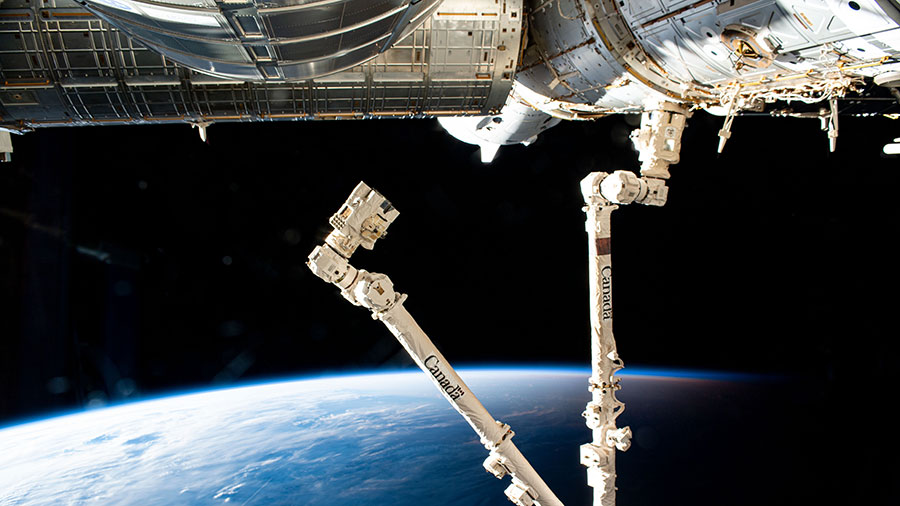
Northrop Grumman’s Cygnus space freighter is counting down to its launch from Virginia on Saturday at 12:36 p.m. EST to the orbiting lab. It will rendezvous with the station on Monday when Flight Engineer Soichi Noguchi of JAXA (Japan Aerospace Exploration Agency)  commands the Canadarm2 robotic arm to capture Cygnus at about 4:40 a.m. NASA Flight Engineer Michael Hopkins will monitor Cygnus’ approach and rendezvous as it reaches a point about 10 meters from the station.

The duo practiced a variety of robotics maneuvers on a computer today to capture Cygnus. The training simulates different approach scenarios for the U.S. space freighter as the astronauts familiarize themselves with the necessary robotic capture techniques.

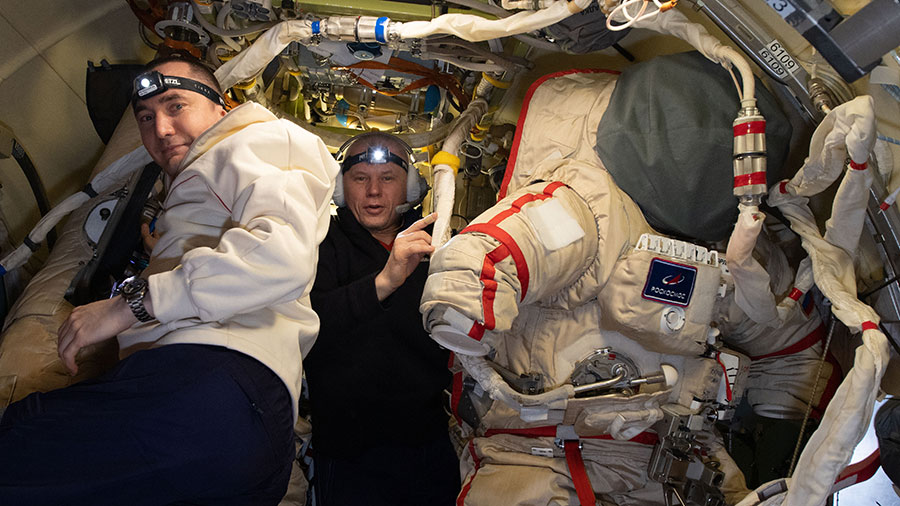
Two more spacewalks are planned at the orbiting lab on Feb. 28 and March 5. On the first spacewalk, NASA astronauts Kate Rubins and Victor Glover will set up the station for upcoming solar array upgrades. For the second spacewalk, Rubins will be joined by Noguchi for maintenance on coolant and communication systems.

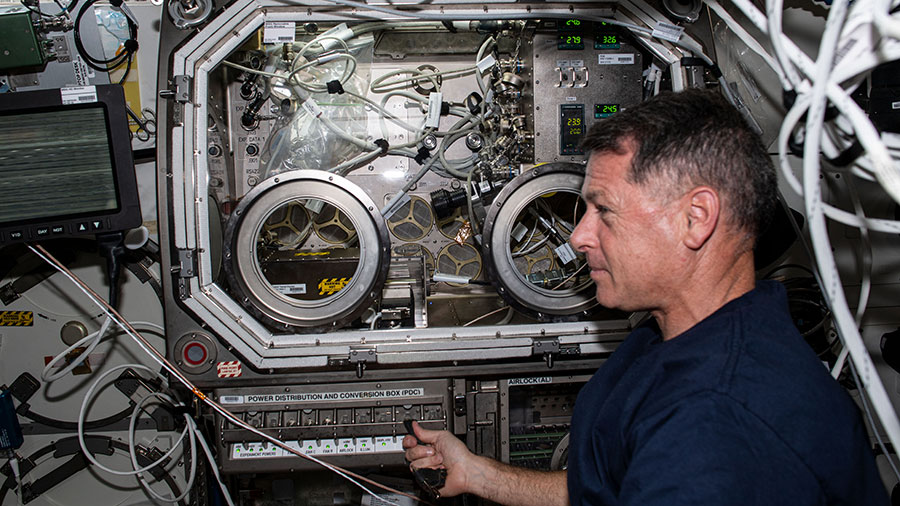
Today’s science work on the station encompassed physics, biology and human research. Flight Engineer Shannon Walker set up hardware in the Microgravity Science Glovebox to explore how liquids and gases behave together in space for the Packed Bed Reactor Experiment. Rubins continued swabbing station surfaces to collect microbe samples for DNA sequencing and analysis. Glover joined Noguchi wearing virtual reality helmets for a study researching how time perception and cognition is affected in weightlessness.

In the station’s Russian segment, Commander Sergey Ryzhikov and Flight Engineer Sergey Kud-Sverchkov serviced an array of life support systems and electronics gear. Cargo transfers from the ISS Progress 77 cargo craft are also ongoing.

Get The Details…

Mark Garcia

Powered by WPeMatico

Crew Gearing Up for Cygnus Capture and Cargo Operations

Crew Gearing Up for Cygnus Capture and Cargo Operations

Northrop Grumman's Cygnus space freighter sits atop the Antares rocket at the Wallops Flight Facility launch pad in Virginia. Credit: NASA/Patrick Black
Northrop Grumman’s Cygnus space freighter sits atop the Antares rocket at the Wallops Flight Facility launch pad in Virginia. Credit: NASA/Patrick Black

The Expedition 64 crew is getting ready for next week’s arrival of the Northrop Grumman Cygnus resupply ship following its launch on Saturday. The orbital residents are also maintaining science operations and unpacking a new Russian spacecraft at the International Space Station.

The Antares rocket with the Cygnus space freighter atop rolled out to its launch pad on Tuesday at Wallops Flight Facility in Virginia. The spacecraft will blast off on Saturday at 12:36 p.m. carrying about 8,000 pounds of science experiments, station hardware and crew supplies for the orbital lab. NASA TV will broadcast the launch activities live beginning at 12 p.m.

Flight Engineers Soichi Noguchi and Michael Hopkins will be on duty Monday morning when Cygnus arrives for its approach and capture. Noguchi of JAXA (Japan Aerospace Exploration Agency) will command the Canadarm2 robotic arm to capture Cygnus at about 4:40 a.m. Hopkins of NASA will monitor Cygnus’ approach and rendezvous as it reaches a point about 10 meters from the station.

The duo was joined Thursday afternoon by NASA astronauts Kate Rubins, Shannon Walker and Victor Glover to review the upcoming Cygnus cargo operations. Afterward, the quintet called down to mission controllers to discuss unpacking and activating some of the critical science experiments arriving on the U.S. space freighter.

Combustion research and eye checks were also on the schedule aboard the station on Thursday. Walker and Hopkins partnered up on a study observing how flames spread in microgravity. Rubins took charge of eye exams and checked the eyes of Glover and Noguchi using optical coherence tomography.

Russia’s new cargo craft, the ISS Progress 77, is being unpacked today by Commander Sergey Ryzhikov and Flight Engineer Sergey Kud-Sverchkov. The pair also serviced a variety of Russian electronics and life support gear throughout Thursday.

Get The Details…

Mark Garcia

Powered by WPeMatico

Russian Cargo Craft Arrives, U.S. Space Freighter Launches Saturday

Russian Cargo Craft Arrives, U.S. Space Freighter Launches Saturday

The International Space Station
The International Space Station is pictured from space shuttle Endeavour after its undocking in February 2010.

Russia’s ISS Progress 77 resupply ship delivered over a ton of nitrogen, propellant and oxygen early Wednesday morning to the International Space Station. Northrop Grumman’s Cygnus space freighter is up next as it counts down to this weekend’s launch from Virginia to the orbiting lab.

The Progress 77 docked to the Pirs docking compartment on Wednesday at 1:27 a.m. EST following a two-day trip that began with a launch from the Baikonur Cosmodrome in Kazakhstan. Commander Sergey Ryzhikov remotely guided the Progress 77 to its docking port with the TORU (tele-robotic rendezvous system) after the vehicle automatically switched over from the Kurs automated rendezvous system.

Ryzhikov and Flight Engineer Sergey Kud-Sverchkov then began a series of hours-long leak and pressure checks with the Progress 77. The duo finally opened the hatch to the new Russian cargo craft to begin transferring its cargo. Progress 77 will stay at the station for about 5 months when it will finally detach Pirs from the Zvezda service module’s Earth-facing port opening it up for the new Nauka multipurpose laboratory module.

Northrop Grumman is readying its next Cygnus cargo mission to launch this Saturday at 12:36 p.m. atop the Antares rocket from NASA’s Wallops Flight Facility in Virginia. Cygnus will be packed with about 8,000 pounds of science experiments, station hardware and crew supplies destined for the Expedition 64 crew.

Cygnus will orbit the Earth for nearly two days before its rendezvous with the station on Feb. 22. JAXA (Japan Aerospace Exploration Agency) astronaut Soichi Noguchi will be on robotics duty early Monday and command the Canadarm2 robotic arm to capture Cygnus at about 4:40 a.m. NASA Flight Engineer Michael Hopkins will back him up monitoring Cygnus’ approach and rendezvous.

Get The Details…

Mark Garcia

Powered by WPeMatico

Russian Progress Cargo Craft Docks to Station

Russian Progress Cargo Craft Docks to Station

Feb. 17, 2021: International Space Station Configuration. Four spaceships are docked at the space station including the SpaceX Crew Dragon and Russia's Progress 75 and 77 resupply ships and the Soyuz MS-17 crew ship.
Feb. 17, 2021: International Space Station Configuration. Four spaceships are docked at the space station including the SpaceX Crew Dragon and Russia’s Progress 75 and 77 resupply ships and the Soyuz MS-17 crew ship.

An uncrewed Russian Progress 77 spacecraft arrived at the International Space Station’s Pirs docking compartment on the station’s Russian segment at 1:27 a.m. EST, two days after lifting off from the Baikonur Cosmodrome in Kazakhstan Sunday, Feb. 14 at 11:45 p.m. EST (9:45 a.m. Monday, Feb. 15, Baikonur time). The spacecraft were flying over Argentina at the time of docking.

The spacecraft is carrying a little more than one ton of nitrogen, water and propellant to the station and the Expedition 64 crew members who are living and working in space to advance scientific knowledge, demonstrate new technologies, and make research breakthroughs not possible on Earth.

Progress 77 is scheduled to remain docked to the space station’s Russian segment until later this year. Instead of undocking from Pirs, this time Progress will stay connected and detach Pirs from the Earth-facing side of the station’s Russian segment, where it has spent nearly 20 years in service as both a docking port and spacewalk airlock.

Progress then will fire its engines to initiate a destructive entry into Earth’s atmosphere for both the spacecraft and docking compartment. Pirs’ departure from the space station is scheduled to take place just days after the launch of the “Nauka” Multipurpose Laboratory Module on a Proton rocket from Baikonur. The multifunctional docking port and research facility will automatically dock to the port vacated by Pirs.

Learn more about station activities by following the space station blog, @space_station and @ISS_Research on Twitter as well as the ISS Facebook and ISS Instagram accounts.

Get The Details…

Mark Garcia

Powered by WPeMatico

Russian Cargo Craft In Orbit to Station

Russian Cargo Craft In Orbit to Station

Russia’s Progress 77 cargo rocket launched from its launch pad at the Baikonur Cosmodrome in Kazakhstan on Feb 14., 2021.

An uncrewed Russian Progress 77 carrying just over one ton of nitrogen, water and propellant to the International Space Station launched from the Baikonur Cosmodrome in Kazakhstan at 11:45 p.m. EST (9:45 a.m. Monday, Feb. 15, Baikonur time).

The resupply ship reached preliminary orbit and deployed its solar arrays and navigational antennas as planned for a two-day rendezvous on its way to meet up with the orbiting laboratory and its Expedition 64 crew members.

After making 33 orbits of Earth on its journey, the spacecraft will automatically dock to the station’s Pirs docking compartment on the Russian segment at 1:20 a.m. Wednesday, Feb. 17. Live coverage on NASA TV of rendezvous and docking will begin at 12:30 a.m.

Learn more about station activities by following the space station blog, @space_station and @ISS_Research on Twitter as well as the ISS Facebook and ISS Instagram accounts.

Get The Details…

Norah Moran

Powered by WPeMatico