Biology on Station Ahead of Spacewalk, Cargo Dragon Mission

Biology on Station Ahead of Spacewalk, Cargo Dragon Mission

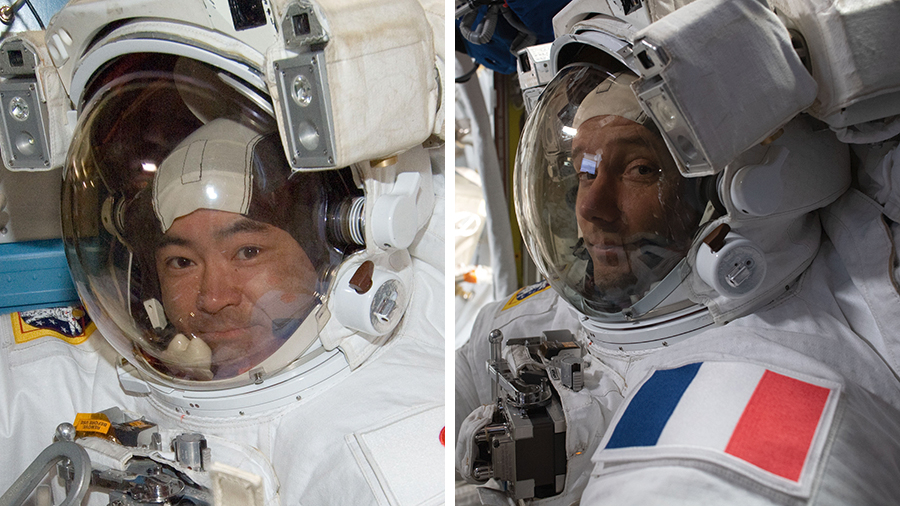
Expedition 65 astronauts Shane Kimbrough and Akihiko Hoshide perform maintenance on a pair of U.S. spacesuits.

Human research and space botany kept the Expedition 65 crew busy today. The International Space Station residents also stayed focused on next week’s spacewalk and packed a U.S. cargo craft.

Flight Engineers Megan McArthur and Thomas Pesquet worked throughout Thursday scanning their leg, foot, arm, neck and lower back muscles with an ultrasound device. The duo performed the scans before and after working out on the advanced resistive exercise device. The long-running Myotones experiment, ongoing since 2011, measures how space affects muscle tone, stiffness and elasticity.

Commander Akihiko Hoshide installed an incubator inside Japan’s Kibo laboratory module for upcoming research for the Kidney Cell-02 study. The biology study could lead to improved treatments for kidney stones and osteoporosis for humans living on and off the Earth. The three-time station visitor then joined NASA astronauts Shane Kimbrough and Mark Vande Hei packing the U.S. Cygnus space freighter ahead of its departure at the end of June.

Vande Hei and Kimbrough also took turns during the day contributing to a space agriculture study that started in October of last year. The Plant Water Management explores hydroponics in microgravity and may also improve watering systems on Earth.

Roscosmos Flight Engineers Oleg Novitskiy and Pyotr Dubrov partnered together Thursday morning pedaling on an exercise bike to evaluate their cardiovascular function. The duo then spent the rest of the day configuring Orlan spacesuits for a spacewalk scheduled on June 2 to service Russian hardware and install science experiments.

The very next day SpaceX will launch its upgraded Cargo Dragon vehicle from Kennedy Space Center to the station at 1:29 p.m. EDT. It will automatically dock on June 5 at 5 a.m. to the Harmony module’s space-facing international docking adapter carrying about 7,300 pounds of science, supplies and hardware. Dragon is also carrying the first set of new solar arrays that will be installed on upcoming spacewalk to augment the orbital lab’s power system.

Get The Details…

Mark Garcia

Powered by WPeMatico

Hydroponics, Virtual Reality on Station Impacting Future Missions

Hydroponics, Virtual Reality on Station Impacting Future Missions

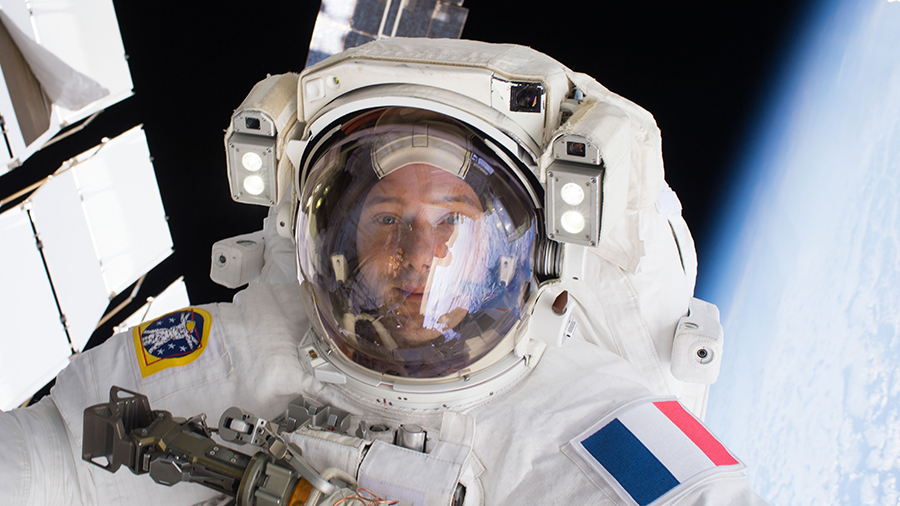
An orbital twilight fades over the city lights of Europe as the space station soared above southern France.

Botany and human research were the main research themes aboard the International Space Station today. Meanwhile, the Expedition 65 crew is also staying focused on spacewalk preparations and orbital lab maintenance.

Space agriculture is key to sustaining human spaceflight as NASA and its international partners plan future missions to the Moon, Mars and beyond. Today, Flight Engineers Mark Vande Hei and Thomas Pesquet joined together for the Plant Water Management study to learn how to operate hydroponics in microgravity. The duo set up and configured hardware for the botany study that may also improve watering systems on Earth.

Pesquet also partnered with NASA Flight Engineer Megan McArthur for an investigation observing how microgravity affects an astronaut’s ability to control robotics and spacecraft. The Pilote experiment uses virtual reality gear and tests a crew member’s aptitude when maneuvering a computer-generated robotic arm toward a target. Results may influence the design of workstations and interfaces for future spacecraft and space habitats.

Blood sample collections started the day for NASA Flight Engineer Shane Kimbrough and Commander Akihiko Hoshide. Kimbrough, with assistance from Vande Hei, then spent the rest of Wednesday continuing to configure the station’s newest toilet inside the Tranquility module. Hoshide set up the Astrobee robotic assistants for an upcoming student competition then swapped samples for a semiconductor crystal physics study.

Cosmonauts Oleg Novitskiy and Pyotr Dubrov are getting ready for their first career spacewalks set to begin June 2 at 1:20 a.m. EDT. The duo continued readying their spacewalking tools, communications gear and Orlan spacesuits today. The pair will exit the Poisk module and spend about six-and-a-half hours servicing Russian hardware and installing science experiments.

Get The Details…

Mark Garcia

Powered by WPeMatico

Ultrasound Scans, Emergency Drill amid Spacewalk Preps Today

Ultrasound Scans, Emergency Drill amid Spacewalk Preps Today

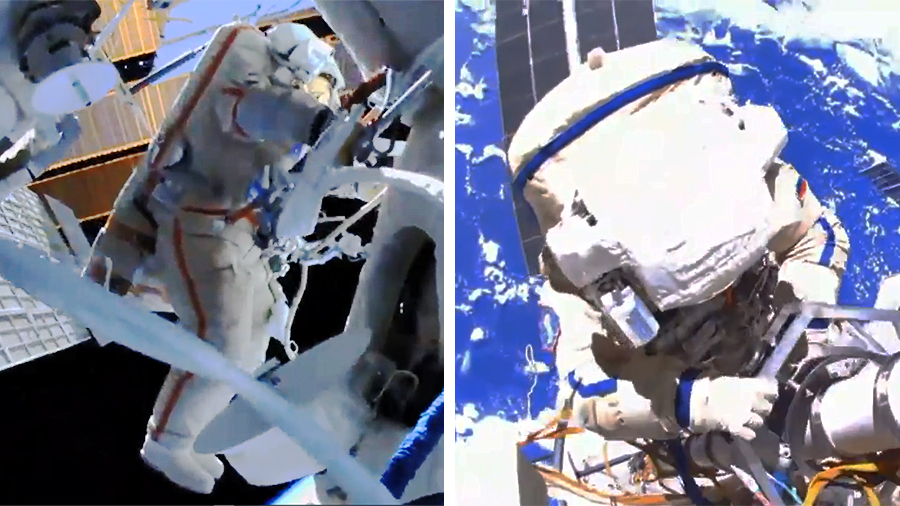
Expedition 65 astronauts (clockwise from bottom) Akihiko Hoshide, Shane Kimbrough and Thomas Pesquet are pictured inside the SpaceX Crew Dragon Resilience.

Tuesday aboard the International Space Station was packed with human research activities helping doctors understand how the Expedition 65 crew is adapting to microgravity. Meanwhile, preparations are ramping up for a Russian spacewalk scheduled for next week.

Four astronauts took turns during the afternoon using the Ultrasound 2 device for artery scans. NASA Flight Engineer Megan McArthur kicked off the biomedical investigation today and scanned Commander Akihiko Hoshide’s neck, clavicle, shoulder and leg arteries in the Columbus laboratory module. Next up, astronauts Thomas Pesquet and Shane Kimbrough took turns as they participated in the ultrasound scanning activities.

McArthur started her day swapping fuel bottles inside the Combustion Integrated Rack before readying a science freezer for a new animal-microbe study due to be delivered on the next SpaceX Cargo Dragon mission. Kimbrough also spent some time setting up Plant Water Management hardware inside the Harmony module for ongoing botany research.

The Celestial Immunity study is still under way aboard the orbital lab as researchers compare donor cells recently launched to the station with those harvested on Earth. NASA Flight Engineer Mark Vande Hei serviced the cell samples inside the Life Science Glovebox possibly helping scientists develop new vaccines and drugs for diseases on Earth.

Four members of the Expedition 65 crew, who rode to the station aboard the Space Crew Dragon Endeavour, also joined up for an emergency drill before lunch today. Kimbrough, McArthur, Pesquet and Hoshide practiced cardiopulmonary resuscitation (CPR), reviewed medical hardware, and rehearsed communication and coordination procedures.

The sixth spacewalk of the year is set for June 2. Cosmonauts Oleg Novitskiy and Pyotr Dubrov will open the hatch to the Poisk module at 1:20 a.m. EDT  and exit into the vacuum of space wearing their Orlan spacesuits. NASA TV will begin its live coverage at 1 a.m. of the six-and-a-half hour spacewalk for Russian hardware maintenance and science experiment installations.

Get The Details…

Mark Garcia

Powered by WPeMatico

Crew Starts Week on Biology, Plumbing and Spacewalk Preps

Crew Starts Week on Biology, Plumbing and Spacewalk Preps

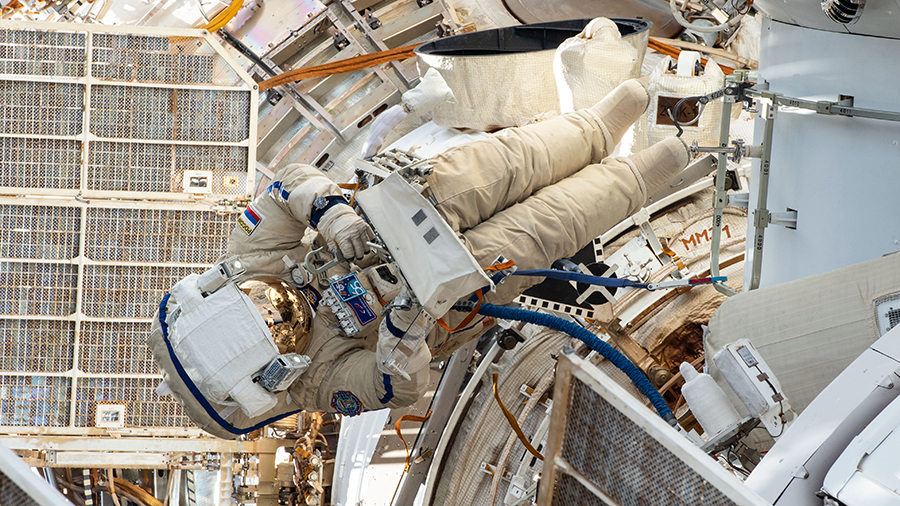
Cosmonauts (from left) Pyotr Dubrov and Oleg Novitskiy prepare Russian Orlan spacesuits inside the Poisk mini-research module for an upcoming spacewalk.

The Expedition 65 crew started the workweek on space biology and orbital plumbing aboard the International Space Station. Meanwhile, two cosmonauts are also gearing up for their first career spacewalks set to begin next week.

The immune system, protein crystals and cell biology dominated the science schedule aboard the orbital lab today. The space life science studies help scientists understand how microgravity affects a multitude of organisms while offering insights into treatments for humans on and off the Earth.

NASA Flight Engineer Megan McArthur once again treated donor samples inside the Life Science Glovebox for the Celestial Immunity study. Afterward, she inserted those samples into a science freezer for later analysis on the station and back on Earth. Observations may help doctors improve vaccines and treatments for diseases on Earth.

Flight Engineer Thomas Pesquet of ESA (European Space Agency) serviced protein crystal samples then placed them into an incubator for the Real-Time Protein Crystal Growth experiment. Results have implications for biotechnology and pharmaceutical companies and may advance the commercialization of space.

Station Commander Akihiko Hoshide opened up the Cell Biology Experiment Facility (CBEF) this morning and temporarily removed a centrifuge to check the research device’s connections. Located in the Kibo laboratory module, the CBEF is an incubator with an artificial gravity generator.

NASA astronauts Shane Kimbrough and Mark Vande Hei partnered together on Monday to assemble and install a brand new space toilet in the Tranquility module. The station’s newest bathroom was delivered in February aboard the Cygnus space freighter from Northrop Grumman.

The next spacewalk for maintenance at the orbital lab is scheduled for June 2. Roscosmos Flight Engineers Oleg Novitskiy and Pyotr Dubrov will open the hatch to the Poisk module at 1:20 a.m. EDT  and exit into the vacuum of space wearing their Orlan spacesuits. The duo will then spend about six-and-a-half hours working on Russian hardware and installing science experiments.

Get The Details…

Mark Garcia

Powered by WPeMatico

Water Processor Assembly Restored, Spacewalk Preps, Immunity Research Round “Magical” Day on Station

Water Processor Assembly Restored, Spacewalk Preps, Immunity Research Round “Magical” Day on Station

NASA astronaut Shane Kimbrough sets up hardware for the SUBSA physics investigation in the Microgravity Science Glovebox.
NASA astronaut Shane Kimbrough sets up hardware for the SUBSA physics investigation inside the Microgravity Science Glovebox.

The station’s Water Processing Assembly (WPA), located in the Tranquility module, was reactivated today and is operating at full functionality after crew members successfully completed repair work throughout the week. The WPA was powered off last week due to a suspected leak.

This hardware is used to recycle water from multiple sources into clean, drinkable water for crew members aboard the International Space Station. The space station serves a vital role in testing and maturing life support technologies that will be required for future missions to the Moon and Mars. Repairs provide invaluable data to engineers refining these systems for use in future spacecraft and missions.

The Expedition 65 crew wrapped up its workweek continuing to research the immune system and preparing for next month’s spacewalk. There was also a bit of magic on the orbital lab today to illustrate the challenges of living in space.

NASA Flight Engineers Mark Vande Hei and Megan McArthur were back on the Celestial Immunity study during Friday afternoon. The duo took turns working in the Life Sciences Glovebox where the experiment takes place. The experiment may help scientists understand how weightlessness affects donor cell samples compared to cell cultures harvested on Earth. Observations may lead to new insights possibly improving vaccines and disease treatments on the ground.

McArthur started her day inside BEAM, the Bigelow Expandable Activity Module, stowing cargo and servicing sensors. She was assisted throughout Friday morning inside the five-year-old module by fellow flight engineers Shane Kimbrough of NASA and Thomas Pesquet of ESA (European Space Agency).

Kimbrough spent the first part of the afternoon packing trash for disposal aboard the U.S. Cygnus space freighter. He wrapped up his day in the U.S. Destiny laboratory module swapping samples for a physics study exploring ways to improve the production of semiconductor crystals.

Pesquet spent most of his morning in the Columbus laboratory module videotaping himself performing magic tracks for the Illusion educational study. The experiment sponsored by ESA illustrates how visual perception and the central nervous system is impacted in microgravity.

The next spacewalk at the orbital lab is planned for June 2. The two Roscosmos flight engineers, Oleg Novitskiy and Pyotr Dubrov, will work outside in the vacuum of space for external maintenance and science experiment installations for about six-and-a-half hours. The duo spent most of Friday getting their spacewalking tools and Orlan spacesuits ready for their first career excursions.

Get The Details…

Mark Garcia

Powered by WPeMatico