Resupply Rocket Ready for Launch, Crew Works Science and Plumbing

Resupply Rocket Ready for Launch, Crew Works Science and Plumbing
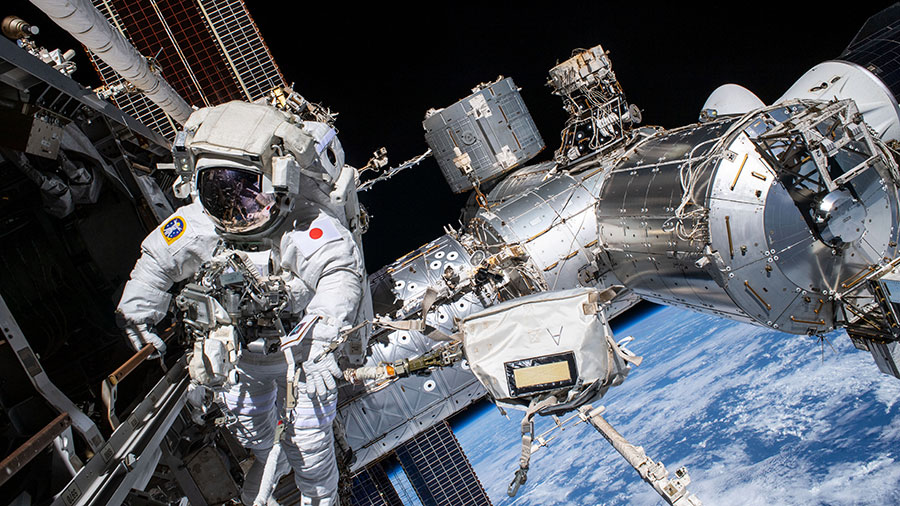
Astronaut Koichi Wakata is pictured during his second spacewalk on Feb. 2, 2023, installing hardware to enable the future installation of the orbiting lab's next roll-out solar array.
Astronaut Koichi Wakata is pictured during his second spacewalk on Feb. 2, 2023, installing hardware to enable the future installation of the orbiting lab’s next roll-out solar array.

A new cargo mission stands ready to launch early Thursday and dock to the International Space Station two days later. Meanwhile, the Expedition 68 crew switched roles between space scientists and orbital plumbers on Wednesday promoting advanced knowledge and maintaining life support systems.

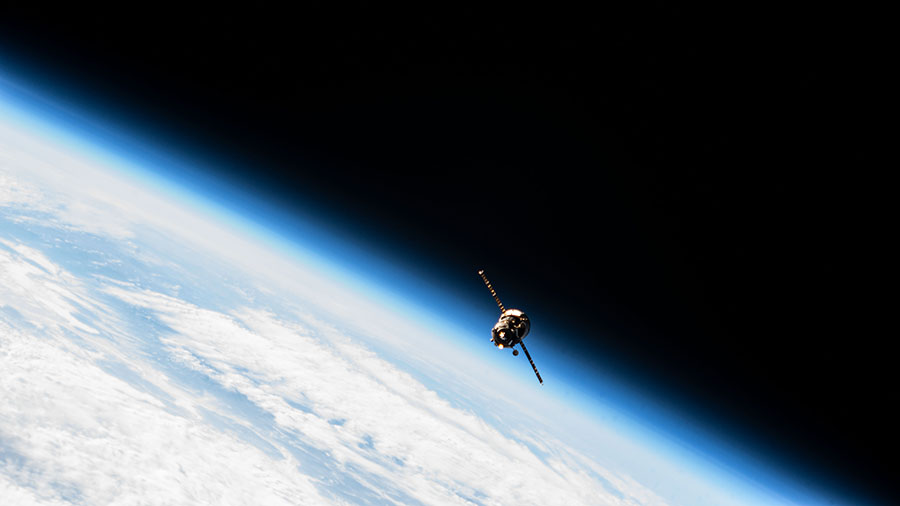
A rocket packed with about three tons of food, fuel, and supplies, is ready to launch from the Baikonur Cosmodrome in Kazakhstan and resupply the crew. The ISS Progress 83 (83P) cargo craft will blast off at 1:15 a.m. EST on Thursday for a two-day trek to the orbital outpost. The 83P will orbit Earth 34 times before catching up to the space station and docking automatically at 3:49 a.m. on Saturday to the Zvezda service module’s rear port. NASA TV will cover both events live on the agency’s app and website.

Brain research was on the science schedule on Wednesday as NASA Flight Engineer Nicole Mann explored how it regulates blood pressure in weightlessness. She set up medical monitoring hardware inside the Kibo laboratory module to learn how the brain manages blood flow with potential benefits for humans living on Earth and in space.

Flight Engineer Koichi Wakata of the Japan Aerospace Exploration Agency (JAXA) worked throughout Wednesday processing his blood and urine samples using the Human Research Facility. He spun the blood samples in a centrifuge then collected the biomedical samples and stowed them in a science freezer for later analysis.

From performing advanced space research to working on orbital plumbing, the well-trained astronauts and cosmonauts also ensure their orbital home and workplace remains in tip-top shape. NASA Flight Engineer Frank Rubio was back inside the Tranquility module inspecting a new toilet for a test of its operations before it sees use in the Orion crew ship on the upcoming Artemis missions to the Moon. NASA Flight Engineer Josh Cassada spent his day carefully inspecting module hatch seals and cleaning smoke detectors inside the Unity module.

The three Expedition 68 cosmonauts spent their day servicing a variety of life support components and conducting human research. Roscosmos Commander Sergey Prokopyev charged batteries in a carbon dioxide monitor and downloaded its data for review on the ground. Flight Engineers Dmitri Petelin and Anna Kikina partnered together for ultrasound scans of the gastrointestinal tract to understand how microgravity affects the digestive system. The cosmonaut trio also split its day working electronics maintenance and plumbing tasks.

All seven crew members gathered together after lunch time and practiced their emergency response skills using computer tablets for guidance. The septet familiarized themselves with procedures for reacting to unlikely contingencies such as a depressurization event, a chemical leak, or a fire. The orbital residents also located emergency equipment and coordinated communications with mission controllers from around the world.


Learn more about station activities by following the space station blog, @space_station and @ISS_Research on Twitter, as well as the ISS Facebook and ISS Instagram accounts.

Get weekly video highlights at: https://roundupreads.jsc.nasa.gov/videupdate/

Get the latest from NASA delivered every week. Subscribe here: www.nasa.gov/subscribe

Get The Details…

Mark Garcia

Powered by WPeMatico

Station Science Picks Up on Tuesday as Resupply Mission Nears

Station Science Picks Up on Tuesday as Resupply Mission Nears

The ISS Progress 81 resupply ship is pictured 266 miles above the Pacific Ocean after undocking from the space station's Zvezda service module.
The ISS Progress 81 resupply ship is pictured 266 miles above the Pacific Ocean after undocking from the space station’s Zvezda service module.

The seven-member Expedition 68 crew was back on its full complement of microgravity research on Tuesday. The orbital residents also saw a trash-filled cargo craft depart the International Space Station early in the morning.

It was a science-packed day aboard the orbital outpost with the four astronauts and three cosmonauts exploring the behavior of fuels in space, high-temperature physics, and cardiac research. The space scientists also turned their attention to more mundane orbital plumbing work and household maintenance tasks.

NASA Flight Engineer Frank Rubio installed new research hardware inside the Columbus laboratory module to observe how fuels behave to optimize satellite performance in space. He also activated a new toilet in the Tranquility module and verified its performance enabling its use for a crew operations test.

Working in the Kibo laboratory module, Flight Engineer Koichi Wakata of the Japan Aerospace Exploration Agency (JAXA) swapped samples from inside a specialized research furnace. The high-temperature physics device uses electrostatic levitation techniques to explore the thermophysical properties of materials exposed to temperatures above 2,000 degrees Celsius. He later collected his blood and urine samples for stowage in a science freezer and future analysis.

NASA Flight Engineers Nicole Mann and Josh Cassada began their day with biomedical research collecting body samples for the long-running Standard Measures study that monitors astronaut health. The duo later practiced on a computer the procedures they would use for the return back to Earth inside the SpaceX Dragon Endurance crew ship, currently targeted for early March.

Roscosmos Flight Engineers Dmitri Petelin and Anna Kikina partnered together during the morning for a study that explores how the human heart adapts to long-term weightlessness. Afterward, Petelin configured hardware that observes Earth’s nighttime atmosphere in the ultraviolet wavelength. Kikina removed sensors from herself after monitoring her heart’s electrical activity and blood pressure for 24 hours.

Roscosmos Commander Sergey Prokopyev woke up early and pointed his camera out a window in the Zvezda service module to photograph the departing ISS Progress 81 (81P) cargo craft. The 81P undocked from Zvezda’s rear port at 11:56 p.m. EST on Monday for a safe demise above the Pacific Ocean just over two hours later completing an eight-month resupply mission.

The 81P will be replaced by the ISS Progress 83 (83P) resupply ship after it launches on Thursday at 1:15 a.m. EST from the Baikonur Cosmodrome in Kazakhstan. The 83P will automatically dock to the same port vacated by the 81P at 3:49 a.m. EST on Saturday for a six-month stay.


Learn more about station activities by following the space station blog, @space_station and @ISS_Research on Twitter, as well as the ISS Facebook and ISS Instagram accounts.

Get weekly video highlights at: https://roundupreads.jsc.nasa.gov/videupdate/

Get the latest from NASA delivered every week. Subscribe here: www.nasa.gov/subscribe

Get The Details…

Mark Garcia

Powered by WPeMatico

Astronauts Relax as Cosmonauts Prep for Cargo Mission

Astronauts Relax as Cosmonauts Prep for Cargo Mission

Astronaut Nicole Mann points the camera toward herself and takes a
Astronaut Nicole Mann points the camera toward herself and takes a “space-selfie” with her helmet’s visor up during a spacewalk on Feb. 2, 2023.

Four Expedition 68 crew members are off-duty today following last week’s spacewalk to upgrade the International Space Station’s power generation system. The rest of the crew is getting ready for a cargo mission due to arrive this week while continuing its ongoing cardiac research.

Four astronauts are relaxing today after a successful spacewalk on Thursday and all the preparations leading up to it. Flight Engineers Nicole Mann of NASA and Koichi Wakata of the Japan Aerospace Exploration Agency (JAXA) spent six hours and 41 minutes in the vacuum of space during the Feb. 2 excursion. The duo completed the installation of a modification kit on the station’s starboard truss structure readying the orbital outpost for its next roll-out solar array.

The spacewalkers were assisted in the days leading up to last week’s spacewalk by NASA Flight Engineers Frank Rubio and Josh Cassada. The two spacewalking assistants helped Mann and Wakata in and out of their Extravehicular Mobility Units (EMUs), or spacesuits, reviewed the mod kit installation procedures with them, and monitored the spacewalking job from inside the station.

The quartet will get back to work on Tuesday resuming their ongoing space research to advance scientific knowledge and demonstrate new technologies. The four astronauts will work throughout the week exploring human research topics such as how microgravity affects blood pressure in the brain and the cardiorespiratory system. They will also look at space agricultural techniques and study the behavior of fuels in microgravity.

A cargo swap is planned for this week when the trash-filled ISS Progress 81 (81P) resupply ship undocks from the Zvezda service module’s rear port on Monday night. Next, the ISS Progress 83 (83P) cargo craft will launch at 1:15 a.m. EST on Wednesday then dock automatically at 3:47 a.m. on Friday to the Zvezda port vacated by the 81P.

Roscosmos Commander Sergey Prokopyev and Flight Engineer Dmitri Petelin prepared on Monday for the weekend arrival of the 83P. The cosmonaut duo practiced on a computer for the unlikely event they would need to use the telerobotically operated rendezvous unit, or TORU, and manually guide the resupply ship to a docking.

Flight Engineer Anna Kikina attached sensors to herself on Monday morning for a 24-hour cardiac monitoring session without interfering with her normal work schedule. The electrodes not only recorded her heart’s electrical activity but also her blood pressure. Kikina then spent the rest of Monday on ventilation and communication maintenance tasks.


Learn more about station activities by following the space station blog, @space_station and @ISS_Research on Twitter, as well as the ISS Facebook and ISS Instagram accounts.

Get weekly video highlights at: https://roundupreads.jsc.nasa.gov/videupdate/

Get the latest from NASA delivered every week. Subscribe here: www.nasa.gov/subscribe

Get The Details…

Mark Garcia

Powered by WPeMatico

Spacewalkers Relax, Science Continues as Station Orbits Higher

Spacewalkers Relax, Science Continues as Station Orbits Higher

Astronaut Nicole Mann is pictured inside the Quest airlock organizing spacewalk tools and hardware on Jan. 31, 2023.

Two astronauts took the morning off on Friday following a spacewalk the day before while the rest of the Expedition 68 crew conducted the latest space experiments and lab maintenance tasks. Meanwhile, the International Space Station is orbiting higher today to get ready for a pair of spaceships arriving this month.

Flight Engineers Nicole Mann of NASA and Koichi Wakata of the Japan Aerospace Exploration Agency (JAXA) relaxed Friday morning after conducting a six-hour and 41-minute spacewalk on Thursday. The duo completed the installation of hardware on the station’s Starboard-4 truss readying the orbiting lab for its next roll-out solar array. The pair then went into the afternoon with standard post-spacewalk medical checks before cleaning up the Quest airlock where their spacewalking tools and Extravehicular Mobility Units (EMUs), or spacesuits, are stowed.

NASA astronauts Josh Cassada and Frank Rubio had their hands full on Friday as they explored how weightlessness affects a wide range of phenomena including biotechnology, agriculture, and physics. The ongoing microgravity studies provide scientists and engineers new insights that could promote state-of-the-art industries both in space and on Earth.

Cassada began his day configuring the BioFabrication Facility, a research device that will investigate the 3-D printing of organ-like tissues in microgravity, in the Columbus laboratory module. Afterward, he was back inside Columbus watering tomato plants growing inside the Veggie space botany facility. The Veg-05 study is studying a continuous fresh-food production system for space missions. Rubio set up the new Particle Vibration experiment inside the Destiny laboratory module’s Microgravity Science Glovebox. The physics study will investigate how particles organize themselves in fluids possibly advancing manufacturing techniques and providing new insights on astrophysics.

Commander Sergey Prokopyev assisted Flight Engineer Anna Kikina during her cardiac research early Friday as she attached sensors to herself to monitor her blood circulation in microgravity. Prokopyev then worked inside the Zvezda service module checking its systems. Kikina then spent her day inside Zvezda and the Nauka multipurpose laboratory module servicing their ventilation systems. Flight Engineer Dmitri Petelin spent all day Friday replacing air purification hardware before transferring filters from the ISS Progress 82 cargo craft to the Unity module.

The space station is orbiting higher, 260 miles above Earth at its highest point and 257.1 miles at its lowest, after the ISS Progress 81 resupply ship fired its engines for nearly fifteen minutes early Friday morning. The new orbiting altitude places the station at the correct altitude for the arrival of the new ISS Progress 83 cargo craft on Feb. 11 and the unpiloted Soyuz MS-23 crew ship on Feb. 21.


Learn more about station activities by following the space station blog, @space_station and @ISS_Research on Twitter, as well as the ISS Facebook and ISS Instagram accounts.

Get weekly video highlights at: https://roundupreads.jsc.nasa.gov/videupdate/

Get the latest from NASA delivered every week. Subscribe here: www.nasa.gov/subscribe

Get The Details…

Mark Garcia

Powered by WPeMatico

Spacewalkers Complete Construction Job to Upgrade Station Power

Spacewalkers Complete Construction Job to Upgrade Station Power

Spacewalkers Koichi Wakata (top) and Nicole Mann (bottom) work on the starboard truss structure to upgrade the space station's power generation system.
Spacewalkers Koichi Wakata (top) and Nicole Mann (bottom) work on the starboard truss structure to upgrade the space station’s power generation system.

NASA astronaut Nicole Mann and Japan Aerospace Exploration Agency (JAXA) astronaut Koichi Wakata concluded their spacewalk at 2:26 p.m. EST after six hours and 41 minutes.

Mann and Wakata completed their major objective for today, which was to complete the construction of a mounting platform on the 1A power channel that was started during a spacewalk on Jan. 20. In addition, they relocated an articulating portable foot restraint from the P6 truss for future spacewalk tasks and deployed cables for the installation of the next pair of International Space Station Roll-Out Solar Arrays (iROSAs).

The installation was part of a series of spacewalks to augment the station’s power channels with new iROSAs. Four iROSAs have been installed so far, and two additional arrays will be mounted to the installed platforms during future spacewalks following their arrival later this year on SpaceX’s 28th commercial resupply services mission for NASA.

It was the 259th spacewalk in support of space station assembly, upgrades, and maintenance, the second spacewalk of 2023, and the second spacewalk for both astronauts.

Mann and Wakata are in the midst of a planned six-month science mission living and working aboard the microgravity laboratory to advance scientific knowledge and demonstrate new technologies for future human and robotic exploration missions, including to the Moon through NASA’s Artemis missions.


Learn more about station activities by following the space station blog, @space_station and @ISS_Research on Twitter, as well as the ISS Facebook and ISS Instagram accounts.

Get weekly video highlights at: https://roundupreads.jsc.nasa.gov/videupdate/

Get the latest from NASA delivered every week. Subscribe here: www.nasa.gov/subscribe

Get The Details…

Mark Garcia

Powered by WPeMatico