Station Orbiting Higher as Exercise Research and Maintenance Continue

Station Orbiting Higher as Exercise Research and Maintenance Continue
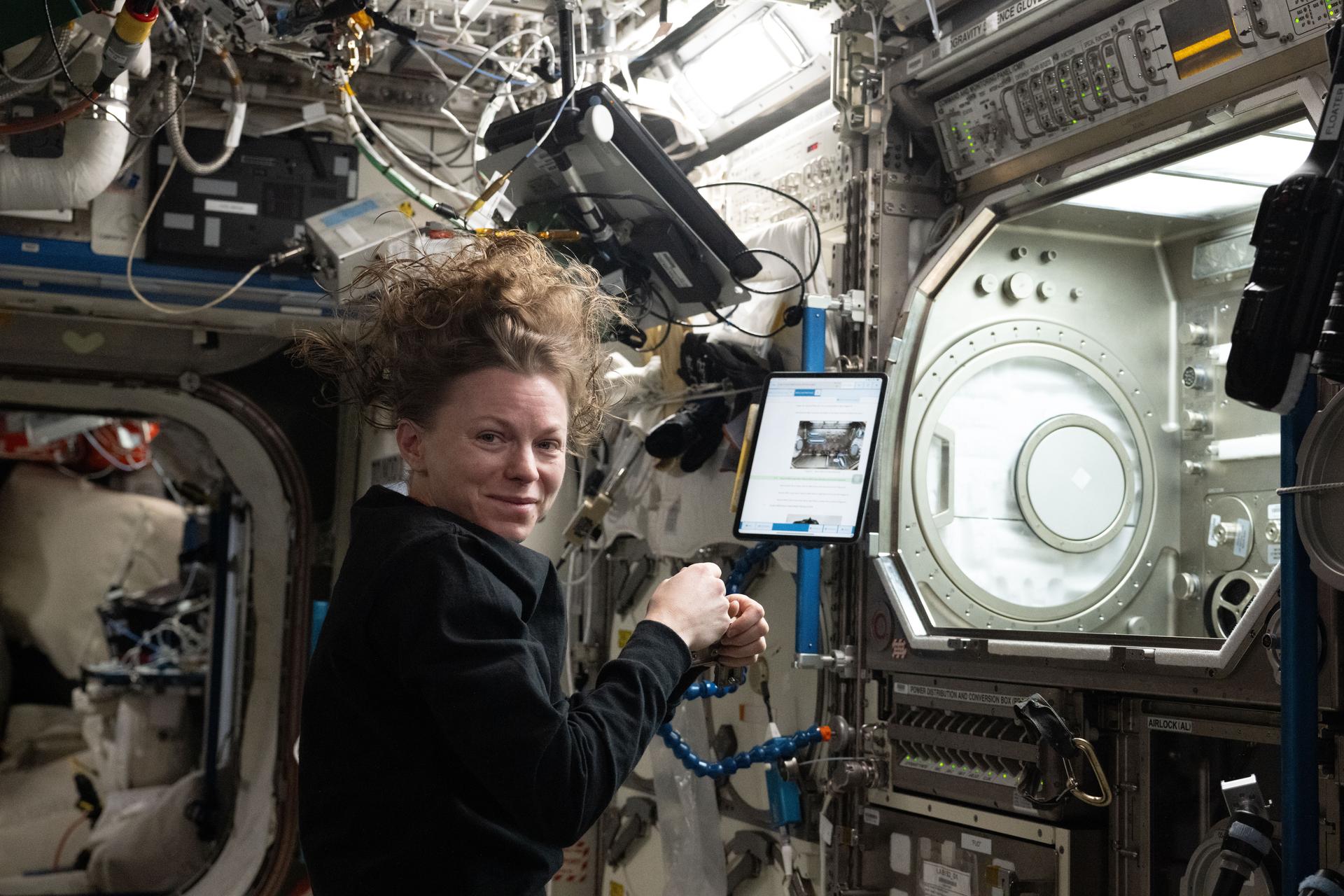
NASA astronaut and Expedition 73 Flight Engineer Zena Cardman installs research hardware inside the Destiny laboratory module’s Microgravity Science Glovebox. The equipment supports the Fluid Particles experiment, which helps researchers understand how particles in a liquid interface come together to form larger structures or clusters in microgravity. Results could advance fire suppression, lunar dust control, and plant growth in space. Earth benefits may include insights into pollen behavior, algae blooms, plastic pollution, and sea salt transfer during storms.
NASA astronaut Zena Cardman installs research hardware inside the Destiny laboratory module’s Microgravity Science Glovebox supporting the Fluid Particles experiment.
NASA

The International Space Station is orbiting higher today after the Progress 93 cargo spacecraft, docked to the Zvezda service module’s aft port, fired its engines for over 14 minutes, 7 seconds at 8:04 a.m. EST on Wednesday. The reboost increased the space station’s altitude by 1 mile at apogee and 2.3 miles at perigee, leaving the station in an orbit of 265.5 x 255.9 statute miles. The orbital reboost places the station at the correct altitude for the arrival late next week of the Soyuz MS-28 crew spacecraft carrying NASA astronaut Chris Williams and Roscosmos cosmonauts Sergey Kud-Sverchkov and Sergey Mikaev. The new trio will become part of the new Expedition 74 crew when NASA astronaut Jonny Kim and Roscosmos cosmonauts Sergey Ryzhikov and Alexey Zubritsky undock from the space station inside the Soyuz MS-27 crew spacecraft a few days later in early December.

Back on the orbital outpost, the Expedition 73 crew focused its science activities on exercise research and fluid physics, both benefitting humans living on and off the Earth. The space lab residents also maintained spacesuit and workout gear, reorganized cargo, and set up a sleep station to accommodate the visiting crew.

Kim began his shift jogging on the COLBERT treadmill and working out on the advanced resistive exercise device while wearing a sensor-packed vest and headband that tracked his cardiac activity for a second day. He also wore the Mobil-O-Graph that measured and recorded his blood pressure throughout Wednesday. Doctors are monitoring his health to understand how the cardiovascular system adapts to space and testing the effectiveness of portable biomedical devices in space.

Afterward, Kim installed and configured the crew alternate sleep accommodation inside the Columbus laboratory module that will temporarily house a new crew member after their arrival late next week. Expedition 73 will expand to 10 crew members for a few days after the Soyuz MS-28 mission arrives. Kim will then return to Earth with Ryzhikov and Zubritsky completing an eight-month space research mission as Expedition 74 begins.

NASA Flight Engineer Mike Fincke continued studying how particles behave inside fluids setting up samples inside a fluorescence microscope to be observed by scientists on the ground. Results may inform commercial in-space manufacturing techniques and improve optical materials and pollution removal operations. Fincke later replaced life support components on a spacesuit inside the Quest airlock.

NASA Flight Engineer Zena Cardman also worked on spacesuit components photographing and packing suit hardware for return to Earth next month inside the Soyuz MS-27. Cardman also joined Flight Engineer Kimiya Yui from JAXA (Japan Aerospace Exploration Agency) and rearranged cargo packed inside the Permanent Multipurpose Module to create more stowage space. Yui spent most of his shift continuing to unload science and supplies delivered in September aboard Northrop Grumman’s Cygnus XL cargo spacecraft.

Cardman then joined Kim and Fincke at the end of their shift on Wednesday and called down to mission controllers and discussed upcoming maintenance on the COLBERT treadmill. The complex work will require temporarily removing the station’s toilet in the Tranquility module to access thermal control system hoses connected to COLBERT for replacement.

Roscosmos cosmonauts Sergey Ryzhikov and Alexey Zubritsky worked on a second station treadmill located inside Zvezda. The duo checked the tension and adjusted belts and shock absorber cords on the exercise device. Roscosmos Flight Engineer Oleg Platonov spent his shift inside the Nauka science module servicing orbital plumbing and life support systems.

Learn more about station activities by following the space station blog, @space_station on X, as well as the ISS Facebook and ISS Instagram accounts.

Get the latest from NASA delivered every week. Subscribe here.

Powered by WPeMatico

Get The Details…

Mark A. Garcia

Heart Health, Stem Cells, and Physics Keep Crew Busy on Tuesday

Heart Health, Stem Cells, and Physics Keep Crew Busy on Tuesday

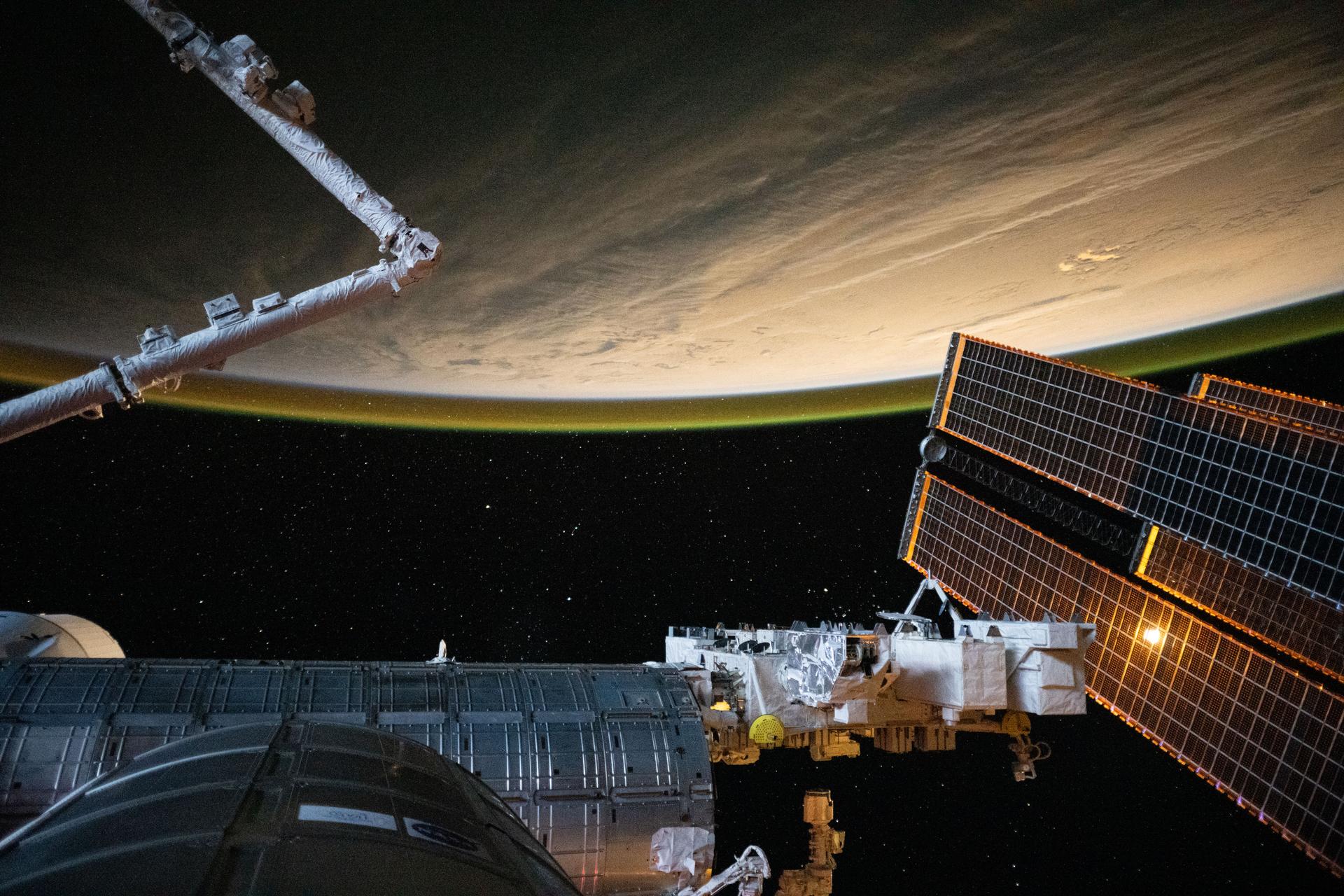
This tranquil view from the International Space Station captures the Kibo laboratory module with its Exposed Facility, a portion of the station’s main solar arrays (right), and part of the Canadarm2 robotic arm (left). The photograph was taken during an orbital sunset as the station soared 270 miles above a cloudy Atlantic Ocean off the coast of South Africa.
This tranquil view from the International Space Station captures the Kibo laboratory module with its Exposed Facility, a portion of the station’s main solar arrays (right), and part of the Canadarm2 robotic arm (left), during an orbital sunset above a cloudy Atlantic Ocean.
NASA

Life science and physics topped the research schedule aboard the International Space Station on Tuesday as the Expedition 73 crew studied heart health, stem cells, fluid physics, and spacecraft fire safety. The orbital residents also completed work on a spacesuit and inspected ventilation and electrical systems while continuing other scientific operations.

NASA Flight Engineer Jonny Kim kicked off his shift wearing a sensor-packed vest and headband that measured his cardiovascular data as he worked out on the advanced resistive exercise device then jogged on the COLBERT treadmill. Doctors will use the medical data to track Kim’s health in space, assess the value of portable health monitoring devices, and treat space-caused health conditions. Later, Kim processed stem cell samples for a study investigating how microgravity affects their conversion to cardiac or brain cells. Results may lead to personalized treatments for astronauts on future missions and advanced therapies for Earth-based conditions such as heart and neurological diseases.

Physics is a critical research subject aboard the orbital outpost since materials behave differently in weightlessness. Flight Engineers Mike Fincke of NASA and Kimiya Yui of JAXA (Japan Aerospace Exploration Agency) split their shift working on a pair of different physics studies, one looking at particles attach themselves to fluids and another observing how flames spread in space. Fincke set up research hardware inside a fluorescence microscope to observe particle-laden droplets potentially informing commercial in-space manufacturing techniques. Yui swapped sample hardware inside the Solid Combustion Experiment Module that enables safe observations of materials burning in weightlessness to improve fire safety on spacecraft.

NASA Flight Engineer Zena Cardman completed several days of spacesuit work and verified the successful installation of ventilation and cooling gear, conducted leak checks, and inspected suit hardware. Next, Cardman checked out the operations of the new Ultrasound 3 device, recently delivered aboard the Cygnus XL cargo spacecraft, used for crew heart and vein scans, as well as internal imaging of bones, organs, and issues.

Roscosmos cosmonauts Sergey Ryzhikov and Alexey Zubritsky, station Commander and Flight Engineer respectively, began their day with mental and physical assessments to understand how they are adjusting to the stresses of long-duration spaceflight. Next, the duo took turns wearing virtual reality googles and sensors while responding to visual signals to observe how their vision and sense of balance adjusts to microgravity.

Roscosmos Flight Engineer Oleg Platonov wrapped up an overnight Earth photography session uninstalling and stowing hardware that photographed landmarks on the ground in a wide variety of wavelengths. Platonov then spent the rest of his day servicing orbital plumbing and ventilation systems throughout the station’s Roscosmos segment.

Learn more about station activities by following the space station blog, @space_station on X, as well as the ISS Facebook and ISS Instagram accounts.

Get the latest from NASA delivered every week. Subscribe here.

Powered by WPeMatico

Get The Details…

Mark A. Garcia

Monday’s Research Studies Ways to Protect Eyes and Lungs in Space

Monday’s Research Studies Ways to Protect Eyes and Lungs in Space

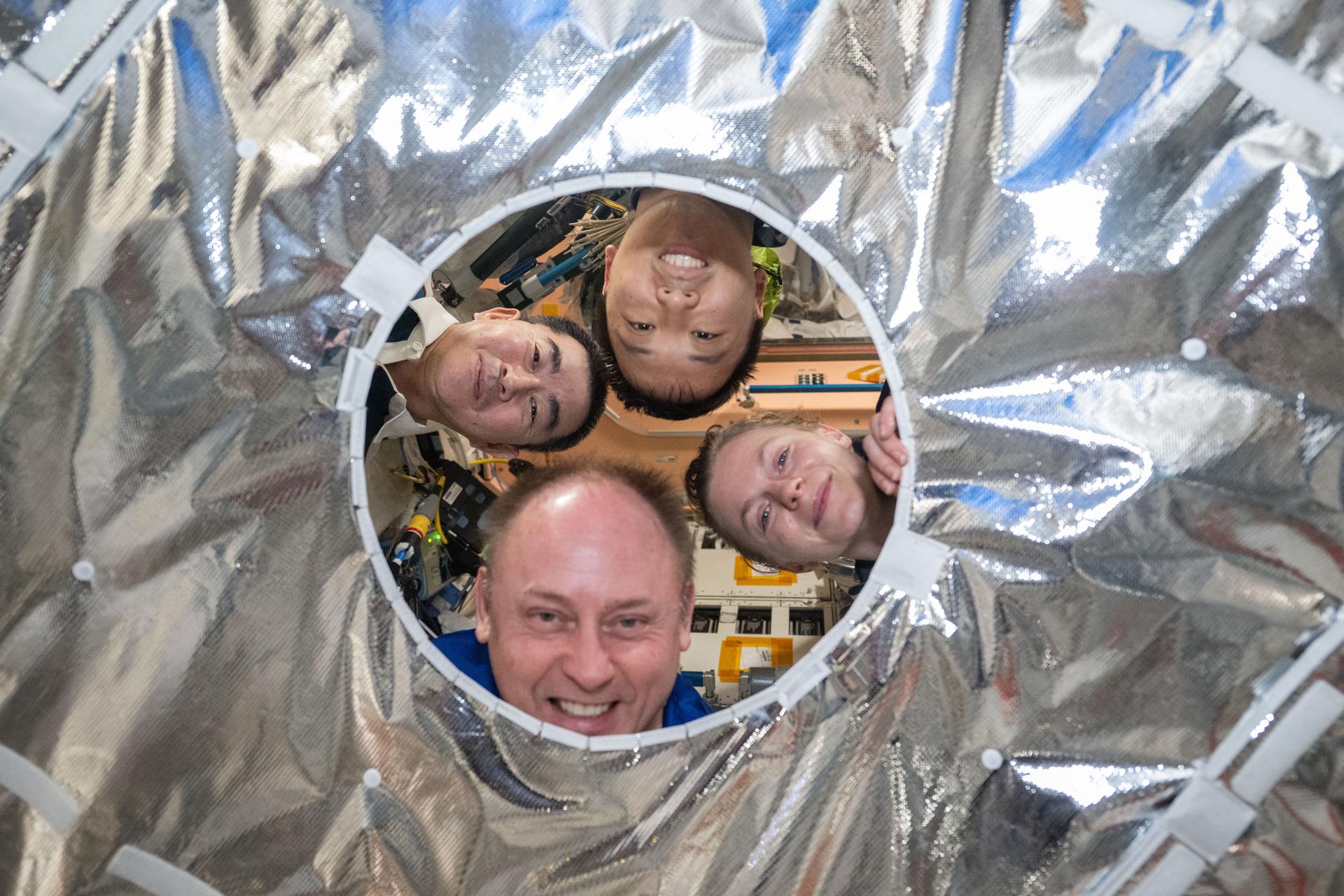
Four Expedition 73 flight engineers pose for a playful portrait through a circular opening in a hatch thermal cover aboard the International Space Station. The cover provides micrometeoroid and orbital debris protection while maintaining cleanliness and pressure integrity in the vestibule between Northrop Grumman's Cygnus XL cargo spacecraft and the orbital outpost. The opening allows for visual inspection of hatch alignment, access to the hatch handle or pressure equalization valve, and visibility for sensors or cameras during berthing operations. Clockwise from left, are JAXA (Japan Aerospace Exploration Agency) astronaut Kimiya Yui and NASA astronauts Jonny Kim, Zena Cardman, and Mike Fincke.
Four Expedition 73 crewmates pose for a playful portrait through a circular opening in a hatch thermal cover aboard the International Space Station. Clockwise from left, are JAXA (Japan Aerospace Exploration Agency) astronaut Kimiya Yui and NASA astronauts Jonny Kim, Zena Cardman, and Mike Fincke.
NASA

Expedition 73 kicked off the week exploring how to prevent space-caused vision problems and what happens to the respiratory system in microgravity. The International Space Station residents also worked on combustion research and Earth observation gear, organized food and cargo inventory, and serviced life support systems.

NASA Flight Engineers Mike Fincke and Jonny Kim spent their day studying ways to pull body fluids back toward the feet similar to Earth’s gravity. In space, the headward fluid shifts can lead to health issues including changes to an astronaut’s eye structure and vision. The duo tested a thigh cuff that may pull fluids toward the lower body and keep them there reducing brain and eye pressure. Fincke led the investigation on Monday collecting Kim’s blood pressure and scanning his veins with the Ultrasound 2 device while he wore the thigh cuff. Next, Kim peered into medical imaging gear for an eye exam as doctors on the monitored in real time. Results, may provide simple tools and less-invasive countermeasures to protect future crews travelling to the Moon, Mars, and beyond.

Station Commander Sergey Ryzhikov and Flight Engineer Alexey Zubritsky, both Roscosmos cosmonauts, wore sensors and nose clips on Monday and exhaled forcefully for a human research experiment to understand how living in space affects respiratory function including lung volume and airflow rate. Afterward, Ryzhikov started a 24-hour blood pressure monitoring session and filled out a questionnaire to document his interactions with international crews and mission controllers. Zubritsky transferred water from the Progress 92 cargo spacecraft into station tanks then took the same international interactions questionnaire as Ryzhikov.

Flight Engineers Zena Cardman of NASA and Kimiya Yui of JAXA (Japan Aerospace Exploration Agency) began their day reorganizing cargo inside the Kibo laboratory module making more stowage space. Cardman then collected food packs from inside the Permanent Multipurpose Module and stowed them inside the Unity module where the station’s galley, or kitchen, is located. Yui called down to Earth and spoke with Japanese elementary, middle, and high school students to talk about science and engineering topics. Finally, he swapped out a camera inside Kibo’s Solid Combustion Experiment Module that studies a how materials burn in weightlessness to improve fire safety on spacecraft.

Roscosmos Flight Engineer Oleg Platonov kicked off his shift on life support maintenance replacing the Vozdukh carbon dioxide removal system located inside the Zvezda service module. During the last half of Platonov’s shift, he worked on water transfers and installed a specialized camera to photograph Earth landmarks in a wide variety of wavelengths.

Learn more about station activities by following the space station blog, @space_station on X, as well as the ISS Facebook and ISS Instagram accounts.

Get the latest from NASA delivered every week. Subscribe here.

Powered by WPeMatico

Get The Details…

Mark A. Garcia

Week Wraps on Station With Cardiac Research, Stem Cells, and Eye Checks

Week Wraps on Station With Cardiac Research, Stem Cells, and Eye Checks

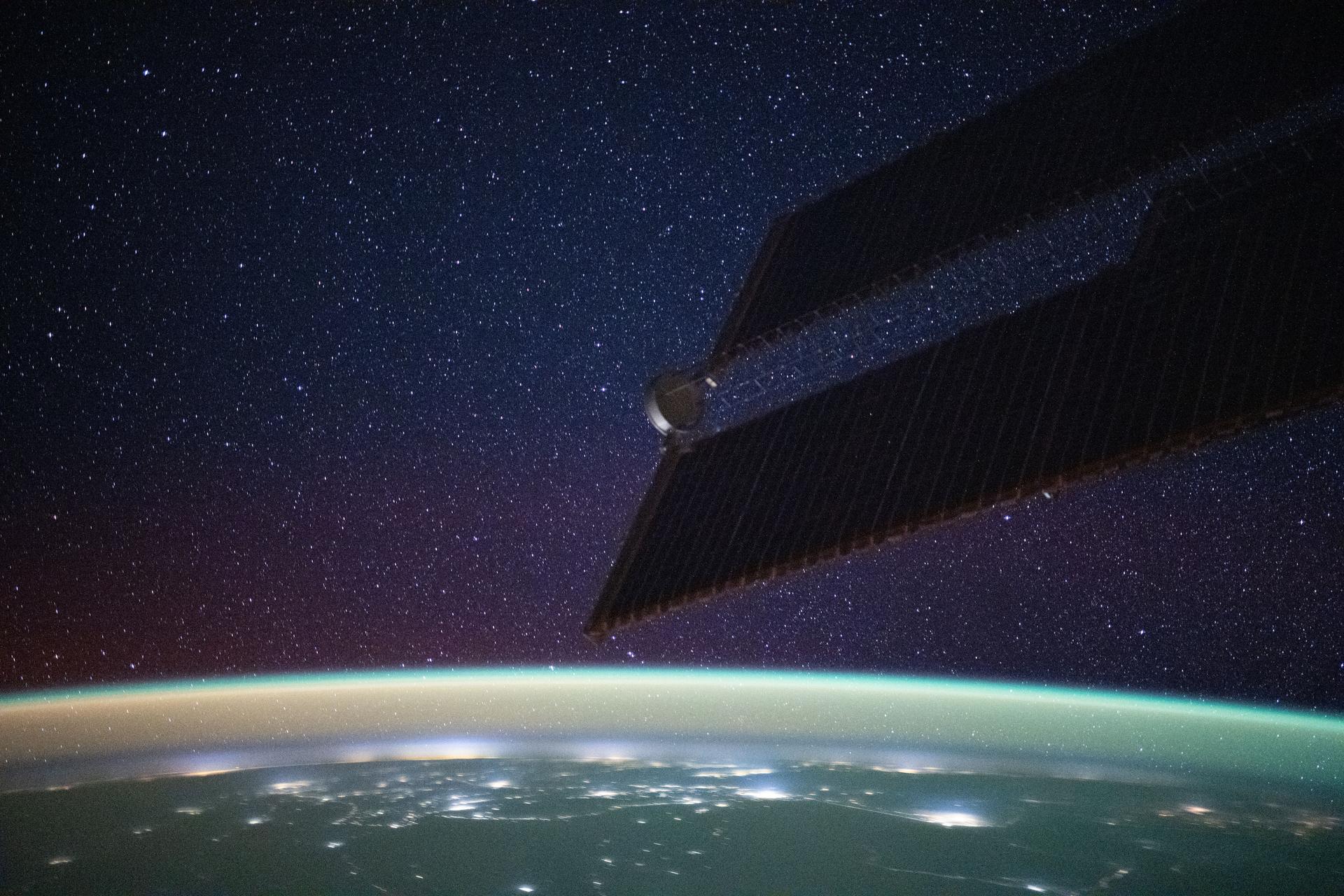
A bright yellow-green airglow blankets Earth's horizon, dotted with the city lights of northern India, beneath a star-filled sky. This long-exposure photograph was taken from the International Space Station as it orbited 260 miles above the Himalayas at approximately 1:11 a.m. local time.
A bright yellow-green airglow blankets Earth’s horizon, dotted with the city lights of northern India, beneath a star-filled sky. This long-exposure photograph was taken from the International Space Station as it orbited 260 miles above the Himalayas at approximately 1:11 a.m. local time.
NASA

Cardiac research, stem cell observations, and eye checks to ensure astronaut health wrapped up the week for the Expedition 73 crew aboard the International Space Station. The orbital residents also continued working on spacesuits and unpacked a pair of resupply ships rounding out their work week.

Doctors continuously study how living in weightlessness affects a crew member’s circulatory system from the heart to the tiniest vessels and blood cells. The station crew is constantly monitored through a variety of devices including electrodes, ultrasounds, and blood pressure cuffs providing insights potentially informing advanced ways to protect astronaut health on future missions to the Moon, Mars, and beyond.

Station Commander Sergey Ryzhikov and Flight Engineer Alexey Zubritsky, both Roscosmos cosmonauts, continued exploring how blood circulates to and from the smallest vessels in a crew member’s body. The duo once again wore sensors on their forehead, fingers, and toes that monitored blood flowing to their microcirculatory and tissue systems. The medical data may help researchers develop techniques that protect future space crews on long-duration missions and prepare them for the return to Earth’s gravity.

NASA Flight Engineer Jonny Kim assisted veteran Flight Engineer Mike Fincke from NASA as he treated stem cells inside the Kibo laboratory module’s Life Science Glovebox. Fincke placed the stem cell samples inside the KERMIT fluorescence microscope so scientists could observe how the programmed cells grow and change into heart and brain cells in microgravity. Results may lead to personalized health treatments in space and advanced treatments for heart conditions and degenerative neurological disorders on Earth.

Kim then joined NASA Flight Engineer Zena Cardman as she scanned his eyes in the Columbus laboratory module using standard medical imaging gear found in a doctor’s office on Earth. Cardman first attached electrodes to Kim’s forehead and to the sides of his eyes that sent flashes of light to measure the electrical response of Kim’s retinas. Next, she operated optical gear inside the Harmony module that sent lightwaves into his eyes so doctors on the ground could observes the retina, cornea, and optic nerve in real time. Doctors will use the data to look for and learn how to prevent space-caused vascular structure and functional changes to a crew member’s eyes.

Cardman, Kim and Fincke also took turns servicing spacesuits inside the Quest airlock. The trio removed and installed batteries on the suits and swapped a life support device inside the suit that provides ventilation and cooling during a spacewalk.

Earlier in their shift, Kim and Fincke spent some time unpacking science, supplies, and hardware recently delivered aboard a pair cargo ships. Kim offloaded some of the new life support gear and science experiments packed inside JAXA’s (Japan Aerospace Exploration Agency) HTV-X1 resupply ship that arrived on Oct. 29.  Fincke continued transferring some of the 11,000 pounds of research and supplies packed inside Northrop Grumman’s Cygnus XL cargo spacecraft.

JAXA Flight Engineer Kimiya Yui spent his day primarily on maintenance first inspecting filters inside the Columbus lab’s BioLab research incubator then cleaning the Tranquility module’s ventilation system. Roscosmos Flight Engineer Oleg Platonov also worked throughout the day on maintenance in the station’s Roscosmos segment checking smoke detection equipment and photographing module windows for inspection.

Learn more about station activities by following the space station blog, @space_station on X, as well as the ISS Facebook and ISS Instagram accounts.

Get the latest from NASA delivered every week. Subscribe here.

Powered by WPeMatico

Get The Details…

Mark A. Garcia

Expedition 73 Crew Works Cardiovascular Research and Spacesuits on Thursday

Expedition 73 Crew Works Cardiovascular Research and Spacesuits on Thursday

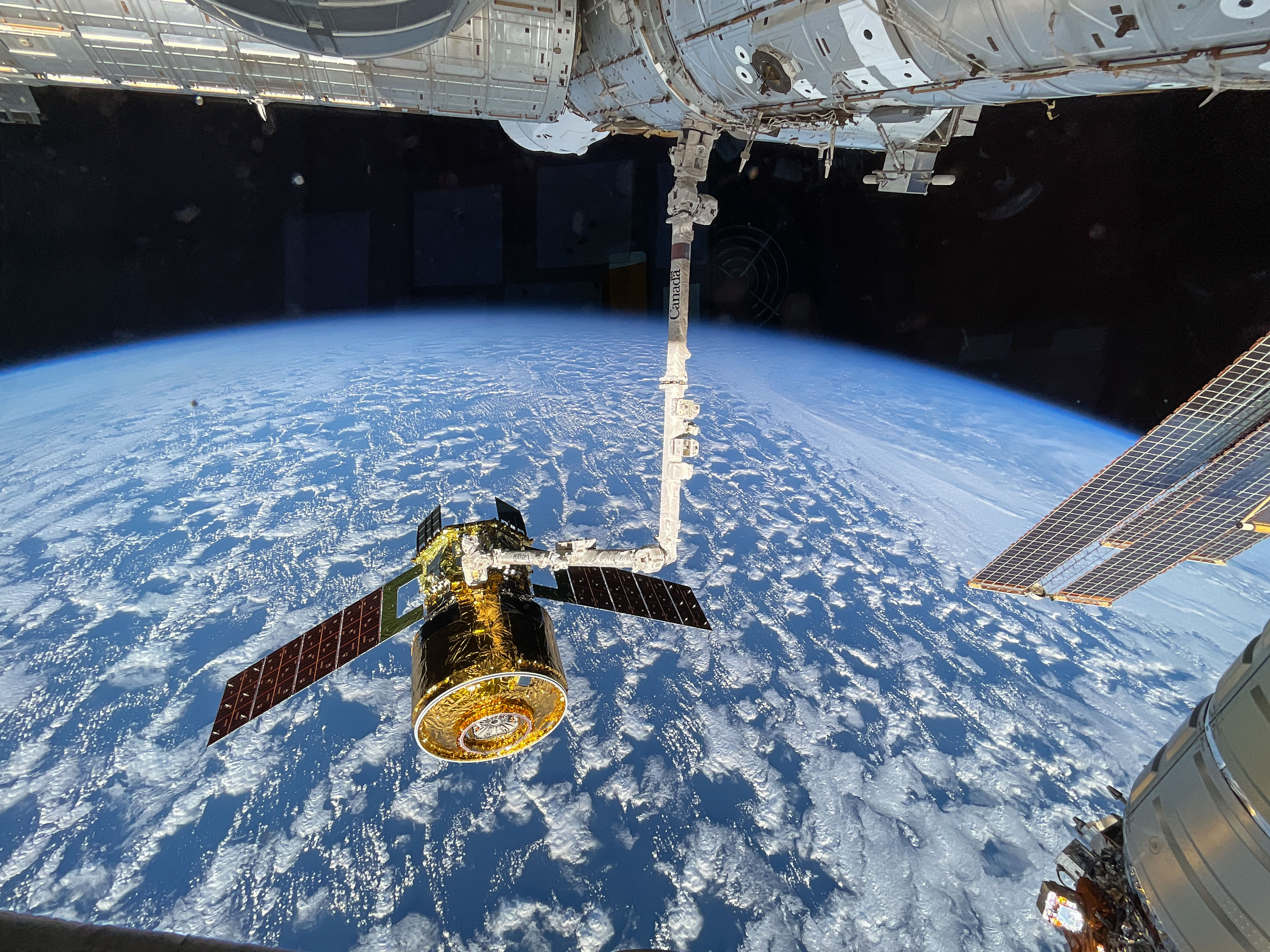
The new HTV-X1 cargo spacecraft from JAXA (Japan Aerospace Exploration Agency) is pictured in the grips of the Canadarm2 robotic arm after completing its arrival at the International Space Station on Oct. 29, 2025.
NASA

Cardiovascular research and spacesuit maintenance topped the schedule for the Expedition 73 crew aboard the International Space Station on Thursday. The orbital residents studied how living in space affects blood circulation, swapped advanced gear on a spacesuit, and installed a new life support experiment.

NASA Flight Engineer Jonny Kim spent the first half of his shift in the Columbus laboratory module wearing electrodes scanning his chest with an ultrasound device to help doctors understand how his heart function and structure is adapting to weightlessness. After lunchtime, Kim jogged on the COLBERT treadmill then worked out on the advanced resistive exercise device while wearing a heart rate monitor that recorded his cardiac activity. The data collected throughout the day may inform researchers of the cardiovascular risk astronauts face as NASA and its international partners plan missions to the Moon, Mars, and beyond.

Roscosmos cosmonauts Sergey Ryzhikov and Alexey Zubritsky, station commander and flight engineer respectively, partnered together exploring how blood circulates to and from the smallest vessels in the human body in microgravity. The duo took turns wearing sensors on their forehead, fingers, and toes to monitor blood flowing to the microcirculatory and tissue systems. Results may help researchers develop techniques to protect long-duration space crews and prepare them for the return to Earth.

Flight Engineers Zena Cardman and Mike Fincke of NASA worked together throughout Thursday servicing a spacesuit inside the Quest airlock. Cardman and Fincke first swapped a life support device inside the suit that provides ventilation and cooling during a spacewalk. Afterward, the pair installed a radio inside the suit that enables communications between spacewalkers, crew members inside the station, and mission controllers on the ground.

JAXA (Japan Aerospace Exploration Agency) Flight Engineer Kimiya Yui spent his day inside the Kibo laboratory module installing a new carbon dioxide removal system delivered aboard the HTV-X1 cargo spacecraft on Oct. 29. The advanced life support technology seeks to demonstrate the efficient removal of carbon dioxide from a spacecraft to promote future Artemis missions to the Moon.

Roscosmos Flight Engineer Oleg Platonov started his day wearing sensors and a blood pressure cuff observing how his blood vessel health is affected by weightlessness and radiation. Afterward, he and Ryzhikov took turns pedaling for an hour on the station’s exercise cycle while wearing chest electrodes and a blood pressure cuff for a fitness evaluation.

Daily health monitoring and exercise are essential for astronauts living in microgravity for months or years at a time. The health and research data collected informs strategies to protect future crews on deep space missions.

Powered by WPeMatico

Get The Details…

Mark A. Garcia