Stem Cell Science and Human Research Studies Ahead of Cargo Arrival

Stem Cell Science and Human Research Studies Ahead of Cargo Arrival

The seven-member Expedition 70 crew gathers for a dinner time portrait inside the International Space Station's Unity module. In the front row from left are, Flight Engineers Konstantin Borisov of Roscosmos, Jasmin Moghbeli of NASA, and Satoshi Furukawa from JAXA (Japan Aerospace Exploration Agency). In the back row are, Commander Andreas Mogensen from ESA (European Space Agency), NASA Flight Engineer Loral O'Hara, and Roscosmos Flight Engineers Oleg Kononenko and Nikolai Chub.
The seven-member Expedition 70 crew gathers for a dinner time portrait inside the International Space Station’s Unity module. In the front row from left are, Flight Engineers Konstantin Borisov of Roscosmos, Jasmin Moghbeli of NASA, and Satoshi Furukawa from JAXA (Japan Aerospace Exploration Agency). In the back row are, Commander Andreas Mogensen from ESA (European Space Agency), NASA Flight Engineer Loral O’Hara, and Roscosmos Flight Engineers Oleg Kononenko and Nikolai Chub.

A cargo craft loaded with nearly three tons of food, fuel, and supplies is currently in orbit heading to the International Space Station, targeting early Saturday for docking. As the Expedition 70 crew members await the arrival of Progress 87, stem cell science, heart rate data collection and eye exam activities topped their research schedule on Thursday.

Progress 87 successfully launched from the Baikonur Cosmodrome in Kazakhstan at 10:25 p.m. EST Wednesday, Feb. 14. On Saturday, Feb. 17, the cargo craft will automatically dock to the aft port of the Zvezda service module at 1:12 a.m., with cosmonauts Oleg Kononenko and Nikolai Chub on duty to monitor the spacecraft’s arrival.

Aboard station, four orbital residents spent most of the day on the Mesenchymal Stem Cells in Microgravity Induced Bone Loss (MABL-A) investigation. MABL-A—delivered aboard Northrop Grumman’s 20th Commercial Resupply Mission—assesses the effects of microgravity on bone marrow stem cells. In the morning, NASA astronaut Loral O’Hara collected BioCell samples inside the habitat with assistance from JAXA (Japan Aerospace Exploration Agency) Flight Engineer Satoshi Furkawa. In the afternoon, NASA astronaut Jasmin Moghbeli took over the BioCell sampling work with assistance from ESA (European Space Agency) Commander Andreas Mogensen.

Mogensen also spent part of the day photographing Plant-Microbe Interactions in Space (APEX-10) petri plates—another investigation that launched aboard Northrop Grumman’s 20th resupply mission—to examine whether beneficial microbes can mitigate some of the negative effects the space environment can have on plant growth and development.

In the afternoon, O’Hara conducted an array of activities for the CIPHER investigation, including the collection of heart rate data and completing an eye exam. CIPHER, or Complement of Integrated Protocols for Human Exploration Research, is an all-encompassing, total-body approach that examines how humans adapt to spaceflight.

In the Roscosmos segment, Chub worked with Flight Engineer Konstantin Borisov to film an educational video that demonstrates the capabilities of Roscosmos scientific hardware aboard station. Meanwhile, Kononenko conducted some routine maintenance in Zarya module. Near the end of the day, Borisov examined the Earth’s nighttime atmosphere in near-ultraviolet for an ongoing investigation aboard the orbital lab.


Learn more about station activities by following the space station blog, @space_station and @ISS_Research on X, as well as the ISS Facebook and ISS Instagram accounts.

Get weekly video highlights at: https://roundupreads.jsc.nasa.gov/videoupdate/

Get the latest from NASA delivered every week. Subscribe here: www.nasa.gov/subscribe

Powered by WPeMatico

Get The Details…

Abby Graf

Cargo Craft Successfully Launches to Station

Cargo Craft Successfully Launches to Station

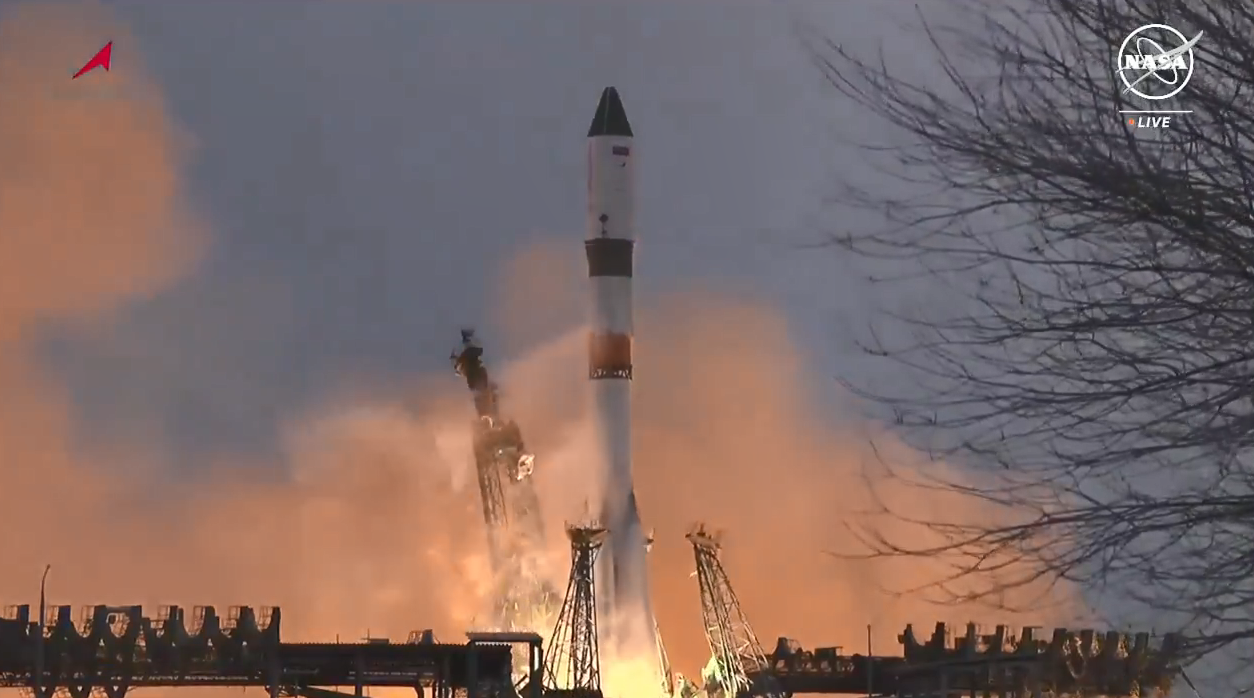
The Progress 87 cargo craft launches to the International Space Station from the Baikonur Cosmodrome in Kazakhstan on Feb. 14, 2024. Credit: NASA TV

The unpiloted Roscosmos Progress 87 is safely in orbit headed for the International Space Station following launch at 10:25 p.m. EST Wednesday, Feb. 14 (8:25 a.m. Baikonur time Thursday, Feb. 15) from the Baikonur Cosmodrome in Kazakhstan.

The resupply ship reached preliminary orbit, and deployed its solar arrays and navigational antennas as planned, on its way to meet up with the orbiting laboratory and its Expedition 70 crew members.

Progress will dock to the aft port of the Zvezda service module two days later at 1:12 a.m. EST Saturday, Feb. 17. Live coverage of rendezvous and docking will begin at 12:30 a.m. Progress will deliver almost three tons of food, fuel, and supplies to the space station.


Learn more about station activities by following the space station blog, @space_station and @ISS_Research on X, as well as the ISS Facebook and ISS Instagram accounts.

Get weekly video highlights at: https://roundupreads.jsc.nasa.gov/videoupdate/

Get the latest from NASA delivered every week. Subscribe here: www.nasa.gov/subscribe

Powered by WPeMatico

Get The Details…

Abby Graf

Progress Cargo Craft Launching Live on NASA TV

Progress Cargo Craft Launching Live on NASA TV

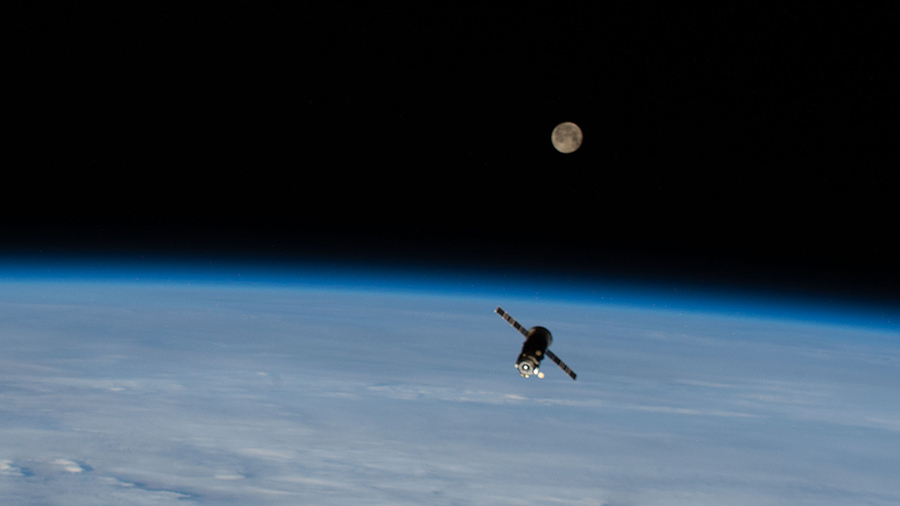
The ISS Progress 75 resupply ship is pictured with a Full Moon above the Earth’s horizon after undocking from the station. Credits: NASA

NASA+, NASA Television, the agency’s website and the NASA app are providing live coverage of the launch of a Roscosmos cargo spacecraft to the International Space Station.

The unpiloted Progress 87 is scheduled to lift off on a Soyuz rocket at 10:25 p.m. EST Wednesday, Feb. 14 (8:25 a.m. Baikonur time Thursday, Feb. 15) from the Baikonur Cosmodrome in Kazakhstan. Progress will dock to the aft port of the Zvezda service module two days later at 1:12 a.m. EST Saturday, Feb. 17 . NASA coverage of rendezvous and docking will begin at 12:30 a.m.


Learn more about station activities by following the space station blog, @space_station and @ISS_Research on X, as well as the ISS Facebook and ISS Instagram accounts.

Get weekly video highlights at: https://roundupreads.jsc.nasa.gov/videoupdate/

Get the latest from NASA delivered every week. Subscribe here: www.nasa.gov/subscribe

Powered by WPeMatico

Get The Details…

Abby Graf

Crew Replaces Scientific Hardware; Cargo Craft Readies for Launch

Crew Replaces Scientific Hardware; Cargo Craft Readies for Launch

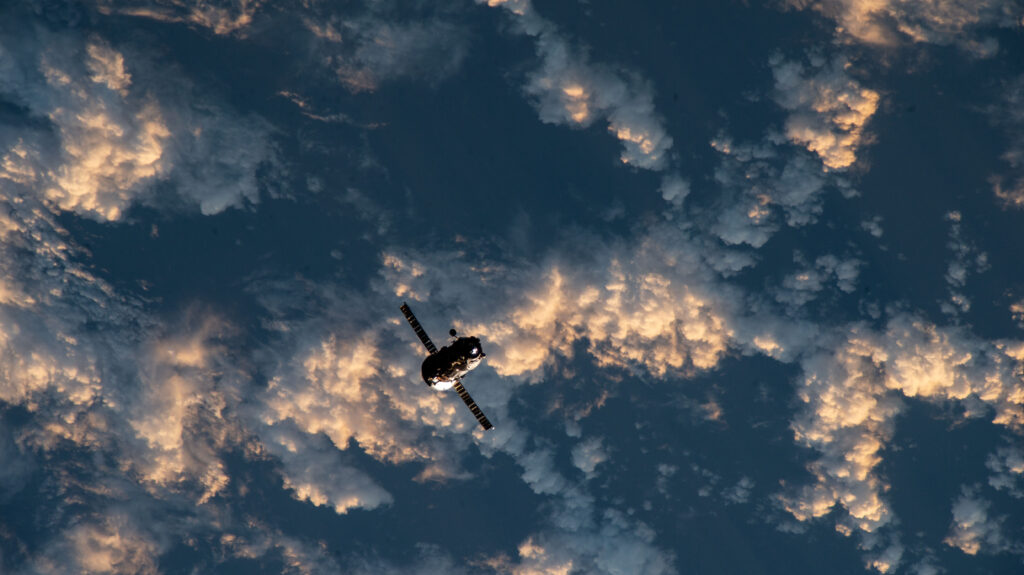
The ISS Progress 81 resupply ship from Roscosmos is pictured 265 miles above the Pacific Ocean after undocking from the Zvezda service module's rear port on Feb. 7, 2023.
The ISS Progress 81 resupply ship from Roscosmos is pictured 265 miles above the Pacific Ocean after undocking from the Zvezda service module’s rear port on Feb. 7, 2023.

The Expedition 70 crew is counting down to the arrival of new cargo as Progress nears its launch on Wednesday. Aboard the International Space Station, scientific hardware replacements and cargo audits topped the schedule for the seven orbital residents.

The Progress 87 cargo craft is scheduled to launch from the Baikonur Cosmodrome in Kazakhstan at 10:25 p.m. EST on Wednesday, Feb. 14. Loaded with nearly three tons of food, fuel, and supplies, Progress will dock to the station around 1:12 a.m. Saturday, Feb. 17, where it will remain for approximately six months.

In the Kibo Laboratory, Flight Engineer Satoshi Furukawa of JAXA (Japan Aerospace Exploration Agency) spent the day working on the Electrostatic Levitation Furnace (ELF). ELF allows safe thermophysical research in microgravity, providing scientists and engineers the opportunity to observe what happens to materials exposed to high temperatures in the space environment. With assistance from Flight Engineer Loral O’Hara of NASA, Furukawa retrieved ELF, then replaced sensor controllers on the device before reinstalling it.

O’Hara completed some orbital plumbing tasks in the morning, and after assisting Furukawa, she swapped the sleeves in the Life Sciences Glovebox, which is a sealed work area astronauts use to conduct various life sciences and technology investigations.

In the Destiny module, Commander Andreas Mogensen of ESA (European Space Agency) installed new sample cartridges in the Materials Science Laboratory, a payload used for materials research in microgravity. Afterward, Mogensen collected water samples from the station’s Potable Water Dispenser, before completing a VR for Exercise and VR Mental Care session.

As part of ongoing science, crew members study burning in microgravity to determine how material flammability is affected by fuel temperatures through an experiment called SoFIE-GEL. In the morning, Flight Engineer Jasmin Moghbeli of NASA replaced experiment samples for the investigation. She then moved on to cargo ops, unloading supplies and science that were delivered aboard Northrop Grumman’s 20th commercial resupply mission.

In the Roscosmos segment, the trio of cosmonauts—Oleg Kononenko, Nikolai Chub, and Konstantin Borisov—kept busy with inventory and cargo audits throughout the day. Borisov also ran a Pilot-T session, an ongoing experiment that allows crew members to practice piloting techniques.


Learn more about station activities by following the space station blog, @space_station and @ISS_Research on X, as well as the ISS Facebook and ISS Instagram accounts.

Get weekly video highlights at: https://roundupreads.jsc.nasa.gov/videoupdate/

Get the latest from NASA delivered every week. Subscribe here: www.nasa.gov/subscribe

Powered by WPeMatico

Get The Details…

Abby Graf

Tech Installs and Maintenance for Crew Ahead of Cargo Launch

Tech Installs and Maintenance for Crew Ahead of Cargo Launch

Expedition 70 Flight Engineers (from left) Jasmin Moghbeli and Loral O'Hara, both from NASA, pose for a portrait inside the Destiny laboratory module.
Expedition 70 Flight Engineers (from left) Jasmin Moghbeli and Loral O’Hara, both from NASA, pose for a portrait inside the Destiny laboratory module.

Equipment installs and station maintenance topped the in-orbit schedule aboard the International Space Station on Tuesday. The Expedition 70 crew members expanded on work that began yesterday while completing some maintenance around station as they await the arrival of an upcoming cargo craft.

The Progress 87 cargo craft is scheduled to launch from the Baikonur Cosmodrome in Kazakhstan at 10:25 p.m. EST on Wednesday, Feb. 14. Loaded with nearly three tons of food, fuel, and supplies, Progress will dock to the station around 1:12 a.m. Saturday, Feb. 17.

As one cargo resupply ship readies for launch, two cosmonauts—Oleg Kononenko and Nikolai Chub—were on duty last night, Feb. 12, to monitor the departure of the Progress 85 cargo craft. Progress undocked from the orbital lab at 9:09 p.m. before it reentered Earth’s atmosphere three hours later and harmlessly burned up over the Pacific Ocean.

Kononenko and Chub had a light duty day afterward, focusing on cargo audits and preparations for future experiments.

Meanwhile, ESA (European Space Agency) Commander Andreas Mogensen spent the bulk of his day working in the Nanoracks Bishop Airlock. He installed the Nanoracks-GITAI S2 modular robotic arm, which demonstrates the design, build, and operations of extravehicular robotic systems. This tech demonstration aims to aid in the development of robots for in-space assembly and manufacturing, supporting future commercial lunar missions.

NASA astronaut Jasmin Moghbeli spent her day on a few different tasks, collecting blood pressure data for the Vascular Aging investigation, stowing the Bio-Monitor garment and headband she donned yesterday, and collecting atmosphere samples throughout the station.

NASA astronaut Loral O’Hara assisted Mogensen with the Nanoracks-GITAI S2 install before photographing Plant-Microbe Interactions in Space (APEX-10) petri plates, which launched aboard Northrop Grumman’s 20th commercial resupply mission to the station. The new investigation examines whether beneficial microbes can mitigate some of the negative effects the space environment can have on plant growth and development.

In the Kibo Laboratory, JAXA (Japan Aerospace Exploration Agency) Flight Engineer Satoshi Furukawa spent his day recording space demonstrations suggested by students for JAXA’s Try Zero-Gravity educational activity. Students can vote for and suggest tasks for JAXA astronauts to carry out on station, such as putting in eye drops, performing push-ups on the ceiling, and more, to allow the youth to interact with station residents and learn about living and working in microgravity.

In the Roscosmos segment, Flight Engineer Konstantin Borisov completed some orbital maintenance tasks and ran a distillation cycle on the Roscosmos water management system.


Learn more about station activities by following the space station blog, @space_station and @ISS_Research on X, as well as the ISS Facebook and ISS Instagram accounts.

Get weekly video highlights at: https://roundupreads.jsc.nasa.gov/videoupdate/

Get the latest from NASA delivered every week. Subscribe here: www.nasa.gov/subscribe

Powered by WPeMatico

Get The Details…

Abby Graf