Immunology, Space Biology, and Cleaning for Crew on Thursday

Immunology, Space Biology, and Cleaning for Crew on Thursday


The southern coast of Africa is pictured from the International Space Station's
The southern coast of Africa is pictured from the International Space Station’s “window to the world,” or cupola, as it soared 265 miles above.

Expedition 71 continued microgravity research on Thursday as the crew spent the day on immunology work and space biology. Two crew members also worked on the orbital upkeep tasks that began earlier in the week.

Aboard the International Space Station, one investigation, Immunity Assay, takes a closer look at immune changes that happen in flight through the processing of biological samples. NASA Flight Engineer Matthew Dominick started the day by collecting samples for Immunity Assay, then NASA Flight Engineer Jeanette Epps processed and installed the sample tubes into Kubik. Understanding how the human body reacts to spaceflight is one step in ensuring spacefarers stay safe and healthy on future long-duration missions in low Earth orbit, to the Moon, and eventually, to Mars.

After immunology work wrapped, Epps moved into the Kibo Laboratory to assemble Hicari sample cartridges for upcoming operations. Hicari, an experiment led by the JAXA (Japanese Aerospace Exploration Agency), investigates high-quality crystal growth of semiconductors.

Meanwhile, Dominick worked with NASA Flight Engineer Tracy C. Dyson to charge and prep batteries and install data recorders in two spacesuits for a round of upcoming spacewalks this summer. The duo then spent the rest of the afternoon inside the station’s cupola, detailing and cleaning its seven windows.

In the Columbus Laboratory Module, NASA Flight Engineer Mike Barratt collected water samples from the water processing tank, then spent the day extracting and sequencing DNA from the samples to identify bacteria and fungi as part of the GiSMOS investigation. Characterizing microbial communities in the water system is critical to sustaining the health of crew members and vehicles on future missions aboard the orbiting complex.

Human health research continued in the Roscosmos segment as two cosmonauts—Oleg Kononenko and Nikolai Chub—spent part of their day donning a device that assesses cardiovascular function in microgravity. Chub then reconfigured some of the cameras used by crewmembers in space and practiced his piloting techniques during a Pilot-T session, while his crewmate, Alexander Grebenkin, completed some maintenance in the Nauka module.

On Earth, NASA, Boeing, and ULA (United Launch Alliance) teams continue working toward the agency’s Boeing Crew Flight Test to the International Space Station. The teams are targeting launch no earlier than 4:43 p.m. EDT Tuesday, May 21. For more information, please visit the Crew Flight Test blog.


Learn more about station activities by following the space station blog, @space_station and @ISS_Research on X, as well as the ISS Facebook and ISS Instagram accounts.

Get weekly updates from NASA Johnson Space Center at: https://roundupreads.jsc.nasa.gov/

Get the latest from NASA delivered every week. Subscribe here: www.nasa.gov/subscribe

Powered by WPeMatico

Get The Details…

Abby Graf

Crew Works Human Research and Payload Prep, Orbital Upkeep Continues

Crew Works Human Research and Payload Prep, Orbital Upkeep Continues

NASA astronaut Jeanette Epps prepares tubes to collect samples from the crew for the Immunity Assay investigation.

Orbital upkeep was at the forefront of Wednesday’s schedule aboard the International Space Station, but the Expedition 71 crew did have some time to conduct human health research and prepare scientific payloads for future operations.

NASA Flight Engineer Mike Barratt spent the morning completing tasks for the CIPHER investigation, collecting blood samples—with assistance from NASA Flight Engineer Jeanette Epps—and completing a cognition test. CIPHER, or the Complement of Integrated Protocols for Human Exploration Research, helps scientists on Earth pinpoint how the human body reacts to long-duration missions in space.

After human research activities wrapped, Barratt moved into the Destiny laboratory module to help NASA Flight Engineer Tracy C. Dyson install a vacuum jumper to the Major Constituent Analyzer, which checks the quality of the orbital complex’s air. The duo was then joined by Epps and NASA Flight Engineer Matthew Dominick for a midday conference with ground teams.

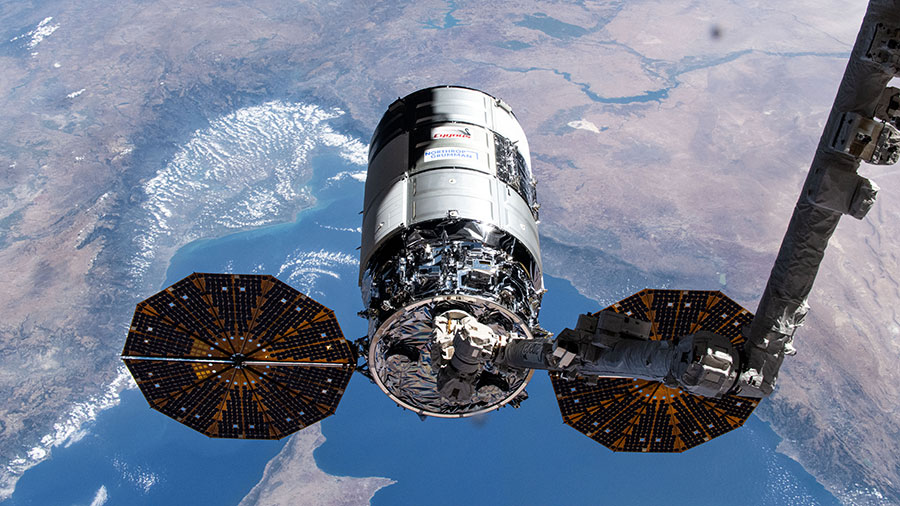
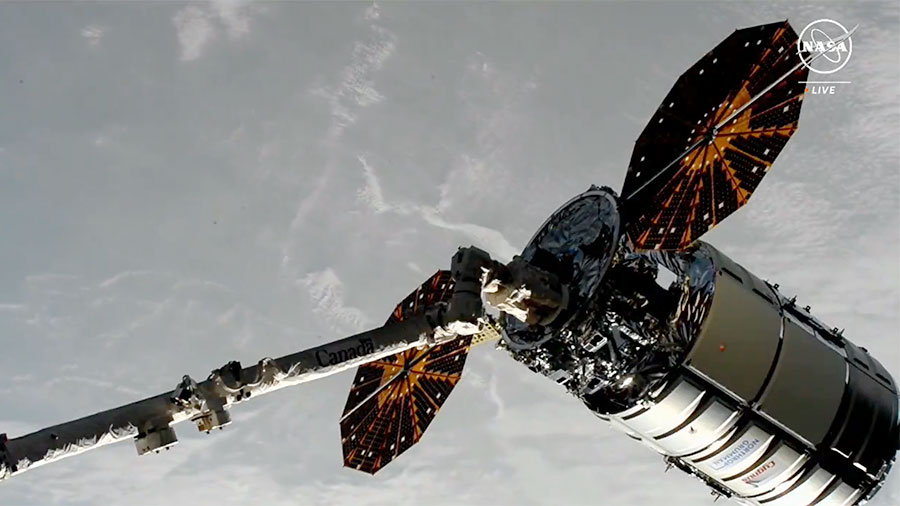
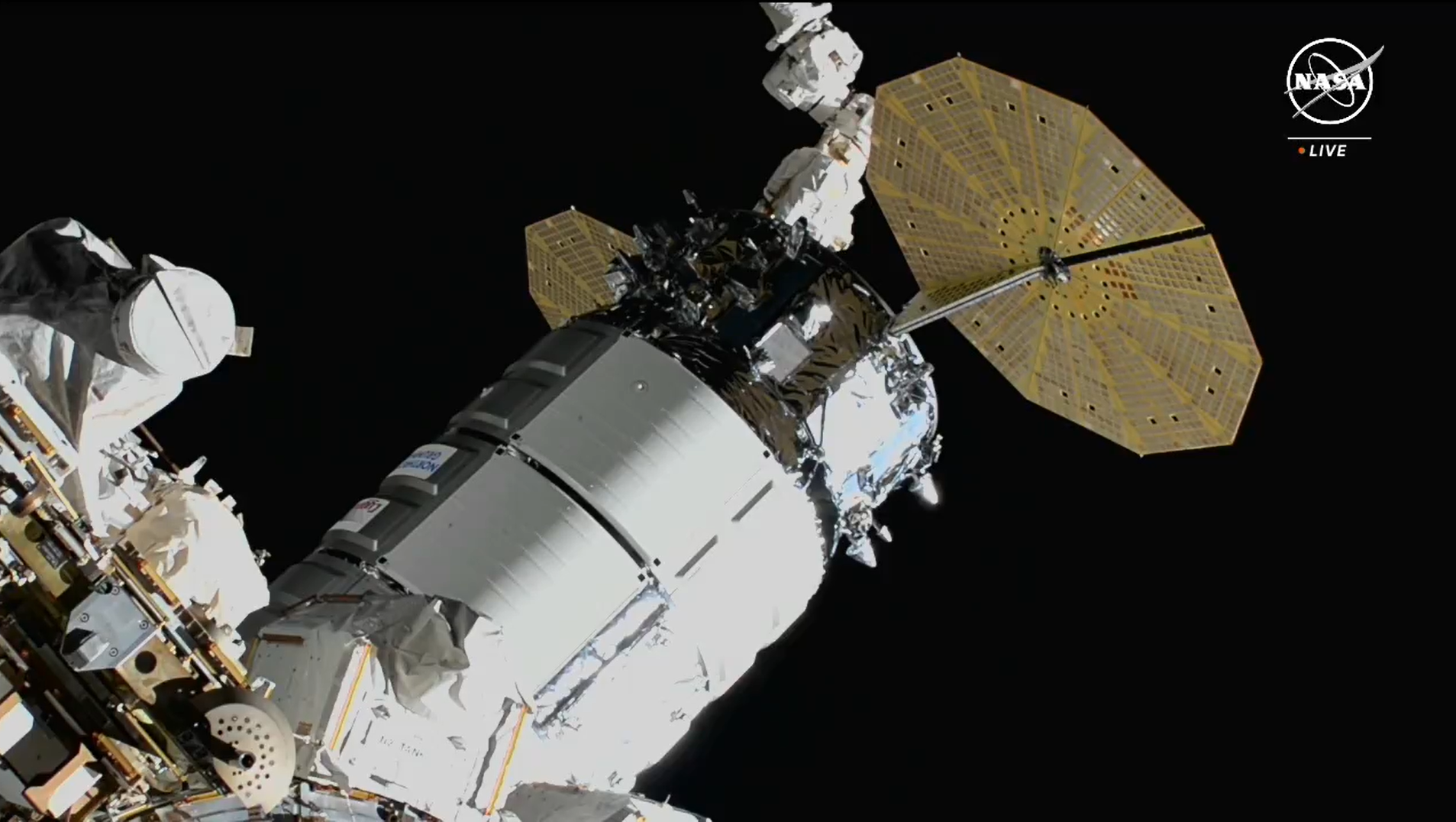
Epps also spent the day gathering kits for future Immunity Assay operations and setting up Kubik, an incubator designed to study biological samples in microgravity. In the afternoon, she worked on cargo operations, stowing items in Northrop Grumman’s Cygnus spacecraft.

Dyson and Dominick worked on additional orbital plumbing tasks throughout the day, inspecting the toilet after wrapping up maintenance and re-installing the port stalls to the bathroom. The duo also worked inside the station’s cupola, or “window to the world,” separately to clean the area and its seven windows.

Near the end of the day, Dyson removed and replaced samples from the Materials Science Lab and prepared the payload for its next sample run, while Dominick completed some on-orbit medical training.

In the Zarya module, current station Commander Oleg Kononenko ran the 3D printer, while Flight Engineer Alexander Grebenkin completed some computer maintenance. Later on, Grebenkin practiced his piloting techniques during a Pilot-T session, and his Roscosmos crewmate, Nikolai Chub, investigated the behavior of liquid phases exposed to different temperatures and vibrations in microgravity.

On Earth, NASA, Boeing, and ULA (United Launch Alliance) teams continue working remaining open tasks in preparation for the agency’s Boeing Crew Flight Test to the International Space Station. The teams now are targeting a launch date of no earlier than 4:43 p.m. EDT on Tuesday, May 21, to complete additional testing. For more information, please visit the CFT blog.


Learn more about station activities by following the space station blog, @space_station and @ISS_Research on X, as well as the ISS Facebook and ISS Instagram accounts.

Get weekly updates from NASA Johnson Space Center at: https://roundupreads.jsc.nasa.gov/

Get the latest from NASA delivered every week. Subscribe here: www.nasa.gov/subscribe

Powered by WPeMatico

Get The Details…

Abby Graf

Crew Works Maintenance; NASA, Boeing Target No Earlier Than May 21 for Launch

Crew Works Maintenance; NASA, Boeing Target No Earlier Than May 21 for Launch

The last rays of an orbital sunset illuminate Earth's atmosphere and reveal the cloud tops in this photograph from the International Space Station as it orbited 258 miles above the Atlantic Ocean.
The last rays of an orbital sunset illuminate Earth’s atmosphere and reveal the cloud tops in this photograph from the International Space Station as it orbited 258 miles above the Atlantic Ocean.

While science often occupies the crew schedule aboard the International Space Station, upkeep of the orbiting complex is just as important to ensure the longevity of microgravity operations. On Tuesday, the Expedition 71 septet spent another full day conducting maintenance on scientific payloads and life support systems.

NASA Flight Engineer Jeanette Epps kicked off the day preparing measurement aids for crew quarter inspections that were conducted later in the day. Afterward, Epps charged spacesuit batteries in preparation for a round of spacewalks this summer, then moved into the Tranquility module to collect and analyze samples from the Water Processor Assembly, which provides clean, drinkable water for crew members after being recycled from multiple sources.

After Epps prepped the measurement aids, NASA Flight Engineer Matthew Dominick entered the crew quarters to take airflow measurements from the intake ducts. Dominick then continued orbital plumbing work he began yesterday, removing and replacing some hoses, the air filter, and wastewater filter in the station’s toilet. He completed the day by reactivating the bathroom and stowing tools used for the repairs.

Though maintenance was at the forefront of today’s microgravity work, Flight Engineer Mike Barratt did have some time to collect biological samples for ongoing human research. CIPHER, or the Complement of Integrated Protocols for Human Exploration Research, is a suite of total-body experiments that help researchers pinpoint how the human body reacts to long-duration missions in space. Through the collection of biological samples, scientists can examine changes to cartilage health, inflammation and immune function, kidney health, and more.

After his human research activities, Barratt moved into the Destiny laboratory module to service the Cold Atom Lab, which chills atoms to near absolute zero to observe the fundamental behaviors and quantum characteristics that are difficult or impossible to probe at higher temperatures. Barratt reconnected power and data cables and the filter to the quantum physics device.

Following Dominick’s intake duct measurements in the morning, NASA Flight Engineer Tracy C. Dyson spent the afternoon in the crew quarters taking additional measurements. She was also joined by cosmonaut and current space station Commander Oleg Kononenko and Flight Engineer Nikolai Chub to complete some on orbit medical training, reviewing procedures that would need to be taken in the event an emergency were to occur on station that requires the use of CPR.

In the Zarya module, Flight Engineer Alexander Grebenkin of Roscosmos assessed lighting conditions throughout the segment, then ran a distillation cycle on the wastewater processor.

On Earth, NASA, Boeing, and ULA (United Launch Alliance) teams continue working remaining open tasks in preparation for the agency’s Boeing Crew Flight Test to the International Space Station. The teams now are targeting a launch date of no earlier than 4:43 p.m. EDT on Tuesday, May 21, to complete additional testing. For more information, please visit the CFT blog.


Learn more about station activities by following the space station blog, @space_station and @ISS_Research on X, as well as the ISS Facebook and ISS Instagram accounts.

Get weekly updates from NASA Johnson Space Center at: https://roundupreads.jsc.nasa.gov/

Get the latest from NASA delivered every week. Subscribe here: www.nasa.gov/subscribe

Powered by WPeMatico

Get The Details…

Abby Graf

NASA’s Boeing Crew Flight Test Eyes Next Launch Opportunity

NASA’s Boeing Crew Flight Test Eyes Next Launch Opportunity

United Launch Alliance's Atlas V rocket with Boeing Starliner's spacecraft atop at Space Launch Complex-41 ahead of NASA's Boeing Crew Flight Test.
A United Launch Alliance Atlas V rocket with Boeing’s CST-100 Starliner spacecraft aboard is seen as it is rolled out of the Vertical Integration Facility to the launch pad at Space Launch Complex 41 ahead of the NASA’s Boeing Crew Flight Test, Saturday, May 4, 2024 at Cape Canaveral Space Force Station in Florida. Photo credit: NASA/Joel Kowsky

NASA, Boeing, and ULA (United Launch Alliance) teams continue working remaining open tasks in preparation for the agency’s Boeing Crew Flight Test to the International Space Station. The teams now are targeting a launch date of no earlier than 4:43 p.m. EDT on Tuesday, May 21, to complete additional testing.

On May 11, the ULA team successfully replaced a pressure regulation valve on the liquid oxygen tank on the Atlas V rocket’s Centaur upper stage. The team also performed re-pressurization and system purges, and tested the new valve, which performed normally.

Starliner teams are working to resolve a small helium leak detected in the spacecraft’s service module traced to a flange on a single reaction control system thruster. Helium is used in spacecraft thruster systems to allow the thrusters to fire and is not combustible or toxic.

NASA and Boeing are developing spacecraft testing and operational solutions to address the issue. As a part of the testing, Boeing will bring the propulsion system up to flight pressurization just as it does prior to launch, and then allow the helium system to vent naturally to validate existing data and strengthen flight rationale. Mission teams also completed a thorough review of the data from the May 6 launch attempt and are not tracking any other issues.

The Atlas V and Starliner remain in the Vertical Integration Facility at Space Launch Complex-41 on Cape Canaveral Space Force Station in Florida.

NASA astronauts Butch Wilmore and Suni Williams, still in preflight quarantine, returned to Houston on May 10 to spend extra time with their families as prelaunch operations progress. The duo will fly back to NASA’s Kennedy Space Center in Florida in the coming days.

Wilmore and Williams are the first to launch aboard Boeing’s Starliner to the space station as part of the agency’s Commercial Crew Program. The astronauts will spend about a week at the orbiting laboratory before returning to Earth and making a parachute and airbag-assisted landing in the southwestern United States.

After successful completion of the mission, NASA will begin the final process of certifying Starliner and its systems for crewed rotation missions to the space station.

Powered by WPeMatico

Get The Details…

Danielle Sempsrott

Station Maintenance and Upkeep Top Monday’s Schedule

Station Maintenance and Upkeep Top Monday’s Schedule

 Expedition 70 Flight Engineer and NASA astronaut Matthew Dominick smiles for a portrait during photography duties aboard the International Space Station.
Expedition 70 Flight Engineer and NASA astronaut Matthew Dominick smiles for a portrait during photography duties aboard the International Space Station.

A full day of orbital upkeep and maintenance kept the Expedition 71 crew busy on Monday as the septet continues to prepare the International Space Station for the arrival of two astronauts.

In the Tranquility module, NASA astronaut Matthew Dominick kicked off the morning by removing the top and bottom port stalls of the orbital lab’s toilet. Removing the stalls allowed him and his NASA crewmate, Tracy C. Dyson, to access the conductivity sensor and pump for repairs. The duo then worked together throughout the day to replace hardware in the station’s bathroom before reinstalling the port stalls and moving onto other work.

Once orbital plumbing duties wrapped, Dominick moved into the cupola, or “window to the world,” to inspect and photograph the conditions of the windows. Dyson assisted NASA astronaut Mike Barratt with a Dragon spacesuit check to ensure the suit and its components—such as the ear pieces, garment shirt, helmet visor, boots, and more—are still comfortable and working properly.

Barratt also conducted some maintenance on the station’s treadmill and his NASA crewmate, Jeanette Epps, performed maintenance on the Advanced Resistive Exercise Device, or ARED. Epps replaced the cable arm ropes on the device’s pulley system, then realigned the tension plates. Later on, she also completed a monthly inspection of the orbital outpost’s defibrillator.

In the Zarya module, Roscosmos Flight Engineer Alexander Grebenkin spent the entire day replacing different sections of soft air ducts. His crewmate, Nikolai Chub, did have some time to perform some science and ran an experiment that assesses the corrosion of various coatings and materials in microgravity. Station Commander Oleg Kononenko photographed Chub during the experiment, then moved on to assess the condition of surfaces throughout the Roscosmos segment.

On Earth, preparations continue for NASA’s Boeing Crew Flight Test ahead of the next launch opportunity, which is targeted for no earlier than 6:16 p.m. EDT Friday, May 17. NASA astronauts Butch Wilmore and Suni Williams returned to Houston over the weekend as work progressed on a valve replacement on the United Launch Alliance Atlas V rocket Centaur upper stage. For the latest on the mission, please visit NASA’s blog.


Learn more about station activities by following the space station blog, @space_station and @ISS_Research on X, as well as the ISS Facebook and ISS Instagram accounts.

Get weekly updates from NASA Johnson Space Center at: https://roundupreads.jsc.nasa.gov/

Get the latest from NASA delivered every week. Subscribe here: www.nasa.gov/subscribe

Powered by WPeMatico

Get The Details…

Abby Graf