
Light Duty Day Still Sees Space Science and Orbital Reboost

Light Duty Day Still Sees Space Science and Orbital Reboost
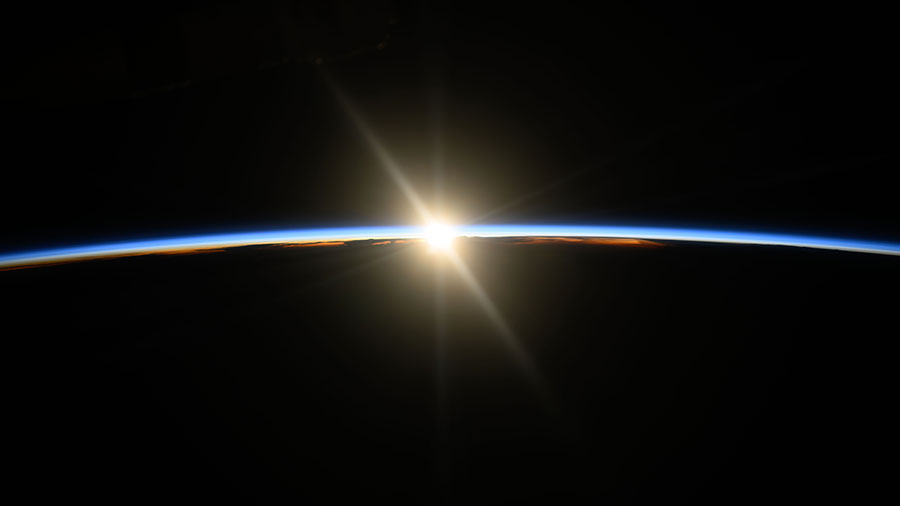
The space station was orbiting above the Pacific Ocean when this photograph captured the first rays of an orbital sunrise illuminating Earth's atmosphere.
The space station was orbiting above the Pacific Ocean when this photograph captured the first rays of an orbital sunrise illuminating Earth’s atmosphere.

Six of the nine crew members living and working aboard the International Space Station had a light duty day on Thursday fitting in some time for science equipment maintenance. Meanwhile, three cosmonauts stayed busy with their full schedule of Roscosmos space research and lab upkeep.

Thursday’s main research activity consisted of cleaning the Electrostatic Levitation Furnace (ELF) planned for Expedition 71 Flight Engineer Tracy C. Dyson and Crew Flight Test Pilot Suni Williams, both from NASA. The duo worked together swapping samples and cleaning the inside of the advanced space research furnace. The ELF heats material samples using a containerless technique to observe their thermophysical properties and reduce imperfections and contamination common in Earth’s gravity. The orbital outpost’s weightless environment may improve the manufacturing of semiconductors, alloys, and more benefitting both Earth and space industries.

Williams’ crewmate Starliner Commander Butch Wilmore of NASA assembled the Sphere Camera-2 during the afternoon. The ultra-high resolution video camera is being tested for its ability to film crew activities possibly leading to advances in lunar and planetary photography and external spacecraft inspections.

NASA Flight Engineers Mike Barratt and Jeanette Epps joined each other for a few moments of examining stem cells samples inside the KERMIT state-of-the-art microscope for a cancer treatment investigation. NASA Flight Engineer Matthew Dominick connected components on the advanced resistive exercise device, or ARED, for an investigation exploring ways to maximize the effects of exercise in microgravity.

Northrop Grumman’s Cygnus space freighter fired its engine for over 19 minutes early Thursday afternoon boosting the orbital outpost’s altitude to 260 miles by 257.9 miles. The orbital reboosts counter atmospheric drag and prepare the space station for upcoming spacecraft activities.

Roscosmos station Commander Oleg Kononenko set up Earth observation hardware to study clouds in the Earth’s upper atmosphere then configured camera and video hardware during his shift on Thursday. Flight Engineer Nikolai Chub continued investigating how microalgae can be used to produce oxygen and consume carbon dioxide improving space life support systems. Flight Engineer Alexander Grebenkin strapped on a sensor-packed cap that recorded his reactions as he practiced futuristic planetary and robotic piloting techniques on a computer.


Learn more about station activities by following the space station blog, @space_station and @ISS_Research on X, as well as the ISS Facebook and ISS Instagram accounts.

Get weekly video highlights at: https://roundupreads.jsc.nasa.gov/videoupdate/

Get the latest from NASA delivered every week. Subscribe here: www.nasa.gov/subscribe

Powered by WPeMatico

Get The Details…

Mark Garcia

Wednesday’s Research Promoting Self-Sufficient Crews Farther Away from Earth

Wednesday’s Research Promoting Self-Sufficient Crews Farther Away from Earth

The Full Moon pictured above Earth's horizon as the space station soared above the Indian Ocean south of the African island nation of Madagascar.
The Full Moon pictured above Earth’s horizon as the space station soared above the Indian Ocean south of the African island nation of Madagascar.

Manufacturing tools and medicine in space is a key objective for NASA and its international partners as crews train for longer missions farther away from Earth. Humans living in space habitats will need to be self-sufficient to stay heathy and run successful missions since launching supplies from Earth will be less feasible and uneconomical.

NASA astronauts Jeanette Epps of Expedition 71 and Suni Williams, Pilot for Boeing’s Crew Flight Test, joined each other in the Columbus laboratory module and configured the Metal 3D printer on Wednesday. The duo first uninstalled the device from Columbus’ European Drawer Rack-2 (EDR-2), a multipurpose experiment rack, to access an experimental sample printed with stainless steel. They replaced a substrate in the advanced manufacturing hardware then reinstalled the 3D printer back in the EDR-2. Researchers are exploring how the Metal 3D printer operates in the microgravity conditions of weightlessness and radiation as well as its ability to manufacture tools and parts on demand during space missions.

NASA Flight Engineer Mike Barratt explored how stem cells grow in microgravity to improve cell therapies on Earth and cell manufacturing in space. Working in the Kibo laboratory module, Barratt serviced stem cell samples inside the Life Science Glovebox. The cells are undergoing a cellular reprogramming process and the samples will be returned to Earth for further analysis. Scientists are pursuing the production of stem cells in space that can be regenerated into human cells or tissues for personalized medicine.

Flight Engineer Matthew Dominick partnered with Crew Flight Test Commander Butch Wilmore, both NASA astronauts, checking CubeSat configurations before they are deployed into Earth orbit. The duo ensured the shoebox-sized satellites were secured in their launch cases and clear of debris inside the Small Satellite Orbital Deployer they are packed in. Afterward, they installed the deployer onto a multipurpose experiment platform and loaded it inside Kibo’s airlock where it will soon be placed in the vacuum of space to release the CubeSats for a variety of research.

NASA Flight Engineer Tracy C. Dyson focused on housekeeping tasks as she cleaned the crew quarters in the starboard side of the Harmony module. She vacuumed dust collected on ventilation systems and wiped down surfaces inside the module where Boeing’s Starliner and the SpaceX Dragon Endeavour spacecraft are docked.

Working in the Roscosmos segment of the orbiting lab, Commander Oleg Kononenko set up Earth observation gear, inspected the aft vestibule of the Zvezda service module, then explored futuristic planetary and robotic piloting techniques. Flight Engineer Nikolai Chub assisted Kononenko with the Zvezda checks then he explored how microalgae can be used to produce oxygen and consume carbon dioxide improving space life support systems. Flight Engineer Alexander Grebenkin spent his day on life support maintenance transferring from resupply tanks and performing coolant leak checks on the aur conditioning system.


Learn more about station activities by following the space station blog, @space_station and @ISS_Research on X, as well as the ISS Facebook and ISS Instagram accounts.

Get weekly video highlights at: https://roundupreads.jsc.nasa.gov/videoupdate/

Get the latest from NASA delivered every week. Subscribe here: www.nasa.gov/subscribe

Powered by WPeMatico

Get The Details…

Mark Garcia

Crew Studies Space Botany, Lunar Cement to Inform Future Missions

Crew Studies Space Botany, Lunar Cement to Inform Future Missions

NASA astronaut Suni Williams installs experimental life support hardware inside the Microgravity Science Glovebox located inside the Destiny laboratory module.

Space botany and lunar construction techniques once again dominated the science schedule aboard the International Space Station on Tuesday. The orbital crewmates are helping researchers plan future missions to the Moon, Mars, and beyond.

NASA Flight Engineer Jeanette Epps continued studying how microgravity and radiation affect thale cress plants at the molecular and cellular levels in the Kibo laboratory module. She collected and treated plant samples that were incubated inside the Plant Experiment Facility for preservation. At the end of the day’s two experiment runs, she preserved and stowed the samples in a science freezer where they will stay before being returned to Earth for further analysis. Results may inform space agricultural techniques to sustain crews venturing further into space and beyond low-Earth orbit.

NASA Flight Engineer Matthew Dominick explored ways to make cement on the lunar surface to help engineers learn how to build crew habitats in different gravity environments. He removed small simulated lunar cement sample bags that had cured overnight in a thermos and stowed them in a concrete kit for several weeks of hardening at ambient temperature. Afterward, he mixed more bags containing simulated lunar soil and other materials with a liquid solution, placed a bag with hot water in between them, then inserted the samples inside a thermos can for overnight incubation. The samples will be returned to Earth and examined to determine the space-created concrete’s microstructure and mechanical strength.

After the cement work, Dominick assisted NASA Flight Engineer Tracy C. Dyson in the Tranquility module relocating cargo to access the NanoRacks Bishop airlock. Next, Dominick mounted a pressure management device and connected power and data cables inside Tranquility ahead of Bishop’s depressurization. Bishop can be used for cargo stowage or external science operations. Dyson later removed sample cassettes from an advanced sample processor that supported a pair of pharmaceutical manufacturing studies.

NASA astronauts Mike Barratt from Expedition 71 and Butch Wilmore from Boeing’s Crew Flight Test had a light duty day spending a few moments on life support duties. NASA astronaut Suni Williams relaxed all day on Tuesday before joining her crewmate Wilmore at the end of their shift for a crew conference with Boeing flight controllers.

Station Commander Oleg Kononenko and Flight Engineer Nikolai Chub started their morning on maintenance tasks in the Zvezda service module. The duo then moved on transferring water delivered aboard the Progress 89 cargo craft and performing leak checks on the resupply ship. Flight Engineer Alexander Grebenkin also had most of the day off taking time out for medical checks and updating operational documents shipped on Progress.


Learn more about station activities by following the space station blog, @space_station and @ISS_Research on X, as well as the ISS Facebook and ISS Instagram accounts.

Get weekly video highlights at: https://roundupreads.jsc.nasa.gov/videoupdate/

Get the latest from NASA delivered every week. Subscribe here: www.nasa.gov/subscribe

Powered by WPeMatico

Get The Details…

Mark Garcia

This Week’s Science Informing Lunar, Planetary Crewed Missions

This Week’s Science Informing Lunar, Planetary Crewed Missions

Astronaut Matthew Dominick displays a bag containing simulated lunar cement to explore how cement materials could be used to build infrastructure on the lunar surface.

Space botany, lunar construction, and science maintenance were the top research tasks at the beginning of the week for the orbital residents living and working aboard the International Space Station.

Expedition 71 Flight Engineer Jeanette Epps of NASA spent all day Monday carefully treating thale cress plant samples growing inside the Plant Experiment Unit. The botany research device located in the Kibo laboratory module’s Cell Biology Experiment Facility housed the growing plants for 10 days before Epps picked the samples with forceps, washed them in a specialized saline solution, then exposed them to high ultraviolet light for one hour. She is helping researchers understand how plants grow in the radiation and microgravity environment to inform space agriculture techniques for missions to the Moon, Mars, and beyond.

Scientists are also exploring ways to build crew habitats on lunar and planetary surfaces without launching supplies on fuel-consuming cargo missions from Earth. NASA Flight Engineer Matthew Dominick mixed and prepared small bags of simulated lunar cement on Monday for a 24-hour incubation period inside a thermos can. Afterward, the samples will be stowed for several more weeks of hardening at ambient temperatures on the orbital outpost. The space-created cement samples will be returned to Earth for scientists to analyze their microstructure and mechanical strength.

NASA astronauts Tracy C. Dyson and Mike Barratt worked throughout Monday servicing a variety of research hardware ensuring ongoing space science operations produce high-quality results. Dyson worked in the Columbus laboratory module during Monday troubleshooting components on the MARES exercise rack, also known as the Muscle Atrophy Research and Exercise System. MARES enables scientists to gain detailed insights on the effects of weightlessness on an astronaut’s musculoskeletal system. Barratt swapped sample cartridges inside the Materials Science Laboratory, a research furnace facilitating discoveries of new and improved materials as well as new uses for existing materials such as metals, alloys, polymers, and more.

NASA astronaut and Boeing Starliner Pilot Suni Williams assisted Dyson with the MARES troubleshooting work throughout Monday. Afterward, she and Starliner Commander Butch Wilmore from NASA called down to Boeing flight controllers for an hourlong crew conference. Earlier, Wilmore was on life support duty transferring and draining fluids from resupply tanks as well as collecting water samples for microbial analysis.

Cosmonauts Oleg Kononenko and Nikolai Chub have begun unpacking some of the nearly three tons of food, fuel, and supplies that arrived aboard the Progress 89 cargo craft at 1:53 a.m. EDT on Saturday. The duo was on duty early Saturday monitoring Progress during its automated docking to the Zvezda service module’s aft port for six months of cargo activities. Flight Engineer Alexander Grebenkin updated operations documents for the orbiting lab’s Roscosmos segment. He also joined Dominick, Barratt, and Epps and trained for emergency scenarios and an upcoming crew departure aboard the SpaceX Dragon Endeavour spacecraft.


Learn more about station activities by following the space station blog, @space_station and @ISS_Research on X, as well as the ISS Facebook and ISS Instagram accounts.

Get weekly video highlights at: https://roundupreads.jsc.nasa.gov/videoupdate/

Get the latest from NASA delivered every week. Subscribe here: www.nasa.gov/subscribe

Powered by WPeMatico

Get The Details…

Mark Garcia

Space Delivery Arrives After Roscosmos Cargo Craft Docks

Space Delivery Arrives After Roscosmos Cargo Craft Docks

The Progress 89 cargo craft approaches the space station above the south Pacific Ocean for an automated docking to the Zvezda service module. Credit: NASA TV

The unpiloted Progress 89 spacecraft arrived at the aft port of the orbiting laboratory’s Zvezda Service module at 1:53 a.m. EDT, Saturday, Aug. 17. The spacecraft launched at 11:20 p.m. Wednesday, Aug. 14 (8:20 a.m. Baikonur time, Thursday, Aug. 15), on a Soyuz rocket from the Baikonur Cosmodrome in Kazakhstan.

The Roscosmos spacecraft is delivering about three tons of food, fuel, and supplies for the Expedition 71 crew aboard the International Space Station and will remain docked for approximately six months before departing for a re-entry into Earth’s atmosphere to dispose of trash loaded by the crew.


Learn more about station activities by following the space station blog, @space_station and @ISS_Research on X, as well as the ISS Facebook and ISS Instagram accounts.

Get weekly video highlights at: https://roundupreads.jsc.nasa.gov/videoupdate/

Get the latest from NASA delivered every week. Subscribe here: www.nasa.gov/subscribe

Powered by WPeMatico

Get The Details…

Mark Garcia