Progress Cargo Spacecraft Launching to Station Live on NASA+
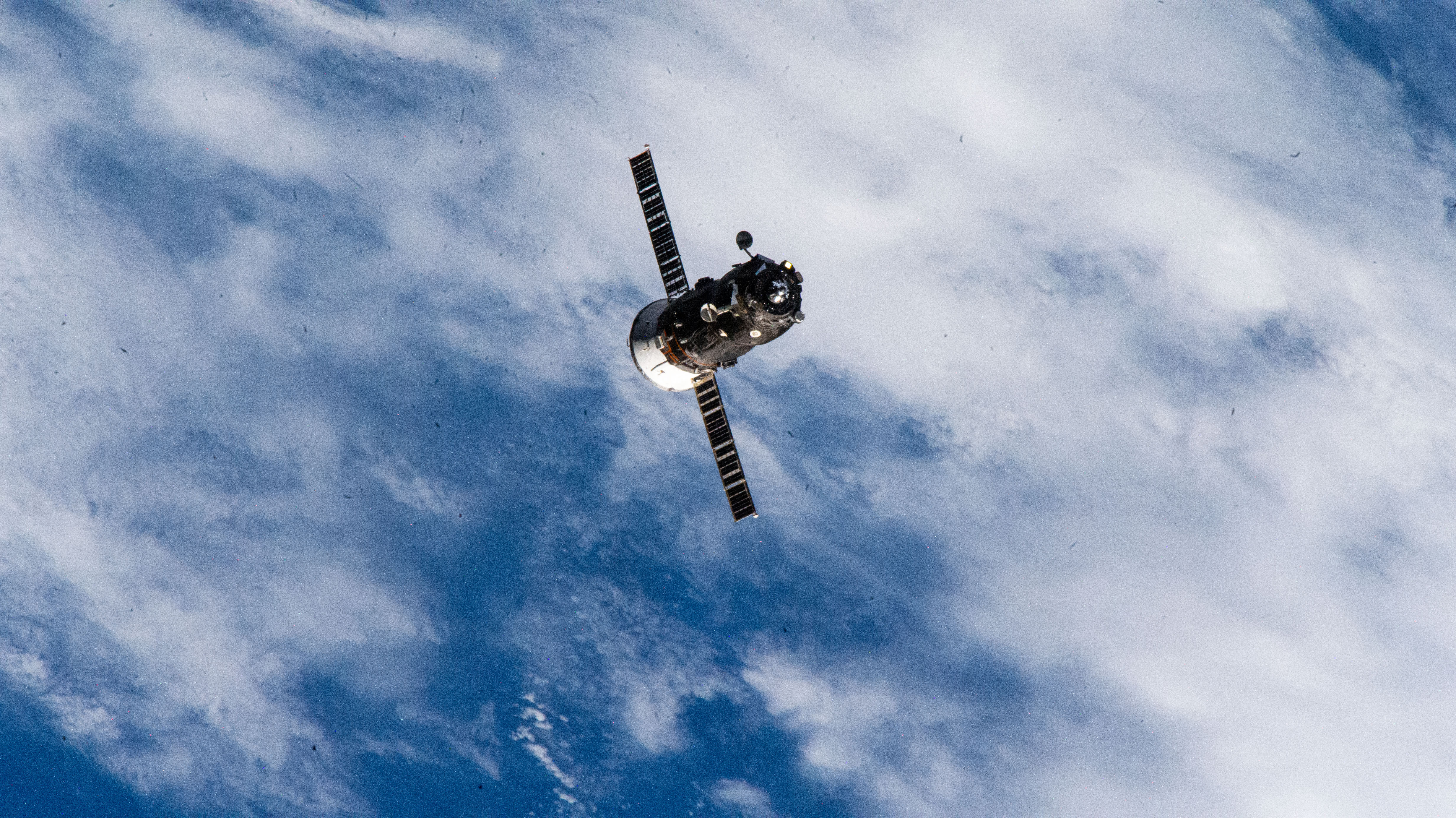
A Progress spacecraft is pictured from the International Space Station as it orbited 257 miles above a cloudy pacific ocean.
NASA’s live coverage is underway on NASA+ and the agency’s website. Learn how to watch NASA content through a variety of platforms, including social media.
The unpiloted Progress 90 spacecraft is scheduled to launch at 7:22 a.m. EST (5:22 p.m. Baikonur time) Thursday, Nov. 21, on a Soyuz rocket from the Baikonur Cosmodrome in Kazakhstan. The Roscosmos spacecraft will liftoff carrying about three tons of food, fuel, and supplies for the Expedition 72 crew aboard the International Space Station.
After a two-day in-orbit journey to the station, the spacecraft will automatically dock to the space-facing port of the orbiting laboratory’s Poisk module at 9:36 a.m., Saturday, Nov. 23. NASA’s coverage of rendezvous and docking will begin at 8:45 a.m. on NASA+ and the agency’s website.
Astronaut Health Studies Fill Crew Day Before Thursday’s Cargo Launch
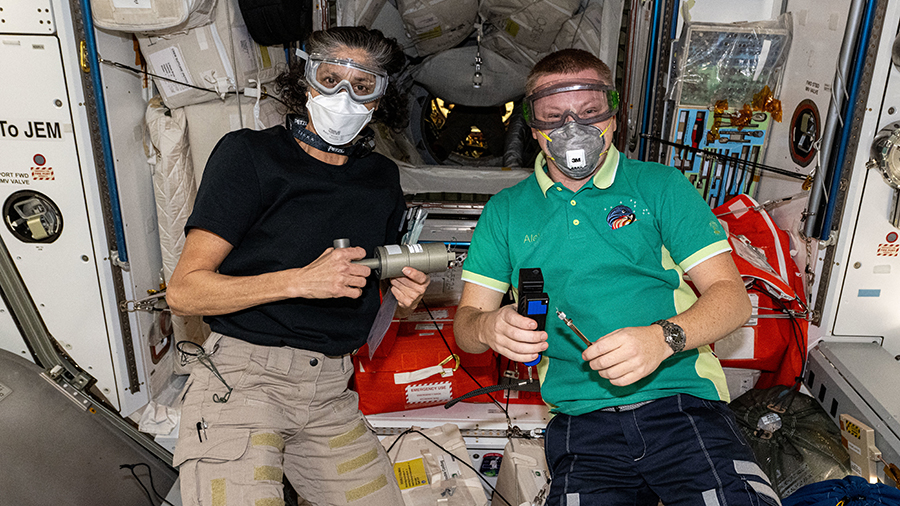
Astronaut Suni Williams (left) and cosmonaut Aleksandr Gorbunov pose for a portrait wearing personal protective equipment before entering the SpaceX Dragon cargo spacecraft.
Keeping astronauts healthy on long term space missions is a key research topic this week aboard the International Space Station. Back on the ground, a cargo craft is counting down to its launch to resupply the Expedition 72 crew.
NASA Flight Engineers Don Pettit and Nick Hague worked together all day Wednesday exploring how living in space affects inflammation, or how the body responds to injury or infection. The duo worked in the Kibo laboratory module servicing biological samples and observing space-caused inflammatory changes using specialized imaging gear. Insights from the biology study may help researchers prevent space-caused immune system dysfunction and protect astronaut health.
Station Commander Suni Williams and Flight Engineer Butch Wilmore, both from NASA, worked on a similar study exploring how spaceflight affects the immune system and blood clotting. The astronauts processed bone marrow cell samples and platelet samples, tiny blood cells that form clots to stop bleeding, in Kibo’s Life Science Glovebox. The Megakaryocyte Flying-One experiment seeks to understand how the cells respond to weightlessness and preserve their functionality protecting crew health during space missions.
Both astronauts also worked inside the SpaceX Dragon cargo spacecraft and unpacked a spacesuit for stowage inside the orbital outpost’s Quest airlock where spacewalks are staged. The duo then loaded another spacesuit inside Dragon for return to Earth and maintenance.
Roscosmos Flight Engineers Alexey Ovchinin and Ivan Vagner took turns on Wednesday wearing a sensor attached to their trachea recording their exhalation rate. The cosmonaut duo was studying how the lack of gravity impacts breathing during a forced expiration maneuver. Afterward, Ovchinin studied 3D printing tools aboard the space station. Vagner partnered with Flight Engineer Aleksandr Gorbunov replacing parts and checking for leaks on Roscosmos’ lower body negative pressure suit. The specialized suit is being tested for its ability to counteract the space-caused pooling of fluids in a crew member’s upper body and protect vision and alleviate the effects of returning to Earth’s gravity.
Nearly three tons of food, fuel, and supplies destined for the Expedition 72 crew are packed inside the Progress 90 spacecraft counting down to a lift off at 7:22 a.m. EST (5:22 p.m. Baikonur time) on Thursday from the Baikonur Cosmodrome in Kazakhstan. The Progress 90 will orbit Earth for two days before beginning its automated approach and rendezvous sequence with the orbiting lab before docking to the Poisk module at 9:36 a.m. on Saturday. The Progress 90 replaces the Progress 88 resupply ship which vacated Poisk’s docking port on Tuesday completing a six-month cargo mission.
Space Biology, Student Robotics Top Day as Cargo Craft Departs
Nov. 19, 2024: International Space Station Configuration. Five spaceships are parked at the space station including the SpaceX Dragon Freedom, the SpaceX Dragon cargo spacecraft, the Northrop Grumman Cygnus resupply ship, the Soyuz MS-26 crew ship, and the Progress 89 resupply ship.
Space biology to improve health and robotics to promote education were the primary research topics aboard the International Space Station on Tuesday. The Expedition 72 crew members also saw the departure of a cargo craft as another one prepares for launch.
NASA Flight Engineer Don Pettit continued nourishing research samples and servicing an artificial gravity-generating incubator housing the samples inside the Kibo laboratory module. Pettit will process the samples during the week inside Kibo’s Life Science Glovebox helping researchers prevent space-caused immune system dysfunction and protect astronaut health.
NASA Flight Engineer Nick Hague reviewed the biology study’s operations and will soon assist Pettit as they process the samples. Hague also unpacked health accessories from the SpaceX Dragon cargo craft resupplying medical kits inside the space station. He later joined Pettit troubleshooting cargo-securing hardware located inside Dragon.
Commander Suni Williams collected station water samples for microbial analysis at the beginning of her shift. Then with assistance from Flight Engineer Butch Wilmore she serviced engineered bacteria and yeast samples for a biomanufacturing study and installed the specimens in cold stowage and a variable gravity simulator for later examination.
Wilmore also activated an Astrobee robotic free-flyer and tested its operation inside Kibo supporting a robotics competition to choose student-written algorithms that control the device. Wilmore worked in conjunction with engineers on the ground monitoring the Astrobee’s flight trajectory and its gesture recognition software. The Astrobee-Zero Robotics contest is meant to inspire students from around the world to pursue STEM and space-related careers.
The trash-packed Progress 88 cargo craft ended its resupply mission today undocking from the orbital outpost at 7:53 a.m. EST after six-months docked to the Poisk module. The Progress 88 descended into Earth’s atmosphere just over three hours later for a fiery, but safe destruction above the South Pacific Ocean.
Roscosmos Flight Engineers Alexey Ovchinin and Ivan Vagner deactivated computer and video monitoring gear after the Progress 88’s departure. Flight Engineer Aleksandr Gorbunov spent his day on orbital plumbing and cleaning duties throughout the station’s Roscosmos segment.
The Progress 90 resupply ship now stands at its launch pad at the Baikonur Cosmodrome in Kazakhstan counting down to a lift off 7:22 a.m. on Thursday. It will dock to the vacated Poisk module at 9:35 a.m. on Saturday loaded with about 5,500 pounds of cargo.
Space Station Raises Orbit Avoiding Orbital Debris
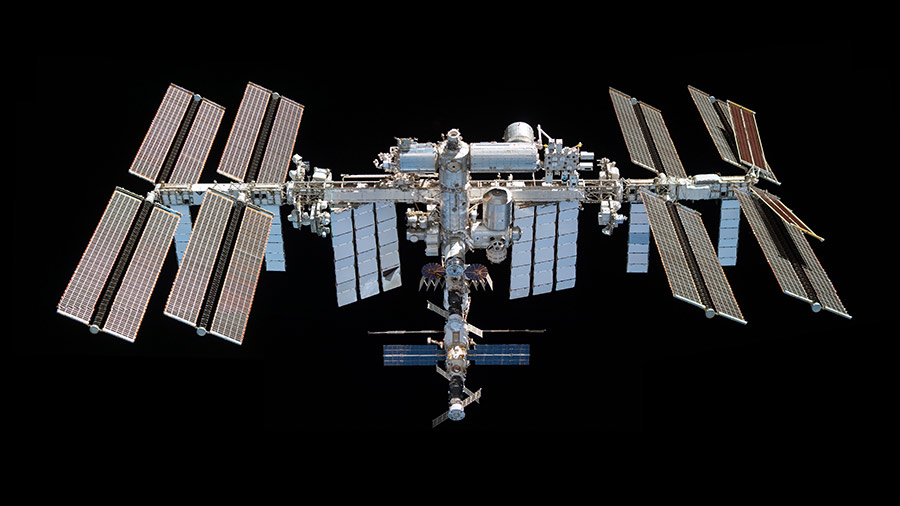
This mosaic depicts the space station pictured from the SpaceX Dragon crew spacecraft on Nov. 8, 2021.
The Progress 89 thrusters were fired at 2:09 p.m. CST today for 5 minutes, 31 seconds, to raise the orbit of the International Space Station to provide an extra margin of distance from a piece of orbital debris from a defunct defense meteorological satellite that broke up in 2015. The Pre-determined Debris Avoidance Maneuver (PDAM) was conducted in coordination with NASA, Roscosmos and the other space station partners.
Without the maneuver, ballistics officials estimated that the fragment could have come within around 2 ½ miles of the station.
The maneuver had no impact on station operations and will not affect Thursday’s scheduled launch of the Progress 90 cargo craft from the Baikonur Cosmodrome in Kazakhstan.
Monday’s Research Boosting Astronaut Health Amid Cargo Mission Preps
NASA astronaut Nick Hague processes samples for a biotechnology experiment that explores using microorganisms and cell cultures to produce materials and biomolecules on a commercial scale.
The Expedition 72 crew members began the week exploring the numerous ways living in space affects the human body to develop advanced therapies promoting health on and off the Earth. The orbital residents are also preparing for the departure of a cargo ship and the arrival of another this week at the International Space Station.
Preventing space-caused changes in eye pressure, inflammation, and blood clotting were the dominant research themes aboard the orbital outpost on Monday. The insights can be achieved only in the microgravity environment and may provide new strategies researchers can use to treat space-caused and Earthbound symptoms and conditions.
NASA Flight Engineers Nick Hague and Butch Wilmore tested a thigh cuff as a way to draw body fluids into their extremities. In microgravity, the human body adjusts by eliminating fluids no longer needed in an astronaut’s torso and head. The fluid shifts can apply pressure to an astronaut’s eyes affecting eye structure and vision. Wilmore assisted Hague at the beginning of the day, imaging his eyes to measure his retina’s thickness then attaching the tight-fitting, fluid-shifting thigh cuffs to both of his legs. Next, Wilmore conducted scans with the Ultrasound 2 device to observe Hague’s cardiac activity and collected blood pressure measurements. Hague had a second round of the same tests at the end of the day before stowing the biomedical hardware. The data was downloaded for doctors on the ground to analyze the effectiveness of the thigh cuff that may help protect astronauts on missions to the Moon, Mars, and beyond.
NASA Flight Engineer Don Pettit serviced biology hardware in the Kibo laboratory module to prepare for an upcoming study exploring ways to prevent space-caused inflammatory changes. He installed components inside Kibo’s artificial gravity-generating incubator to observe how weightlessness and radiation affect the immune system, bones, and muscles creating symptoms that are similar to age-related issues on Earth. Insights may lead to therapies counteracting the stresses of living in space as well as aging conditions on Earth.
Commander Suni Williams inserted cell samples inside a fluorescence microscope that scientists remotely controlled to observe inflammation and immunity response changes in microgravity. Researchers seek to identify genes regulated by gravitational forces and understand their impact on the human immune system to protect astronaut health on future missions.
A Roscosmos cargo mission swap is due to take place beginning at 7:53 a.m. EST on Tuesday when the trash-packed Progress 88 resupply ship undocks after six months attached to the Poisk module. The next cargo craft to replace it, the Progress 90, has already rolled out to its launch pad at the Baikonur Cosmodrome in Kazakhstan. Loaded with about 5,500 pounds of cargo, the Progress 90 will launch at 7:22 a.m. on Thursday for a two-day trip to the station. The space delivery will arrive at 9:35 a.m. on Saturday for an automated docking to Poisk beginning another six-month cargo mission.
Cosmonaut Flight Engineers Alexey Ovchinin and Ivan Vagner trained on Monday for the departure and arrival of the two Progress spacecraft. The Roscosmos duo practiced operating on a computer the telerobotically operated rendezvous unit, or TORU, in the unlikely event it would be necessary to remotely control the Progress spacecraft if they lost their automated capabilities. The duo then split up as Vagner closed the Progress 88 hatch and checked for leaks while Ovchinin serviced the treadmill inside the Zvezda service module. Flight Engineer Aleksandr Gorbunov assisted Ovchinin with the treadmill maintenance and synchronized cameras with space station clocks.