NASA, SpaceX Adjust Dragon Undock Date Due to Weather
International Space Station Configuration. Six spaceships are parked at the space station including the SpaceX Dragon Freedom, the SpaceX Dragon cargo spacecraft, the Northrop Grumman Cygnus resupply ship, the Soyuz MS-26 crew ship, and the Progress 89 and 90 resupply ships.
Mission managers waved off the planned return of a Dragon resupply spacecraft on Sunday, Dec. 15, due to forecasted unfavorable weather conditions at the splashdown sites off the coast of Florida. NASA and SpaceX now are targeting no earlier than Monday, Dec. 16, for the next undocking opportunity of NASA’s SpaceX 31st commercial resupply services spacecraft.
Crew Studies Physics and Biology, Preps for Spacewalk, Dragon Undocking Adjusted
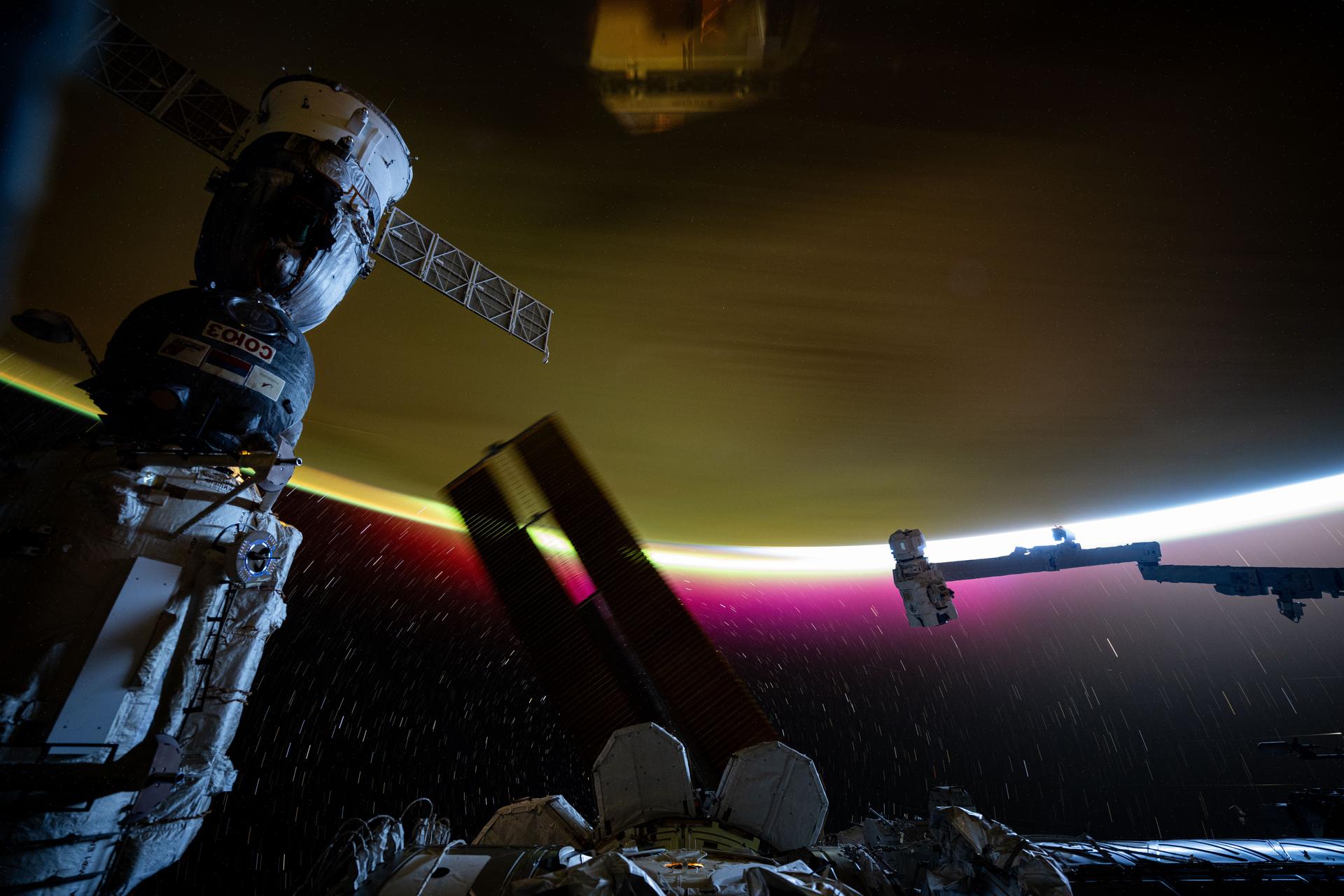
An orbital sunrise crowns Earth’s horizon in this photograph from the International Space Station as it orbited 261 miles above Brazil.
A space exposure experiment, a micro-algae study, and eye exams topped the research schedule for the Expedition 72 crew members at the end of the week. The orbital residents also continue to gear up for a spacewalk planned for next week at the International Space Station.
NASA astronaut and station Commander Suni Williams spent most of her day inside the Tranquility module working on the Nanoracks Bishop airlock. She was joined at the beginning of her shift by NASA Flight Engineer Butch Wilmore who helped her prepare the Euro Materials Aging (EMA) experiment for installation inside Bishop. Afterward, she inspected one portion of the EMA study that will observe organic molecules and how they adapt to the external space environment.
NASA Flight Engineer Don Pettit looked at another segment of the EMA hardware that will expose a variety of materials to outer space to monitor how they age over time. Finally, NASA Flight Engineer Nick Hague inspected the Bishop airlock with the EMA experiment inside, closed its hatch, and prepared the airlock for its upcoming depressurization.
On Monday, the Canadarm2 robotic arm will detach Bishop with the EMA inside from Tranquility and maneuver it toward the Columbus laboratory module. Next, the EMA will be robotically installed on the Bartolomeo research platform attached to the outside of Columbus. The external investigation will operate outside Columbus for about a year.
Hague at the beginning of his shift on Friday, swapped samples of micro-algae inside the BioLab incubator located in Columbus. Researchers are exploring the potential of micro-algae as a way to remove carbon dioxide, produce oxygen, and grow food on spacecraft. At the end of the day, Williams partnered with Pettit and Wilmore for eye exams using standard medical imaging hardware found in a doctor’s office on Earth. The trio were joined by ground doctors monitoring in real-time who want to understand how living in weightlessness affects vision and the human eye.
Two cosmonauts continue their preparations for a spacewalk on Thursday, Dec. 19, to remove external science experiments and relocate European robotic arm hardware. Roscosmos Flight Engineers Alexey Ovchinin and Ivan Vagner began Friday installing components on their Orlan spacesuits. Next, the duo pedaled on an exercise bicycle for a pre-spacewalk fitness assessment. Finally, the cosmonauts wrapped up the day’s suit work installing lights, batteries, and video cameras they will wear on their spacesuits during the planned six-hour and 40-minute spacewalk next week.
Roscosmos Flight Engineer Aleksandr Gorbunov trained to use the European robotic arm reviewing the laptop computers that support the robotic arm attached to the Nauka science module. Following that work, the first-time space flyer swapped out life support hardware then installed Earth observation gear to view the effects of natural and human-caused catastrophes in different wavelengths.
Mission managers waved off the planned return of a Dragon resupply spacecraft on Saturday, Dec. 14, due to forecasted unfavorable weather conditions at the splashdown sites off the coast of Florida. NASA and SpaceX now are targeting no earlier than Sunday, Dec. 15, for the next undocking opportunity of NASA’s SpaceX 31st commercial resupply services spacecraft.
Crew Packs Science for Exposure, Studies Immune System, and Preps for Spacewalk
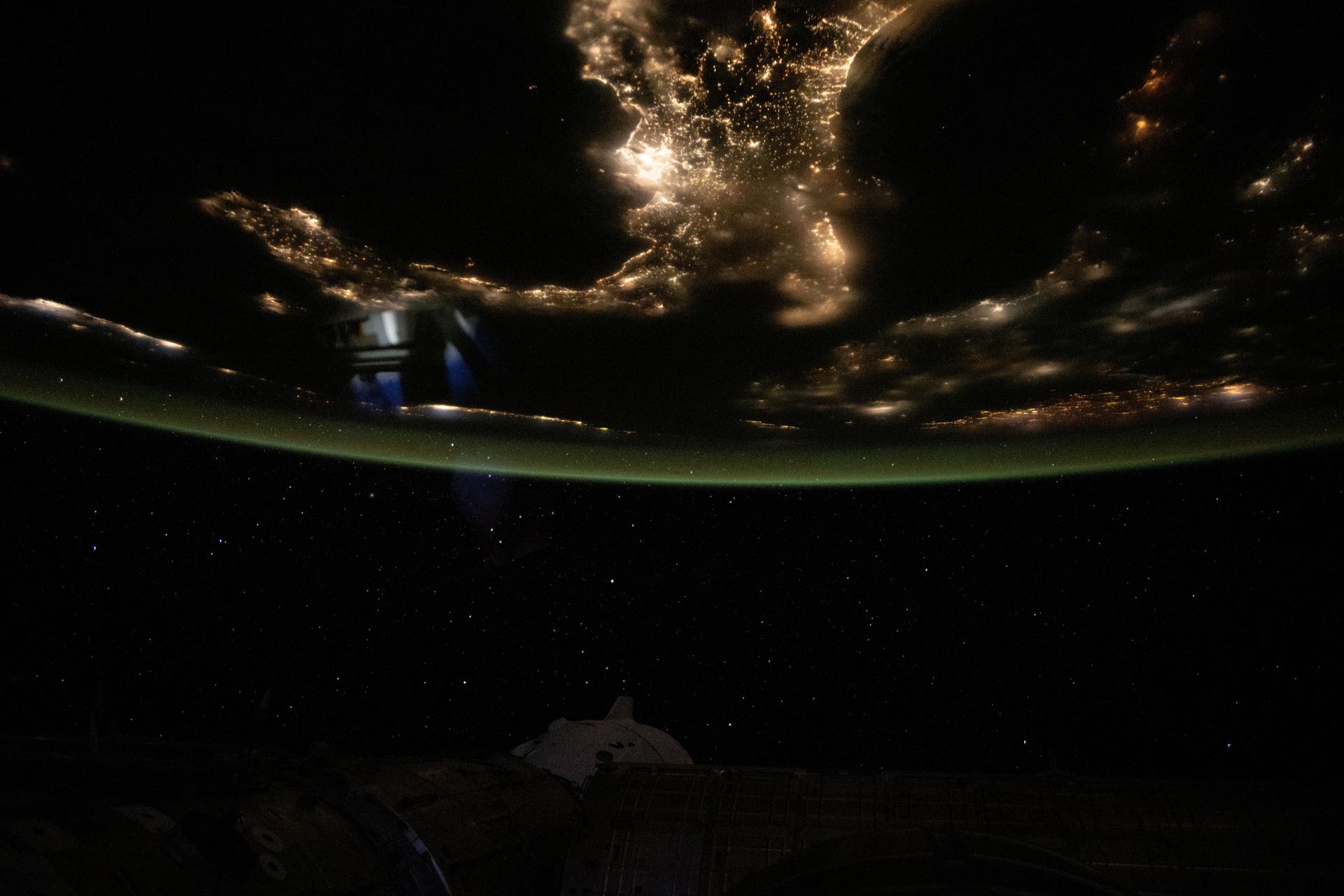
A vivid aurora streams over the Earth as the space station orbited 273 miles above the southern Indian Ocean in between Australia and Antarctica.
The Expedition 72 crew prepared a science experiment for placement outside the International Space Station and studied space-caused cellular stress and tissue damage on Thursday. Spacewalk preparations are also ongoing to remove and relocate hardware on the orbital outpost next week.
EMA will expose a variety of materials to the space environment to learn how to improve the development of space hardware and applications for missions to the Moon, Mars, and beyond. The external investigation will operate outside Columbus for about a year.
NASA Flight Engineer Nick Hague continued his cellular immunity research processing blood samples in the Harmony module. He removed the samples from the Kubik research incubator after overnight stowage and spun them inside the Human Research Facility’s centrifuge. Afterward, Hague stowed the blood specimens inside a science freezer then powered down and uninstalled Kubik. Doctors on the ground will analyze the samples to understand the effects of living in space on the human immune system.
All four NASA astronauts relaxed and took a half-a-day off at the end of their shifts on Thursday. The quartet will have a busy day on Friday as they prepare the Bishop airlock and the Euro Materials Aging experiment for their robotic move next week.
Roscosmos Flight Engineers Alexey Ovchinin and Ivan Vagner continued their preparations for a spacewalk planned to begin at 10:10 a.m. EST on Thursday, Dec. 19, for science and robotics hardware transfers. The cosmonauts wore their pressurized Orlan spacesuits and practiced maneuvering to the Poisk airlock where they will exit into the vacuum of space. Fellow cosmonaut and flight engineer Aleksandr Gorbunov joined the duo afterward and reviewed procedures to depressurize and repressurize the airlock when the spacewalkers exit and enter the station.
Ovchinin and Vagner also had time for a cardiac study wearing electrodes and arm cuffs measuring their heart activity and blood pressure. Gorbunov focused on orbital plumbing tasks before the spacewalk reviews. At the end of his shift, he joined his cosmonaut crewmates for a test to learn how international crews and mission controllers from around the world can communicate better.
Crew Works Biomedical, Robotics Research and Waits for Dragon Departure
The SpaceX Dragon cargo spacecraft is pictured from an external space station camera approaching the orbital outpost above Argentina. Credit: NASA+
Disease detection, cellular immunity, and free-flying robotics were the top advanced research topics aboard the International Space Station on Wednesday. Meanwhile, the Expedition 72 crew members wait to send off a U.S. cargo spacecraft while preparing for the year’s final spacewalk.
Scientists on the ground are using the orbital outpost’s microgravity environment to learn how to detect genetic mutations and viruses that can cause illnesses, such as cancer and other diseases, on Earth and in space. NASA Flight Engineer Don Pettit processed samples of RNA, a nucleic acid, in the Harmony module’s maintenance work area for visualization in a handheld fluorescence viewer. Results may enable the quick identification of genetic sequences that can affect human health to better protect astronauts on missions to the Moon, Mars, and beyond.
Working in the Kibo laboratory module, NASA Flight Engineer Butch Wilmore outfitted the toaster-sized Astrobee robotic free-flyer with a small docking mechanism for the Clingers technology demonstration. Engineers on the ground monitored the Astrobee as it tested autonomous navigation, docking, and undocking techniques using the Clingers device. Insights may boost space industry standardization of in-space refueling, repair, and manufacturing operations.
Station Commander Suni Williams from NASA opened up the Materials Science Laboratory (MSL) inside the Columbus laboratory module troubleshooting its components. The MSL enables safe, high-temperature observations of materials such as metals, polymers, semiconductors, and more in weightlessness to discover new applications and create new materials.
Mission managers waved off the planned return of a Dragon resupply spacecraft on Thursday, Dec. 12, due to forecasted unfavorable weather conditions at the splashdown site off the coast of Florida. NASA and SpaceX now are targeting Saturday, Dec. 14, for the next undocking opportunity of NASA’s SpaceX 31st commercial resupply services spacecraft.
NASA’s live coverage of Dragon’s undocking and departure begins at 10:50 a.m. EST on NASA+ as the spacecraft autonomously undocks from the Harmony module’s forward port around 11:05 a.m. on Saturday. Learn how to watch NASA content through a variety of platforms, including social media.
Roscosmos Flight Engineers Alexey Ovchinin and Ivan Vagner continued their spacewalk preparations on Wednesday. The duo checked their suits for leaks, tested communications and medical hardware, and installed spacewalking gear inside the Poisk module. The cosmonauts will exit Poisk into the vacuum of space at 10:10 a.m. EST on Thursday, Dec. 19, and spend about six hours and 40 minutes removing science experiments and relocating robotic hardware.
Cosmonaut Aleksandr Gorbunov began his day working on video and computer hardware throughout the station’s Roscosmos segment. Afterward, he entered the Nauka science module activating the European robotic arm (ERA) and verifying mission data uploaded to the ERA.
Spacesuits and Space Biology Fill Day Aboard Space Station
Astronaut Suni Williams displays science hardware housing bacteria and yeast samples for a biomanufacturing experiment that may enable the production of food and medicine in space.
Spacesuits and space biology were the main focus on Tuesday as the Expedition 72 crew aboard the International Space Station gets ready for a spacewalk and keeps up critical research.
Flight Engineers Alexey Ovchinin and Ivan Vagner from Roscosmos worked throughout the day inside the Poisk module where they are getting ready for the year’s final spacewalk. Vagner first conducted leak checks on Poisk’s airlock hatch where the cosmonauts will exit into the vacuum of space at 10:10 a.m. EST on Thursday, Dec. 19. Next, the duo paired up activating and inspecting their individual Orlan spacesuits, installing batteries, and removing excess gasses and liquids from the suits they will wear during the spacewalk. The cosmonauts are expected to spend about six hours and 40 minutes removing external science experiments and relocating European robotic arm hardware.
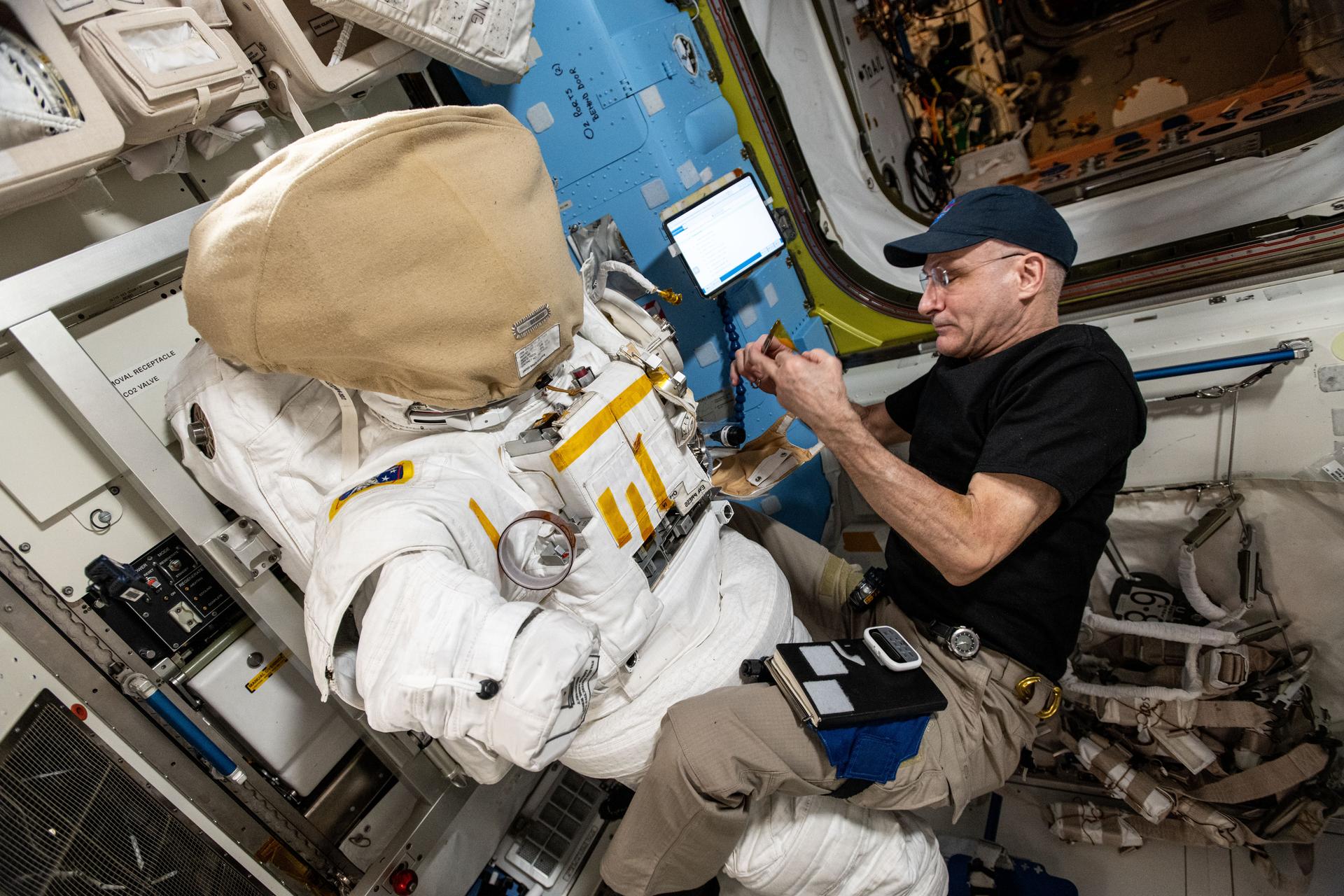
Station Commander Suni Williams was back inside the Quest airlock on Tuesday checking out and replacing components on a U.S. spacesuit. Afterward, she joined NASA Flight Engineer Butch Wilmore for eye exams with the Ultrasound 2 device. The duo took turns scanning each other’s eyes as doctors on the ground monitored in real-time the condition of each astronaut’s cornea, lens, and optic nerve. Wilmore also transferred cargo between the Kibo and Columbus laboratory modules then installed air quality sensors inside Quest.
NASA Flight Engineer Don Pettit started his day reconfiguring and cleaning a pair of research incubators, one of which can generate artificial gravity, inside the Kibo lab module. He later joined Wilmore who scanned Pettit’s eyes with the Ultrasound 2 then assisted him with the cargo transfers between Kibo and Columbus. Pettit also reviewed procedures for an upcoming cancer and disease detection study.
Flight Engineer Nick Hague of NASA explored the potential of micro-algae as a way to remove carbon dioxide, produce oxygen, and grow food on spacecraft. Hague processed sample containers for installation inside the BioLab research facility to understand the effects of radiation and microgravity on the micro-algae and learn how to sustain crews on missions to the Moon, Mars, and beyond.
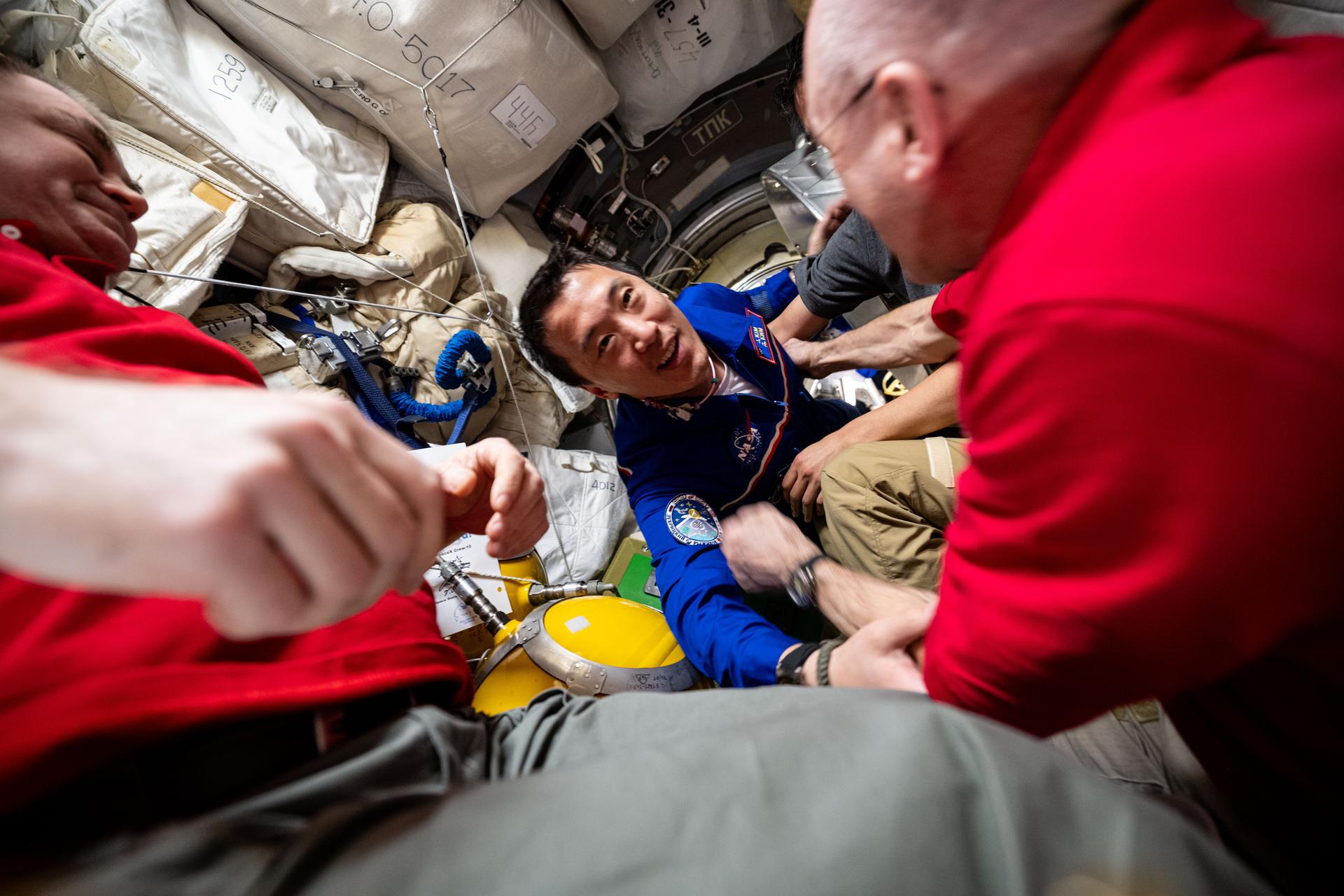
Hague, who is also the commander of the SpaceX Crew-9 mission, joined his crewmates Williams, Wilmore, and cosmonaut Aleksandr Gorbunov inside the Dragon crew spacecraft for a departure training session at the end of the day. Hague and Gorbunov launched together on Dragon to the orbital outpost on Sept. 28. They will return to Earth in the spring with Williams and Wilmore.