Astronauts and Robotics Experts Finalize Dragon Departure Work

Astronauts and Robotics Experts Finalize Dragon Departure Work
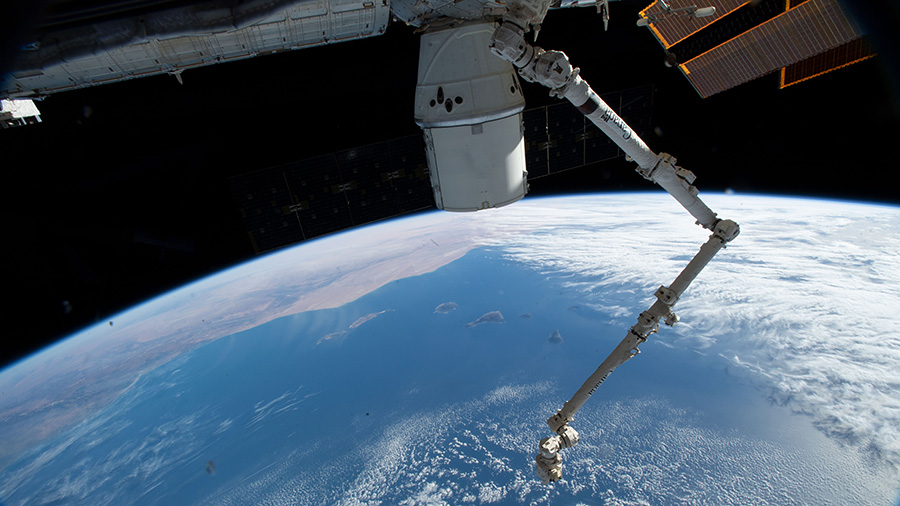
The SpaceX Dragon and Station above the Indian Ocean
The SpaceX Dragon cargo craft is pictured attached to the International Space Station’s Harmony module as the orbital complex orbited 261 miles above the Indian Ocean southeast of the continent of Africa. The Canadarm2 robotic arm vertically splits the frame prior to grappling the spacecraft ahead of planned departure activities.

The three Expedition 58 crew members have finished packing the SpaceX Dragon cargo craft with science experiments and hardware today. Final preparations for the vehicle’s departure are now on hold while teams wait for favorable weather in the splashdown area for Dragon’s return.

Dragon was scheduled for departure early Thursday morning from the International Space Station but mission managers made the decision to delay departure. Managers are assessing the backup release date of Sunday, Jan. 13 for Dragon’s return to Earth.

Robotics controllers maneuvered the Canadarm2 robotic arm Wednesday and grappled Dragon while it was still attached to the Harmony module. Prior to Dragon departure, they will remotely uninstall Dragon from Harmony and slowly guide it to its release position.

Astronaut Anne McClain will be in the cupola when robotics experts command the Canadarm2 to release Dragon finalizing its mission at the orbital lab. She’ll monitor its departure while her crewmates Commander Oleg Kononenko and Flight Engineer David Saint-Jacques work on their daily science and maintenance tasks.

Dragon, which arrived at the station Dec. 8, will orbit Earth a few more hours on its own before reentering the atmosphere. It will parachute to a splashdown in the Pacific Ocean off the coast of southern California where SpaceX personnel will retrieve the space freighter. They’ll deliver it to shore where NASA engineers will extract the precious cargo for immediate shipment to investigators around the country for analysis.

Get The Details…

Mark Garcia

Crew Wraps Up Science Packing After Robotic Arm Grips Dragon

Crew Wraps Up Science Packing After Robotic Arm Grips Dragon

The coast of southern California and Baja California
When the SpaceX Dragon cargo craft returns to Earth it will splash down in the Pacific Ocean a few hundred miles off the coast of southern California and Baja California.

The SpaceX Dragon space freighter is in the grips of the Canadarm2 robotic arm today as the Expedition 58 crew wraps up cargo transfers inside the vessel. The space trio is also on lab duty conducting a variety of microgravity research aboard the International Space Station.

Overnight, robotics controllers remotely commanded the Canadarm2 to grapple Dragon before its release from the Harmony module. Meanwhile, the hatches are still open and Flight Engineers Anne McClain and David Saint-Jacques continue loading time-critical space experiments inside the U.S. cargo craft.

The crew will shut the hatch to Dragon Wednesday and disconnect power cables. Then robotics controllers will take over, uninstall Dragon from Harmony overnight and maneuver it into release position. McClain will be in the cupola Thursday monitoring Dragon when it is released from the Canadarm2 around 4:35 a.m. EDT.

After its departure, Dragon will orbit Earth a few more hours before splashing down in the Pacific Ocean off the coast of southern California. SpaceX personnel will retrieve Dragon and return it to port where NASA engineers will extract the precious cargo for immediate shipment to investigators around the country.

Get The Details…

Mark Garcia

Dragon Packed With Science Before Thursday’s Departure

Dragon Packed With Science Before Thursday’s Departure

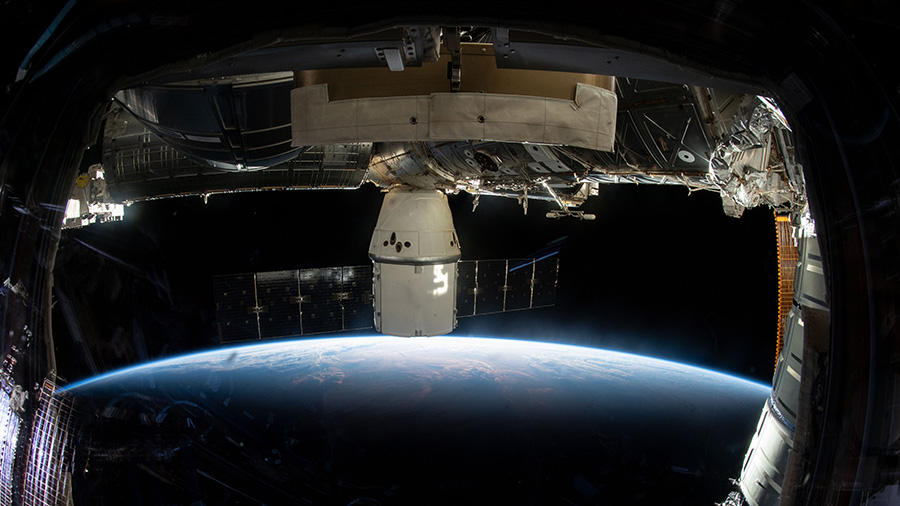
The SpaceX Dragon cargo craft and the Canadarm2 robotic arm
The SpaceX Dragon cargo craft and the Canadarm2 robotic arm are pictured attached to the International Space Station as the orbital complex was 251 miles above the Atlantic Ocean about to fly over Morocco.

The Expedition 58 crew members are packing the SpaceX Dragon space freighter ahead of its return to Earth on Thursday. Ground controllers are also readying communications gear and robotics systems prior to Dragon’s departure from the International Space Station.

Astronauts Anne McClain of NASA and David Saint-Jacques of the Canadian Space Agency are wrapping up final transfers of completed science experiments in Dragon today. The duo is loading science samples from several experiments for return to Earth, where they will quickly be delivered to investigators around the country for analysis.

Engineers on the ground are testing communications and control gear that will be used to monitor and command Dragon after its release from the station. Robotics controllers are also powering up the Canadarm2 robotic arm today to grapple Dragon before its removal from the Harmony module.

Get The Details…

Mark Garcia

Dragon Departing Station Next Week; Crew Studies Biology

Dragon Departing Station Next Week; Crew Studies Biology

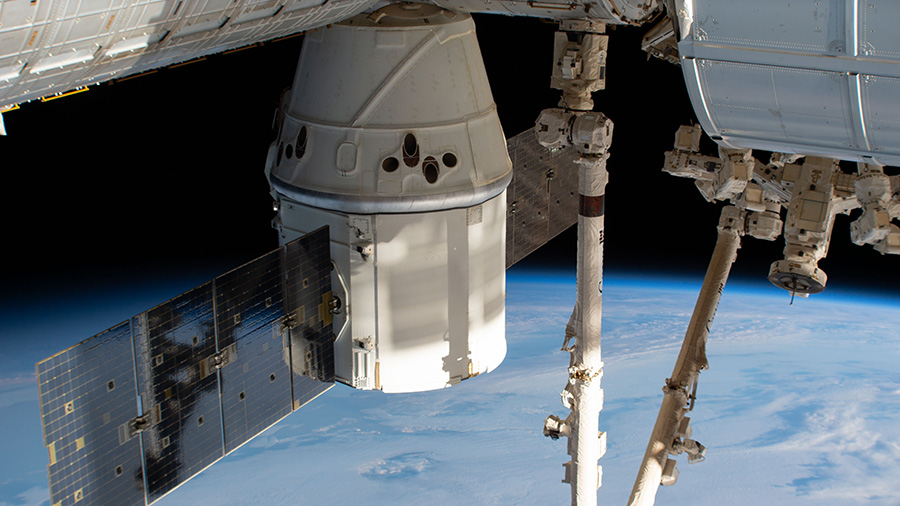
The SpaceX Dragon cargo craft
The SpaceX Dragon cargo craft is pictured attached to the International Space Station almost 257 miles above Quebec on New Year’s Eve.

The SpaceX Dragon cargo craft is in its final week attached to the International Space Station’s Harmony module. Meanwhile, robotics experts on the ground and the crew aboard the lab are working a wide variety of science activities today.

The Dragon space freighter has nearly completed its cargo mission to replenish the orbital laboratory after delivering over 5,600 pounds of science and supplies Dec. 8. Dragon will return to Earth Jan. 10 for retrieval in the Pacific Ocean loaded with completed science experiments and used hardware for analysis.

New space exposure experiments are being remotely installed outside the station today using a specialized robotic hand known as Dextre. Also, astronauts Anne McClain and David Saint-Jacques collected biological samples today for stowage and later analysis. The duo then split up for more science work including testing crew brain function and removing science hardware that explores stem cells and other biological processes.

Get The Details…

Mark Garcia

International Crew to Ring in Christmas 50 Years After First Moon Trip

International Crew to Ring in Christmas 50 Years After First Moon Trip

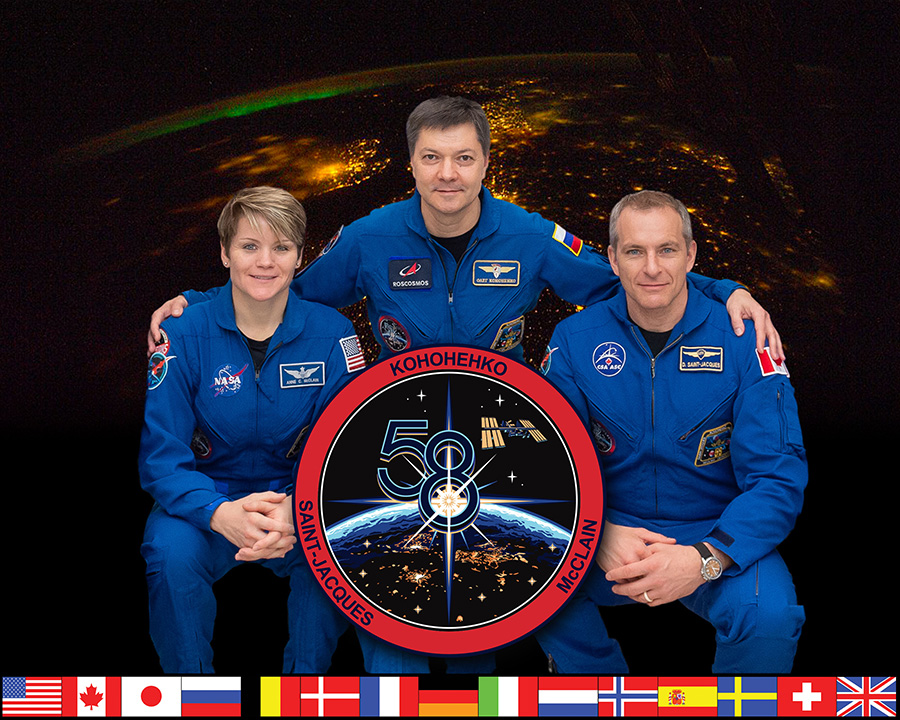
Expedition 58 Crew Portrait
The official Expedition crew portrait with (from left) NASA astronaut Anne McClain, Roscosmos cosmonaut Oleg Kononenko and astronaut David Saint-Jacques of the Canadian Space Agency.

Three people from the U.S., Canada and Russia are orbiting Earth today getting ready to observe Christmas and experience New Year’s Eve from space aboard the International Space Station. Back on Earth, another three station crew members have returned to their home bases just 24 hours after completing a 197-day mission aboard the orbital lab.

The first time three humans spent Christmas in space was 50 years ago in 1968 during Apollo 8 and was also the first time a crew orbited the Moon. This Christmas astronauts Anne McClain of NASA and David Saint-Jacques of the Canadian Space Agency with cosmonaut Oleg Kononenko of Roscosmos will be soaring about 250 miles above the Earth’s surface in a much larger spacecraft. The Expedition 58 trio will share a traditional meal aboard the orbital lab, share gifts and call down to family during their off-duty day.

Kononenko is beginning his fourth mission on the station and will spend his second Christmas in space. McClain and Saint-Jacques are getting used to life in space for the first time and will return to Earth in June with Kononenko.

NASA astronaut Serena Auñón-Chancellor returned to Houston late Thursday just one day after landing in Kazakhstan wrapping up her six-and-a-half month stay aboard the orbital lab. She parachuted to Earth inside the Soyuz MS-09 spacecraft with her Expedition 57 crewmates Alexander Gerst of ESA (European Space Agency) and Sergey Prokopyev of Roscosmos.

Get The Details…

Mark Garcia