Station Teams Are Go For Dragon’s Return To Earth Friday

Station Teams Are Go For Dragon’s Return To Earth Friday

SpaceX Dragon Resupply Ship
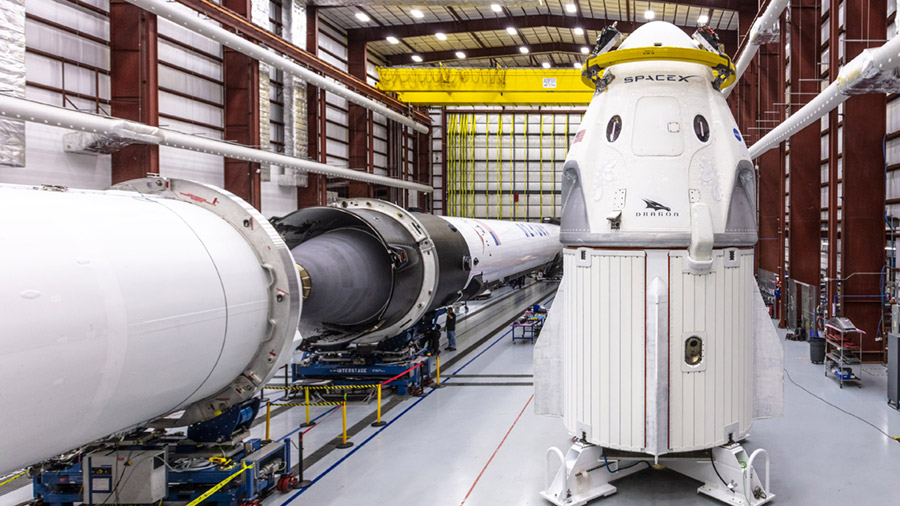
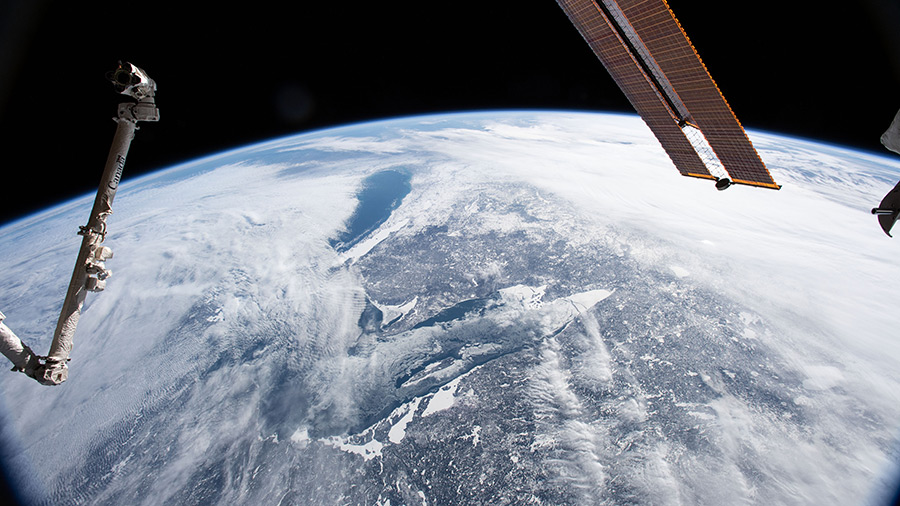
The SpaceX Dragon resupply ship, on its 15th Commercial Resupply Services mission (CRS-15), is pictured the day after it was captured and installed on the Harmony module. The orbital complex was flying over northern central China near the Mongolian border at the time this photograph was taken.

The International Space Station Partners and mission managers polled “go” for tomorrow’s release of the SpaceX Dragon cargo craft for its deorbit and splashdown in the Pacific Ocean to wrap up the CRS-15 mission.

With favorable weather conditions forecast in the splashdown zone, Dragon’s hatch will be closed early Friday around 3 a.m. Central time. Robotic ground controllers will then use the Canadarm2 robotic arm to detach Dragon from the Earth-facing port of the Harmony module around 5:30 a.m. Central time and will maneuver Dragon into the release position.

With Expedition 56 Flight Engineer Serena Auñón-Chancellor of NASA monitoring Dragon’s systems, the ground controllers will release Dragon from Canadarm2 at 11:37 a.m. Central time. After its release, Dragon will conduct a series of “departure” burns to move to a safe distance away from the station.

Several hours later, at 4:23 p.m. Central time, SpaceX flight controllers at Hawthorne, California will command Dragon’s engine to fire for 12 minutes and 53 seconds in the deorbit burn that will enable Dragon to slip out of orbit for its descent back to Earth.

Dragon’s parachute-assisted splashdown is scheduled at 5:17 p.m. Central time, 3:17 p.m. Pacific time, about 410 miles southwest of Long Beach, California. It will take about two days for Dragon to be brought back to port for its cache of cargo and scientific experiments to be unloaded.

Get The Details…
Mark Garcia

ISS

Powered by WPeMatico

Dragon Packing, Eye Science and Spacewalk Preps Today

Dragon Packing, Eye Science and Spacewalk Preps Today

Alexander Gerst and Sergey Prokopyev
Astronaut Alexander Gerst practices cardiopulmonary resuscitation (CPR) as cosmonaut Sergey Prokopev looks on during an emergency training session aboard the International Space Station.

The Expedition 56 crew has nearly completed loading the SpaceX Dragon resupply ship with cargo for retrieval back on Earth this Friday. The orbital residents are also busy with an intense day of space research and Russian spacewalk preparations.

Dragon is due to be released Friday at 12:37 p.m. EDT from the International Space Station carrying several tons of experiment results and orbital lab hardware. The crew has been packing the crucial research samples this week inside specialized, portable freezers onboard the commercial space freighter.

SpaceX technicians will pick up Dragon with its precious cargo after it splashes down in the Pacific Ocean and return to shore in southern California. Scientists and engineers will then begin the process of analyzing the critical space science and refurbishing station hardware.

Astronauts Serena Auñón-Chancellor and Alexander Gerst spent Wednesday morning helping doctors understand how living in space impacts the human eye. They are exploring the hypothesis that upward fluid shifts in the body caused by microgravity increases pressure on the brain possibly pushing against the eyes. This may affect the shape of the eye and permanently affect vision.

Cosmonauts Oleg Artemyev and Sergey Prokopyev are getting ready for a spacewalk on Aug. 15. The duo reviewed the translation paths to their work sites on the outside of the station’s Russian segment. During the near seven-hour excursion, the spacewalkers will hand-deploy four tiny satellites, install antennas and cables on the Zvezda service module and collect exposed science experiments.

Get The Details…
Mark Garcia

ISS

Powered by WPeMatico

Dragon Being Packed With Science as Research Wraps Up

Dragon Being Packed With Science as Research Wraps Up

Astronauts Drew Feustel and Serena Auñón-Chancellor
Astronauts Drew Feustel and Serena Auñón-Chancellor are seen while Auñón-Chancellor works inside the Microgravity Science Glovebox on the Micro-11 investigation. The study is looking to provide fundamental data indicating whether successful human reproduction beyond Earth is possible.

Numerous microgravity investigations are wrapping up this week onboard the International Space Station. The Expedition 56 crew is carefully packing the research results and science gear inside the SpaceX Dragon cargo craft for return to Earth on Friday.

A host of life science studies being returned aboard Dragon looked at cancer therapies, gut microbes, and a variety of other biological phenomena. Samples collected from those studies, including the experiment hardware housing the research, are being transferred from the station and stowed inside the Dragon.

The AngieX Cancer Therapy investigation is completing its run today with NASA astronaut Serena Auñón-Chancellor finalizing research operations inside the Microgravity Science Glovebox. The experiment tested a treatment that targets tumors and the resulting samples are being stowed inside Dragon science freezers.

Rodents studied for the Rodent Research-7 experiment to understand how microbes interact with the gut in space are being returned Friday. Biological samples observed in July for the Micro-11 human reproduction study are also being cold stowed aboard Dragon.

SpaceX technicians will retrieve Dragon loaded with the Earth-bound cargo when it splashes down in the Pacific Ocean Friday afternoon. Once the cargo craft reaches port, personnel from NASA and the Center for the Advancement of Science in Space (CASIS) will collect the research and hardware and distribute it to scientists and engineers for analysis.


Get weekly video highlights at: http://jscfeatures.jsc.nasa.gov/videoupdate/

Get The Details…
Mark Garcia

ISS

Powered by WPeMatico

Cancer Study Prepped for Earth Return Amid Time Perception Research

Cancer Study Prepped for Earth Return Amid Time Perception Research

The Cygnus space freighter is poised for release from the Canadarm2
The Cygnus space freighter was pictured July 15 , 2018, poised for release from the Canadarm2 robotic arm back into Earth orbit ending a 52-day cargo mission at the International Space Station.

A new cancer therapy study is wrapping up aboard the International Space Station this week as an American cargo craft is packed for return to Earth. The Expedition 56 crew also researched how astronauts perceive time and distance in space and back on Earth.

NASA astronaut Serena Auñón-Chancellor has been contributing to pharmaceutical research since the arrival of the AngieX Cancer Therapy experiment July 2 inside the SpaceX Dragon cargo craft. Today, she is examining endothelial cells in space to help determine if they make a good model for targeting the vasculature of tumor cells. Results may improve the design of safer, more effective therapies targeting cancer tumors.

NASA astronaut Ricky Arnold has been loading Dragon with hardware and science samples today ahead of its return to Earth on Friday. Results from the AngieX cancer investigation will also be stowed in Dragon this week for retrieval and analysis on Earth. Robotics controllers will release Dragon from the grips of the Canadarm2 Friday at 12:37 p.m. EDT as Auñón-Chancellor monitors from the Cupola. Less than six hours later, the commercial space freighter will splashdown in the Pacific Ocean off the coast of Baja California.

Another U.S. cargo craft, the Northrop Grumman Cygnus resupply ship, released from the space station on July 15 is getting ready to end its stay in space today. The Cygnus was detached from the station’s Harmony module in mid-July and has been orbiting Earth for engineering research. It is due to burn up harmlessly over the Pacific Ocean at 5:07 p.m. today.

Alexander Gerst, of the European Space Agency, worked in the Columbus lab module to help doctors understand how an astronaut’s perception of time and distance is affected during and after a mission. Results will help mission planners understand how astronauts adapt to space impacting the success and safety of long-term missions.

Get The Details…
Mark Garcia

ISS

Powered by WPeMatico

Today’s Science Focuses on Human Benefits While Crew Packs Dragon

Today’s Science Focuses on Human Benefits While Crew Packs Dragon

NASA astronaut Ricky Arnold
NASA astronaut Ricky Arnold processes microbial DNA using the Biomolecule Sequencer, a device that enables DNA sequencing in microgravity, to identify microbes able to survive in microgravity.

A trio of studies taking place today aboard the International Space Station explored a potential cancer therapy, researched human reproduction and observed protein crystals. Eye exams were also on the schedule to understand how microgravity impacts vision.

NASA astronaut Serena Auñón-Chancellor started her morning peering at endothelial cells through a microscope for the AngieX Cancer Therapy study. Afterward, she moved on to the Micro-11 investigation examining more biological samples in a microscope to gain fundamental data about successful reproduction in space.

Alexander Gerst, of the European Space Agency, contributed to pharmaceutical research during the afternoon stowing protein molecules in a science freezer. Microgravity enables the growth of high quality protein crystals revealing structures and properties that could improve disease-fighting therapies on Earth.

Gerst first started his day scanning NASA astronaut Ricky Arnold’s for eyes using Optical Coherence Tomography, a light imaging technique analogous to ultrasound. The data helps doctors understand how the weightless environment of microgravity impacts vision so mission controllers can plan safer spaceflight missions.

Finally, the SpaceX Dragon space freighter is being packed for its return to Earth on Aug. 3. Arnold and Commander Drew Feustel took turns today loading Dragon with station hardware and research samples for retrieval and analysis on Earth.

Get The Details…
Mark Garcia

ISS

Powered by WPeMatico