Before Launch and Spacewalks, Science Reigns Supreme Aboard Orbiting Lab

Before Launch and Spacewalks, Science Reigns Supreme Aboard Orbiting Lab
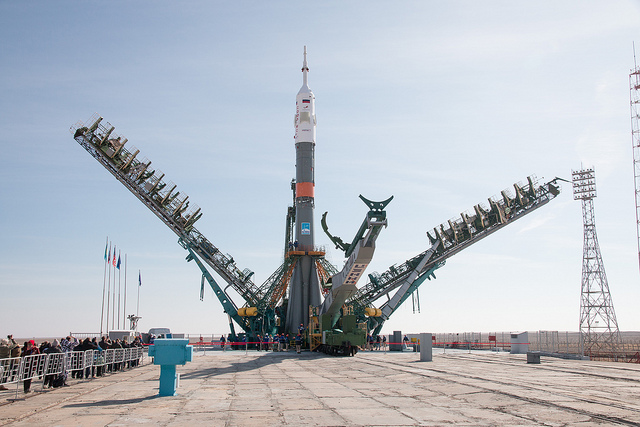
The Soyuz rocket is raised into vertical position on the launch pad at the Baikonur Cosmodrome in Kazakhstan.
On March 12, 2019, the Soyuz rocket is raised into vertical position on the launch pad at the Baikonur Cosmodrome in Kazakhstan. Image Credit: NASA

As the Soyuz MS-12 that will carry the Expedition 59 crew to the International Space Station Thursday was erected on the launch pad at the Baikonur Cosmodrome in Kazakhstan, Expedition 58 resumed research and routine maintenance after their off-duty day Monday. 

NASA astronaut Anne McClain conducted botany work with the VEG-03 experiment, which builds on what scientists have initially learned about harvesting vegetation in space with VEG-01. This time around, testing will demonstrate plant growth with a new batch of crops, including red romaine lettuce, extra dwarf Pak Choi, red Russian kale and wasabi mustard. McClain also spent time on life-support system upkeep in the Kibo lab module and maintenance in the U.S. lab on an EXPRESS rack—hardware integral to providing structural interfaces and support for science experiments with power, data, cooling, water and other items needed for successful operations. 

In the Quest airlock, Canadian Space Agency astronaut David Saint-Jacques completed additional prep work for upcoming spacewalks slated for March 22, 29 and April 8 by scrubbing cooling loops and performing leak checks on the spacesuits. After resupplying the Human Research Facility-2 rack, Saint Jacques added input to a questionnaire for Behavioral Core Measures, an investigation that seeks to create a standardized toolkit to rapidly and reliably assess the risk of adverse cognitive or behavioral conditions and psychiatric disorders that could occur with longer space missions. 

Meanwhile, Commander Oleg Kononenko from Roscosmos ticked off additional maintenance tasks by cleaning panels in the Zvezda service module and performing fluid transfers to the Progress 71 resupply ship. 

Learn more about station activities by following @space_station and @ISS_Research on Twitter, as well as the ISS Facebook and ISS Instagram accounts.

Get The Details…

Catherine Williams

Station Crews Take a Breather in Anticipation of Launch on March 14

Station Crews Take a Breather in Anticipation of Launch on March 14

A view from the International Space Station taken Feb. 21, 2019.
A view from the International Space Station taken Feb. 21, 2019. Image Credit: NASA

This Monday, the Expedition 58 crew is taking a well-deserved break after a busy week prior wrapping up SpaceX’s inaugural flight of Crew Dragon to the International Space Station during Demonstration Mission-1, an uncrewed flight test. The vehicle departed station for a splashdown off the Florida Space Coast at 8:45 a.m. EST Friday, bringing NASA even closer to sending astronauts into space from American soil. 

The Expedition 59 crew, which will soon get their turn in orbit, is taking time to relax and review their launch day flight plan at the Baikonur Cosmodrome in Kazakhstan. On March 14, Commander Alexey Ovchinin and Flight Engineers Nick Hague and Christina Koch are set to blastoff at 3:14 p.m. EDT and dock less than six hours later to the Rassvet module at the orbiting laboratory. Research investigations will get a boost in productivity with their arrival, which will bring the full crew complement to six. All launch and docking events will be carried live on NASA TV. 

Tomorrow, the Soyuz MS-12 that will carry the new crew crawls to the launch pad at Baikonur as Expedition 58 resumes science studies. 

Learn more about station activities by following @space_station and @ISS_Research on Twitter as well as the ISS Facebook and ISS Instagram accounts.

Get The Details…

Catherine Williams

Expedition 58 Crew Congratulates NASA and SpaceX after Crew Dragon Departure

Expedition 58 Crew Congratulates NASA and SpaceX after Crew Dragon Departure

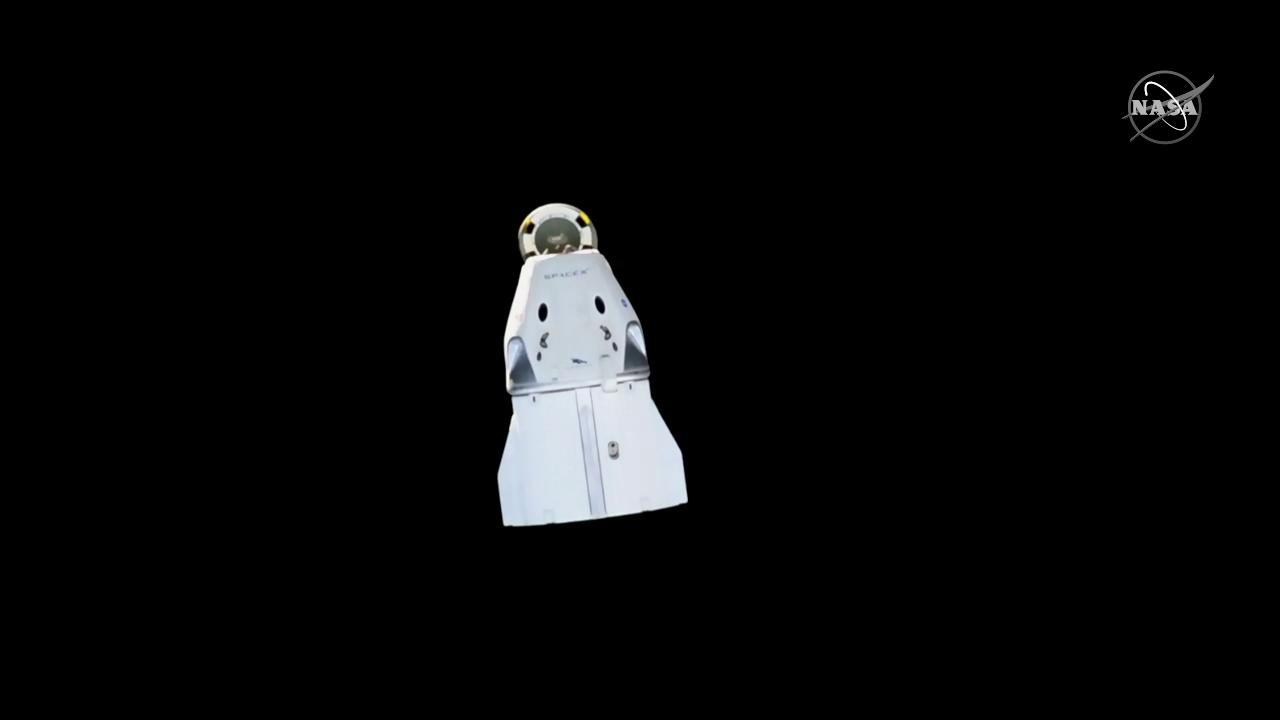
Crew Dragon spacecraft on it's way back to Earth
Crew Dragon spacecraft on it’s way back to Earth after undocking from the International Space Station at 2:32 am EST on March 8, 2019

On behalf of the Expedition 58 crew, NASA Astronaut Anne McClain takes time to congratulate the NASA and SpaceX teams immediately following the Crew Dragon spacecraft’s undocking from the International Space Station at 2:32 a.m. EST Friday, March 8.

Get The Details…

Norah Moran

Crew Dragon Splashes Down in Atlantic Ending First Commercial Crew Mission

Crew Dragon Splashes Down in Atlantic Ending First Commercial Crew Mission

Crew Dragon splashes down in the Atlantic Ocean
SpaceX’s Crew Dragon splashes down in the Atlantic Ocean after successful Demo-1 flight on March 8, 2019.

SpaceX’s Crew Dragon returned to Earth with a splash in the Atlantic Ocean off Florida’s eastern shore at 8:45 a.m. EST, completing an end-to-end flight test to demonstrate most of the capabilities of its crew transportation system to the International Space Station as part of NASA’s Commercial Crew Program.

The mission, known as Demo-1, is a critical step for NASA and SpaceX to demonstrate the ability to safely fly missions with NASA astronauts to the orbital laboratory.

The Crew Dragon launched March 2 from NASA’s Kennedy Space Center in Florida. It was the first commercially-built and operated American crew spacecraft and rocket to launch from American soil on a mission to the space station and autonomously dock to the station. To complete the docking, both the station and Crew Dragon’s adapters used the new international docking standard.

Crew Dragon is returning to Earth some critical research samples from science investigations conducted to enable human exploration farther into space and develop and demonstrate in the U.S. ISS National Laboratory new technologies, treatments, and products for improving life on Earth.

Also traveling aboard the spacecraft is an anthropomorphic test device named Ripley outfitted with sensors to provide data about potential effects on humans traveling in Crew Dragon.

SpaceX’s recovery ship, Go Searcher, is equipped with a crane to lift Crew Dragon out of the water and onto the main deck of the ship within an hour after splashdown.

NASA and SpaceX still have work to do to review the systems and flight data to validate the spacecraft’s performance and prepare it to fly astronauts. Already planned upgrades, additional qualification testing, and an in-flight abort test will occur before NASA astronauts Bob Behnken and Doug Hurley will climb aboard for Demo-2, the crewed flight test to the International Space Station that is necessary to certify Crew Dragon for routine operational missions.

Crew Dragon’s splashdown in the Atlantic was almost 50 years after the return of Apollo 9 on March 13, 1969, the last human spacecraft to return to the waters off the East Coast.

More details about the mission and NASA’s commercial crew program can be found in the press kit online and by following the commercial crew blog, @commercial_crew and commercial crew on Facebook.

Learn more about station activities by following @space_station and @ISS_Research on Twitter as well as the ISS Facebook and ISS Instagram accounts.

Get The Details…

Norah Moran

Watch NASA TV to See Crew Dragon’s Return to Earth

Watch NASA TV to See Crew Dragon’s Return to Earth

Crew Dragon spacecraft on it's way back to Earth
Crew Dragon spacecraft on it’s way back to Earth after undocking from the International Space Station at 2:32 am EST on March 8, 2019

NASA is providing live coverage of the return to Earth of SpaceX’s Crew Dragon after five days docked to the International Space Station.

Known as Demo-1, SpaceX’s inaugural mission with NASA’s Commercial Crew Program is an important uncrewed end-to-end flight test of the new system’s capabilities.

The spacecraft departed the space station at 2:32 a.m. EST and is on track for a splashdown in the Atlantic Ocean about 200 nautical miles off the eastern shore of Florida.

At approximately 7:48 a.m., Crew Dragon will separate from its trunk containing its solar array and radiator. Four minutes later, the spacecraft’s thrusters will initiate the deorbit burn at 7:52 a.m. The 15-minute, 25-second burn will place the Crew Dragon on its final re-entry path into Earth’s atmosphere. The nosecone will be closed before the spacecraft enters the atmosphere.

At about 8:41 a.m., drogue parachutes will deploy, and the four main chutes will begin to open less than a minute later to slow the Crew Dragon during its final descent prior to its water landing at about 8:45 a.m.

SpaceX’s two recovery ships are positioned nearby to recover Crew Dragon and return it to Cape Canaveral Air Force Station, Florida, to conclude its mission.

More details about the mission and NASA’s commercial crew program can be found in the press kit online and by following the commercial crew blog@commercial_crew and commercial crew on Facebook.

Learn more about station activities by following @space_station and @ISS_Research on Twitter as well as the ISS Facebook and ISS Instagram accounts.

Get The Details…

Norah Moran