Dragon Completes Cargo Return Mission with Splashdown in Pacific

Dragon Completes Cargo Return Mission with Splashdown in Pacific
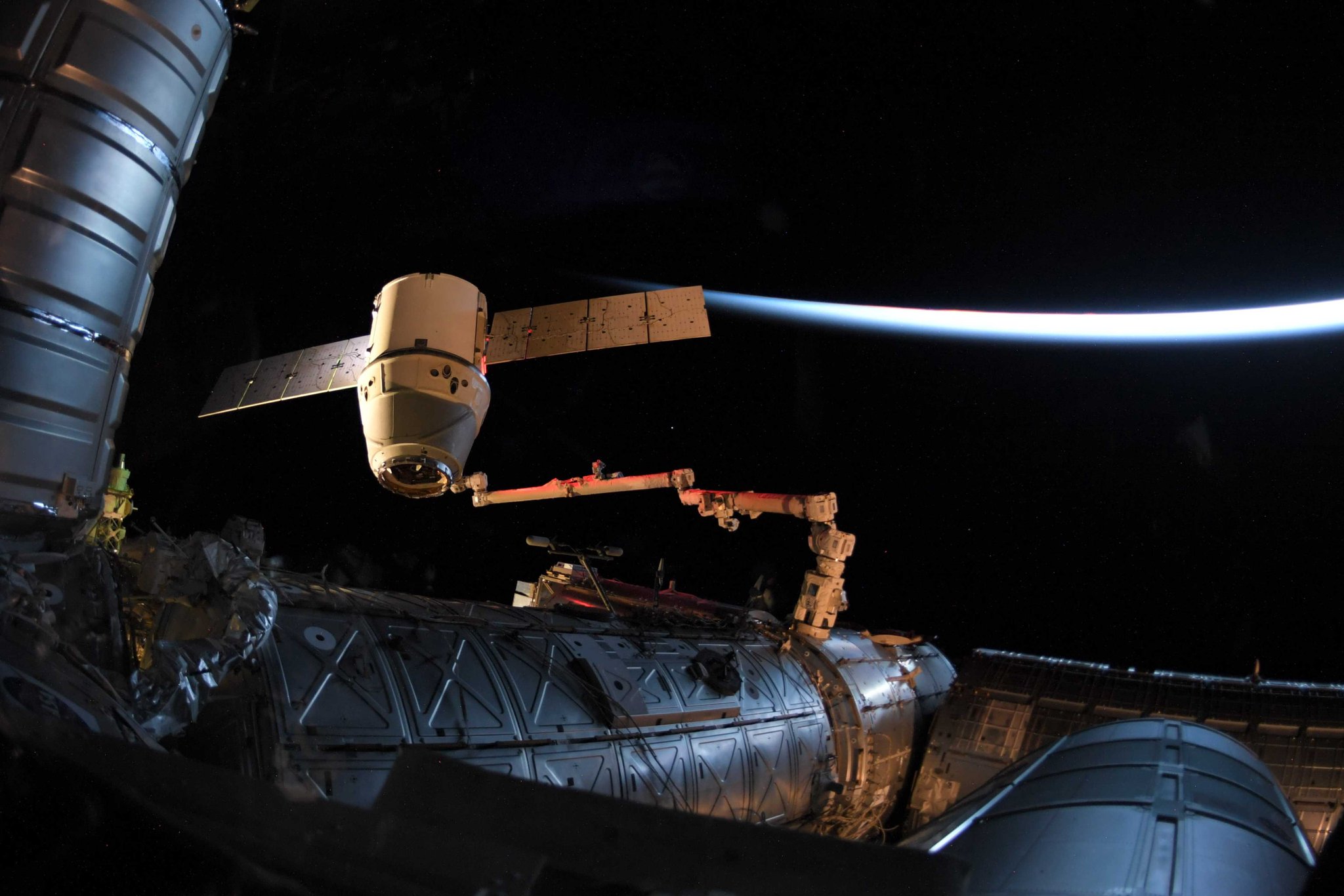
The SpaceX Dragon resupply ship
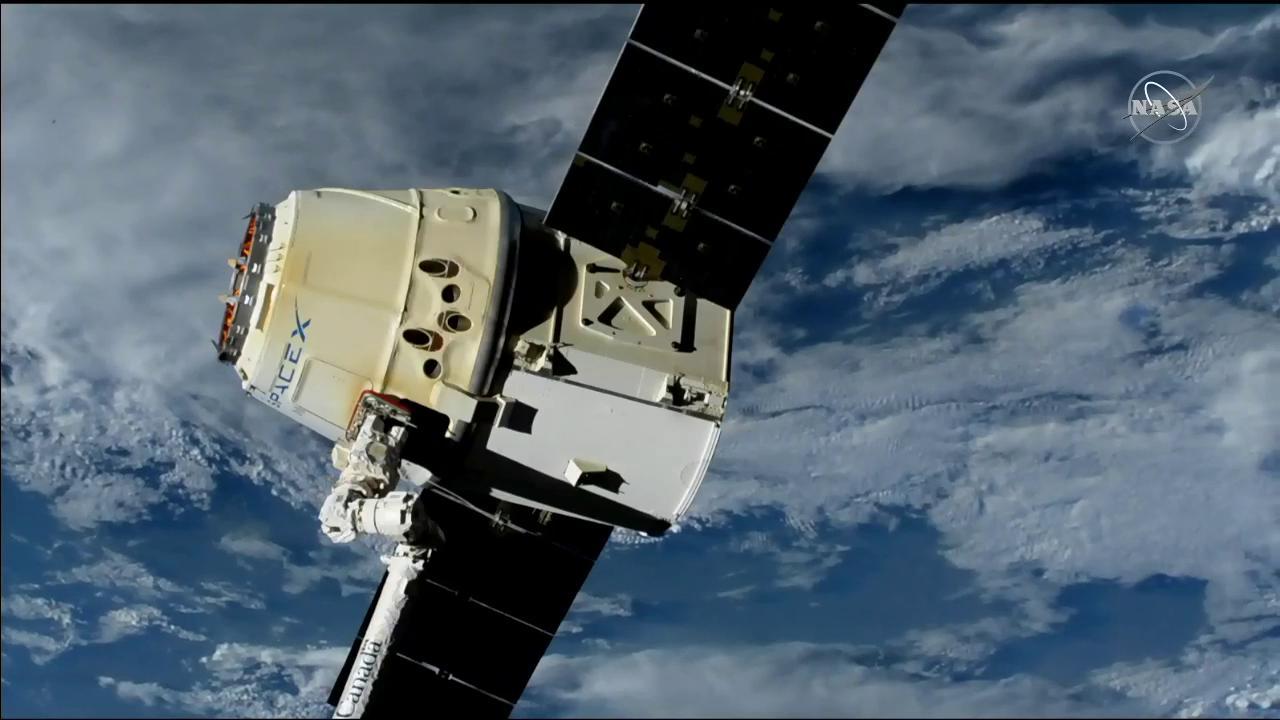
The SpaceX Dragon resupply ship is pictured moments before its release from the International Space Station’s Canadarm2 robotic arm. Credit: @Astro_DavidS

SpaceX‘s Dragon cargo spacecraft splashed down in the Pacific Ocean at 5:48 p.m. EDT (2:48 p.m PDT), approximately 202 miles southwest of Long Beach, California, marking the end of the company’s 17th contracted cargo resupply mission to the International Space Station for NASA. The spacecraft returned more than 4,200 pounds of valuable scientific experiments and other cargo.

Some of the scientific investigations Dragon returned to Earth include:

Observing Protein Crystal Growth

NASA’s Biophysics-6 experiment looks at the growth of two proteins of interest in cancer treatment and radiation protection. Scientists are using ground-based predictions and in-space X-ray crystallography to determine which proteins benefit from crystallization in microgravity, where some proteins can grow larger and with fewer imperfections.

Microalgae Biosynthesis in Microgravity

Microalgae Biosynthesis in Microgravity (MicroAlgae) studies the effects of microgravity on Haematococcus pluvialis, an algae capable of producing a powerful antioxidant, astaxanthin. It could provide a readily available dietary supplement to promote astronaut health on long-duration space exploration missions. A community college student and alumnae of the NASA Community College Aerospace Scholars (NCAS) program proposed the research, and NCAS is engaging community colleges across the U.S. to conduct ground studies for comparison to the in-orbit investigation.

Genes in Space

On May 23, astronauts aboard the space station successfully edited DNA using CRISPR/Cas9 technology for the first time in space, working on the Genes in Space-6 investigation. This milestone advances understanding of how DNA repair mechanisms function in space and supports better safeguards to protect space explorers from DNA damage. Genetic damage caused by cosmic radiation poses a serious risk to space travelers, especially those on long-duration missions to the Moon and Mars. CRISPR/Cas9 now joins a growing portfolio of molecular biology techniques available on the ISS National Lab.

These are just a few of the hundreds of investigations aimed at keeping astronauts healthy during space travel and demonstrating technologies for future human and robotic exploration beyond low-Earth orbit, including missions to the Moon by 2024 and on to Mars. Space station research also provides opportunities for other U.S. government agencies, private industry, and academic and research institutions to conduct microgravity research that leads to new technologies, medical treatments, and products that improve life on Earth.

For more than 18 years, humans have lived and worked continuously aboard the International Space Station, advancing scientific knowledge and demonstrating new technologies, making research breakthroughs not possible on Earth that will enable long-duration human and robotic exploration into deep space. A global endeavor, more than 230 people from 18 countries have visited the unique microgravity laboratory that has hosted more than 2,500 research investigations from researchers in 106 countries.

Learn more about station activities by following the space station blog, @space_station and @ISS_Research on Twitter as well as the ISS Facebook and ISS Instagram accounts.

Get The Details…

Mark Garcia

Powered by WPeMatico

Dragon Resupply Ship Leaves Station, Heads for Pacific Splashdown

Dragon Resupply Ship Leaves Station, Heads for Pacific Splashdown

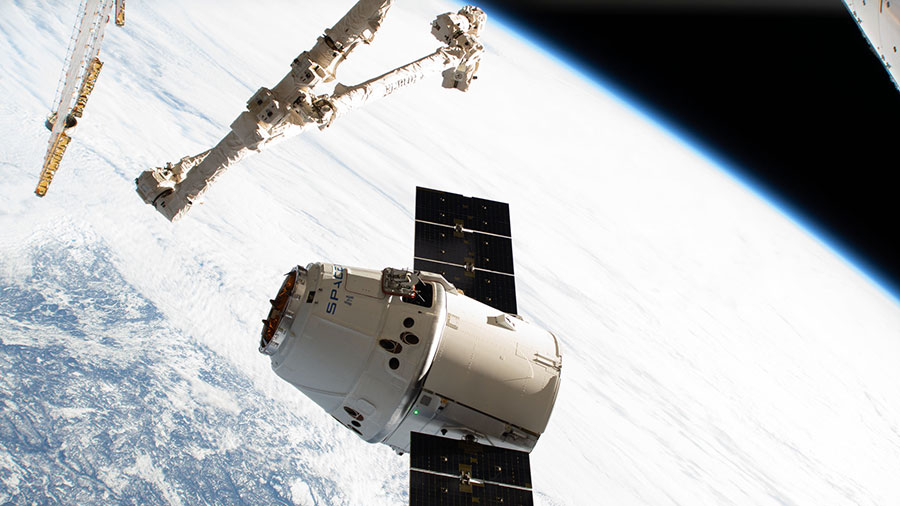
The SpaceX Dragon resupply ship is in the grips of the Canadarm2
The SpaceX Dragon resupply ship is in the grips of the Canadarm2 robotic arm moments before its release from the International pace Station.

The SpaceX Dragon cargo spacecraft released from the International Space Station at 12:01 p.m. EDT after flight controllers in Houston delivered remote commands to the station’s Canadarm2 robotic arm. Expedition 59 Flight Engineer David Saint-Jacques of the Canadian Space Agency monitored Dragon’s systems as it departed the microgravity laboratory.

Next up, Dragon will fire its thrusters to move a safe distance from the station and execute a deorbit burn around 4:56 p.m. to leave orbit. Splashdown down is targeted for approximately 5:55 p.m. EDT (2:55 p.m. PDT).

Learn more about station activities by following the space station blog, @space_station and @ISS_Research on Twitter as well as the ISS Facebook and ISS Instagram accounts.

Get The Details…

Mark Garcia

Powered by WPeMatico

U.S. Cargo Craft Poised to Depart Station and Return to Earth

U.S. Cargo Craft Poised to Depart Station and Return to Earth

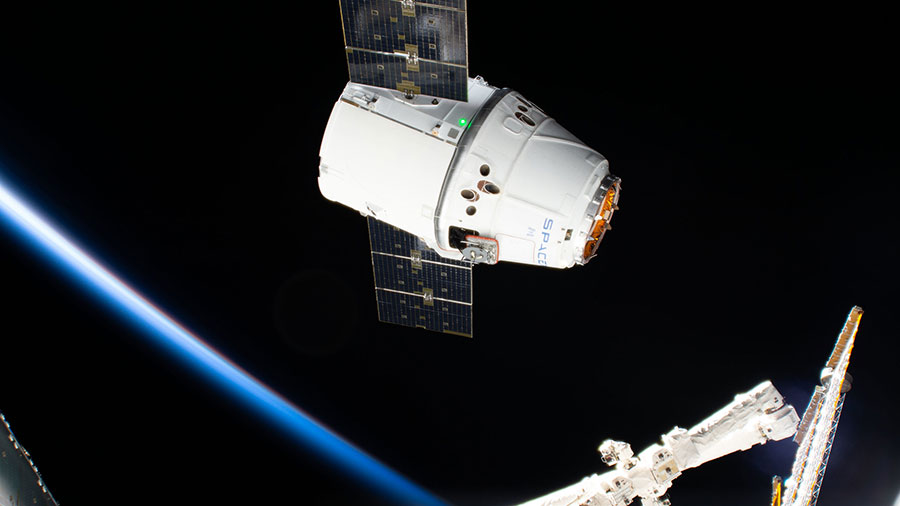
The SpaceX Dragon cargo craft approaches the International Space Station
The SpaceX Dragon cargo craft arrived at the International Space Station May 6, 2019 and was captured with the Canadarm2 robotic arm.

NASA Television coverage is now underway for departure of the SpaceX Dragon spacecraft from the International Space Station. The spacecraft is scheduled for release at 12:09 p.m. EDT.

Dragon was detached from the Earth-facing port of the Harmony module at 8:30 a.m. after flight controllers at mission control in Houston delivered remote commands to the station’s Canadarm2 robotic arm. Expedition 59 Flight Engineer David Saint-Jacques of the Canadian Space Agency will back up the operation and monitor Dragon’s systems as it departs the orbital laboratory.

After firing its thrusters to move a safe distance away from the station, Dragon will execute a deorbit burn around 4:56 p.m. to leave orbit, as it heads for a parachute-assisted splashdown in the Pacific Ocean, 202 miles southwest of Long Beach, California, at approximately 5:48 p.m. (2:48 p.m. PDT). There will be no live coverage of deorbit burn or splashdown.

Dragon launched on the SpaceX Falcon 9 rocket May 4 from Space Launch Complex 40 at Cape Canaveral Air Force Station in Florida, and arrived at the station two days later with almost 5,500 pounds of science, supplies and cargo on SpaceX’s 17th commercial resupply mission to the station for NASA.

Learn more about station activities by following the space station blog, @space_station and @ISS_Research on Twitter as well as the ISS Facebook and ISS Instagram accounts.

Get The Details…

Mark Garcia

Powered by WPeMatico

Science Results Packed for Return to Earth Aboard Dragon Monday

Science Results Packed for Return to Earth Aboard Dragon Monday

The SpaceX Dragon cargo craft approaches its capture point
The SpaceX Dragon cargo craft approaches the International Space Station on May 6, 2019, to deliver than 5,500 pounds of research, equipment, cargo and supplies to the Expedition 59 crew.

The Expedition 59 crew is starting the weekend preparing the SpaceX Dragon cargo craft for its departure from the International Space Station on Monday. The space residents are also juggling a variety of research work and lab maintenance tasks today.

NASA TV is broadcasting the robotic release of Dragon from the station live on NASA TV beginning Monday at 11:45 a.m. EDT.  Robotics controllers will command the Canadarm2 robotic arm to release the space freighter around 12:09 p.m. while astronaut David Saint-Jacques monitors from the cupola. Dragon will splashdown in the Pacific about 5:48 p.m. and will not be seen on NASA TV.

Several critical experiments have wrapped up aboard the orbiting lab with the completed results and hardware being packed inside the Dragon this weekend. After the space freighter splashes down Monday, it will be towed to shore where the finalized research will be distributed to labs around the world for analysis.

Astronauts Anne McClain and David Saint-Jacques are cleaning up and inspecting the Life Sciences Glovebox (LSG) today. This comes after the crew completed a month-long study of the immune system’s response to weightlessness inside the LSG. Samples from that study will also return to Earth aboard Dragon Monday.

The pair first joined Flight Engineer Nick Hague during the morning checking out space biology hardware and transferring more frozen research samples into Dragon’s science freezers. Hague and McClain then participated in regularly scheduled eye exams in the afternoon.

Christina Koch of NASA is helping cosmonauts Oleg Kononenko and Alexey Ovchinin clean up after the duo’s spacewalk on Wednesday. She stowed the U.S. tools they used back in the Quest airlock while the cosmonauts serviced their Russian Orlan spacesuits in the Pirs airlock.

Get The Details…

Mark Garcia

Powered by WPeMatico

Light Science Duties as Crew Sleeps in After Spacewalk

Light Science Duties as Crew Sleeps in After Spacewalk

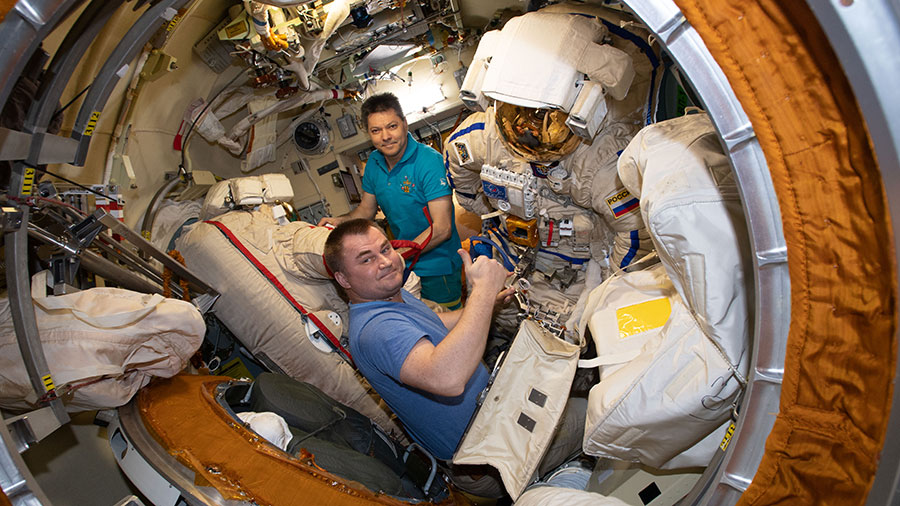
Cosmonauts Alexey Ovchinin (foreground) and Oleg Kononenko
Cosmonauts Alexey Ovchinin (foreground) and Oleg Kononenko work on a pair of Russian Orlan spacesuits inside the Pirs docking compartment’s airlock.

The six-member Expedition 59 crew had a chance to sleep in the day after wrapping up a successful spacewalk on the Russian side of the International Space Station. The cosmonauts are cleaning up this afternoon from yesterday’s excursion while the rest of the orbiting crew focuses on exercise research and other light science duties.

NASA astronauts Nick Hague and Christina Koch woke up after lunch today and strapped themselves into an exercise bike inside the U.S. Destiny laboratory module. The duo took turns working out on the specialized bicycle attached to sensors for the experiment measuring oxygen uptake and aerobic capacity.

Flight Engineers Anne McClain and David Saint-Jacques checked on a couple of life science experiments during their relaxed afternoon. McClain updated software for the Photobioreactor study exploring how microalgae can create a hybrid life support system for astronauts and Earthlings. Saint-Jacques turned off and stowed the Canadian Bio-Monitor device that can quickly analyze human biological samples in space.

Commander Oleg Kononenko and Flight Engineer Alexey Ovchinin are reconfiguring the Pirs airlock, cleaning spacesuits and stowing tools following Wednesday’s six hour and one minute spacewalk. The cosmonauts also debriefed spacewalk experts on the ground discussing their hardware removal and experiment jettisoning tasks.

Get The Details…

Mark Garcia

Powered by WPeMatico