Crew Explores Space Biology, Radiation Exposure Before Independence Day

Crew Explores Space Biology, Radiation Exposure Before Independence Day
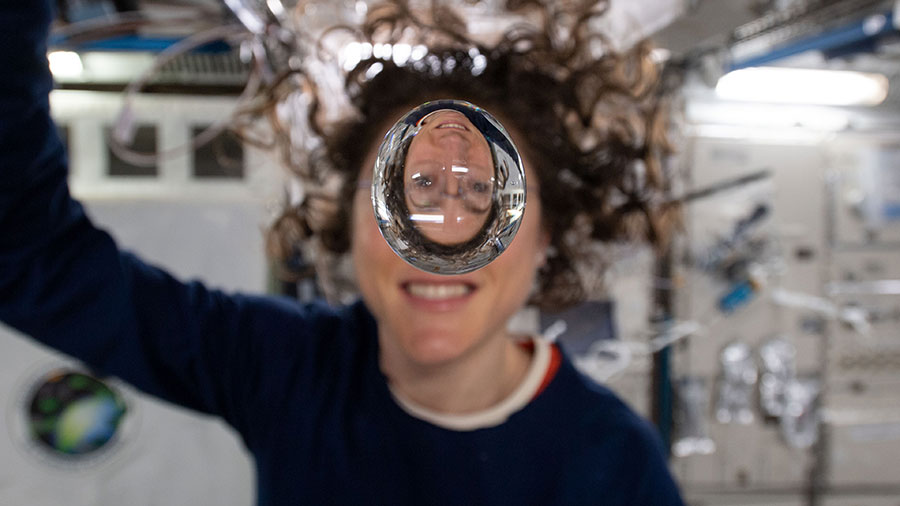
Expedition 60 Flight Engineer Christina Koch of NASA
Expedition 60 Flight Engineer Christina Koch of NASA playfully demonstrates how fluids behave in the weightless environment of microgravity aboard the International Space Station.

The Expedition 60 crew explored space biology and radiation exposure aboard the International Space Station today. The orbital residents also filmed a virtual reality experience and oversaw the deployment of a set microsatellites.

NASA astronaut Christina Koch tended plants and stored microalgae samples for a pair of biology studies investigating ways to support long-term missions farther away from Earth. The two-part VEG-04 study is researching space agriculture as a method to nourish future crews as NASA prepares to go to the Moon and beyond. Microalgae is being observed for the Photobioreactor experiment that aims to demonstrate a hybrid life support system.

A series of seven CubeSats were deployed outside Japan’s Kibo laboratory module today. NASA Flight Engineer Nick Hague configured the seven microsatellites last week and installed them in a Kibo’s small satellite deployer. An international team of engineers and students designed the CubeSats for a variety of experiments and technology demonstrations.

Both astronauts teamed up in the afternoon for another filming session depicting life aboard the orbital outpost. The crew has been videotaping a cinematic, virtual reality experience on the station to share with audiences on Earth.

Commander Alexey Ovchinin set up radiation detectors throughout the station’s Russian segment this morning. The Matroyshka experiment is observing the amount of radiation the station and the crew are exposed to on its flight path.

The orbiting trio will take a day off on July 4 and relax aboard the station. Back on Earth, a new set of Expedition 60 crewmates will fly from Russia on the U.S. Independence Day to their launch site at the Baikonur Cosmodrome in Kazakhstan. Astronauts Andrew Morgan and Luca Parmitano are in final preparations with cosmonaut Alexander Skvortsov for a July 20 liftoff to their new home in space. Their launch comes 50 years to the day NASA landed humans on the Moon for the first time.

Get The Details…

Mark Garcia

Powered by WPeMatico

Life Support Work Aboard Lab as Next Crew Preps for Mission

Life Support Work Aboard Lab as Next Crew Preps for Mission

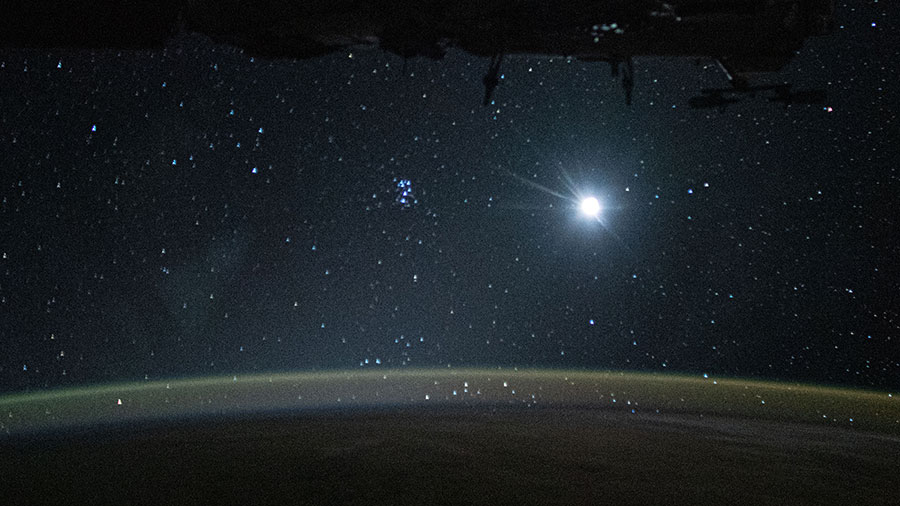
Earth's atmospheric glow, highlighted by the Moon and a starry orbital nighttime
Earth’s atmospheric glow, highlighted by the Moon and a starry orbital nighttime background, are pictured as the International Space Station orbited 256 miles above the Pacific Ocean, southeast of the Hawaiian island chain.

The three Expedition 60 crewmembers aboard the International Space Station focused primarily on keeping the orbiting lab in tip-top shape today. At the end of the workday, the trio split up for some space gardening and Earth photography.

NASA Flight Engineers Christina Koch and Nick Hague teamed up on Tuesday replacing components in the station’s Water Recovery System (WRS). The time-consuming maintenance work requires the rotation of racks and a treadmill to access the WRS in the Tranquility module. The life support device processes water vapor and urine and converts it into drinkable water.

Hague wrapped up his workday servicing a science freezer before watering plants growing for a space botany study. Koch worked out on the Advanced Resistive Exercise Device then called down to Mission Control for a conference with flight surgeons.

On the Russian side of the station, Commander Alexey Ovchinin explored advanced photography techniques before an afternoon of lab cleaning work. In the evening, the veteran cosmonaut photographed Earth targets documenting the effects of human and natural catastrophes.

The orbiting trio will take a day off on July 4 and relax aboard the station. Back on Earth, a new set of Expedition 60 crewmates will fly from Russia on the U.S. Independence Day to their launch site at the Baikonur Cosmodrome in Kazakhstan. Astronauts Andrew Morgan and Luca Parmitano are in final preparations with cosmonaut Alexander Skvortsov for a July 20 liftoff to their new home in space. Their launch comes 50 years to the day NASA landed humans on the Moon for the first time.

Get The Details…

Mark Garcia

Powered by WPeMatico

Station Trio Works CubeSats, Space Plumbing Ahead of Historic July 20 Launch

Station Trio Works CubeSats, Space Plumbing Ahead of Historic July 20 Launch

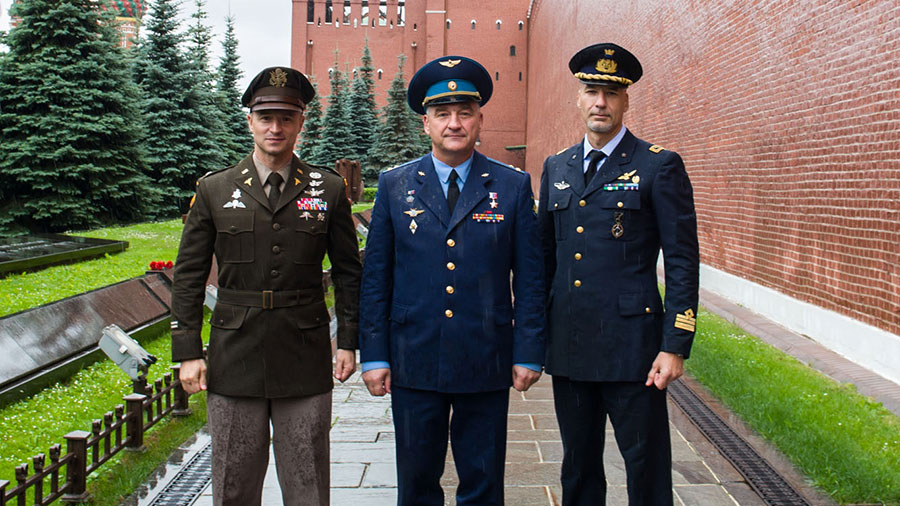
Upcoming Expedition 60 crewmembers
Upcoming Expedition 60 crewmembers (from left) Drew Morgan, Alexander Skvortsov and Luca Parmitano pose for pictures at the Kremlin Wall at Red Square in Moscow on June 28.

The Expedition 60 crew is configuring more CubeSats for deployment and working on space plumbing aboard the International Space Station today. Back on Earth, three crewmembers from the U.S., Italy and Russia are in training for their launch to the station on July 20.

NASA astronaut Nick Hague installed hardware that will deploy seven CubeSats outside of the Kibo laboratory module this week. Engineers and students from around the world designed the series of seven microsatellites for a variety of experiments and technology demonstrations.

NASA Flight Engineer Christina Koch relocated a science freezer before some space gardening during Monday morning. She and Hague then took turns during the afternoon swapping filters and components in the station’s Water Recycling System.

Commander Alexey Ovchinin worked throughout the day in the orbiting lab’s Russian segment. The two-time station visitor tested laptop computer batteries, transferred urine to a Russian cargo craft and maintained life support systems.

In Russia, three upcoming station residents from NASA, the European Space Agency and Roscosmos are in final preparations ahead of their historic July 20 launch. Flight Engineers Andrew Morgan, Luca Parmitano and Alexander Skvortsov are launching 50 years to the day humans first landed on the Moon. The trio will liftoff aboard the Soyuz TMA-13 spacecraft to their new home in space.

Get The Details…

Mark Garcia

Powered by WPeMatico

Station Deploying Microsatellites as New Crew Prepares for July 20 Launch

Station Deploying Microsatellites as New Crew Prepares for July 20 Launch

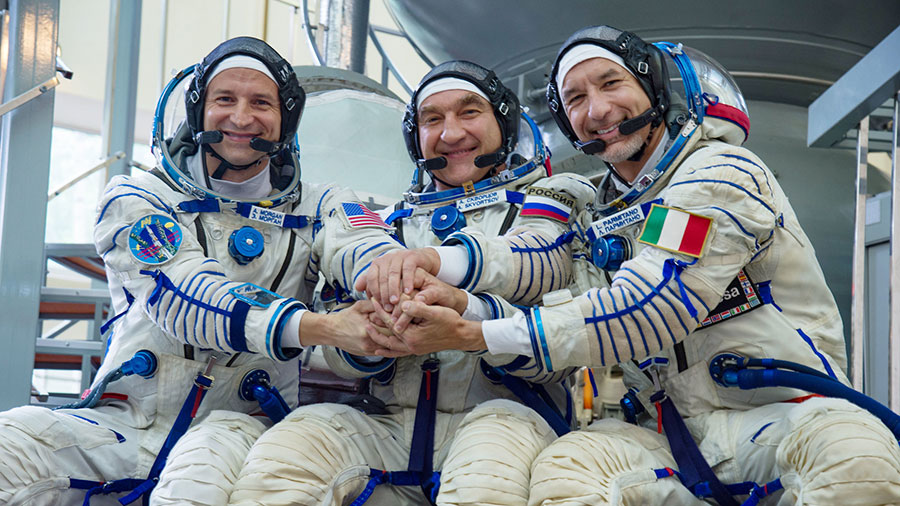
Expedition 60-61 Crewmembers
The next crew to launch to the space station is in Russia training for a July 20 launch to their new home in space. From left are, Expedition 60-61 crewmembers Andrew Morgan, Alexander Skvortsov and Luca Parmitano.

A satellite deployer ejected a CubeSat into Earth orbit last night from outside the International Space Station’s Kibo laboratory module. Today, the three Expedition 60 crewmembers explored microgravity’s effect on humans and plants to support longer spaceflight missions.

The RED-EYE microsatellite is orbiting Earth today to demonstrate satellite communications and attitude control technologies. NASA Flight Engineer Nick Hague installed the satellite inside Kibo’s airlock last week for a safe deployment outside the orbiting lab. The SpaceX Dragon resupply ship delivered the CubeSat to the station May 6.

Hague is readying more CubeSats today for deployment later next week outside Kibo. They will orbit Earth demonstrating space tasks such as weather observations, satellite maneuvers and Earth photography. Students and engineers from around the world designed the series of seven microsatellites.

NASA astronaut Christina Koch watered plants growing inside Europe’s Columbus laboratory module for the Veg-04 space gardening study. Afterward, she replaced fuel bottles to support flame and fuel research in the U.S. Destiny laboratory module’s Combustion Integrated Rack.

Commander Alexey Ovchinin spent Friday morning exploring tools and techniques future cosmonauts could use when controlling a spacecraft or a robot on a planetary surface. The two-time station resident then spent the afternoon working on life support systems and plumbing tasks in the station’s Russian segment.

Back on Earth, two veteran station crewmembers and a first-time space-flyer are wrapping up tests in Russia to certify for their July 20 launch to the orbiting lab. NASA astronaut Andrew Morgan is in final mission training with experienced space residents Luca Parmitano of the European Agency and Alexander Skvortsov of Roscosmos. The trio will liftoff aboard the Soyuz MS-13 crew ship from Kazakhstan 50 years to the day when Neil Armstrong first stepped on the Moon.

Get The Details…

Mark Garcia

Powered by WPeMatico

Expedition 60 Science Ramps Up as Next Crew Trains for Mission

Expedition 60 Science Ramps Up as Next Crew Trains for Mission

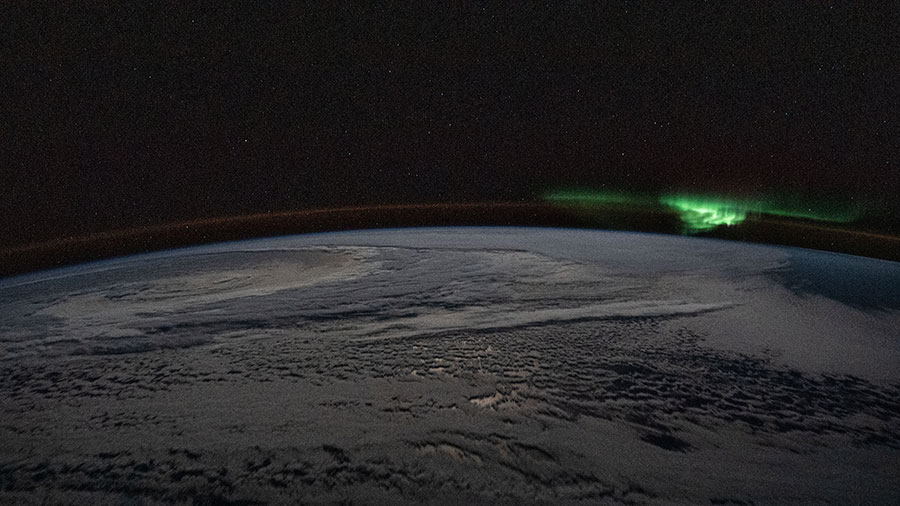
The atmospheric glow and a wispy aurora australis
The atmospheric glow and a wispy aurora australis, also known as the “southern lights,” frame a cloud-covered Earth.

Virtual reality filming, space gardening and biomedical research were on the timeline for two NASA astronauts aboard the International Space Station today, while a cosmonaut took care of computer hardware and life support maintenance.

Flight Engineer Christina Koch tended to plants today growing inside Europe’s Columbus laboratory module for the Veg-04 botany study. She later relocated a pair of tiny research facilities in the EXPRESS-6 science rack. The two devices, TangoLab-2 and STaARS-1, enable advanced investigations into a variety of biological processes, such as cell cultures and tissue engineering.

Astronaut Nick Hague took a turn today recording himself with a 360-degree camera for a virtual reality experience targeted to audiences on Earth. In the afternoon, he collected and stowed his urine samples in a science freezer for later analysis.

Expedition 60 Commander Alexey Ovchinin worked on Russian computer hardware in the Zvezda service module. In the evening, he picked up a high-powered camera for a photographic survey of catastrophes on Earth and their natural consequences.

The next crew to launch to the space station is in Star City, Russia for final qualification exams to certify to fly aboard the Soyuz MS-13 spaceship. Cosmonaut Alexander Skvortsov will lead NASA astronaut Andrew Morgan and European Space Agency astronaut Luca Parmitano in the Soyuz when they blast off June 20 for a six-hour ride to their new home in space. This will be Morgan’s first space mission, Parmitano’s second and Skvortsov’s third visit to the station.

Get The Details…

Mark Garcia

Powered by WPeMatico