Full Science Schedule Today After Spacewalk and Rocket Launch

Full Science Schedule Today After Spacewalk and Rocket Launch
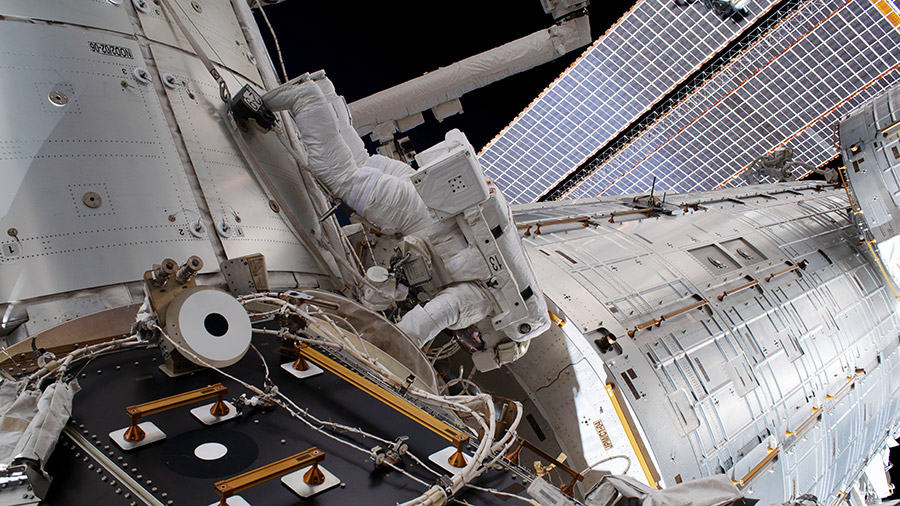
NASA astronaut Andrew Morgan
NASA astronaut Andrew Morgan is pictured working outside the International Space Station during a six-hour and 32-minute spacewalk to install the orbiting lab’s second commercial crew vehicle docking port, the International Docking Adapter-3

Russia’s uncrewed Soyuz MS-14 spacecraft is on its way to the International Space Station following its launch just a few hours after Wednesday’s spacewalk. The Expedition 60 crew is back on a full science schedule today and preparing to send a U.S. cargo craft back to Earth.

NASA astronauts Nick Hague and Andrew Morgan called down to Mission Control today to discuss yesterday’s spacewalk when they installed the station’s second commercial crew vehicle docking port, the International Docking Adapter-3. The duo, including NASA Flight Engineer Christina Koch, talked about normal technical issues and task challenges they faced before, during and after the spacewalking job.

Koch spent most of Thursday tending to lab mice living aboard the station. Scientists seek therapeutic insights not possible on Earth by observing the rodents due to their genetic similarity to humans.

Hague spent a portion of his day contributing to experiments designed by middle and high school students researching a variety of space phenomena. Luca Parmitano of ESA (European Space Agency) continued exploring ways to manufacture safer, more fuel-efficient tires before moving on to more cell differentiation research.

Morgan is preparing the SpaceX Dragon cargo craft for its return to Earth next week. The crew will be packing Dragon over the weekend and into Monday with the results of numerous space experiments for analysis. Robotics controllers will command the Canadarm2 to release Dragon from its grips on Tuesday at 10:42 a.m. EDT. It will splashdown in the Pacific Ocean off the coast of southern California a few hours later for retrieval by SpaceX personnel.

The first unpiloted Soyuz spacecraft launched yesterday from Kazakhstan about nine hours after Hague and Morgan completed their spacewalk. The Soyuz MS-14 is orbiting Earth today headed toward the station following a successful 2.1a booster test during its ascent. Commander Alexey Ovchinin and Flight Engineer Alexander Skvortsov will monitor its automated approach and rendezvous when it docks Saturday to the Poisk module at 1:31 a.m. EDT.

Get The Details…

Mark Garcia

Powered by WPeMatico

Uncrewed Soyuz Rocket Launches on Two-Day Trip to Station

Uncrewed Soyuz Rocket Launches on Two-Day Trip to Station

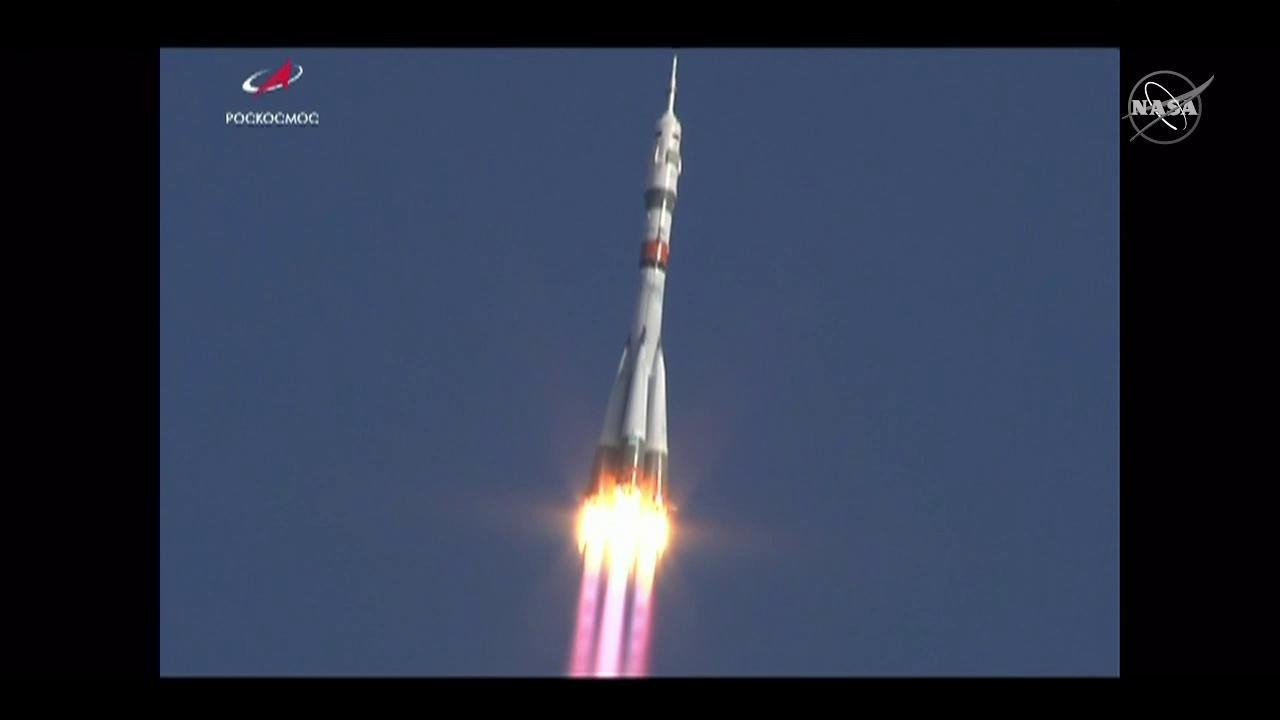
The Soyuz MS-14 spacecraft lifts off
The Soyuz MS-14 spacecraft launches from the Baikonur Cosmodrome in Kazakhstan on Wednesday, Aug. 21

The Soyuz MS-14 spacecraft launched at 11:38 p.m. EDT (8:38 a.m. Aug. 22 Baikonur time) from Site 31 at the Cosmodrome on a Soyuz 2.1a booster, which has been used recently to launch uncrewed Russian Progress cargo resupply missions to the space station.

The Soyuz 2.1a booster, equipped with a new digital flight control system and upgraded engines, is replacing the Soyuz FG booster that has been used for decades to launch crews into space. The Soyuz spacecraft will have an upgraded motion control and navigation system, as well as a revamped descent control system.

Instead of crew members, the Soyuz will carry 1,450 pounds of cargo to the Expedition 60 crew currently residing on the orbital outpost.

The Soyuz will navigate to station for an automated docking on the space-facing Poisk module on Saturday, Aug. 24, at 1:30 a.m.  After a two-week stay at the station, the Soyuz will be commanded to undock from the station on Friday, Sept. 6, at 2:13 p.m.

NASA TV coverage of the docking, and undocking activities is as follows:

Saturday, Aug. 24:

  • 12:45 a.m. – Docking coverage (docking scheduled for 1:30 a.m.)

Friday, Sept. 6:

  • 1:45 p.m. – Undocking coverage (undocking scheduled for 2:13 p.m.)

Get The Details…

Mark Garcia

Powered by WPeMatico

NASA TV to Broadcast Uncrewed Soyuz Rocket Launch

NASA TV to Broadcast Uncrewed Soyuz Rocket Launch

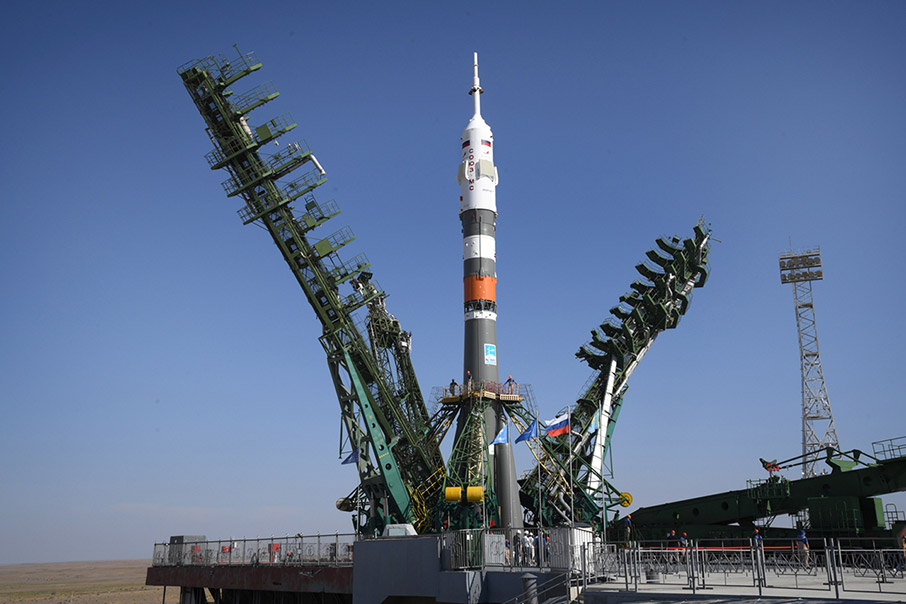
The Soyuz MS-14 spacecraft stands at its launch pad
The Soyuz MS-14 spacecraft stands at its launch pad at the Baikonur Cosmodrome in Kazakhstan. Credit: Roscosmos

An uncrewed Russian Soyuz spacecraft is set to launch from the Baikonur Cosmodrome in Kazakhstan on Wednesday, Aug. 21, at 11:38 p.m. EDT (8:38 a.m. Aug. 22 Baikonur time) on a test flight to validate the spacecraft’s compatibility with a revamped Soyuz booster rocket. The booster will be used to transport crews to the International Space Station beginning in spring 2020.

Live coverage of the launch, docking and undocking of the spacecraft is underway on NASA Television and the agency’s website.

Get The Details…

Mark Garcia

Powered by WPeMatico

Spacewalkers Complete Installation of Second Commercial Docking Port

Spacewalkers Complete Installation of Second Commercial Docking Port

Spacewalkers Nick Hague and Andrew Morgan
Spacewalkers Nick Hague (top) and Andrew Morgan install the International Docking Adapter (IDA-3) to the Pressurized Mating Adapter on top of the station’s Harmony module.

NASA astronauts Nick Hague and Andrew Morgan concluded today’s spacewalk at 2:59 p.m. EDT. During the six-hour and 32-minute spacewalk, the two astronauts successfully installed the second of two international docking adapters (IDAs).

The IDAs will be used for the future arrivals of Boeing CST-100 Starliner and SpaceX Crew Dragon  commercial crew spacecraft. NASA’s commercial crew partnership with Boeing and SpaceX will restore launches of American astronauts from American soil on American rockets and maximize the time U.S. crews can dedicate to scientific research and technological advances aboard the orbiting laboratory to enable the agency’s ambitious goals for the Artemis lunar exploration program and future missions to the Moon and Mars. Regular human space transportation to the space station is a critical step to opening the space station for commercial business to enable the growth of the U.S. commercial space sector and the development of a robust low-Earth orbit economy.

The spacewalkers also completed additional routing for the station’s wireless internet.

Space station crew members have spent a total of 56 days, 23 hours, and 26 minutes during 218 spacewalks in support of station assembly, maintenance and upgrades. It was the fifth spacewalk in 2019, and the first for Morgan. During three spacewalks, Hague has now spent a total of 19 hours and 59 minutes outside the space station.

Learn more about station activities by following the space station blog, @space_station and @ISS_Research on Twitter as well as the ISS Facebook and ISS Instagram accounts.

Get The Details…

Mark Garcia

Powered by WPeMatico

NASA Spacewalkers Suited Up and Installing Docking Adapter

NASA Spacewalkers Suited Up and Installing Docking Adapter

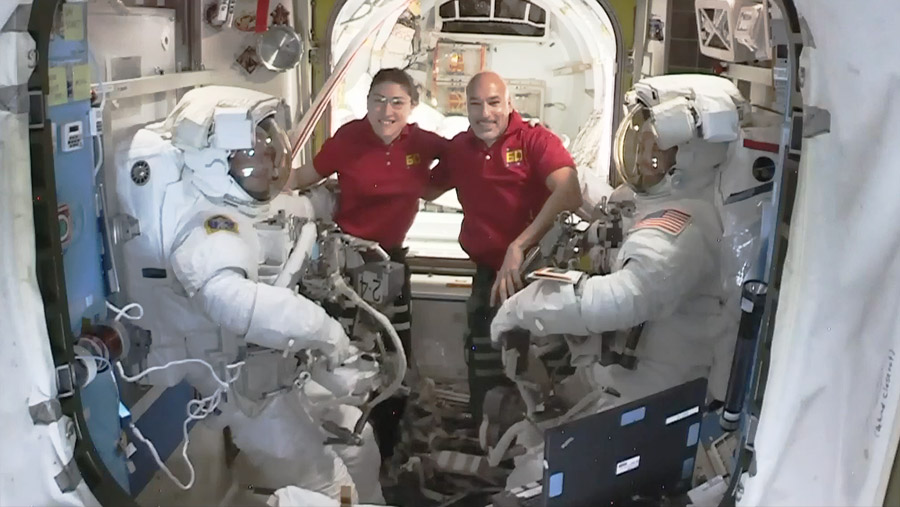
Astronauts pose with spacewalkers
Astronauts Christina Koch and Luca Parmitano take a portrait with spacewalkers Andrew Morgan (right) and Nick Hague (left) in their U.S. spacesuits during this morning’s spacewalk preparations.

NASA astronauts Nick Hague and Andrew Morgan switched their spacesuits to battery power this morning at 8:27 a.m. EDT aboard the International Space Station to begin a spacewalk planned to last about six-and-a-half hours. The two flight engineers will install the second of two international docking adapters (IDAs) that will enable future arrivals of Boeing and SpaceX commercial crew spacecraft.

NASA Television coverage of today’s spacewalk is ongoing and available on the agency’s website.

Hague is designated extravehicular crew member 1 (EV 1), his helmet camera is #11, and he is wearing the spacesuit with a red stripe. Morgan will be extravehicular crew member 2 (EV 2), his helmet camera is #18, and he is wearing the suit with no stripes.

The docking adapter arrived to the space station July 27 on a SpaceX Dragon cargo resupply spacecraft. On Monday, ground controllers used the Canadarm2 robotic arm, and its attached “Dextre” Special Dexterous Manipulator, to extract the IDA from the trunk of Dragon and position it just 2 feet away from Pressurized Mating Adapter-3 (PMA) located on the space-facing side of the station’s Harmony module. Once the IDA is moved to a surface to surface contact with the PMA, Hague and Morgan will begin work to hook up tethers in advance of NASA astronaut Christina Koch sending commands to close the hooks between the two docking ports. Once the hooks are closed, Hague and Morgan will press ahead to route and connect power and data lines for future use of the IDA.

The spacewalk is the 218th in support of station assembly, maintenance and upgrades and the fifth outside the station this year. It will be the third spacewalk for Hague and the first for Morgan.

Learn more about station activities by following the space station blog, @space_station and @ISS_Research on Twitter as well as the ISS Facebook and ISS Instagram accounts.

Get The Details…

Mark Garcia

Powered by WPeMatico