NASA, SpaceX Proceed Toward Crew Dragon Splashdown

NASA, SpaceX Proceed Toward Crew Dragon Splashdown

The SpaceX Crew Dragon astronauts (front row, from left) Bob Behnken and Doug Hurley joined their Expedition 63 crewmates (rear, from left) Ivan Vagner, Chris Cassidy and Anatoly Ivanishin for a crew farewell ceremony Saturday morning. Credit: NASA TV

Teams from NASA and SpaceX are proceeding with preparations to bring NASA astronauts Robert Behnken and Douglas Hurley home from the International Space Station to Earth with a splashdown on Sunday, Aug. 2, off the Florida coast aboard the SpaceX Crew Dragon “Endeavour” spacecraft.

Watch the crew farewell ceremony on YouTube.

Return conditions remained “Go” at several of the needed target locations for splashdown and recovery after teams received a weather briefing Friday evening from the U.S. Air Force 45th Weather Squadron. NASA and SpaceX will make a decision on a primary splashdown target approximately 6 hours before undocking.

NASA and SpaceX are targeting 7:34 p.m. EDT Saturday, Aug. 1, for undocking of the Dragon “Endeavour” spacecraft from the space station and 2:42 p.m. Sunday, Aug. 2, for splashdown, which will be the first return of a commercially built and operated American spacecraft carrying astronauts from the space station.

Teams continue to closely monitor Hurricane Isaias and evaluate impacts to the landing sites in the Gulf of Mexico along the Florida Panhandle. Teams have several weather decision milestones ahead of and after undocking to adjust the splashdown location and time based on the forecasted conditions for recovery.

NASA’s SpaceX Demo-2 return coverage is as follows (all times Eastern):

Saturday, Aug. 1

  • 5:15 p.m. – NASA TV undocking coverage begins for the 7:34 p.m. undocking (NASA Television will have continuous coverage from undocking to splashdown)

Sunday, Aug. 2

  • 2:42 p.m. – Splashdown
  • 5 p.m. – Administrator post-splashdown news conference at Johnson, with the following representatives:
    • NASA Administrator Jim Bridenstine
    • Commercial Crew Program representative
    • International Space Station representative
    • Gwynne Shotwell, president and chief operating officer, SpaceX
    • NASA Astronaut Office representative

Tuesday, Aug. 4 

  • 4:30 p.m. – Demo-2 Crew News Conference from the Johnson Space Center, with the following participants
    • NASA astronaut Bob Behnken
    • NASA astronaut Doug Hurley

Behnken and Hurley arrived at the orbiting laboratory on May 31, following a successful launch on May 30 on a SpaceX Falcon 9 rocket from NASA’s Kennedy Space Center in Florida. During their 63 days aboard station, Behnken and Hurley contributed more than 100 hours of time to supporting the orbiting laboratory’s investigations, participated in public engagement events, and supported four spacewalks with Behnken and Cassidy to install new batteries in the station’s power grid and upgrade other station hardware.

These activities are a part of NASA’s Commercial Crew Program, which has been working with the U.S. aerospace industry to launch astronauts on American rockets and spacecraft from American soil the International Space Station for the first time since 2011. This is SpaceX’s final test flight and is providing data on the performance of the Falcon 9 rocket, Crew Dragon spacecraft and ground systems, as well as in-orbit, docking, splashdown and recovery operations.

The test flight also is helping NASA certify SpaceX’s crew transportation system for regular flights carrying astronauts to and from the space station. SpaceX is readying the hardware for the first rotational mission, which would occur following NASA certification.

The goal of NASA’s Commercial Crew Program is safe, reliable and cost-effective transportation to and from the International Space Station. This could allow for additional research time and increase the opportunity for discovery aboard humanity’s testbed for exploration, including helping us prepare for human exploration of the Moon and Mars.

More details about the mission and NASA’s commercial crew program can be found in the press kit online and by following the commercial crew blog@commercial_crew and commercial crew on Facebook.

Learn more about station activities by following @space_station and @ISS_Research

on Twitter as well as the ISS Facebook and ISS Instagram accounts.

Get The Details…

Mark Garcia

Powered by WPeMatico

NASA Astronauts Conclude Today’s Spacewalk

NASA Astronauts Conclude Today’s Spacewalk

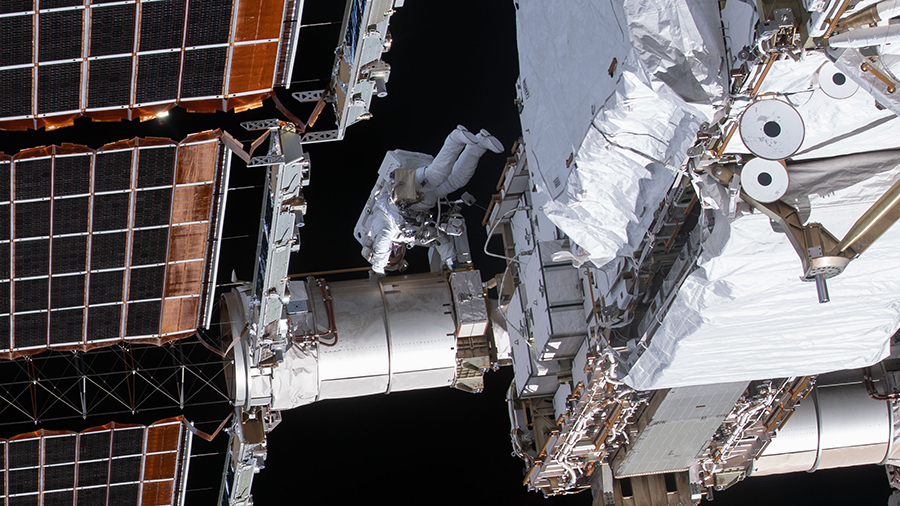
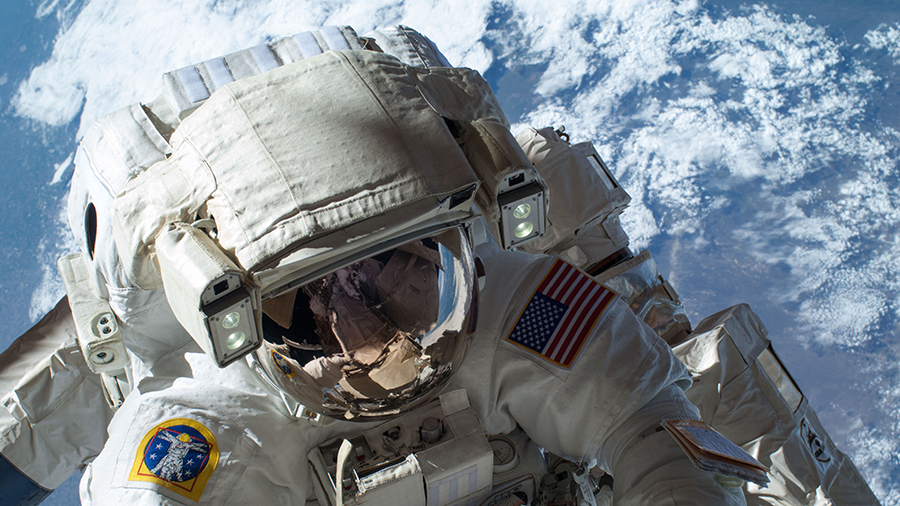
NASA astronaut pictured tethered on the space station’s truss structure during a spacewalk to swap batteries and route cables.

NASA astronauts Chris Cassidy and Robert Behnken concluded their spacewalk at 1:10 p.m. EDT, after six hours. The two NASA astronauts completed all the work to replace batteries that provide power for the station’s solar arrays on the starboard truss of the complex. The new batteries provide an improved and more efficient power capacity for operations.

The spacewalkers removed six aging nickel-hydrogen batteries for the second of two power channels for the starboard 6 (S6) truss, installed three new lithium-ion batteries, and installed the three associated adapter plates that are used to complete the power circuit to the new batteries. Mission control reports that all three new batteries are working.

The work nearly completes a 3.5-year effort to upgrade the International Space Station’s power system. At completion, 24 new lithium-ion batteries and adapter plates will replace 48 aging nickel-hydrogen batteries. In April 2019, one of the newly installed lithium-ion batteries on the near port truss blew a fuse, so two nickel-hydrogen batteries were re-installed to take its place. A new replacement lithium-ion battery arrived to the space station in January 2020 aboard the SpaceX Dragon on its 19th commercial resupply services mission and is stowed on the station’s truss until it can be installed during a future spacewalk later this year.

Behnken and Cassidy are scheduled to conduct one more spacewalk Tuesday, July 21, during which they will remove two lifting fixtures used for ground processing of the station’s solar arrays prior to their launch. They’ll also begin preparing the Tranquility module for the installation of a commercial airlock provided by NanoRacks and scheduled to arrive on a SpaceX cargo flight later this year. The airlock will be used to deploy commercial and government-sponsored experiments into space.

This was the ninth spacewalk for each astronaut. Behnken has now spent a total of 55 hours and 41 minutes spacewalking. Cassidy now has spent a total of 49 hours and 22 minutes spacewalking.

Space station crew members have conducted 230 spacewalks in support of assembly and maintenance of the orbiting laboratory. Spacewalkers have now spent a total of 60 days, 6 hours, and 34 minutes working outside the station.

Learn more about station activities by following the space station blog, @space_station and @ISS_Research on Twitter as well as the ISS Facebook and ISS Instagram accounts.

Get The Details…

Norah Moran

Powered by WPeMatico

Astronauts Have Begun Spacewalk Live on NASA TV

Astronauts Have Begun Spacewalk Live on NASA TV

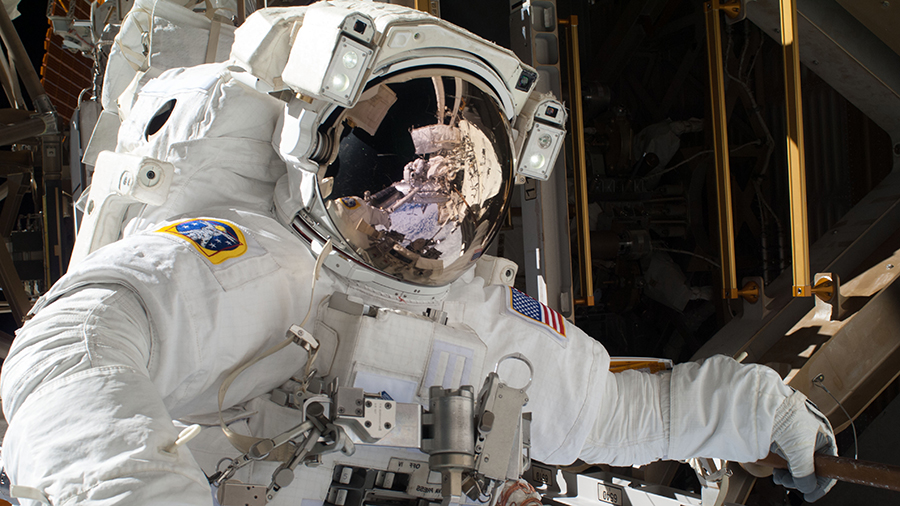
NASA astronaut and Expedition 63 Flight Engineer Bob Behnken works during a spacewalk to swap an aging nickel-hydrogen battery for a new lithium-ion battery on the International Space Station's Starboard-6 truss structure.
NASA astronaut and Expedition 63 Flight Engineer Bob Behnken works during a spacewalk to swap an aging nickel-hydrogen battery for a new lithium-ion battery on the International Space Station’s Starboard-6 truss structure.

NASA astronauts Robert Behnken and Chris Cassidy have begun the first of two final spacewalks to finish a 3.5-year effort to upgrade the International Space Station’s power system. They will replace batteries on one of two power channels on the station’s far starboard truss (S6 Truss).

The spacewalkers switched their spacesuits to battery power at 7:10 a.m. EDT to begin the spacewalk, which is expected to last between six and seven hours.

Watch the spacewalk on NASA TV and on the agency’s website.

The spacewalkers will be removing five existing nickel-hydrogen batteries and replacing them with three new lithium-ion batteries that arrived on a Japanese cargo ship last month. The batteries store electricity for one pair of the station’s solar arrays, and the swap will upgrade the station’s power supply capability. The batteries store power generated by the station’s solar arrays to provide power to the microgravity laboratory when the station is not in sunlight as it circles Earth during orbital night.

This is the 230th spacewalk in support of space station assembly and maintenance. Behnken is extravehicular crew member 1 (EV 1), wearing the spacesuit with red stripes, and using helmet camera #20. Cassidy is extravehicular crew member 2 (EV 2), wearing the spacesuit with no stripes and helmet camera #18. It is the ninth spacewalk for both astronauts.

Learn more about station activities by following the space station blog, @space_station and @ISS_Research on Twitter as well as the ISS Facebook and ISS Instagram accounts.

Get The Details…

Norah Moran

Powered by WPeMatico

NASA TV is Live Now as Astronauts Prepare for Spacewalk

NASA TV is Live Now as Astronauts Prepare for Spacewalk

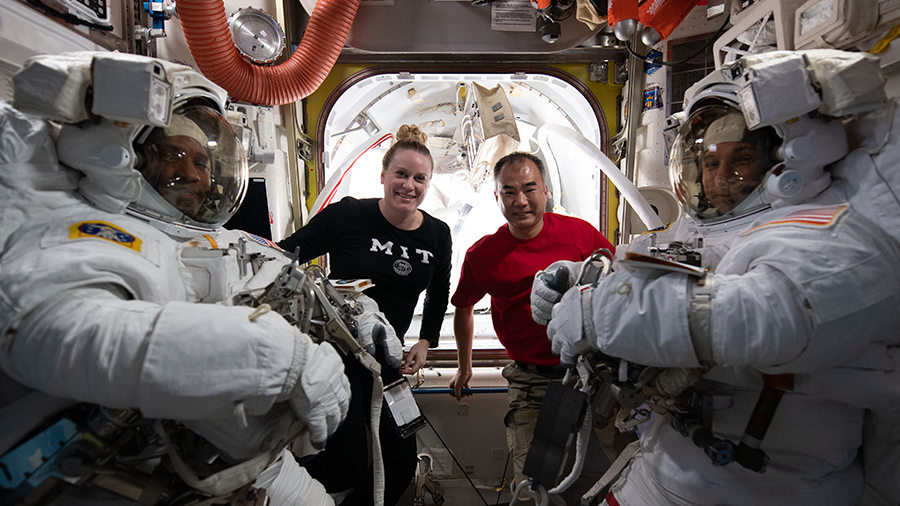
Spacewalkers Bob Behnken (far left) and Chris Cassidy (far right) are suited up ahead of their June 26 spacewalk.
Spacewalkers Bob Behnken (far left) and Chris Cassidy (far right) are suited up with assistance from Expedition 63 Flight Engineers (middle left) Doug Hurley and Ivan Vagner (middle right) ahead of their June 26 spacewalk.

NASA Television coverage of today’s spacewalk with NASA astronauts Robert Behnken and Chris Cassidy is now underway and available on the agency’s website.

The crew members of Expedition 63 are preparing to venture outside the International Space Station for a spacewalk expected to begin at approximately 7:35 a.m. EDT and last as long as seven hours.

The crew is in the airlock and have donned their suits in preparation to exit the airlock and begin today’s activities working on one of two power channels on the far starboard truss (S6 Truss) of the station.

Mirroring the work they completed in the first spacewalk June 26 on the other power channel, the primary tasks for the crew are to remove five of six older nickel-hydrogen batteries for the truss’ power system and install three new lithium-ion batteries. The batteries store electricity for one pair of the station’s solar arrays. Behnken and Cassidy also will be installing two of three adapter plates to complete the circuit to the new batteries and relocating the nickel-hydrogen batteries for storage and for future disposal.

Leading the mission control team today is Flight Director Allison Bolinger with support from Sandy Moore as the lead spacewalk officer.

Learn more about station activities by following @space_station and @ISS_Research on Twitter as well as the ISS Facebook and ISS Instagram accounts.

Get The Details…

Norah Moran

Powered by WPeMatico

Crew Completes Spacewalk Preps and Studies Human Biology

Crew Completes Spacewalk Preps and Studies Human Biology

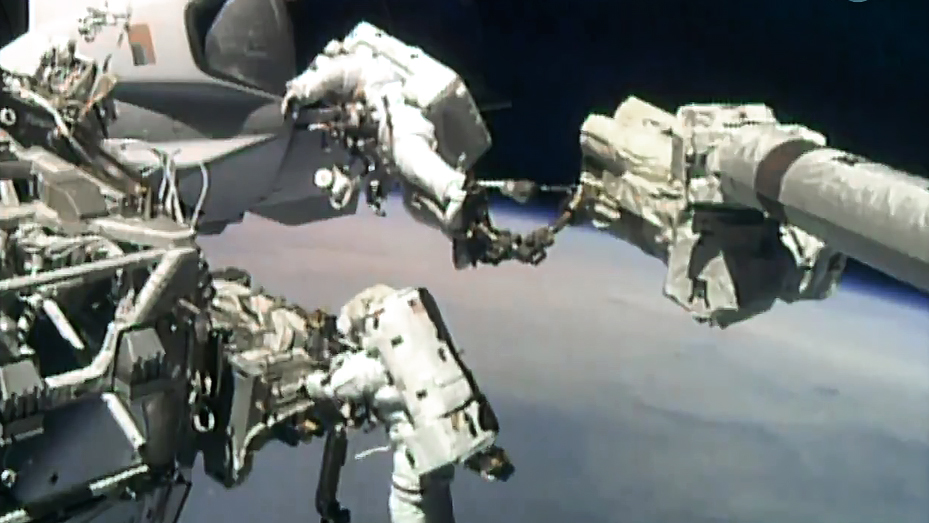
Flight Engineer Bob Behnken (center) is pictured on July 1 during a spacewalk to swap an aging nickel-hydrogen battery for a new lithium-ion battery on the station's starboard truss structure.
Flight Engineer Bob Behnken (center) is pictured on July 1 during a spacewalk to swap an aging nickel-hydrogen battery for a new lithium-ion battery on the station’s starboard truss structure.

Two NASA astronauts finalized their preparations today, ahead of Thursday’s spacewalk, to complete battery swaps on the outside of the International Space Station. NASA Flight Engineer Bob Behnken and Expedition 63 Commander Chris Cassidy organized their tools and readied the Quest airlock for the spacewalk set to begin tomorrow at 7:35 a.m.

NASA astronaut Doug Hurley joined the duo Wednesday afternoon for a spacewalk review and conference with specialists on the ground. Hurley will assist the astronauts in and out of their U.S. spacesuits and monitor their spacewalk activities.

The trio will stay in readiness mode for a second spacewalk scheduled to begin at the same time on Tuesday, July 21. They will finish swapping the aging nickel-hydrogen batteries with new lithium-ion batteries on the station’s truss structure that began 3.5 years ago. The veteran spacewalkers will then set up the Tranquility module for the upcoming installation of a NanoRacks airlock. The new commercial airlock will support public and private experiments exposed to the space environment.

All three astronauts started the day with standard health checks ahead of their spacewalk. Hurley took on the crew medical officer role and briefly examined his crewmates similar to a doctor conducting a checkup on Earth.

Meanwhile, cosmonauts Anatoly Ivanishin and Ivan Vagner were back on human research duty this morning. The Russian duo collected and stowed blood and saliva samples for a pair of studies looking into bone loss and the immune system. The pair then split up as Ivanishin checked out communications gear and Vagner worked on Progress 75 resupply ship cargo transfers.

Get The Details…

Mark Garcia

Powered by WPeMatico