Station Crew Changes Commanders Live on NASA TV

Station Crew Changes Commanders Live on NASA TV

NASA astronaut Tom Marshburn (above) assumes command of the International Space Station from cosmonaut Anton Shkaplerov.

NASA Television coverage of Russian cosmonaut Anton Shkaplerov’s hand over of the space station to NASA astronaut Tom Marshburn will begin at 9:45 a.m. EDT during a change of command ceremony. The event will air live on NASA TV, the NASA app, and the agency’s website.

Mark Vande Hei, along with Russian cosmonauts Anton Shkaplerov and Pyotr Dubrov, will close the hatch to the Soyuz MS-19 spacecraft to begin the journey back to Earth. The Soyuz will undock from the Rassvet module, heading for a parachute-assisted landing Wednesday, March 30, on the steppe of Kazakhstan, southeast of the remote town of Dzhezkazgan.

Coverage of the crew’s farewells, undocking, and landing will air live on NASA TV, the agency’s website, and the NASA app at the following times (all EDT):

  • 11:30 p.m. Tuesday, March 29 – Farewells and hatch closure (at 12 a.m., Wednesday, March 30)
  • 2:45 a.m. Wednesday, March 30 – Undocking (at 3:21 a.m.)
  • 6:15 a.m. Wednesday, March 30 – Deorbit burn and landing (landing at 7:28 a.m. / 5:28 p.m. Kazakhstan time)

Vande Hei and Dubrov launched April 9, 2021, on Soyuz MS-18, and will wrap up a 355-day mission spanning 5,680 orbits of Earth and more than 150 million miles. During the long-duration mission, Vande Hei broke the record for longest single spaceflight by an American astronaut, previously held at 340 days. Vande Hei will wrap up his second spaceflight with a total of 523 days in space. Shkaplerov launched on Soyuz MS-19 on Oct. 5, 2021. This was Dubrov’s first flight. Shkaplerov is ending his fourth mission with 708 cumulative days spent in space.

At the time of undocking, Expedition 67 will formally begin aboard the station, with new station Commander Tom Marshburn, NASA astronauts Raja Chari and Kayla Barron, ESA (European Space Agency) astronaut Matthias Maurer, and Roscosmos cosmonauts Oleg Artemyev, Denis Matveev, and Sergey Korsakov.

After landing, the Soyuz MS-19 crew will split up, as per standard crew return practice, with Vande Hei returning to his home in Houston, while the cosmonauts fly back to their training base in Star City, Russia.


Learn more about station activities by following the space station blog@space_station and @ISS_Research on Twitter, as well as the ISS Facebook and ISS Instagram accounts.

Get weekly video highlights at: http://jscfeatures.jsc.nasa.gov/videoupdate/

Get the latest from NASA delivered every week. Subscribe here: www.nasa.gov/subscribe

Get The Details…

Mark Garcia

Powered by WPeMatico

Trio Set to Go Home Wednesday; First Private Astronaut Mission Nears

Trio Set to Go Home Wednesday; First Private Astronaut Mission Nears

The Soyuz MS-19 crew ship, in between the Cygnus cargo craft and the Prichal module, that will take three Expedition 66 crew mates home is pictured docked to the Rassvet module. It was pictured before the Soyuz MS-21 crew ship docked to Prichal on March 18.

Three Expedition 66 Flight Engineers are returning to Earth in less than two days as four private astronauts prepare for their mission to the International Space Station. The crew activities haven’t stopped the ongoing space research as the orbital residents studied biology, botany, and physics on Monday.

NASA astronaut Mark Vande Hei is nearing the end of his missions as he prepares to return to Earth on Wednesday after a NASA-record breaking 355 days in space. Soyuz Commander Anton Shkaplerov will lead Vande Hei and Flight Engineer Pyotr Dubrov inside the Soyuz MS-19 crew ship when they undock from the Rassvet module at 3:21 a.m. EDT on Wednesday. The trio will parachute to a landing just over four hours later.

The next mission to the orbiting lab will be the Axiom Space-1 mission, or Ax-1, carrying a former NASA astronaut and three U.S. crew members. Commander Michael Lopez-Alegria will be making his fifth visit to space and his third visit to the space station while commanding the first private mission for Axiom Space. He will lead first time space visitors Pilot Larry Connor and Mission Specialists Eytan Stibbe and Mark Pathy aboard Endeavour, during the vehicle’s second mission to the station.

NASA teams supporting the Artemis I mission polled “go” today to proceed with the wet dress rehearsal, planned for Friday, April 1, through Sunday, April 3, on Launch Pad 39B at NASA’s Kennedy Space Center in Florida. NASA, Axiom and SpaceX are now looking at no earlier than April 6 for the launch of Axiom Mission 1 (Ax-1), the first  private astronaut mission to the International Space Station, pending range approval. For an April 6 launch, Ax-1 static fire would take place April 4. NASA’s SpaceX Crew-4 mission remains scheduled to launch no earlier than Tuesday, April 19.

Science is always ongoing aboard the station whether its crew members tending to experiments, or scientists uploading commands, or even investigations that are designed to run autonomously.

Monday’s research program aboard the station covered human research, space botany and glass optics. NASA Flight Engineers Raja Chari and Kayla Barron helped researchers understand how astronauts manipulate objects possibly informing the design of spacecraft interfaces for a variety of gravity environments. The duo also joined astronauts Tom Marshburn of NASA and Matthias Maurer of ESA (European Space Agency) for a standard vision test using an eye chart.

Chari also harvested cotton cultures grown for the Plant Habitat-05 experiment and prepared them for return analysis back on Earth. Marshburn serviced samples for a physics study exploring using artificial intelligence to improve the development of advanced glass optics with implications for Earth and space industries.

The orbiting lab’s three newest crew members spent the day on a variety of activities in the Russian segment including an exercise study, ventilation maintenance, and station familiarization activities. Cosmonauts Oleg Artemyev, Sergey Korsakov, and Denis Matveev are in the second week of a six-and-a-half-month mission that began on March 18.

After successfully completing a spacewalk March 23 at the International Space Station, a thin layer of water was discovered on the inner surface of the helmet and on an absorption pad inside ESA (European Space Agency) astronaut Matthias Maurer’s helmet following airlock re-pressurization. The water found was more than normal. The space station crew expedited Maurer’s helmet removal and then gathered data in coordination with ground support teams. The space station team is looking into the cause, and any possible fixes that might be needed. The station crew members remain in good health, and they are continuing their daily activities of science and maintenance. Key objectives were completed during the spacewalk, and there are no planned U.S operating segment spacewalks in the near future as a part of normal station operations. Crew safety is a top priority for NASA. The agency and our international partners are constantly identifying and mitigating risks of human spaceflight.

Get The Details…

Mark Garcia

Powered by WPeMatico

NASA’s Flight Readiness Review for Axiom Mission 1 Concludes

NASA’s Flight Readiness Review for Axiom Mission 1 Concludes

The International Space Station is pictured from the SpaceX Crew Dragon Endeavour during a fly around of the orbiting lab that took place on Nov. 8, 2021.

The Flight Readiness Review for Axiom Mission 1 has concluded, and teams are proceeding toward launch of the first private astronaut mission to the International Space Station. Pending range availability, launch is targeted no earlier than Sunday, April 3, from Launch Complex 39A at NASA’s Kennedy Space Center’s in Florida.

NASA will hold a media conference at 6 p.m. EDT to discuss the outcome of the review. Listen live on the agency’s website.

Participants include:

  • Kathryn Lueders, associate administrator, NASA’s Space Operations Mission Directorate
  • Dana Weigel, deputy manager, NASA’s International Space Station Program
  • Angela Hart, program manager, NASA’s Commercial Low-Earth Orbit Program
  • Michael Suffredini, president and CEO, Axiom Space
  • Derek Hassmann, operations director, Axiom Space
  • William Gerstenmaier, vice president, Build and Flight Reliability, SpaceX

The Ax-1 crew members, Commander Michael López-Alegría of Spain and the United States, Pilot Larry Connor of the United States, and Mission Specialists Eytan Stibbe of Israel and Mark Pathy of Canada, will travel to the space station on the SpaceX Dragon Endeavour spacecraft after launching on the company’s Falcon 9 rocket.

During the 10-day mission, the crew will spend eight days on the International Space Station conducting scientific research, outreach, and commercial activities.

For more information about NASA’s low-Earth orbit commercialization activities, visit:

https://www.nasa.gov/leo-economy/


Learn more about station activities by following the space station blog@space_station and @ISS_Research on Twitter, as well as the ISS Facebook and ISS Instagram accounts.

Get weekly video highlights at: http://jscfeatures.jsc.nasa.gov/videoupdate/

Get the latest from NASA delivered every week. Subscribe here: www.nasa.gov/subscribe

Get The Details…

Mark Garcia

Powered by WPeMatico

10-Member Crew Juggles Human Research, Spacewalk Cleanup, and Robotics

10-Member Crew Juggles Human Research, Spacewalk Cleanup, and Robotics

Astronaut Kayla Barron poses for a portrait with spacewalkers (from left) Matthias Maurer and Raja Chari before the beginning of Wednesday's spacewalk.
Astronaut Kayla Barron poses for a portrait with spacewalkers (from left) Matthias Maurer and Raja Chari before the beginning of Wednesday’s spacewalk.

The 10 Expedition 66 crew members aboard the International Space Station wrapped up the workweek exploring ways to adapt to microgravity, cleaning up after a spacewalk, and completing robotics work. The orbital crewmates also prepared a crew ship for departure and checked emergency gear.

NASA Flight Engineers Raja Chari and Kayla Barron took turns in the Columbus laboratory module on Friday studying how astronauts manipulate objects for ESA’s (European Space Agency) GRIP experiment. The duo sat in a specialized chair making gripping motions and tapping gestures as video cameras monitored their activities. Results may inform the design of intelligent spacecraft interfaces for a variety of gravity environments on lunar and planetary surfaces.

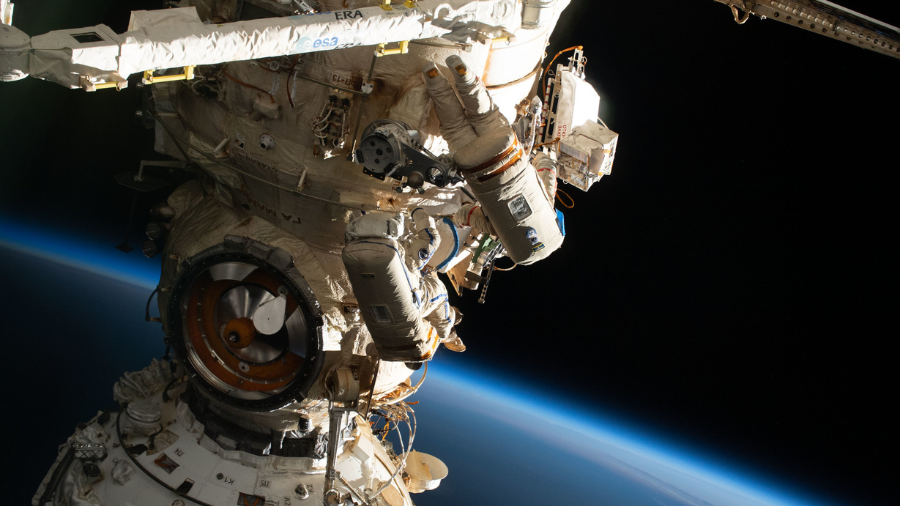
Chari also joined ESA Flight Engineer Matthias Maurer in the U.S. Quest airlock for cleanup duties after this week’s spacewalk. The duo spent six hours and 54-minutes during a spacewalk on Wednesday installing thermal gear and electronics components on the orbiting lab. Maurer later tested the EasyMotion suit that stimulates muscles while working out on the U.S. Destiny laboratory module’s exercise cycle. Researchers are exploring the effectiveness of the suit which may enhance and shorten the duration of working out in weightlessness.

NASA astronauts Tom Marshburn and Mark Vande Hei worked throughout the day on maintenance activities. Marshburn serviced components on a unique incubator that can generate artificial gravity inside the Cell Biology Experiment Facility. Vande Hei cleaned ventilation systems inside station crew quarters.

Vande Hei is now turning his attention to his upcoming crew departure on March 30 with cosmonauts Anton Shkaplerov and Pyotr Dubrov. He ended Friday finalizing computer tasks necessary before he returns to Earth. Shkaplerov scanned and loaded cargo inside the Soyuz MS-19 crew ship that will take the trio home. Shkaplerov also joined Dubrov and evaluated the lower body negative pressure suit for its ability to counteract the effects of weightlessness on the human body.

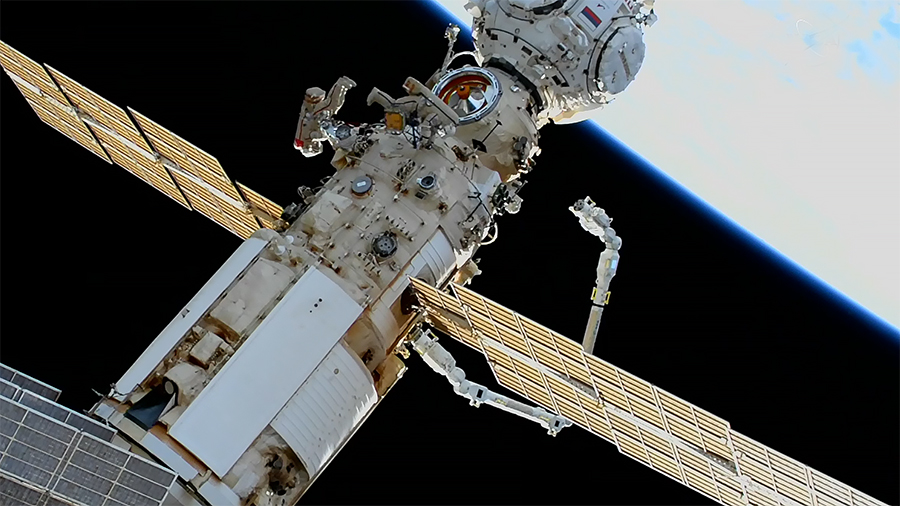
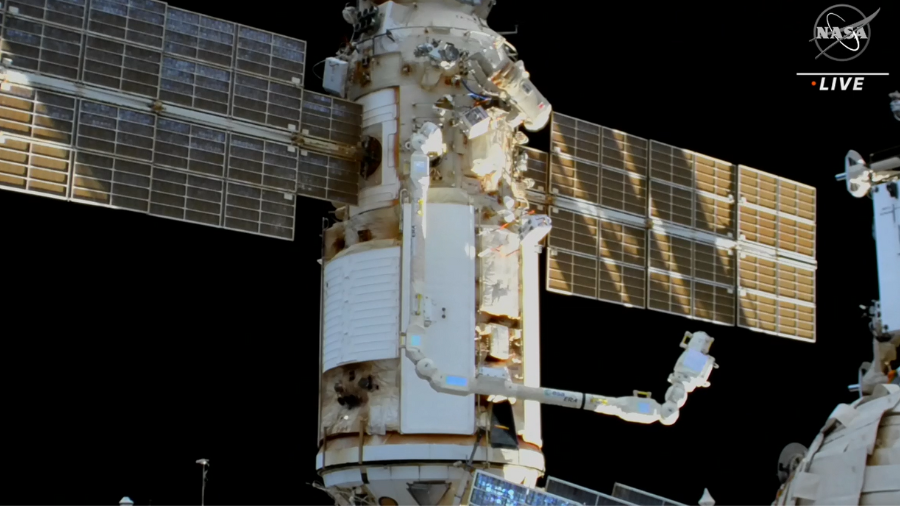
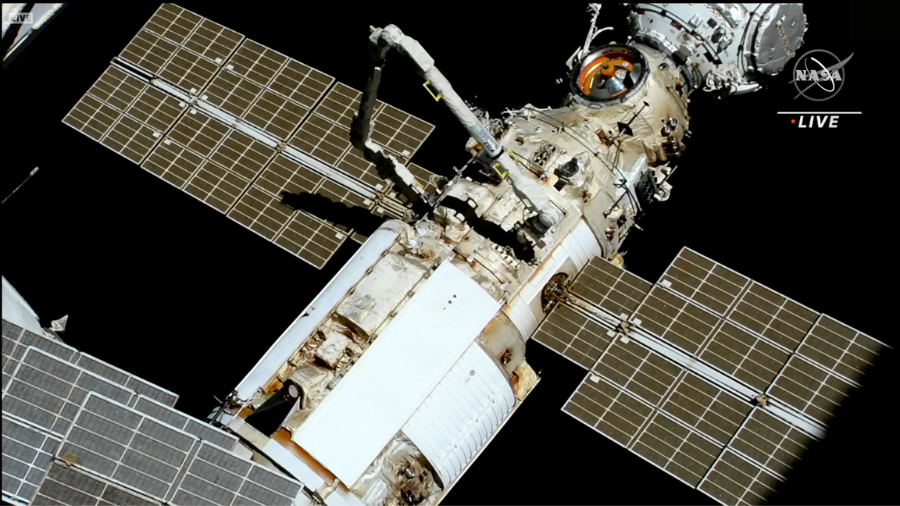
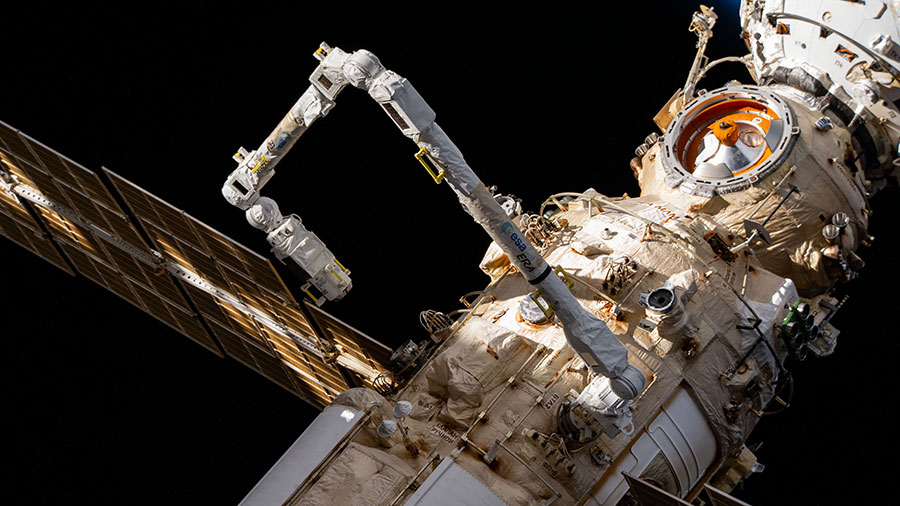
Dubrov also partnered with Roscosmos cosmonaut Sergey Korsakov as they completed check out activities of the European Robotic Arm’s controls inside the Nauka multipurpose laboratory module. Korsakov also had a session with cosmonauts Oleg Artemyev and Denis Matveev reviewing station emergency procedures and hardware.

Get The Details…

Mark Garcia

Powered by WPeMatico

NASA’s Flight Readiness Review for Axiom Mission 1 Begins

NASA’s Flight Readiness Review for Axiom Mission 1 Begins

The International Space Station is pictured from the SpaceX Crew Dragon Endeavour during a fly around of the orbiting lab that took place on Nov. 8, 2021.

NASA, Axiom Space, and SpaceX managers are gathered at the agency’s Johnson Space Center in Houston, TX, where they have started the Axiom Mission 1 (Ax-1) Flight Readiness Review (FRR). The purpose of the review is for the agency to assess the readiness of the International Space Station to execute the Ax-1 mission, including arrival, docking, in-orbit operations, undocking, and NASA cargo recovery for the private mission to and from the orbital complex.

NASA will hold a media teleconference later today, about one hour after the FRR concludes, to discuss the outcome. The current target to host the teleconference is 6 p.m. EDT. While the teleconference will not be televised, media may call in to ask questions via phone. For the call-in details, please contact NASA’s Johnson Space Center newsroom at 281-483-5111 or jsccommu@mail.nasa.gov no later than noon Friday, March 25.

Participants include:

  • Kathy Lueders, associate administrator for Space Operations, NASA
  • Dana Weigel, International Space Station deputy program manager, NASA
  • Angela Hart, Commercial Low-Earth Orbit (LEO) program manager, NASA
  • Michael Suffredini, president and CEO, Axiom Space
  • Derek Hassmann, operations director, Axiom Space
  • William Gerstenmaier, vice president, Build and Flight Reliability, SpaceX

Ax-1 launch is targeted for no earlier than Sunday, April 3, from Launch Complex 39A at NASA’s Kennedy Space Center in Florida, pending range availability. The crew will travel in a SpaceX Dragon spacecraft and launch on the company’s Falcon 9 rocket.

The Ax-1 crew members are Commander Michael López-Alegría of Spain and the United States, Pilot Larry Connor of the United States, and Mission Specialists Eytan Stibbe of Israel, and Mark Pathy of Canada.

During the 10-day mission, the crew will spend eight days on the International Space Station conducting scientific research, outreach, and commercial activities.

For more information about NASA’s low-Earth orbit commercialization activities, visit:

https://www.nasa.gov/leo-economy/


Learn more about station activities by following the space station blog@space_station and @ISS_Research on Twitter, as well as the ISS Facebook and ISS Instagram accounts.

Get weekly video highlights at: http://jscfeatures.jsc.nasa.gov/videoupdate/

Get the latest from NASA delivered every week. Subscribe here: www.nasa.gov/subscribe

Get The Details…

Mark Garcia

Powered by WPeMatico