Human Research Underway as Station Awaits Boeing Starliner Mission

Human Research Underway as Station Awaits Boeing Starliner Mission

A portion of the station is silhouetted as it orbited 268 miles above the Pacific Ocean off the coast of Chile.
A portion of the space station is silhouetted as it orbited 268 miles above the Pacific Ocean.

Human research took precedence aboard the International Space Station on Tuesday as the seven-member Expedition 67 crew explored how living in space affects the human body. Meanwhile, Boeing’s first crew ship to visit the orbiting lab is targeted to launch late next week.

Exercise research and a central nervous system study were the main experiments today helping doctors learn how to keep astronauts healthy and successful during long-term space missions. NASA astronauts Kjell Lindgren, Bob Hines, and Jessica Watkins, took turns pedaling on an exercise cycle in the U.S. Destiny laboratory module throughout the day. The trio spent nearly an hour each working out while attached to sensors providing scientists insights into the aerobic capacity of a crew member in living and working weightlessness.

Lindgren later worked in the Tranquility module replacing components on the advanced resistive exercise device that simulates free-weight training on Earth. At the end of the day, he switched to a space botany study investigating hydroponic and aeroponic techniques to grow plants without soil.

Hines and Watkins also swapped a virtual reality headset in the Columbus laboratory module as they explored how the human brain adapts to the lack of up and down references in microgravity. Observations will help researchers understand how the lack of gravity affects the way astronauts reach for and grasp objects.

The three cosmonauts spent the majority of their time today working in the station’s Russian segment. Commander Oleg Artemyev partnered with Flight Engineer Denis Matveev servicing a variety of communications and life support hardware. Flight Engineer Sergey Korsakov worked on ventilation systems and an oxygen generator while also maintaining a pair of Russian laptop computers.

The next spacecraft to visit the space station, Boeing’s Starliner crew ship, is targeted to launch at 6:54 p.m. EDT on May 19 atop an Atlas-V rocket from United Launch Alliance. The unpiloted commercial crew vehicle will liftoff as part of Boeing’s Orbital Flight Test-2 from Cape Canaveral Space Force Station in Florida. It would dock to the Harmony module’s forward-facing port the next day and depart five to 10 days after that for a parachuted return to Earth.


Learn more about station activities by following the space station blog@space_station and @ISS_Research on Twitter, as well as the ISS Facebook and ISS Instagram accounts.

Get weekly video highlights at: http://jscfeatures.jsc.nasa.gov/videoupdate/

Get the latest from NASA delivered every week. Subscribe here: www.nasa.gov/subscribe

Get The Details…

Mark Garcia

Powered by WPeMatico

Expedition 67 Crew Takes a Day Off After Colleagues Arrive Home Safely

Expedition 67 Crew Takes a Day Off After Colleagues Arrive Home Safely

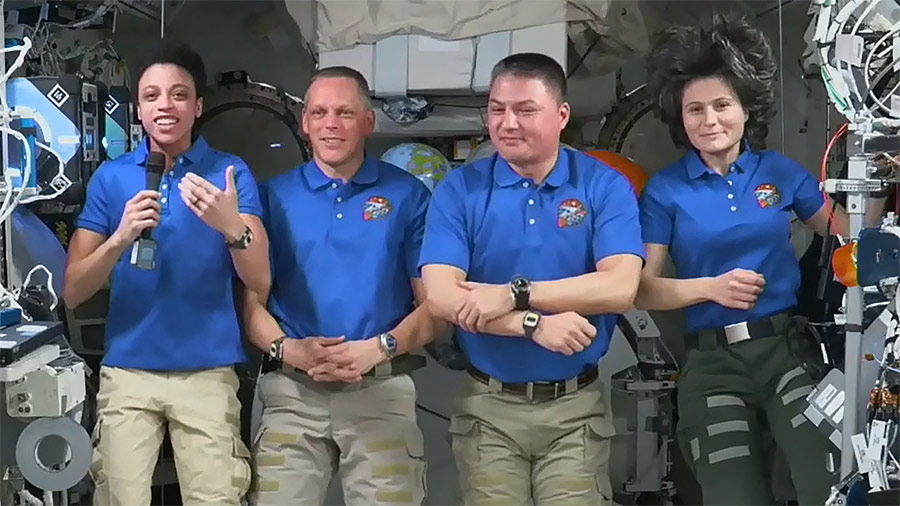
The Expedition 67 crew. From left to right: NASA astronaut Bob Hines; ESA astronaut Samantha Cristoforetti; Roscosmos cosmonauts Denis Matveev, Oleg Artemyev, and Sergey Korsakov; NASA astronauts Jessica Watkins and Kjell Lindgren.

The seven Expedition 67 crew members are enjoying an off-duty day today following the change of command of the station and the departure of the SpaceX Crew-3 astronauts last week.

After a weekend that included housekeeping tasks and station maintenance, Expedition 67 Flight Engineer Kjell Lindgren performed a filter check on the Photocatalyst experiment on Monday. The Photocatalyst investigation, which was brought to the station by the Ax-1 mission, analyzes the photocatalyst’s effect onboard the International Space Station and its ability to remove volatile organic compounds (VOCs) from cabin air. This could improve conditions for crew members on future spaceflight missions, including long-duration missions.

Flight Engineer Bob Hines performed checks on the Cold Atom Lab. The Cold Atom Laboratory (CAL) produces clouds of atoms that are chilled to about one ten billionth of a degree above absolute zero — much colder than the average temperature of deep space. At these low temperatures, atoms have almost no motion, allowing scientists to study fundamental behaviors and quantum characteristics that are difficult or impossible to probe at higher temperatures. In microgravity, researchers may be able to achieve even colder temperatures than what is possible on the ground and observe these cold atom clouds for longer periods of time.

Flight Engineer Jessica Watkins performed equipment maintenance and prepared to work on the GRASP experiment with Bob Hines on Tuesday, while ESA astronaut Samantha Cristoforetti worked on a nutritional assessment.

In the station’s Russian segment, ISS Commander Oleg Artemyev and Flight Engineers Sergey Korsakov and Denis Matveev worked on equipment inspections and maintenance, prepared for a computer scan, and downlinked exercise data from the station.


Learn more about station activities by following the space station blog, @space_station and @ISS_Research on Twitter, as well as the ISS Facebook and ISS Instagram accounts.

Get weekly video highlights at: http://jscfeatures.jsc.nasa.gov/videoupdate/

Get the latest from NASA delivered every week. Subscribe here: www.nasa.gov/subscribe

Get The Details…

Heidi Lavelle

Powered by WPeMatico

Station Crew Gets Back to Work After Crew-3 Mission Ends

Station Crew Gets Back to Work After Crew-3 Mission Ends

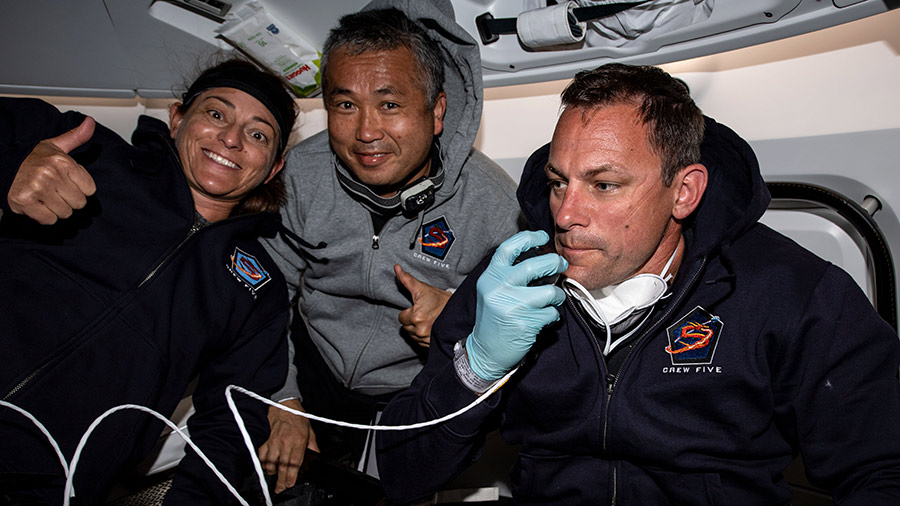
SpaceX Crew-3 astronauts (from left) Matthias Maurer, Tom Marshburn, Raja Chari, and Kayla Barron, are pictured inside the Dragon Endurance vehicle after returning to Earth. Credit: NASA/Aubrey Gemignani

The Expedition 67 crew was back to normal on Friday following the departure of four commercial crew astronauts early Thursday morning. The seven International Space Station astronauts and cosmonauts will live and work in space together until late summer.

The SpaceX Crew-3 mission ended at 12:43 a.m. EDT on Friday when the Dragon Endurance crew ship splashed down off the coast of Tampa, Florida. Nearly 24 hours earlier, Crew-3 Commander Raja Chari with Pilot Tom Marshburn and Mission Specialists Kayla Barron and Matthias Maurer undocked from the Harmony module’s forward port inside Dragon.

After saying farewell to the Crew-3 astronauts early Thursday, the orbiting lab’s four newest astronauts, who arrived the week before aboard the Dragon Freedom spaceship, closed the station’s hatches, went to bed about two hours later, and took the rest of the day off.

On Friday, NASA Flight Engineer Kjell Lindgren, who is one week into his second spaceflight, stowed emergency gear and checked out hydroponic hardware for the XROOTS space botany study. ESA (European Space Agency) Flight Engineer Samantha Cristoforetti, who is also on her second mission, spent her day maintaining orbital plumbing systems.

First time space-flyers Bob Hines and Jessica Watkins partnered once again in the Columbus laboratory module studying how the central nervous system adapts to weightlessness. Hines and Watkins were both selected as members of the 2017 class of astronaut candidates in August of the same year.

The station’s new commander, Oleg Artemyev, started his day installing video gear before continuing his weeklong research on ways to maximize the effectiveness of a space workout. Roscosmos Flight Engineer Sergey Korsakov also participated on the space exercise study before working on networking equipment. Roscosmos Flight Engineer Denis Matveev checked out systems inside the Rassvet and Zarya modules before performing Russian orbital maintenance tasks.


Learn more about station activities by following the space station blog, @space_station and @ISS_Research on Twitter, as well as the ISS Facebook and ISS Instagram accounts.

Get weekly video highlights at: http://jscfeatures.jsc.nasa.gov/videoupdate/

Get the latest from NASA delivered every week. Subscribe here: www.nasa.gov/subscribe

Get The Details…

Heidi Lavelle

Powered by WPeMatico

Crew-3 Astronauts Splashdown Ending Six-Month Mission

Crew-3 Astronauts Splashdown Ending Six-Month Mission

The SpaceX Dragon Endurance crew ship lands in the Gulf of Mexico for a nighttime splashdown with four commercial crew astronauts inside.
The SpaceX Dragon Endurance crew ship returns to Earth in the Gulf of Mexico for a nighttime splashdown with four commercial crew astronauts inside.

NASA astronauts Kayla Barron, Raja Chari, and Tom Marshburn, as well as ESA (European Space Agency) astronaut Matthias Maurer splashed down safely in the SpaceX Dragon Endurance in the Gulf of Mexico off the coast of Tampa, Florida, at 12:43 p.m. EDT after 177 days in space.

Teams on the Shannon recovery ship, including two fast boats, now are in the process of securing Dragon and ensuring the spacecraft is safe for the recovery effort. As the fast boat teams complete their work, the recovery ship will move into position to hoist Dragon onto the main deck of Shannon with the astronauts inside. Once on the main deck, the crew will be taken out of the spacecraft and receive medical checks before a helicopter ride to board a plane for Houston.


Learn more about station activities by following the space station blog@space_station and @ISS_Research on Twitter, as well as the ISS Facebook and ISS Instagram accounts.

Get weekly video highlights at: http://jscfeatures.jsc.nasa.gov/videoupdate/

Get the latest from NASA delivered every week. Subscribe here: www.nasa.gov/subscribe

Get The Details…

Mark Garcia

Powered by WPeMatico

Dragon Endurance Fires Engines to Return Crew-3 to Earth

Dragon Endurance Fires Engines to Return Crew-3 to Earth

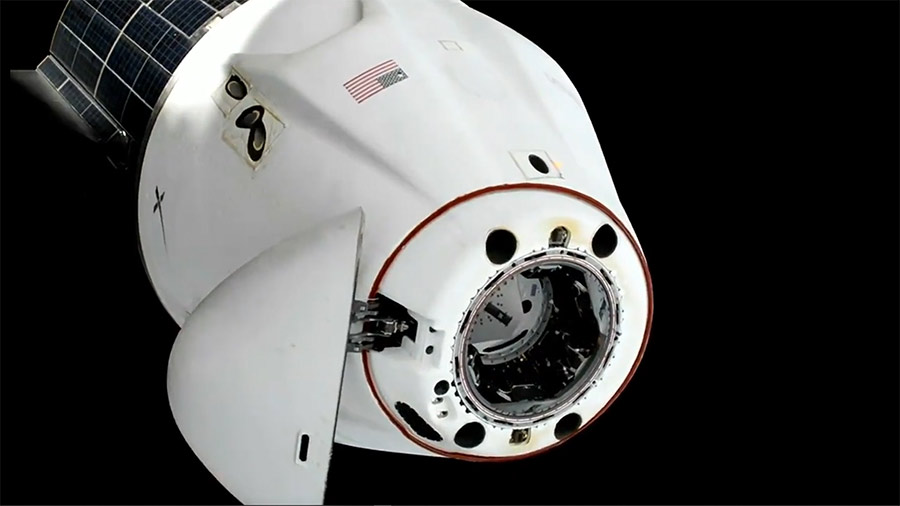
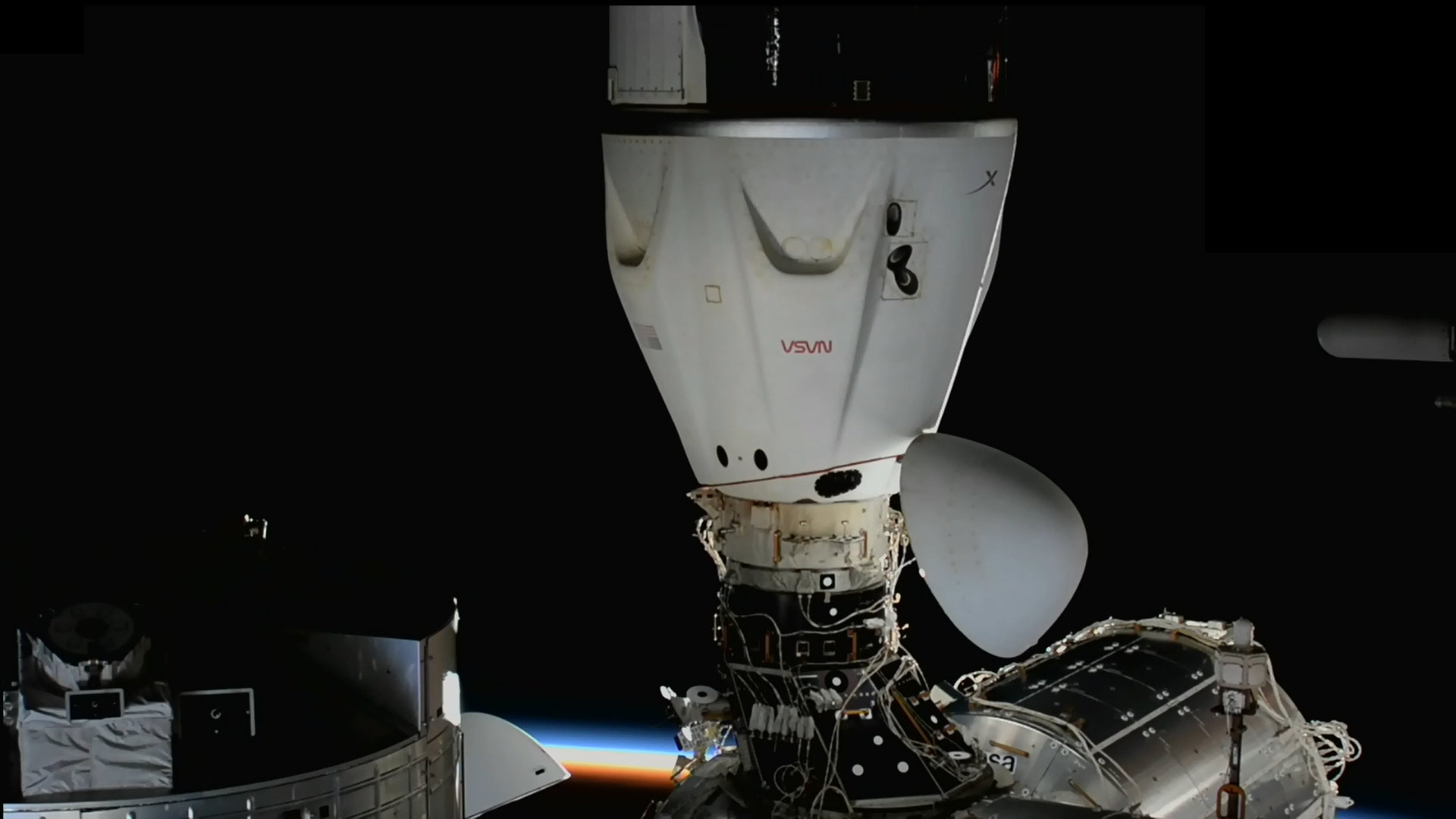
The SpaceX Dragon Endurance spacecraft is seen just after undocking from the forward port of the International Space Station’s Harmony module at 1:20 a.m.

The Dragon Endurance spacecraft carrying NASA astronauts Kayla Barron, Raja Chari, and Tom Marshburn, as well as ESA (European Space Agency) astronaut Matthias Maurer on their return to Earth after a nearly six-month science mission has completed its deorbit burn as expected ahead of splashdown at about 12:43 p.m. EDT in the Gulf of Mexico off the coast of Tampa, Florida.

Four minutes before splashdown, the drogue parachutes will deploy at about 18,000 feet in altitude while Dragon is moving approximately 350 miles per hour, and less than a minute later, the main parachutes deploy at about 6,000 feet in altitude while the spacecraft is moving approximately 119 miles per hour.

NASA TV coverage available online and via the NASA app will continue until the crew is recovered from the spacecraft.


Learn more about station activities by following the space station blog@space_station and @ISS_Research on Twitter, as well as the ISS Facebook and ISS Instagram accounts.

Get weekly video highlights at: http://jscfeatures.jsc.nasa.gov/videoupdate/

Get the latest from NASA delivered every week. Subscribe here: www.nasa.gov/subscribe

Get The Details…

Mark Garcia

Powered by WPeMatico