Bone Healing Study Continues as SpaceX Crew-6 Mission Approaches

Bone Healing Study Continues as SpaceX Crew-6 Mission Approaches

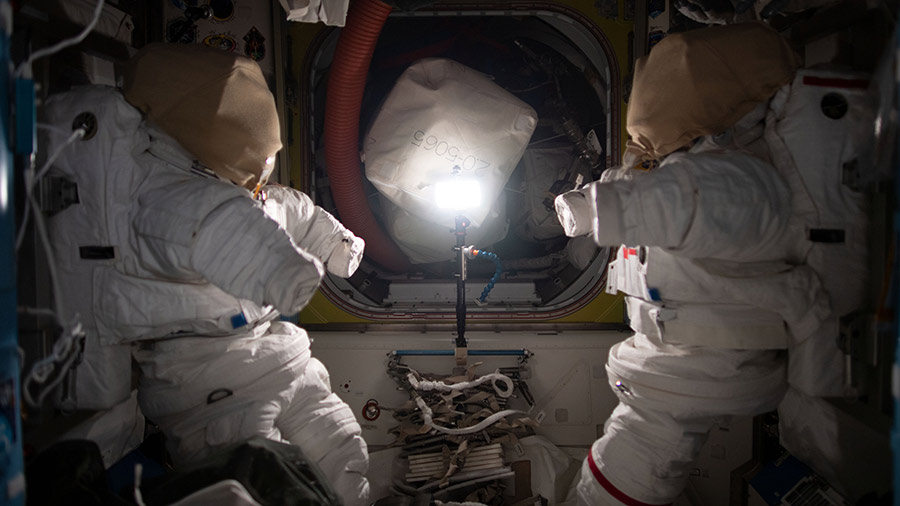
Astronauts (middle left to right) Josh Cassada and Frank Rubio pose with spacewalkers (far left and right) Nicole Mann and Koichi Wakata following the completion of a spacewalk on Jan. 20, 2023.

Wednesday was the last full day of research operations aboard the International Space Station to learn how to improve bone healing therapies both on Earth and in space. The Expedition 68 crew members also studied the human heart and plasma physics and set up Earth imagery hardware.

NASA astronauts Nicole Mann, Josh Cassada, and Frank Rubio and Japan Aerospace Exploration Agency (JAXA) astronaut Koichi Wakata wrapped up three days of continuous research into bone growth. The quartet spent the day inside the Kibo laboratory module studying research samples in the Life Science Glovebox to understand the bone healing process in microgravity. Cassada will work on Thursday and Friday cleaning up the space biology hardware and completing sample processing.

Weightlessness inhibits bone tissue regeneration, or bone repair, and the Osteopromotive Bone Adhesive investigation seeks to reverse these effects on stem cells and bone tissue. Insights gained from the biology experiment may help doctors provide advanced treatments for bone injuries that occur in space and improve therapies for conditions on Earth such as osteoporosis.

Cardiac research in space is also very important as two cosmonauts joined each other on Wednesday morning learning how the circulatory system is impacted by long-term microgravity. Commander Sergey Prokopyev attached sensors to himself, with assistance from Flight Engineer Dmitri Petelin, for the cardiac study. The experiment seeks insights into how the heart adapts to microgravity and to prepare for the effects of returning to Earth’s gravity months later.

Prokopyev also continued this week’s space physics work studying the behavior of plasma crystals, or clouds of highly charged particles, inside a specialized chamber. Petelin studied kept up his observations of fluids exposed to magnetic and electric fields in microgravity. Both studies have the potential to advance space and Earth-bound industries as well as improve fundamental knowledge.

Flight Engineer Anna Kikina of Roscosmos began her day pointing a camera outside station windows and photographing the external condition of the Nauka, Zvezda, and Rassvet modules. She finished her shift installing and activating gear that will acquire ultraviolet imagery of Earth’s nighttime atmosphere.

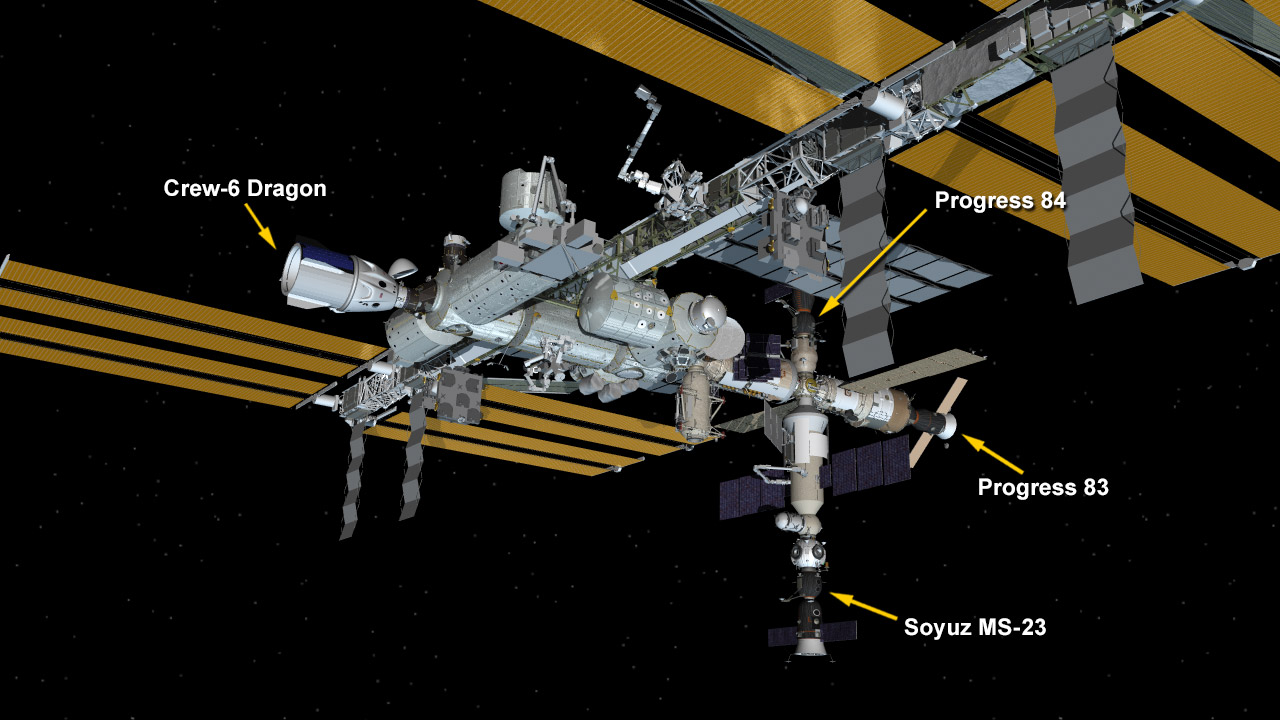
The next SpaceX crewed mission to the space station is soon approaching. The Crew-6 crewmates are Commander Stephen Bowen and Pilot Warren “Woody” Hoburg, both from NASA, and Mission Specialists Andrey Fedyaev from Roscosmos and Sultan Alnedayi from the Mohammed bin Rashid Space Centre. The quartet will lift off aboard SpaceX Crew Dragon Endeavour at 2:07 a.m. EST on Feb. 26 and dock to the Harmony module’s space-facing port just over half-a-day later.


Learn more about station activities by following the space station blog@space_station and @ISS_Research on Twitter, as well as the ISS Facebook and ISS Instagram accounts.

Get weekly video highlights at: https://roundupreads.jsc.nasa.gov/videupdate/

Get the latest from NASA delivered every week. Subscribe here: www.nasa.gov/subscribe

Get The Details…

Mark Garcia

Powered by WPeMatico

Crew Studies Bone Growth, Space Physics and Works Eye Exams

Crew Studies Bone Growth, Space Physics and Works Eye Exams

NASA astronaut Josh Cassada peers through one of the seven windows in the cupola, the space station's
NASA astronaut Josh Cassada peers through one of the seven windows in the cupola, the space station’s “window to the world.”

Four Expedition 68 astronauts are midway through their bone research activities this week helping doctors improve treatment for bone conditions on and off the Earth. The three cosmonauts living aboard the International Space Station kept up their physics research, tested spacecraft communications gear, and conducted eye exams.

Weightlessness reveals phenomena that are difficult or impossible to study in Earth’s gravity environment. Scientists on the ground use the space station’s research facilities to study and observe this unique phenomena and provide advanced solutions benefiting a host of space and Earth-bound industries.

Four astronauts aboard the orbiting lab are in the middle of an experiment that is studying a bone graft adhesive that may reverse the effects of weightlessness on stem cells and bone tissue. Doctors have learned that microgravity inhibits bone tissue regeneration and are exploring ways to promote bone repair while living in space. Results may improve recovery from bone injuries during space missions and benefit therapies for conditions on Earth such as osteoporosis.

Flight Engineers Nicole Mann, Josh Cassada, and Frank Rubio from NASA and Flight Engineer Koichi Wakata of the Japan Aerospace Exploration Agency were in their second of three days of research operations for the Osteopromotive Bone Adhesive study. The quartet once again spent all day working in the Kibo laboratory module studying biological specimens inside the Life Science Glovebox. The samples are returned to Earth for evaluation and analysis and are compared to control samples on the ground maintained under similar conditions.

Commander Sergey Prokopyev continued his space physics research on Tuesday studying how clouds of highly charged particles, or plasma crystals, behave in a specialized chamber. This fundamental experiment may lead to more advanced research methods and improve practical knowledge for Earth and space industries.

Flight Engineer Dmitri Petelin spent Tuesday morning collecting station air samples for analysis from the Zvezda, Zarya, Nauka, and Destiny modules. Petelin later joined Prokopyev and tested the station’s tele-robotically operated rendezvous unit, or TORU, in coordination with the ISS Progress 81 cargo craft docked to Zvezda.

Flight Engineer Anna Kikina began her day with working on an oxygen generator and other life support components. Afterward, she joined Petelin for eye checks using medical imaging hardware to understand how living in space affects vision.


Learn more about station activities by following the space station blog@space_station and @ISS_Research on Twitter, as well as the ISS Facebook and ISS Instagram accounts.

Get weekly video highlights at: https://roundupreads.jsc.nasa.gov/videupdate/

Get the latest from NASA delivered every week. Subscribe here: www.nasa.gov/subscribe

Get The Details…

Mark Garcia

Powered by WPeMatico

Crew Kicks off Week With Bone Research, Physics Studies

Crew Kicks off Week With Bone Research, Physics Studies

The space station's solar arrays and a small satellite orbital deployer are pictured as the orbiting lab soared above the African nation of Namibia.
The space station’s solar arrays and a small satellite orbital deployer are pictured as the orbiting lab soared above the African nation of Namibia.

Space medicine was the top research priority aboard the International Space Station on Monday as four Expedition 68 astronauts explored healing bone conditions. The orbiting lab’s three cosmonauts spent the day studying a variety of physics, packing a resupply ship, and servicing station hardware.

NASA astronauts Nicole Mann, Josh Cassada, and Frank Rubio joined Flight Engineer Koichi Wakata of the Japan Aerospace Exploration Agency for an all-day bone research session in the Kibo laboratory module. The quartet worked in Kibo’s Life Science Glovebox servicing research samples for the Osteopromotive Bone Adhesive study.

Living in microgravity may affect skeletal stem cells and bone tissue regeneration, or bone repair. Researchers are studying a bone graft adhesive on the space station with the potential to reverse the effects of weightlessness on stem cells and bone tissue. Results may also benefit therapies for conditions on Earth such as osteoporosis. The astronauts will stay focused on the bone research activities through Wednesday.

Two cosmonauts worked on a several different space physics experiments throughout Monday. Commander Sergey Prokopyev explored the behavior of clouds of highly charged particles, or plasma crystals, in a specialized chamber. Observations may lead to improved spacecraft designs, as well as a better understanding of plasmas on Earth. Flight Engineer Dmitri Petelin studied the physics of fluids exposed to magnetic and electric fields in microgravity.

The cosmonauts also worked on cargo activities and lab maintenance. Prokopyev stowed items for disposal inside the ISS Progress 81 cargo craft ahead of its departure in February. Petelin removed navigation hardware from the inside the ISS Progress 82 resupply ship then photographed the internal area of the Nauka multipurpose laboratory module to assess its potential stowage volume. Roscosmos Flight Engineer Anna Kikina spent her day servicing life support and electronics systems.


Learn more about station activities by following the space station blog@space_station and @ISS_Research on Twitter, as well as the ISS Facebook and ISS Instagram accounts.

Get weekly video highlights at: https://roundupreads.jsc.nasa.gov/videupdate/

Get the latest from NASA delivered every week. Subscribe here: www.nasa.gov/subscribe

Get The Details…

Mark Garcia

Powered by WPeMatico

NASA, Space Station Partners Approve Next Axiom Private Mission Crew

NASA, Space Station Partners Approve Next Axiom Private Mission Crew

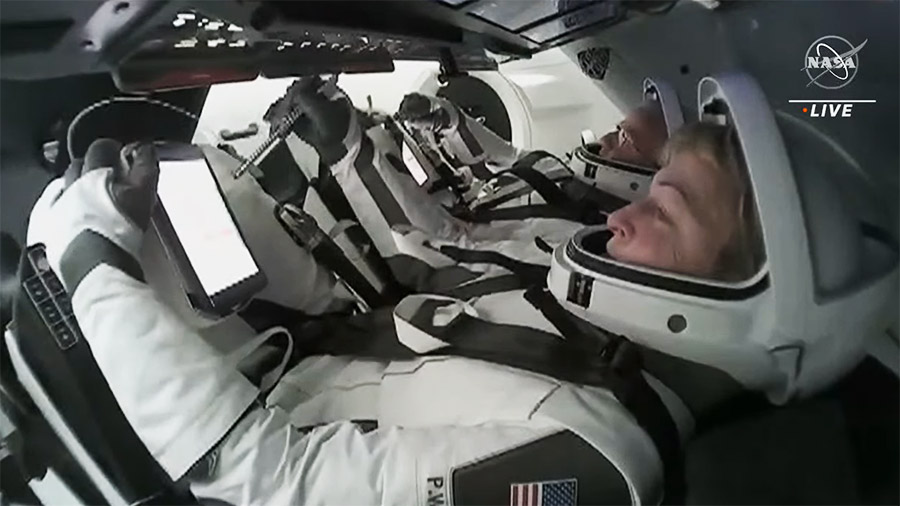
The NASA meatball logoNASA and its international partners have approved the crew for Axiom Space’s second private astronaut mission to the International Space Station, Axiom Mission 2 (Ax-2).

Axiom Space’s Director of Human Spaceflight and former NASA astronaut Peggy Whitson will command the privately funded mission. Aviator John Shoffner of Knoxville, Tennessee, will serve as pilot. The two mission specialists will be announced later.


Learn more about station activities by following the space station blog@space_station and @ISS_Research on Twitter, as well as the ISS Facebook and ISS Instagram accounts.

Get weekly video highlights at: https://roundupreads.jsc.nasa.gov/videupdate/

Get the latest from NASA delivered every week. Subscribe here: www.nasa.gov/subscribe

Get The Details…

Mark Garcia

Powered by WPeMatico

Spacewalkers Wrap Up First Spacewalk of 2023

Spacewalkers Wrap Up First Spacewalk of 2023

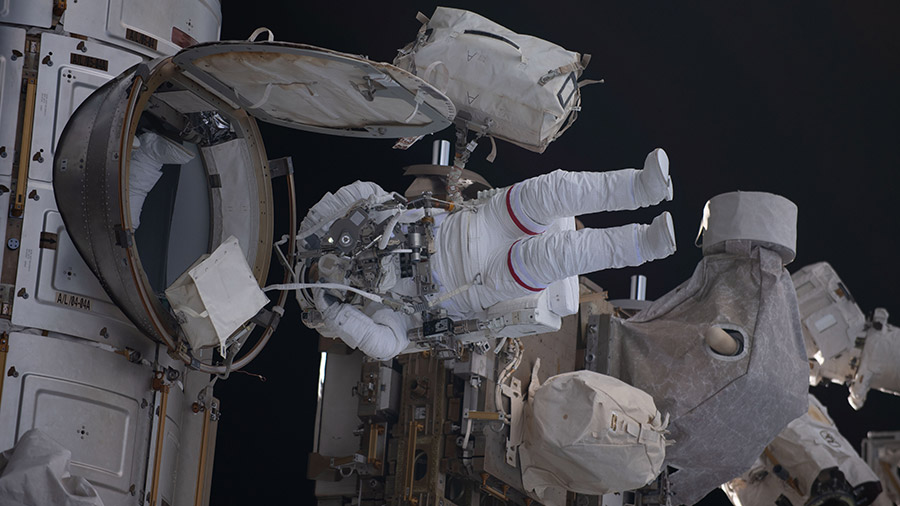
Spacewalkers (from left) Koichi Wakata and Nicole Mann are pictured installing hardware on the space station preparing the orbiting lab for its next roll-out solar array. Credit: NASA TV

NASA astronaut Nicole Mann and Japan Aerospace Exploration Agency (JAXA) astronaut Koichi Wakata concluded their spacewalk at 3:35 p.m. EST after 7 hours and 21 minutes.

Mann and Wakata completed work left over from a previous spacewalk for a platform on which a set of International Space Station Roll-Out Solar Arrays (iROSAs) for the station’s 1B power channel will be installed later this year, as well as most of the work to install a similar mounting platform for a set of iROSAs for the 1A power channel. Due to time constraints, plans to bolt a final strut for the second platform were deferred until a future spacewalk. There is no impact to station operations.

The installation is part of a series of spacewalks to augment the International Space Station’s power channels with new iROSAs. Four iROSAs have been installed so far, and two more will be mounted to the platforms installed during this spacewalk in the future.

It was the 258th spacewalk in support of space station assembly, upgrades, and maintenance, the first spacewalk of 2023, and the first spacewalk for both astronauts.

Mann and Wakata are in the midst of a planned six-month science mission living and working aboard the microgravity laboratory to advance scientific knowledge and demonstrate new technologies for future human and robotic exploration missions, including lunar missions through NASA’s Artemis program.


Learn more about station activities by following the space station blog@space_station and @ISS_Research on Twitter, as well as the ISS Facebook and ISS Instagram accounts.

Get weekly video highlights at: https://roundupreads.jsc.nasa.gov/videupdate/

Get the latest from NASA delivered every week. Subscribe here: www.nasa.gov/subscribe

Get The Details…

Mark Garcia

Powered by WPeMatico