ESA, NASA Solar Observatory Discovers Its 5,000th Comet

ESA, NASA Solar Observatory Discovers Its 5,000th Comet

4 min read

ESA, NASA Solar Observatory Discovers Its 5,000th Comet

On March 25, 2024, a citizen scientist in the Czech Republic spotted a comet in an image from the Solar and Heliospheric Observatory (SOHO) spacecraft, which has now been confirmed to be the 5,000th comet discovered using SOHO data. SOHO has achieved this milestone over 28 years in space, even though it was never designed to be a comet hunter.

An image from the SOHO spacecraft shows the Sun covered by a red disk. A white circle within that disk shows the size of the Sun. Around the disk, white and orange streamers in the solar corona extend away from the Sun. In the upper left, a small white box opens up into a larger white box that has “SOHO-5000” written above a faint dot with one short, vertical white line above it and another below it. At the bottom is written “2024/03/25 03:48” and “ESA/NASA SOHO/LASCO C2.”
The 5,000th comet discovered with the Solar and Heliospheric Observatory (SOHO) spacecraft is noted by a small white box in the upper left portion of this image. A zoomed-in inset shows the comet as a faint dot between the white vertical lines. The image was taken on March 25, 2024, by SOHO’s Large Angle and Spectrometric Coronagraph (LASCO), which uses a disk to block the bright Sun and reveal faint features around it.
NASA/ESA/SOHO

The comet is a small body made of ice and rock that takes only a few years to orbit the Sun. It belongs to the “Marsden group” of comets. This group is thought to be related to comet 96P/Machholz (which SOHO observes when Machholz passes near the Sun every 5.3 years) and is named for the late scientist Brian Marsden who first recognized the group using SOHO observations. Only about 75 of the 5,000 comets discovered with SOHO belong to the Marsden group.

A joint mission of ESA (European Space Agency) and NASA, SOHO launched in December 1995 to study the Sun and the dynamics in its outer atmosphere, called the corona. A science instrument on SOHO, called the Large Angle and Spectrometric Coronagraph (LASCO), uses an artificial disk to block the blinding light of the Sun so scientists can study the corona and environment immediately around the Sun.

This also allows SOHO to do something many other spacecraft cannot – see comets flying close to the Sun, known as “sungrazing” comets or “sungrazers.” Many of these comets only brighten when they’re too close to the Sun for other observatories to see and would otherwise go undetected, lost in the bright glare of our star. While scientists expected SOHO to serendipitously find some comets during its mission, the spacecraft’s ability to spot them has made it the most prolific comet-finder in history – discovering more than half of the comets known today.

In fact, soon after SOHO launched, people around the world began spotting so many comets in its images that mission scientists needed a way to keep track of them all. In the early 2000s, they launched the NASA-funded Sungrazer Project that allows anyone to report comets they find in SOHO images.

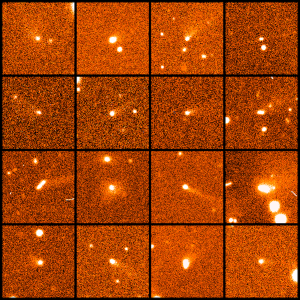
This animation shows the Solar and Heliospheric Observatory’s 5,000th comet (circled) moving across the field relative to background stars. The images in this sequence were taken with the spacecraft’s Large Angle and Spectrometric Coronagraph (LASCO) instrument.
NASA/ESA/SOHO

SOHO’s 5,000th comet was found by Hanjie Tan, a Sungrazer Project participant who is originally from Guangzhou, China, and is currently pursuing a doctoral degree in astronomy in Prague, Czech Republic. Tan has been participating in the Sungrazer Project since he was 13 years old and is one of the project’s youngest comet discoverers.

“Since 2009, I’ve discovered over 200 comets,” Tan said. “I got into the Sungrazer Project because I love looking for comets. It’s really exciting to be the first to see comets get bright near the Sun after they’ve been traveling through space for thousands of years.”

Most of the 5,000 comets discovered using SOHO have been found with the help of an international cadre of volunteer comet hunters – many with no formal scientific training – participating in the Sungrazer Project.

“Prior to the launch of the SOHO mission and the Sungrazer Project, there were only a couple dozen sungrazing comets on record – that’s all we knew existed,” said Karl Battams, a space scientist at the U.S. Naval Research Lab in Washington, D.C., and the principal investigator for the Sungrazer Project. “The fact that we’ve finally reached this milestone – 5,000 comets – is just unbelievable to me.”

SOHO’s 5,000th comet was discovered with the help of volunteers participating in the NASA-funded Sungrazer Project.
Credit: NASA’s Goddard Space Flight Center

The vast number of comets discovered using SOHO has allowed scientists to learn more about sungrazing comets and groups of comets that orbit the Sun. Comets discovered by the Sungrazer Project have also helped scientists learn more about the Sun, by watching the comets plunge through our star’s atmosphere like small solar probes.

“The statistics of 5,000 comets, and looking at their orbits and trajectories through space, is a super unique dataset – it’s really valuable science,” Battams said. “It’s a testament to the countless hours the project participants have put into this. We absolutely would never had reached this milestone if it wasn’t for what the project volunteers have done.”

The Sungrazer Project is one of many opportunities that anyone can get involved with to help make discoveries with NASA during the Heliophysics Big Year, which extends through the end of 2024. Learn more about SOHO, the Sungrazer Project, and other NASA science projects you can participate in:

by Vanessa Thomas
NASA’s Goddard Space Flight Center, Greenbelt, Md.

Powered by WPeMatico

Get The Details…

IXPE Operations Update

IXPE Operations Update

1 min read

IXPE Operations Update

Artist Rendering of IXPE in Space

On March 23, NASA’s IXPE (Imaging X-ray Polarimetry Explorer) stopped transmitting valid telemetry data. The only previous interruption of IXPE science observations was due to a similar issue in June of 2023.

On March 26, using procedures developed following that previous interruption, the team initiated a spacecraft avionics reset to address the issue, which put IXPE into a planned safe mode. The team has confirmed that IXPE is once again transmitting valid telemetry data and is now working to resume science operations, in as rapid and safe a manner as possible. The spacecraft is in good health.

Launched in 2021, IXPE is a space observatory built to discover the secrets of some of the most extreme cosmic objects – the remnants of supernova explosions, neutron stars, powerful particle streams ejected by feeding black holes, and more. The observatory is NASA’s first mission to study the polarization of X-rays from many different types of celestial objects. Follow the IXPE blog for further updates. 

Share

Details

Last Updated
Mar 26, 2024

Powered by WPeMatico

Get The Details…

NASA Selects First Lunar Instruments for Artemis Astronaut Deployment

NASA Selects First Lunar Instruments for Artemis Astronaut Deployment

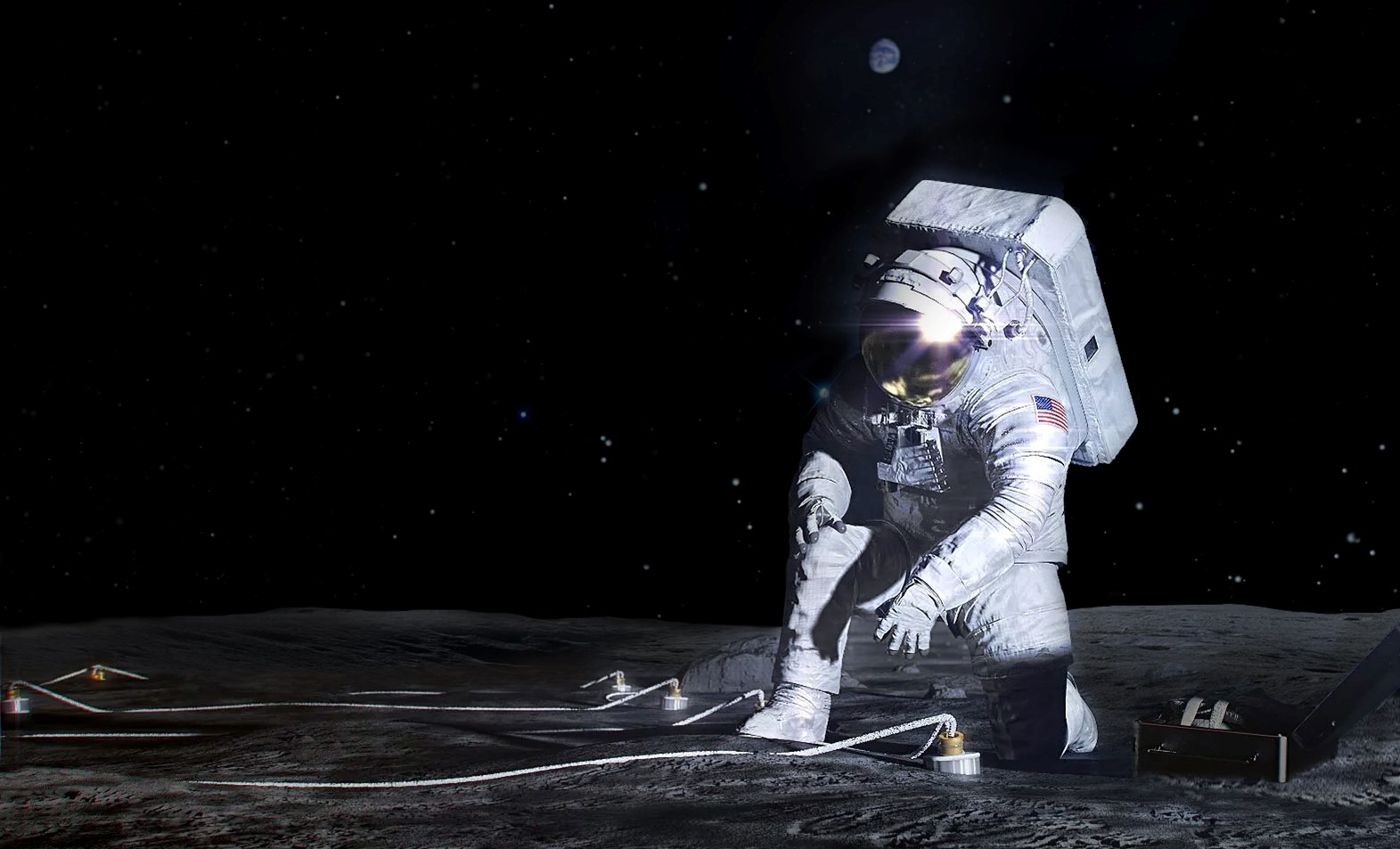
Artist’s concept of an Artemis astronaut deploying an instrument on the lunar surface.
Credits: NASA

NASA has chosen the first science instruments designed for astronauts to deploy on the surface of the Moon during Artemis III. Once installed near the lunar South Pole, the three instruments will collect valuable scientific data about the lunar environment, the lunar interior, and how to sustain a long-duration human presence on the Moon, which will help prepare NASA to send astronauts to Mars.

“Artemis marks a bold new era of exploration, where human presence amplifies scientific discovery. With these innovative instruments stationed on the Moon’s surface, we’re embarking on a transformative journey that will kick-start the ability to conduct human-machine teaming – an entirely new way of doing science,” said NASA Deputy Administrator Pam Melroy. “These three deployed instruments were chosen to begin scientific investigations that will address key Moon to Mars science objectives.”

The instruments will address three Artemis science objectives: understanding planetary processes, understanding the character and origin of lunar polar volatiles, and investigating and mitigating exploration risks. They were specifically chosen because of their unique installation requirements that necessitate deployment by humans during moonwalks. All three payloads were selected for further development to fly on Artemis III that’s targeted to launch in 2026, however, final manifesting decisions about the mission will be determined at a later date. Members of these payload teams will become members of NASA’s Artemis III science team.

The Lunar Environment Monitoring Station (LEMS) is a compact, autonomous seismometer suite designed to carry out continuous, long-term monitoring of the seismic environment, namely ground motion from moonquakes, in the lunar south polar region. The instrument will characterize the regional structure of the Moon’s crust and mantle, which will add valuable information to lunar formation and evolution models. LEMS previously received four years of NASA’s Development and Advancement of Lunar Instrumentation funding for engineering development and risk reduction. It is intended to operate on the lunar surface from three months up to two years and may become a key station in a future global lunar geophysical network. LEMS is led by Dr. Mehdi Benna, from the University of Maryland, Baltimore County.

Lunar Effects on Agricultural Flora (LEAF) will investigate the lunar surface environment’s effects on space crops. LEAF will be the first experiment to observe plant photosynthesis, growth, and systemic stress responses in space-radiation and partial gravity.  Plant growth and development data, along with environmental parameters measured by LEAF, will help scientists understand the use of plants grown on the Moon for both human nutrition and life support on the Moon and beyond. LEAF is led by Christine Escobar of Space Lab Technologies, LLC, in Boulder, Colorado.

The Lunar Dielectric Analyzer (LDA) will measure the regolith’s ability to propagate an electric field, which is a key parameter in the search for lunar volatiles, especially ice. It will gather essential information about the structure of the Moon’s subsurface, monitor dielectric changes caused by the changing angle of the Sun as the Moon rotates, and look for possible frost formation or ice deposits. LDA, an internationally contributed payload, is led by Dr. Hideaki Miyamoto of the University of Tokyo and supported by JAXA (Japan Aerospace Exploration Agency).

“These three scientific instruments will be our first opportunity since Apollo to leverage the unique capabilities of human explorers to conduct transformative lunar science,” said Joel Kearns, deputy associate administrator for exploration in NASA’s Science Mission Directorate in Washington. “These payloads mark our first steps toward implementing the recommendations for the high-priority science outlined in the Artemis III Science Definition Team report.”

Artemis III, the first mission to return astronauts to the surface of the Moon in more than 50 years, will explore the south polar region of the Moon, within 6 degrees of latitude from the South Pole. Several proposed landing regions for the mission are located among some of the oldest parts of the Moon. Together with the permanently shadowed regions, they provide the opportunity to learn about the history of the Moon through previously unstudied lunar materials.

With the Artemis campaign, NASA will land the first woman, first person of color, and its first international partner astronaut on the Moon, and establish long-term exploration for scientific discovery and preparation for human missions to Mars for the benefit of all.

For more information on Artemis science, visit:

https://science.nasa.gov/lunar-science

-end-

Karen Fox / Erin Morton
Headquarters, Washington
202-358-1257 / 202-805-9393
karen.c.fox@nasa.gov / erin.morton@nasa.gov  

Share

Details

Last Updated

Mar 26, 2024

Powered by WPeMatico

Get The Details…
Tiernan P. Doyle

CADRE Rovers’ Test Drive in the Mars Yard

CADRE Rovers’ Test Drive in the Mars Yard

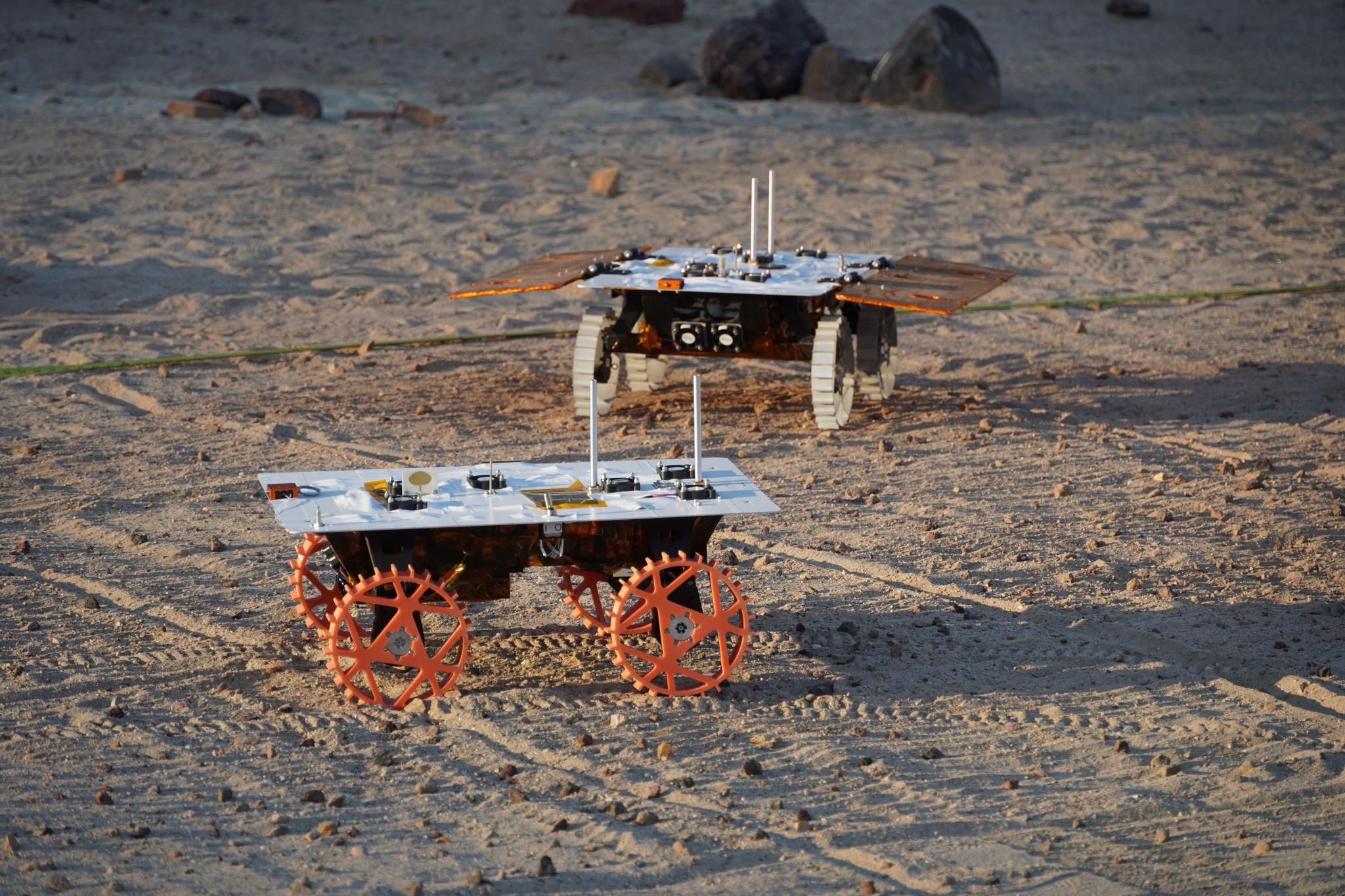
Two small rovers in a sandy yard. The rover in the back has solar panels fitted to it and white wheels. The one in the front has orange wheels and no solar panels.
NASA/JPL-Caltech

Two full-scale development model rovers, part of NASA’s Cooperative Autonomous Distributed Robotic Exploration (CADRE) technology demonstration, drive in the Mars Yard at the agency’s Jet Propulsion Laboratory in Southern California in this image from August 2023. The project is designed to show that a group of robotic spacecraft can work together as a team to accomplish tasks and record data autonomously – without explicit commands from mission controllers on Earth.

A series of Mars Yard tests with the development models confirmed CADRE hardware and software can work together to accomplish key goals for the project. The rovers drove together in formation and adjusted their plans as a group when faced with unexpected obstacles.

CADRE is slated to arrive at the Reiner Gamma region of the Moon through NASA’s Commercial Lunar Payload Services (CLPS) initiative. The network of robots will spend the daylight hours of a single lunar day – about 14 Earth days – conducting experiments that will test their capabilities.

Image Credit: NASA/JPL-Caltech

Powered by WPeMatico

Get The Details…
Monika Luabeya

NASA’s OSIRIS-REx Mission Awarded Collier Trophy

NASA’s OSIRIS-REx Mission Awarded Collier Trophy

NASA and the OSIRIS-REx (Origins, Spectral Interpretation, Resource Identification, and Security – Regolith Explorer) mission team have won the National Aeronautic Association’s (NAA) Robert J. Collier Trophy. NAA awards the trophy annually for what it determines is “the greatest achievement in aerospace and astronautics in America.” The OSIRIS-REx team will be celebrated at an award dinner on June 13, 2024, in Washington, D.C. 

The NAA bestowed the Robert J. Collier Trophy on the team behind NASA’s OSIRIS-REx, acknowledging the mission’s place in aerospace history by being the first U.S. mission to collect a sample from an asteroid and deliver it to Earth for study.

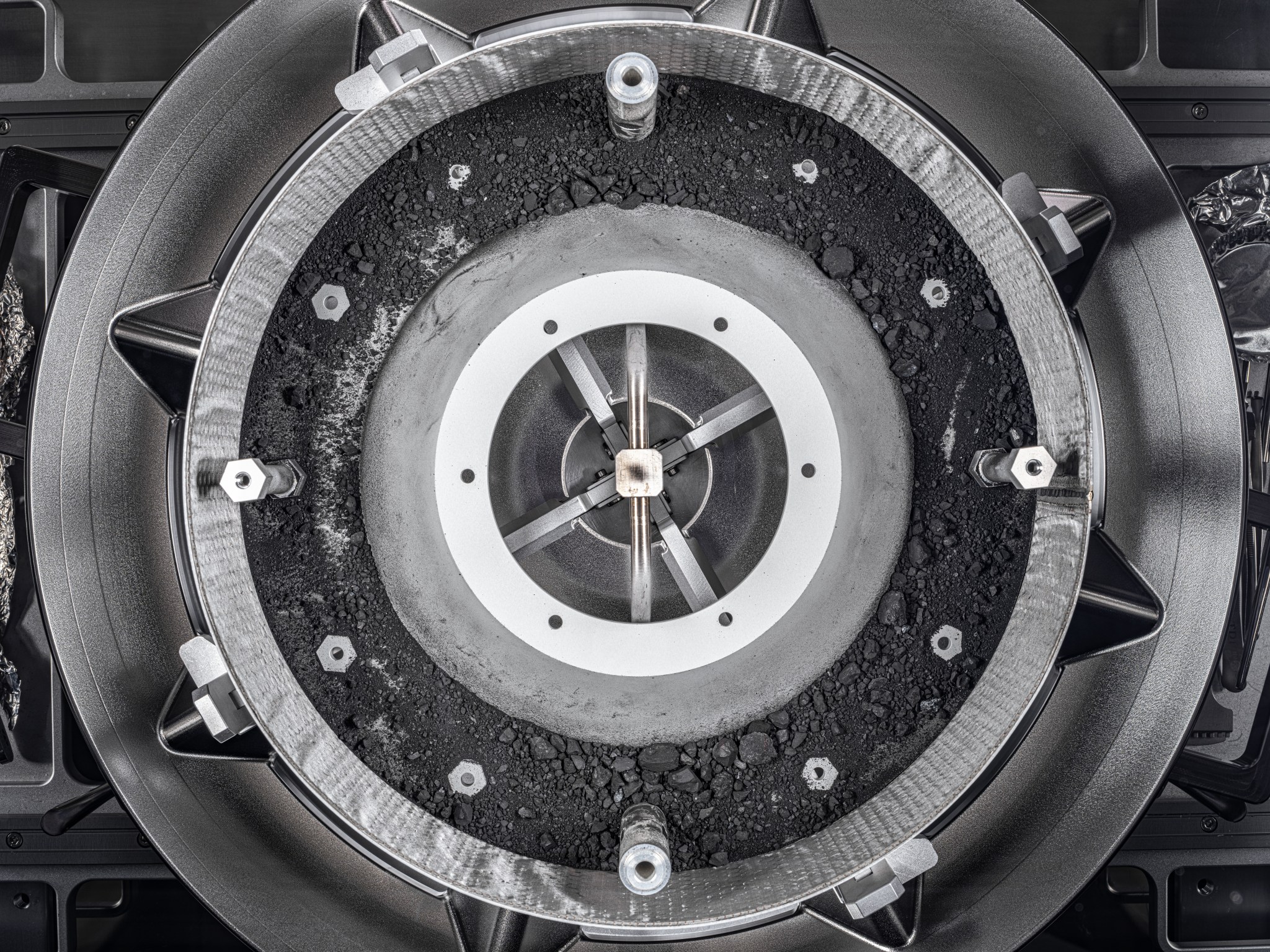
A top-down view of the OSIRIS-REx Touch-and-Go-Sample-Acquisition-Mechanism (TAGSAM) head with the lid removed, revealing the remainder of the asteroid sample inside. The TAGSAM is round, metallic silver, and looks like three concentric circles. The outermost circle has eight triangular metal ridges. The second ring is covered in deep gray, rocky dust particles and small rocks, with silver bolts peeking through the dust. The central circle has three metal bars, crossing in a star pattern.
A top-down view of the OSIRIS-REx Touch-and-Go-Sample-Acquisition-Mechanism (TAGSAM) head with the lid removed, revealing the remainder of the asteroid sample inside. Erika Blumenfeld, creative lead for the Advanced Imaging and Visualization of Astromaterials (AIVA) and Joe Aebersold, project management lead, captured this picture using manual high-resolution precision photography and a semi-automated focus stacking procedure. The result is an image that can be zoomed in on to show extreme detail of the sample. The remaining sample material includes dust and rocks up to about .4 in (one cm) in size.
NASA/Erika Blumenfeld & Joseph Aebersold

“Congratulations to the OSIRIS-REx team on this well-deserved honor,” said NASA Administrator Bill Nelson. “By successfully designing, building, and carrying out the first U.S. mission to collect an asteroid sample, NASA proved once again that we do big things. Things that inspire the world. We look forward to the incredible science to come that will tell us more about our solar system and help protect humanity here on Earth.”

Established more than a century ago, the award has marked major achievements in the timeline of flight, including Orville Wright in 1913 for developing the automatic stabilizer; Air Force test pilot Chuck Yeager for his sound-barrier-breaking 1947 flight of the X-1 rocket plane; the crews of NASA’s Apollo 8, 11, and 15 for their missions to the Moon in the late 1960s and early ’70s; and NASA’s Ingenuity Mars Helicopter.

The OSIRIS-REx team includes NASA’s Goddard Space Flight Center in Greenbelt, Maryland; Lockheed Martin in Littleton, Colorado; University of Arizona, Tucson; and KinetX in Tempe, Arizona.

The sample from the ancient asteroid Bennu that OSIRIS-REx delivered to Earth in September 2023 will give researchers worldwide a glimpse into the earliest days of our solar system, offering insights into planet formation and the origin of organics essential for life on Earth. Data collected by the spacecraft combined with future analysis of the Bennu sample will also aid our understanding of asteroids that could impact Earth.

The Collier Trophy adds to the recent Robert H. Goddard Memorial Trophy received by NASA’s OSIRIS-REx team in March 2024.

Following its successful sample return, the OSIRIS-REx spacecraft was renamed OSIRIS-APEX and will now enter an extended mission to visit and study near-Earth asteroid Apophis in 2029.

NASA Goddard provides overall mission management, systems engineering, and the safety and mission assurance for OSIRIS-REx. Dante Lauretta of the University of Arizona, Tucson, is the principal investigator. The university leads the science team and the mission’s science observation planning and data processing. Lockheed Martin Space in Littleton, Colorado, built the spacecraft and provides flight operations. Goddard and KinetX Aerospace are responsible for navigating the OSIRIS-REx spacecraft. Processing and curation for OSIRIS-REx’s Bennu sample takes place at NASA’s Johnson Space Center in Houston. International partnerships on this mission include the OSIRIS-REx Laser Altimeter instrument from CSA (the Canadian Space Agency) and asteroid sample science collaboration with JAXA’s (the Japan Aerospace Exploration Agency) Hayabusa2 mission. OSIRIS-REx is the third mission in NASA’s New Frontiers Program, managed by the agency’s Marshall Space Flight Center in Huntsville, Alabama, for the agency’s Science Mission Directorate at NASA Headquarters in Washington.

Find more information about NASA’s OSIRIS-REx mission at:

https://science.nasa.gov/mission/osiris-rex

Rob Gutro
NASA’s Goddard Space Flight Center, Greenbelt, Md.
Robert.j.gutro@nasa.gov 

Karen Fox / Charles Blue
Headquarters, Washington
202-358-1257 / 202-802-5345
 

Powered by WPeMatico

Get The Details…
Katy Mersmann