NASA Invites Media to Expedition 70 Crew Visit at Marshall

NASA Invites Media to Expedition 70 Crew Visit at Marshall

4 min read

Preparations for Next Moonwalk Simulations Underway (and Underwater)

 Four Expedition 70 crew members pose for a fun portrait inside their crew quarters aboard the International Space Station’s Harmony module. Clockwise from bottom are, NASA astronaut Jasmin Moghbeli; ESA (European Space Agency) astronaut Andreas Mogensen; JAXA (Japan Aerospace Exploration Agency) astronaut Satoshi Furukawa; and NASA astronaut Loral O’Hara.
NASA

NASA will host four astronauts at 10 a.m. CDT Tuesday, May 14, for a media opportunity at the agency’s Marshall Space Flight Center in Huntsville, Alabama.

NASA astronauts Jasmin Moghbeli and Loral O’Hara, ESA (European Space Agency) astronaut Andreas Mogensen, and JAXA (Japan Aerospace Exploration Agency) astronaut Satoshi Furukawa served as part of Expedition 70 and will discuss their recent mission to the International Space Station.

Media are invited to attend this event and participate in a news conference to speak with the astronauts about their experiments aboard the microgravity laboratory and other mission highlights.

Media interested in participating must confirm their attendance by 12 p.m., on Monday, May 13, with Joel Wallace in Marshall’s Office of Communications at joel.w.wallace@nasa.gov or 256-786-0117.

Media must report by 9 a.m., Tuesday, May 14 to the Redstone Arsenal Joint Visitor Control Center Gate 9 parking lot, located at the Interstate 565 interchange at Research Park Boulevard. The event will take place in the NASA Marshall Activities Building 4316. Vehicles are subject to a security search at the gate, so please allow extra time. All members of media and drivers will need photo identification. Drivers will need proof of insurance, if requested.

The Expedition 70 mission to the space station began Sept. 27, 2023, and ended April 5. During their mission, the Expedition 70 crew marked the 25th anniversary of space station operations in December 2023.

As part of NASA’s SpaceX Crew-7, Moghbeli, Mogensen, and Furukawa traveled 84,434,094 miles during their mission, spent 197 days aboard the space station, and completed 3,184 orbits around Earth. The Crew-7 mission was the first spaceflight for Moghbeli. Mogensen has logged 209 days in space over his two flights, and Furukawa has logged 366 days in space over his two flights.

NASA astronaut and Expedition 70 Flight Engineer Jasmin Moghbeli uses DNA analysis to identify bacteria extracted from water samples collected aboard the International Space Station. Known as BioMole, the study is demonstrating the ability to monitor the spacecraft’s microbial environment without sending samples back to Earth for analysis.
NASA

Throughout their mission, the Crew-7 members contributed to a host of science and maintenance activities and technology demonstrations. Moghbeli conducted one spacewalk, joined by O’Hara, replacing one of the 12 trundle bearing assemblies on the port solar alpha rotary joint, which allows the arrays to track the Sun and generate electricity to power the station. Crew-7 returned to Earth in March.

O’Hara completed 204 days in space, 3,264 orbits of the Earth, and 86.5 million miles during her first spaceflight. She witnessed the arrival of eight visiting spacecraft and the departure of seven visiting spacecraft, including both crewed and cargo missions. O’Hara also completed one spacewalk totaling six hours, 42 minutes.

While aboard the orbiting lab, O’Hara conducted dozens of science and technology activities to benefit future exploration in space and life back on Earth. O’Hara is among the first astronauts to participate in the Complement of Integrated Protocols for Human Exploration Research Program, an investigation that studies the psychological and physiological changes humans experience during spaceflight. Collecting data from astronauts on missions of different durations supports the development of ways to protect crew health on long-duration missions to the Moon and future missions to Mars. O’Hara returned to Earth in April aboard the Roscosmos Soyuz spacecraft.

The International Space Station remains the springboard to NASA’s next leap in space exploration, including future missions to the Moon and, eventually, Mars. The agency’s Huntsville Operations Support Center, or HOSC, at Marshall provides engineering and mission operations support for the space station, Commercial Crew Program, and other missions. Within the HOSC, the commercial crew support team provides engineering and safety and mission assurance expertise for launch vehicles, spacecraft propulsion, and integrated vehicle performance. The HOSC’s Payload Operations Integration Center, which operates, plans, and coordinates science experiments aboard the space station 365 days a year, 24 hours a day, supported Expedition 70, managing communications between the International Space Station crew and researchers worldwide.

For more information on the Expedition 70 crew, visit:

Joel Wallace
Marshall Space Flight Center, Huntsville, Ala.
256-786-0117
joel.w.wallace@nasa.gov

Share

Details

Last Updated

May 10, 2024

Editor
Beth Ridgeway

Powered by WPeMatico

Get The Details…
Beth Ridgeway
Sols 4182-4183: We Reached the South Side of Pinnacle Ridge… What’s Next?

Sols 4182-4183: We Reached the South Side of Pinnacle Ridge… What’s Next?

3 min read

Sols 4182-4183: We Reached the South Side of Pinnacle Ridge… What’s Next?

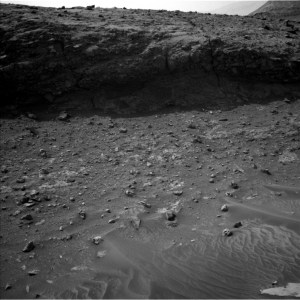
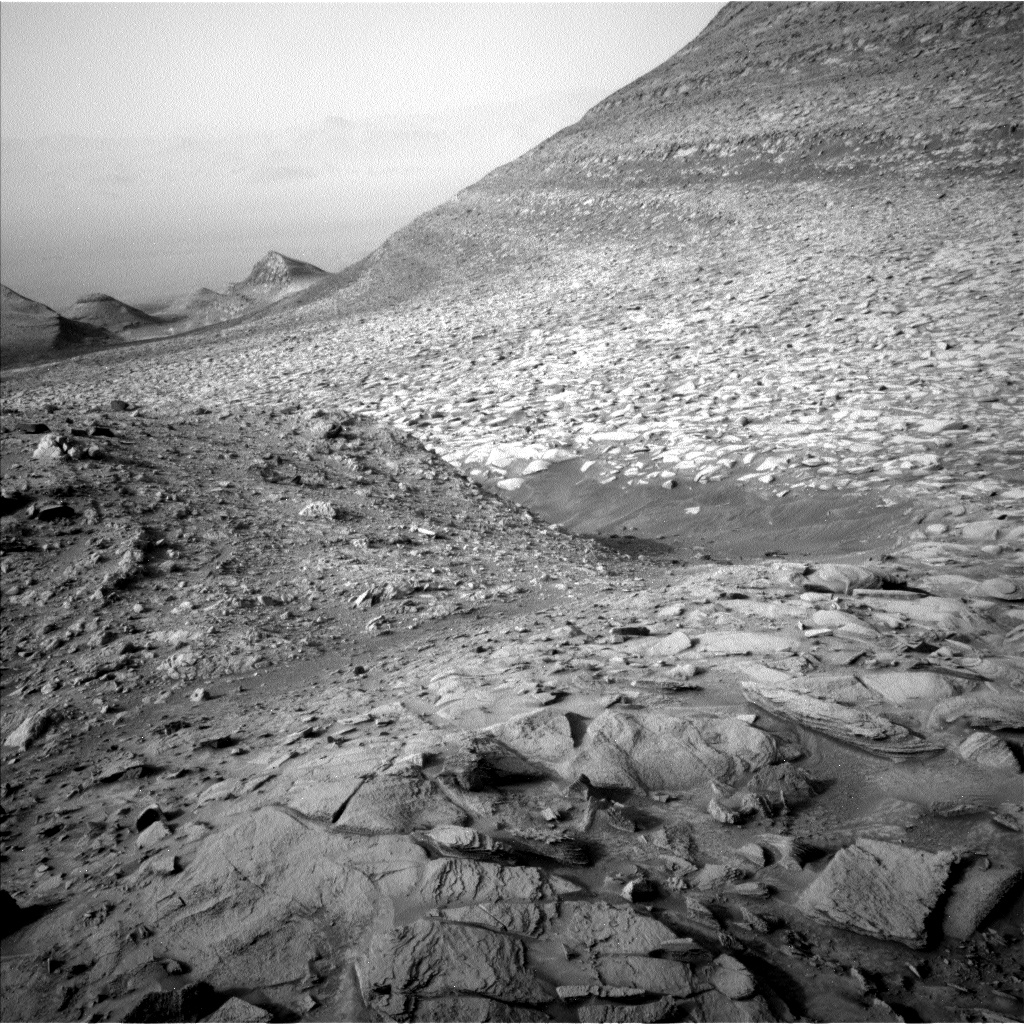
Image taken by the Mars rover Curiosity of a bumpy terrain of Mars. The image shows a hillside and a few vallies afar.
This image was taken by Left Navigation Camera onboard NASA’s Mars rover Curiosity on Sol 4180 (2024-05-10 03:55:37 UTC).
NASA/JPL-Caltech

Earth planning date: Friday, May 10, 2024

We planned quite a drive on Wednesday, with lots of twists and turns over very bumpy terrain, so the team was delighted to learn everything completed as planned when we received our downlink at ~4 am Pacific Time this morning! The successful drive means Curiosity is now parked on the south side of Pinnacle Ridge, the final area of upper Gediz Vallis ridge that we planned to investigate before we cross Gediz Vallis channel. We visited the north side of Pinnacle Ridge last week and collected all sorts of data that tell us a lot about the composition and textures of the rocks that form the ridge.  

We had a big decision to make this morning: Now that we can see the south side of Pinnacle Ridge is traversable, should we drive onto it to get additional contact science data on the Gediz Vallis ridge rocks, or should we continue to drive along Gediz Vallis channel towards our planned channel crossing spot? Driving onto Pinnacle Ridge at this location could give us an opportunity to learn more about the materials that make up the ridge and the role of water in this area, but it could also take several sols and not tell us much more than what we already learned from our investigation on the north face of Pinnacle Ridge.  

My role today was Long Term Planner, which meant I had to lead the team’s discussion to talk through the pros and cons of this decision, and (ideally) help the group come to a consensus. We talked a lot about how the rocks we could see from our current location compared with the rocks we already investigated on the north side, and ultimately the ~25 scientists who were on the tactical operations planning group today came to a consensus decision that we’d rather move on then spend more time here.

So today we’re going to collect lots of Mastcam observations and then continue to make our way up and along the channel, heading ~23 meters to the southwest.  Before driving away we’ll also take the opportunity to do some contact science on the rocks at our feet, doing a DRT followed by APXS and MAHLI observations on the target named “Boyden Cave,”  APXS and MAHLI observations on a nearby (dusty) target named “Royal Arches,” and finally a MAHLI only target of a cool nearby rock named “Quarry Peak.”  We’ll also collect two ChemCam LIBS observations of “Otter Lake,” a target very close to Royal Arches, and another nearby rock named “Nevada Falls.”  A suite of environmental monitoring observations will round out the plan.  

I really love operations days like today. We came in this morning with a completely new Martian vista to admire, and then we had to work together as a team to make a quick decision about what to do next.  I think the pace of this decision making, the ability to talk through tough choices with a group of really smart, passionate people, and the realization that these decisions are guiding the course of a one-ton vehicle on an entirely different planet is one of the coolest ways to spend a morning.

Written by Abigail Fraeman, Planetary Geologist at NASA’s Jet Propulsion Laboratory

Share

Details

Last Updated
May 10, 2024

Related Terms

Powered by WPeMatico

Get The Details…

NASA Awards Expand Research Capabilities at Institutions Nationwide

NASA Awards Expand Research Capabilities at Institutions Nationwide

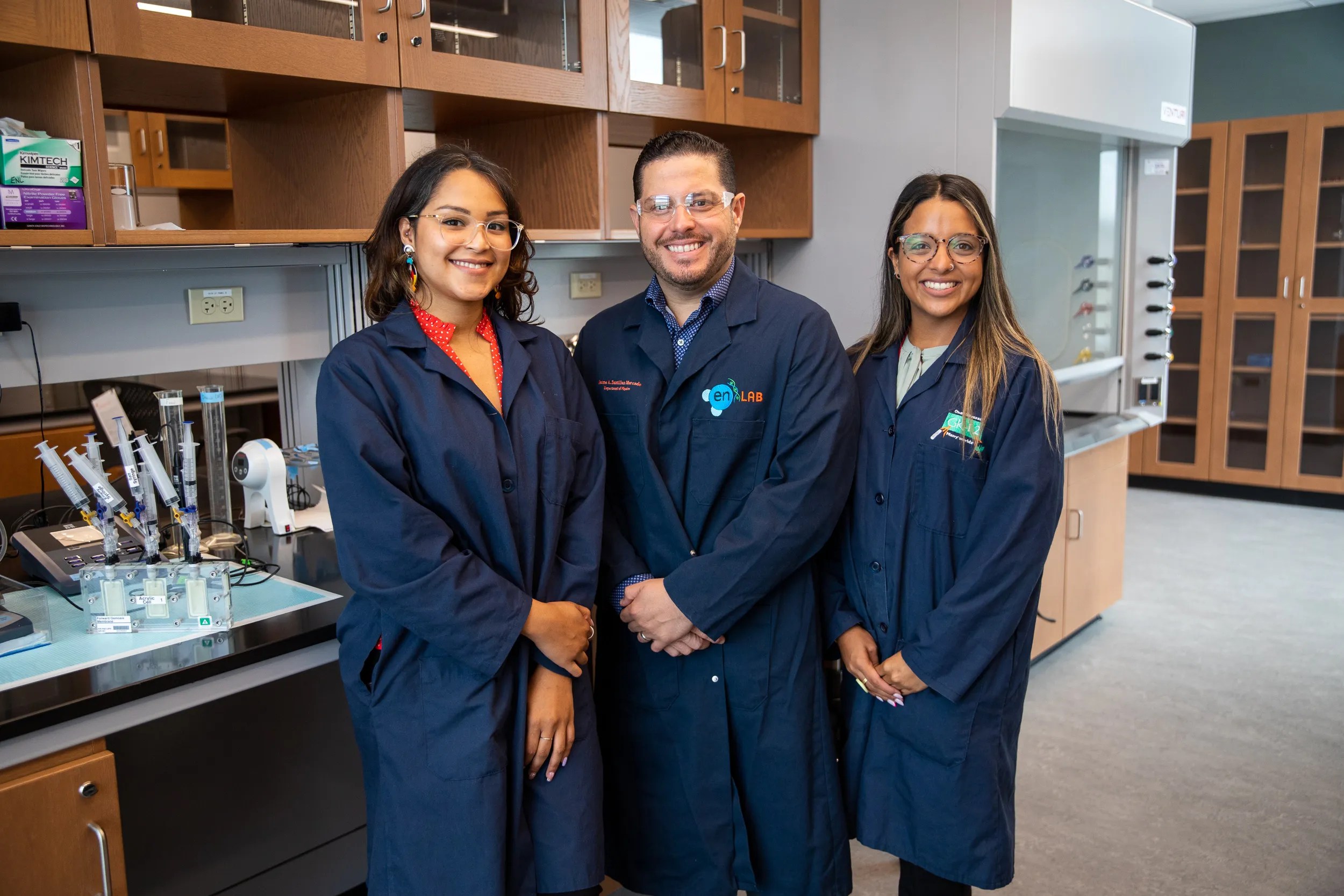
A photo of a team of researchers from the University of Puerto Rico-Río Piedras while working to discover a more efficient water recycling system for use on space missions. The team is comprised of doctoral students Liz Santiago-Martoral, on the left, and Alondra Rodriguez-Rolon, and their mentor Professor Eduardo Nicolau. One of their experiments can be seen on the countertop to the left of the group.
Credits: NASA

NASA is awarding approximately $45 million to 21 higher-education institutions to help build capacity for research. The awards were made possible through the Minority University Research and Education Project Institutional Research Opportunity (MIRO) and Established Program to Stimulate Competitive Research (EPSCoR) grants, which are funded by the agency’s Office of Science, Technology, Engineering, and Mathematics (STEM) Engagement.

“NASA’s Minority University Research and Education Project Institutional Research Opportunity and Established Program to Stimulate Competitive Research awards help institutions raise their technological bar,” said Torry Johnson, deputy associate administrator of STEM Engagement Programs at NASA Headquarters in Washington. “When institutions enhance their capabilities and infrastructure, they become more competitive in their research, which opens doors to valuable experience and opportunities.”

Minority University Research and Education Project Institutional Research Opportunity (MIRO) Awards

Seven minority-serving institutions will receive approximately $5 million each over a five-year period of performance for projects that span a variety of research topics. The institutions and their proposed projects are:

  • Alaska Pacific University in Anchorage – Alaska Pacific University Microplastics Research and Education Center
  • California State University in Fullerton – SpaceIgnite Center for Advanced Research-Education in Combustion
  • City University of New York, Hunter College in New York – NASA-Hunter College Center for Advanced Energy Storage for Space
  • Florida Agricultural and Mechanical University in Tallahassee – Integrative Space Additive Manufacturing: Opportunities for Workforce-Development in NASA Related Materials Research and Education
  • New Jersey Institute of Technology in Newark – AI Powered Solar Eruption Center of Excellence in Research and Education
  • University of Houston in Houston – NASA MIRO Inflatable Deployable Environment and Adaptive Space Systems Center
  • University of Illinois in Chicago – Center for In-Space Manufacturing: Recycling and Regolith Processing

NASA’s MIRO award was established to strengthen and develop research capacity and infrastructure of minority serving institutions in areas of strategic importance and value to NASA missions and national priorities.

Established Program to Stimulate Competitive Research (EPSCoR) Award

NASA establishes partnerships with government, higher education, and industry to create lasting improvements in research infrastructure and capacity for specific states or regions, while enhancing its national research and development competitiveness. The program is directed at those jurisdictions that have traditionally not participated in competitive aerospace and aerospace-related research activities.

NASA will award 14 institutions up to $750,000 each over the course of a three-year period of performance. The awarded institutions and their projects are:

  • University of Mississippi in University – Development of a Lagrangian Stability Analysis Framework for High-Speed Boundary Layers
  • University of Alabama in Huntsville – Testing the functionality and performance of a large area detector for STROBE-X
  • Louisiana State University in Baton Rouge – Colloidal Assembly: Understanding the Electric Field Driven Assembly of Colloids and its Applications (Science Mission Directorate)
  • West Virginia University in Morgantown – Science Mission Directorate: Bringing Gravitational-Wave Astronomy into the Space Age: Next-Generation Waveform Modeling of Black-Hole Binary Coalescences for Laser Intererometer Space Antenna Data Analysis
  • University of Puerto Rico in San Juan – NASA EPSCoR: Space Technology Mission Directorate/Jet Propulsion Laboratory: Advancing High-Energy, Cycle-Stable Sulfur-Based Batteries for NASA Space Missions: An Integrated Framework of Density Functional Theory, Machine Learning, and Materials Innovation
  • Desert Research Institute, Reno, Nevada – NASA’s Ames Research Center in Silicon Valley, California: Prospecting and Pre-Colonization of the Moon and Mars using Autonomous Robots with Human-In-The-Loop
  • Oklahoma State University in Stillwater – A.7.4.2 Biosignature Detection of Solar System Ocean Worlds using Science-Guided Machine Learning
  • Iowa State University in Ames – Johnson Space Center, Ames Research Center: Non-GPS Navigation System Using Dual Star/Planetary Cameras for Lunar and Deep-Space CubeSat Missions
  • University of Alaska Fairbanks in Fairbanks – NASA’s Glenn Research Center in Cleveland: The Alaska – Venus analog: synthesizing seismic ground motion and wind noise in extreme environments
  • University of the Virgin Islands in Charlotte Amalie – University of the Virgin Islands Etelman Observatory in the Era of Time Domain and MultiMessenger Astronomy: Preparing for a New Era of Science Productivity
  • University of Hawaii at Manoa in Honolulu – Cubesats for Climate Change Detection of Transient Greenhouse Gas Emissions
  • University of Idaho in Moscow – Science Mission Directorate and Goddard Space Flight Center: Improving Global Dryland Streamflow Modeling by Better Characterizing Vegetation Use of Deep-Water Resources Using NASA’s Gravity Recovery and Climate Experiment/Gravity Recovery and Climate Experiment Follow-On, SWOT, and Land Information System
  • University of Arkansas in Little Rock – AR- III-Nitride Ultraviolet Laser Diodes for Harsh Environments, Space Based Communications, and Remote Sensing (Space Technology Mission Directorate)
  • South Dakota School of Mines and Technology in Rapid City – Science Mission Directorate: High Spatial-Temporal Resolution Soil Moisture Retrieval using Deep Learning Fusion of Multimodal Satellite Datastreams

Both awards were made through NASA’s Office of STEM engagement solicitations. They promote STEM literacy to enhance and sustain the capability of institutions to perform NASA-related research and education, which directly supports the agency’s mission directorates.

For more information about NASA STEM, visit:

https://stem.nasa.gov

-end-

Gerelle Dodson
Headquarters, Washington
202-358-4637
gerelle.q.dodson@nasa.gov

Powered by WPeMatico

Get The Details…
Tiernan P. Doyle

That’s Refreshing

That’s Refreshing

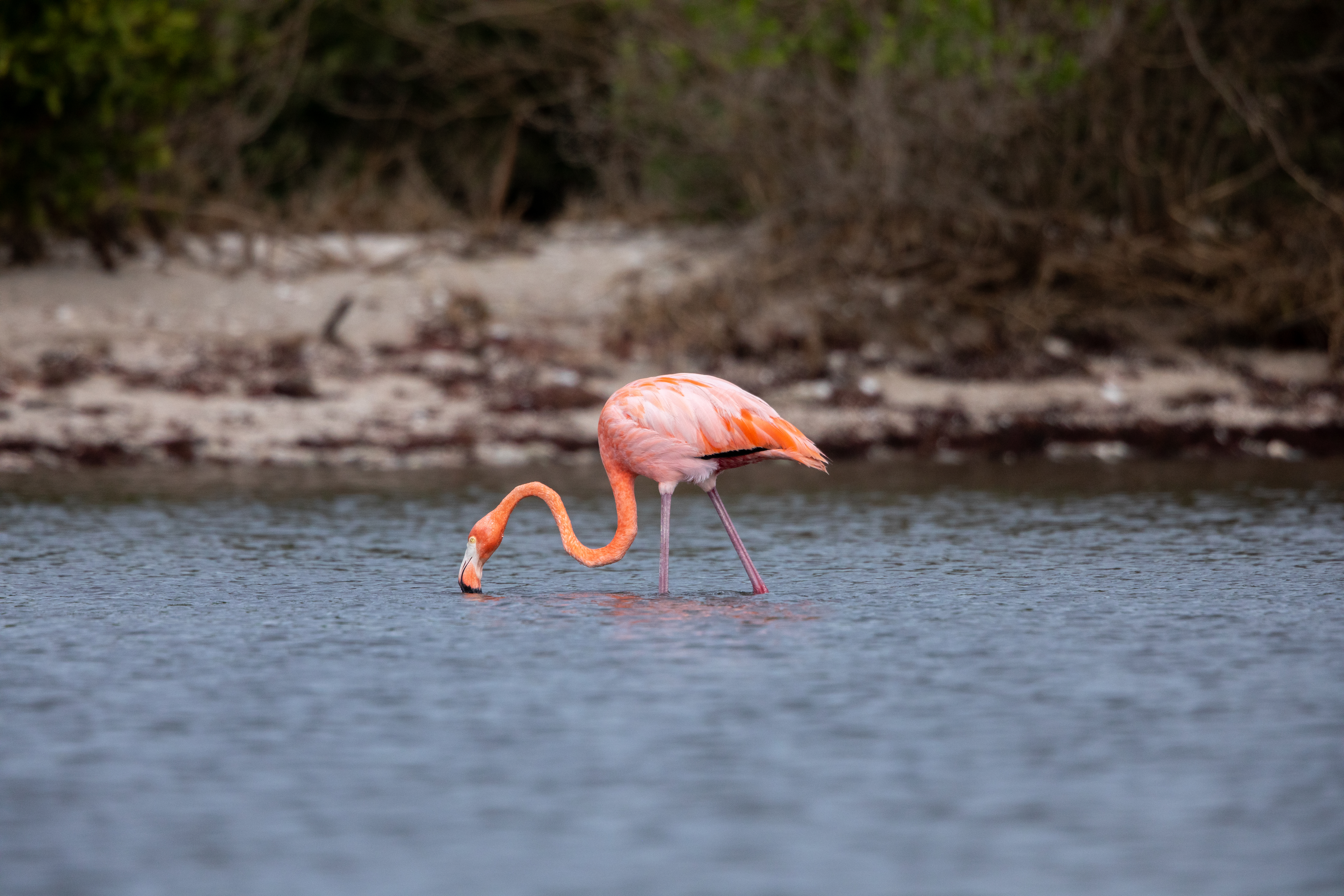
A flamingo lowers its neck to drink from the water it is standing in. Its neck bends like a backwards letter S and its legs are slightly spread apart. The flamingo's body is a rosy pink, with darker pink legs, and a more coral pink color on its neck and wings.
NASA/Kim Shiflett

An American flamingo takes a moment to drink water in the Indian River at Haulover Canal on Merritt Island on Thursday, Jan. 11, 2024. American Flamingos are more common in Mexico and Cuba but the winds from Hurricane Idalia relocated them to Florida in September 2023.

The Merritt Island National Wildlife Refuge is northwest of Kennedy Space Center in Florida; Merritt Island’s strategic location along the Atlantic Flyway provides a resting and feeding place for thousands of wading birds, shorebirds, and songbirds. The wildlife refuge is a habitat for more than 310 species of birds, 25 mammals, 117 fishes and 65 amphibians and reptiles.

Image Credit: NASA/Kim Shiflett

Powered by WPeMatico

Get The Details…
Monika Luabeya

NASA Invites Media to Annual Lunabotics Competition

NASA Invites Media to Annual Lunabotics Competition

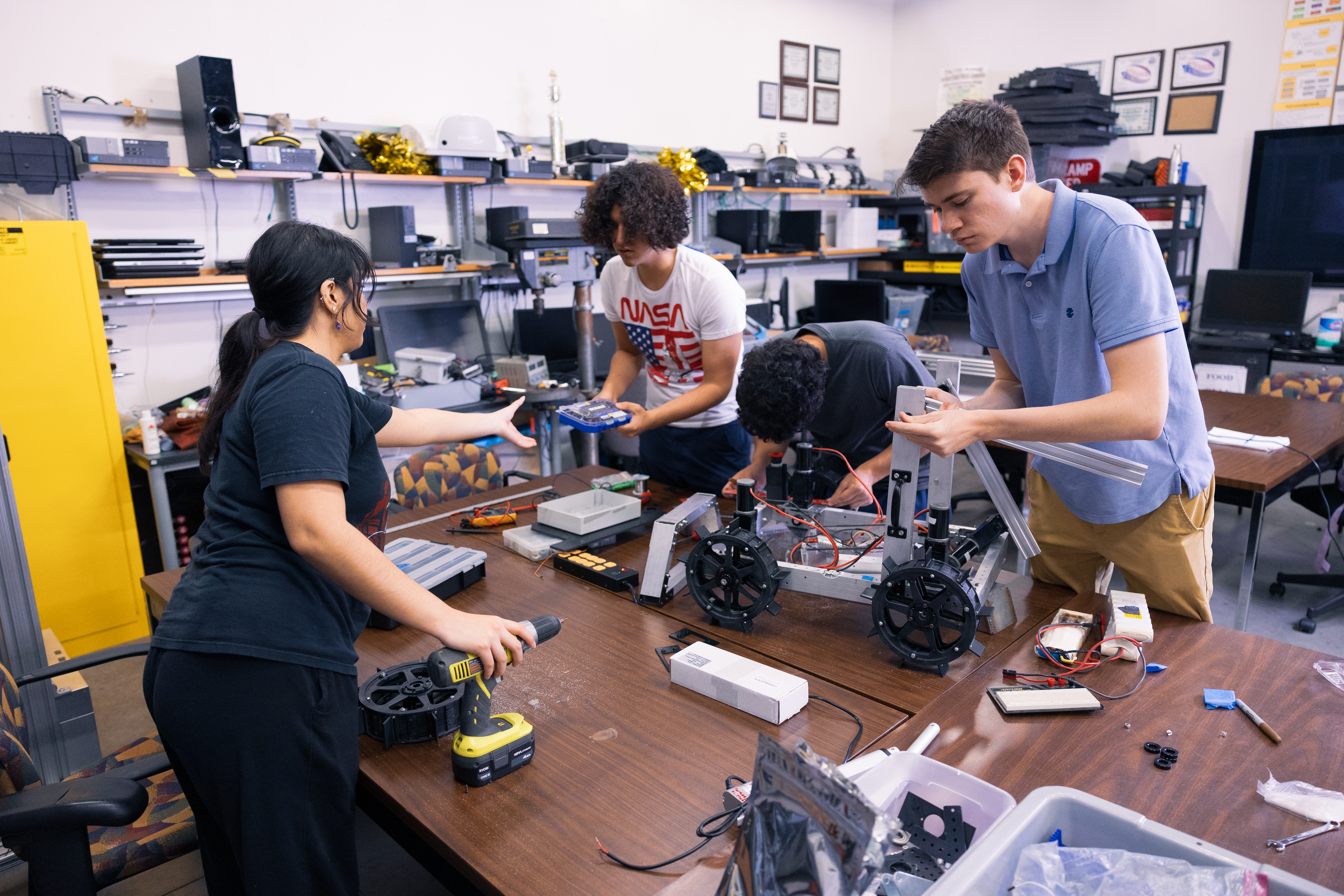
From left to right, Cielo Torres, Jacob Liorca, Thomas Jaycard, and Gavin Fitzgerald work on a robotic rover inside the University of Central Florida’s robotics lab ahead of the 2024 Lunabotics Challenge.
University of Central Florida/Antoine Hart

NASA’s 2024 Lunabotics Challenge offers more than 40 college teams from across the country the chance to design, build, and operate their own lunar robots, with the top 10 teams advancing to the final demonstrations phase. Media are invited to attend the finals on May 16-17 at the Kennedy Space Center Visitor Complex in Florida.

The teams’ autonomous rovers must be capable of building a berm structure from lunar regolith to protect critical Artemis infrastructure on the Moon. Such berms could defend against blast and ejecta during lunar landings and launches, shade cryogenic propellant tank farms, shield a nuclear power plant from space radiation, and provide other uses.

“The task of robotically building berm structures will be important for preparation and support of crewed lunar missions,” said Kurt Leucht, NASA software developer and In-Situ Resource Utilization (ISRU) researcher, as well as longtime Lunabotics commentator. “These competing teams are not only building critical engineering skills that will assist their future careers, they are literally helping NASA prepare for our future Artemis missions to the Moon.”

Coverage of Lunabotics will include live streaming of the first round and final round throughout the duration of the competition.

Reporters interested in attending the Lunabotics finals must contact Isabel Kennedy at isabel.kennedy@nasa.gov.

The first round of the challenge takes place May 12-14 in the Exolith Lab at the University of Central Florida in Orlando. Those wishing to attend the first round of the challenge should contact Margot Winick at margot.winick@ucf.edu.

Coordinated by NASA’s Office of STEM Engagement, Lunabotics has taken place annually since 2010. As one of NASA’s Artemis Student Challenges, the competition is designed to engage and retain students in STEM fields by expanding opportunities for student research and design in the areas of science, technology, engineering, and math.

For more competition information, visit:

https://www.nasa.gov/learning-resources/lunabotics-challenge/

– end –

Derrol Nail
Kennedy Space Center, Fla.
321-289-9513
derrol.j.nail@nasa.gov

Powered by WPeMatico

Get The Details…
Jason Costa