NASA Signs US, Saudi Arabia Agreement for Civil Aeronautics, Space Collaboration

NASA Signs US, Saudi Arabia Agreement for Civil Aeronautics, Space Collaboration

Image of the NASA logo
Credit: NASA

The United States and Saudi Arabia signed a framework agreement that opens new possibilities for cooperation with NASA in areas such as space science, exploration, aeronautics, space operations, education, and Earth science.

NASA Administrator Bill Nelson signed on behalf of the U.S., and CEO of the Saudi Space Agency Mohammed bin Saud Al-Tamimi signed on behalf of the Kingdom of Saudi Arabia.

“Building on my visit to Saudi Arabia earlier this year, I look forward to strengthening our cooperation for the future of exploration,” said Nelson. “We are living in the golden era of exploration – one that is rooted in partnership. This new agreement outlines how we’ll work together, and explore together, for the benefit of humanity.” 

Known as the “Framework Agreement Between the Government of the United States of America and the Government of The Kingdom of Saudi Arabia on Cooperation in Aeronautics and the Exploration and Use of Airspace and Outer Space for Peaceful Purposes,” it establishes the overall legal framework to facilitate and strengthen mutually beneficial collaboration between the two countries.

“The agreement represents a turning point in the Kingdom’s journey towards building a strong and prosperous space sector,” said Saudi Space Agency Chairman Abdullah bin Amer Al-Swaha. “It reflects the Kingdom’s firm commitment to progress and innovation in the field of space, and its continuous efforts to enhance its position as an important partner on the global stage for space exploration and scientific discovery.” 

The agreement also acknowledges the importance of the Artemis Accords, which Saudi Arabia signed in July 2022, for the transparent, safe, and responsible exploration of space. The commitments of the Artemis Accords, and efforts by the signatories to advance implementation of all its principles, support NASA’s Artemis campaign with its partners and other activities of the accords signatories.

The signing comes two months after Nelson’s visit to Saudi Arabia, where he met with Saudi Space Agency and other senior officials to discuss future partnerships and civil space cooperation for the broader U.S. and Saudi Arabia relationship.

In May 2023, two Saudi mission specialists, Ali Alqarni and Rayyanah Barnawi, were among a group of Axiom Mission-2 private astronauts who launched into orbit aboard a SpaceX Dragon from NASA’s Kennedy Space Center in Florida, highlighting international cooperation. The Axiom Space astronauts conducted scientific research, outreach, and commercial activities aboard the International Space Station.

For more information about NASA’s international partnerships, visit:

https://www.nasa.gov/oiir

-end-

Meira Bernstein / Elizabeth Shaw
Headquarters, Washington
202-358-1600
meira.b.bernstein@nasa.gov / elizabeth.a.shaw@nasa.gov

Share

Details

Last Updated

Jul 16, 2024

Powered by WPeMatico

Get The Details…
Tiernan P. Doyle

Prepare for Perseids!

Prepare for Perseids!

4 Min Read

Prepare for Perseids!

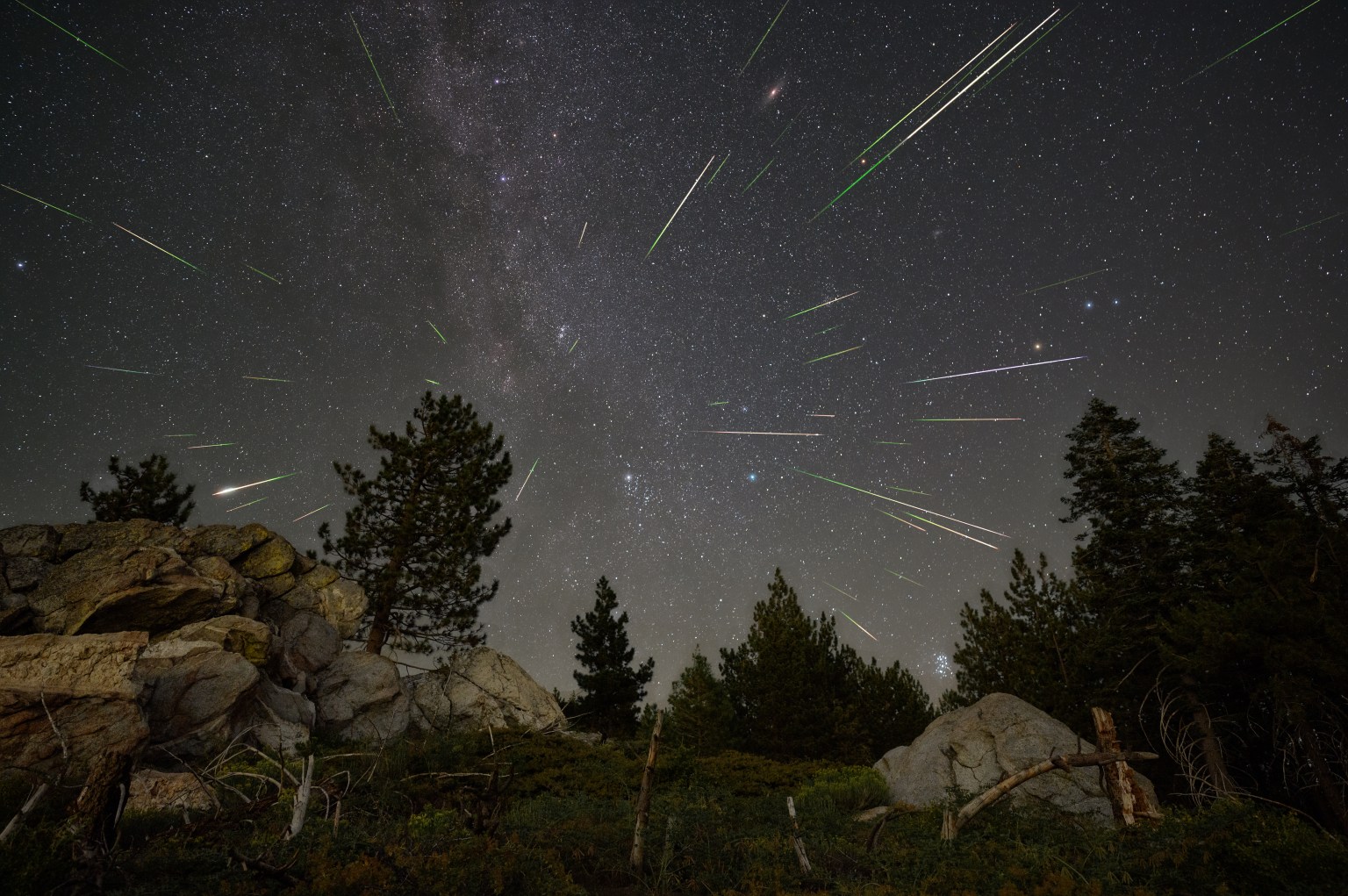
Dark sky with streaks of light from the Perseid meteor shower.
A view of the 2023 Perseid meteor shower from the southernmost part of Sequoia National Forest, near Piute Peak.
Credits:
NASA/Preston Dyches

Are you ready for the 2024 Perseids? Their peak is expected to be on the night of August 11 through the morning of the 12th, with good seeing to be had the nights before and after. You may have already spotted a few Perseids streaking across the summer skies! This shower, part of the debris stream of comet Swift-Tuttle, actually starts in mid to late July and lasts through most of August. While most of these nights only showcase a few meteors each hour, the peak of the Perseids brings many, many more. How much more? The number actually varies every year; there can be as little as a few dozen per hour, but some rare years bring a brief “burst’ of up to two hundred beautiful “shooting stars” an hour.

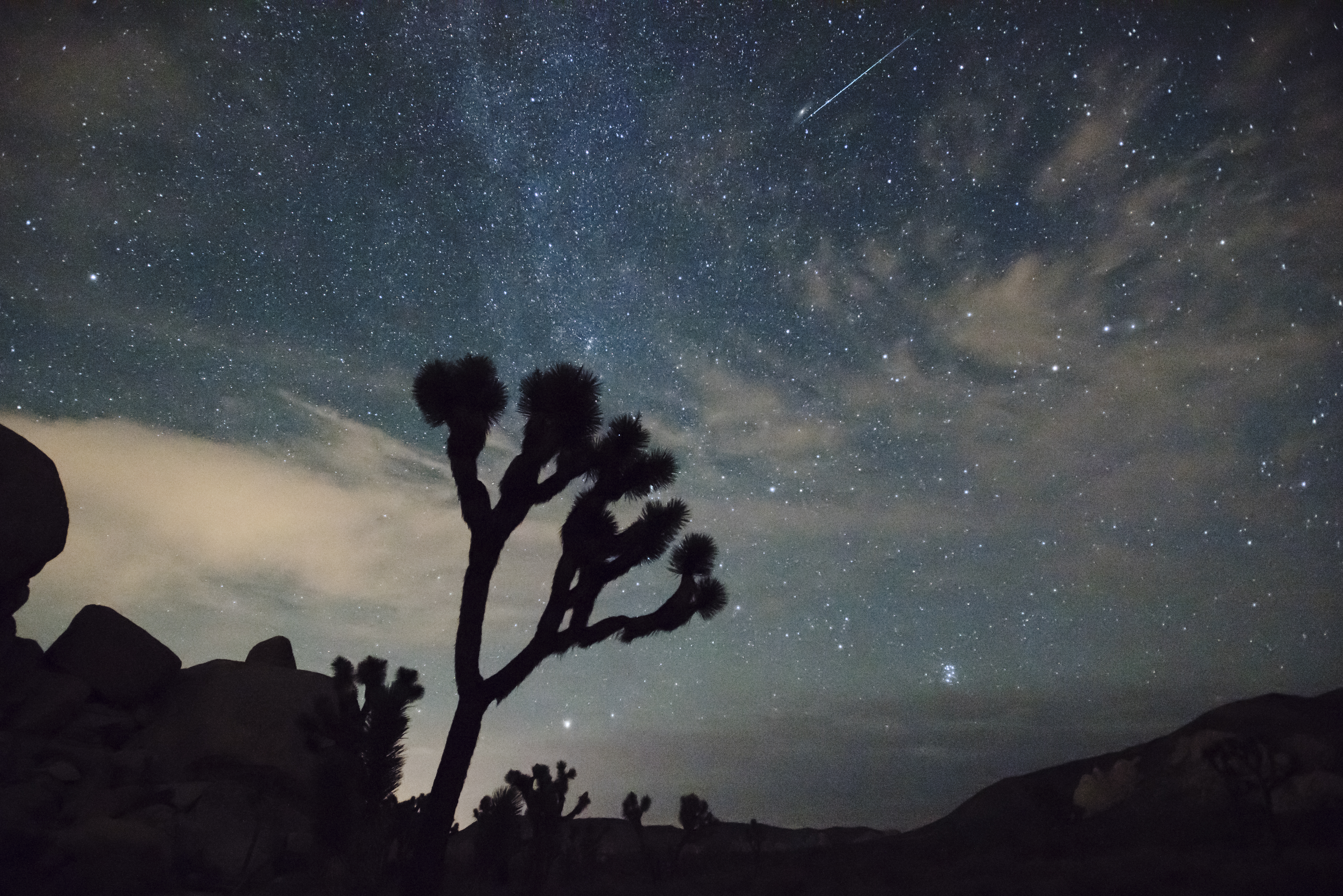
Image of a Perseid meteor streaking over Joshua Tree National Park
Image of a Perseid meteor streaking over Joshua Tree National Park.
Brad Sutton/National Parks Service

This year’s Perseids will be slightly impacted by a 53% waxing Moon, but the Moon will set right as the Perseids begin to peak! This means that if you are in an area free from light pollution and enjoy clear skies, you may be able to see quite a few meteors over the course of the night! How many will you be able to see? There’s only one way to find out for yourself how strong the Perseids will be this year: go outside and patiently watch!

We have a few tips on how to make the most of your meteor shower viewing experience: 

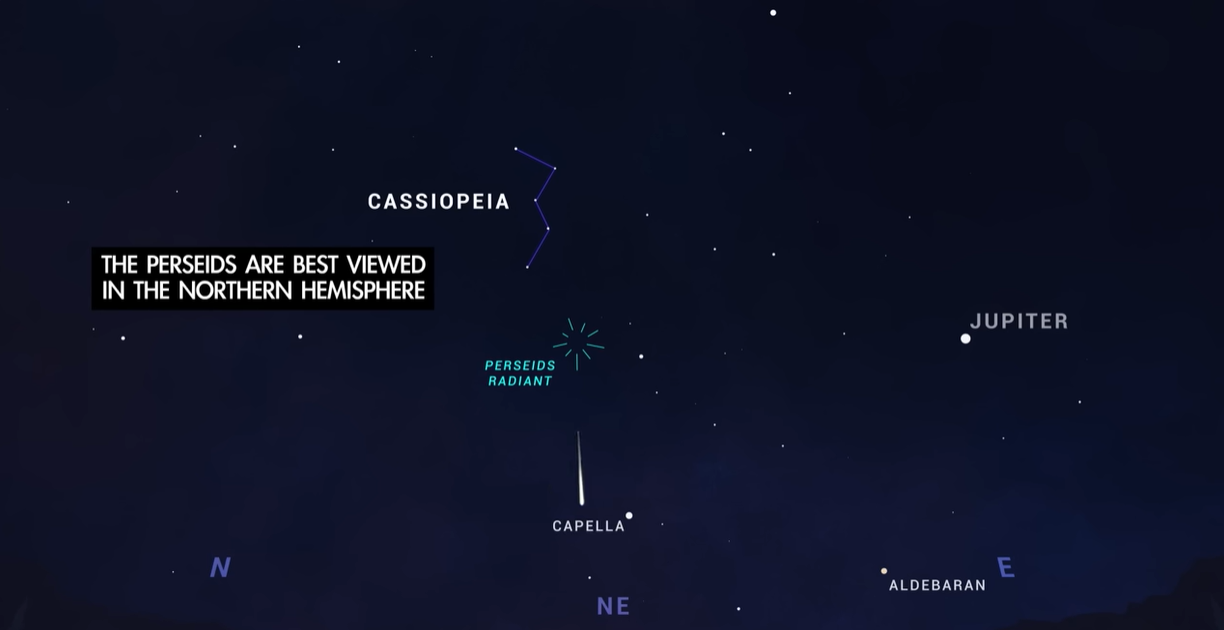
Map of the night sky showing the radiant of the Perseids, and the constellation Cassiopeia with the text: The Perseids are best viewed in the northern hemisphere
If you trace the meteor trails of the Perseids back to their source, you will find they seem to come from a spot near the constellation Perseus – hence their name, and the name of most meteor showers.
What’s Up: August 2023, NASA/JPL
  • Get out of the city!  Try to get to the darkest location you can. The darker it is where you are, the more meteors you will see streaking across the sky.
  • Check the weather forecast for that night. You may need to check out two or three areas for predictions on fog, clouds, and temperature. Some weather sites even offer forecasts specially tailored for sky watching. Make sure you have clear skies to go along with those dark ones.
  • Find a meteor shower party! Go to a gathering of like-minded folks in a local park, or an event hosted by a local astronomy club – especially if it’s your first time! Find a Perseids party by searching the Night Sky Network for clubs near you, or by searching for events near you 
  • Stay warm and comfortable outside-be prepared! You will be out for a good long while and will want to lie flat on your back to soak up as much of the sky as possible. To stay cozy, bring a blanket, jacket, hat, a warm drink, and water. You may think it’s silly to bring some warm clothes in the middle of the summer, but late at night the temperature can drop just enough to be chilly.  If you are in a buggy area, you will want to apply some bug spray to avoid irritating bites
  • Bring your friends and family! Company under starry skies is wonderful, and they provide a bonus since there are more eyes on the sky! Groups can spot more meteors than single individuals and help each other find ‘hot spots” in the sky. (Also- if you are out in the wilderness in the dark, good company helps you feel safer.)

For more information on one of our favorite meteor showers, check out NASA’s Perseid page and EarthSky’s great observing guide. You should also check out JPL’s August 2023 “What’s Up? video as Preston Dyches offers great tips on how to watch for the Perseids, as well as other objects to look for in the night skies while you wait for these brilliant streaks. You can also use NASA’s “Fluximator” meteor shower activity application to try to predict when the peak activity will be for your location.  We also have a handout you can use at your star parties and outreach events: Heads up! It’s a Meteor Shower resource page.

Have fun and may you have clear skies and great weather for your meteor shower party!

Originally posted by Dave Prosper: August 2018

Last Updated by Kat Troche: May 2024

Powered by WPeMatico

Get The Details…

NASA Johnson to Dedicate Building to Dorothy Vaughan, Women of Apollo

NASA Johnson to Dedicate Building to Dorothy Vaughan, Women of Apollo

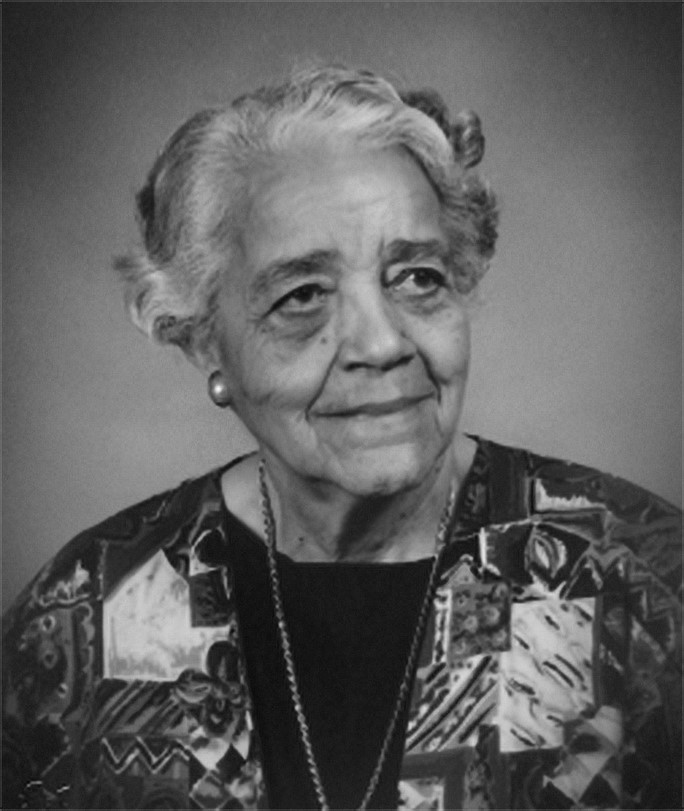
A portrait image of Dorothy Vaughan.
A portrait of Dorothy Vaughan, a mathematician, computer programmer, and NASA’s first Black manager.
Credit: NASA

NASA’s Johnson Space Center in Houston will recognize legendary human computer Dorothy Vaughan and the women of Apollo with activities marking their achievements, including a renaming and ribbon-cutting ceremony at the center’s “Building 12,” on Friday, July 19, the eve of the 55th anniversary of the Apollo 11 Moon landing.

At 9 a.m. CDT, NASA Johnson Director Vanessa Wyche will begin with a discussion about the importance of Vaughan and the women of Apollo’s contributions to the agency’s lunar landing program and their significance to today’s Artemis campaign. Other highlights include a poetry reading, a recital by Texas Southern University’s Dr. Thomas F. Freeman Debate Team, and a “Women in Human Spaceflight” panel discussion.

The panel in NASA Johnson’s Teague Auditorium will be moderated by Debbie Korth, the agency’s Orion Program deputy manager, and include:

  • Christina Koch, NASA astronaut
  • Sandy Johnson, Barrios Technology CEO
  • Lara Kearney, NASA Extravehicular Activity and Human Surface Mobility Program manager
  • Andrea Mosie, NASA Lunar Materials Repository Laboratory manager and senior sample processor
  • Dr. Shirley Price, former NASA Equal Opportunity specialist

Following the program, the ribbon-cutting ceremony will begin at Building 12, which will thereafter be named the “Dorothy Vaughan Center in Honor of the Women of Apollo.” The dedication is a tribute to the people who made humanity’s first steps on the Moon possible.

All interested media must request credentials by 12 p.m. Thursday, July 18, by email at jsccommu@mail.nasa.gov or by calling the Johnson newsroom at 281-483-5111. Media should arrive onsite for setup by 8:15 a.m. July 19, at the Teague Auditorium in Building 2 South. U.S. media are invited to attend and will have an opportunity to ask questions during the panel discussion and may request brief interviews with available NASA officials following the ribbon cutting.

Distinguished guests are expected to include local elected officials, NASA senior leadership, members of NASA’s Alumni League, and the families of Dorothy Vaughan and the women of Apollo.

“On behalf of NASA’s Johnson Space Center, we are proud to host this historic event as the agency honors the significant contributions women have made to the space industry, particularly trailblazers who persevered against many challenges of their era,” Wyche said. “As we prepare to return to the Moon for long-term science and exploration, NASA’s Artemis missions will land the first woman and first person of color on the Moon. It’s a privilege to dedicate Johnson’s Building 12 to the innovative women who laid the foundation to our nation’s space program.”

Vaughan’s personal commitment and determination during the Apollo missions advanced the agency’s current diverse workforce and leadership – particularly at Johnson — as human computers transitioned from Langley Research Center in Virginia to Houston, supporting Mission Control from Building 12. She was a steadfast advocate for the women who worked as human computers, and for all the individuals under her leadership.

Learn about the life and legacy of Dorothy Vaughan here:

https://www.nasa.gov/people/dorothy-vaughan/

-end-

Tiernan Doyle
Headquarters, Washington
202-358-1600
tiernan.doyle@nasa.gov

Laura Rochon
Johnson Space Center, Houston
281-483-5111
laura.a.rochon@nasa.gov

Share

Details

Last Updated

Jul 15, 2024

Powered by WPeMatico

Get The Details…
Tiernan P. Doyle

Telepong

Telepong

1 min read

Preparations for Next Moonwalk Simulations Underway (and Underwater)

Next Generation Science Standards: Engineering Design (MS-PS4-1, MS-ETS1)

Grades 5+

In this activity, students will create an “antenna” or “receiver” out of re-used materials. After construction is complete, the students test their design by throwing “data” (in this case, ping pong balls) across the room and comparing the message to test the success of their receivers.

o	A cartoon of eight white ping pong balls float about a science experiment, each holding a different black letter. Together, the floating ping pong balls spell ‘Telepong’. The science experiment below the ping pong balls consists of plastic cups, cardboard paper towel tubes, scissors, and a black marker.

Share

Details

Last Updated

Jul 15, 2024

Related Terms

Powered by WPeMatico

Get The Details…
Jacqueline E. Zito

15 Years Ago: STS-127 Delivers Japanese External Platform to Space Station

15 Years Ago: STS-127 Delivers Japanese External Platform to Space Station

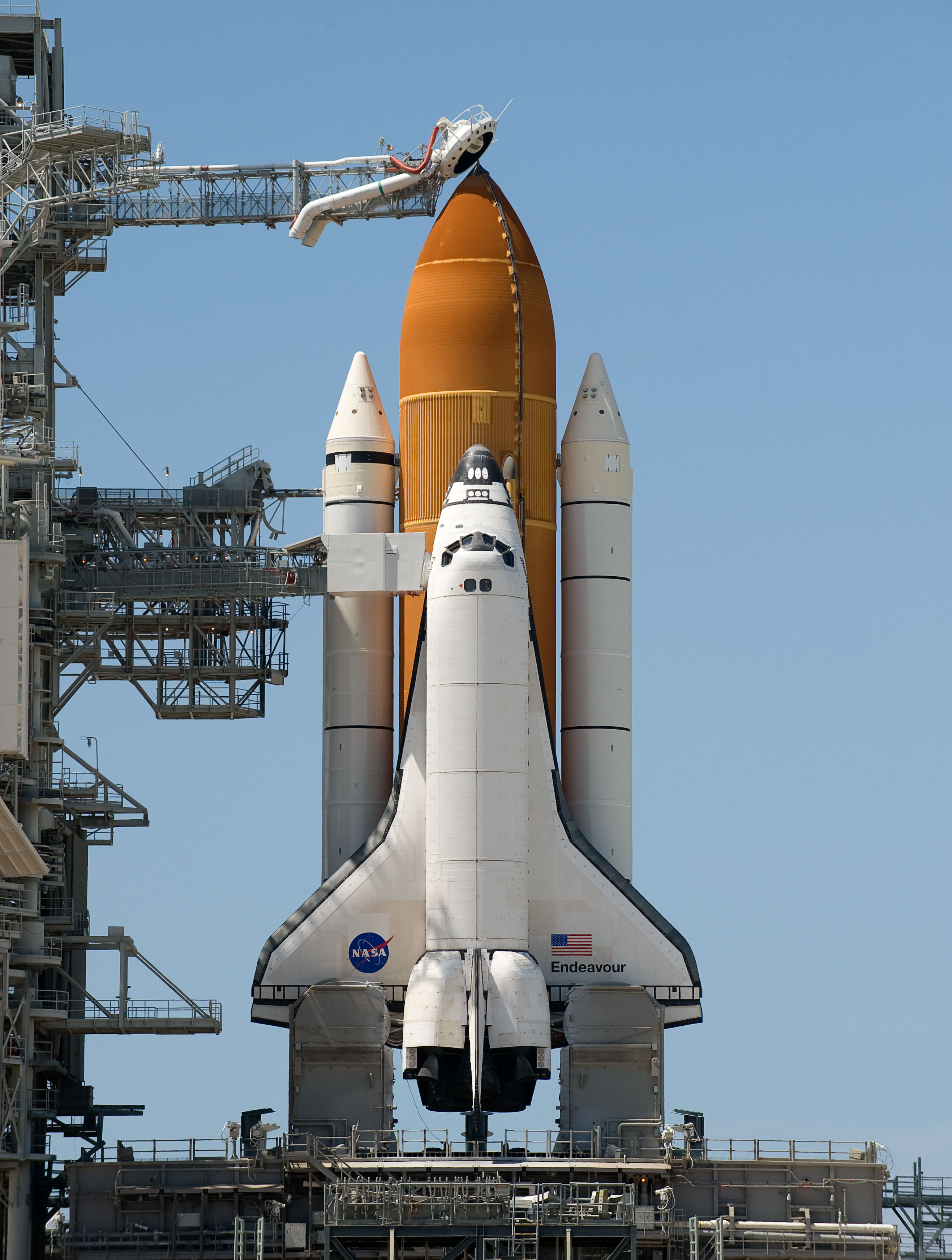
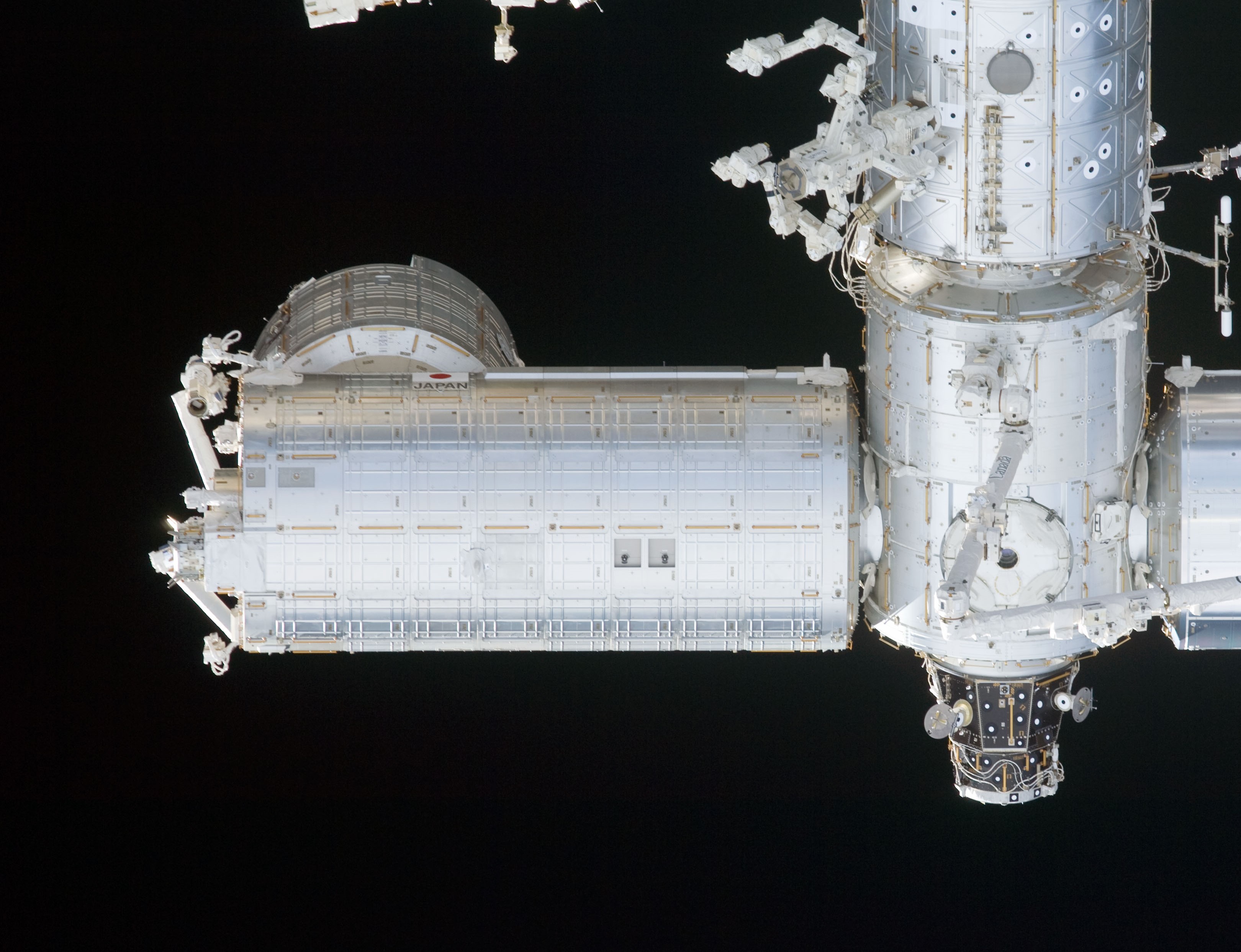
On July 15, 2009, space shuttle Endeavour began its 23rd trip into space, on the 2JA mission to the International Space Station, the 29th shuttle flight to the orbiting lab. During the 16-day mission, the seven-member STS-127 crew, working with Expedition 20, the first six-person crew aboard the station, completed the primary objectives of the mission. The flight marked the first time 13 people worked about the station at the same time. They added the Exposed Facility (EF) to the Kibo Japanese Experiment Module (JEM), including its first three payloads, and performed a crew exchange of long-duration crew members. The tasks involved five complex space walks and extensive robotic activities using three different manipulator systems during 11 days of docked operations.
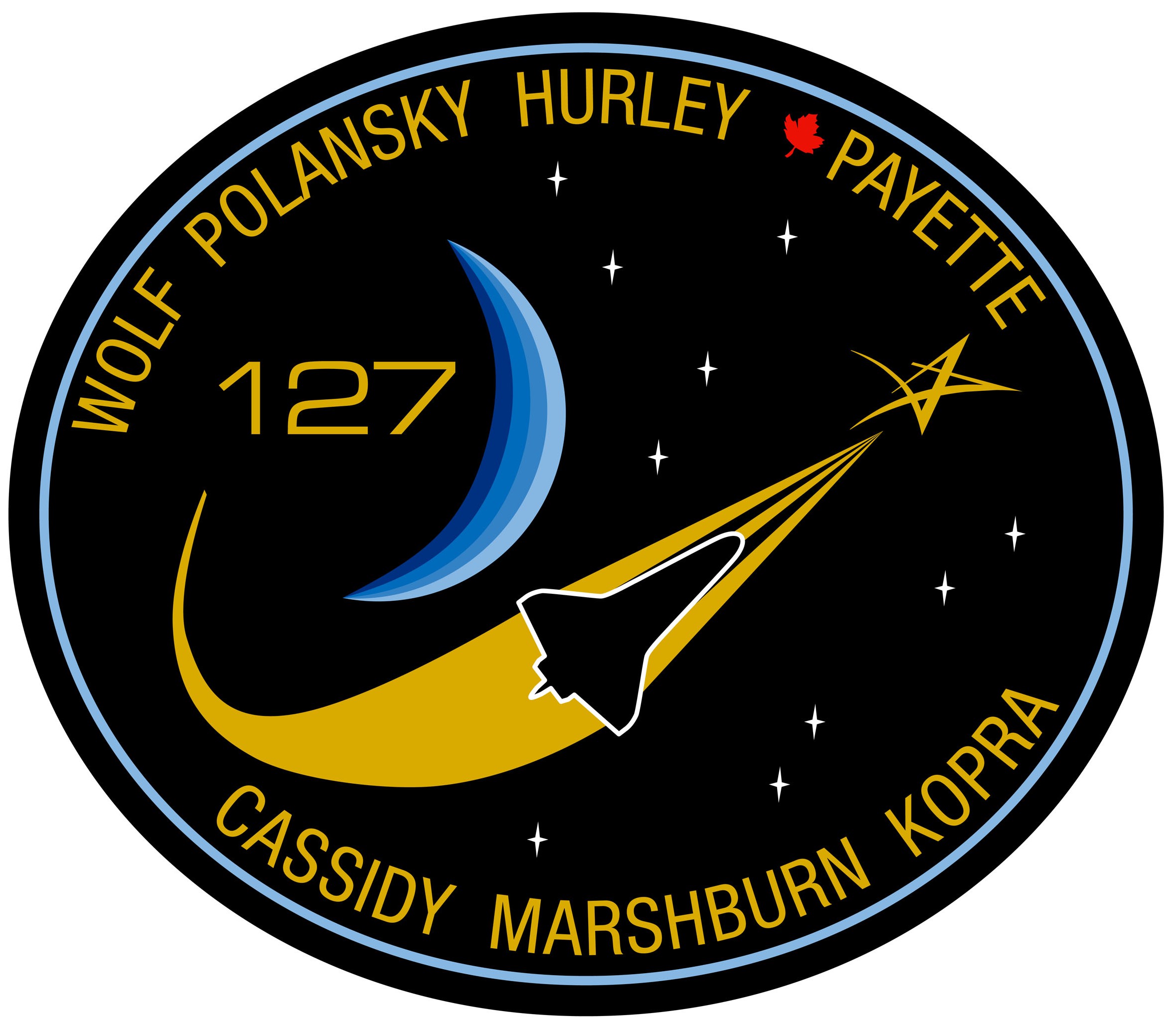
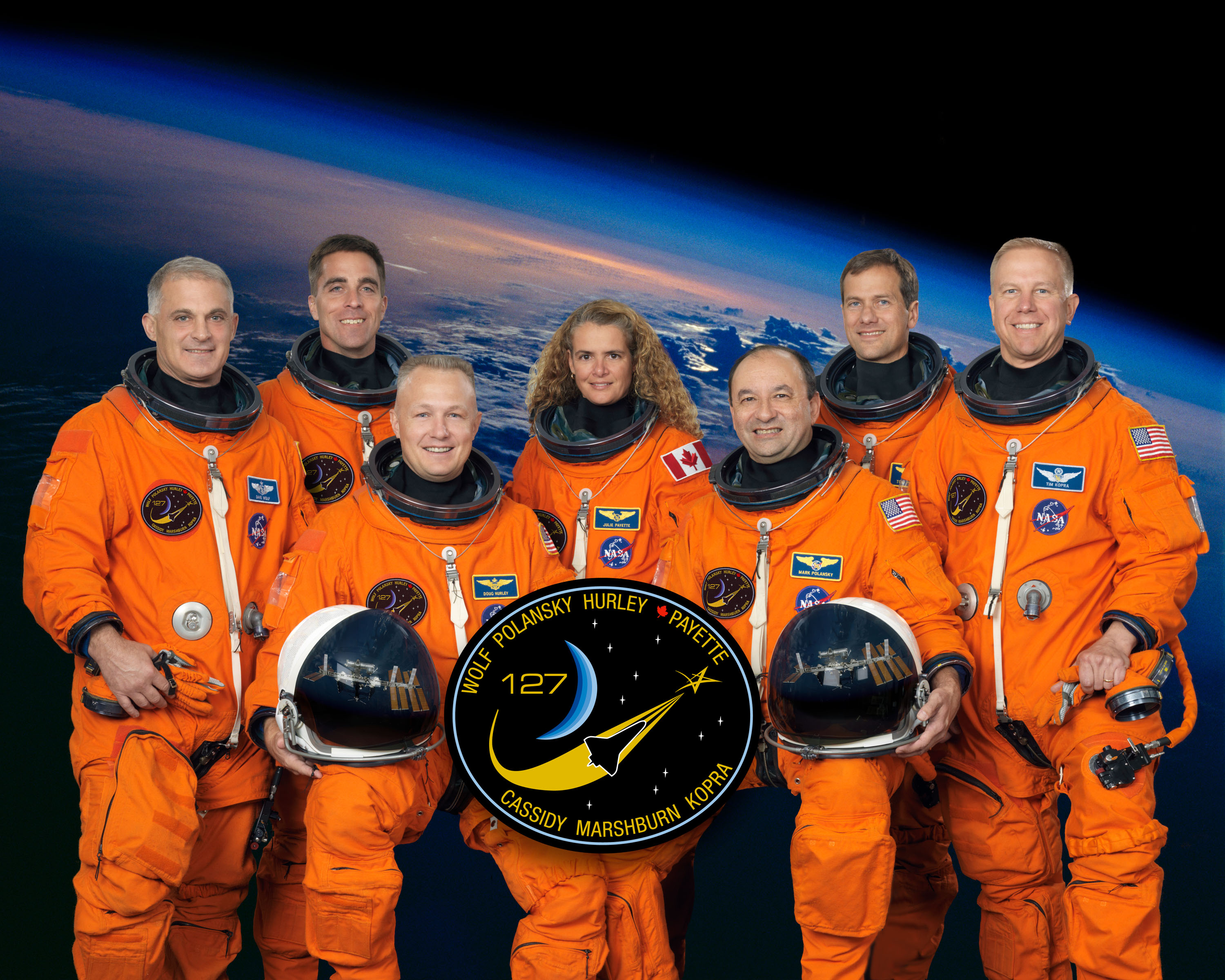
The STS-127 crew patch Official photograph of the STS-127 crew of David A. Wolf, left, Christopher J. Cassidy, Douglas G. Hurley, Julie Payette of Canada, Mark L. Polansky, Thomas H. Marshburn, and Timothy L. Kopra The patch for the 2J/A mission
Left: The STS-127 crew patch. Middle: Official photograph of the STS-127 crew of David A. Wolf, left, Christopher J. Cassidy, Douglas G. Hurley, Julie Payette of Canada, Mark L. Polansky, Thomas H. Marshburn, and Timothy L. Kopra. Right: The patch for the 2J/A mission.

The seven-person STS-127 crew consisted of Commander Mark L. Polansky, Pilot Douglas G. Hurley, and Mission Specialists David A. Wolf, Christopher J. Cassidy, Julie Payette of the Canadian Space Agency (CSA), Thomas H. Marshburn, and Timothy L. Kopra. Primary objectives of the mission included the addition of the Exposed Facility (EF) to the Kibo Japanese Experiment Module (JEM) and the long-duration crew member exchange of Kopra for Koichi Wakata of the Japan Aerospace Exploration Agency (JAXA), who had been aboard the space station since March 2009 as a member of Expeditions 18, 19, and 20.
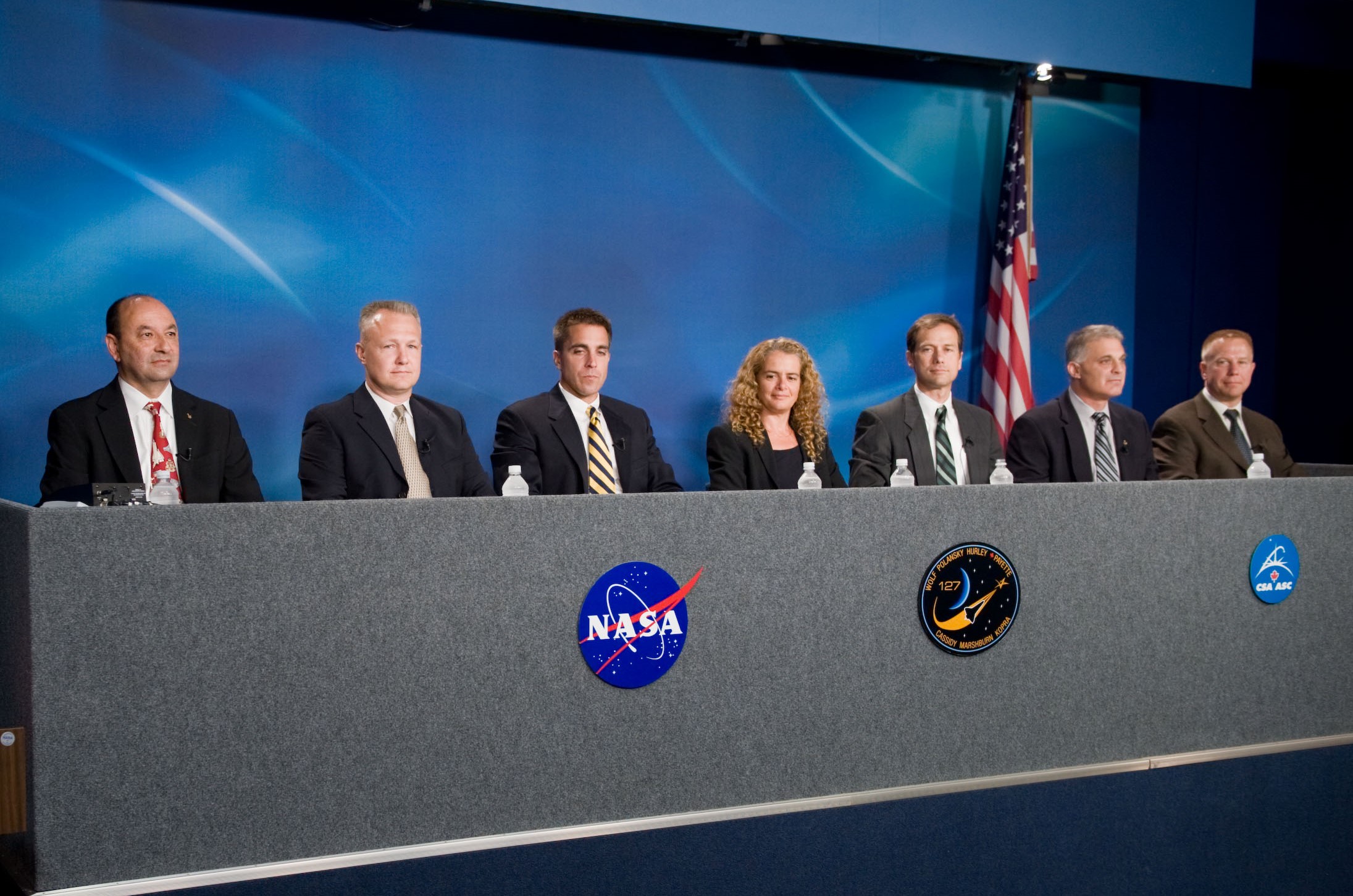
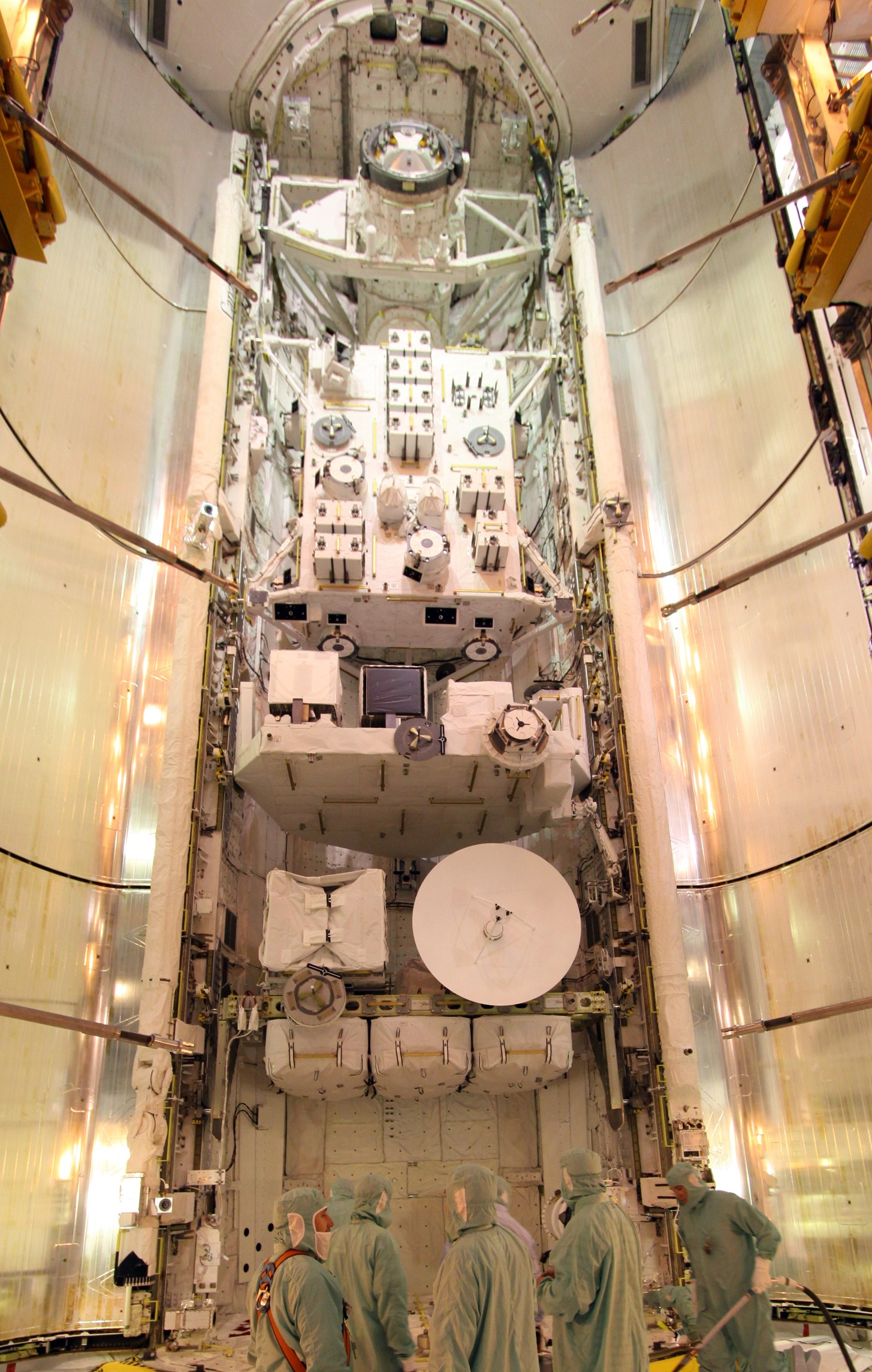
The STS-127 crew during their preflight press conference at NASA’s Johnson Space Center in Houston The STS-127 payloads in Endeavour’s cargo bay at Launch Pad 39A at NASA’s Kennedy Space Center in Florida Space shuttle Endeavour on Launch Pad 39A a few days before launch
Left: The STS-127 crew during their preflight press conference at NASA’s Johnson Space Center in Houston. Middle: The STS-127 payloads in Endeavour’s cargo bay at Launch Pad 39A at NASA’s Kennedy Space Center in Florida. Right: Space shuttle Endeavour on Launch Pad 39A a few days before launch.

Endeavour returned from its previous mission, STS-126, on Nov. 28, 2008. It arrived in the Orbiter Processing Facility at NASA’s Kennedy Space Center (KSC) on Dec. 13, moved to the Vehicle Assembly Building on April 10, 2009, and rolled out to Launch Pad 39B seven days later to serve as the Launch on Need vehicle for STS-125 in May 2009. When that mission flew without issues, on May 31, workers rolled Endeavour around to Pad 39A to begin preparations for STS-127, planned for launch on June 13. A gaseous hydrogen leak scrubbed this first launch attempt. A similar leak halted the second attempt on June 17 and managers reset the launch date to July 11. Managers scrubbed that launch when 11 lightning strikes struck the launch pad area, requiring a review of Endeavour’s and ground systems. With the seven-member crew aboard Endeavour, weather once again halted the launch attempt on July 12. They tried again the next day, but weather conditions led to a fifth scrubbed launch attempt. The charm came on the sixth try.
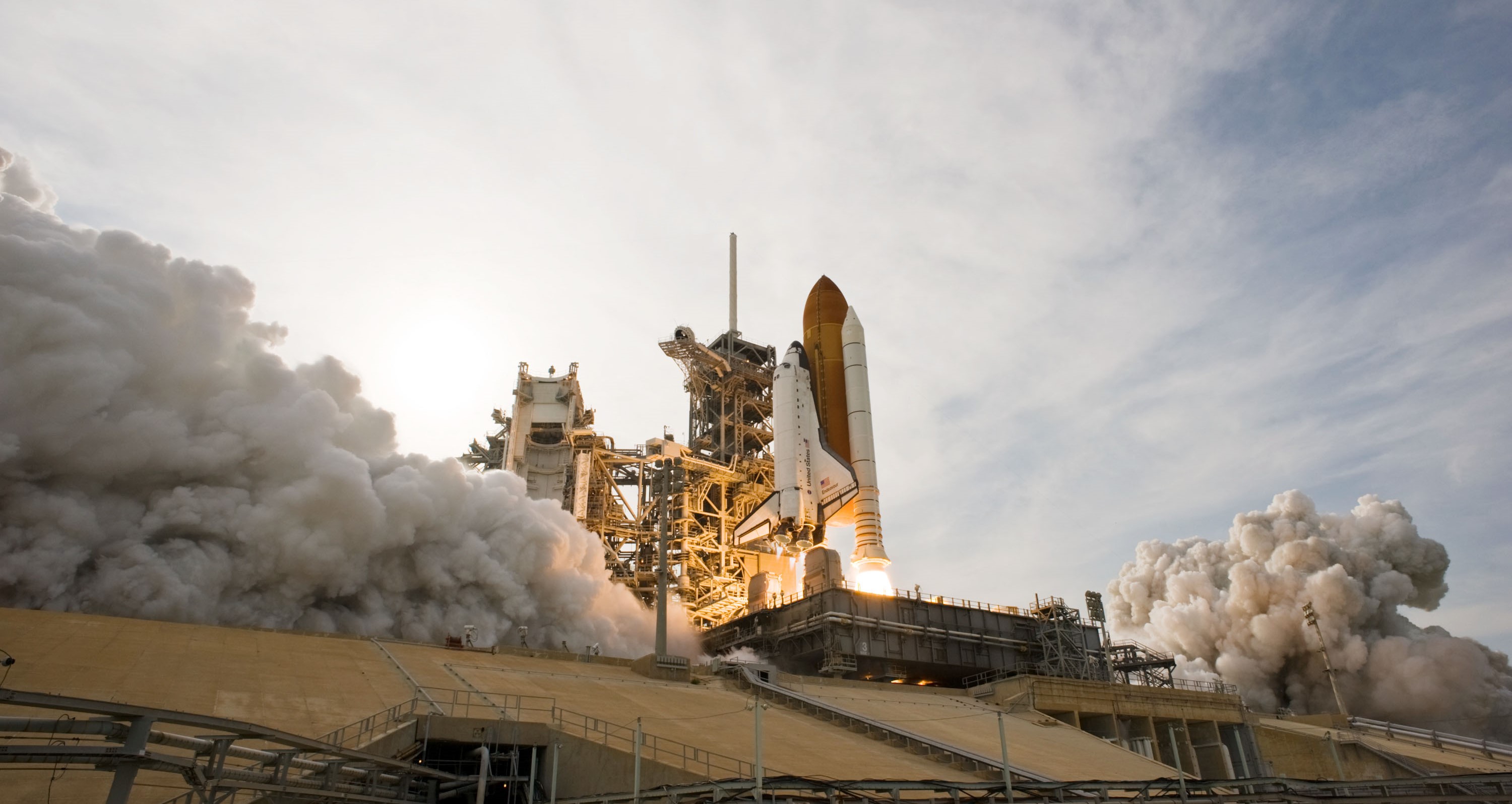
Liftoff of space shuttle Endeavour on STS-127 carrying the Exposed Facility for the Japanese Kibo module
Liftoff of space shuttle Endeavour on STS-127 carrying the Exposed Facility for the Japanese Kibo module.

On July 15, 2009, at 6:03 p.m. EDT, space shuttle Endeavour lifted off from KSC’s Launch Pad 39A to begin its 23rd trip into space, beginning the 2JA mission to the space station. Eight and a half minutes later, Endeavour and its crew had reached orbit. This marked Wolf’s fourth time in space, Polansky’s third, Payette’s second, while Hurley, Cassidy, Marshburn, and Kopra enjoyed their first taste of true weightlessness.
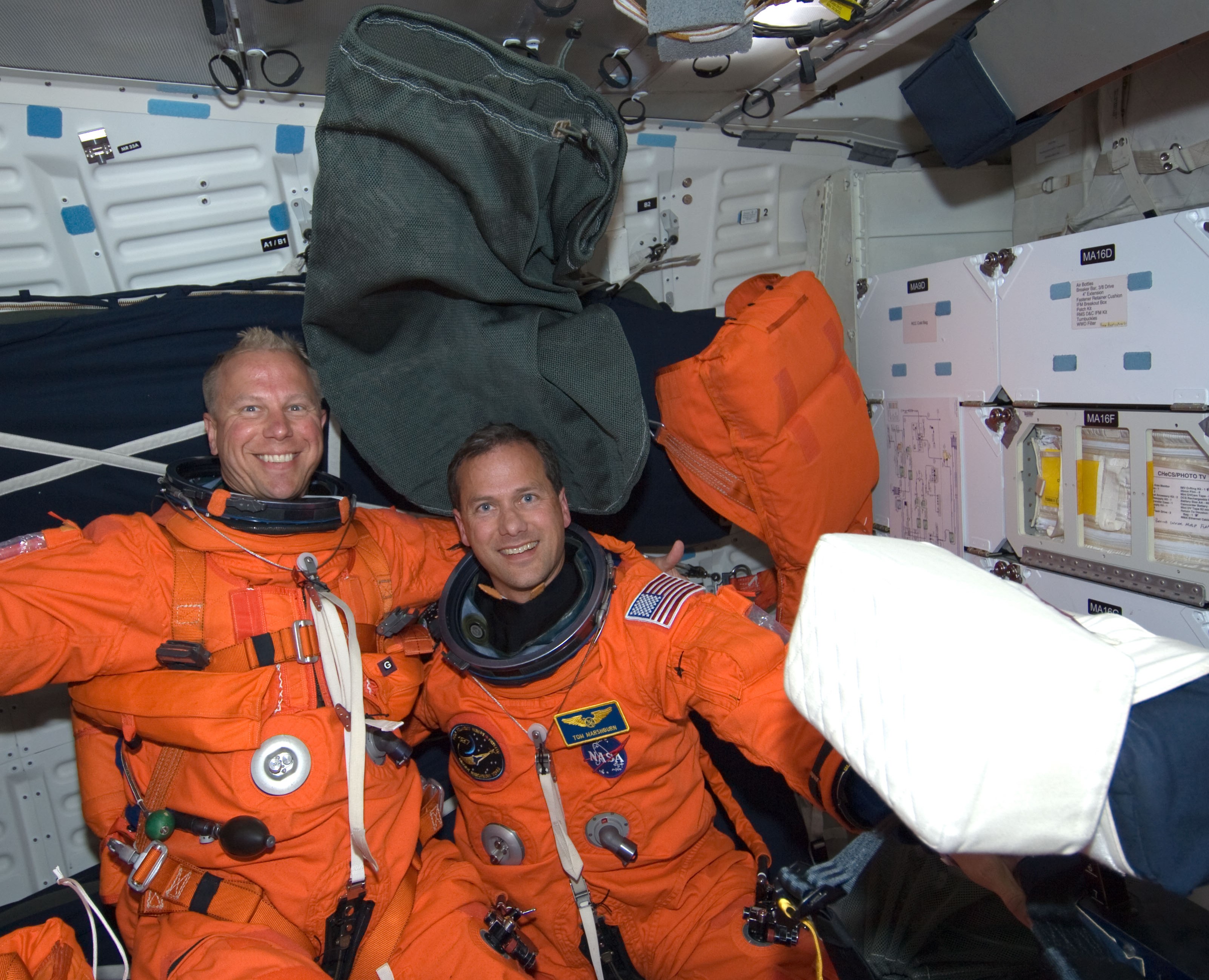
NASA astronauts Timothy L. Kopra, left, and Thomas H. Marshburn enjoy the first few minutes of weightlessness after Endeavour reached orbit On the mission’s second day, the Shuttle Remote Manipulator System (SRMS) uses the Orbiter Boom Sensor System to image Endeavour’s Thermal Protection System (TPS) Canadian Space Agency astronaut Julie Payette operates the SRMS during the TPS inspection
Left: NASA astronauts Timothy L. Kopra, left, and Thomas H. Marshburn enjoy the first few minutes of weightlessness after Endeavour reached orbit. Middle: On the mission’s second day, the Shuttle Remote Manipulator System (SRMS) uses the Orbiter Boom Sensor System to image Endeavour’s Thermal Protection System (TPS). Right: Canadian Space Agency astronaut Julie Payette operates the SRMS during the TPS inspection.

After reaching orbit, the crew opened the payload bay doors and deployed the shuttle’s radiators, and removed their bulky launch and entry suits, stowing them for the remainder of the flight. The astronauts spent five hours on their second day in space conducting a detailed inspection of Endeavour’s nose cap and wing leading edges, with Payette operating the Shuttle Remote Manipulator System (SRMS), or robotic arm, and the Orbiter Boom Sensor System (OBSS).
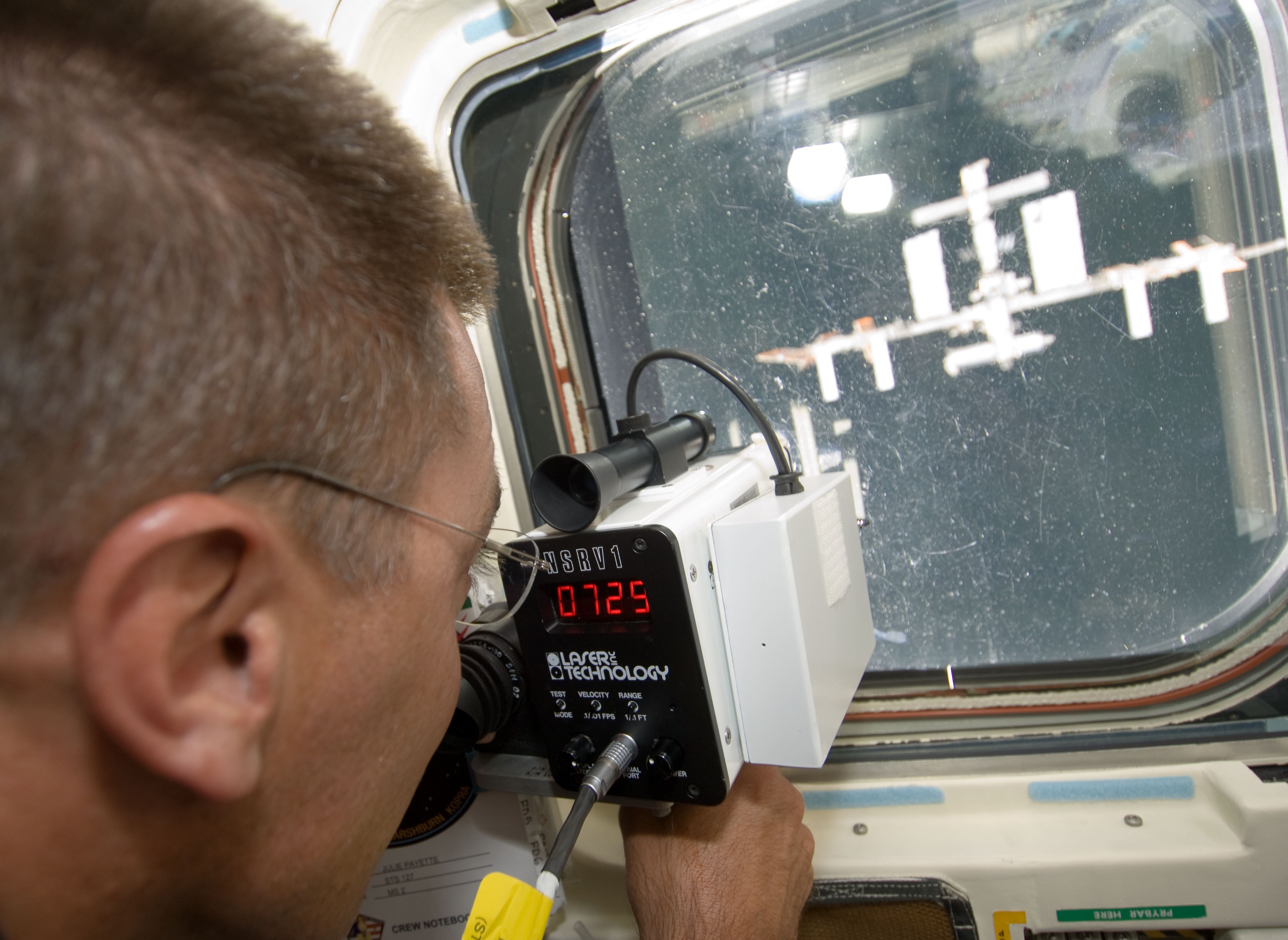
NASA astronaut Christopher J. Cassidy uses a laser range finder during Endeavour’s rendezvous with the space station Endeavour as seen from the space station during the rendezvous Close up of the Kibo Japanese Experiment Module – the astronauts attached the Exposed Facility at the left end of the module
Left: NASA astronaut Christopher J. Cassidy uses a laser range finder during Endeavour’s rendezvous with the space station. Middle: Endeavour as seen from the space station during the rendezvous. Right: Close up of the Kibo Japanese Experiment Module – the astronauts attached the Exposed Facility at the left end of the module.

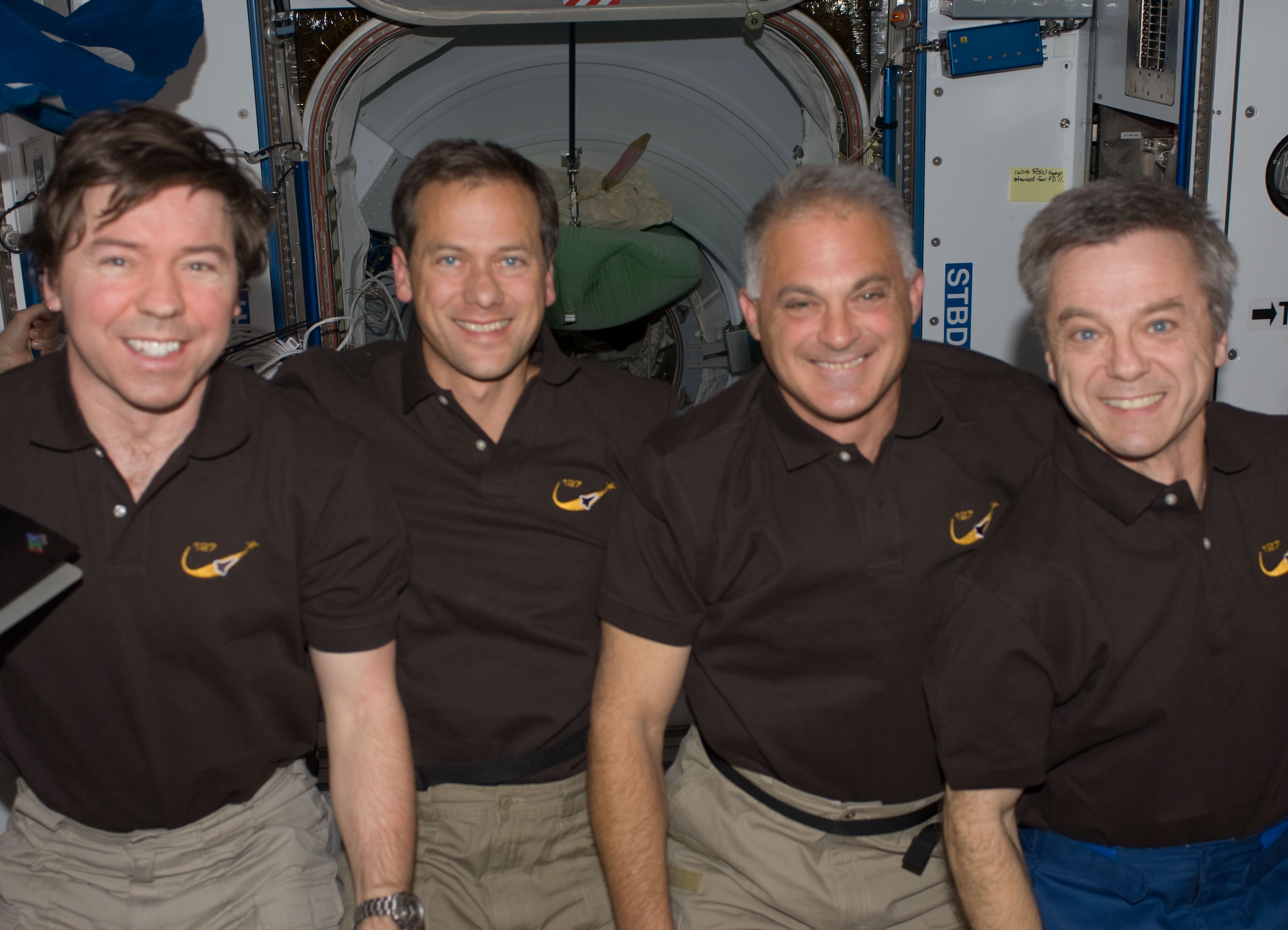
On July 17, the 34th anniversary of the Apollo-Soyuz Test Project docking, Polansky assisted by his crewmates brought Endeavour in for a docking with the space station. During the rendezvous, Polansky stopped the approach at 600 feet and completed the Rendezvous Pitch Maneuver so astronauts aboard the station could photograph Endeavour’s underside to look for any damage to the tiles. Shortly after docking, the crews opened the hatches between the two spacecraft and the six-person station crew welcomed the seven-member shuttle crew. Expedition 20 Commander Gennady I. Padalka of Roscosmos stated, “This is a remarkable event for the whole space program.” Polansky responded, “Thirteen is a big number, but we are thrilled to be here.” After exchanging Soyuz seat liners, Kopra joined the Expedition 20 crew and Wakata the STS-127 crew.

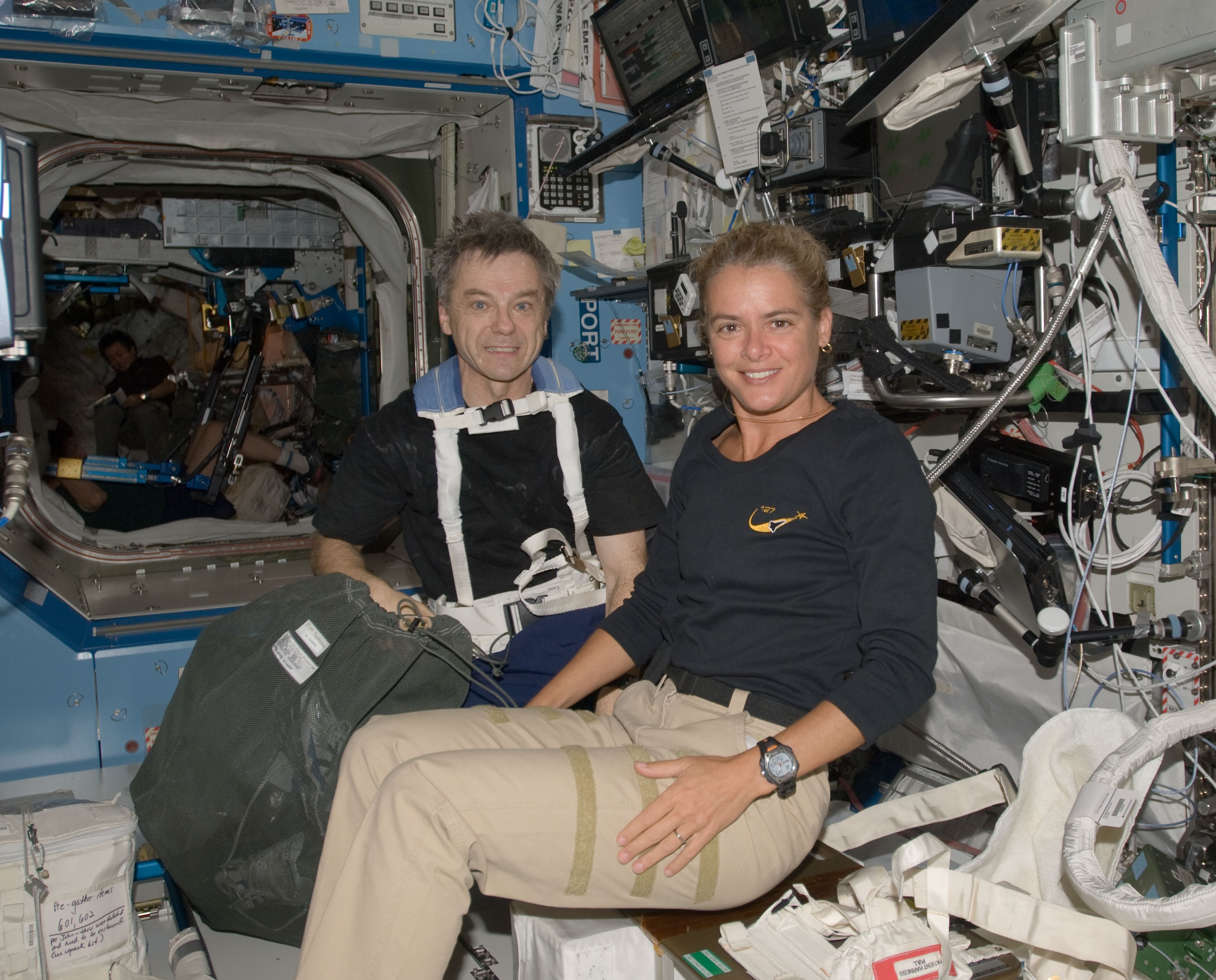
Expedition 20, the space station’s first six-person crew and the first, and so far only, time that each of the five space station partners had crew members on board at the same time The first time two Canadians were in space at the same time A medical convention in space – the first time four medical doctors flew in space at the same time
Left: Expedition 20, the space station’s first six-person crew and the first, and so far only, time that each of the five space station partners had crew members on board at the same time. Middle: The first time two Canadians were in space at the same time. Right: A medical convention in space – the first time four medical doctors flew in space at the same time.

STS-127 marked not only the first time that a space shuttle arrived at the station with a six-person crew living aboard, but as it happened, each of the five space station partners had a crew member aboard, a feat not repeated since. The flight also marked the first time that two CSA astronauts worked aboard the space station at the same time. And for the true trivia buffs, the mission marked the first time that four medical doctors worked in space together – an out of this world medical convention!
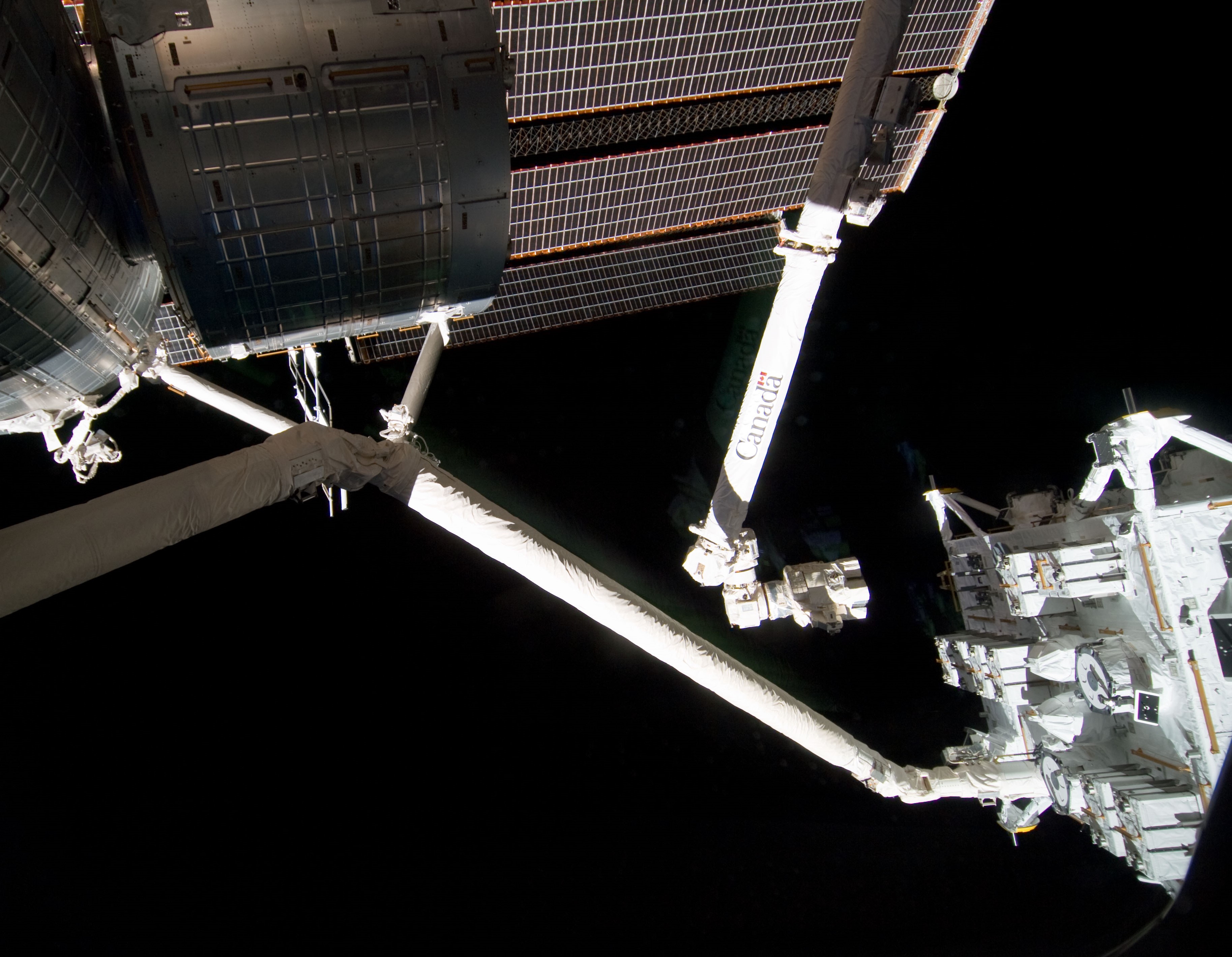
Transfer of the Exposed Facility from the shuttle to the station Timothy L. Kopra, left, and David A. Wolf work on the station’s truss during the mission’s first spacewalk Douglas G. Hurley, left, and Koichi Wakata of the Japan Aerospace Exploration Agency operate the station’s robotic arm during the first spacewalk
Left: Transfer of the Exposed Facility from the shuttle to the station. Middle: Timothy L. Kopra, left, and David A. Wolf work on the station’s truss during the mission’s first spacewalk. Right: Douglas G. Hurley, left, and Koichi Wakata of the Japan Aerospace Exploration Agency operate the station’s robotic arm during the first spacewalk.

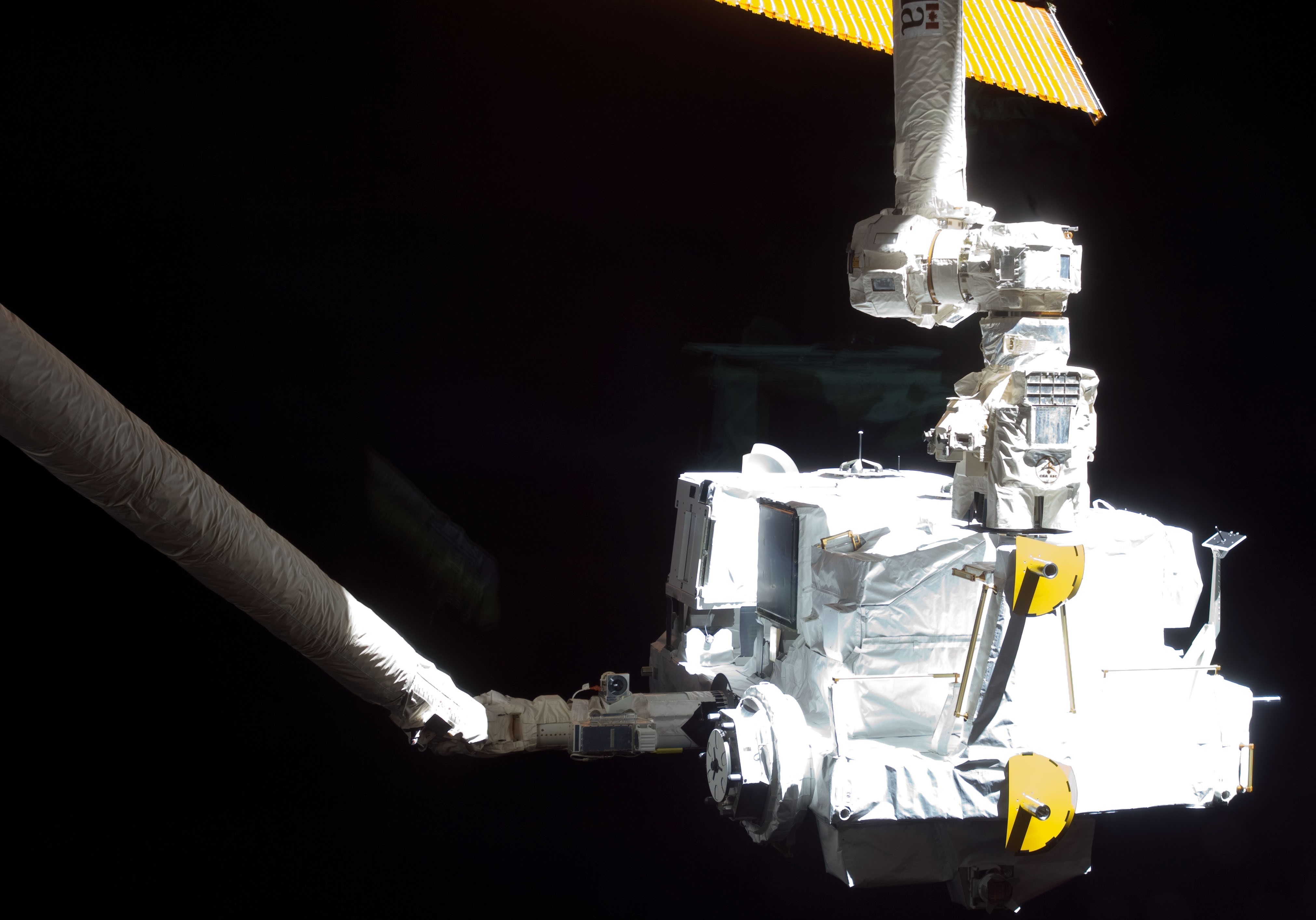
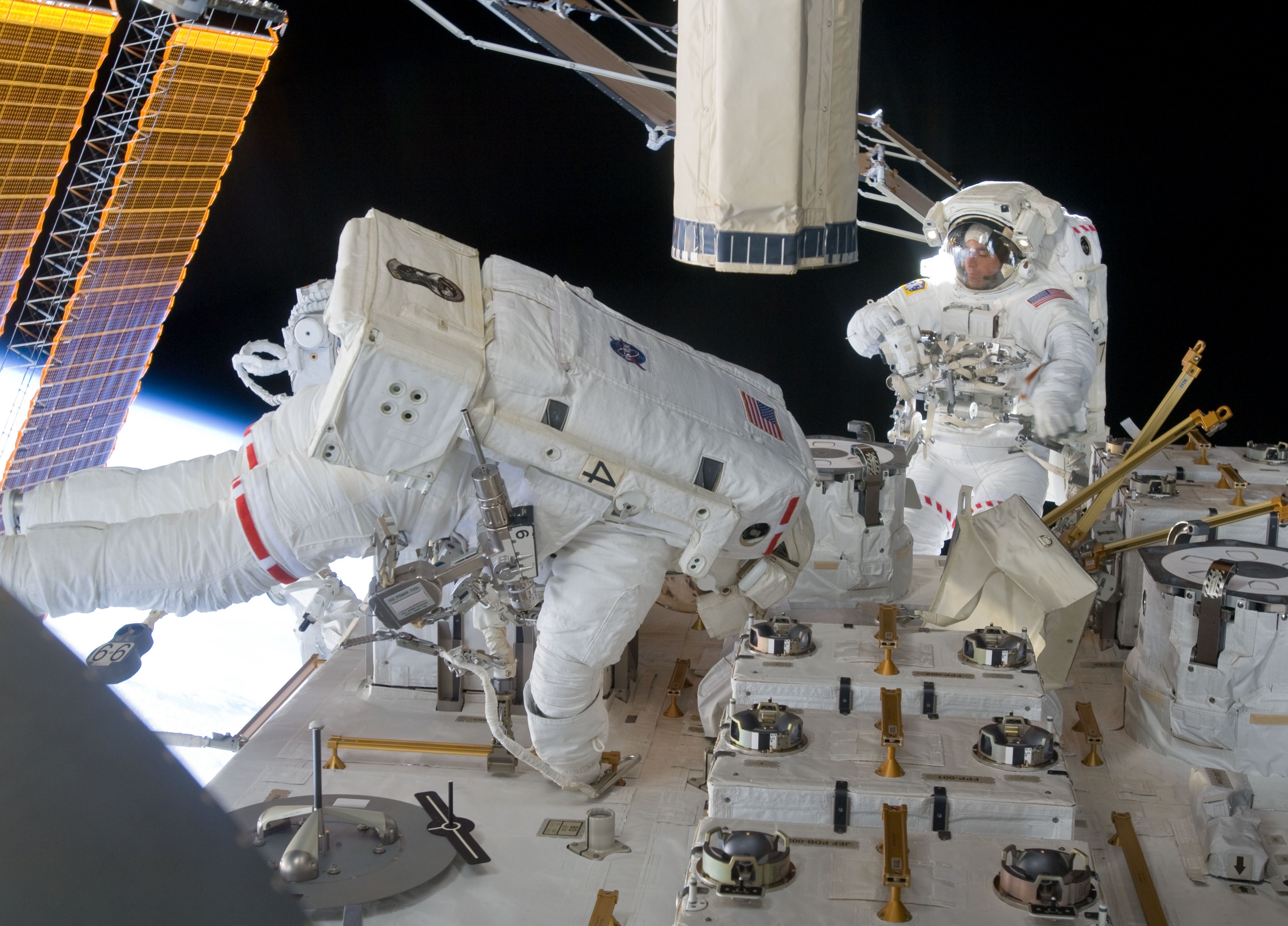
On July 18, the mission’s fourth day, Hurley and Wakata grappled the JEM-EF using the Space Station Remote Manipulator System (SSRMS) or robotic arm, handed it off temporarily to the SRMS operated by Polansky and Payette, moved the station arm into position to grapple it again, and installed it on the end of the Kibo module. Meanwhile, Wolf, with red stripes on his spacesuit, and Kopra, wearing a suit with no stripes, began the mission’s first spacewalk. During the excursion that lasted 5 hours 32 minutes, Wolf and Kopra prepared the JEM for the EF installation and performed other tasks in the shuttle’s payload bay and on the station.
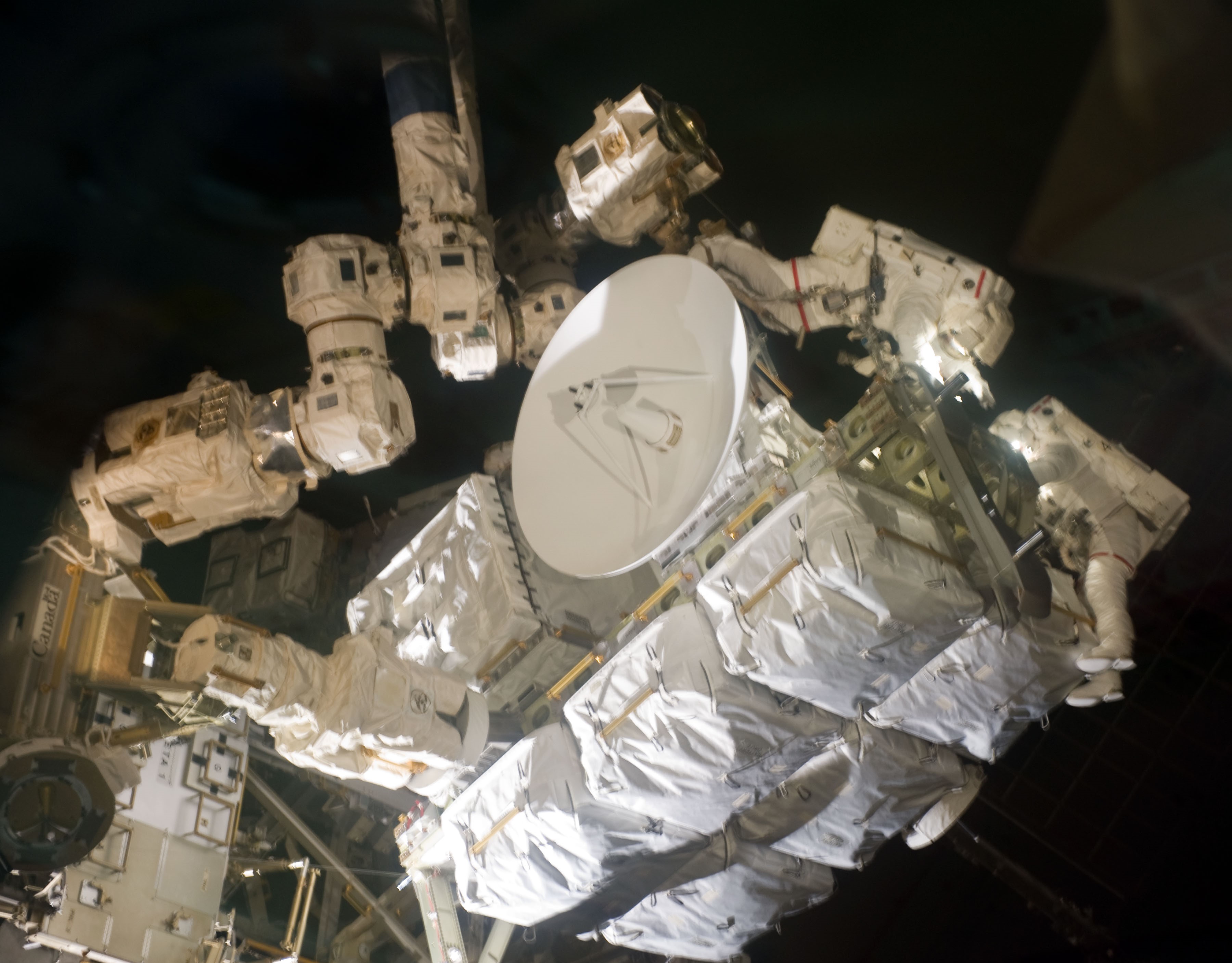
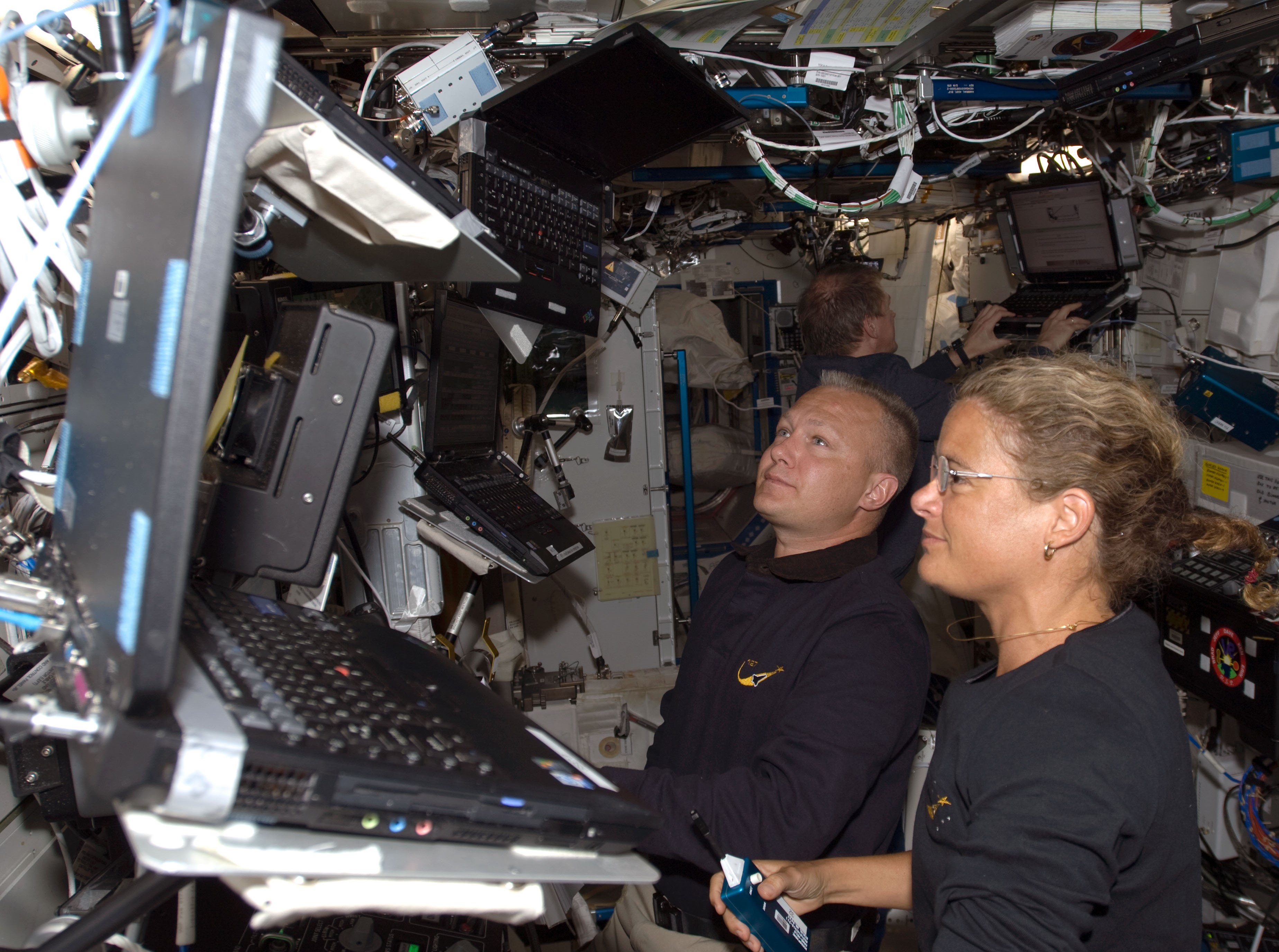
During the second spacewalk, David A. Wolf, left, and Thomas H. Marshburn transfer spare parts to the space station NASA astronaut Douglas G. Hurley, left, and Canadian Space Agency astronaut Julie Payette operate the station’s robotic arm during the second spacewalk
Left: During the second spacewalk, David A. Wolf, left, and Thomas H. Marshburn transfer spare parts to the space station. Right: NASA astronaut Douglas G. Hurley, left, and Canadian Space Agency astronaut Julie Payette operate the station’s robotic arm during the second spacewalk.

The mission’s fifth day involved internal transfers of equipment from the shuttle to the station and the robotic transfer of the Integrated Cargo Carrier (ICC) from the payload bay to the station truss. The ICC carried spare parts that the next day Wolf and Marshburn, wearing dashed red stripes on his spacesuit, transferred to a stowage platform on the station’s exterior during the mission’s second spacewalk, lasting 6 hours and 53 minutes.
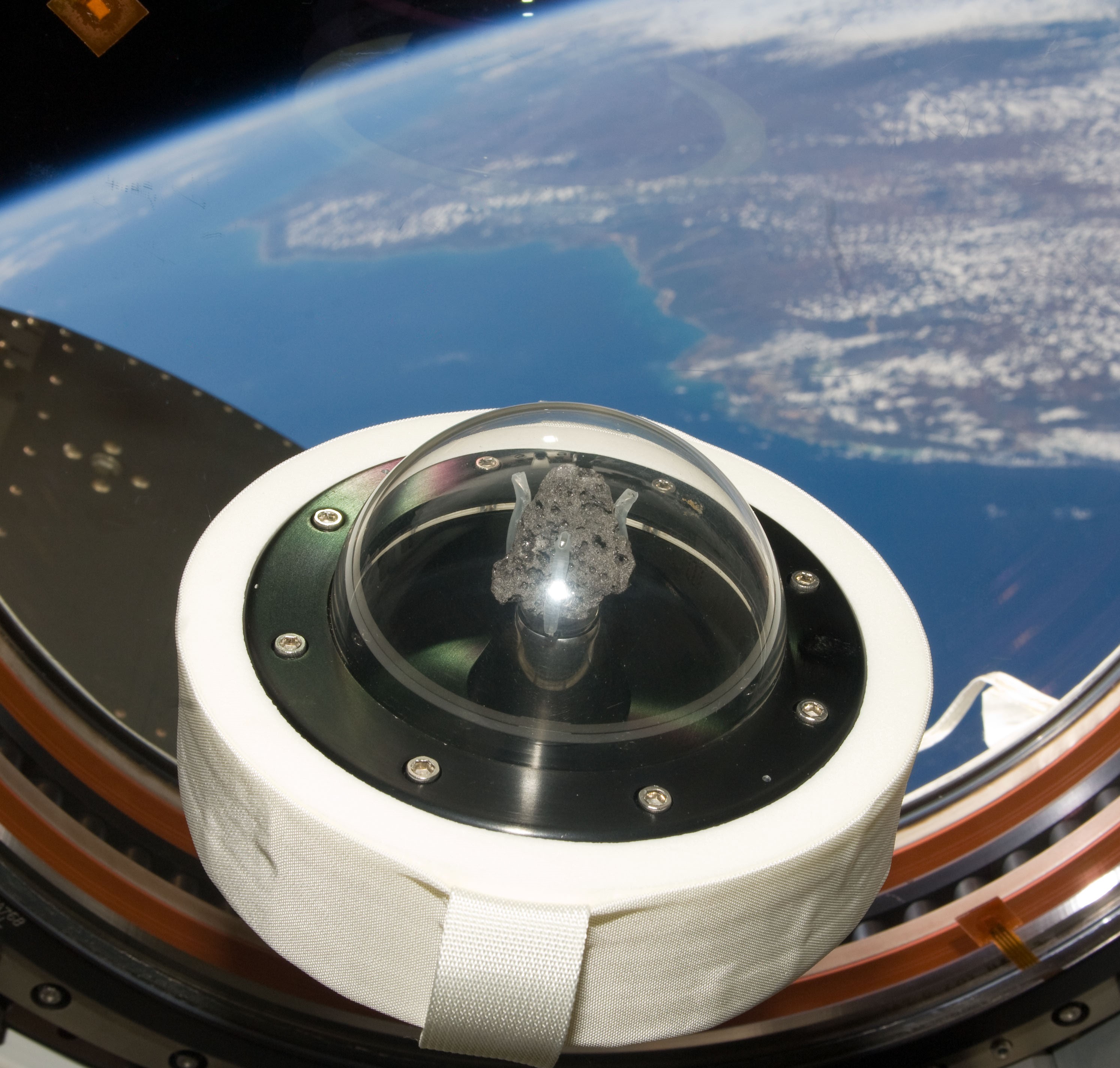
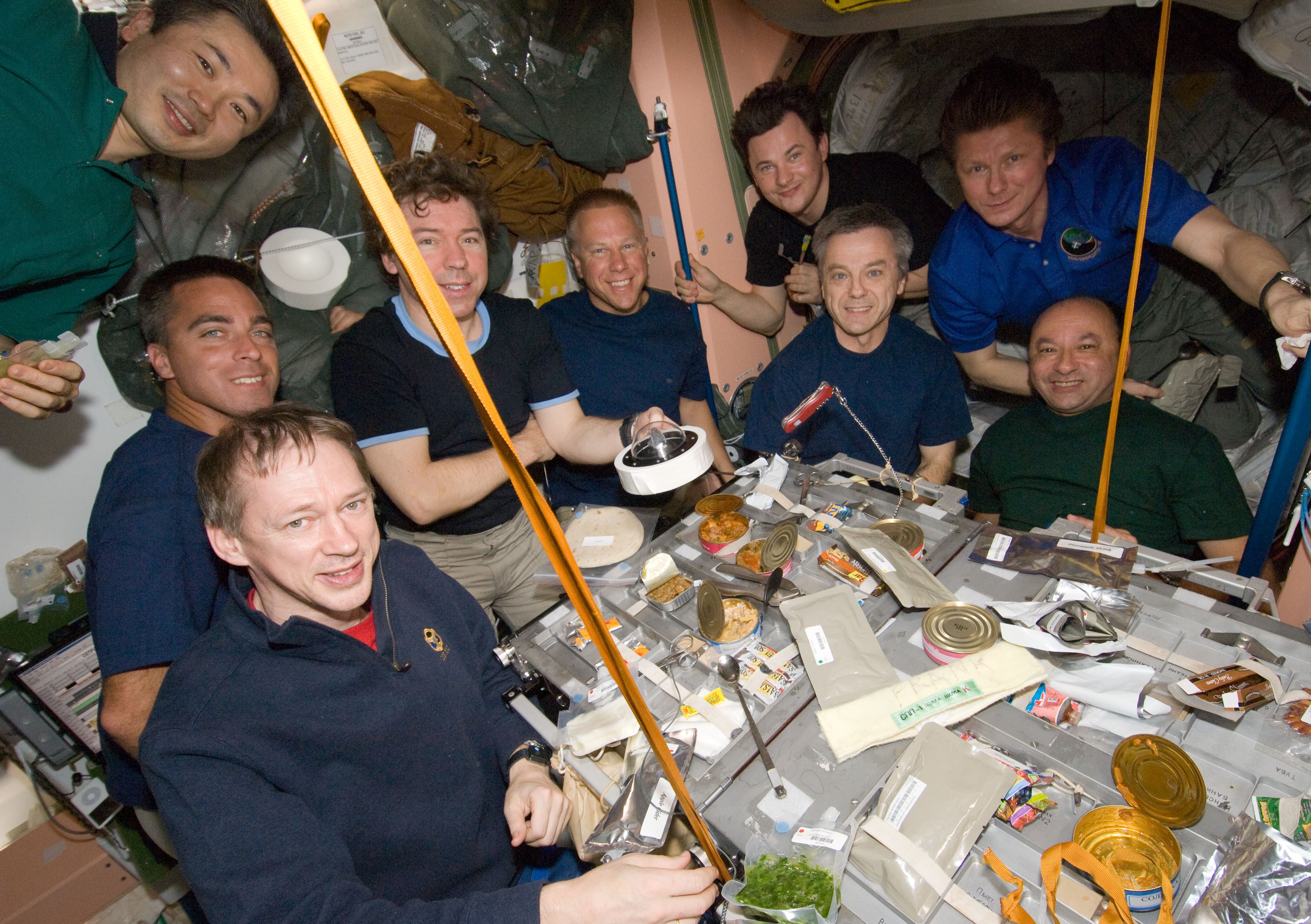
An Apollo 11 Moon rock brought to the station to commemorate the 40th anniversary of the first Moon landing Nine of the 13 Expedition 20 and STS-127 crew members share a meal, as NASA astronaut Michael R. Barratt holds the Apollo 11 Moon rock Transfer of the Kibo Experiment Logistics Module from the shuttle to the station
Left: An Apollo 11 Moon rock brought to the station to commemorate the 40th anniversary of the first Moon landing. Middle: Nine of the 13 Expedition 20 and STS-127 crew members share a meal, as NASA astronaut Michael R. Barratt holds the Apollo 11 Moon rock. Right: Transfer of the Kibo Experiment Logistics Module from the shuttle to the station.

The second spacewalk took place on July 20, the 40th anniversary of Apollo 11 landing on the Moon. To commemorate the event, NASA selected a Moon rock returned on that mission and flew it to the space station on STS-119 in March 2009. Expedition 20 astronaut Michael Barratt recorded a video message about the Moon rock, played at a 40th anniversary celebration hosted by the National Air and Space Museum in Washington, D.C., and attended by the Apollo 11 astronauts. The following day, the joint crews continued their work by robotically transferring the JEM Experiment Logistics Module (JEM ELM) and temporarily installing it on the Exposed Facility. Later in the mission, astronauts robotically transferred the three payloads from the ELM to EF.
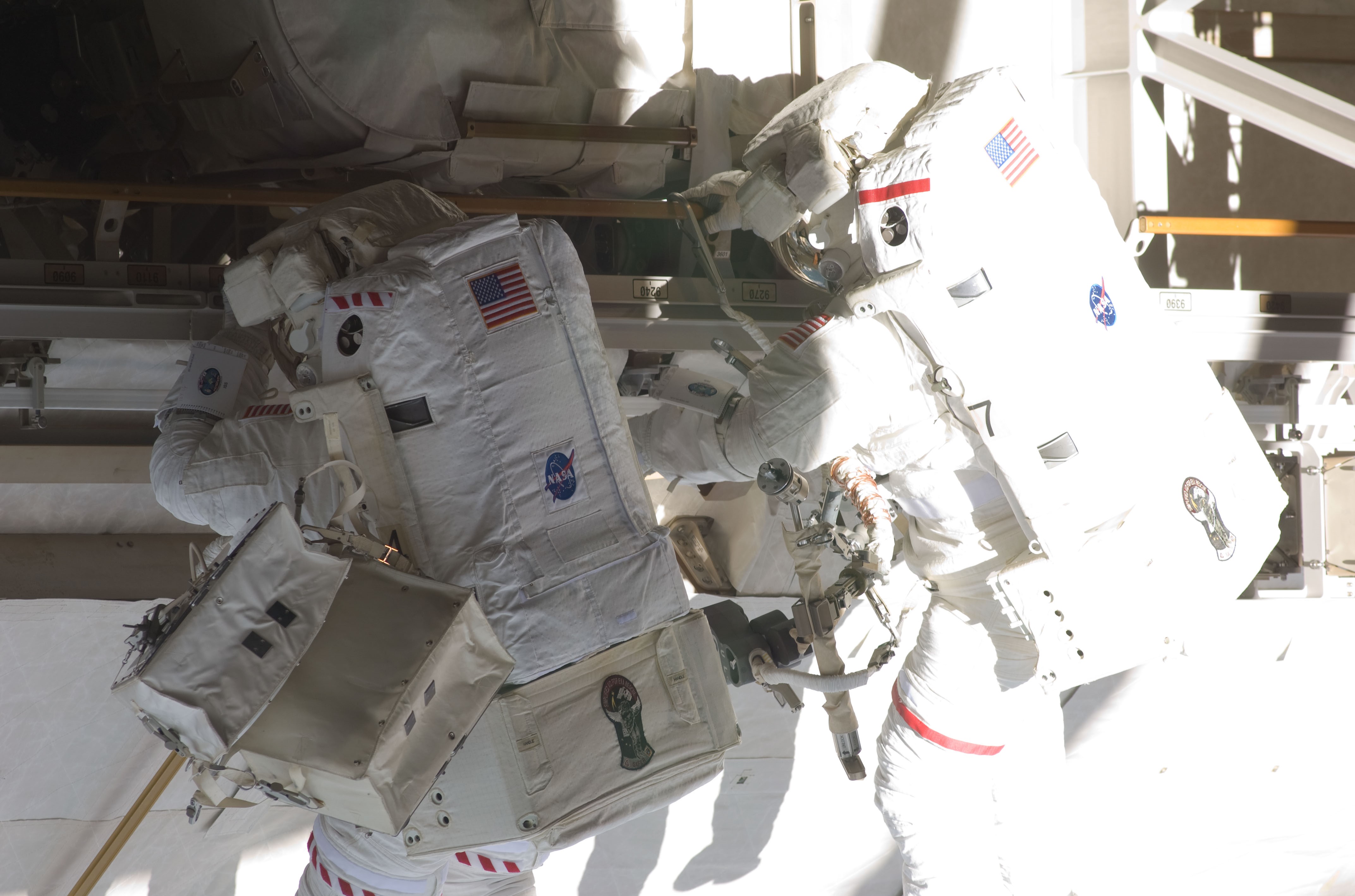
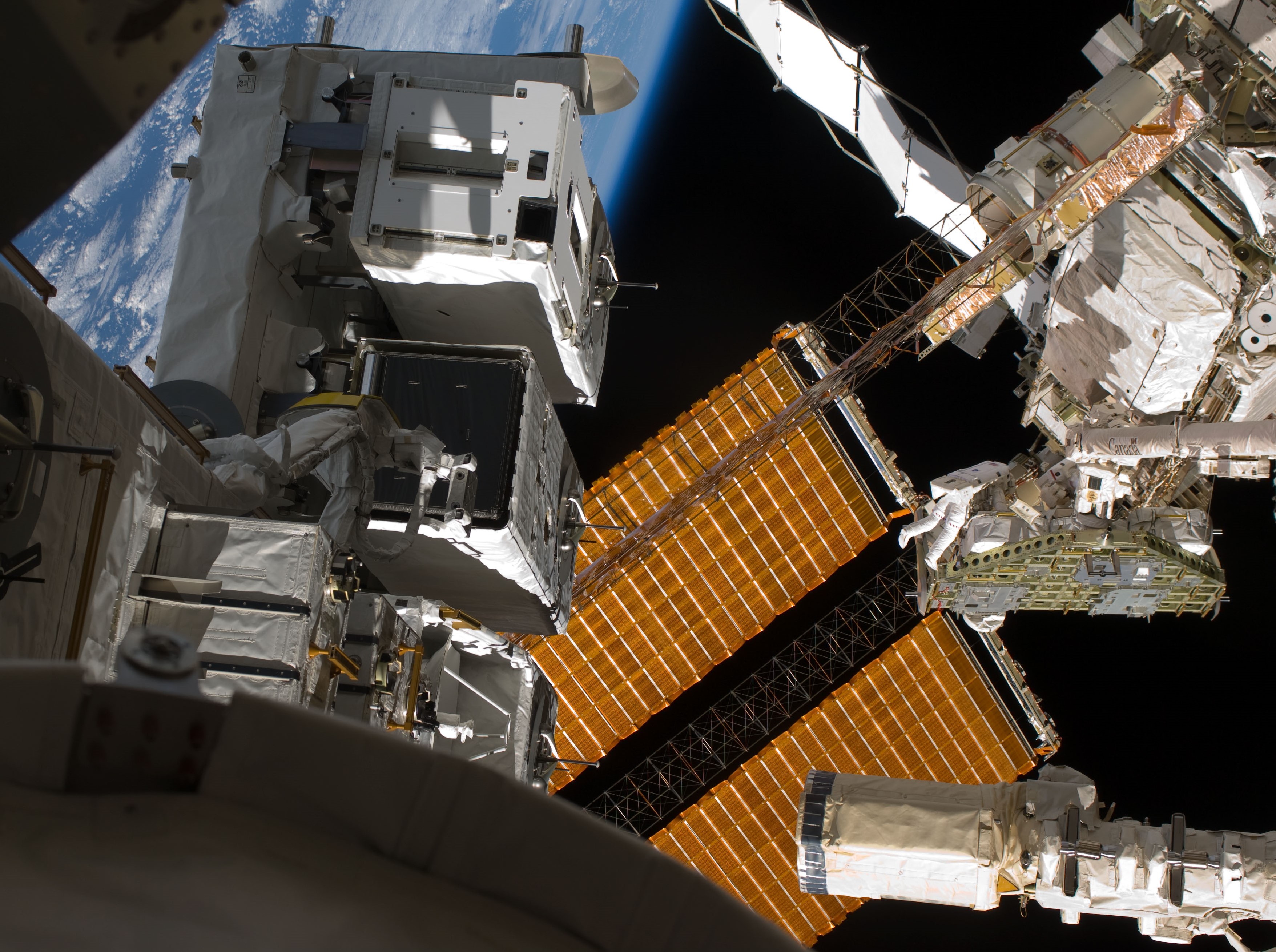
Christopher J. Cassidy, left, and David A. Wolf during the mission’s third spacewalk Cassidy, left, and Wolf during a battery changeout
Left: Christopher J. Cassidy, left, and David A. Wolf during the mission’s third spacewalk. Right: Cassidy, left, and Wolf during a battery changeout.

Flight Day 8 saw the mission’s third spacewalk, with Wolf making his final excursion, this time accompanied by Cassidy, wearing diagonal red stripes on his suit. Prior to the start of the spacewalk, Hurley and Payette used the station’s arm to relocate the ICC to a different workstation for Wolf and Cassidy to transfer the batteries to the station. As their first task, Wolf and Cassidy prepared the JEM EF for the transfer of the three payload the following day. They managed to transfer two of the four batteries before mission managers decided to shorten the spacewalk due to a slight buildup of carbon dioxide in Cassidy’s suit. The excursion lasted 5 hours and 59 minutes.
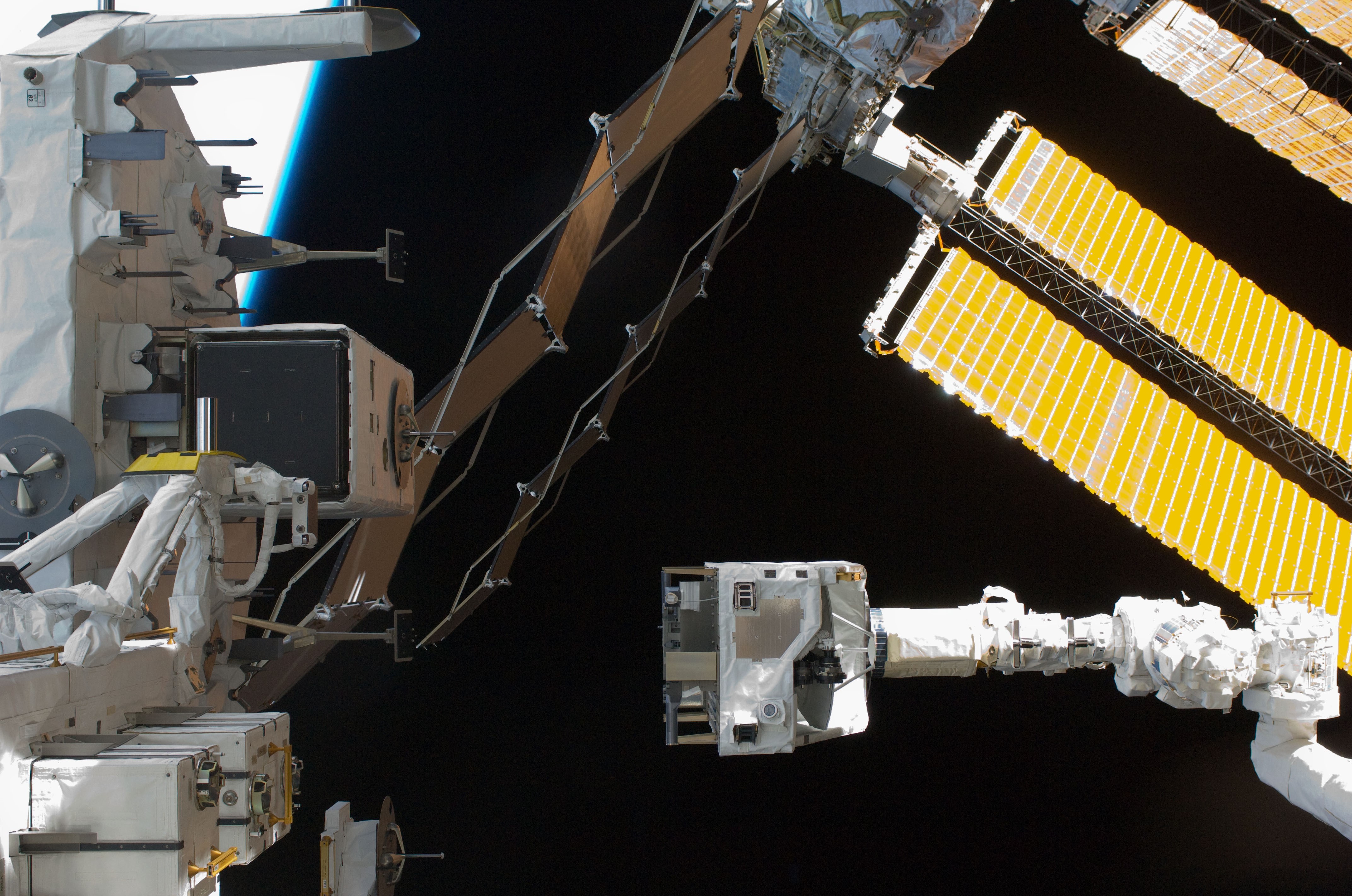
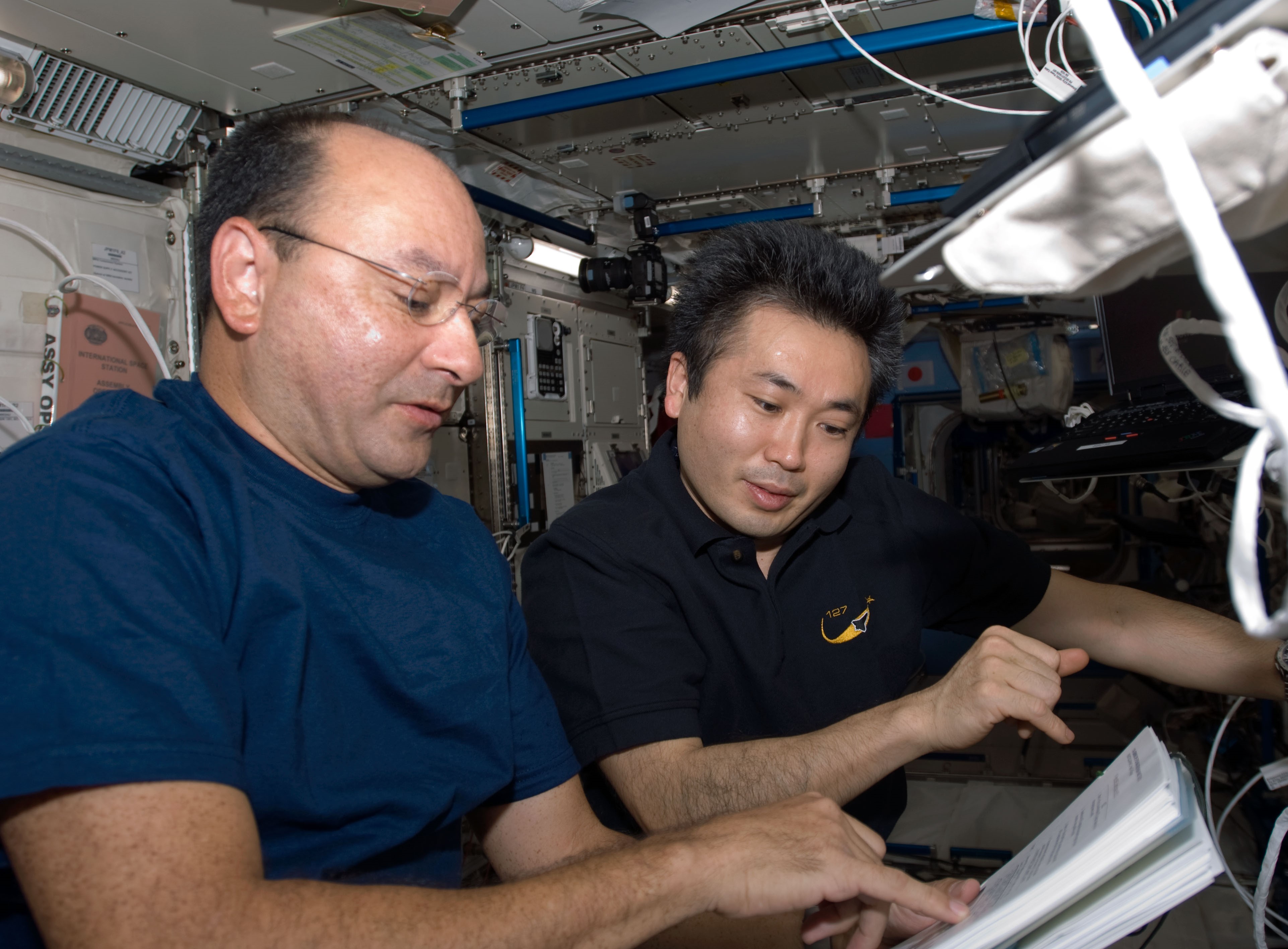
Installation of one of the payloads onto the Kibo Exposed Facility (EF) Mark J. Polansky, left, and Koichi Wakata of the Japan Aerospace Exploration Agency, one of the three teams that transferred the EF payloads using Kibo’s robotic arm
Left: Installation of one of the payloads onto the Kibo Exposed Facility (EF). Right: Mark J. Polansky, left, and Koichi Wakata of the Japan Aerospace Exploration Agency, one of the three teams that transferred the EF payloads using Kibo’s robotic arm.

On Flight Day 9, Wakata, assisted by Kopra, inaugurated the operational use of the JEM’s robotic arm by transferring the first payload from the ELM to the EF. Three separate two-person teams transferred each of the three payloads.
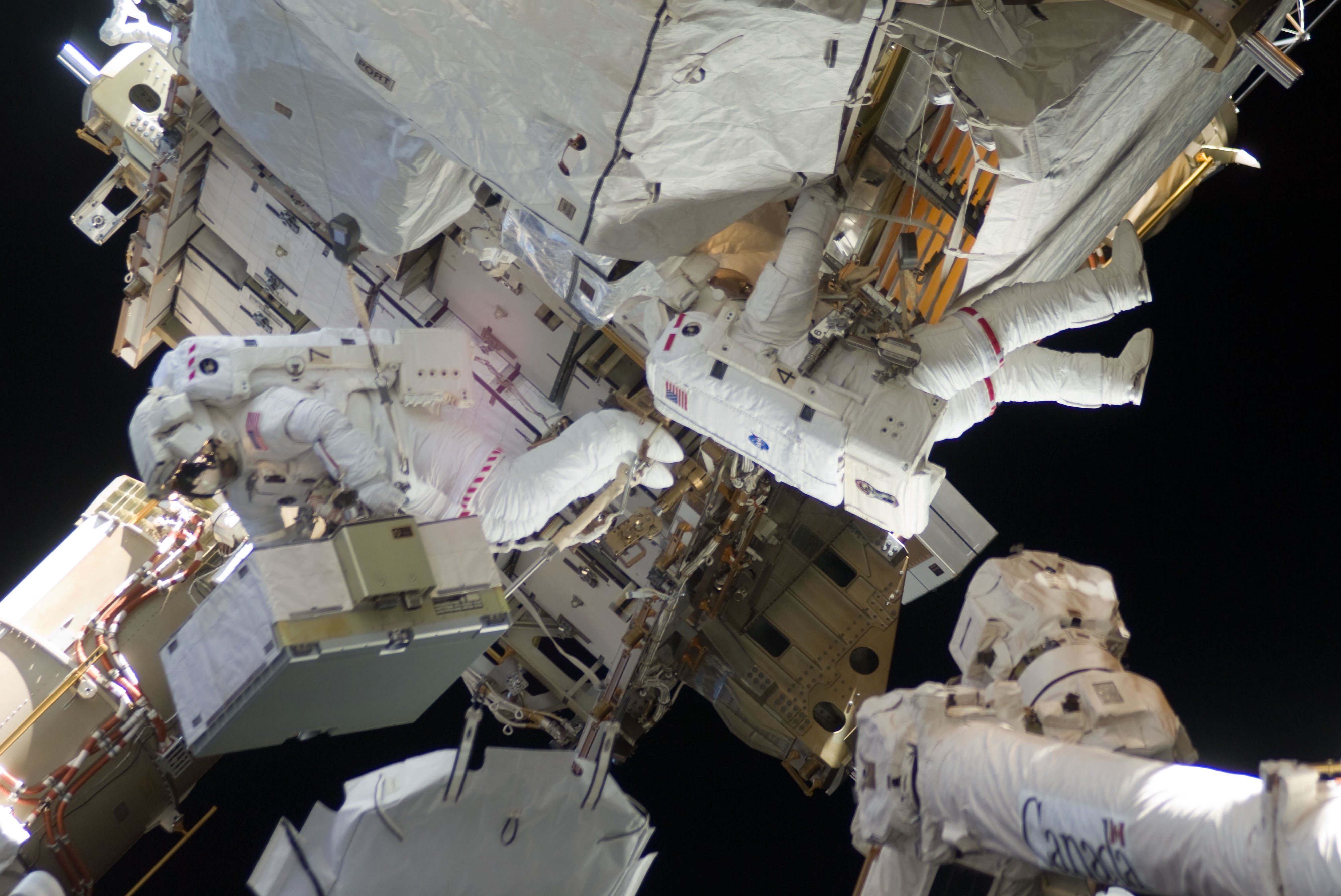
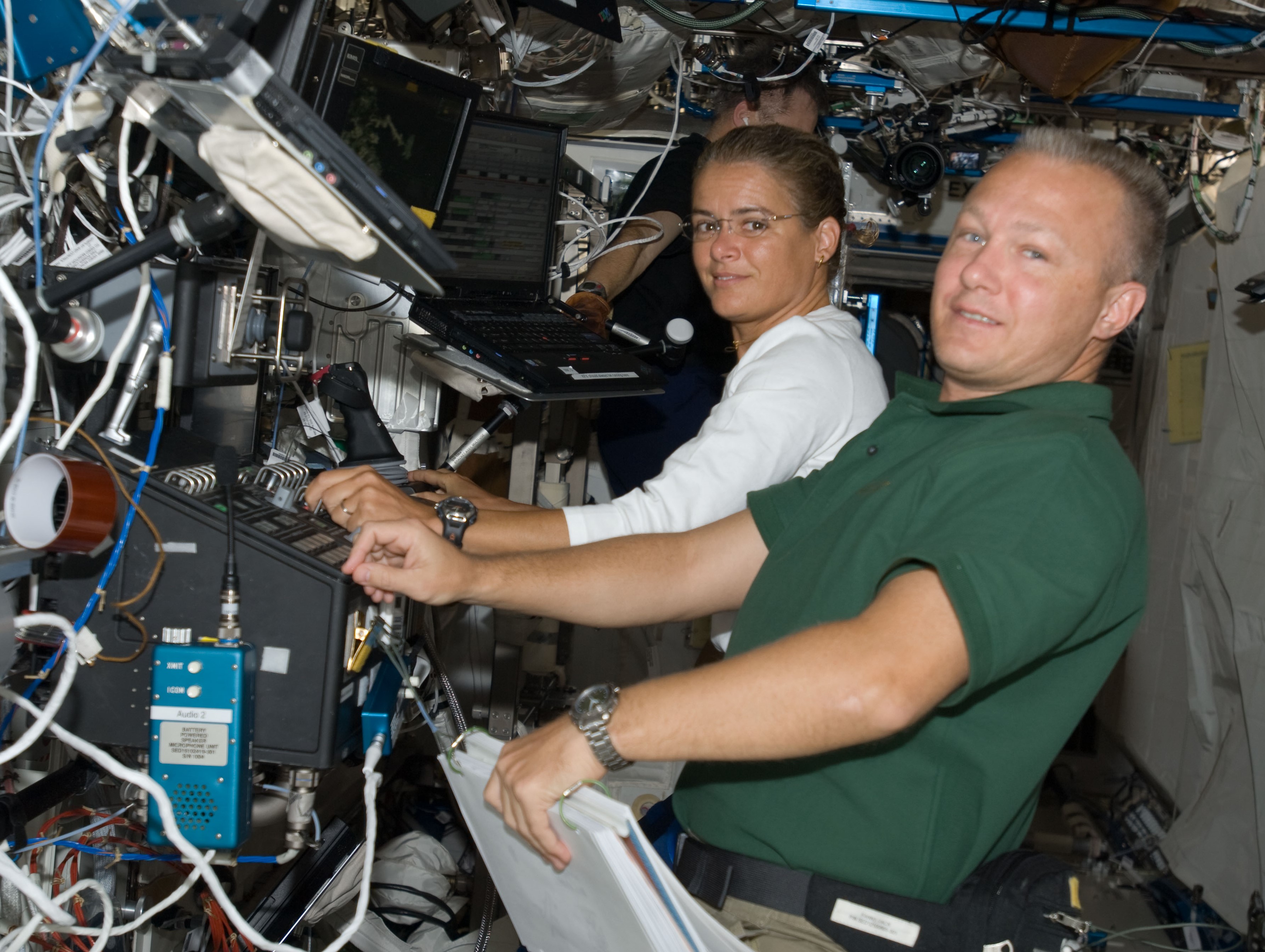
Christopher J. Cassidy, left, and Thomas H. Marshburn exchange space station batteries during the mission’s fourth spacewalk Canadian Space Agency astronaut Julie Payette, left, and NASA astronaut Douglas G. Hurley operate the station’s robotic arm during the fourth spacewalk
Left: Christopher J. Cassidy, left, and Thomas H. Marshburn exchange space station batteries during the mission’s fourth spacewalk. Right: Canadian Space Agency astronaut Julie Payette, left, and NASA astronaut Douglas G. Hurley operate the station’s robotic arm during the fourth spacewalk.

On Flight Day 10, Marshburn and Cassidy transferred the remaining four batteries and completed other tasks during the mission’s fourth spacewalk, lasting 7 hours and 12 minutes. Following the battery transfers, Hurley and Payette used the station’s arm to transfer the ICC to Polansky and Hurley operating the shuttle arm, who then stowed it in Endeavour’s payload bay.

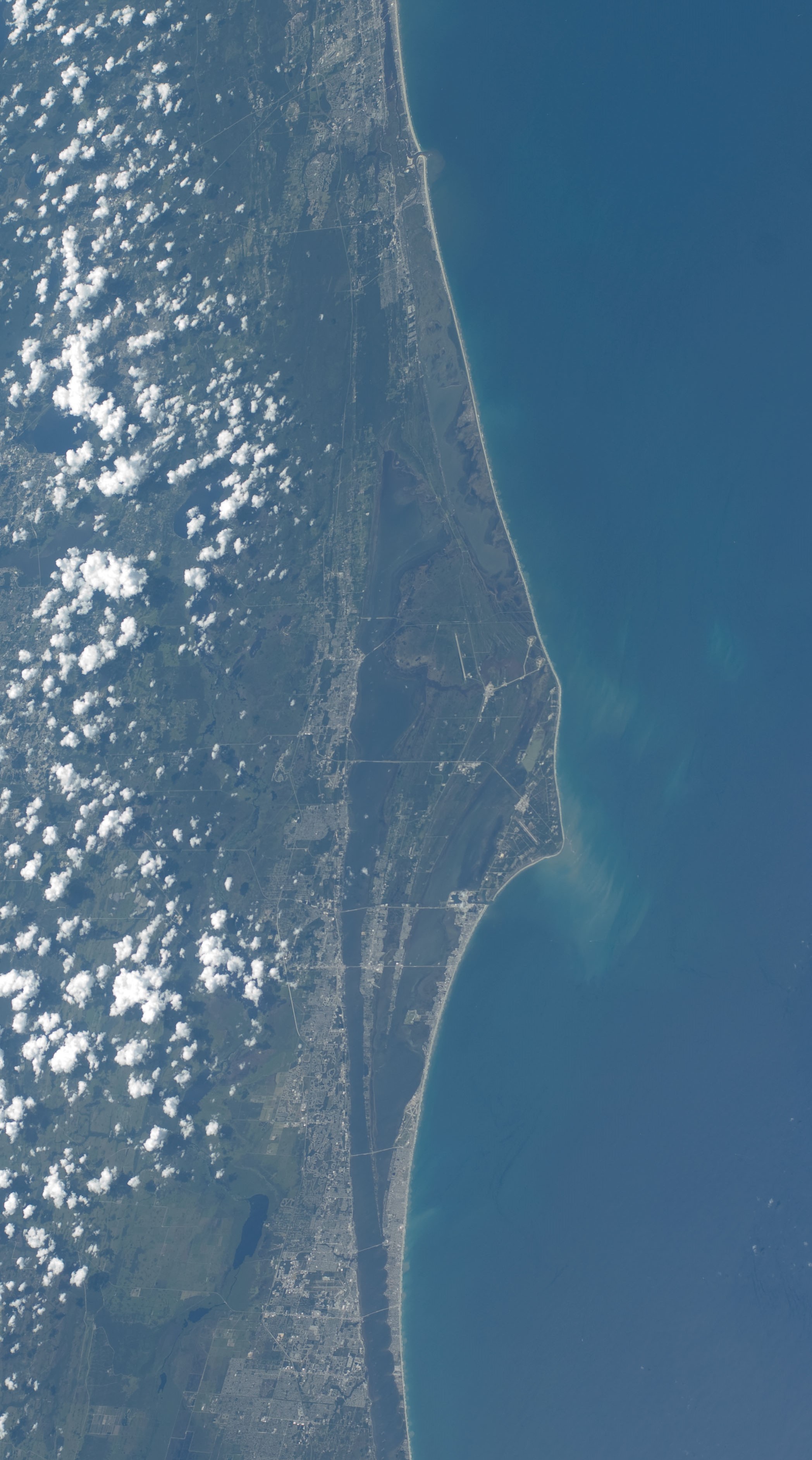
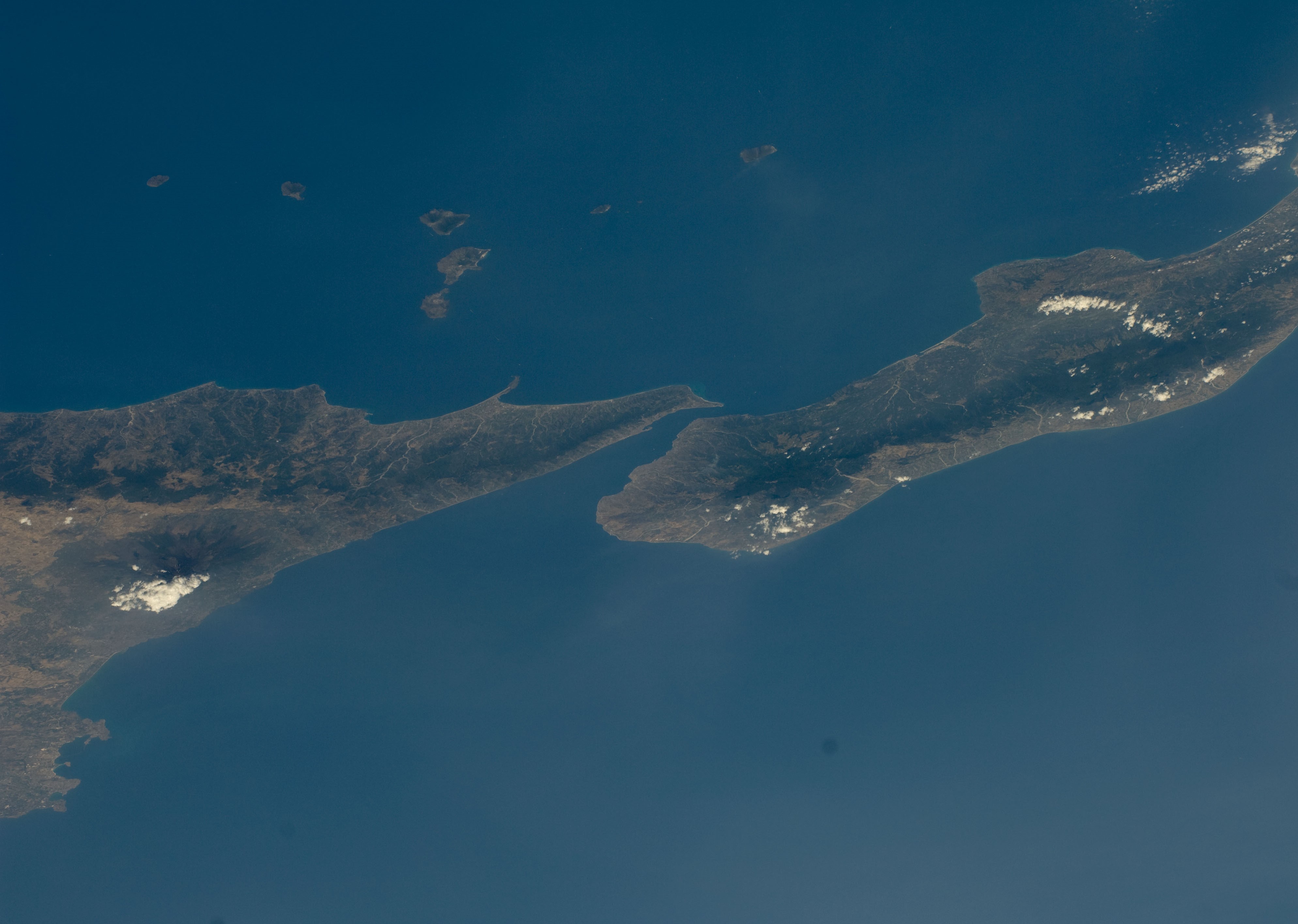
The Seattle-Tacoma area The central Florida coast including NASA’s Kennedy Space Center Sicily with Mt. Etna, left, and the “toe” of Italy at right Istanbul straddling Europe, left, and Asia
Left: The Seattle-Tacoma area. Middle left: The central Florida coast including NASA’s Kennedy Space Center. Middle right: Sicily with Mt. Etna, left, and the “toe” of Italy at right. Right: Istanbul straddling Europe, left, and Asia.

With Flight Day 11 given as a crew off duty day, many of the astronauts took part in a favorite activity: looking at and photographing the Earth. They also used the time to catch up on other activities.
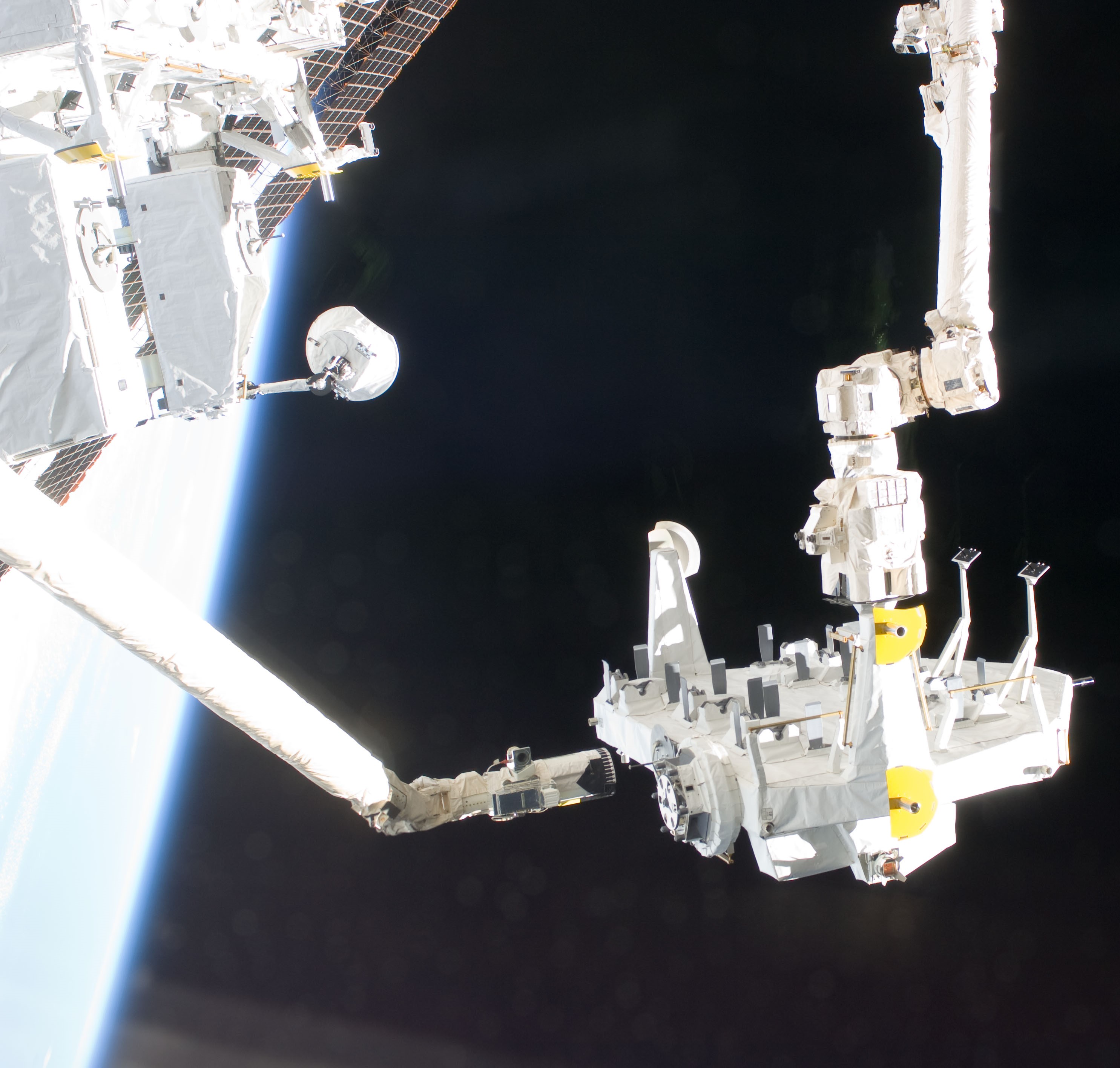
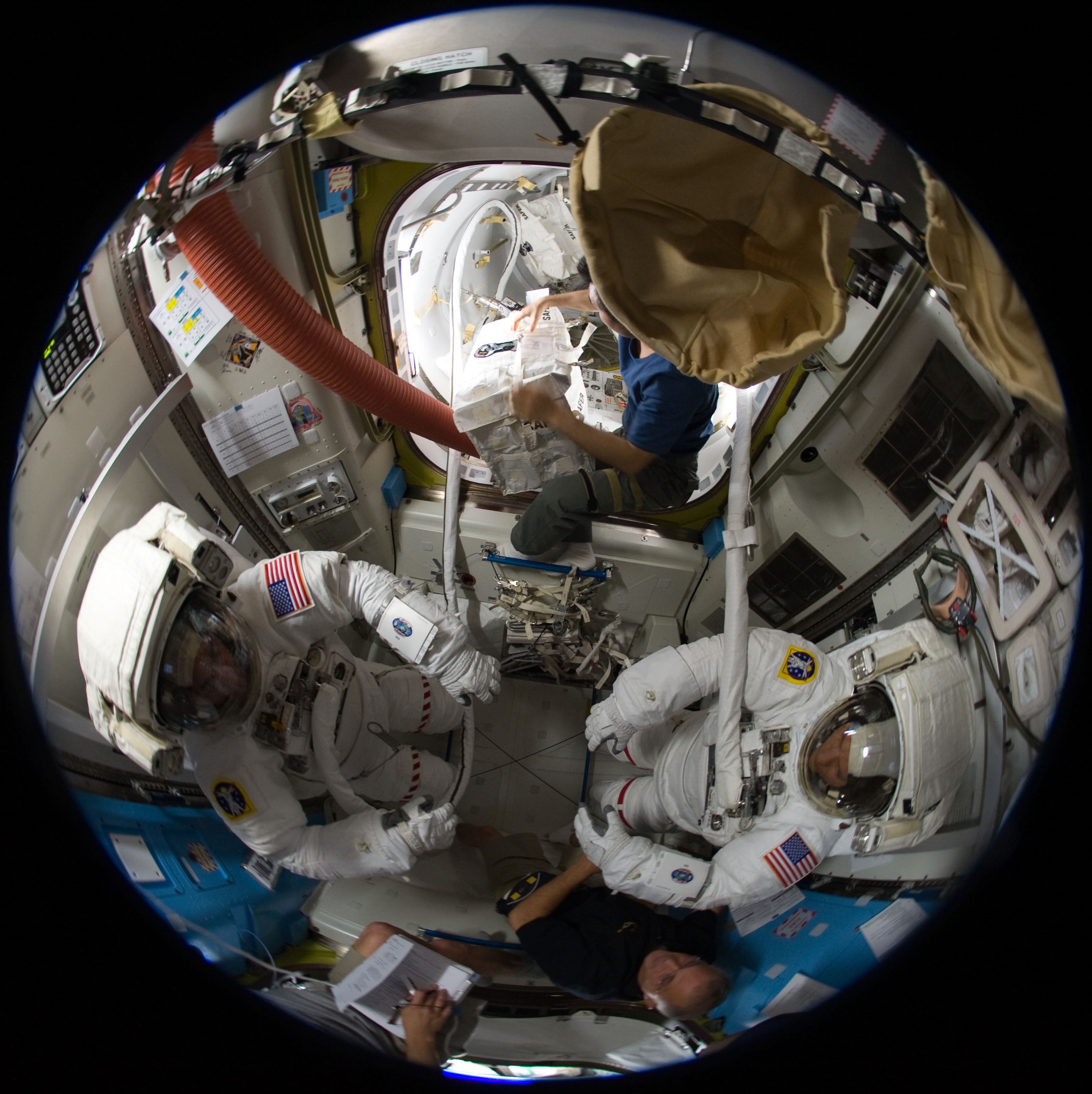
Return of the empty Exposed Logistics Module to Endeavour’s payload bay Fisheye view of Christopher J. Cassidy, left, and Thomas H. Marshburn in the U.S. Airlock preparing for the mission’s fifth and final spacewalk Marshburn, left, and Cassidy install cameras on the Kibo Exposed Facility during the fifth and final spacewalk
Left: Return of the empty Exposed Logistics Module to Endeavour’s payload bay. Middle: Fisheye view of Christopher J. Cassidy, left, and Thomas H. Marshburn in the U.S. Airlock preparing for the mission’s fifth and final spacewalk. Right: Marshburn, left, and Cassidy install cameras on the Kibo Exposed Facility during the fifth and final spacewalk.

First thing on Flight Day 12, Payette and Polansky returned the now empty ELM to Endeavour’s payload bay, using the station and shuttle robotic arms. The next day, Marshburn and Cassidy teamed up again for the flight’s fifth and final spacewalk. During the 4-hour 54-minute excursion, they installed a pair of cameras on the Kibo module to help guide future H-II Transfer Vehicle (HTV) cargo spacecraft, the first planned to arrive in September 2009. They also completed a few get ahead tasks. Their excursion brought the total spacewalking time for the mission to 30 hours 30 minutes and marked only the second time that a shuttle mission to the space station completed five spacewalks.

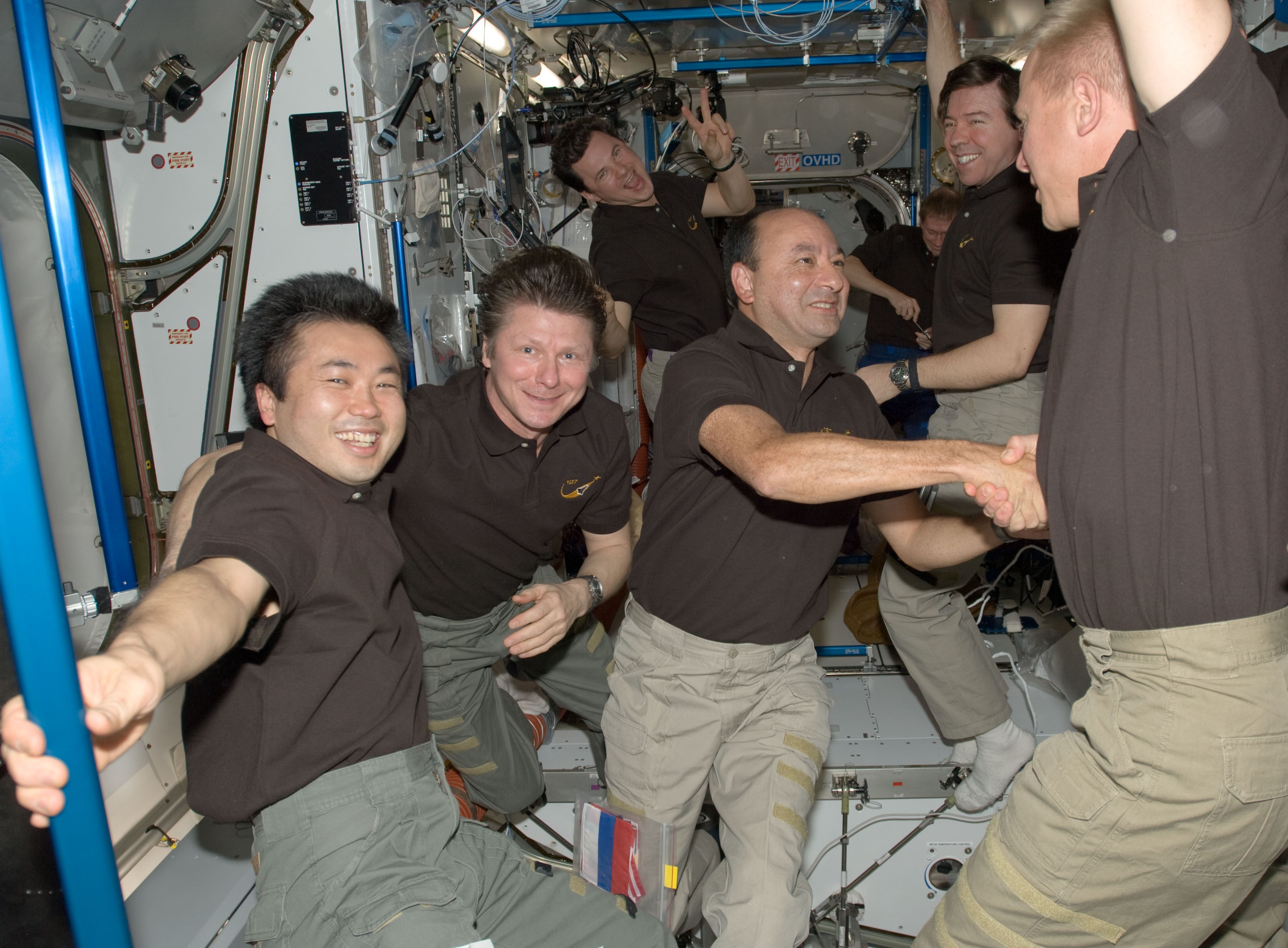
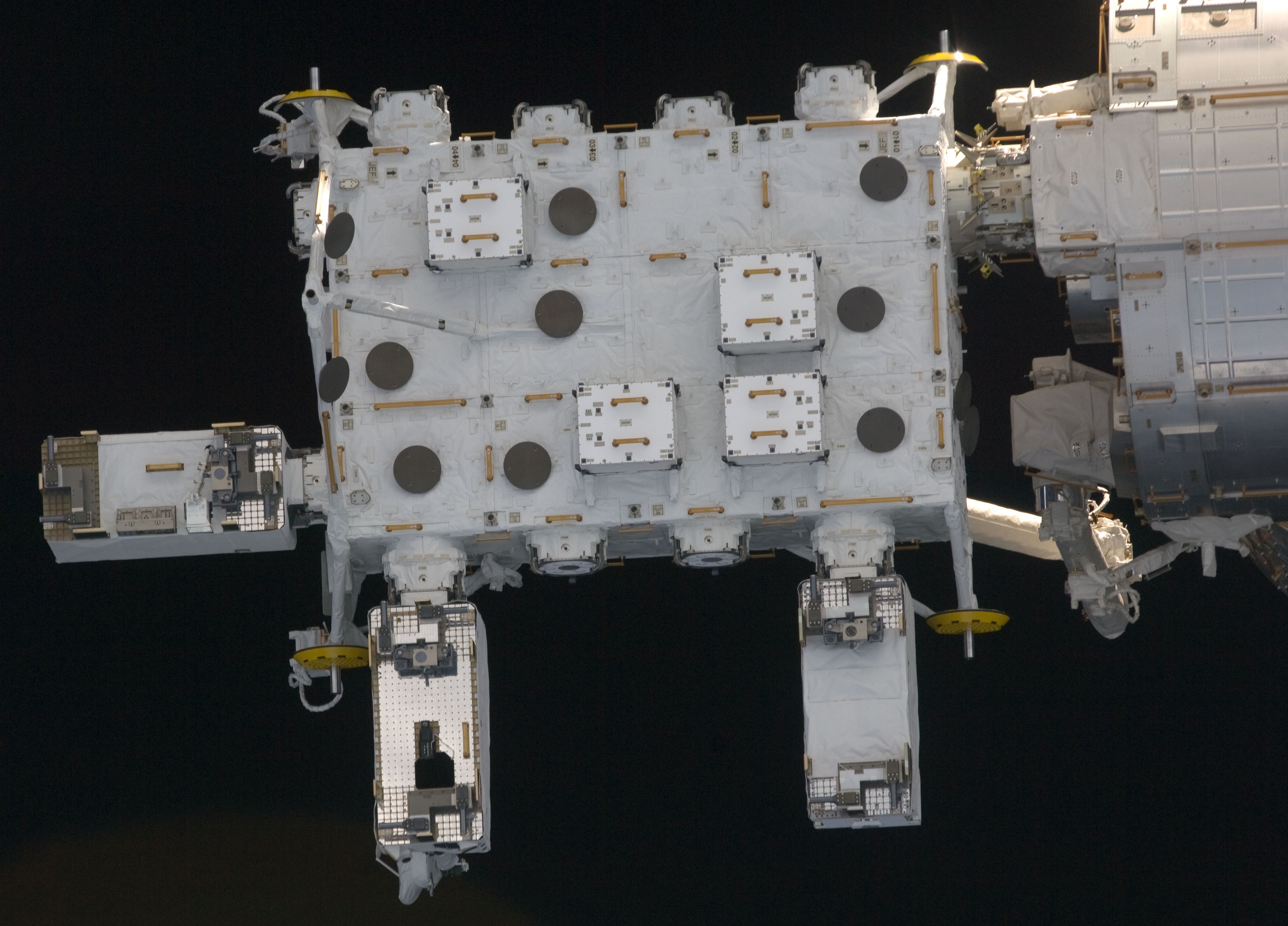
The 13 members of Expedition 20 and STS-127 pose for a final photograph before saying their farewells The crew members exchange farewells, with Koichi Wakata of the Japan Aerospace Exploration Agency, left, appearing a little reluctant to leave after spending 133 days aboard the space station Photograph of the newly installed Exposed Facility on the Kibo Japanese Experiment Module
Left: The 13 members of Expedition 20 and STS-127 pose for a final photograph before saying their farewells. Middle: The crew members exchange farewells, with Koichi Wakata of the Japan Aerospace Exploration Agency, left, appearing a little reluctant to leave after spending 133 days aboard the space station. Right: Photograph of the newly installed Exposed Facility on the Kibo Japanese Experiment Module.

On July 28, the mission’s 14th day, the 13-member joint crew held a brief farewell ceremony, parted company, and closed the hatches between the two spacecraft. With Hurley at the controls, Endeavour undocked from the space station, having spent nearly 11 days as a single spacecraft. Hurley completed a flyaround  of the station, with the astronauts photographing it to document its condition. A final separation burn sent Endeavour on its way.
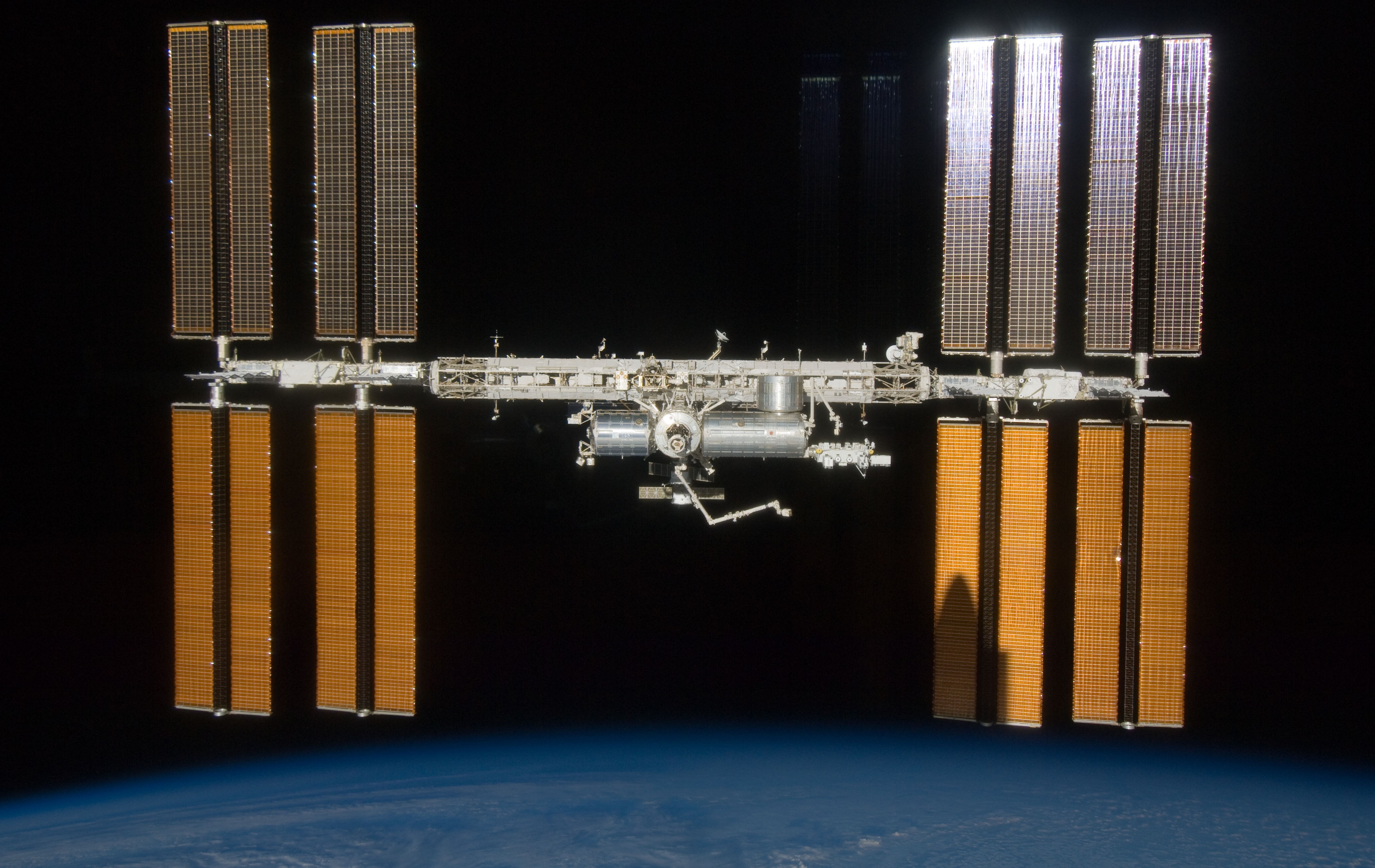
The International Space Station, with the newly added Exposed Facility and its first payloads, as seen from Endeavour during the departure flyaround. Endeavour casts its shadow on the solar arrays
The International Space Station, with the newly added Exposed Facility and its first payloads, as seen from Endeavour during the departure flyaround. Endeavour casts its shadow on the solar arrays.
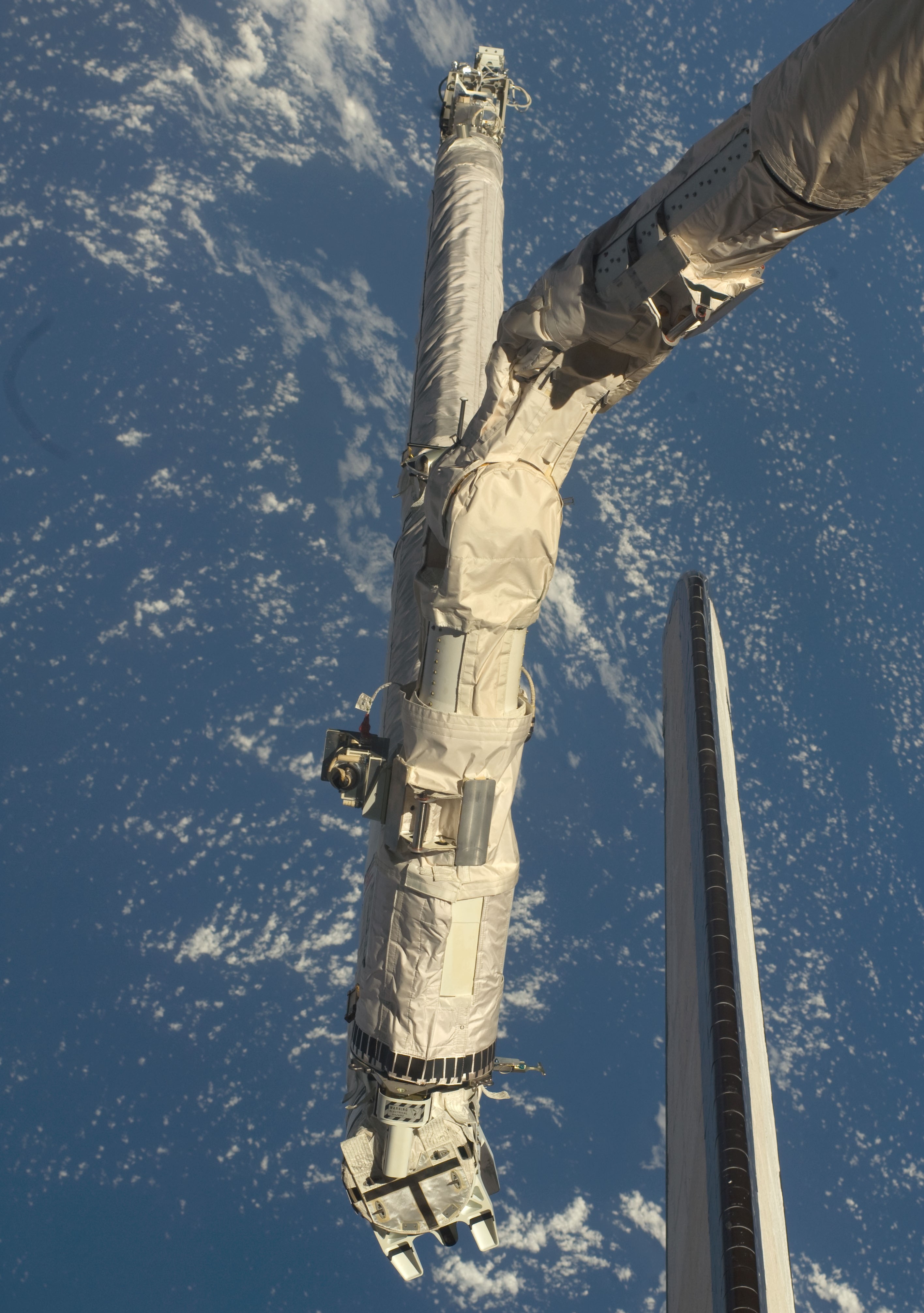
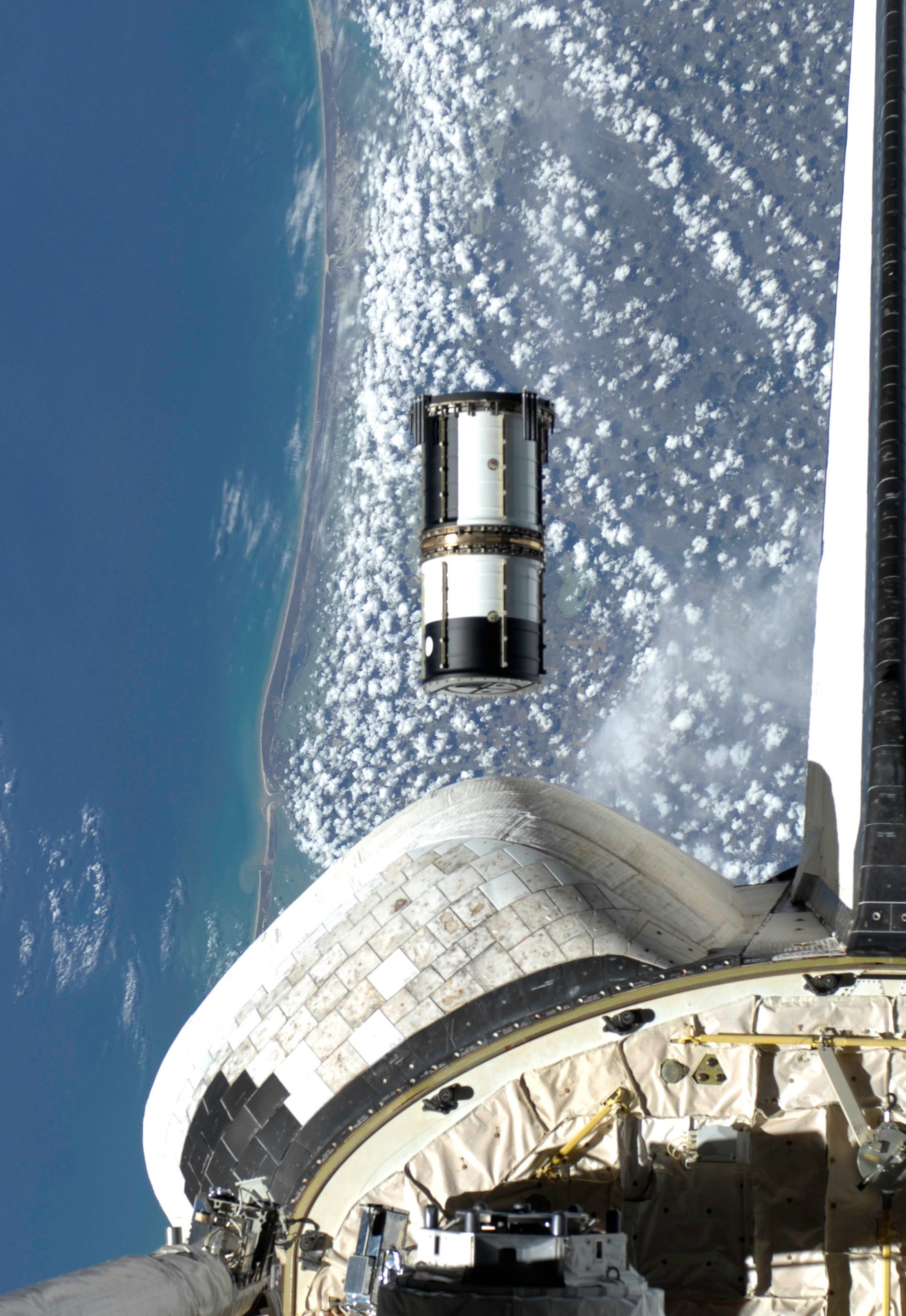
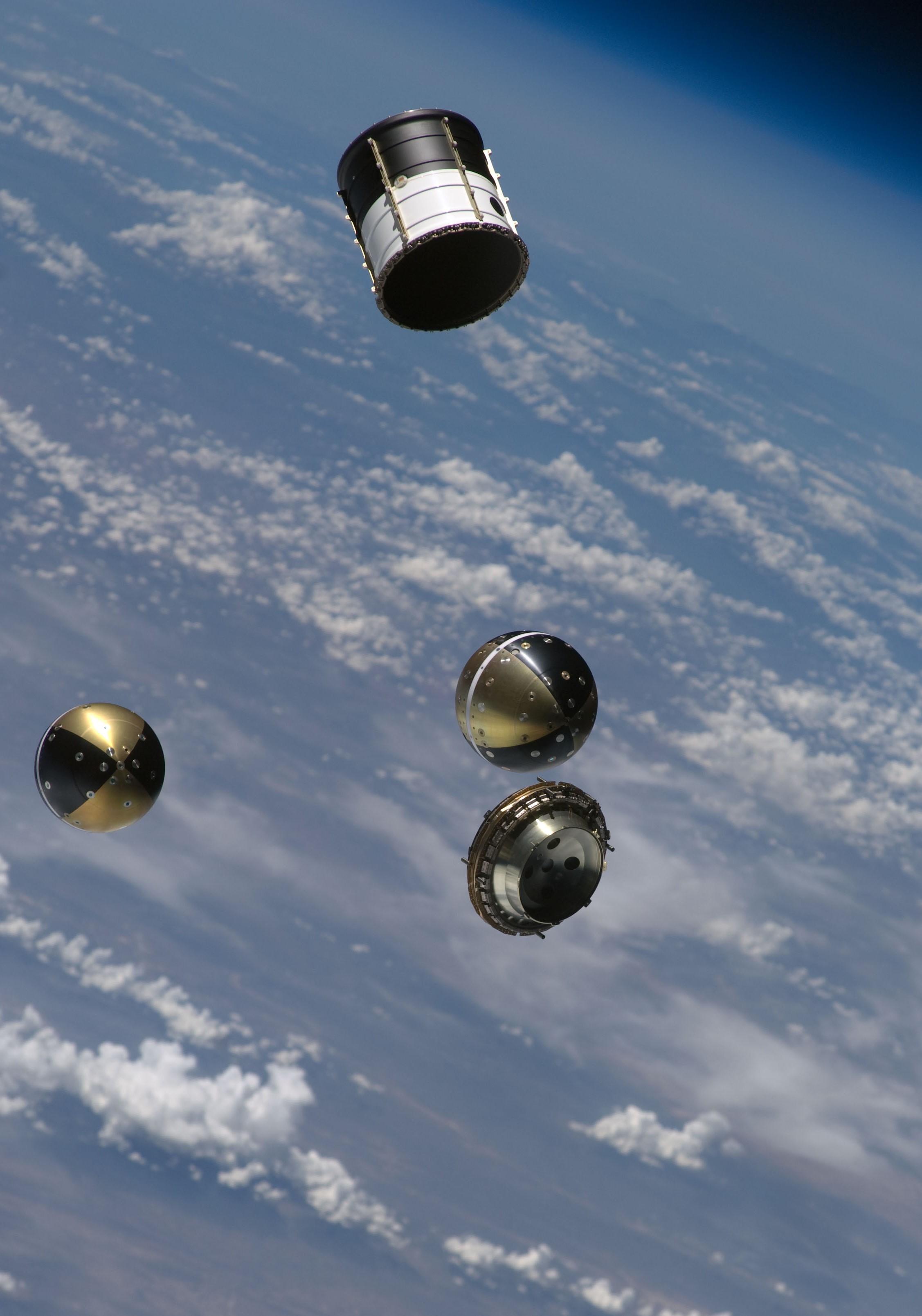
The shuttle’s robotic arm grapples the Orbiter Boom Sensor System for the late inspection of Endeavour’s heat shield Deploy of the DRAGONSAT microsatellite Deploy of the ANDE microsatellites
Left: The shuttle’s robotic arm grapples the Orbiter Boom Sensor System for the late inspection of Endeavour’s heat shield. Middle: Deploy of the DRAGONSAT microsatellite. Right: Deploy of the ANDE microsatellites.

The next day, Polansky, Payette, and Hurley used the shuttle’s arm to pick up the OBSS and perform a late inspection of Endeavour’s thermal protection system. On Flight Day 16, the astronauts deployed two satellites. The first, called Dual RF Astrodynamic GPS Orbital Navigation Satellite, or DRAGONSAT, designed by students at the University of Texas, Austin, and Texas A&M University, College Station, consisted of a pair of picosatellites to look at independent rendezvous of spacecraft using GPS. The second, called Atmospheric Neutral Density Experiment-2, or ANDE-2, consisted of a set of Department of Defense microsatellites to look at the density and composition of the atmosphere 200 miles above the Earth. Polansky and Hurley tested Endeavour’s reaction control system thrusters and flight control surfaces in preparation for the next day’s entry and landing. The entire crew busied themselves with stowing all unneeded equipment.
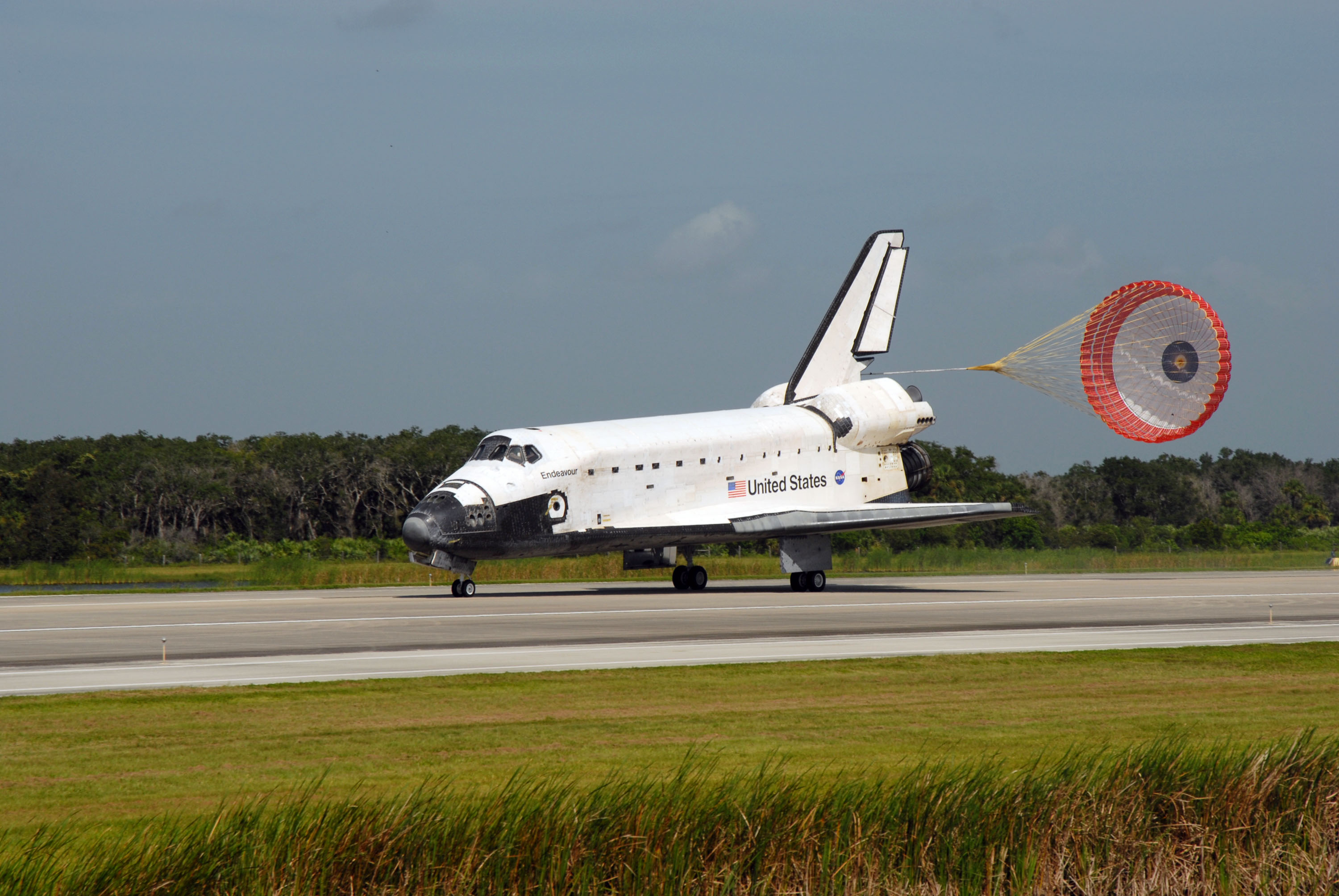
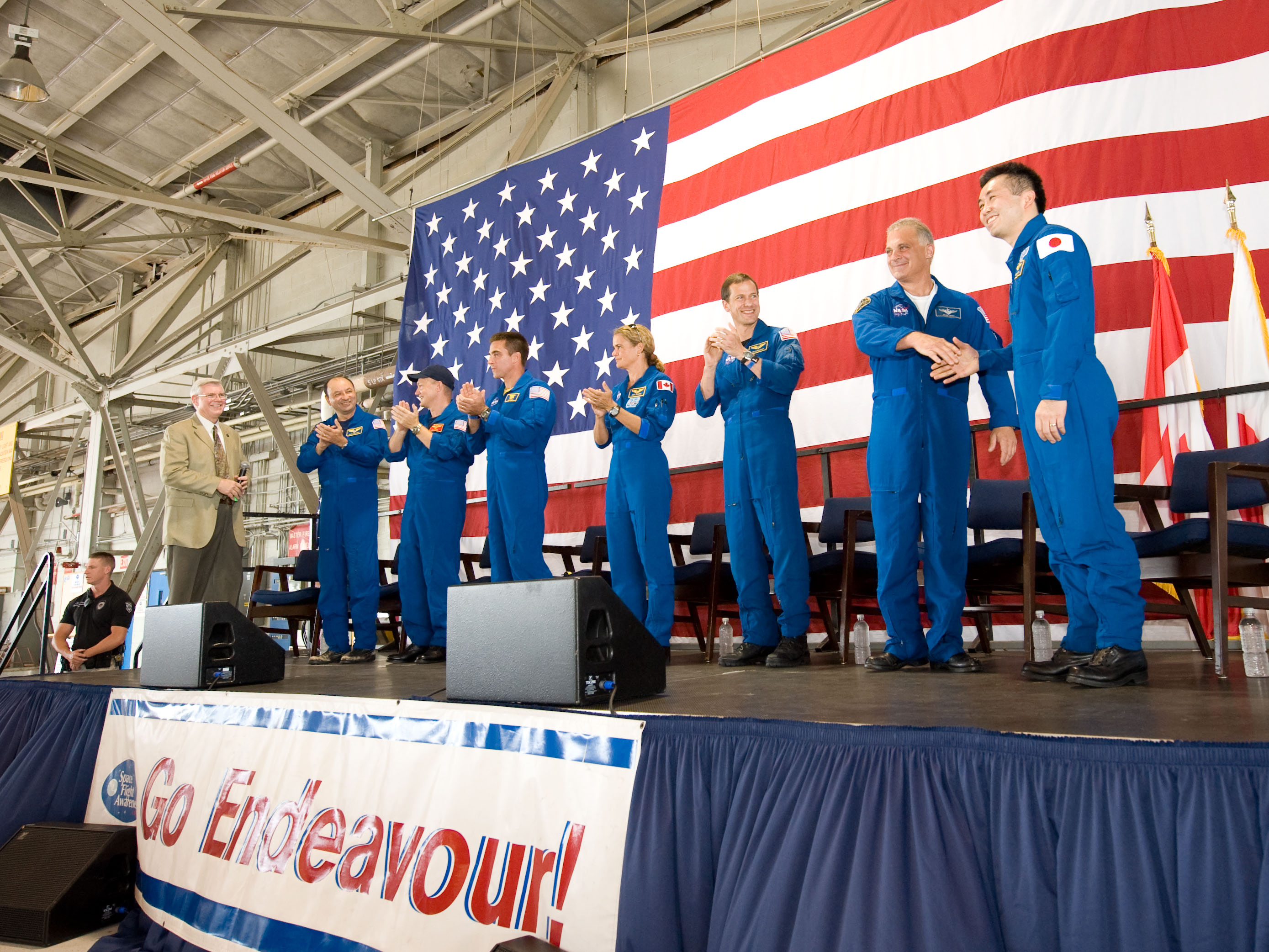
Endeavour touches down on the Shuttle Landing Facility at NASA’s Kennedy Space Center in Florida The welcome home ceremony for the STS-127 crew at Ellington Field in Houston
Left: Endeavour touches down on the Shuttle Landing Facility at NASA’s Kennedy Space Center in Florida. Right: The welcome home ceremony for the STS-127 crew at Ellington Field in Houston.

On July 31, the astronauts closed Endeavour’s payload bay doors, donned their launch and entry suits, and strapped themselves into their seats, a special recumbent seat for Wakata who had spent the last four months in weightlessness. Polansky fired Endeavour’s two Orbital Maneuvering System engines to bring them out of orbit and heading for a landing half an orbit later. He guided Endeavour to a smooth touchdown at KSC’s Shuttle Landing Facility, capping off a very successful STS-127 mission of 15 days, 16 hours, 45 minutes. They orbited the planet 248 times. Wakata spent 137 days, 15 hours, 4 minutes in space, completing 2,166 orbits of the Earth. Workers at KSC began preparing Endeavour for its next flight, STS-130 in February 2010.

Enjoy the crew narrate a video about the STS-127 mission.

Powered by WPeMatico

Get The Details…
Kelli Mars