NASA Invites Media to View NOAA’s Newest Environmental Satellite

NASA Invites Media to View NOAA’s Newest Environmental Satellite
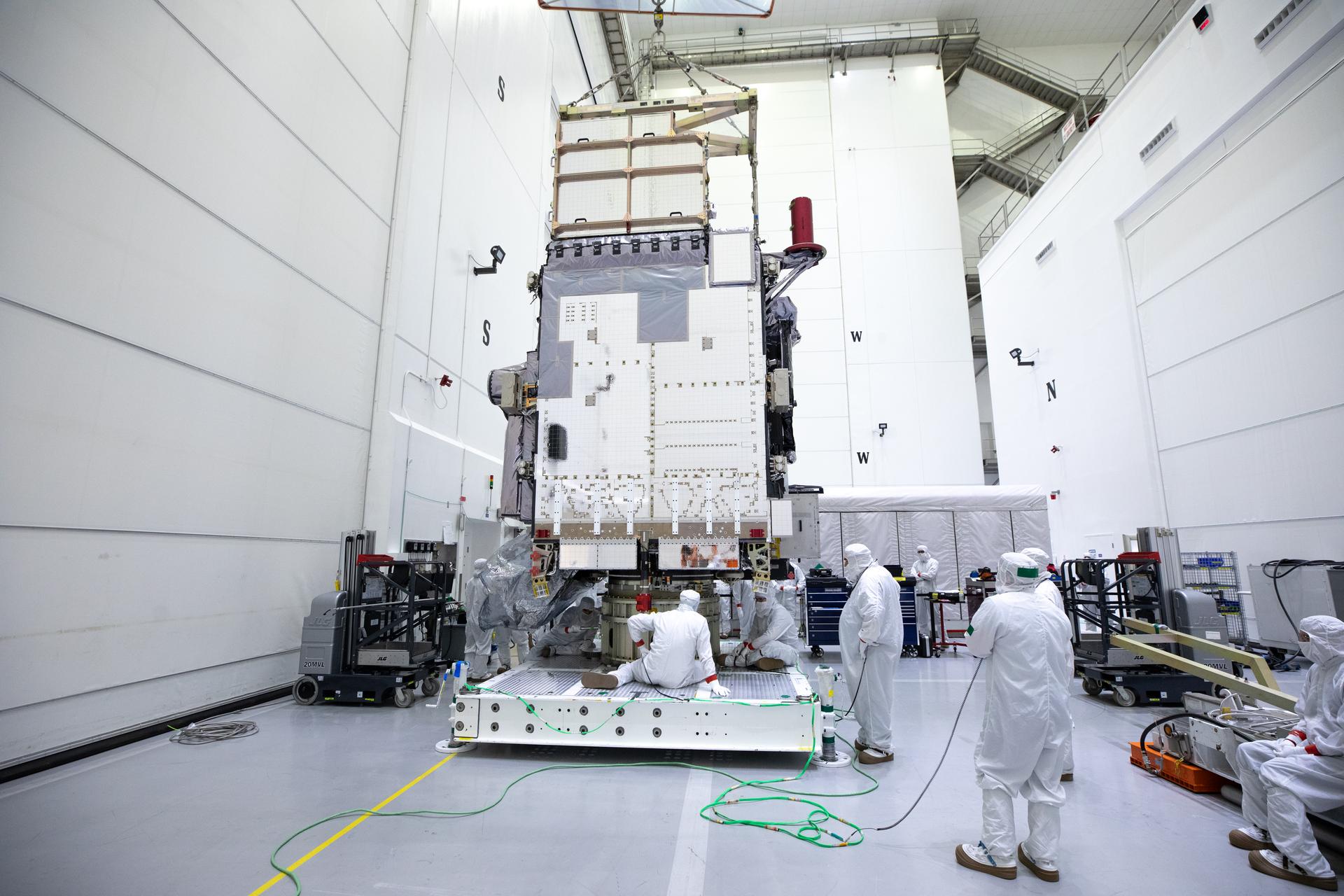
Technicians monitor movement and guide NOAA’s Geostationary Operation Environmental Satellite-U (GOES-U) as a crane hoists it on to a spacecraft dolly in a high bay at the Astrotech Space Operations Facility near the agency’s Kennedy Space Center in Florida. Credit: NASA/Ben Smegelsky

NASA will host a media availability to view NOAA’s (National Oceanic and Atmospheric Administration’s) GOES-U (Geostationary Operational Environmental Satellite U) spacecraft Thursday June 6, at the Astrotech Space Operations payload processing facility in Titusville, Florida.

NASA is targeting a two-hour launch window opening at 5:16 p.m. EDT Tuesday, June 25, for the launch of GOES-U on a SpaceX Falcon Heavy rocket from Launch Complex 39A at the agency’s Kennedy Space Center in Florida.

Ahead of the launch, media will have an opportunity to photograph the satellite and speak with subject-matter experts. As the fourth and final satellite in the GOES-R Series, GOES-U will continue weather observations and include a new compact coronagraph that will image the outer layer of the Sun’s atmosphere to detect and characterize coronal mass ejections.

Media interested in participating in the June 6 event must RSVP by 11:59 p.m. on Wednesday, May 29, and submit their request online at:

https://media.ksc.nasa.gov

NASA’s media accreditation policy is available online. For questions about accreditation, please email: ksc-media-accreditat@mail.nasa.gov.

Facility Access

Due to spacecraft cleanliness requirements, this invitation is open to a limited number of media with no more than two requests per media organization. This event is open to U.S. citizens who possess an unexpired government-issued photo identification, such as a driver’s license, and proof of U.S. citizenship, such as a passport or birth certificate.

Media who attend this event must comply with cleanroom guidelines. This includes wearing specific cleanroom garments; avoiding cologne, cosmetics, and high-heeled shoes; cleaning camera equipment under the supervision or assistance of contamination control specialists; and placing all electronics in airplane mode in the designated areas near the spacecraft. NASA will provide detailed guidance to approved media.

About GOES-U

The GOES-R series has improved the detection and observation of environmental phenomena that directly affect public safety, protection of property, and the nation’s economic health and prosperity.

The advanced instruments on the GOES-R series of satellites provide images of Earth’s weather, oceans, and environment with sharper resolution and rapid-refresh imagery, as well as real-time mapping of lightning activity and improved monitoring of solar activity and space weather.

NASA and NOAA collaborate on various missions to enhance our understanding of Earth, its climate, and its environment, enhancing the safety and well-being of all humanity. NASA’s Goddard Space Flight Center in Greenbelt, Maryland, manages the acquisition of the spacecraft and instruments and built the Magnetometer instrument for GOES-T and GOES-U. NASA’s Launch Services Program, based at Kennedy Space Center, manages the launch services for the GOES missions. Lockheed Martin designs, builds, and tests the GOES-R series satellites. L3Harris Technologies provides the primary instrument, the Advanced Baseline Imager, along with the ground system, which includes the antenna system for data reception.

The GOES-U spacecraft is the last of the GOES-R Series satellites, which are planned to operate into the 2030s. Looking forward, NOAA is working with NASA to develop the next generation of operational satellites in geostationary orbit, called Geostationary Extended Observations (GeoXO). This program will provide new and improved observations of the atmosphere, weather, and ocean to help address emerging environmental issues, respond to the effects of Earth’s changing climate, and improve forecasting and warning of severe weather and hazards. NASA will manage the development of the GeoXO satellites and launch them for NOAA.

For more information about the GOES-U mission, visit:

https://go.nasa.gov/48httvm

-end-

Liz Vlock
Headquarters, Washington
202-358-1600
elizabeth.a.vlock@nasa.gov

Leejay Lockhart
Kennedy Space Center, Florida
321-747-8310
leejay.lockhart@nasa.gov

Share

Details

Last Updated

May 15, 2024

Powered by WPeMatico

Get The Details…
Abbey A. Donaldson
Maintenance on High-Speed Wind Tunnel

Maintenance on High-Speed Wind Tunnel

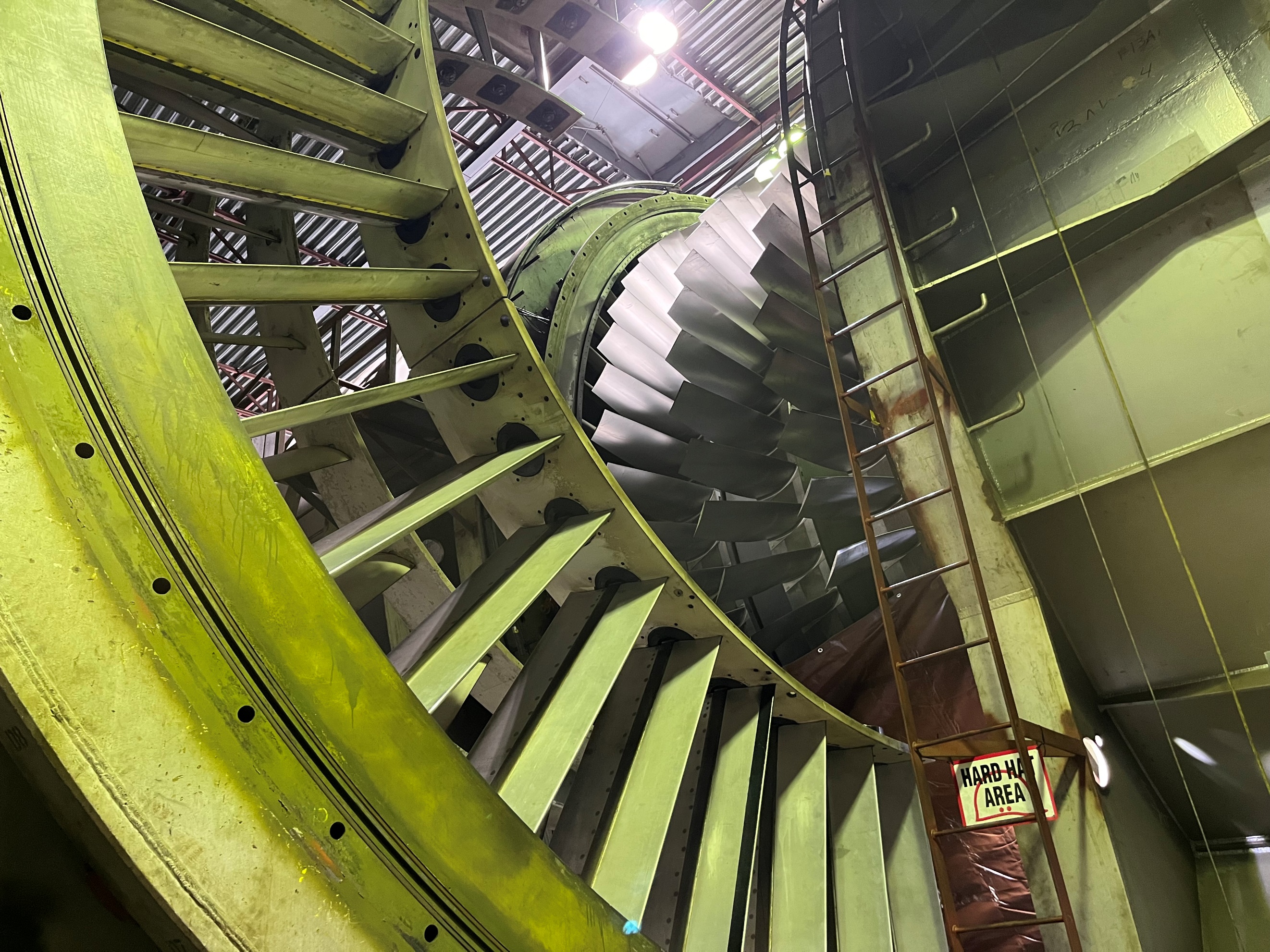
A Close up shot inside of the wind tunnel 3- stage compressor which shows the blades of the wind tunnel
Clamshell hatch of UPWT 3-stage compressor in the open position. The outer diameter of the case is approximately 24 feet. Stator blades (in green on left) will be inspected and instrumented to determine extent of stator resonance which occurs at different RPMs.
NASA/ James Bell

During April and May 2024, maintenance is being conducted within the Unitary Plan Wind Tunnel (UPWT) complex at NASA Ames Research Center.  One key part of this maintenance is the inspection of stators in the 3-stage compressor.  Stators are fixed blades that control the flow of air, which can reach a speed of Mach 1.4 (about 1100 miles per hour in air at 100F) within the UPWT.  Blade resonance of the stators may be responsible for significant wear on the compressor.  The figure below shows the opening of the stator clamshell to enable that inspection.

Share

Details

Last Updated

May 15, 2024

Related Terms

Powered by WPeMatico

Get The Details…
Osvaldo R. Sosa Valle

NASA Honors Three Chroniclers for Helping Tell America’s Space Story  

NASA Honors Three Chroniclers for Helping Tell America’s Space Story  


Through decades of hard work, three storytellers brought out of this world news down to Earth, providing a lens through which young and old could watch space exploration unfold. This week, NASA recognized the contributions of these Chroniclers during a May 15, 2024, ceremony at the agency’s Kennedy Space Center in Florida.  

NASA Kennedy Space Center’s Associate Director of Management Burt Summerfield was at the spaceport’s Press Site for the unveiling of three brass plates bearing the names of the 2024 honorees – Dan Billow, Michael R. Brown, and Margaret (Maggie) Persinger. 

Dan Billow, Mike Brown, and Maggie Persinger were honored May 15, 2024, during the 2024 Kennedy Chroniclers ceremony at the Press Site at NASA’s Kennedy Space Center in Florida. Three brass plates bearing their names were added to the wall of the “bullpen,” where reporters traditionally gather to cover launches and events at NASA Kennedy.
Photo credit: NASA/Glenn Benson

“The Chroniclers ceremony is one of Press Site’s greatest traditions,” Summerfield said. “We get a chance to extend our deepest thank you to members of the media – and our NASA and industry communicators – who go above and beyond to tell our story to the world,”  

The inductees join the list of 82 other Chroniclers awardees whose names hang proudly on the wall in the “bullpen” at Kennedy’s Press Site, where journalists, photographers and broadcasters have gathered to cover the space industry since 1962. 

The honorees were nominated by other members of the news media and selected by a panel of NASA officials and current space reporters. 

Dan Billow was born in 1960 in Orange County, California. He earned his bachelor’s degree in 1982 in radio and television from California State University in Fullerton and completed a certificate in meteorology from Mississippi State University in 2008. 

Dan began his career in 1982 as a news reporter at KRCR-TV in Redding, California. From 1985 to 1987, he worked as a news reporter with KLAS-TV in Las Vegas, Nevada. In 1987, Dan took a job with WESH-TV in Orlando, Florida, as a news reporter and meteorologist. While there, he covered all space shuttle missions from 1988-2011. He also covered NASA’s Earth and other planetary missions, including Mars landings, spacecraft flights to Mercury, Venus, Jupiter, Saturn, Uranus, Neptune, Pluto, the Sun, and Earth’s moon. Dan experienced weightlessness in a NASA KC-135 aircraft in 1998, and he even experienced simulated space shuttle landings in a Shuttle Training Aircraft commanded by astronaut Chris Ferguson in 2011. 

Dan earned the Society of Professional Journalists Silver Medallion in 2003 and the duPont-Columbia Award in 2004 for coverage of the Space Shuttle Columbia tragedy, as well as three regional Emmy awards. 

Dan retired in 2021, settling in the Blue Ridge Mountains of Georgia with his wife of 41 years, Rebecca. They have three adult children: Alex, Jordan, and Marie. 

“Spaceflight is romance – there’s an element of grandeur to it – and that’s the way I covered it,” Billow said. “Spaceflight is beauty, and I will continue to watch the next generation of reporters covering it.” 

Michael R. Brown served in the United States Navy from 1968 to 1972. Following his Navy service, Michael studied photography at the Art Institute of Fort Lauderdale from 1974 to 1976 and launched his career as a photojournalist beginning with the Thomasville Times in Georgia in 1977. 

In 1978, Michael accepted a job with Florida Today as a photojournalist. He had many notable accomplishments during his 34-year career with Florida Today, including covering all 135 Space Shuttle launches as well as the launches of hundreds of expendable rockets. Notably, he was recognized as a finalist for the 1987 Pulitzer Prize for his photo coverage of the Space Shuttle Challenger tragedy. Michael now lives and works in Florida as a freelance photographer. 

“We had a lot of fun setting up remote cameras during shuttle days to get just the right shots,” Brown said. “If we had an idea for a photo, the people here bent over backwards to make sure we could get what we needed. But working with the people here was what I really enjoyed most.” 

Margaret (Maggie) Persinger began her career at NASA’s Kennedy Space Center in Florida as an archivist assistant in 1975. As a result of her in-depth research of the space program at Kennedy, she was hired by Technicolor to work as a film file at the Motion Picture Lab at Patrick Air Force Base in Florida from 1978 to 1986. Maggie then moved to the Photo Lab at NASA’s Kennedy Space Center in Florida where she worked until 1992, ending her time as lead of the Film File Library. 

In 1992, Margaret transferred to Kennedy’s Press Site, providing still imagery to newspapers, wires, and magazines via black and white as well as color photos, slides, and transparencies. With the rise of the digital era, imagery transitioned to include photo CDs and eventually to digital images on the internet. These shifts in technology required learning brand new techniques, procedures, computers, and programs. With her knowledge and experience, Maggie became the Photo Editor at Kennedy. 

In 1995, Maggie’s responsibilities grew to include video, motion picture film, and audio tape releases to the media. Originally this entailed research into the subject matter on VHS, beta tapes, and audio tapes used by TV, motion picture film productions, and radio. It wasn’t long before technology growth changed the nature of her job again with the introduction of high-definition capability and tapes, which added to the already extensive library. Hard copy tapes eventually gave way to digital formats, requiring Maggie to edit video clips that could be rapidly released to the media via computer, thumb drives, or large capacity decks enabling a vast amount of footage. Without a requirement to mail tapes, videos shot at Kennedy to be edited and viewed quickly around the world. 

Maggie’s career saw many advances in film and technology, allowing her the rare opportunity to work with many types of media – newspapers, wires, magazines, TV, documentaries, motion picture film productions, and social media. 

“I was so proud of what NASA is doing and that I could help get word out to the public,” Persinger said. “Back when we worked with print photos and tape, I remember meeting reporters at all hours and at locations like the bowling alley to be sure they had what they needed for their stories.” 

The Chroniclers ceremony is typically held in early May to honor the first U.S. human spaceflight, Mercury-Redstone 3, or Freedom 7, on May 5, 1961. The 15-minute, 28-second flight sent astronaut Alan Shepard into orbit around Earth, ending with a successful splashdown in the Atlantic Ocean. 

For more listings of all The Chroniclers, visit: The Chroniclers – NASA 

Powered by WPeMatico

Get The Details…
Jamie Groh

5 Things to Know About NASA’s Tiny Twin Polar Satellites

5 Things to Know About NASA’s Tiny Twin Polar Satellites

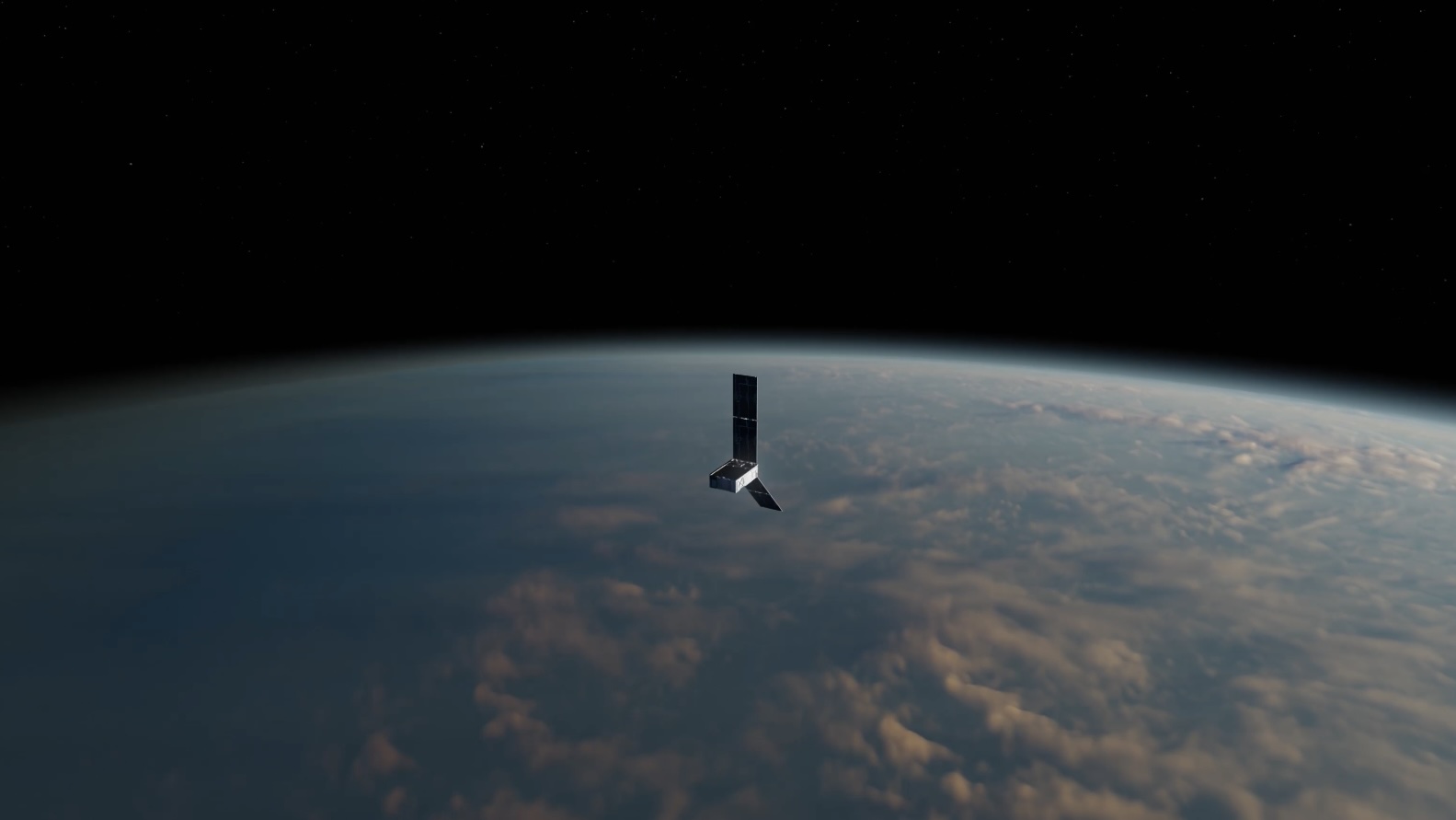
This artist’s concept depicts one of two PREFIRE CubeSats in orbit around Earth. The NASA mission will measure the amount of far-infrared radiation the planet’s polar regions shed to space – information that’s key to understanding Earth’s energy balance.
NASA/JPL-Caltech

Called PREFIRE, this CubeSat duo will boost our understanding of how much heat Earth’s polar regions radiate out to space and how that influences our climate.

Twin shoebox-size climate satellites will soon be studying two of the most remote regions on Earth: the Arctic and Antarctic. The NASA mission will measure the amount of heat the planet emits into space from these polar regions — information that’s key to understanding the balance of energy coming into and out of Earth and how that affects the planet’s climate.

The data from the Polar Radiant Energy in the Far-InfraRed Experiment (PREFIRE) mission will help improve our understanding of the greenhouse effect at the poles — specifically, the capacity of water vapor, clouds, and other elements of Earth’s atmosphere to trap heat and keep it from radiating into space. Researchers will use this information to update climate and ice models, which will lead to better predictions of how sea level, weather, and snow and ice cover are likely to change in a warming world.

Each of PREFIRE’s cube satellites, or CubeSats, will use a thermal infrared spectrometer to measure the heat, in the form of far-infrared energy, radiated into space by Earth’s surface and atmosphere.

Here are five things to know about this small but mighty mission:

1. The PREFIRE CubeSats will provide new information on how Earth’s atmosphere and ice influence the amount of heat being radiated out to space from the Arctic and Antarctic.

The CubeSats will gather data over the poles using sensors that are sensitive to 10 times more infrared wavelengths than any similar instrument. Information gathered by the mission will advance our understanding of when and where the poles shed heat into space, as well as why the Arctic has warmed more than 2½ times faster than the rest of the planet since the 1970s.

2. This mission will focus on the far-infrared portion of the heat Earth emits into space.

Just beyond the visible part of the electromagnetic spectrum sits the infrared, a spectrum of longer-wavelength light that can be sensed as heat. Essentially all of Earth’s heat emissions happen at infrared wavelengths between 4 and 100 micrometers. At the planet’s cold polar regions, 60% of the heat emissions occur at far-infrared wavelengths (longer than 15 micrometers). Researchers have relatively little data on which parts of the Arctic and Antarctic are shedding this heat. PREFIRE will help address this lack of knowledge, giving scientists a better idea of how efficiently far-infrared heat is emitted by things like snow and sea ice, and how clouds influence the amount of far-infrared radiation that escapes to space.

3. Data from PREFIRE will help improve polar and global climate models.

By filling in gaps in our knowledge of Earth’s energy budget, PREFIRE will sharpen our understanding of what drives the loss of polar ice on land and sea, and related questions of sea level rise. This will help researchers better predict how the heat exchange between Earth and space will change in the future, and how those changes will affect things like ice sheet melting, atmospheric temperatures, and global weather. PREFIRE data will be available to the public through NASA’s Atmospheric Science Data Center.

4. The PREFIRE CubeSats are designed to answer critical questions using a platform that’s lower-cost than a full-size satellite.

The PREFIRE CubeSats use advances in spectrometry to measure processes associated with ice melt and formation, snow melt and accumulation, and changes in cloud cover. A single satellite that revisits the same region of Earth every several days can monitor seasonal changes that researchers can use to improve climate models. But following the interactions between Earth’s surface and atmosphere, such as the amount of cloud cover temporarily effecting the temperature of the area beneath it, requires more frequent measurements. Two satellites in asynchronous near-polar orbits — passing over a given spot on Earth at different times, looking at the same area within hours of each other — could catch some of these shorter-time-scale phenomena.

5. The PREFIRE mission is helping to train the next generation of satellite climate scientists.

NASA developed PREFIRE with the University of Wisconsin-Madison, including team members from the universities of Michigan and Colorado. The mission engages a diverse group of undergraduate and graduate students, who make up a significant portion of the science team.

More About the Mission

NASA’s Jet Propulsion Laboratory manages PREFIRE for the agency’s Science Mission Directorate and provided the spectrometers. Blue Canyon Technologies built the CubeSats and the University of Wisconsin-Madison will process the data the instruments collect. The launch services provider, Rocket Lab USA Inc. of Long Beach, California, will launch both PREFIRE CubeSats from Rocket Lab Launch Complex 1 in New Zealand.

To learn more about PREFIRE, visit:

https://science.nasa.gov/mission/prefire/

News Media Contacts

Jane J. Lee / Andrew Wang
Jet Propulsion Laboratory, Pasadena, Calif.
818-354-0307 / 626-379-6874
jane.j.lee@jpl.nasa.gov / andrew.wang@jpl.nasa.gov

Karen Fox / Elizabeth Vlock
NASA Headquarters, Washington
202-358-1100 / 202-358-1600
karen.c.fox@nasa.gov / elizabeth.a.vlock@nasa.gov

2024-067

Powered by WPeMatico

Get The Details…
Naomi Hartono

NASA’s X-59 Passes Milestone Toward Safe First Flight

NASA’s X-59 Passes Milestone Toward Safe First Flight

4 min read

Preparations for Next Moonwalk Simulations Underway (and Underwater)

An aircraft parked with desert landscape in the background.
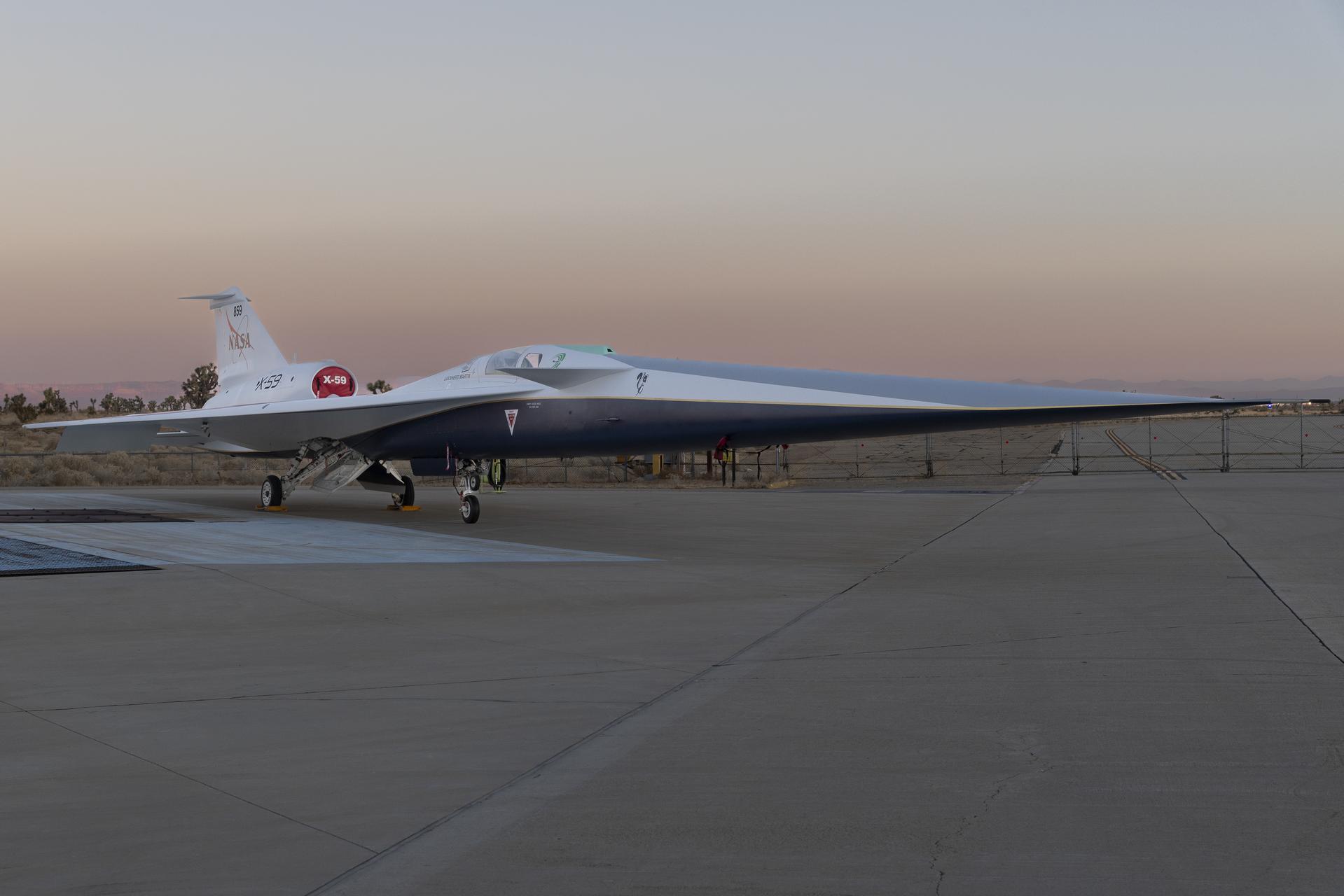
NASA’s X-59 quiet supersonic research aircraft sits on the ramp at Lockheed Martin Skunk Works in Palmdale, California during sunrise, shortly after completion of painting. With its unique design, including a 38-foot-long nose, the X-59 was built to demonstrate the ability to fly supersonic, or faster than the speed of sound, while reducing the typically loud sonic boom produced by aircraft at such speeds to a quieter sonic “thump”. The X-59 is the centerpiece of NASA’s Quesst mission, which seeks to solve one of the major barriers to supersonic flight over land, currently banned in the United States, by making sonic booms quieter.
NASA/Steve Freeman

NASA has taken the next step toward verifying the airworthiness for its quiet supersonic X-59 aircraft with the completion of a milestone review that will allow it to progress toward flight.

A Flight Readiness Review board composed of independent experts from across NASA has completed a study of the X-59 project team’s approach to safety for the public and staff during ground and flight testing. The review board looked in detail at the project team’s analysis of potential hazards, focusing on safety and risk identification.

Flight Readiness Review is the first step in the flight approval process. The board’s work will provide the X-59 team with insights and recommendations toward systems checkouts on the ground and first flight.

“It’s not a pass-fail,” said Cathy Bahm, NASA’s Low Boom Flight Demonstrator project manager. “We’ll be getting actions from the board and will work with them to resolve those and work toward the Airworthiness and Flight Safety Review.”

NASA and prime contractor Lockheed Martin Skunk Works are developing the X-59 to reduce the sound of a sonic boom to a quieter “thump.” The aircraft is at the center of NASA’s Quesst mission, which will use it to gather data that could revolutionize air travel, potentially paving the way for a new generation of commercial aircraft that can travel faster than the speed of sound. Commercial supersonic flight over land has been banned for more than 50 years because of the noise of sonic booms.

“The Flight Readiness Review focused on specific aspects of the X-59 team’s work on the aircraft, but also served as an overview and update on the entire project,” said Jay Brandon, chief engineer for the Low Boom Flight Demonstrator project.

 “It gave us the opportunity to stop working for a minute and gather what we’ve done so we could tell our story, not just to the board, but to the whole project team,” Brandon said.

With the Flight Readiness Review complete, the upcoming Airworthiness and Flight Safety Review will be the next safety milestone. The Airworthiness and Flight Safety Review board includes senior leaders from several NASA centers and Skunk Works. It will review findings from the Flight Readiness Review, as well as the project team’s response to those filings. The board will send a recommendation to NASA Armstrong’s center director, who signs the airworthiness certificate.

Finally, the team will provide a technical brief to another review board based on test objectives, how the tests are being carried out, the risks involved, and the risk-mitigation actions the team has taken. The X-59 team would have to address any issues raised in the brief before the board, led by NASA Armstrong chief engineer Cynthia J. “CJ” Bixby, will sign a flight request.

“It’s really an exciting time on the project,” Bahm said. “It’s not an easy road, but there’s a finite set of activities that are in front of us.”

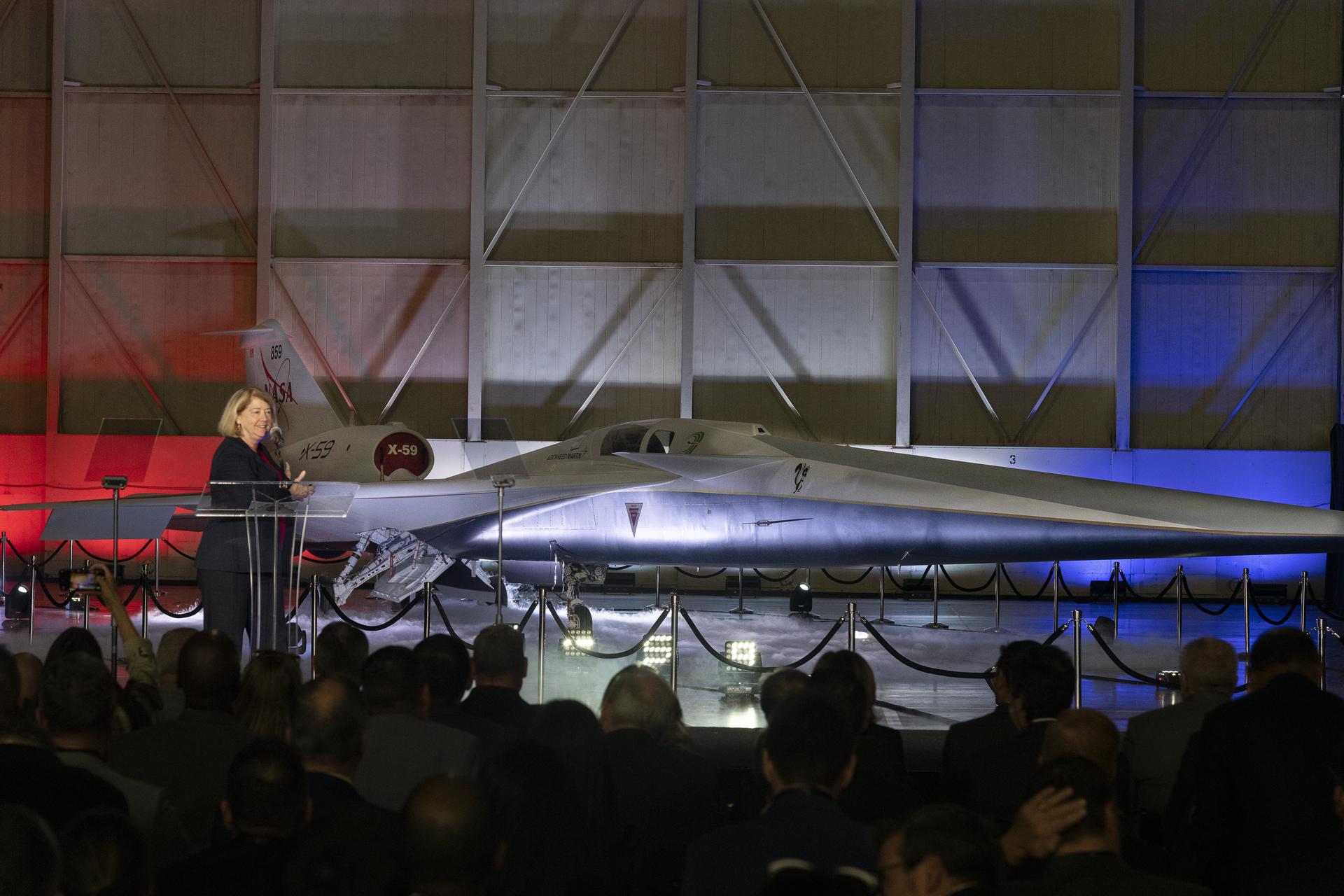
View of a lit stage inside a hangar. A woman speaks at a podium. In the immediate background, the X-59 sits, newly painted in its red, white, blue and gold livery.
NASA Deputy Administrator Pam Melroy speaks on stage immediately following the unveiling of the agency’s X-59 quiet supersonic research aircraft at a January 12, 2024 event at Lockheed Martin Skunk Works in Palmdale, California. The X-59 is the centerpiece of NASA’s Quesst mission, which seeks to solve one of the major barriers to supersonic flight over land, currently banned in the United States, by making sonic booms quieter.
NASA/Steve Freeman

The Path Forward

There are significant steps to be completed before flights can begin. The X-59 team is preparing for upcoming major ground tests focused on systems integration engine runs, and electromagnetic interference.

The X-59 aircraft is a bold, new design, but many of its components are from well-established aircraft, including landing gear from an Air Force F-16 fighter, a cockpit canopy from a NASA T-38 trainer, and a control stick from an Air Force F-117 stealth fighter are among those parts.

“None of these systems have ever worked and played together before,” said Brad Neal, chairman for the X-59 Airworthiness and Flight Safety Review board. “It’s a brand-new thing that we are developing, even though they’re components that have been on different legacy aircraft. As we get into integration testing here, it’s going to be a great opportunity to learn.’’

Powered by WPeMatico

Get The Details…
Dede Dinius