NASA’s X-59 Progresses Through Tests on the Path to Flight

NASA’s X-59 Progresses Through Tests on the Path to Flight

3 min read

Preparations for Next Moonwalk Simulations Underway (and Underwater)
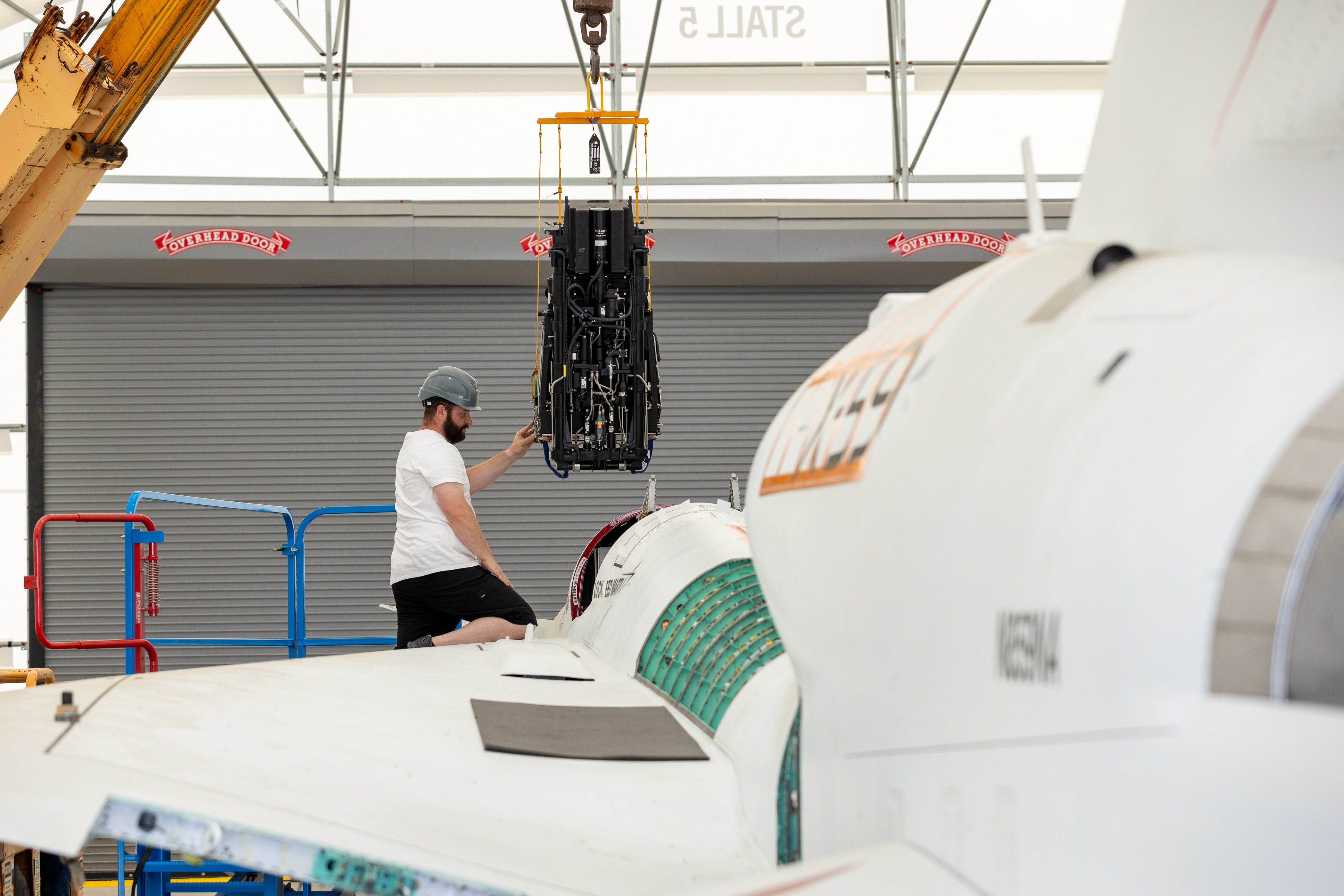
A man supporting the installation of the X-59 ejection seat.
NASA Life Support Technician Mathew Sechler provides support as the X-59’s ejection seat is installed into the aircraft at Lockheed Martin Skunk Works’ facilities in Palmdale, California. Completion of the seat’s installation marks an integration milestone for the aircraft as it prepares for final ground tests.
Lockheed Martin

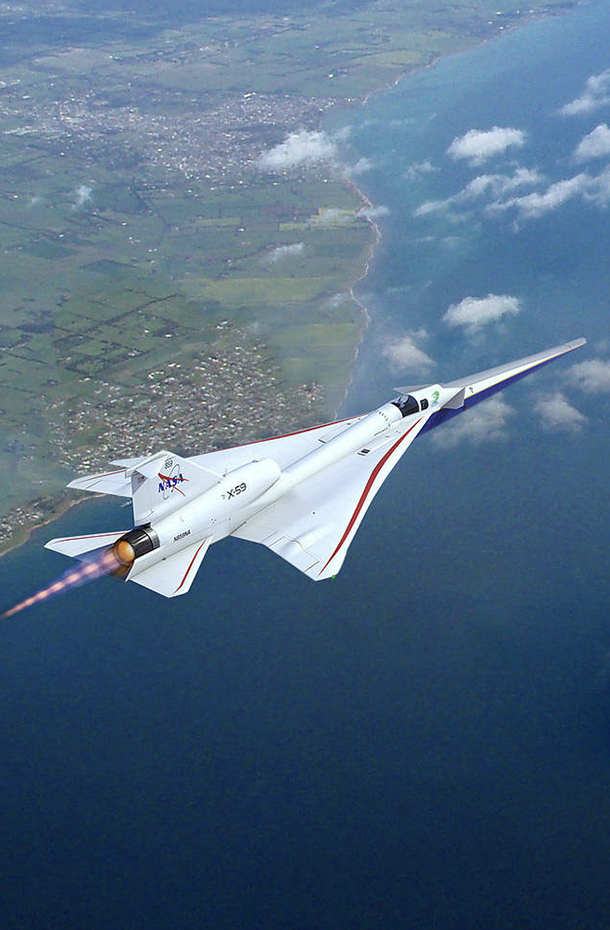
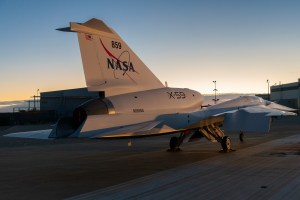
The team preparing NASA’s X-59 continues through testing in preparation for the quiet supersonic aircraft to make its first flight. This includes a trio of important structural tests and critical inspections on the path to flight.

The X-59 is an experimental plane that will fly faster than the speed of sound without a loud sonic boom. It will be the first of its kind to fly, with the goal of gathering sound data for NASA’s Quesst mission, which could open the door to commercial supersonic overland flight in the future.

Because of its unique design, the X-59’s engineering team must do all it can to predict every aspect of it before it ever takes off, including how its fuselage, wings, and the control surfaces will behave together in flight. That means testing on the ground to give the team the data it needs to validate the models they’ve developed.

“The testing not only tells us how structurally sound the aircraft is, but also what kind of forces it can take once it is in the air.

WALT SILVA

WALT SILVA

Senior Research Scientist at NASA Langley Research Center in Hampton, Virginia, who serves as structures lead for the X-59.

The X-59’s structural tests provide the team with valuable feedback. From 2022 to –2024 the engineers collected data on the forces that the aircraft will experience in flight and the potential effects of vibrations on the plane.

“You do these tests, you get the data, and things compare well in some areas and in other areas you want to improve them,” Silva said. “So, you figure that all out and then you work towards making it better.”

Three men installing the
Lockheed Martin technicians temporarily remove the canopy from the X-59 in preparation for final installation of the ejection seat into the aircraft.
Lockheed Martin

Earlier this year, the X-59 underwent structural coupling tests that saw its control surfaces, including its ailerons, flaps and rudder, moved by computer. It was the last of three vital structural tests. In 2023, engineers applied “shakers” to parts of the plane to evaluate its response to vibrations, and in early 2022 they conducted a proof test to ensure the aircraft would absorb the forces it will experience during flight. This year the X-59 ejection seat was installed and passed inspection. The ejection seat is an additional safety measure that is critical for pilot safety during all aspects of flight.

With structural tests and ejection seat installation complete, the aircraft will advance toward a new milestone, starting up its engines for a series of test runs on the ground.

Also ahead for the X-59 is testing the airplane’s avionics and extensive wiring for potential electromagnetic interference, imitating flight conditions in a ground test environment, and finally, completing taxi tests to validate ground mobility before first flight.

“First flights are always very intense,” said Natalie Spivey, aerospace engineer at NASA’s Armstrong Flight Research Center in Edwards, California. “There’s lots of anticipation, but we’re ready to get there and see how the aircraft responds in the air. It’ll be very exciting.”

Powered by WPeMatico

Get The Details…
Jim Banke
Automated Technology Developed at Glenn Launches to Space 

Automated Technology Developed at Glenn Launches to Space 

2 min read

Preparations for Next Moonwalk Simulations Underway (and Underwater)

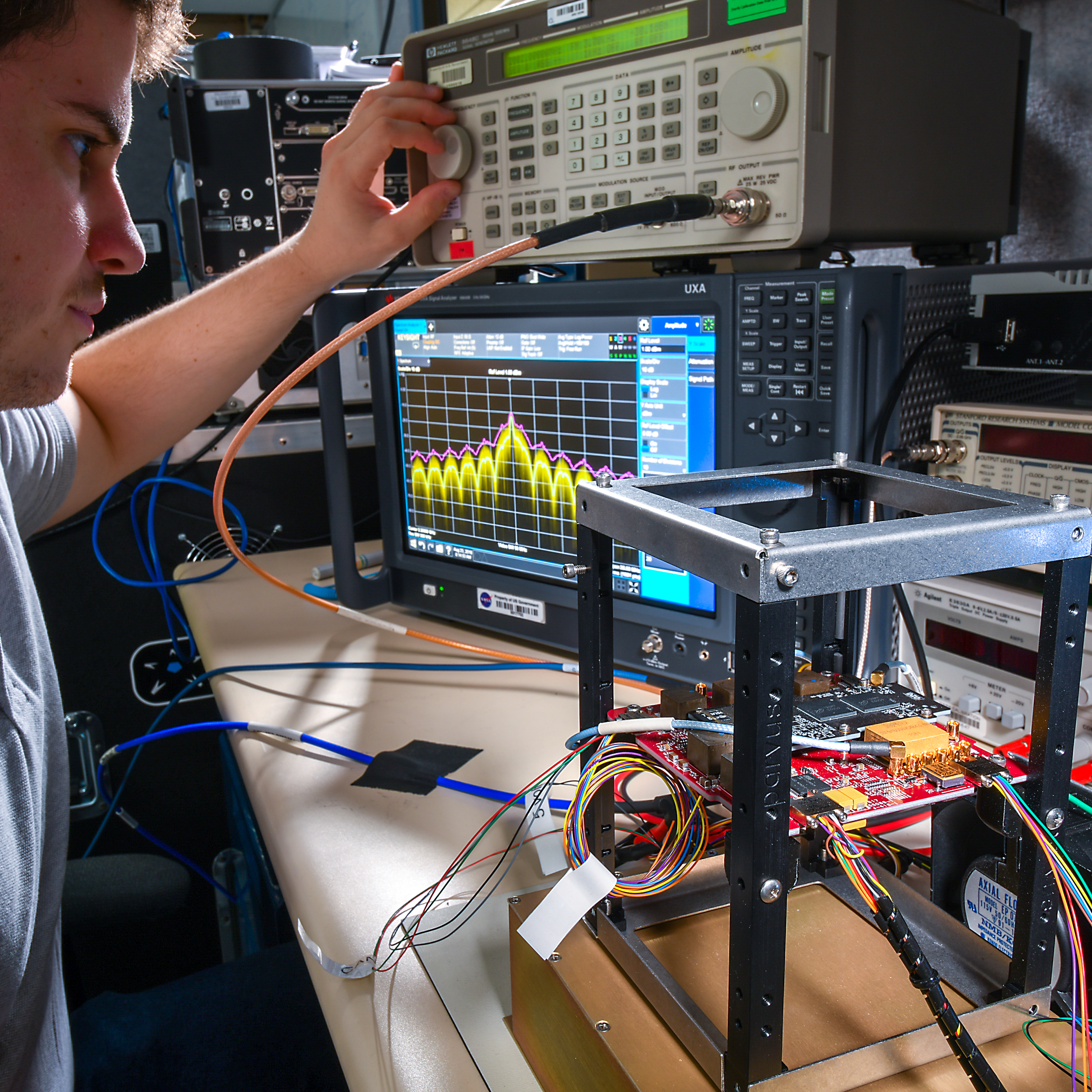
Up-close photo of an engineer working with diagnostics equipment to test CE-1 hardware.
Engineer Adam Gannon works on the development of Cognitive Engine-1 in the Cognitive Communications Lab at NASA’s Glenn Research Center.
Credit: NASA 

Automated technology developed in Cleveland has launched to space aboard the Technology Education Satellite 11 mission. The flight test aims to confirm the precision and accuracy of this new technology developed at NASA’s Glenn Research Center. 

The Cognitive Communications Project was founded by NASA in 2016 to develop autonomous space communications systems for the agency. Autonomous systems use technology that can react to its environment to implement updates during a mission, without needing any human interaction.  

The project first collaborated with the Technology Education Satellite (TES) program at NASA’s Ames Research Center in California’s Silicon Valley back in 2022 to launch the TES-13 CubeSat, which sent the first neuromorphic processor to space. A neuromorphic processor is a piece of technology built to act in ways that replicate how the human brain functions. Through TES-13, the cognitive team was able to test their advanced technology in space successfully for the first time.  

Two researchers clothed in white suits and purple gloves delicately place the technology (chip) inside the CubeSat.
Researchers at NASA’s Ames Research Center in California’s Silicon Valley assemble the Technology Education Satellite-11 CubeSat inside of a laboratory.
Credit: NASA 

After the success of TES-13, the team compiled each of their unique capabilities into one end-to-end system, called Cognitive Engine 1, or CE-1. CE-1 is a space and ground software system that automates normal aspects of spacecraft communications, like service scheduling and planning reliable priority-based data transfers.  

Cognitive technology launched to space for the second time on July 3 on TES-11 aboard Firefly Aerospace’s Noise of Summer mission. TES-11 was one of eight small satellites launched during the mission. It was created as a part of the Technology Education Satellite program at NASA Ames, which organizes collaborative projects and missions that pair college and university students with NASA researchers to evaluate how new technologies work on small satellites, known as CubeSats.  

Three CubeSat packages fly in space.
Image of various CubeSats deployed in space from the International Space Station.
Credit: NASA 

TES-11 is testing the components of CE-1 that allow satellites to independently schedule time with ground stations and download data without human interaction. Results from the TES-11 mission will be used by the Cognitive Communications team to finalize their CE-1 design, to ensure that the technology is ready to be adopted by future NASA missions.  

The Cognitive Communications Project is funded by the Space Communications and Navigation program at NASA Headquarters in Washington and managed out of NASA’s Glenn Research Center in Cleveland.  

Powered by WPeMatico

Get The Details…
Kelly M. Matter

Cleveland High School Students Land STEM Career Exploration Experience 

Cleveland High School Students Land STEM Career Exploration Experience 

1 min read

Preparations for Next Moonwalk Simulations Underway (and Underwater)

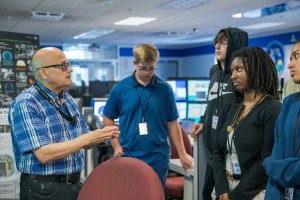
NASA subject matter expert talks with students in lab coats, right, about equipment in the ISS Payload Operations Center.
NASA Glenn Research Center’s Amber Krauss talks to students about how NASA uses ground integration units to prepare for flight science operations.
Credit: NASA/Jef Janis 

This summer, 10 Cleveland Metropolitan School District (CMSD) students landed the opportunity to participate in the NASA Glenn High School Career Exploration and Research Experience program at NASA’s Glenn Research Center in Cleveland. 

High school students were paired with a mentor in their field of study who they shadowed for eight weeks during a hands-on workplace experience exploring their interests. The students prepared presentations to highlight their experiences and discussed how the program will impact their career choices. 

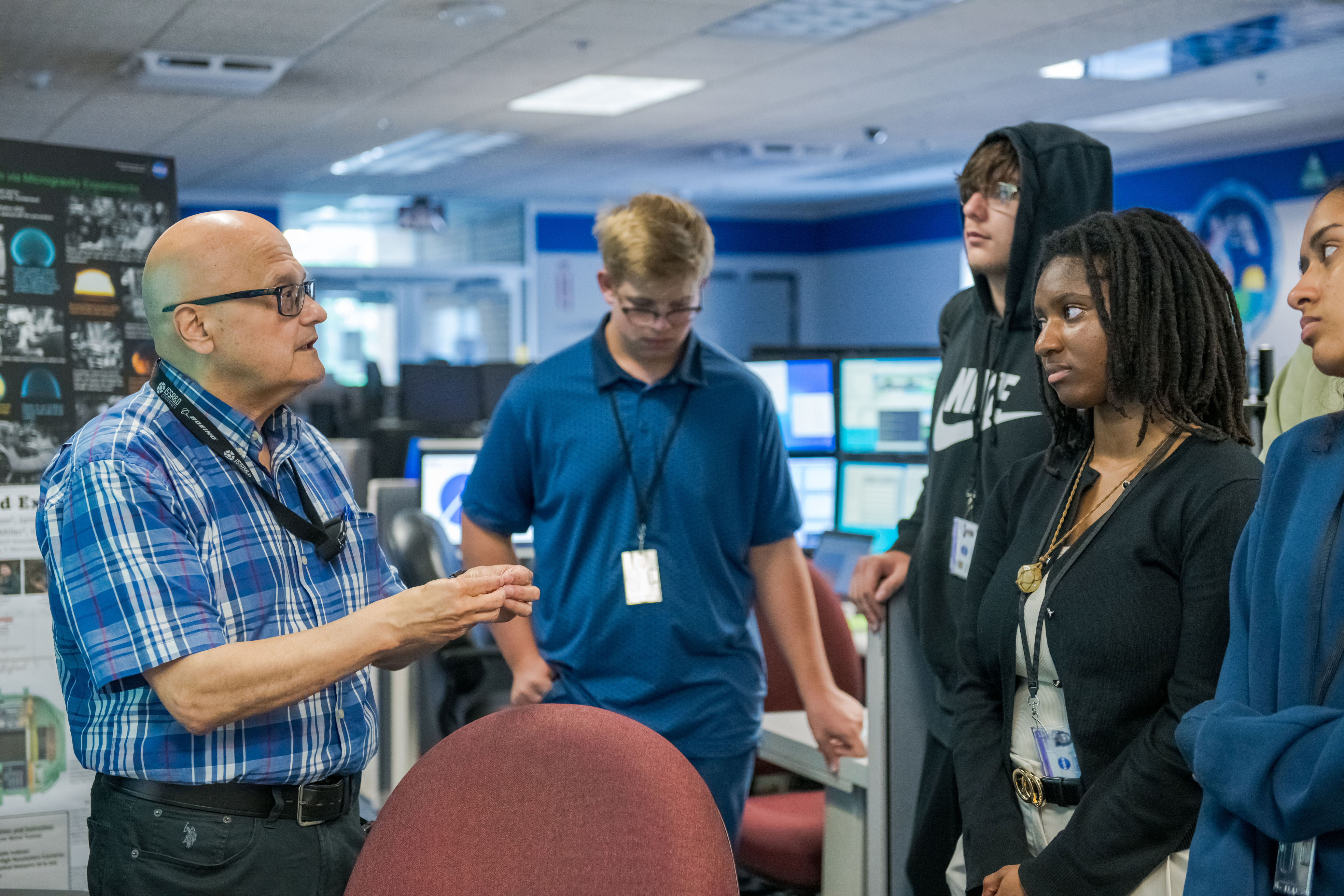
A NASA subject matter expert, left, explains details to four students about the ISS Payload Operations Center. Several monitors tracking experiments are in the background.
NASA Glenn Research Center’s Henry Nahra shares details about Glenn’s ISS Payload Operations Center with Glenn Career Exploration and Research Experience program students.
Credit: NASA/Jef Janis 

“This opportunity has substantially helped me develop my soft skills and technical skills,” said CSMD participant JayLeesa Jones. “I have come to realize that I can reach new heights as an intern, team member, and aspiring engineer!” 

This unique, paid STEM engagement learning experience is part of a series of NASA Glenn programs focused on attracting and retaining a diverse, skilled workforce. The Glenn Career Exploration and Research Experience program is made possible through a Space Act Agreement between NASA Glenn and Youth Opportunities Unlimited.  

Powered by WPeMatico

Get The Details…
Kelly M. Matter

NASA Lands at National Cherry Festival 

NASA Lands at National Cherry Festival 

1 min read

Preparations for Next Moonwalk Simulations Underway (and Underwater)

National Cherry Festival visitors line up to explore NASA Glenn’s Journey to Tomorrow traveling exhibit.
National Cherry Festival visitors line up to explore NASA Glenn’s Journey to Tomorrow traveling exhibit.  
Credit: NASA/Heather Brown  

NASA’s Glenn Research Center staff traveled across the Midwest to share the NASA mission with visitors at the National Cherry Festival in Traverse City, Michigan, June 26–29. The team participated in several activities including visiting a Pit Spitters baseball game and showcasing the Journey to Tomorrow traveling exhibit stationed in the center of the Cherry Festival.  

An astronaut mascot poses with a member of NASA’s Transportation Integration Office in front of a black backdrop with pink and blue stars.
Eva the Astronaut mascot and NASA employee Tricia Mack tagged up to share information on NASA exploration with the public during the National Cherry Festival.
Credit: NASA/Heather Brown 

Michigan native Tricia Mack, who works in NASA’s Transportation Integration Office within the International Space Station Program, joined the team. Mack taught six crews of astronauts how to perform spacewalks and served as a flight controller and director of the Human Space Flight Program in Russia for six years. During the trip to Michigan, she supported multiple engagements. 

Powered by WPeMatico

Get The Details…
Kelly M. Matter

Local Creators Learn About NASA’s Iconic Logo 

Local Creators Learn About NASA’s Iconic Logo 

1 min read

Preparations for Next Moonwalk Simulations Underway (and Underwater)

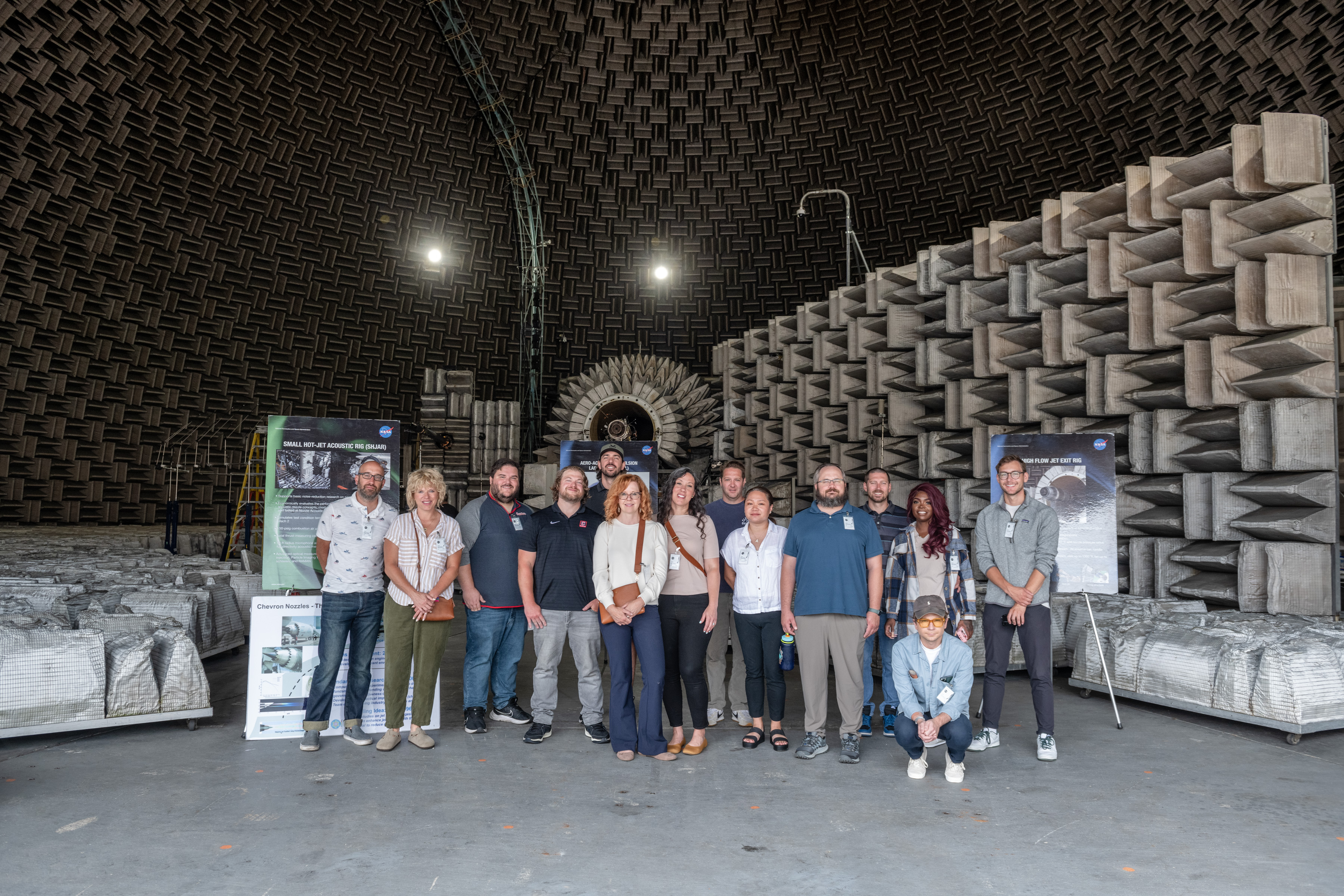
A large group of people stand in a large laboratory with fiberglass wedges mounted on the dome’s interior walls and floor areas adjacent to the test rigs.
Local creators representing food, tourism, apparel, and professional sports industries tour several of NASA Glenn Research Center’s facilities. They stop to pose in the Aero-Acoustic Propulsion Laboratory, a world-class facility for conducting aero-propulsion noise reduction research.
Credit: NASA/Sara Lowthian-Hanna 

NASA’s Glenn Research Center has made contributions to nearly every NASA mission since the agency’s inception. These contributions go beyond science and engineering to include designing NASA’s iconic logo. Affectionally called the “meatball,” it was created in Cleveland at the lab that would become NASA Glenn by graphic artist James Modarelli. 

This timeless brand symbol turned 65 last month. In honor of the occasion, NASA Glenn’s Office of Communications (OCOMM) hosted a Cleveland Creators Tour on July 10 and welcomed creators representing food, tourism, apparel, and professional sports industries to the center. During the event, they learned about NASA Glenn’s work and ways they can appropriately use NASA’s iconic logo. Like Modarelli, their creative interpretations could engage a new generation of creators, explorers, and space lovers. 

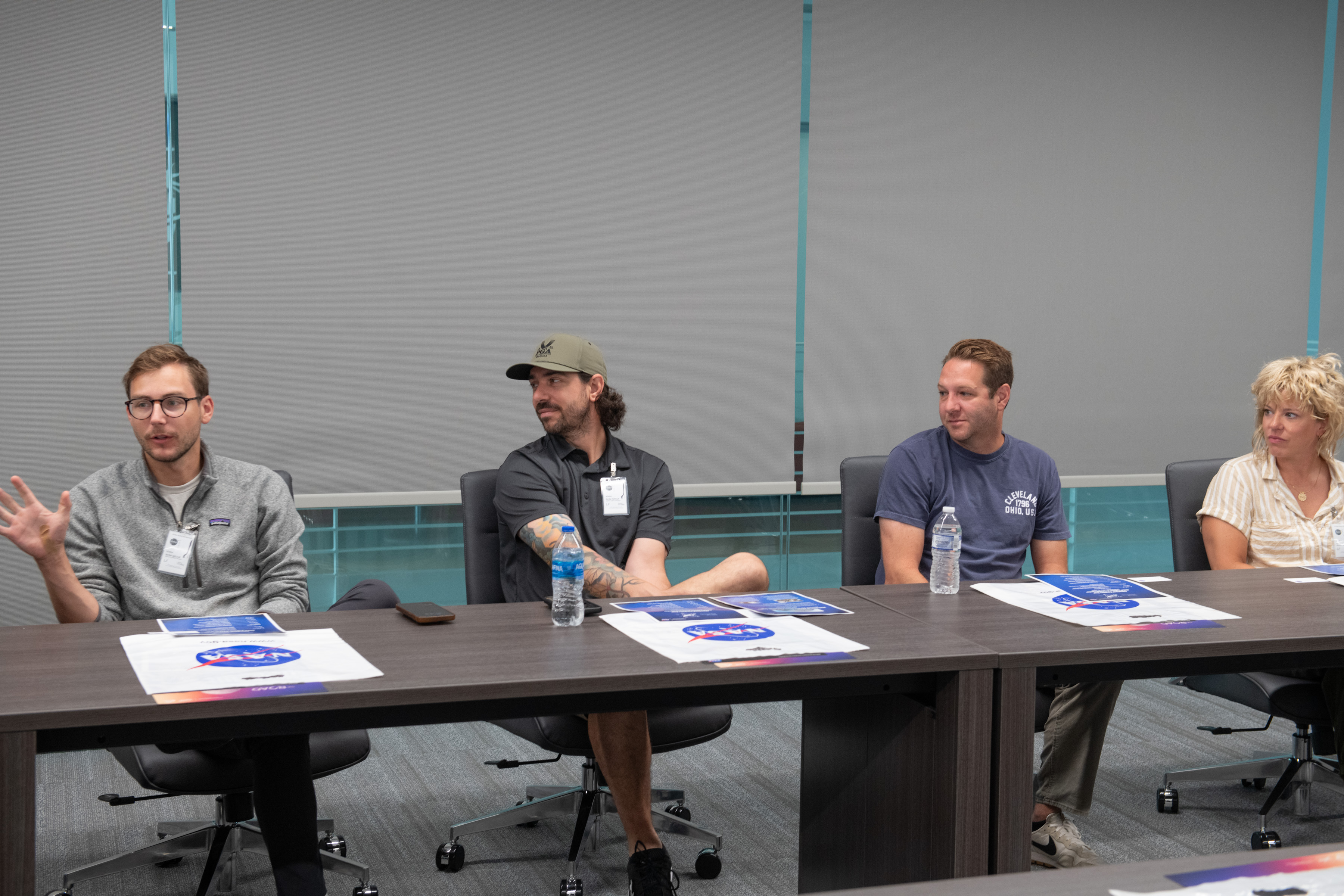
Four people sit behind a long table that contains information on NASA’s iconic logo.
Local creatives learn about ways they can appropriately use NASA’s iconic logo.
Credit: NASA/Sara Lowthian-Hanna 

Deputy Center Director Dawn Schaible provided a welcome and center overview, followed by NASA Merchandising and Branding Manager Aimee Crane, who explained how to work with the agency to use NASA brand symbols. Tours of several Glenn research facilities highlighted how Cleveland is improving flight and exploring space.  

Powered by WPeMatico

Get The Details…
Kelly M. Matter