Xiaoyi Li Engineers Instruments and the Teams that Get Them Done

Xiaoyi Li Engineers Instruments and the Teams that Get Them Done

Name: Xiaoyi Li

Title: Instrument Systems Engineer (ISE) of Venus Atmospheric Structure Investigation (VASI) for the Deep Atmosphere Venus Investigation of Noble gases, Chemistry, and Imaging (DAVINCI) and Deputy ISE of Comprehensive Auroral Precipitation Experiment (CAPE) instrument for the Geospace Dynamics Constellation (GDC) mission

Formal Job Classification: Instrument Systems Engineer

Organization: Instrument/Payload Systems Engineering Branch, Engineering Directorate (Code 592)

Xiaoyi Li in a shirt with NASA's logo and
Xiaoyi Li is an instrument systems engineer at NASA’s Goddard Space Flight Center in Greenbelt, Md. “My role involves not only managing technical tasks but also blending a variety of technical skills and personalities,” she said. “Understanding of the technical connections between different components is essential to ensure the integrated systems meet requirements. In addition, helping to cultivate collaboration and synthesize diverse expertise is vital. I find the process of learning about and achieving integration of different personalities within the team particularly rewarding.”
Photo Courtesy Xiaoyi Li

What do you do and what is most interesting about your role here at Goddard?

I have two roles. As the instrument systems engineer of VASI, I lead the technical team to develop a sensor suite for this component of NASA’s upcoming DAVINCI mission to Venus. I am also the deputy instrument systems engineer of CAPE where I assist the lead for developing the CAPE instrument for the Geospace Dynamics Constellation mission. The most intriguing aspect of my job is to collaborate with two talented and diverse technical teams, learn from team members, and come up with solutions to resolve technical challenges within budget and schedule.

What is your educational background?

I received a bachelor’s degree in mechanical engineering from Tongji University in Shanghai, China. I furthered my education at the University of New South Wales, Australia, where I earned a master’s in mechanical engineering. After I moved to the U.S., I received a Ph.D. in mechanical engineering from the University of Central Florida in Orlando. My doctorate was funded by a NASA grant to design, build and test a spaceflight cryocooler.

Why did you become a mechanical engineer?

I grew up in an engineering family. My mother was a chemical engineer. My father was an architect and structural engineer. I grew up watching them build large factories. While I would like to think I would have become an engineer without their influence, growing up with such incredible role models gave me access to, and an understanding of engineering disciplines that I never really considered any other profession.

What brought you to Goddard?

Upon completing my Ph.D. in 2005, I started out as a mission analyst for launch service programs at NASA’s Kennedy Space Center in Florida. In 2009, I began working as a thermal engineer for NASA’s Wallops Flight Facility in Virginia. In 2010, I came across a position that brought me back to my Ph.D. days and I couldn’t pass up the opportunity. I joined the Cryogenics and Fluids Branch at Goddard.

What did you do at Goddard before your current position?

I contributed to multiple engineering and science studies, proposals, and projects as a cryogenics engineer. Notably, I served as the principal investigator for two IRAD studies. One of the studies was submitted to the Patent Office and later was granted a new patent. Additionally, I was a co-inventor for another patent. Prior to joining my current group, I held the position of instrument cryogenics lead for the Roman Space Telescope. I served as the associate branch head in my current organization before devoting full time as an instrument systems engineer.

What are your main responsibilities as the instrument systems engineer for CAPE and VASI?

As the deputy instrument systems engineer for CAPE, my main responsibility is to assist the lead to coordinate multiple technical teams. The main focus is to work with the mechanical, electrical, thermal, structural, and other engineers to build electron/ion analyzers. For the VASI instrument, which has a smaller team, I take a more direct role in organizing and coordinating the technical work. This position allows me to engage in hands-on engineering tasks, which is extremely gratifying being able to get “my hands dirty.”

My role involves not only managing technical tasks but also blending a variety of technical skills and personalities. Understanding of the technical connections between different components is essential to ensure the integrated systems meet requirements. In addition, helping to cultivate collaboration and synthesize diverse expertise is vital. I find the process of learning about and achieving integration of different personalities within the team particularly rewarding.

How do you coordinate between all the different systems and personalities?

My experience includes over eight years in leadership roles, supported by extensive training and a robust technical background. This includes a one-year detail assignment in Goddard’s Science Mission Directorate. In this role, I facilitate collaboration within the engineering team, as well as between the engineers and the scientists to ensure that the instrument meets scientific objectives while adhering to well established engineering best practices and principles. Additionally, I empower our subject matter experts to pursue their innovative ideas while guiding them toward a unified direction through a shared vision. Although individual approaches may vary, we are all committed to the collective goal of a successful mission.

Who were your mentors and what did they advise?

I am grateful for the guidance of two mentors who have been instrumental in my development. Mr. Dave Everett, a systems engineer by trade and the current head of our branch, has been my technical mentor. He taught me, among many other things, the importance of understanding the overall system. Ms. Maria So, my leadership mentor, is a former senior executive service (SES) member at Goddard. As a fellow Chinese woman and engineer, her influence has been profound. She has guided me and acted as a sounding board for some very exciting but challenging decisions these past years. She also taught me the importance of seeing the bigger picture and the critical organizational leadership role to systems engineering, which has shaped my approach to leadership.

In turn, I apply these teachings and ideas when I informally mentor the younger engineers on my team. I encourage them to tackle problems independently by providing the necessary background knowledge and allowing them the autonomy to make decisions. I guide them when needed, but I believe in balance and the importance of learning through one’s own mistakes.

two women standing in an auditorium
Li with her leadership mentor, Maria So, at a Goddard “Taste of Asia” event celebrating Asian American, Native Hawaiian and Pacific Islander Heritage Month. “Her influence has been profound,” Li said. “She has guided me and acted as a sounding board for some very exciting but challenging decisions these past years. She also taught me the importance of seeing the bigger picture and the critical organizational leadership role to systems engineering, which has shaped my approach to leadership.”
Photo courtesy Xiaoyi Li

What is your involvement with the Asian American Native Hawaiian and Pacific Islander Employee Resource Group (AANHPI)?

I have been actively involved with the group, and I recently served as co-chair for three years. Our group is dedicated to advocating for the wellness of the Asian American community within Goddard. Our group also addresses any concerns from the community members by reporting directly to Goddard senior management. In addition, we foster a sense of community and support among members through community events including our annual “Taste of Asia and the Pacific Islands” lunch event at Goddard.

What do you do for fun?

I enjoy cooking a variety of cuisines, including Chinese and Thai (which I learned in Australia), as well as classic American dishes. My favorite culinary challenge is a rib roast using suis vide method, which involves 18 hours of slow cooking before finishing it in the oven! Additionally, I enjoy playing video games with my family and friends, which is a great way to relax and connect.

By Elizabeth M. Jarrell
NASA’s Goddard Space Flight Center, Greenbelt, Md.
A banner graphic with a group of people smiling and the text "Conversations with Goddard" on the right. The people represent many genders, ethnicities, and ages, and all pose in front of a soft blue background image of space and stars.

Conversations With Goddard is a collection of Q&A profiles highlighting the breadth and depth of NASA’s Goddard Space Flight Center’s talented and diverse workforce. The Conversations have been published twice a month on average since May 2011. Read past editions on Goddard’s “Our People” webpage.

Share

Details

Last Updated

Aug 14, 2024

Editor
Rob Garner
Contact
Rob Garner
Location
Goddard Space Flight Center

Powered by WPeMatico

Get The Details…
Rob Garner
NASA to Provide Crew Flight Test Status Update

NASA to Provide Crew Flight Test Status Update

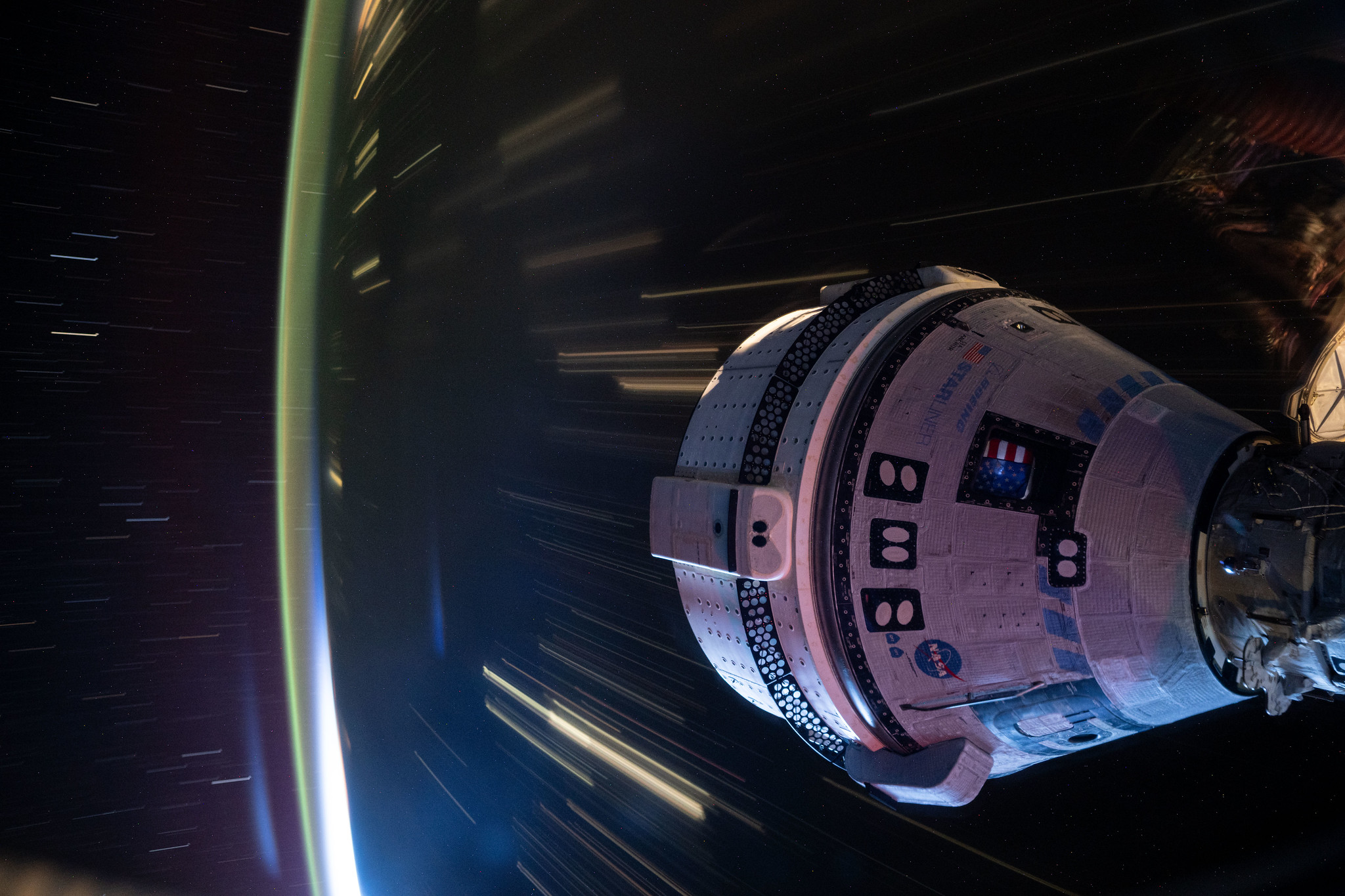
A long-duration image of Boeing's Starliner spacecraft docked to the International Space Station as it soared 258 miles above western China.
Boeing’s Starliner spacecraft is pictured docked to the International Space Station. This long-duration photograph was taken at night from the orbital complex as it soared 258 miles above western China.
Credit: NASA

NASA will host a media teleconference at 1 p.m. EDT, Wednesday, Aug. 14, to provide an update on the agency’s Boeing Crew Flight Test. Mission managers continue to evaluate the Starliner spacecraft’s readiness in advance of decisional meetings no earlier than next week regarding the return of NASA astronauts Butch Wilmore and Suni Williams.

Audio of the teleconference will stream live on the agency’s website at:

https://www.nasa.gov/nasatv

Participants include:

  • Ken Bowersox, associate administrator, NASA’s Space Operations Mission Directorate
  • Joel Montalbano, deputy associate administrator, NASA’s Space Operations Mission Directorate
  • Russ DeLoach, chief, NASA’s Office of Safety and Mission Assurance 
  • NASA chief astronaut Joe Acaba
  • Emily Nelson, chief flight director, NASA’s Flight Operations Directorate

To ask questions during the teleconference, media must RSVP no later than two hours prior to the start of the call to Jimi Russell at: james.j.russell@nasa.gov. NASA’s media accreditation policy is available online.

NASA’s Boeing Crew Flight Test launched on June 5 on a ULA (United Launch Alliance) Atlas V rocket from Space Launch Complex-41 at Cape Canaveral Space Force Station in Florida. It is an end-to-end test of the Starliner system as part of the agency’s Commercial Crew Program. Through partnership with American private industry, NASA is opening access to low Earth orbit and the space station to more people, science, and commercial opportunities.

For NASA’s blog and more information about the mission, visit:

https://www.nasa.gov/commercialcrew

-end-

Josh Finch / Jimi Russell
Headquarters, Washington
202-358-1100
joshua.a.finch@nasa.gov / james.j.russell@nasa.gov

Courtney Beasley / Leah Cheshier
Johnson Space Center, Houston
281-483-5111
courtney.m.beasley@nasa.gov / leah.d.cheshier@nasa.gov

Powered by WPeMatico

Get The Details…
Tiernan P. Doyle

NASA Challenge Seeks ‘Cooler’ Solutions for Deep Space Exploration

NASA Challenge Seeks ‘Cooler’ Solutions for Deep Space Exploration

Human Lander Challenge (HuLC) banner.

NASA’s Human Lander Challenge, or HuLC, is now open and accepting submissions for its second year. As NASA aims to return astronauts to the Moon through its Artemis campaign in preparation for future missions to Mars, the agency is seeking ideas from college and university students for evolved supercold, or cryogenic, propellant applications for human landing systems.

As part of the 2025 HuLC competition, teams will aim to develop innovative solutions and technology developments for in-space cryogenic liquid storage and transfer systems as part of future long-duration missions beyond low Earth orbit.

“The HuLC competition represents a unique opportunity for Artemis Generation engineers and scientists to contribute to groundbreaking advancements in space technology,” said Esther Lee, an aerospace engineer leading the navigation sensors technology assessment capability team at NASA’s Langley Research Center in Hampton, Virginia. “NASA’s Human Lander Challenge is more than just a competition – it is a collaborative effort to bridge the gap between academic innovation and practical space technology. By involving students in the early stages of technology development, NASA aims to foster a new generation of aerospace professionals and innovators.”

The Goal

Through Artemis, NASA is working to send the first woman, first person of color, and first international partner astronaut to the Moon to establish long-term lunar exploration and science opportunities. Artemis astronauts will descend to the lunar surface in a commercial Human Landing System. The Human Landing System Program is managed by NASA’s Marshall Space Flight Center in Huntsville, Alabama.

Cryogenic, or super-chilled, propellants like liquid hydrogen and liquid oxygen are integral to NASA’s future exploration and science efforts. The temperatures must stay extremely cold to maintain a liquid state. Current state-of-the-art systems can only keep these substances stable for a matter of hours, which makes long-term storage particularly problematic. For NASA’s HLS mission architecture, extending storage duration from hours to several months will help ensure mission success.

“NASA’s cryogenics work for HLS focuses on several key development areas, many of which we are asking proposing teams to address,” said Juan Valenzuela, a HuLC technical advisor and aerospace engineer specializing in cryogenic fuel management at NASA Marshall. “By focusing research in these key areas, we can explore new avenues to mature advanced cryogenic fluid technologies and discover new approaches to understand and mitigate potential problems.”

The Competition

Interested teams from U.S.-based colleges and universities should submit a non-binding Notice of Intent (NOI) by Oct. 6, 2024, and submit a proposal package by March 3, 2025. Based on proposal package evaluations, up to 12 finalist teams will be selected to receive a $9,250 stipend to further develop and present their concepts to a panel of NASA and industry judges at the 2025 HuLC Forum in Huntsville, Alabama, near NASA Marshall, in June 2025. The top three placing teams will share a prize purse of $18,000.

Teams’ potential solutions should focus on one of the following categories: On-Orbit Cryogenic Propellant Transfer, Microgravity Mass Tracking of Cryogenics, Large Surface Area Radiative Insulation, Advanced Structural Supports for Heat Reduction, Automated Cryo-Couplers for Propellant Transfer, or Low Leakage Cryogenic Components.

NASA’s Human Lander Challenge is sponsored by the Human Landing System Program within the Exploration Systems Development Mission Directorate and managed by the National Institute of Aerospace. 

For more information on NASA’s 2025 Human Lander Challenge, including how to participate, visit the HuLC Website.

News Media Contact

Corinne Beckinger 
Marshall Space Flight Center, Huntsville, Ala. 
256.544.0034  
corinne.m.beckinger@nasa.gov 

Powered by WPeMatico

Get The Details…
Lee Mohon

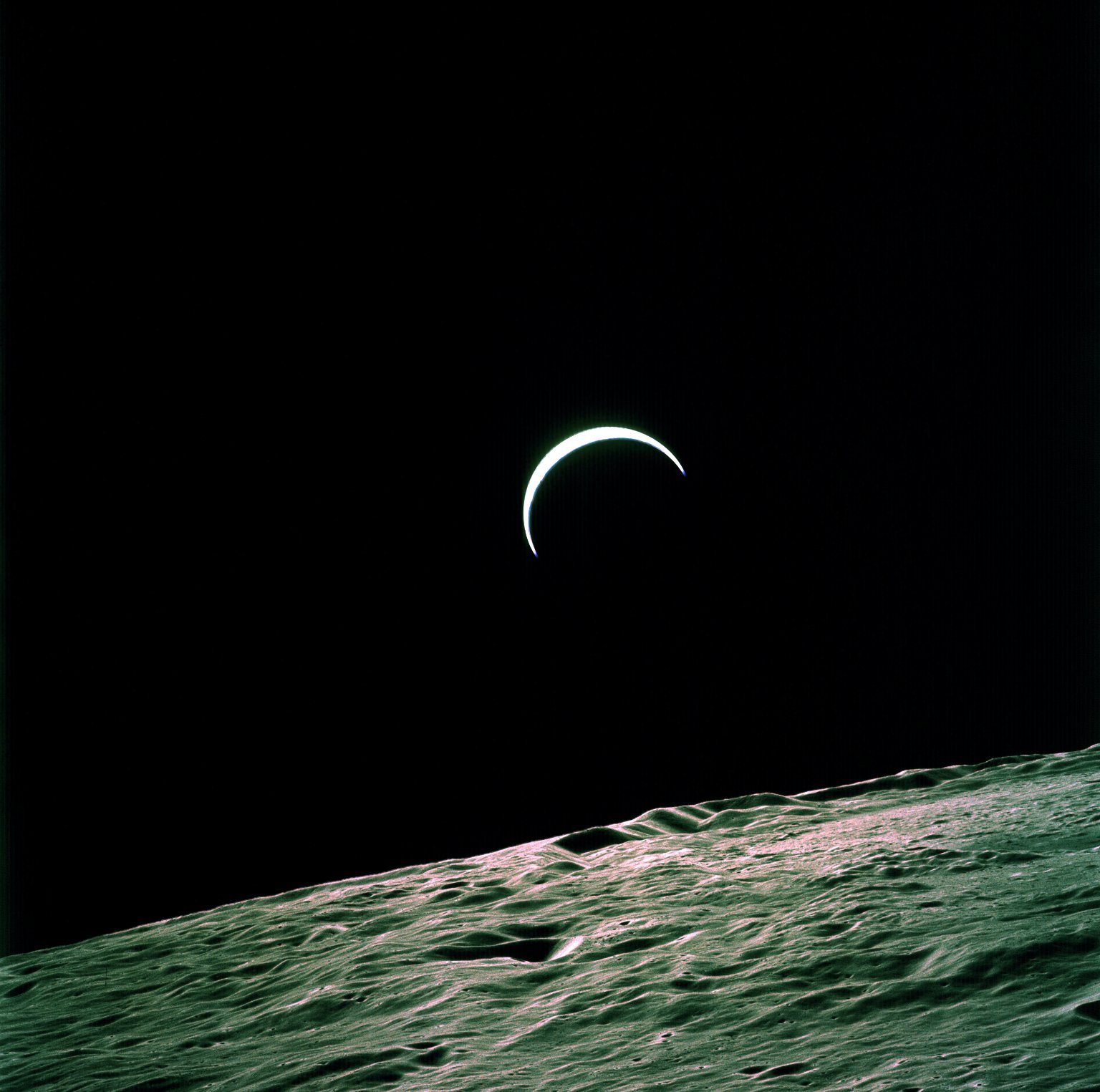
Earth’s Crest Over the Lunar Horizon

Earth’s Crest Over the Lunar Horizon

The Earth appears in the blackness of space as a slim white crescent. In the foreground is the rough, rocky gray surface of the Moon.
NASA

This view of the Earth’s crest over the lunar horizon was taken on July 29, 1971, during the Apollo 15 lunar landing mission. Astronauts David Scott, Alfred Worden, and James Irwin launched from NASA’s Kennedy Space Center in Florida aboard a Saturn V launch vehicle.

Designed to explore the Moon over longer periods, greater ranges, and with more instruments for the collection of scientific data than before, Apollo 15 included the introduction of a $40 million lunar roving vehicle (LRV) that reached a top speed of 10 mph (16 kph) across the Moon’s surface.

Upon landing on the Moon at the Hadley-Apennine site, Scott and Irwin conducted four spacewalks, including three excursions using the LRV, for a combined total of 19 hours. Worden remained in orbit aboard the command module Endeavour.

See more photos from the Apollo 15 mission.

Image credit: NASA

Powered by WPeMatico

Get The Details…
Monika Luabeya

Primary Instrument for Roman Space Telescope Arrives at NASA Goddard

Primary Instrument for Roman Space Telescope Arrives at NASA Goddard

A photo of Roman's Wide Field Instrument
This photo shows the Wide Field Instrument for NASA’s Nancy Grace Roman Space Telescope arriving at the big clean room at NASA’s Goddard Space Flight Center. About the size of a commercial refrigerator, this instrument will help astronomers explore the universe’s evolution and the characteristics of worlds outside our solar system. Unlocking these cosmic mysteries and more will offer a better understanding of the nature of the universe and our place within it.
NASA/Chris Gunn

The primary instrument for NASA’s Nancy Grace Roman Space Telescope is a sophisticated camera that will survey the cosmos from the outskirts of our solar system all the way out to the edge of the observable universe. Called the Wide Field Instrument, it was recently delivered to the agency’s Goddard Space Flight Center in Greenbelt, Maryland.

The camera’s large field of view, sharp resolution, and sensitivity from visible to near-infrared wavelengths will give Roman a deep, panoramic view of the universe. Scanning much larger portions of the sky than astronomers can with NASA’s Hubble or James Webb space telescopes will open new avenues of cosmic exploration. Roman is designed to study dark energy (a mysterious cosmic pressure thought to accelerate the universe’s expansion), dark matter (invisible matter seen only via its gravitational influence), and exoplanets (worlds beyond our solar system).

“This instrument will turn signals from space into a new understanding of how our universe works,” said Julie McEnery, the Roman senior project scientist at Goddard. “To achieve its main goals, the mission will precisely measure hundreds of millions of galaxies. That’s quite a dataset for all kinds of researchers to pull from, so there will be a flood of results on a vast array of science.”

A photo of Roman's Wide Field Instrument
Technicians inspect NASA’s Nancy Grace Roman Space Telescope’s Wide Field Instrument upon delivery to the big clean room at NASA’s Goddard Space Flight Center.
NASA/Chris Gunn

About 1,000 people contributed to the Wide Field Instrument’s development, from the initial design phase to assembling it from around a million individual components. The WFI’s design was a collaborative effort between Goddard and BAE Systems in Boulder, Colorado.  Teledyne Imaging Sensors, Hawaii Aerospace Corporation, Applied Aerospace Structures Corporation, Northrop Grumman, Honeybee Robotics, CDA Intercorp, Alluxa, and JenOptik provided critical components. Those parts and many more, made by other vendors, were delivered to Goddard and BAE Systems, where they were assembled and tested prior to the instrument’s delivery to Goddard this month.

“I am so happy to be delivering this amazing instrument,” said Mary Walker, Roman’s Wide Field Instrument manager at Goddard. “All the years of hard work and the team’s dedication have brought us to this exciting moment.”

NASA’s Nancy Grace Roman Space Telescope is a next-generation observatory that will survey the infrared universe from beyond the orbit of the Moon. The spacecraft’s giant camera, the Wide Field Instrument, will be fundamental to this exploration. Data it gathers will enable scientists to discover new and uniquely detailed information about planetary systems around other stars. The instrument will also map how matter is structured and distributed throughout the cosmos, which could ultimately allow scientists to discover the fate of the universe. Watch this video to see a simplified version of how the Wide Field Instrument works.
NASA’s Goddard Space Flight Center

Seeing the Bigger Picture

After Roman launches by May 2027, each of the Wide Field Instrument’s 300-million-pixel images will capture a patch of the sky bigger than the apparent size of a full moon. The instrument’s large field of view will enable sweeping celestial surveys, revealing billions of cosmic objects across vast stretches of time and space. Astronomers will conduct research that could take hundreds of years using other telescopes.

And by observing from space, Roman’s camera will be very sensitive to infrared light –– light with longer wavelengths than our eyes can see –– from far across the cosmos. This ancient cosmic light will help scientists address some of the biggest cosmic mysteries, one of which is how the universe evolved to its present state.

From the telescope, light’s path through the instrument begins by passing through one of several optical elements in a large wheel. These elements include filters, which allow specific wavelengths of light to pass through, and a grism and prism, which split light into all of its individual colors. These detailed patterns, called spectra, reveal information about the object that emitted the light.

Then, the light travels on toward the camera’s set of 18 detectors, which each contain 16 million pixels. The large number of detectors and pixels gives Roman its large field of view. The instrument is designed for accurate, stable images and exquisite precision in measuring the exact amount of light in every pixel of every image, giving Roman unprecedented power to study dark energy. The detectors will be held at about minus 300 degrees Fahrenheit (minus 184 degrees Celsius) to increase sensitivity to the infrared universe.

“When the light reaches the detectors, that marks the end of what may have been a 10-billion-year journey through space,” said Art Whipple, an aerospace engineer at Goddard who has contributed to the Wide Field Instrument’s design and construction for more than a decade.

Once Roman begins observing, its rapid data delivery will require new analysis techniques.

“If we had every astronomer on Earth working on Roman data, there still wouldn’t be nearly enough people to go through it all,” McEnery said. “We’re looking at modern techniques like machine learning and artificial intelligence to help sift through Roman’s observations and find where the most exciting things are.”

Now that the Wide Field Instrument is at Goddard, it will be tested to ensure everything is operating as expected. It will be integrated onto the instrument carrier and mated to the telescope this fall, bringing scientists one step closer to making groundbreaking discoveries for decades to come.

A panel listing many names
One panel on the Wide Field Instrument for NASA’s Nancy Grace Roman Space Telescope contains hundreds of names of team members who helped design and build the instrument.
BAE Systems

To virtually tour an interactive version of the telescope, visit:

https://roman.gsfc.nasa.gov/interactive

The Nancy Grace Roman Space Telescope is managed at NASA’s Goddard Space Flight Center in Greenbelt, Maryland, with participation by NASA’s Jet Propulsion Laboratory and Caltech/IPAC in Southern California, the Space Telescope Science Institute in Baltimore, and a science team comprising scientists from various research institutions. The primary industrial partners are BAE Systems, Inc. in Boulder, Colorado; L3Harris Technologies in Rochester, New York; and Teledyne Scientific & Imaging in Thousand Oaks, California.

By Ashley Balzer
NASA’s Goddard Space Flight Center, Greenbelt, Md.

Media contact:

Claire Andreoli
claire.andreoli@nasa.gov
NASA’s Goddard Space Flight Center, Greenbelt, Md.
301-286-1940

Share

Details

Last Updated

Aug 13, 2024

Editor
Ashley Balzer
Contact
Ashley Balzer
Location
Goddard Space Flight Center

Powered by WPeMatico

Get The Details…
Ashley Balzer