NASA Public Engagement Specialist Loves to Inspire Kids with STEM

NASA Public Engagement Specialist Loves to Inspire Kids with STEM

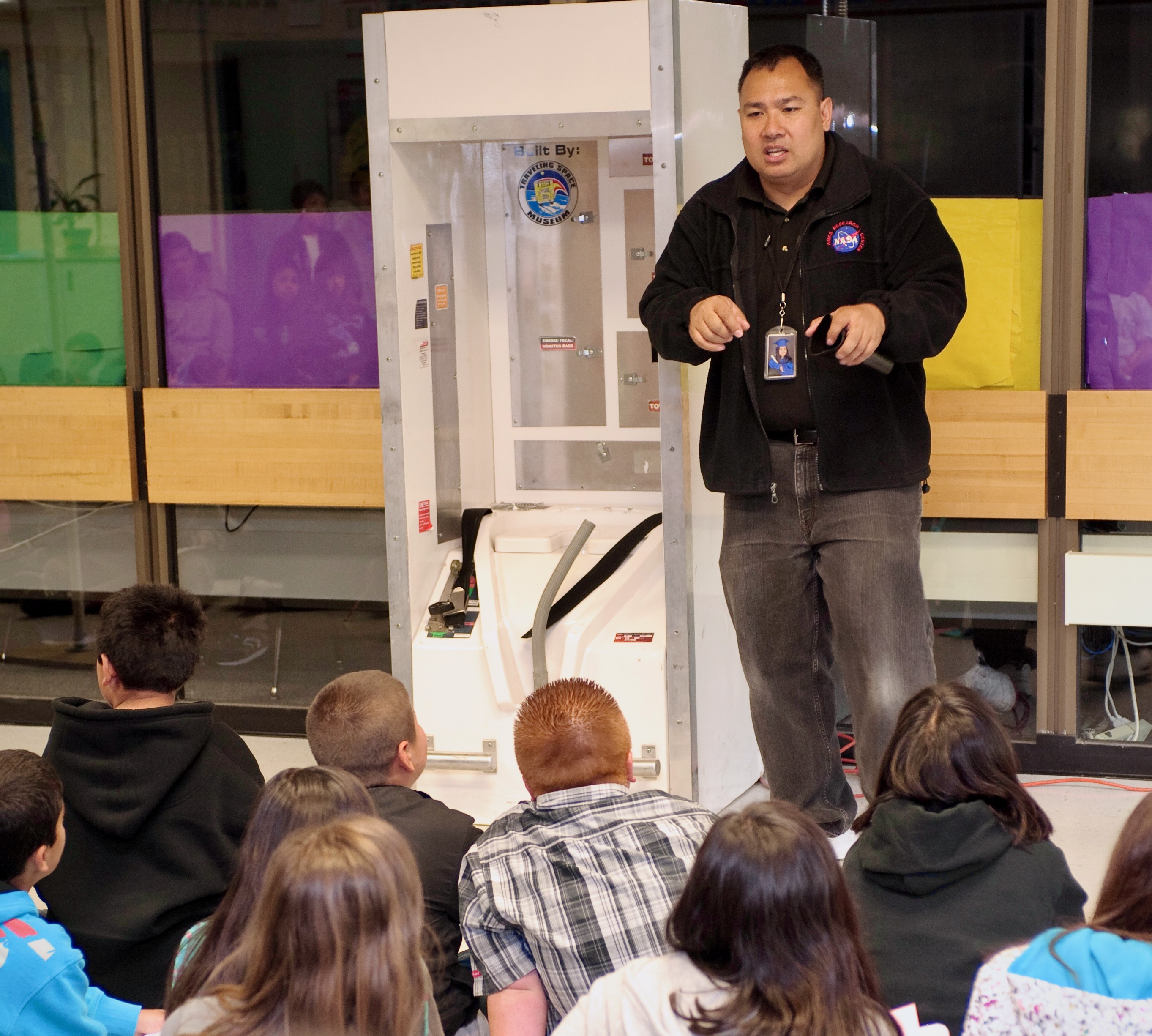
A group of students, seated on the ground, face the front of the room and listen while Jonas Dino talks to them.
Jonas Dino speaks to students at the Cezar Chavez Middle School in Union City, California, as part of a NASA-sponsored traveling space museum tour of Bay Area schools.

Careers at NASA were not on his radar growing up. But Jonas Dino, public engagement specialist at NASA’s Ames Research Center in California’s Silicon Valley, ended up with his perfect job that involves connecting people with NASA.

One of the best parts of his job is to learn first-hand about NASA’s cutting-edge research and translate these concepts to the next generation.

“I’m excited about what NASA does and where we are going,” said Dino, “As an extrovert, I love interacting with the public, especially little kids.”

When speaking to younger children, Dino often kneels, to get to their level. With the future of aeronautics and space exploration in mind, he has a message for them: ‘NASA needs you.’ 

“They love space and think it is very cool, but many don’t think they could ever work at NASA,” said Dino. “I want to help them see: anything is possible.”

A person rolling a handcart of boxes off the ramp of a small cargo trailer.
NASA’s Ames Research Center in California’s Silicon Valley takes NASA’s message on the road to area schools and public events with its public engagement trailer. Jonas Dino is shown unloading the trailer for an event.
NASA/Dominic Hart

A path to NASA he didn’t know existed

A first-generation immigrant from the Philippines, Dino’s academic start focused on studying life sciences. 

“As a Filipino, you’re encouraged to go into the medical field as a career,” said Dino. 

After joining the Marine Corps, Reserve, he returned home to study biology at San Jose State University (SJSU). After doing poorly at organic chemistry, he took his next “logical” step and switched his major to nursing. After working in the field, he realized that was not for him either. Luckily, he had been taking psychology classes, following his interests, and could graduate with a psychology degree by only taking two more classes.

After three changes in major and just getting ready to graduate, Dino was hit by a car. His injury and subsequent recovery gave him time to evaluate what he wanted to do with his life. 

“I was pretty good at talking to people and teaching,” said Dino. “Maybe I could to that as a job?”  

Dino started his teaching career at James Logan – the same high school he graduated from in 1985. He eventually ran for and was elected as a trustee for the New Haven Unified School District in the San Francisco Bay Area. Unfortunately, to take that seat, he could not be a teacher in the district – a conflict of interest. Suddenly needing a job, he found the internship book at SJSU where he was getting his master’s degree. Soon, he was evaluating opportunities: a high-tech company or NASA?

“It was during the dotcom boom and my family strongly encouraged me to take the high-tech internship,” said Dino. “I took the internship at NASA Ames and have never regretted my decision.”

Working as a communicator, Dino has covered the gamut of NASA projects from aeronautics to space missions, including a lunar mission, LCROSS, that helped confirm the presence of water on the Moon. 

His favorite part of his job is STEM engagement. 

“There is nothing like seeing a kid’s eyes get larger, or that proverbial light-bulb-turn-on-above-their-heads when you teach them something new,” said Dino. “When you see kids are hungry for science, you need to feed it.”

He did serve his community on the school board for four terms – 16 years. Now, he serves as an advocate for the NASA Ames workforce as president of the Ames Federal Employees Union.

“NASA is a great place to work, it has been a blast, for nearly 24 years.”

Science data from NASA’s Lunar Crater Observation and Sensing Satellite (LCROSS) mission’s 2009 lunar impact helped confirm the presence of water on the Moon. Here, LCROSS project manager, Daniel Andrews (left), points to a model of the LCROSS spacecraft integrated with the Atlas V Centaur upper stage rocket. Jonas Dino (right) led public communications for the mission at NASA Ames.
NASA/Eric James

Nudging an asteroid

A little push in the right direction, even incidental, can have a huge effect on your trajectory – and thus where you end up – if it happens early on. This is true both for rogue rocks, on the loose in the solar system, and for people too.

“When I was a kid, I took apart everything because I wanted to know what’s inside and how everything worked,” said Dino. “Looking back, I should have been an engineer.” 

“I have two children, a son and a daughter,” said Dino. “I’m encouraging my daughter to go into STEM; we need more young women in STEM careers but too many girls are pushed away from this choice by the time they are in middle school. I also want to encourage Filipino kids to make their own career choices and maybe even to come work for NASA.”

To help pursue these goals, Dino started a memorial scholarship in honor of his father for Filipino students going into STEM fields. He handed out the inaugural scholarship for this last May. 

There is nothing like seeing a kid’s eyes get larger, or that proverbial light-bulb-turn-on-above-their-heads when you teach them something new.

Jonas Dino

Jonas Dino

Public engagement specialist, president of the Ames Federal Employees Union

NASA never stops for Dino. Whether at work or on his free time, he’s always talking about NASA. While dishing out samples of his Filipino adobo recipe during a recent adobo-cooking contest – according to Dino, every Filipino family has their own recipe for this dish – he also handed out NASA knowledge. He won second place.

Powered by WPeMatico

Get The Details…
Gianine Figliozzi

NASA’s First-Ever Quantum Memory Made at Glenn Research Center

NASA’s First-Ever Quantum Memory Made at Glenn Research Center

3 min read

Preparations for Next Moonwalk Simulations Underway (and Underwater)

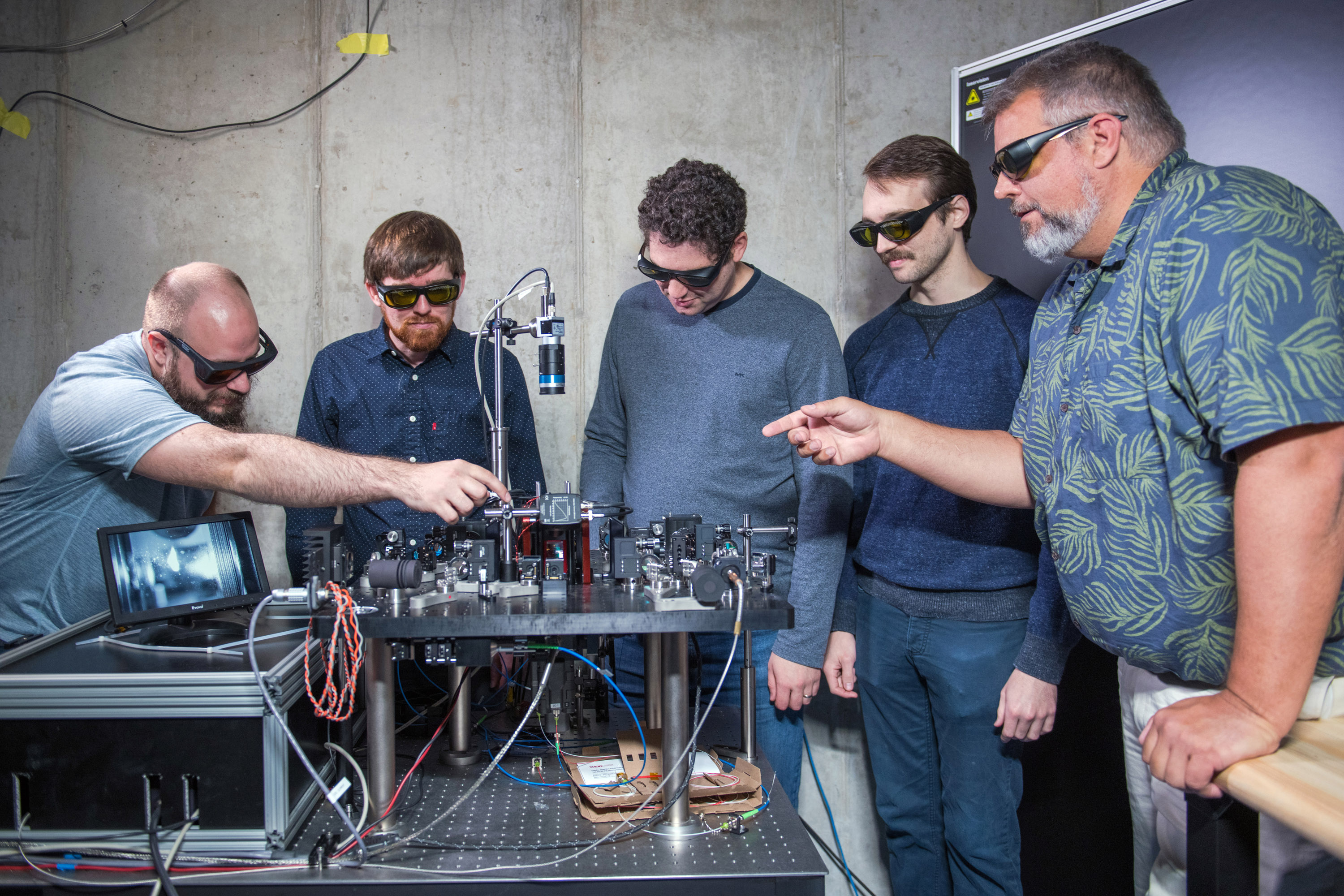
Five engineers inspect laboratory equipment. The quantum memory the equipment holds is shown on a digital screen. Engineers wear eye protection and point at the equipment.
NASA Glenn Research Center’s quantum team stands with new quantum memory laboratory equipment.
Credit: NASA/Jef Janis

Bringing bright minds together has once again proven to be the key to unlocking the mysteries of the universe. Researchers developed technology that will store information within a cloud of atoms.

Together with Infleqtion Inc., researchers at NASA’s Glenn Research Center in Cleveland produced NASA’s first-ever quantum memory. This technology is NASA’s first step in creating a large-scale quantum network, which could lead to more secure space communications and, eventually, new scientific discoveries.

Quantum memory stores information encoded in matter or on photons — which are single particles of light ­— for a certain amount of time. The memory developed in partnership with Glenn stores information in a cloud of laser-cooled atoms and later releases it as photons.

On Earth, many quantum networks use fiber optic infrastructure. However, quantum information degrades after just a few dozen miles, greatly limiting the size of any future network. Quantum memory will help enable the expansion of quantum networks to send information over longer distances.

Credit: NASA/Steve Logan

“If we’re able to put quantum memory into space, then we could use free space transmission and further those distances to spanning the country,” said Dr. Adam Fallon, quantum scientist at NASA Glenn.

A large-scale quantum network would process information faster, provide better information security, and improve the accuracy of how we explore the world compared to a traditional computer network.

“So, quantum may provide NASA the ability to explore or sense things in space that we could not do otherwise classically,” said Evan Katz, quantum scientist at NASA Glenn. “While quantum networks are a little further down the road, in the here-and-now, we are excited to have received this memory through an SBIR effort with Infleqtion Inc. so that we can understand more about how quantum memory impacts quantum networks.”

A small cloud of light is illuminated by a red laser. It appears hazy in a cube.
A cloud of rubidium atoms is illuminated by a red laser. Quantum memory stores information that is encoded in matter or on photons for a certain amount of time.
Credit: NASA/Jef Janis

Glenn’s quantum team intends to study and refine the new technology and then plug what they’ve learned into models to simulate how it would work in a large-scale quantum network. From there, they plan to provide feedback to NASA, academia, and industry so all parties can come closer to their goal of developing a quantum network.

Infleqtion Inc. created the quantum memory through the NASA Small Business Innovation Research/Small Business Technology Transfer (SBIR/STTR) Program, which provides funding for research, development, and demonstration of innovative technologies that fulfill the needs of NASA and the commercial marketplace.

Learn more about the SBIR/STTR program.

Powered by WPeMatico

Get The Details…
Kelly M. Matter

NASA Sets Coverage for Northrop Grumman’s 21st Station Resupply Launch

NASA Sets Coverage for Northrop Grumman’s 21st Station Resupply Launch

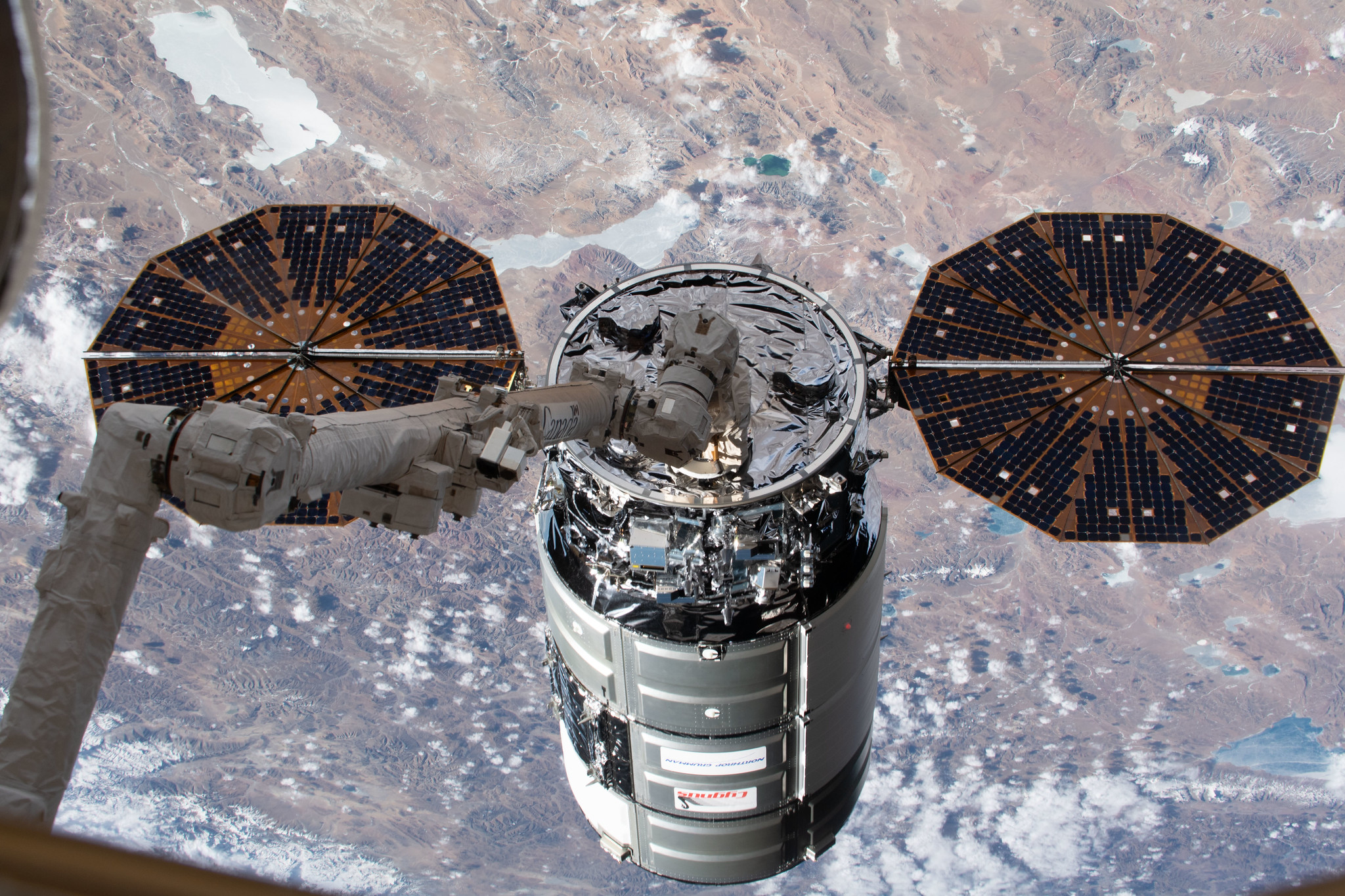
An image of Northrop Grumman’s Cygnus spacecraft in the grips of the Canadarm2 robotic arm shortly after being captured at the International Space Station
Northrop Grumman’s Cygnus spacecraft in the grips of the Canadarm2 robotic arm shortly after being captured at the International Space Station.
Credit: NASA

NASA, Northrop Grumman, and SpaceX are targeting 11:28 a.m. EDT on Saturday, Aug. 3, for the next launch to deliver science investigations, supplies, and equipment to the International Space Station. This launch is the 21st Northrop Grumman commercial resupply services mission to the orbital laboratory for the agency.

NASA’s live launch coverage will begin at 11:10 a.m. on NASA+, NASA Television, the NASA app, YouTube, and the agency’s website. Learn how to stream NASA TV through a variety of platforms, including social media.

Filled with nearly 8,200 pounds of supplies, the Northrop Grumman Cygnus spacecraft, carried on the SpaceX Falcon 9 rocket, will launch from Space Launch Complex 40 at Cape Canaveral Space Force Station in Florida.

NASA coverage of arrival will begin at 2:30 a.m. Monday, Aug. 5 on NASA+, NASA Television, the NASA app, YouTube, and the agency’s website. NASA astronaut Matthew Dominick will capture Cygnus using the station’s robotic arm, and NASA astronaut Jeanette Epps will act as backup to Dominick. After capture, the spacecraft will be installed on the Unity module’s Earth-facing port.

Highlights of space station research facilitated by delivery aboard this Cygnus are:

  • Test articles to evaluate liquid and gas flow through porous media found in space station life support systems.
  • A balloon, penny, and hexnut for a new STEMonstration on centripetal force.
  • Microorganisms known as Rotifers to examine the effects of spaceflight on DNA repair mechanisms.
  • A bioreactor to demonstrate the production of many high-quality blood and immune stem cells.
  • Vascularized liver tissue to analyze the development of blood vessels in engineered tissue flown to the space station.

NASA’s CubeSat Launch Initiative also is sending two CubeSats to deploy from the orbiting laboratory, CySat-1 from Iowa State University and DORA (Deployable Optical Receiver Aperture) from Arizona State University, making up ELaNa 52 (Educational Launch of Nanosatellites).

Media interested in speaking to a science subject matter expert, should contact Sandra Jones at sandra.p.jones@nasa.gov.

The Cygnus spacecraft is scheduled to remain at the space station until January when it will depart the orbiting laboratory at which point it will burn up in the Earth’s atmosphere. This spacecraft is named the S.S. Richard “Dick” Scobee after the former NASA astronaut.

NASA’s mission coverage is as follows (all times Eastern and subject to change based on real-time operations):

Friday, Aug. 2

3 p.m. – Prelaunch media teleconference (no earlier than one hour after completion of the Launch Readiness Review) with the following participants:

  • Bill Spetch, operations integration manager, NASA’s International Space Station Program
  • Meghan Everett, deputy chief scientist, NASA’s International Space Station Program
  • Ryan Tintner, vice president, civil space systems, Northrop Grumman
  • Jared Metter, director, flight reliability, SpaceX
  • Melody Lovin, launch weather officer, Cape Canaveral Space Force Station’s 45th Weather Squadron

Media who wish to participate by phone must request dial-in information by 1 p.m. Aug. 2, by emailing Kennedy’s newsroom at ksc-media-accreditat@mail.nasa.gov.

Audio of the teleconference will stream live on the agency’s website at:

https://www.nasa.gov/nasatv

Saturday, Aug. 3:

11:10 a.m. – Launch coverage begins on NASA+, NASA Television, the NASA app, YouTube, and the agency’s website.

11:28 a.m. – Launch

NASA Television launch coverage
Live coverage of the launch on NASA Television will begin at 11:10 a.m., Aug. 3. For downlink information, schedules, and links to streaming video, visit: https://nasa.gov/nasatv.

Audio of the news teleconference and launch coverage will not be carried on the NASA “V” circuits. Launch coverage without NASA TV commentary via a tech feed will not be available for this launch.

NASA website launch coverage
Launch day coverage of the mission will be available on the NASA website. Coverage will include live streaming and blog updates beginning no earlier than 11:10 a.m., Aug. 3, as the countdown milestones occur. On-demand streaming video on NASA+ and photos of the launch will be available shortly after liftoff. For questions about countdown coverage, contact the NASA Kennedy newsroom at 321-867-2468. Follow countdown coverage on our International Space Station blog for updates.

Attend Launch Virtually

Members of the public can register to attend this launch virtually. NASA’s virtual guest program for this mission also includes curated launch resources, notifications about related opportunities or changes, and a stamp for the NASA virtual guest passport following launch.

Engage on Social Media

Let people know you’re watching the mission on X, Facebook, and Instagram by following and tagging these accounts:

X: @NASA, @NASAKennedy, @NASASocial, @Space_Station, @ISS_Research, @ISS_CASIS

Facebook: NASA, NASAKennedy, ISS, ISS National Lab

Instagram: @NASA, @NASAKennedy, @ISS, @ISSNationalLab

Coverage en Espanol

Did you know NASA has a Spanish section called NASA en Espanol? Check out NASA en Espanol on X, Instagram, Facebook, and YouTube for additional mission coverage.

Para obtener información sobre cobertura en español en el Centro Espacial Kennedy o si desea solicitar entrevistas en español, comuníquese con Antonia Jaramillo o Messod Bendayan a: antonia.jaramillobotero@nasa.gov o messod.c.bendayan@nasa.gov.

Learn more about the commercial resupply mission at:

https://www.nasa.gov

-end-

Claire O’Shea / Josh Finch
Headquarters, Washington
202-358-1100
claire.a.o’shea@nasa.gov / joshua.a.finch@nasa.gov

Stephanie Plucinsky / Steven Siceloff
Kennedy Space Center, Fla.
321-876-2468
stephanie.n.plucinsky@nasa.gov / steven.p.siceloff@nasa.gov

Sandra Jones
Johnson Space Center, Houston
281-483-5111
sandra.p.jones@nasa.gov

Laura Keefe
Northrop Grumman, Cygnus
571-205-0258
laura.keefe@ngc.com

Powered by WPeMatico

Get The Details…
Tiernan P. Doyle

Overview for NASA’s Northrop Grumman 21st Commercial Resupply Mission

Overview for NASA’s Northrop Grumman 21st Commercial Resupply Mission

NASA's Northrop Grumman 21st commercial resupply mission will launch on a SpaceX Falcon 9 rocket to deliver research and supplies to the International Space Station.
NASA’s Northrop Grumman 21st commercial resupply mission will launch on a SpaceX Falcon 9 rocket to deliver research and supplies to the International Space Station.
NASA
NASA’s Northrop Grumman 21st commercial resupply mission will launch from Space Launch Complex 40 at Cape Canaveral Space Force Station in Florida.
NASA

NASA, Northrop Grumman, and SpaceX are targeting no earlier than 11:28 a.m. EDT on Saturday, Aug. 3, for the next launch to deliver scientific investigations, supplies, and equipment to the International Space Station. Filled with more than 8,200 pounds of supplies, the Cygnus cargo spacecraft, carried on the SpaceX Falcon 9 rocket, will launch from Space Launch Complex 40 at Cape Canaveral Space Force Station in Florida. This launch is the 21st Northrop Grumman commercial resupply services mission to the orbital laboratory for the agency.

Live launch coverage will begin at 11:10 a.m. and stream on NASA+, NASA Television, the NASA app, YouTube, and the agency’s website. Learn how to stream NASA TV through a variety of platforms.

Learn more at: www.nasa.gov/northropgrumman

Northrop Grumman S.S. Richard Dick” Scobee

NASA selected Richard Scobee as an astronaut in 1978. Scobee flew as a pilot of STS 41-C and was the commander of STS 51-L. The STS 51-L crew, including Scobee, died on January 28, 1986, when space shuttle Challenger exploded after launch.
NASA

Arrival & Departure

The Cygnus spacecraft will arrive at the orbiting laboratory on Monday, Aug. 5, filled with supplies, hardware, and critical materials to directly support dozens of scientific and research investigations during Expeditions 71 and 72. NASA astronaut Matthew Dominick will capture Cygnus using the station’s robotic arm, and NASA astronaut Jeanette Epps will act as backup.

After capture, the spacecraft will be installed on the Unity module’s Earth-facing port and will spend almost six months connected to the orbiting laboratory before departing in January 2025. Cygnus also provides the operational capability to reboost the station’s orbit.

Live coverage of Cygnus’ arrival will begin at 2:30 a.m. Aug. 5 on NASA+, NASA Television, the NASA app, YouTube, and the agency’s website.

NASA astronauts Matthew Dominick and Jeanette Epps will be on duty during the Cygnus spacecraft’s approach and rendezvous. Dominick will be at the controls of the Canadarm2 robotic arm ready to capture Cygnus as Epps monitors the vehicle’s arrival.
NASA

Research Highlights

Scientific investigations traveling in the Cygnus spacecraft include tests of water recovery technology and a process to produce blood and immune stem cells in microgravity, studies of the effects of spaceflight on engineered liver tissue and microorganism DNA, and live science demonstrations for students.

Gravitational Effects on Filtration Systems

The Packed Bed Reactor Experiment: Water Recovery Series evaluates gravity’s effects on eight additional test articles.
NASA

The Packed Bed Reactor Experiment: Water Recovery Series investigates how gravity affects two-phase flow or simultaneous movement of gas and liquid through porous media. Teams will evaluate eight different test articles representing components found in the space station’s water processor or urine processor to understand two-phase flows for both liquid and gas in microgravity.

Packed bed reactors are structures that use “packing” of objects, usually pellet-like catalysts, of various shapes and materials to increase contact between different phases of fluids. These systems are used for a variety of applications such as water recovery, thermal management, and fuel cells, and the experiment develops a set of guidelines and tools to optimize their design and operation for water filtration and other systems in microgravity and on the Moon and Mars. Insights from the investigation also could lead to improvements in this technology for applications on Earth such as water purification and heating and cooling systems.

Balloon Sounds in Space

The Office of STEM Engagement’s Next Gen STEM Project, STEMonstrations, that will demonstration the effects centripetal force has on sounds during spaceflight.
NASA’s Office of STEM Engagement

STEMonstrations, as part of NASA’s Next Gen STEM (science, technology, engineering, and mathematics) Project, are performed and recorded by astronauts on the space station. Each NASA STEMonstration illustrates a different scientific concept, such as centripetal force, and includes resources to help teachers further explore the topics with their students.

Astronauts will demonstrate centripetal force on the space station using a penny, a hexnut, and two clear balloons. The penny and the hexnut are whirled inside of the inflated balloon to compare the sounds made in a microgravity environment.

Cell Production on Station

The production of blood and immune stem cells on the space station with the BioServe In-Space Cell Expansion Platform (BICEP).
NASA

In-Space Expansion of Hematopoietic Stem Cells for Clinical Application (InSPA-StemCellEX-H1) tests hardware to produce human hematopoietic stem cells (HSCs) in space. HSCs give rise to blood and immune cells and are used in therapies for patients with certain blood diseases, autoimmune disorders, and cancers.

Researchers use BioServe In-Space Cell Expansion Platform, a stem cell expansion bioreactor designed to expand the stem cells three hundredfold without the need to change or add new growth media.

Someone in the United States is diagnosed with a blood cancer about every three minutes. Treating patients with transplanted stem cells requires a donor-recipient match and long-term repopulation of transplanted stem cells. This investigation demonstrates whether expanding stem cells in microgravity could generate far more continuously renewing stem cells.

Spaceflight Effects on DNA

The Rotifer-B2 investigation on the Internation Space Station explores the effects of spaceflight on DNA (deoxyribonucleic acid) repair mechanisms.
ESA (European Space Agency)

Rotifer-B2, an ESA (European Space Agency) investigation, explores how spaceflight affects DNA (deoxyribonucleic acid) repair mechanisms in a microscopic organisms called bdelloid rotifer, or Adineta vaga. These tiny but complex organisms are known for their ability to withstand harsh conditions, including radiation doses 100 times higher than human cells can survive.

Researchers culture rotifers, microorganisms that inhabit mainly freshwater aquatic environments, in an incubator facility on the space station. After exposure to microgravity conditions, the samples provide insights into how spaceflight affects the rotifer’s ability to repair sections of damaged DNA in a microgravity environment and could improve the general understanding of DNA damage and repair mechanisms for applications on Earth.

Bioprinting Tissue

The Maturation of Vascularized Liver Tissue Construct in Zero Gravity (MVP Cell-07) investigation used to conduct bioprinting of tissue on the space station.
NASA

Maturation of Vascularized Liver Tissue Construct in Zero Gravity (MVP Cell-07) examines engineered liver tissue constructs that contain blood vessels. Researchers aim to learn more about the progression of tissue and development of blood vessels in engineered tissues on the space station.

The experiment observes how bioprinted liver tissue behaves in space and whether microgravity causes changes in cell shape, size, and volume. The formation of tissue structures and vascular linings also are studied to ensure proper structure generation in orbit. Bioprinting in microgravity may enable the manufacturing of high-quality tissues and organs that are difficult to maintain on the ground, which could help advance space-based production of tissues and functional organs to treat patients on Earth.

Cargo Highlights

SpaceX’s Falcon 9 rocket will launch the Northrop Grumman Cygnus spacecraft to the International Space Station.

NASA’s Northrop Grumman 21st commercial resupply mission will carry more than 8,500 pounds (3,856 kilograms) of cargo to the International Space Station.
NASA

Hardware

International Space Station Roll Out Solar Array Modification Kit 8 – This upgrade kit consists of power cables and large structural components such as a backbone, mounting brackets, and two sets of struts. This kit will support the installation of the eighth set of roll out solar arrays located on the S6 truss segment of orbiting laboratory in 2025. The new arrays are designed to augment the station’s original solar arrays which have degraded over time. The replacement solar arrays are installed on top of existing arrays to provide a net increase in power with each array generating more than 20 kilowatts of power.

Plant Habitat Environmental Control System – The environmental control system is a component of the Advanced Plant Habitat and controls the temperature, humidity, and air flow in the growth chamber. The habitat is an enclosed, fully automated plant growth facility that will conduct plant bioscience research in orbit for up to 135 days and complete at least one year of continuous operation without maintenance.

Rate Gyro Enclosure Assembly – The Rate Gyro Assembly determines the rate of angular motion of the space station. The assembly is integrated into the enclosure housing on ground to protect the hardware for launch and in-orbit storage. This unit will serve as an in-orbit spare.

European Enhanced Exploration Exercise Device & Vibration Isolation and Stabilization System (E4D VIS) Assembly Kit – This assembly kit consists of fasteners, clips, and labels to be used during the in-orbit assembly projected to be completed in mid-2025. ESA and the Danish Aerospace Company developed the E4D to address the challenge of preventing muscle and bone deterioration during long space missions. Some key features of E4D are resistive exercise, cycling ergonomic exercise, rowing, and rope pulling.

X-Y Rotation Axis Launch Configuration – This assembly consists of the X-Y-Rotational and Translational subassemblies in the flight configuration and adds the launch stabilization hardware to protect the various axes of motions for the transport to the space station. Once in orbit, the stabilizing hardware will be discarded, and the remaining assembly will then be installed into the Columbus module location with other subassemblies to provide a base for the E4D exercise device.

Pressure Control and Pump Assembly – This assembly evacuates the Distillation Assembly at startup, periodically purges non-condensable gases and water vapor, and pumps them into the Separator Plumbing Assembly as part of the Urine Processing Assembly. This unit will serve as an in-orbit spare to ensure successful urine processing operation capability without interruption.

Resupply Water Tanks – The resupply water tanks are cylindrical composite fibrewound pressure tanks that provide stored potable water for the space station.

NORS (Nitrogen/Oxygen Recharge System) Maintenance Tank/Recharge Tank Assembly, Nitrogen – The NORS Maintenance Kit is comprised of two separate assemblies: the NORS Recharge Tank Assembly and the NORS Vehicle Interface Assembly. The recharge tank assembly will be pressurized for launch with Nitrogen gas. The vehicle interface assembly will protect the recharge tank assembly for launch and stowage aboard the space station.

Tungsten Plates – A total of 14 tungsten plates will serve as the counter mass of the Vibration Isolation & Stabilization System designed to integrate with the European Enhanced Exercise Device.

Watch and Engage

Live coverage of the launch from Cape Canaveral Space Force Station will stream on NASA+, NASA Television, the NASA app, YouTube, and the agency’s website. Coverage will begin at 11:10 a.m. on Aug. 3.

Live coverage of Cygnus’ arrival at the space station will begin at 2:30 a.m. Aug. 5 on NASA+, NASA Television, the NASA app, YouTube, and the agency’s website.

Powered by WPeMatico

Get The Details…
Mark A. Garcia

Repair Kit for NASA’s NICER Mission Heading to Space Station

Repair Kit for NASA’s NICER Mission Heading to Space Station

4 min read

Repair Kit for NASA’s NICER Mission Heading to Space Station

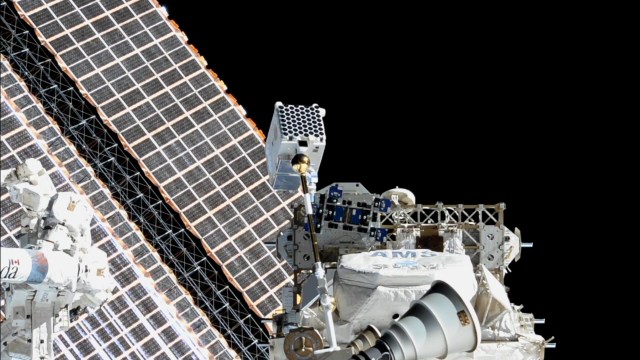
NASA will deliver a patch kit for NICER (Neutron star Interior Composition Explorer), an X-ray telescope on the International Space Station, on the agency’s Northrop Grumman 21st commercial resupply mission. Astronauts will conduct a spacewalk to complete the repair.

Located near the space station’s starboard solar array, NICER was damaged in May 2023. The mission team delivered the patch kit to NASA’s Johnson Space Center in Houston in May 2024 so it could be prepped and packed for the upcoming resupply mission.

“It’s incredible that in just one year, we were able to diagnose the problem and then design, build, test, and deliver a solution,” said Steve Kenyon, NICER’s mechanical lead at NASA’s Goddard Space Flight Center in Greenbelt, Maryland. “We’re so excited to see the patches installed during a future spacewalk, return to a more regular operating schedule, and keep doing groundbreaking science.”

From its perch on the station, the washing machine-sized NICER studies the X-ray sky. It has precisely measured superdense stellar remnants called neutron stars, which contain the densest matter scientists can directly observe. It has also investigated mysterious fast radio bursts, observed comets in our solar system, and collected data about Earth’s upper atmosphere.

But in May 2023, NICER developed a “light leak,” where unwanted sunlight began entering the telescope.

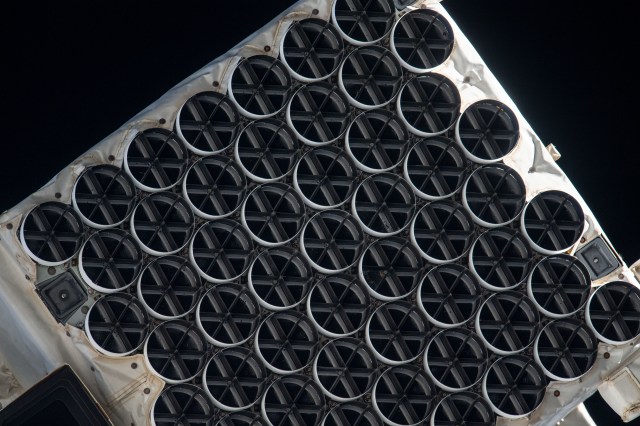
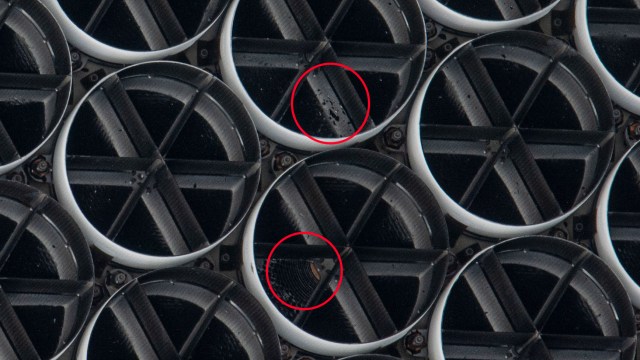
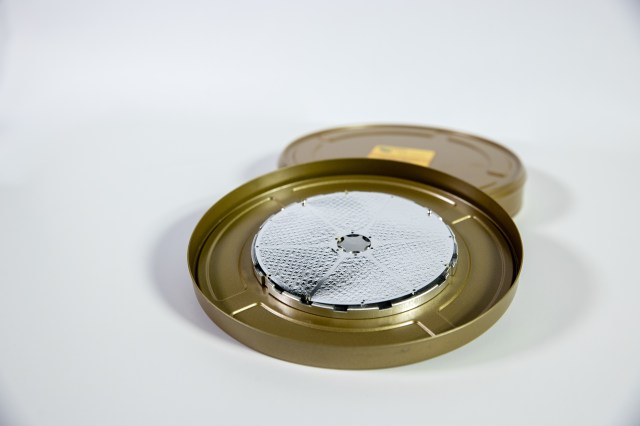
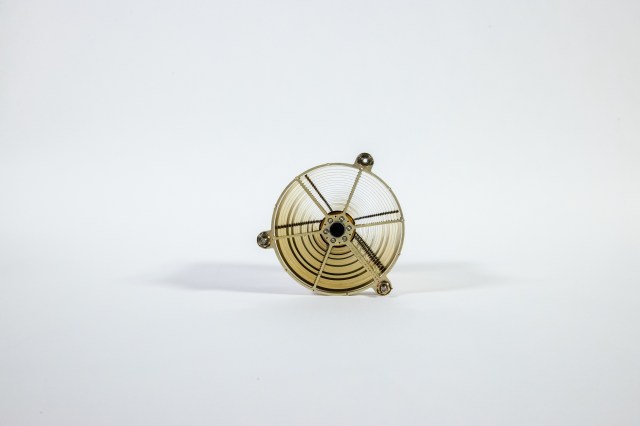
Photos taken aboard the station revealed several areas of damage to NICER’s thermal shields. The shields are 500 times thinner than a human hair and filter out infrared, ultraviolet, and visible light while allowing X-rays to pass through. They cover each of NICER’s 56 X-ray concentrators, sets of 24 nested circular mirrors designed to skip X-rays into corresponding detectors. A sunshade tops each concentrator and shield assembly, with a slight gap in between. The sunshades are segmented by six internal struts, resembling a sliced pie.

The largest damage to the shields is around the size of a typical U.S. postage stamp. The other areas are closer in size to pinheads. During the station’s daytime, the damage allows sunlight to reach the detectors, saturating sensors and interfering with NICER’s measurements. The mission team altered their daytime observing strategy to mitigate the effect. The damage does not impact nighttime observations.

“NICER wasn’t designed to be serviced or repaired,” said Keith Gendreau, the mission’s principal investigator at Goddard. “It was installed robotically, and we operate it remotely. When we decided to investigate the possibility of patching the largest damaged areas on the thermal shields, we had to come up with a method that would use the existing parts of the telescope and station toolkits. We couldn’t have done it without all the support and collaboration from our colleagues at Johnson and throughout the space station program.”

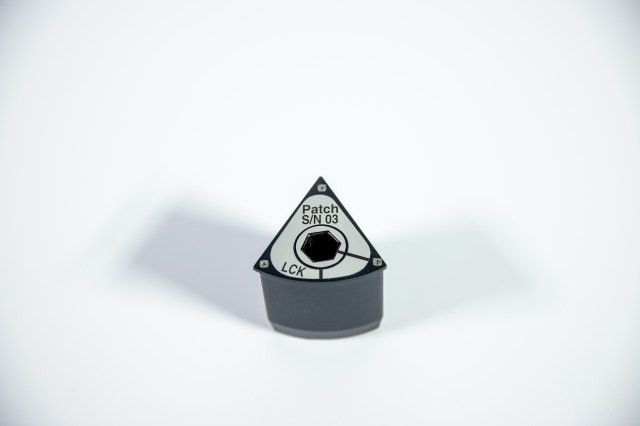
The solution, in the end, was simple. The team designed patches, each shaped like a piece of pie, that will slide into the sunshades. A tab at the bottom of each patch will turn into the space between the bottom of the sunshade and the top of the thermal shield, keeping it in place.

Astronauts will install five patches during the spacewalk. They’ll cover the most significant areas of damage and block the sunlight affecting NICER’s X-ray measurements.

The repair kit contains 12 patches in total, allowing for spares if needed. Astronauts will carry the patches in a caddy, a rectangular frame containing two spare sunshades with the patches held inside.

“NICER will be the first X-ray telescope in orbit to be serviced by astronauts and only the fourth science observatory to be repaired overall — joining the ranks of missions like NASA’s Hubble Space Telescope,” said Charles Baker, the NICER project systems engineer at Goddard. “It’s been amazing to watch the patch kit come together over the last year. NICER has taught us so many wonderful things about the cosmos, and we’re really looking forward to this next step of its journey.”

Photo of the NICER caddy.
The NICER caddy is an aluminum box containing two of the mission’s spare sunshades, which are attached to the bottom. Inside the sunshades, 12 patches are locked into place. Astronauts will take the complete caddy assembly with them during a future spacewalk to address damage to NICER’s thermal shields. They’ll insert five of the patches over the largest areas of damage, which will allow the mission to return to a normal operating status during the station’s daytime.

The NICER telescope is an Astrophysics Mission of Opportunity within NASA’s Explorers Program, which provides frequent flight opportunities for world-class scientific investigations from space utilizing innovative, streamlined, and efficient management approaches within the heliophysics and astrophysics science areas. NASA’s Space Technology Mission Directorate supported the SEXTANT component of the mission, demonstrating pulsar-based spacecraft navigation.

By Jeanette Kazmierczak
NASA’s Goddard Space Flight Center, Greenbelt, Md.

Media Contact:
Claire Andreoli
301-286-1940
claire.andreoli@nasa.gov
NASA’s Goddard Space Flight Center, Greenbelt, Md.

Powered by WPeMatico

Get The Details…