NASA Shares its SpaceX Crew-10 Assignments for Space Station Mission

NASA Shares its SpaceX Crew-10 Assignments for Space Station Mission
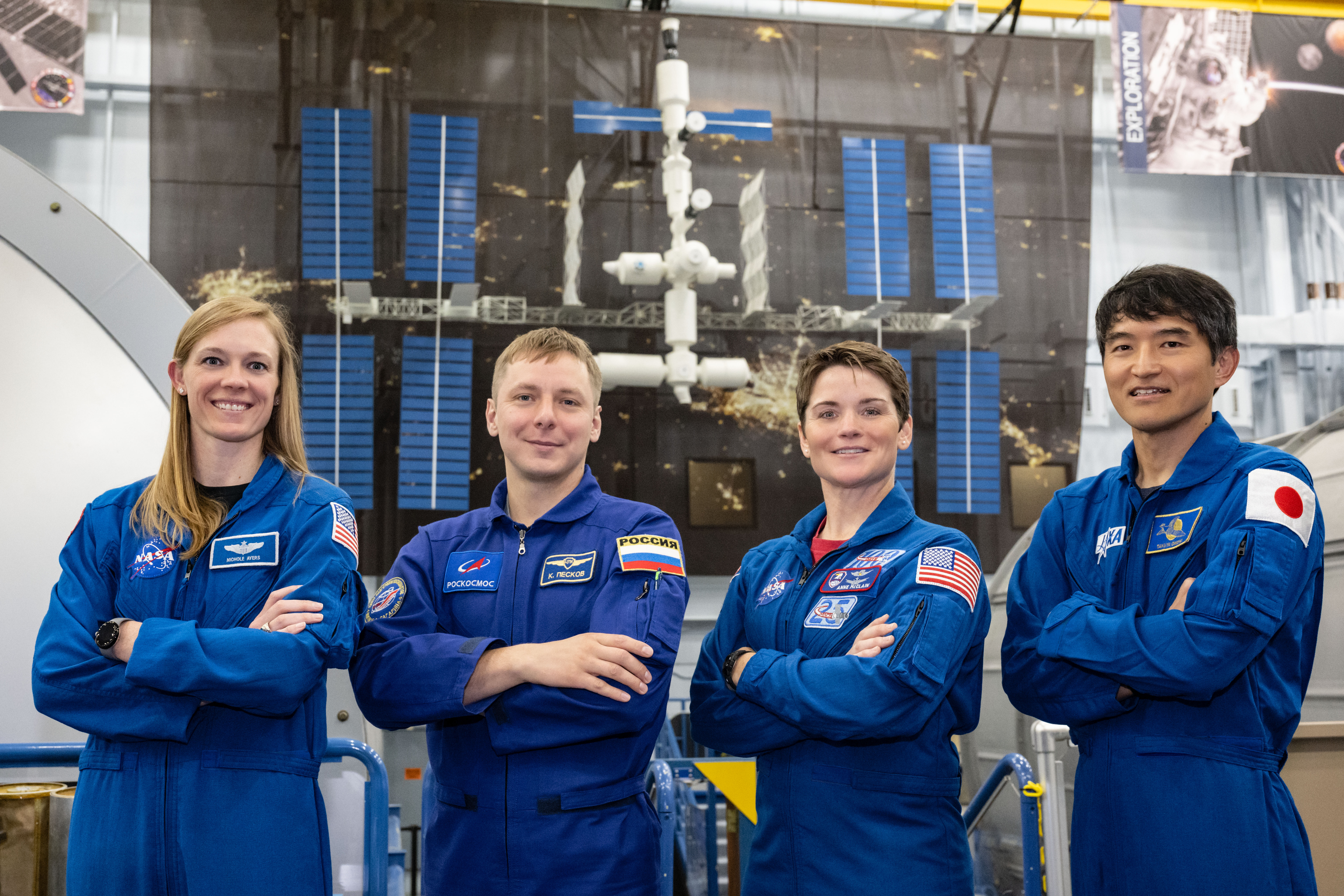
NASA’s SpaceX Crew-10 members (pictured from left to right) NASA astronaut Nichole Ayers, Roscosmos cosmonaut Kirill Peskov, NASA astronaut Anne McClain, and JAXA (Japan Aerospace Exploration Agency) astronaut Takuya Onishi
Credit: NASA

As part of NASA’s SpaceX Crew-10 mission, four crew members are preparing to launch for a long-duration stay aboard the International Space Station.

NASA astronauts Commander Anne McClain and Pilot Nichole Ayers, JAXA (Japan Aerospace Exploration Agency) astronaut Mission Specialist Takuya Onishi, and Roscosmos cosmonaut Mission Specialist Kirill Peskov will join astronauts at the orbiting laboratory no earlier than February 2025.

The flight is the 10th crew rotation with SpaceX to the station as part of NASA’s Commercial Crew Program. While aboard, the international crew will conduct scientific investigations and technology demonstrations to help prepare humans for future missions and benefit people on Earth.

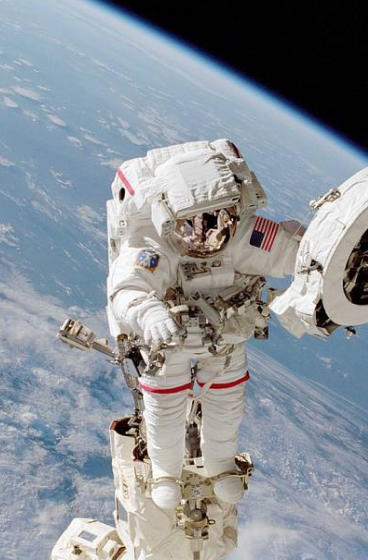
Selected by NASA as an astronaut in 2013, this will be McClain’s second spaceflight. A colonel in the U.S. Army, she earned her bachelor’s degree in Mechanical Engineering from the U.S. Military Academy at West Point, New York, and holds master’s degrees in Aerospace Engineering, International Security, and Strategic Studies. The Spokane, Washington, native was an instructor pilot in the OH-58D Kiowa Warrior helicopter and is a graduate of the U.S. Naval Test Pilot School in Patuxent River, Maryland. McClain has more than 2,300 flight hours in 24 rotary and fixed-wing aircraft, including more than 800 in combat, and was a member of the U.S. Women’s National Rugby Team. On her first spaceflight, McClain spent 204 days as a flight engineer during Expeditions 58 and 59 and was the lead on two spacewalks, totaling 13 hours and 8 minutes. Since then, she has served in various roles, including branch chief and space station assistant to the chief of NASA’s Astronaut Office.

Ayers is a major in the U.S. Air Force and the first member of NASA’s 2021 astronaut class named to a crew. The Colorado native graduated from the Air Force Academy in Colorado Springs with a bachelor’s degree in Mathematics and a minor in Russian, where she was a member of the academy’s varsity volleyball team. She later earned a master’s in Computational and Applied Mathematics from Rice University in Houston. Ayers served as an instructor pilot and mission commander in the T-38 ADAIR and F-22 Raptor, leading multinational and multiservice missions worldwide. She has more than 1,400 total flight hours, including more than 200 in combat.

With 113 days in space, this mission also will mark Onishi’s second trip to the space station. After being selected by JAXA in 2009, he flew as a flight engineer for Expeditions 48 and 49 became the first Japanese astronaut to robotically capture the Cygnus spacecraft. He also constructed a new experimental environment aboard Kibo, the station’s Japanese experiment module. Since his spaceflight, Onishi became certified as a JAXA flight director, leading the team responsible for operating Kibo from JAXA Mission Control in Tsukuba, Japan. He holds a bachelor’s degree in Aeronautics and Astronautics from the University of Tokyo and was a pilot for All Nippon Airways, flying more than 3,700 flight hours in the Boeing 767.

NASA’s SpaceX Crew-10 mission also will be Peskov’s first spaceflight. Before his selection as a cosmonaut in 2018, he earned a degree in Engineering from the Ulyanovsk Civil Aviation School and was a co-pilot on the Boeing 757 and 767 aircraft for airlines Nordwind and Ikar. Assigned as a test-cosmonaut in 2020, he has additional experience in skydiving, zero-gravity training, scuba diving, and wilderness survival.

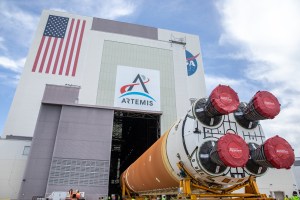
For more than two decades, people have lived and worked continuously aboard the International Space Station, advancing scientific knowledge and demonstrating new technologies, making research breakthroughs not possible on Earth. The station is a critical testbed for NASA to understand and overcome the challenges of long-duration spaceflight and to expand commercial opportunities in low Earth orbit. As commercial companies focus on providing human space transportation services and destinations as part of a robust low Earth orbit economy, NASA’s Artemis campaign is underway at the Moon, where the agency is preparing for future human exploration of Mars.

Find more information on NASA’s Commercial Crew Program at:

https://www.nasa.gov/commercialcrew

-end-

Joshua Finch / Claire O’Shea
Headquarters, Washington
202-358-1100
joshua.a.finch@nasa.gov / claire.a.o’shea@nasa.gov

Raegan Scharfetter
Johnson Space Center, Houston
281-910-4989
raegan.r.scharfetter@nasa.gov

Powered by WPeMatico

Get The Details…
Jessica Taveau

Exploring Deep Space: NASA Announces 2025 RASC-AL Competition 

Exploring Deep Space: NASA Announces 2025 RASC-AL Competition 

3 min read

Preparations for Next Moonwalk Simulations Underway (and Underwater)

NASA has officially announced the 2025 Revolutionary Aerospace Systems Concepts – Academic Linkage (RASC-AL) competition.
Credit: National Institute of Aerospace

NASA has officially announced the 2025 Revolutionary Aerospace Systems Concepts – Academic Linkage (RASC-AL) competition, an initiative to fuel innovation for aerospace systems concepts, analogs, and technology prototyping through university engagement. RASC-AL, one of NASA’s longest-running student competitions, solicits concepts from the next generation of engineers and scientists to explore the future of deep space exploration.

RASC-AL is seeking proposals from the university community to develop new concepts that leverage innovation to improve our ability to operate on the Moon, Mars and beyond. This year’s themes range from developing large-scale lunar surface architectures enabling long-term, off-world habitation, to designing new systems that address objective characteristics and needs and leverage human-scale exploration infrastructure for new science paradigms.

Through RASC-AL, teams and their faculty advisors will design innovative solutions with supporting original engineering and analysis in response to one of the following four themes:
Sustained Lunar Evolution – An Inspirational Moment
Advanced Science Missions and Technology Demonstrators for Human-Mars Precursor Campaign
Small Lunar Servicing and Maintenance Robot

“The RASC-AL competition is a wellspring for groundbreaking ideas,” said Dan Mazanek, Assistant Branch Head for the Exploration Space Mission Analysis Branch (SMAB) at NASA’s Langley Research Center in Hampton, Virginia. “It fosters creativity and pushes the boundaries of what is possible in space exploration. We are looking for innovative solutions that can advance our capabilities beyond Earth’s orbit and pave the way for sustainable lunar exploration and beyond.”

Interested undergraduate and graduate university student teams and their faculty advisors should submit a Notice of Intent by October 16, 2024, and submit proposals and videos by February 24, 2025. Based on review of the team proposal and video submissions in March, up to 14 teams will be selected to advance to the final phase of the competition – presenting their concepts to a panel of NASA and industry judges in a competitive design review at the 2025 RASC-AL Forum in Cocoa Beach, Florida next June.

In addition to their research, teams are also highly encouraged to develop a prototype of part or all of their concept to demonstrate its key functions. Each finalist team will receive a $6,500 stipend to facilitate their full participation in the 2025 RASC-AL Competition, and the top two overall teams will be awarded with additional travel stipends to present their concept at an aerospace conference later in 2025.

Dr. Christopher Jones, Chief Technologist for the Systems Analysis and Concepts Directorate (SACD) at NASA Langley, emphasized RASC-AL’s distinctive fusion of educational value with real-world experience. “RASC-AL provides students with a unique opportunity to engage directly with NASA’s vision for space exploration. Participants not only gain hands-on experience in developing aerospace concepts but also contribute fresh perspectives that the Agency can take as inspiration for future missions and technologies.”

The call for proposals is now open, with proposal submissions due by February 24, 2025. Interested student teams are encouraged to visit the official RASC-AL competition website for detailed guidelines and eligibility requirements.

RASC-AL is sponsored by the Strategy and Architecture Office within the Exploration Systems Development Mission Directorate at NASA Headquarters, and by SMAB within SACD at NASA Langley. It is administered by the National Institute of Aerospace.

For more information about the RASC-AL competition, including eligibility, complete themes, and submission guidelines, visit: http://rascal.nianet.org

Share

Details

Last Updated

Aug 01, 2024

Powered by WPeMatico

Get The Details…
Julia L. Bradshaw

Telfer Mine, Western Australia

Telfer Mine, Western Australia

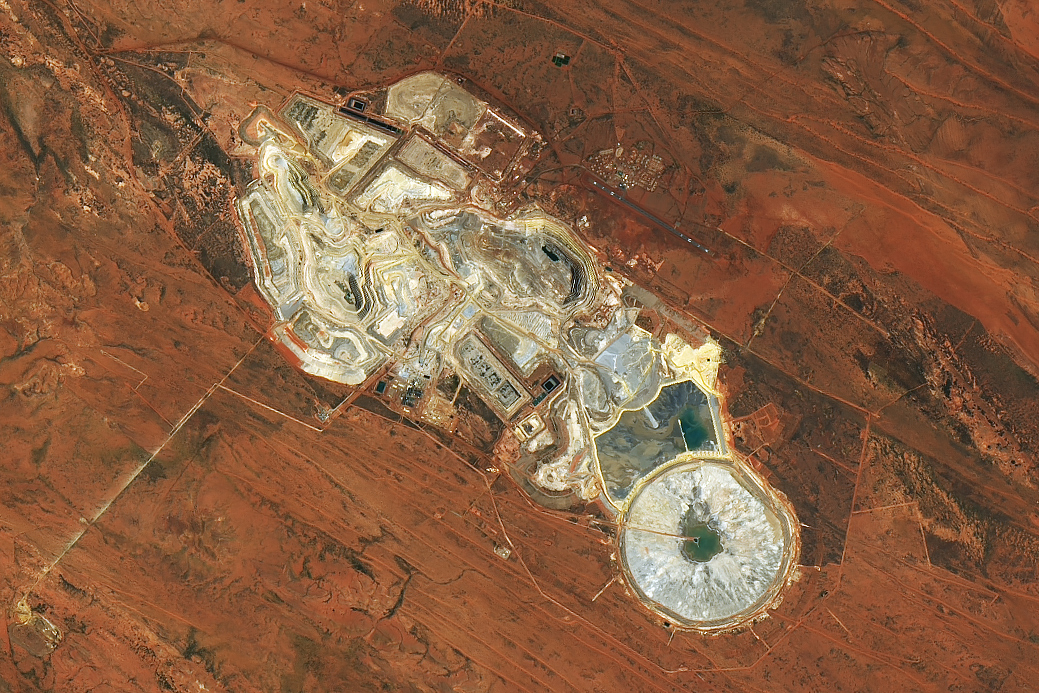
An overhead view of a mine in the dry outback of Australia. Most of the image is dominated by rusty red soil. Miners have excavated the soil in places, revealing an off-white color in these open pits. Some water is visible as well, in ponds.
NASA/Michala Garrison, USGS

Landsat 9’s Operational Land Imager-2 captured this image of the open pits and ponds of Telfer Mine and the surrounding rust-colored soil on Dec. 15, 2023. The soils have a reddish tint from the iron oxides that have accumulated from millions of years of weathering. This part of Western Australia is known for being rich in natural resources, including petroleum, iron ore, copper, and certain precious metals. Beneath the soils, veins of gold and silver run through sedimentary rocks, such as quartz sandstone and siltstone, that formed about 600 million years ago, when much of Australia was under water.

Text credit: Emily Cassidy

Image credit: NASA/Michala Garrison, USGS

Powered by WPeMatico

Get The Details…
Monika Luabeya

NASA Additive Manufacturing Project Shapes Future for Agency, Industry Rocket Makers

NASA Additive Manufacturing Project Shapes Future for Agency, Industry Rocket Makers

5 Min Read

NASA Additive Manufacturing Project Shapes Future for Agency, Industry Rocket Makers

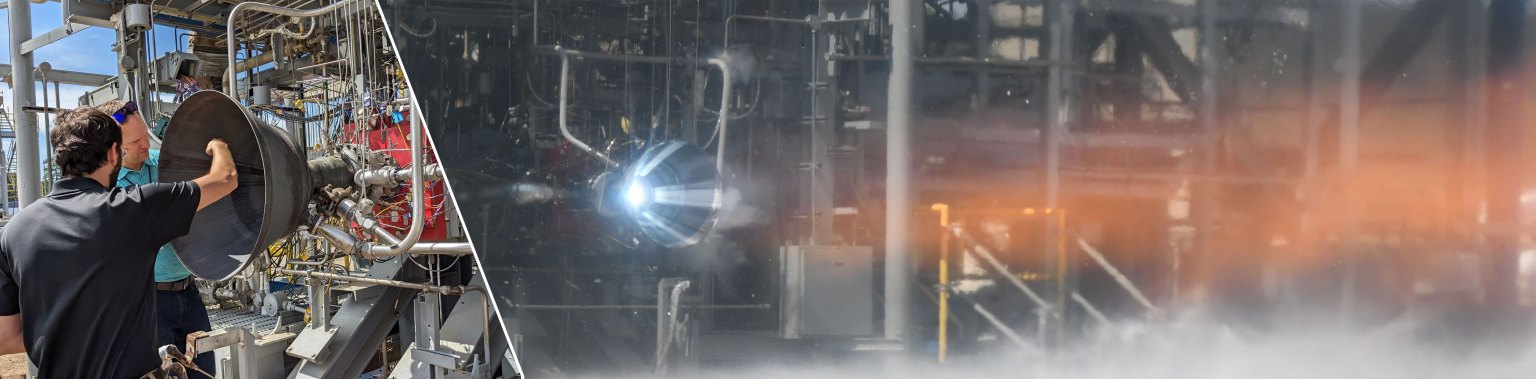
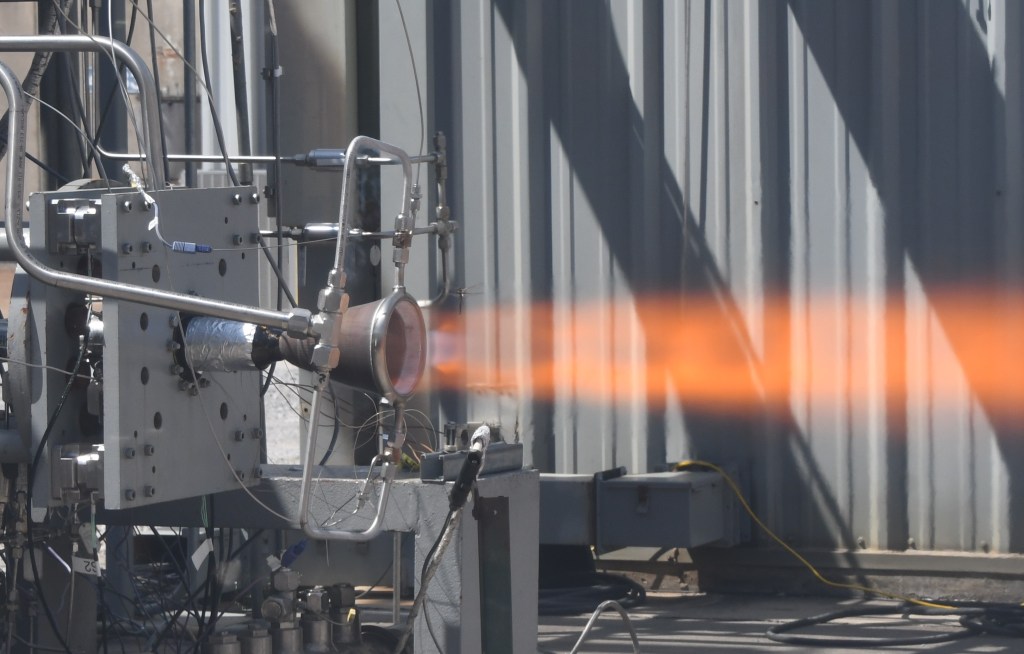
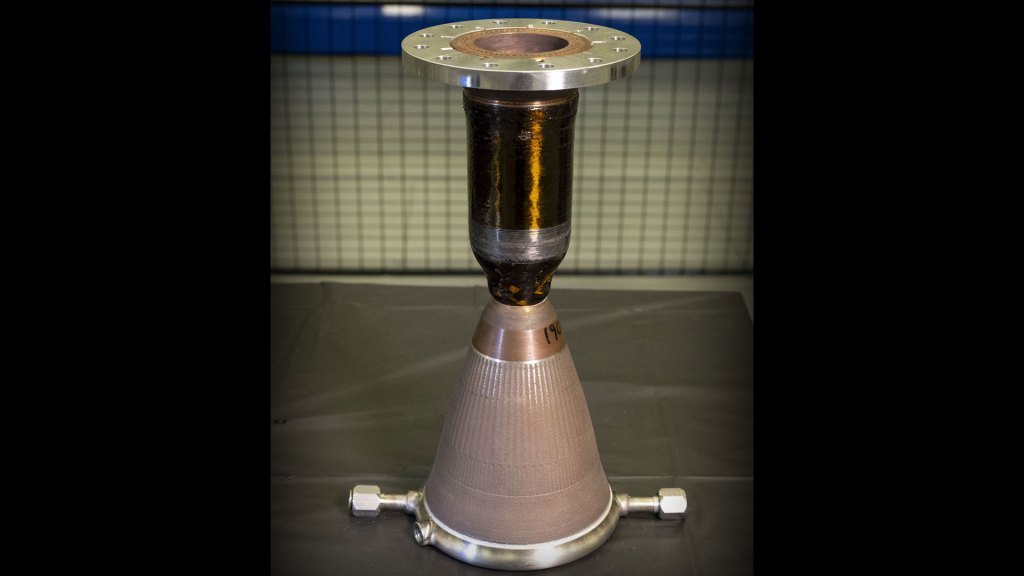
Additively manufactured rocket engine hardware coupled with advanced composites allows for precision features, such as multi-material coolant channels developed by the Rapid Analysis and Manufacturing Propulsion Technology team at NASA’s Marshall Space Flight Center in Huntsville, Alabama

Credits:
NASA

The widespread commercial adoption of additive manufacturing technologies, commonly known as 3D printing, is no surprise to design engineers at NASA’s Marshall Space Flight Center in Huntsville, Alabama whose research created stronger, lighter weight materials and new manufacturing processes to make rocket parts.

NASA’s RAMPT (Rapid Analysis and Manufacturing Propulsion Technology) project is on the cutting-edge of additive manufacturing – helping the agency and industry produce new alloys and additively manufactured parts, commonly referred to as 3D printing, according to Paul Gradl, the project’s co-principal investigator at NASA Marshall.

“Across NASA’s storied legacy of vehicle and hardware design, testing, and integration, our underlying strength is in our application of extremely durable and severe environment materials and innovative manufacturing for component design,” said Gradl. “We strive to fully understand the microstructure and properties of every material and how they will ultimately be used in components before we make them available to industry for flight applications.”

The same principle applies to additive manufacturing, the meticulous process of building components and hardware one layer of material at a time.

An info graphic shows the different sections of a testing article
The graphic captures additive manufacturing technology milestones led by the RAMPT project. Using 3D-printed, liquid oxygen/hydrogen thrust chamber hardware at chamber pressures of up to 1,400 pounds per square inch, Marshall engineers have completed 12 hot-fire tests totaling a combined 330 seconds. The project also has delivered composite materials demonstrating a 40% weight savings over conventional bimetallic combustion chambers. NASA and its industry partners are working to make this cutting-edge technology accessible for a host of future NASA and commercial space missions.
NASA/Pablo Garcia

“The RAMPT project’s goal is to support commercial, technical readiness, enabling our industry partners to meet the challenges inherent in building new generations of safer, more cost-effective deep space exploration propulsion systems,” said John Fikes, RAMPT project manager.

Since its inception, RAMPT has conducted 500 test-firings of 3D-printed injectors, nozzles, and chamber hardware totaling more than 16,000 seconds, using newly developed extreme-environment alloys, large-scale additive manufacturing processes, and advanced composite technology. The project has also started developing a full-scale version for the workhorse RS-25 engine – which experts say could reduce its costs by up to 70% and cut manufacturing time in half.

As printed structures are getting bigger and more complex, a major area of interest is the additive manufacturing print scale. A decade ago, most 3D-printed parts were no bigger than a shoebox. Today, additive manufacturing researchers are helping the industry produce lighter, more robust, intricately designed rocket engine components 10-feet tall and eight-feet in diameter.

A man and women look at a piece of hardware
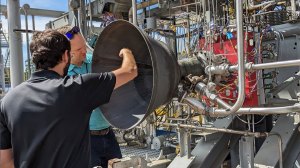
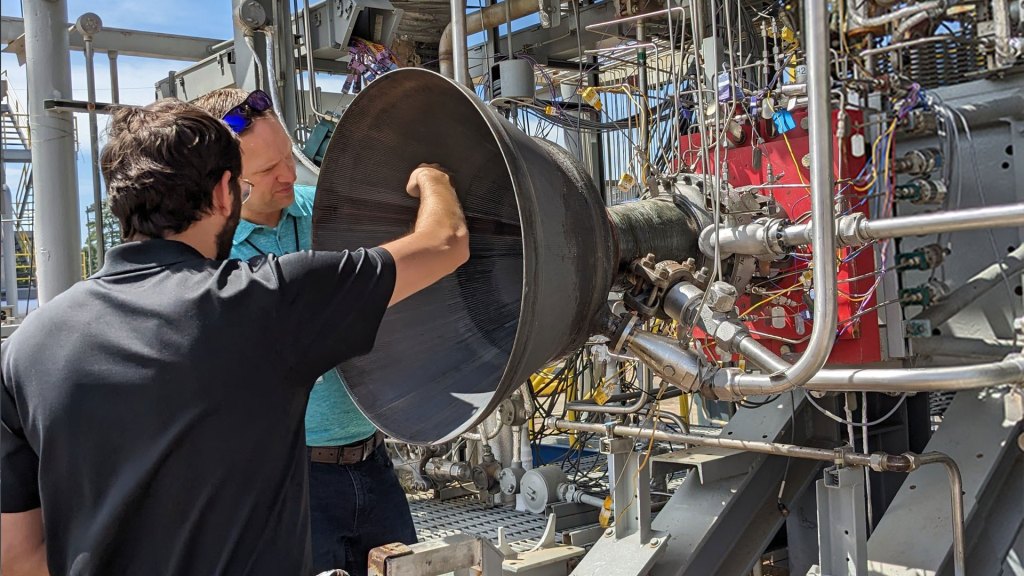
Tyler Gibson, left, and Allison Clark, RAMPT engineers at NASA’s Marshall Space Flight Center in Huntsville, Alabama, inspect an additively manufactured composite overwrap thrust chamber assembly. Conventional rocket hardware may require more than 1,000 or more individually joined parts. Additive manufacturing permits engineers to print these channels in novel alloys as a single piece with multiple alloys, dramatically reducing manufacturing time.
NASA/Danielle Burleson

“NASA, through public-private partnerships, is making these breakthroughs accessible to the commercial space industry to help them rapidly advance new flight technologies of their own,” Gradl said. “We’re solving technical challenges, creating new supply chains for parts and materials, and increasing the industry’s capacity to rapidly deliver reliable hardware that draws a busy commercial space infrastructure ever closer.”

The RAMPT project does not just develop the end technology but the means to fully understand that technology, whatever the application. That means advancing cutting-edge simulation tools that can identify the viability of new alloys and composites at the microstructural level – assessing how they handle the fiery rigors of liftoff, the punishing cold of space, and the dynamic stresses associated with liftoffs, landings, and the long transits between.

NASA’s strategy to encourage commercial and academic buy-in is to offer public-private partnership opportunities, wherein industry and academia contribute as much as 25% of project development costs, allowing them to reap the benefits.

For example, NASA successfully delivered a refined version of an alloy, known as GRCop42, created at NASA Glenn nearly 40 years ago which helped commercial launch provider, Relativity Space, launch the first fully 3D-printed rocket in March 2023.

“Our primary goal with these higher-performance alloys is to prove them in a rocket engine test-fire environment and then hand them off to enable commercial providers to build hardware, fly launch vehicles, and foster a thriving space infrastructure with real scientific, social, and economic rewards,” Gradl said.

A key benefit of additive manufacturing hardware development is radically reducing the “design-fail-fix” cycle – when engineers develop new hardware, ground-test it to failure to determine the hardware’s design limits under all possible conditions and then tweak accordingly. That capability is increasingly important with the creation of new alloys and designs, new processing techniques, and the introduction of composite overwraps and other innovations.

The RAMPT project did just that, successfully advancing new additive manufacturing alloys and processes, integrating them with carbon-fiber composites to reduce weight by up to 40%, developing and validating new simulation tools – and making all this data available to industry through public-private partnerships.

“We’re able to deliver prototypes in weeks instead of years, conduct dozens of scaled ground tests in a period that would feasibly permit just one or two such tests of conventionally manufactured hardware, and most importantly, deliver technology solutions that are safer, lighter, and less costly than traditional components,” Gradl said.

Fikes added, “Ten years from now, we may be building rocket engines – or rockets themselves – out of entirely new materials, employing all-new processing and fabrication techniques. NASA is central to all of that.”

The RAMPT project continues to progress and receive recognition from NASA and industry partners. On July 31, the RAMPT team was awarded NASA’s 2024 Invention of The Year award for its excellence and contributions to NASA and the commercial industry’s deep space exploration goals.

NASA’s Marshall Spaceflight Center in Huntsville, Alabama, leads RAMPT, with key support among engineers and technologists at NASA’s Glenn Research Center in Cleveland; Ames Research Center in Mountain View, California; Langley Research Center in Hampton, Virginia; and Auburn University in Auburn, Alabama, plus contributions from other academic partners and industry contractors. RAMPT is funded by NASA’s Game Changing Development Program within the agency’s Space Technology Mission Directorate.

Learn more at:

https://www.nasa.gov/rapid-analysis-and-manufacturing-propulsion-technology

Ramon J. Osorio
Marshall Space Flight Center, Huntsville, Alabama
256-544-0034
ramon.j.osorio@nasa.gov

Powered by WPeMatico

Get The Details…
Beth Ridgeway

Sols 4261-4262: Drill Sol 1…Take 2

Sols 4261-4262: Drill Sol 1…Take 2

2 min read

Sols 4261-4262: Drill Sol 1…Take 2

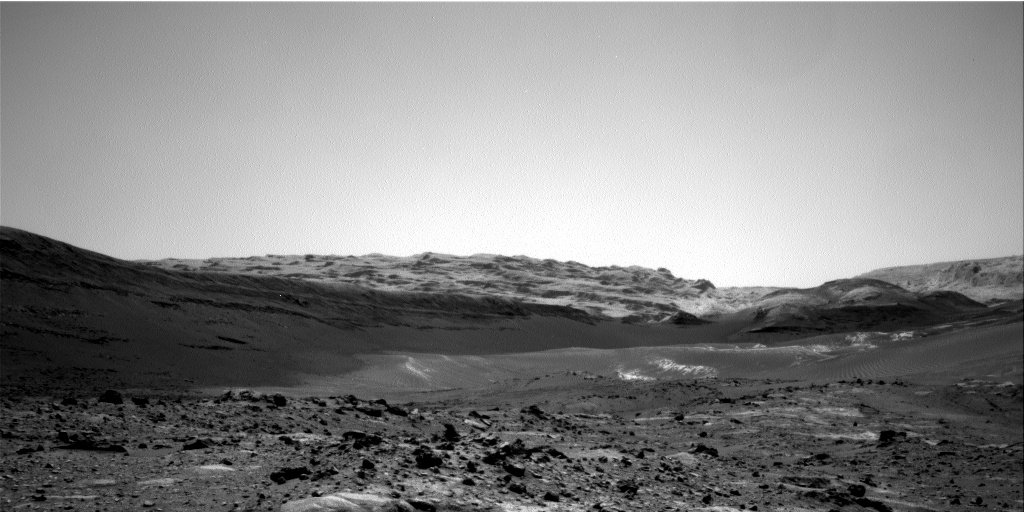
A grayscale panorama of the Martian surface showing terrain covered in many small rocks in the foreground. The middle ground consists of smooth dunes, curving from a low point in the center of the image, upward toward the left and right edges of the frame. In the background, another hill at center, with uneven ground that looks like the top of a frosted chocolate cake.
This image was taken by Right Navigation Camera onboard NASA’s Mars rover Curiosity on Sol 4258 — Martian day 4,258 of the Mars Science Laboratory mission — on July 29, 2024, at 03:26:02 UTC.

Earth planning date: Wednesday, July 31, 2024

As Cat mentioned on Monday, today’s plan is a second attempt at our Drill Sol 1 activities. We’ve shifted the target on Kings Canyon a little bit, but the activities remain the same — a preload test to ensure that we’re able to safely drill here, and contact science to get a preview of what composition we might be dealing with in this target.

Around these pre-drilling activities, we still had some time left over for more typical science activities. Power wasn’t as much of a concern as it will become as the drill campaign progresses, but we did have to do some rearranging due to timing constraints. There are some activities that need to go at particular times, whether that be for lighting, heating, or to coincide with other observations. If you put enough of these together, there can be a lot of swapping back and forth and moving things around to get the perfect position for everything. It’s a bit like choreographing a big dance — activities have to come in at just the right time so they don’t step on anyone’s toes, and all the pieces come together to make a cohesive whole.

In this metaphorical dance, our first movement is a short solo from ChemCam — just before the preload test we were able to squeeze in LIBS (laser spectroscopy) on a darker area of bedrock called “Blacksmith Peak.” The rest of the company joins ChemCam on the second sol. Mastcam comes in first to check out “Sam Mack Meadow,” an area of crushed material, followed by a quartet of environmental activities — a suprahorizon cloud movie, a tau and line-of-sight to see how dusty the atmosphere is, and a dust devil movie. It’s then back over to ChemCam, with LIBS on Kings Canyon and a long-distance observation of the yardang unit. Mastcam brings the dance to a close with their own documentation of Kings Canyon. For an encore, Mastcam makes one last appearance later that evening to do a sky survey.

Written by Alex Innanen, atmospheric scientist at York University

Share

Details

Last Updated
Aug 01, 2024

Related Terms

Powered by WPeMatico

Get The Details…