NASA Announces Teams for 2025 Student Launch Challenge

NASA Announces Teams for 2025 Student Launch Challenge

3 min read

Preparations for Next Moonwalk Simulations Underway (and Underwater)

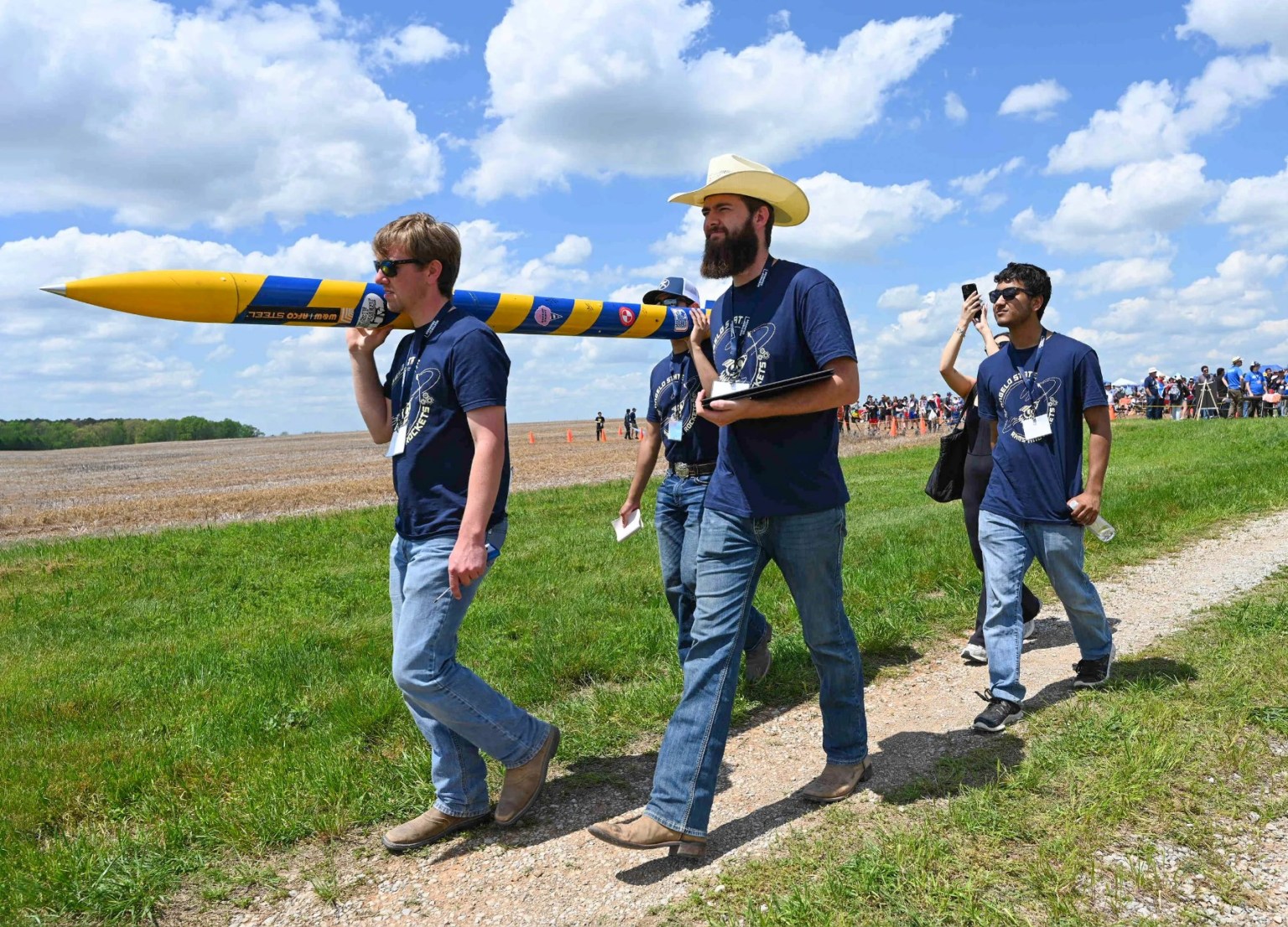
Students raise their hands in celebration and cheer after a successful launch of their vehicle in the 2024 Student Launch competition.
Students celebrate after a successful performance in the 2024 Student Launch competition at Bragg Farms in Toney, Alabama.
NASA

NASA has selected 71 teams from across the U.S. to participate in its 25th annual Student Launch Challenge, one of the agency’s Artemis Student Challenges. The competition is aimed at inspiring Artemis Generation students to explore science, technology, engineering, and math (STEM) for the benefit of humanity.

As part of the challenge, teams will design, build, and fly a high-powered amateur rocket and scientific payload. They also must meet documentation milestones and undergo detailed reviews throughout the school year.

The nine-month-long challenge will culminate with on-site events starting on April 30, 2025. Final launches are scheduled for May 3, at Bragg Farms in Toney, Alabama, just minutes north of NASA’s Marshall Space Flight Center in Huntsville, Alabama. Teams are not required to travel for their final launch, having the option to launch from a qualified site. Details are outlined in the Student Launch Handbook.

Each year, NASA updates the university payload challenge to reflect current scientific and exploration missions. For the 2025 season, the payload challenge will again take inspiration from the Artemis missions, which seek to land the first woman and first person of color on the Moon, and pave the way for future human exploration of Mars.

As Student Launch celebrates its 25th anniversary, the payload challenge will include reports from STEMnauts, non-living objects representing astronauts. The STEMnaut crew must relay real-time data to the student team’s mission control via radio frequency, simulating the communication that will be required when the Artemis crew achieves its lunar landing.

University and college teams are required to meet the 2025 payload requirements set by NASA, but middle and high school teams have the option to tackle the same challenge or design their own payload experiment.

Student teams will undergo detailed reviews by NASA personnel to ensure the safety and feasibility of their rocket and payload designs. The team closest to their target will win the Altitude Award, one of multiple awards presented to teams at the end of the competition. Other awards include overall winner, vehicle design, experiment design, and social media presence.

In addition to the engineering and science objectives of the challenge, students must also participate in outreach efforts such as engaging with local schools and maintaining active social media accounts. Student Launch is an all-encompassing challenge and aims to prepare the next generation for the professional world of space exploration.

The Student Launch Challenge is managed by Marshall’s Office of STEM Engagement (OSTEM). Additional funding and support are provided by NASA’s OSTEM via the Next Gen STEM project, NASA’s Space Operations Mission Directorate, Northrup Grumman, National Space Club Huntsville, American Institute of Aeronautics and Astronautics, National Association of Rocketry, Relativity Space, and Bastion Technologies.

For more information about Student Launch, visit:

Taylor Goodwin
Marshall Space Flight Center, Huntsville, Ala.
256.544.0034
taylor.goodwin@nasa.gov

Share

Details

Last Updated

Oct 04, 2024

Editor
Beth Ridgeway

Powered by WPeMatico

Get The Details…
Beth Ridgeway

NASA Announces Teams to Compete in International Rover Challenge

NASA Announces Teams to Compete in International Rover Challenge

2 min read

Preparations for Next Moonwalk Simulations Underway (and Underwater)

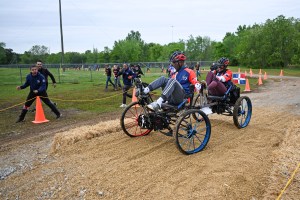
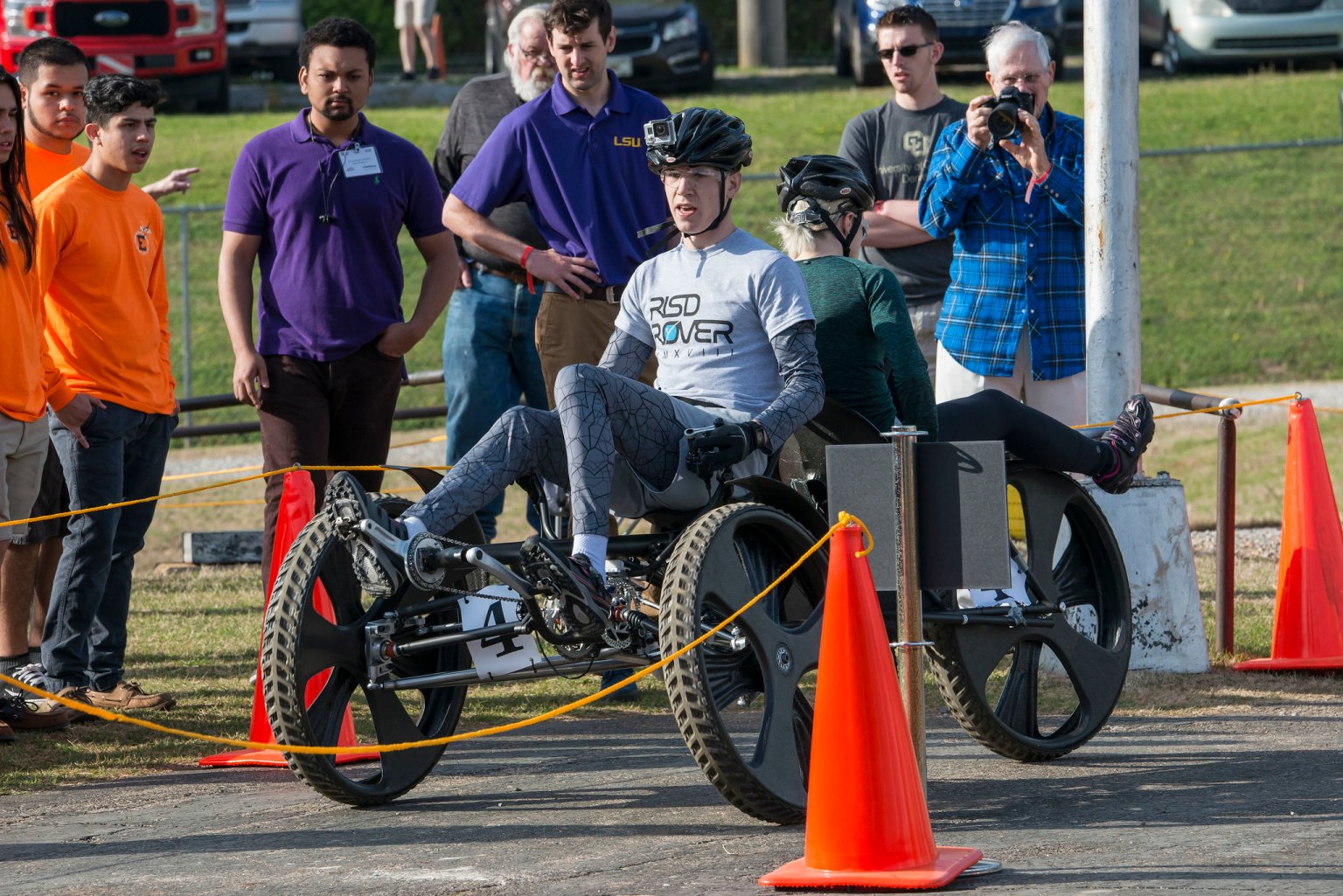
Two students from Team Instituto Tecnologico de Santo Domingo from Santo Domingo, Dominican Republic, pedal their human-powered rover through the 2024 Human Exploration Rover Challenge course. Their teammates cheer them on from outside of the course.
NASA MSFC HERC is the annual engineering competition – one of NASA’s longest standing challenges – held its concluding event April 19 and April 20, at the U.S. Space & Rocket Center in Huntsville, near NASA’s Marshall Space Flight Center.
NASA

NASA has selected 75 student teams to begin an engineering design challenge to build rovers that will compete next spring at the U.S. Space and Rocket Center near the agency’s Marshall Space Flight Center in Huntsville, Alabama. The competition is one of the agency’s Artemis Student Challenges, encouraging students to pursue degrees and careers in science, technology, engineering, and mathematics (STEM).

Recognized as NASA’s leading international student challenge, the 31st annual Human Exploration Rover Challenge (HERC) aims to put competitors in the mindset of NASA’s Artemis campaign as they pitch an engineering design for a lunar terrain vehicle which simulates astronauts piloting a vehicle, exploring the lunar surface while overcoming various obstacles.

Participating teams represent 35 colleges and universities, 38 high schools, and two middle schools from 20 states, Puerto Rico, and 16 other nations from around the world. The 31st annual Human Exploration Rover Challenge (HERC) is scheduled to begin on April 11, 2025. The challenge is managed by NASA’s Southeast Regional Office of STEM Engagement at NASA Marshall.

Following a 2024 competition that garnered international attention, NASA expanded the challenge to include a remote-control division, Remote-Operated Vehicular Research, and invited middle school students to participate. The 2025 HERC Handbook includes guidelines for the new remote-control division and updates for the human-powered division.

NASA’s Artemis Student Challenges reflects the goals of the Artemis campaign, which seeks to land the first woman and first person of color on the Moon while establishing a long-term presence for science and exploration.

More than 1,000 students with 72 teams from around the world participated in the 2024 challenge as HERC celebrated its 30th anniversary as a NASA competition. Since its inception in 1994, more than 15,000 students have participated in HERC – with many former students now working at NASA, or within the aerospace industry.    

To learn more about HERC, please visit: 

Taylor Goodwin
Marshall Space Flight Center, Huntsville, Ala.
256.544.0034
taylor.goodwin@nasa.gov

Share

Details

Last Updated

Oct 04, 2024

Editor
Beth Ridgeway

Powered by WPeMatico

Get The Details…
Beth Ridgeway

Hubble Observes a Peculiar Galaxy Shape

Hubble Observes a Peculiar Galaxy Shape

2 min read

Hubble Observes a Peculiar Galaxy Shape

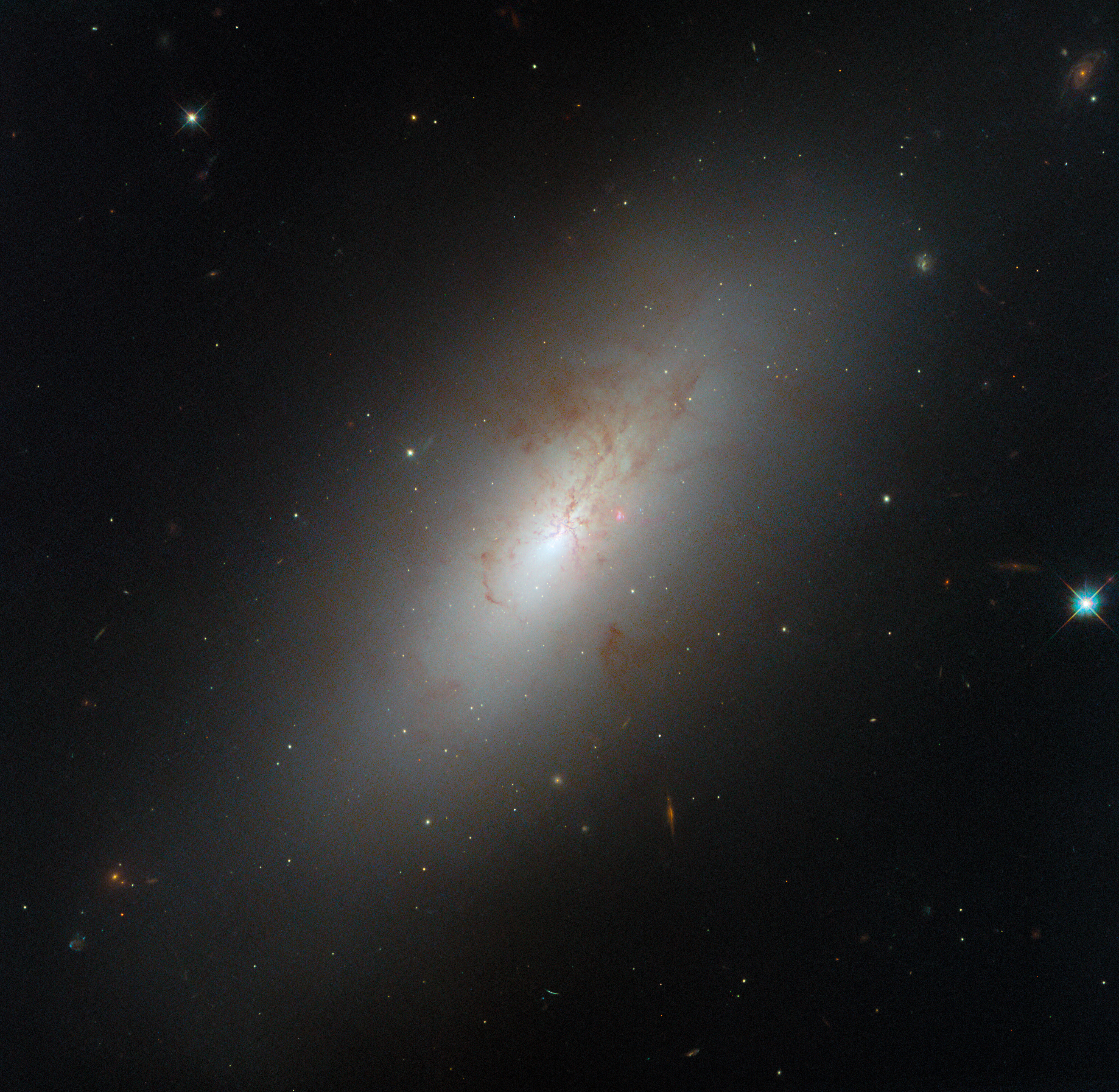
An oval-shaped galaxy seen tilted at an angle. It glows brightly at its core and radiates outward, dimming toward the edge of the oval. Reddish-brown, patchy dust spreads out from the core and covers much of the galaxy’s top half, as well as the outer edge, obscuring some of its light. Stars are visible around and in front of the galaxy.
This NASA/ESA Hubble Space Telescope image features the galaxy, NGC 4694.
ESA/Hubble & NASA, D. Thilker

This NASA/ESA Hubble Space Telescope image reveals the galaxy, NGC 4694. Most galaxies fall into one of two basic types. Spiral galaxies are young and energetic, filled with the gas needed to form new stars and sporting spiral arms that host these hot, bright youths. Elliptical galaxies have a much more pedestrian look, and their light comes from a uniform population of older and redder stars. But some galaxies require in-depth study to classify their type: such is the case with NGC 4694, a galaxy located 54 million light-years from Earth in the Virgo galaxy cluster.

NGC 4694 has a smooth-looking, armless disk which — like an elliptical galaxy — is nearly devoid of star formation. Yet its stellar population is still relatively young and new stars are actively forming in its core, powering its bright center and giving it a markedly different stellar profile from that of a classic elliptical. Although elliptical galaxies often host significant quantities of dust, they generally do not hold the fuel needed to form new stars. NGC 4694 is filled with the hydrogen gas and dust normally seen in a young and sprightly spiral, and a huge cloud of invisible hydrogen gas surrounds the galaxy.

As this Hubble image reveals, NGC 4694’s dust forms chaotic structures that indicate some kind of disturbance. It turns out that the cloud of hydrogen gas around NGC 4694 forms a long bridge to a nearby, faint dwarf galaxy named VCC 2062. The two galaxies have undergone a violent collision, and the larger NGC 4694 is accreting gas from the smaller galaxy. This collision helped give NGC 4694 its peculiar shape and star-forming activity that classify it as a lenticular galaxy. Lenticular galaxies lack the unmistakable arms of a spiral, but still have a central bulge and disk. They also hold more star-forming gas than an elliptical galaxy. Some galaxies, like NGC 4694, aren’t as easy to categorize as one type or the other. It takes a bit more digging to reveal their true nature, and thanks to Hubble, we have the ability to uncover their secrets.

Media Contact:

Claire Andreoli
NASA’s Goddard Space Flight Center, Greenbelt, MD
claire.andreoli@nasa.gov

Powered by WPeMatico

Get The Details…

Sols 4323-4324: Surfin’ Our Way out of the Channel

Sols 4323-4324: Surfin’ Our Way out of the Channel

2 min read

Sols 4323-4324: Surfin’ Our Way out of the Channel

A grayscale image of the Martian surface shows undulating, windswept dunes of dark gray soil dominating the foreground in front of the rover, covering most of the frame from the upper left to lower right.
An image from NASA’s Mars rover Curiosity, looking back at the western edge of the Gediz Vallis deposit (top left) and the channel wall in the sulfate unit with unconsolidated sand/soil deposits in the foreground. This image was taken by Curiosity’s Left Navigation Camera on Sol 4321 — Martian day 4,321 of the Mars Science Laboratory mission — on Oct. 2, 2024, at 02:13:27 UTC.
NASA/JPL-Caltech

Earth planning date: Wednesday, Oct. 2, 2024

As a member of the group tasked with organizing our campaign to investigate the Gediz Vallis channel and deposit (informally known as the Channel Surfers), I was a little sad this morning to see that our drive had successfully taken us out of the channel, back onto the magnesium sulfate-bearing unit, into which the channel is incised. Our long-anticipated investigation of the channel has proven fruitful: Curiosity made the first definitive detection of elemental sulfur on Mars, and we have examined a variety of intriguing lithologies and relationships within the deposit over the last 4.5 months. It has been an exciting time, and I have particularly enjoyed riding this wave with my fellow Channel Surfers — a great team! Now to make sense of all the fantastic data we have collected.

We are not completely done looking at the channel and deposits though. We will be driving parallel to the western margin for a while to facilitate comparisons with what we observed from the east. Tosol we will image two areas of interest within the Gediz Vallis channel from our current vantage point with Mastcam and ChemCam long-distance RMI. But back to the sulfate unit — the team planned a number of activities to document the return to the sulfate unit. These include APXS and MAHLI of the nodular bedrock immediately in front of the rover (“Sub Dome”), ChemCam LIBS and Mastcam of another bedrock block (“Vert Lost Grove”), and Mastcam of the resistant bedrock ridge immediately adjacent to the Gediz Vallis channel (“Muah Mountain”).

Once the drive of about 25 meters (about 82 feet) hopefully executes successfully, Curiosity will look down and image the terrain between her front wheels with MARDI, acquire ChemCam LIBS on an autonomously selected target in the workspace, and then perform a series of atmospheric and environmental observations. These include a Mastcam tau to measure dust in the atmosphere, Navcam dust devil and suprahorizon movies, and a Navcam line-of-sight observation. The plan is rounded out with DAN, RAD, and REMS activities.

Written by Lucy Thompson, Planetary Geologist at University of New Brunswick

Share

Details

Last Updated
Oct 03, 2024

Related Terms

Powered by WPeMatico

Get The Details…

Cobertura de la NASA del lanzamiento de Europa Clipper a una luna de Júpiter

Cobertura de la NASA del lanzamiento de Europa Clipper a una luna de Júpiter

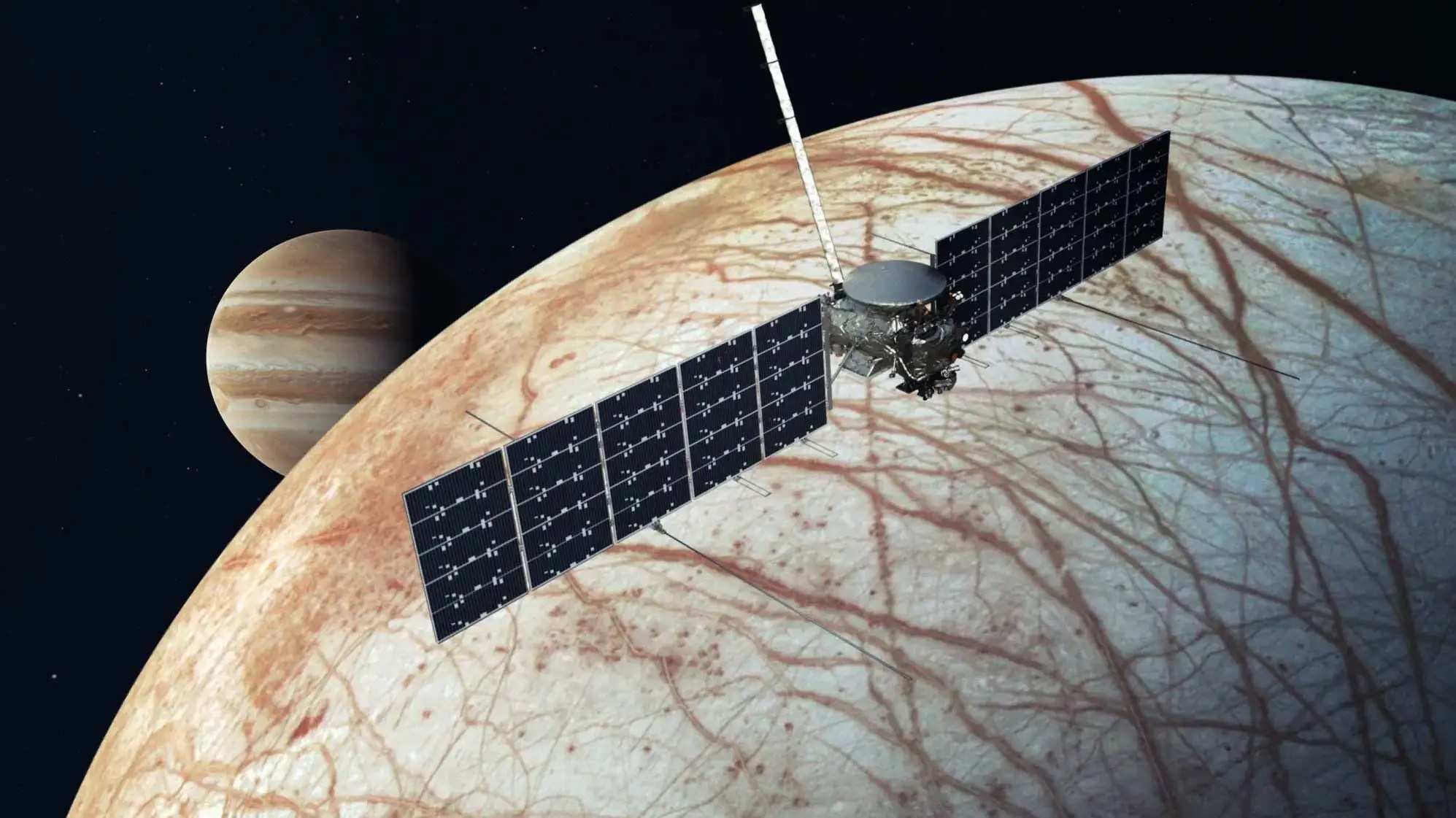
Concepto artístico de la nave espacial Europa Clipper de la NASA.

Créditos: NASA/JPL-Caltech.

Read this release in English here.

La NASA ofrecerá cobertura en directo, en inglés y en español, de las actividades previas al lanzamiento y del lanzamiento de Europa Clipper, la misión de la agencia para explorar Europa, una luna helada de Júpiter. La cobertura del lanzamiento se ofrecerá también en español. La NASA prevé que el lanzamiento se dé a las 12:31 p.m. EDT (hora del este) del jueves, 10 de octubre, a bordo de un cohete SpaceX Falcon Heavy desde el Complejo de Lanzamiento 39A en el Centro Espacial Kennedy de la NASA en Florida.

Más allá de la Tierra, Europa, una luna de Júpiter, es considerada uno de los entornos con más potencial para la habitabilidad del sistema solar. Tras un viaje de aproximadamente 1.800 millones de millas (unos 2.900 millones de kilómetros), Europa Clipper entrará en órbita alrededor de Júpiter en abril de 2030. Desde ahí, la nave espacial llevará a cabo un estudio detallado de Europa para determinar si este mundo helado podría presentar condiciones adecuadas para la vida. Europa Clipper es la mayor nave espacial que la NASA ha desarrollado para una misión planetaria. Transporta un conjunto de nueve instrumentos y un experimento gravitatorio, los cuales investigarán un océano bajo la superficie de Europa que los científicos creen que contiene el doble de agua líquida que los océanos de la Tierra.

Para consultar el calendario de eventos en directo y las plataformas en las que se retransmitirán, visita:

https://go.nasa.gov/europaclipperlive

El plazo para la acreditación de los medios de comunicación para la cobertura presencial de este lanzamiento ya finalizó. La política de acreditación de medios de la NASA está disponible en línea (en inglés). Si tienes preguntas sobre la acreditación de los medios de comunicación, envía un correo electrónico a: ksc-media-accreditat@mail.nasa.gov.

La cobertura de la misión de la NASA es la siguiente (todas las horas son del este y están sujetas a cambios en función de las operaciones a tiempo real):

Martes, 8 de octubre

1 p.m. – Entrevistas presenciales, abiertas a los medios de comunicación acreditados para este lanzamiento.

3:30 p.m. – Sesión informativa científica de Europa Clipper de la NASA con los siguientes participantes:

  • Gina DiBraccio, directora en funciones, División de Ciencias Planetarias, Sede de la NASA
  • Robert Pappalardo, científico de proyecto, Europa Clipper, Laboratorio de Propulsión a Chorro de la NASA (NASA JPL)
  • Haje Korth, científico adjunto de proyecto, Europa Clipper, Laboratorio de Física Aplicada de la Universidad Johns Hopkins
  • Cynthia Phillips, científica de proyecto, Europa Clipper, NASA JPL

La cobertura de la conferencia de prensa científica se retransmitirá en directo en NASA+ y en el sitio web de la agencia, Aprende cómo ver contenidos de la NASA a través de diversas plataformas, incluidas las redes sociales.

Los representantes de los medios de comunicación podrán formular preguntas tanto presencialmente como por teléfono. El espacio disponible en el auditorio para la participación en persona será limitado. Para obtener el número de teléfono y el código de acceso a la conferencia, los medios de comunicación deberán ponerse en contacto con la sala de prensa de la NASA en Kennedy a más tardar una hora antes del comienzo del acto: ksc-newsroom@mail.nasa.gov.

Miércoles, 9 de octubre

2 p.m. – Panel social del NASA Social en el centro Kennedy, con los siguientes participantes:

  • Kate Calvin, científica jefe y asesora principal sobre el clima, sede de la NASA
  • Caley Burke, analista de diseño de vuelos, Programa de Servicios de Lanzamiento de la NASA
  • Erin Leonard, científica del proyecto Europa Clipper, NASA JPL
  • Juan Pablo León, ingeniero de banco de pruebas de sistemas, Europa Clipper, NASA JPL (León es hispanohablante)
  • Elizabeth Turtle, investigadora principal, instrumento de sistema de imágenes de Europa, Europa Clipper, APL

Esta mesa redonda se transmitirá en directo a través de las cuentas de la NASA en YouTube, X y Facebook. Los miembros del público pueden hacer preguntas en línea publicando en las transmisiones en vivo de YouTube, X y Facebook o usando el hashtag #AskNASA.

3:30 p.m. – Conferencia de prensa de la NASA previa al lanzamiento de Europa Clipper (tras la finalización de la revisión del estado de preparación para el lanzamiento), con los siguientes participantes:

  • Administrador asociado de la NASA Jim Free
  • Sandra Connelly, administradora adjunta, Dirección de Misiones Científicas, Sede de la NASA
  • Tim Dunn, director de lanzamiento, Programa de Servicios de Lanzamiento de la NASA
  • Julianna Scheiman, directora para misiones científicas de la NASA, SpaceX
  • Jordan Evans, gerente de proyecto, Europa Clipper, NASA JPL
  • Mike McAleenan, meteorólogo de lanzamiento, 45º Escuadrón Meteorológico, Fuerza Espacial de EE.UU.

La conferencia de prensa previa al lanzamiento se retransmitirá en directo en NASA+, el sitio web de la agencia, la aplicación de la NASA, y YouTube.

Los representantes de los medios de comunicación podrán formular preguntas tanto presencialmente como por teléfono. El espacio disponible en el auditorio para la participación en persona será limitado. Para obtener el número de teléfono y el código de acceso a la conferencia, los medios de comunicación deberán ponerse en contacto con la sala de prensa de la NASA en Kennedy a más tardar una hora antes del comienzo del acto: ksc-newsroom@mail.nasa.gov.

5:30 p.m. – Transmisión del despliegue de Europa Clipper de la NASA a la plataforma de lanzamiento. La retransmisión en vivo (en inglés) estará disponible en NASA+, el sitio web de la agencia, la aplicación de la NASA, y YouTube.

Jueves, 10 de octubre

11:30 a.m. – La cobertura en inglés del lanzamiento empezará en NASA+ y el el sitio web de la agencia.

11:30 a.m. – La cobertura en español del lanzamiento empezará en NASA+ y el canal de YouTube en español de la NASA.

12:31 p.m. – Lanzamiento.

Cobertura de audio

El audio de las conferencias de prensa y de la cobertura del lanzamiento, ambos en inglés, se transmitirá por los circuitos «V» de la NASA, a los que se puede acceder marcando 321-867-1220, -1240 o -7135. El día del lanzamiento, el «audio de la misión», es decir, las actividades de la cuenta atrás sin los comentarios de los medios de NASA+ sobre el lanzamiento, se retransmitirá por el 321-867-7135.

Cobertura de vídeo en directo previa al lanzamiento
La NASA proporcionará una conexión de vídeo en directo del Complejo de Lanzamiento 39A aproximadamente 18 horas antes del despegue previsto de la misión en el canal de YouTube de la sala de prensa de la NASA en Kennedy. La transmisión será ininterrumpida hasta que comience la emisión del lanzamiento en NASA+.

Cobertura del lanzamiento en el sitio web de la NASA
La cobertura de la misión el día del lanzamiento estará disponible en el sitio web de la agencia. La cobertura incluirá enlaces a retransmisiones en directo (en español e inglés) y actualizaciones del blog que comenzarán no antes de las 10 a.m. del 10 de octubre, a medida que se cumplan los hitos de la cuenta regresiva. Poco después del despegue se podrá acceder a vídeos y fotos del lanzamiento en streaming a demanda.

Siga la cobertura de la cuenta regresiva en el blog de Europa Clipper (en inglés). Si tiene alguna pregunta sobre la cobertura de la cuenta atrás, póngase en contacto con la sala de prensa Kennedy llamando al 321-867-2468.

Para obtener información sobre cobertura en español en el Centro Espacial Kennedy o si desea solicitar entrevistas en español, comuníquese con María José Viñas: maria-jose.vinasgarcia@nasa.gov, Antonia Jaramillo: antonia.jaramillobotero@nasa.gov o Messod Bendayan: messod.c.bendayan@nasa.gov

Asistencia virtual al lanzamiento

Los miembros del público pueden registrarse para asistir virtualmente a este lanzamiento. El programa de invitados virtuales (en inglés) de la NASA para esta misión también incluye recursos curados de lanzamiento, notificaciones sobre oportunidades o cambios relacionados, y un sello para el pasaporte de invitado virtual de la NASA después del lanzamiento.

Observación y participación en redes sociales

Haz que la gente sepa que estás siguiendo la misión en X, Facebook e Instagram utilizando los hashtags #EuropaClipper y #NASASocial. También puedes mantenerte conectado siguiendo y etiquetando estas cuentas:

X: @NASA, @EuropaClipper, @NASASolarSystem, @NASAJPL, @NASAKennedy, @NASA_LSP, @NASA_ES (en español)

Facebook: NASA, NASA’s Europa Clipper, NASA’s JPL, NASA’s Launch Services Program, NASA en español

Instagram: @NASA, @nasasolarsystem, @NASAKennedy, @NASAJPL, @NASA_ES (en español)

Para más información en español sobre la misión:

https://ciencia.nasa.gov/europaclipper

-fin-

Karen Fox / Molly Wasser/ María José Viñas
Sede, Washington
202-358-1600
karen.c.fox@nasa.gov / molly.l.wasser.nasa.gov  / maria-jose.vinasgarcia@nasa.gov

Leejay Lockhart
Centro Espacial Kennedy, Florida
321-747-8310
leejay.lockhart@nasa.gov

Share

Details

Last Updated

Oct 03, 2024

Location
Kennedy Space Center

Powered by WPeMatico

Get The Details…
Roxana Bardan