NASA to Cover 33rd SpaceX Resupply Mission Station Departure

NASA to Cover 33rd SpaceX Resupply Mission Station Departure
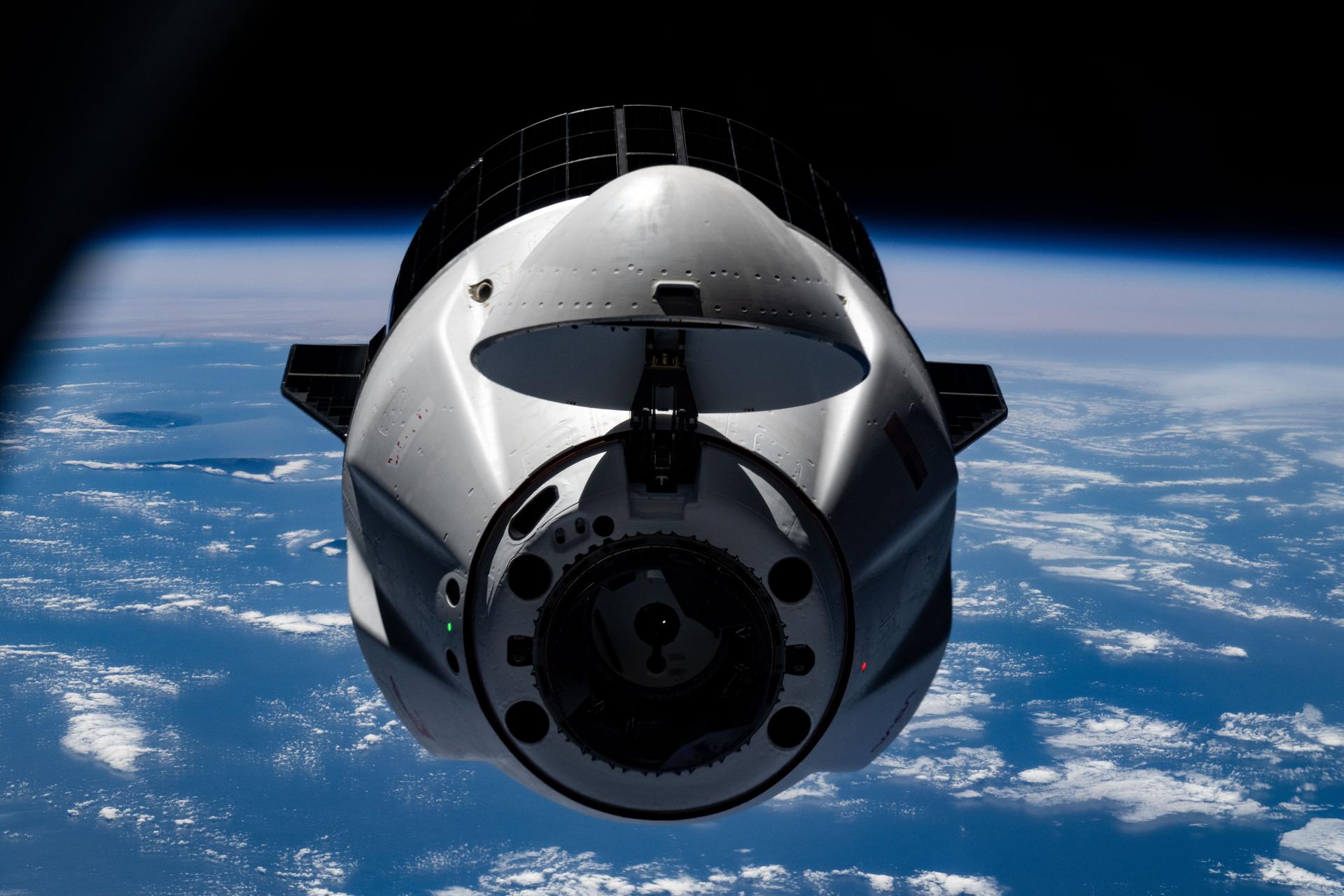
A SpaceX Dragon cargo spacecraft with its nosecone open and carrying over 5,000 pounds of science, supplies, and hardware for NASA's SpaceX CRS-33 mission approaches the International Space Station for an automated docking to the Harmony module's forward port. Both spacecraft were flying 261 miles above the Atlantic Ocean south of the Azores, a Portuguese archipelago, at the time of this photograph.
A SpaceX Dragon cargo spacecraft, carrying more than 5,000 pounds of science, supplies, and hardware for NASA’s SpaceX CRS-33 mission, approaches the International Space Station on Aug. 25, 2025, for an automated docking to the Harmony module’s forward port.
Credit: NASA

NASA and its international partners will receive scientific research samples and hardware when a SpaceX Dragon spacecraft departs the International Space Station on Thursday, Feb. 26, and returns to Earth.

Watch NASA’s live coverage of the undocking and departure of the agency’s 33rd SpaceX Commercial Resupply Services mission starting at 11:45 a.m. EST on NASA+, Amazon Prime, and the agency’s YouTube channel. Learn how to watch NASA content on a variety of online platforms, including social media.

A Dragon spacecraft will autonomously undock from the Harmony module’s forward-facing port at 12:05 p.m. and fire its thrusters to move safely away from the space station. Splashdown is scheduled later that evening at approximately 11:44 p.m. PST off the California coast. NASA will not stream the splashdown but will post updates on its space station blog.

Several scientific investigations are returning aboard Dragon, offering insights that could help shape future space exploration and life on Earth. The Euro Material Ageing study exposed 141 samples to space for a year to examine how coatings, insulation, and 3D-printed materials degrade, while Thailand’s Liquid Crystals experiment observed the stability of films used in electronics in microgravity. Both could lead to stronger spacecraft, better displays, and improved optical devices on future missions.

Frozen samples from the Stellar Stem Cells Mission 2 experiment are helping study how microgravity affects brain and heart stem cell growth, which could improve treatments for diseases such as ALS and Parkinson’s disease. The SpaceDuino project is paving the way for more low-cost instruments after successfully measuring vibrations using a commercially available single-board computer and open-source software. The Moon Microscope also successfully tested a portable diagnostic kit for blood analysis in space that could support future missions to the Moon and Mars.

The Dragon spacecraft supporting the mission also introduced a new capability to reboost the space station, helping maintain its altitude and counter atmospheric drag, which is critical for safe operations and the long-term sustainability of the orbital complex. During its time docked to the station, Dragon performed six reboosts — five in 2025 and a final maneuver on Jan. 23 — before preparations for its departure began.

Loaded with thousands of pounds of crew supplies, science experiments, and equipment, the spacecraft arrived at the station on Aug. 25, 2025, following its launch a day earlier on a Falcon 9 rocket from Space Launch Complex 40 at Cape Canaveral Space Force Station in Florida.

For more than 25 years, people have lived and worked continuously aboard the International Space Station, advancing scientific knowledge and making research breakthroughs that are not possible on Earth. The station is a critical testbed for NASA to understand and overcome the challenges of long-duration spaceflight and to expand commercial opportunities in low Earth orbit. As commercial companies concentrate on providing human space transportation services and destinations as part of a robust low Earth orbit economy, NASA is focusing its resources on deep space missions to the Moon as part of the Artemis campaign in preparation for future astronaut missions to Mars.

Get breaking news, images and features from the space station on Instagram, Facebook, and X.

Learn more about International Space Station research and operations at:

https://www.nasa.gov/station

-end-

Josh Finch / Jimi Russell
Headquarters, Washington
202-358-1100
joshua.a.finch@nasa.gov / james.j.russell@nasa.gov

Sandra Jones / Joseph Zakrzewski
Johnson Space Center, Houston
281-483-5111
sandra.p.jones@nasa.gov / joseph.a.zakrzewski@nasa.gov

Share

Details

Last Updated

Feb 23, 2026

Editor
Jessica Taveau

Powered by WPeMatico

Get The Details…
Jessica Taveau

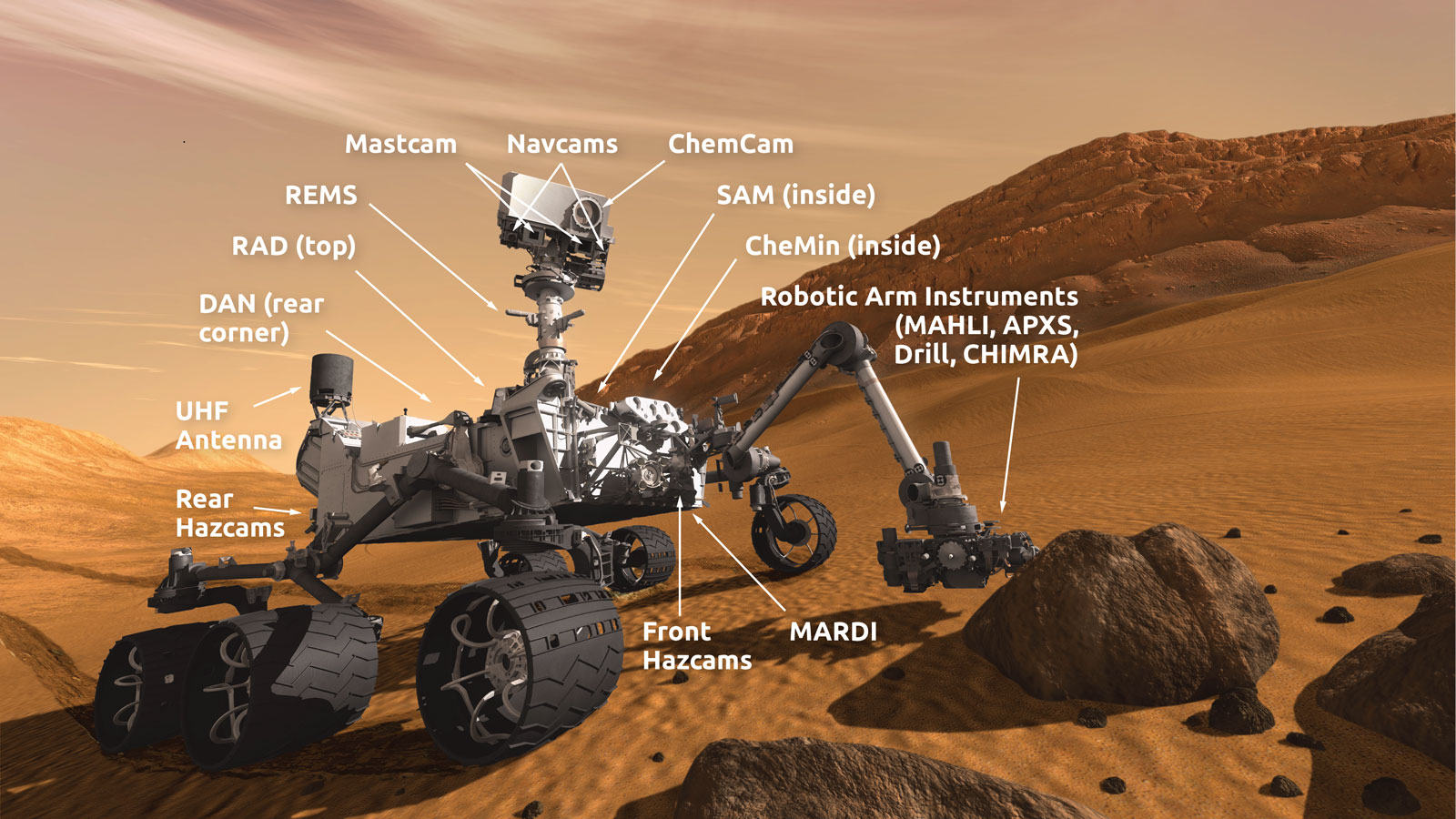
Curiosity Studies Nodules on Boxwork Formations

Curiosity Studies Nodules on Boxwork Formations

2 Min Read

Curiosity Studies Nodules on Boxwork Formations

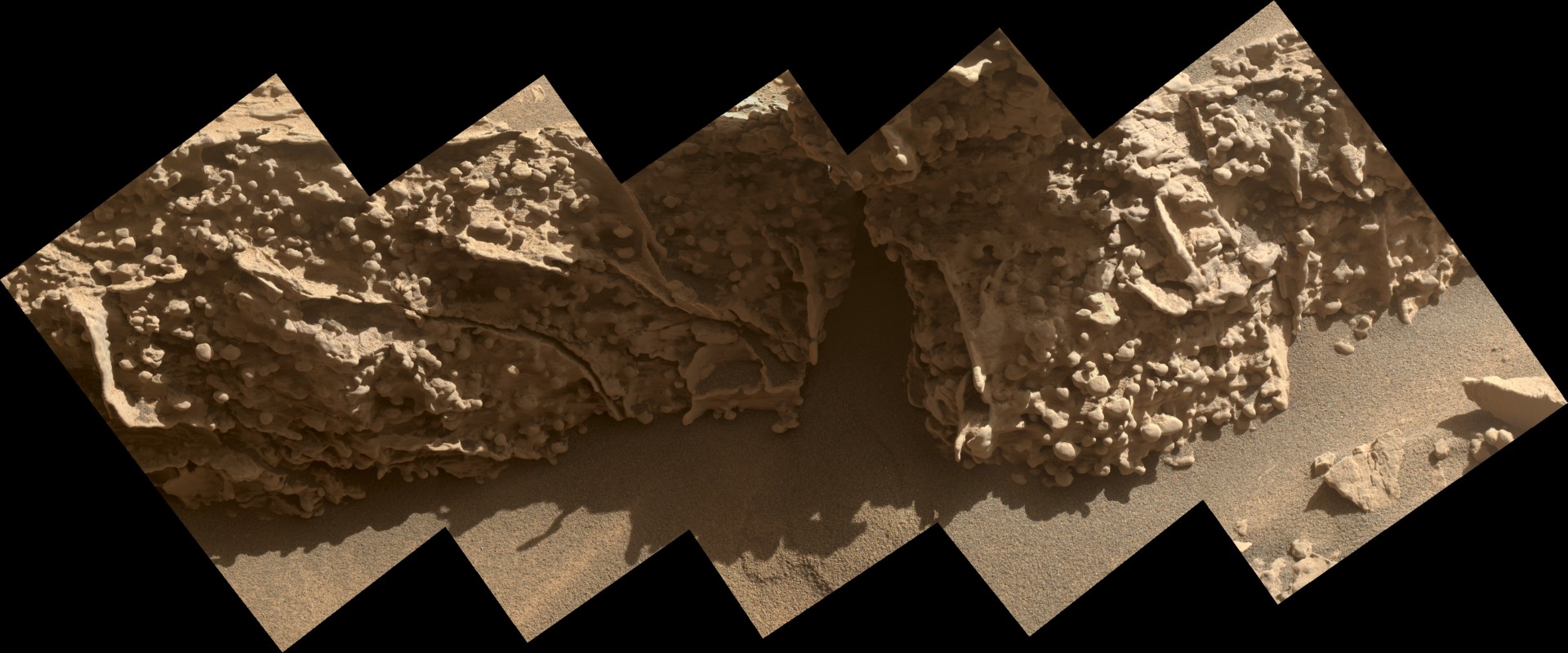
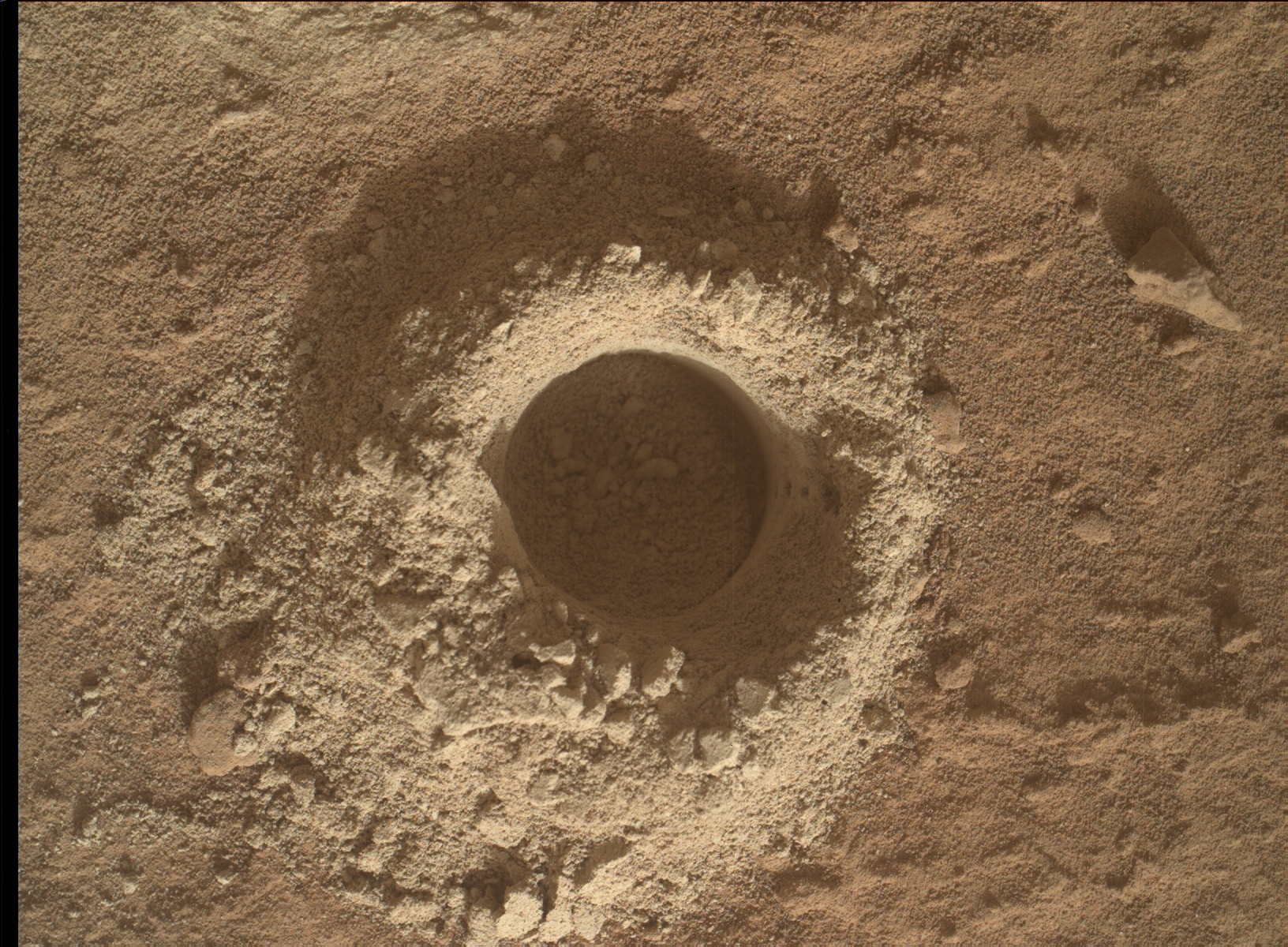
These bumpy nodules were formed by minerals left behind as groundwater was drying out on Mars billions of years ago. NASA’s Curiosity rover captured images of these pea-size features while exploring geologic formations called boxwork on Aug. 21, 2025.
PIA26697
Credits:
NASA/JPL-Caltech/MSSS

Description

NASA’s Curiosity Mars rover discovered these bumpy, pea-sized nodules while exploring a region filled with boxwork formations — low ridges standing roughly 3 to 6 feet (1 to 2 meters) tall with sandy hollows in-between. This mosaic is made up of 50 individual images taken by Curiosity’s Mars Hand Lens Imager (MAHLI), a camera on the end of the rover’s robotic arm, on Aug. 21, 2025, the 4,636th Martian day, or sol, of the mission. Ten images at different focus settings were taken at each of five locations to produce a sharp mosaic. The images were stitched together after being sent back to Earth.

Figure A is the PIA26697 image with a small scale bar added to the right-hand side.
Figure A

Figure A is the same image with a small scale bar added to the right-hand side.

Nodules like these have been seen many times before on the Red Planet, including by Curiosity. They were made by minerals left behind as water dried billions of years ago. Crisscrossing the surface for miles, the boxwork formations suggest ancient groundwater flowed on this part of the Red Planet later than expected, raising new questions about how long microbial life could have survived on Mars billions of years ago, before rivers and lakes dried up.

The boxwork ridgetops often include a dark line the team refers to as “central fractures,” where groundwater originally seeped through a rock crack, allowing minerals to concentrate. Surprisingly, the mission did not find nodules near these central fractures. Instead, they were found along the walls of the ridges and in the hollows between them. The wavy ridges between the groups of nodules are mineral veins made of calcium sulfate, also deposited by groundwater.

Curiosity was built by NASA’s Jet Propulsion Laboratory, which is managed by Caltech in Pasadena, California. JPL leads the mission on behalf of NASA’s Science Mission Directorate in Washington as part of NASA’s Mars Exploration Program portfolio. MAHLI was built by Malin Space Science Systems in San Diego.

To learn more about Curiosity, visit:

science.nasa.gov/mission/msl-curiosity

Powered by WPeMatico

Get The Details…

Curiosity Surveys the Boxwork Region

Curiosity Surveys the Boxwork Region

1 Min Read

Curiosity Surveys the Boxwork Region

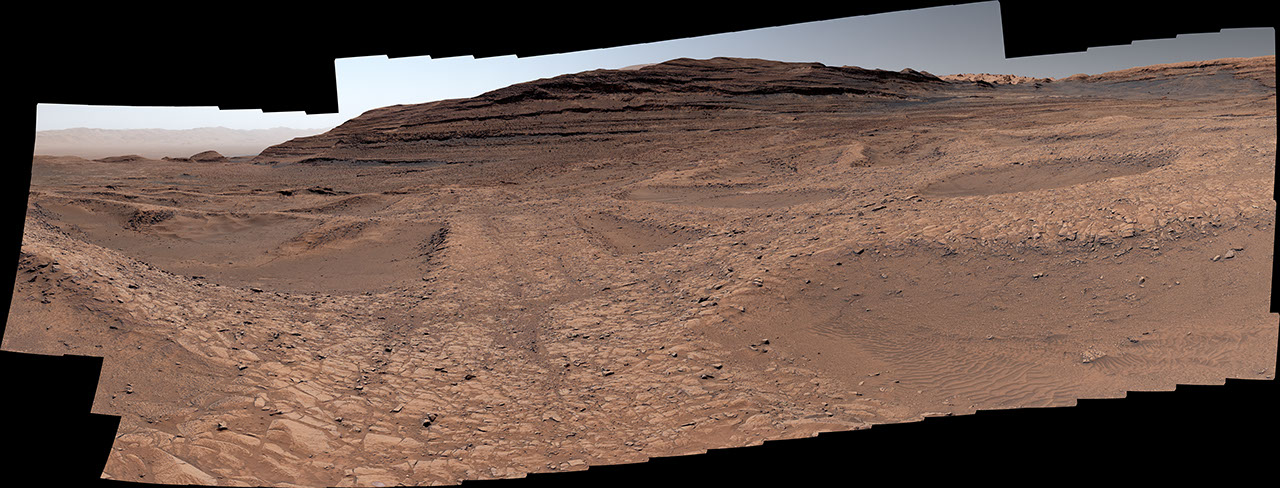
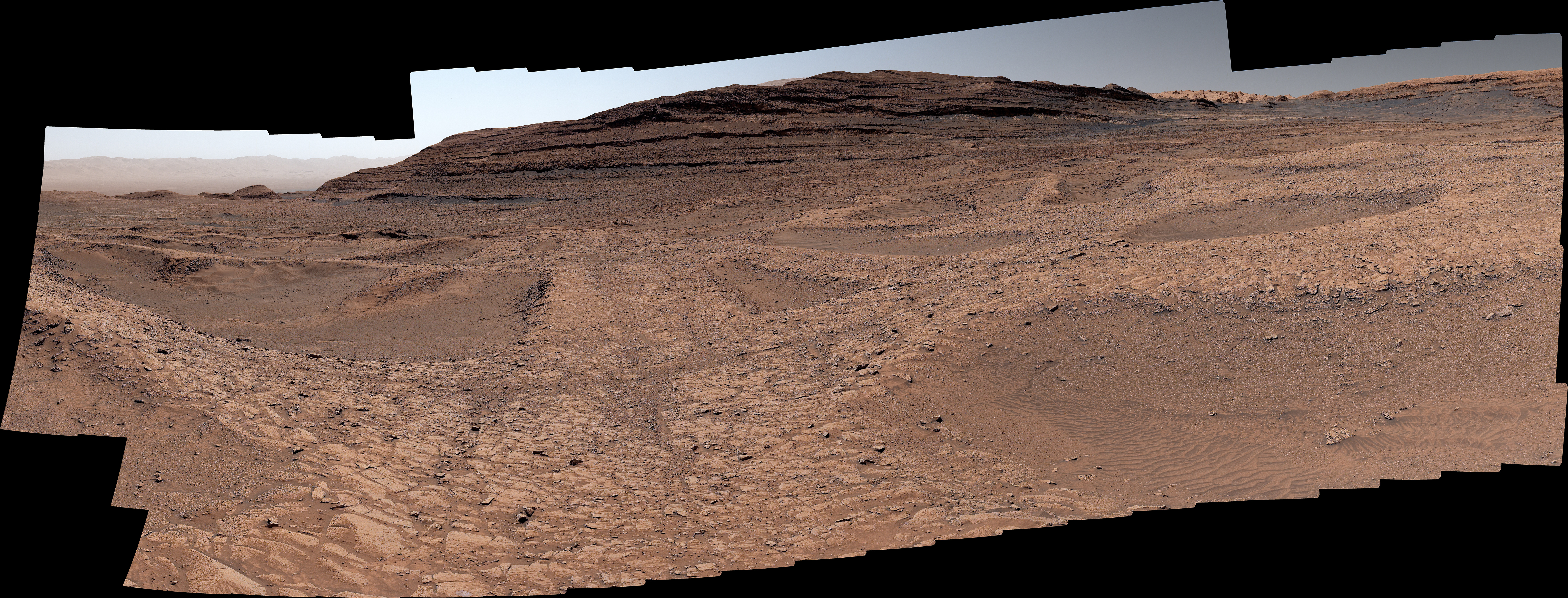
NASA’s Curiosity Mars rover captured this panorama of boxwork formations — the low ridges seen here with hollows in between them — using its Mastcam on Sept. 26, 2025.
PIA26693
Credits:
NASA/JPL-Caltech/MSSS

Description

NASA’s Curiosity Mars rover captured this panorama of boxwork formations — the low ridges seen here with hollows in between them — using its Mastcam on Sept. 26, 2025, the 4,671st Martian day, or sol, of the mission. These boxwork formations were created billions of years ago when water leaked through rock cracks. Minerals carried into the cracks later hardened; after eons of windblown sand eroding away the softer rock, the hardened ridges were left exposed.

The panorama is made up of 179 individual images that were stitched together after being sent back to Earth. This natural color view is approximately how the scene would appear to an average person if they were on Mars. 

Curiosity was built by NASA’s Jet Propulsion Laboratory, which is managed by Caltech in Pasadena, California. JPL leads the mission on behalf of NASA’s Science Mission Directorate in Washington as part of NASA’s Mars Exploration Program portfolio. Malin Space Science Systems in San Diego built and operates Mastcam.

For more about Curiosity, visit:

science.nasa.gov/mission/msl-curiosity

Powered by WPeMatico

Get The Details…

NASA’s Curiosity Rover Sees Martian ‘Spiderwebs’ Up Close

NASA’s Curiosity Rover Sees Martian ‘Spiderwebs’ Up Close

NASA’s Curiosity Mars rover captured this panorama of boxwork formations — the low ridges seen here with hollows in between them — using its Mastcam on Sept. 26, 2025.
NASA/JPL-Caltech/MSSS

For about six months, NASA’s Curiosity Mars rover has been exploring a region full of geologic formations called boxwork, low ridges standing roughly 3 to 6 feet (1 to 2 meters) tall with sandy hollows in between. Crisscrossing the surface for miles, the formations suggest ancient groundwater flowed on this part of the Red Planet later than scientists expected. This possibility raises new questions about how long microbial life could have survived on Mars billions of years ago, before rivers and lakes dried up and left a freezing desert world behind.

The boxwork formations look like giant spiderwebs when viewed from space. To explain the shapes, scientists have proposed that groundwater once flowed through large fractures in the bedrock, leaving behind minerals. Those minerals then strengthened the areas that became ridges while other portions without mineral reinforcement were eventually hollowed out by wind.

These bumpy nodules were formed by minerals left behind as groundwater was drying out on Mars billions of years ago. NASA’s Curiosity rover captured images of these pea-size features while exploring geologic formations called boxwork on Aug. 21, 2025.
NASA/JPL-Caltech/MSSS

Until Curiosity arrived at this region, however, no one could be sure what these formations looked like up close, and there were even more questions about how they were made.

Unpacking boxwork

Although Earth also has boxwork ridges, they’re rarely taller than a few centimeters and are usually found in caves or in dry, sandy environments. The Curiosity team wanted to get a close look at the Martian formations and gather more data. This posed a real challenge for rover drivers: They needed to send instructions to Curiosity, an SUV-size vehicle that weighs nearly a ton (899 kilograms), so that it could roll across the tops of ridges not much wider than the rover itself.

“It almost feels like a highway we can drive on. But then we have to go down into the hollows, where you need to be mindful of Curiosity’s wheels slipping or having trouble turning in the sand,” said operations systems engineer Ashley Stroupe of NASA’s Jet Propulsion Laboratory in Southern California, which built Curiosity and leads the mission. “There’s always a solution. It just takes trying different paths.”

For scientists, the challenge is piecing together how such a vast network of boxwork could exist on Mount Sharp, the 3-mile-tall (5-kilometer-tall) mountain the rover has been ascending. Each layer of the mountain formed in a different era of Mars’ ancient, changing climate. The higher Curiosity goes, the more the landscape bears signs that water was drying out over time, with occasional wet periods that saw the return of rivers and lakes.

“Seeing boxwork this far up the mountain suggests the groundwater table had to be pretty high,” said Tina Seeger of Rice University in Houston, one of the mission scientists leading the boxwork investigation. “And that means the water needed for sustaining life could have lasted much longer than we thought looking from orbit.”

Previous orbital imagery included one crucial piece of evidence: dark lines running across the “spiderwebs.” In 2014, it was proposed that these lines might be what are known as central fractures, where groundwater seeped through rock cracks and allowed minerals to concentrate. Investigating the ridges up close, Curiosity found that these lines are in fact fractures, lending weight to that hypothesis.

The rover also discovered bumpy textures called nodules, an obvious sign of past groundwater that has been spotted many times by Curiosity and other Mars missions. Unexpectedly, these nodules were not found near the central fractures, but along a ridge’s walls and the hollows between them.

“We can’t quite explain yet why the nodules appear where they do,” Seeger said. “Maybe the ridges were cemented by minerals first, and later episodes of groundwater left nodules around them.”

Roving laboratory

A major part of Curiosity’s science centers on rock samples collected by the rock-pulverizing drill on the end of the rover’s robotic arm. The resulting powder can be trickled into complex science instruments in the vehicle’s body for analysis.

Last year, three samples from the boxwork region — one from a ridgetop, one from bedrock within a hollow, and one from a transitional area before Curiosity reached the ridges — were collected by the drill and analyzed with X-rays and a high-temperature oven. The X-ray analyses found clay minerals in the ridge and carbonate minerals in the hollow, providing additional clues to help understand how these features formed.

The mission recently collected a fourth sample, which was analyzed with a special technique reserved for the most intriguing science targets: After the pulverized rock went into the rover’s high-temperature oven, chemical reagents reacted with the sample to conduct what is called wet chemistry. The resulting reactions make it easier to detect certain organic compounds, carbon-based molecules important to the formation of life.

Sometime in March, Curiosity will leave the boxwork formations behind. The whole region is part of a layer on Mount Sharp enriched in salty minerals called sulfates, which formed as water was drying out on Mars. Curiosity’s team plans to continue exploring this sulfate layer for many miles in the coming year, learning more about how the ancient Red Planet’s climate changed billions of years ago.

More about Curiosity

Curiosity was built by NASA’s Jet Propulsion Laboratory, which is managed by Caltech in Pasadena, California. JPL leads the mission on behalf of NASA’s Science Mission Directorate in Washington as part of NASA’s Mars Exploration Program portfolio.

To learn more about Curiosity, visit:

science.nasa.gov/mission/msl-curiosity

News Media Contacts

Andrew Good
Jet Propulsion Laboratory, Pasadena, Calif.
818-393-2433
andrew.c.good@jpl.nasa.gov

Karen Fox / Molly Wasser
NASA Headquarters, Washington
240-285-5155 / 240-419-1732
karen.c.fox@nasa.gov / molly.l.wasser@nasa.gov

2026-013

Powered by WPeMatico

Get The Details…
Naomi Hartono

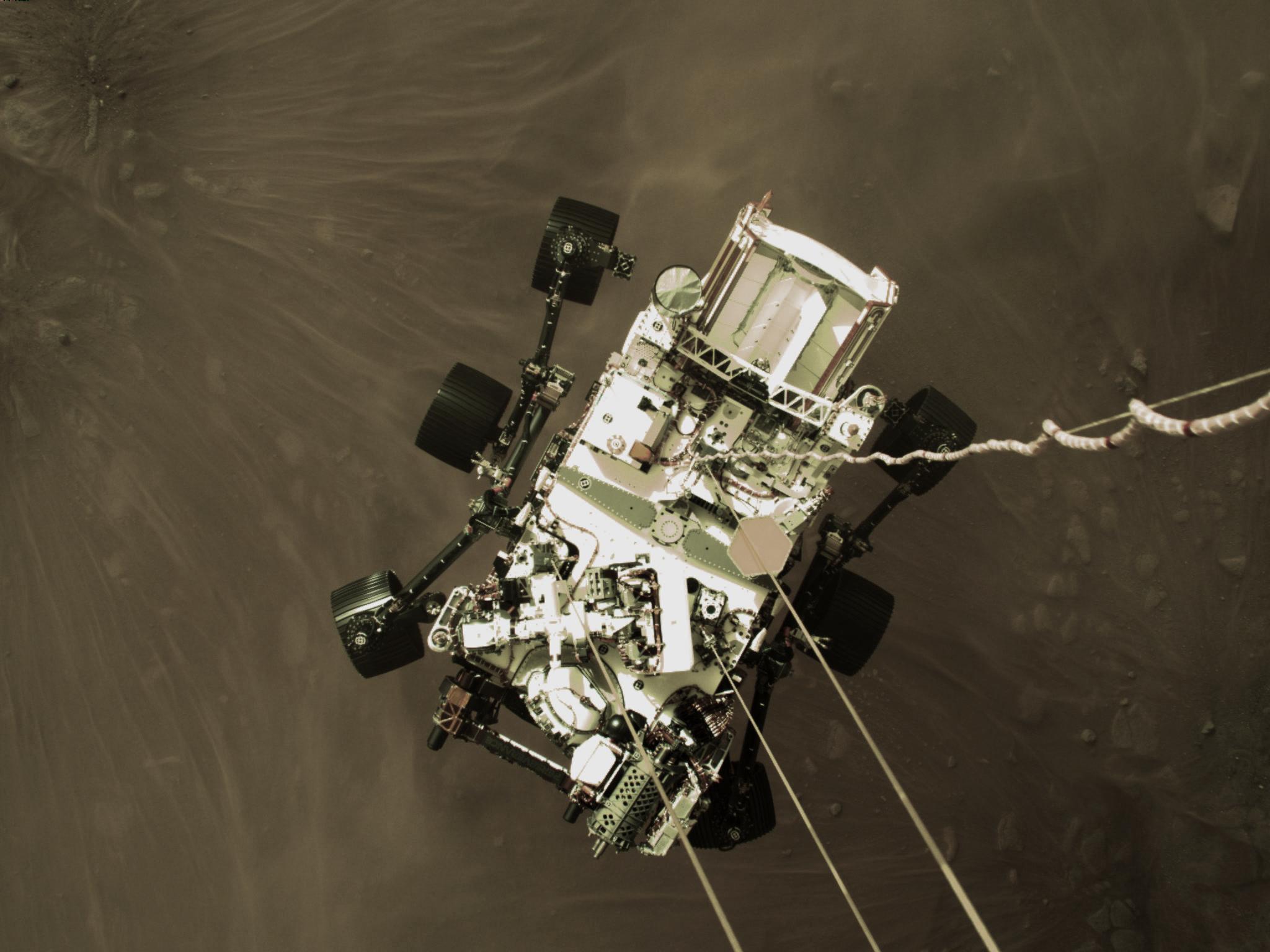
Perseverance’s Landing

Perseverance’s Landing

A rover descends toward Mars. The view is top-down. The rover looks like a white rectangle with 6 small black wheels attached to it. Mars' terrain is a brown blur.
This high-resolution still image is part of a video taken by several cameras as NASA’s Perseverance rover touched down on Mars on February 18, 2021.
NASA/JPL-Caltech

NASA’s Perseverance Rover approaches Mars in this Feb. 18, 2020, top-down still image captured by a camera on the rover’s descent stage.

Perseverance is searching for signs of ancient microbial life, to advance NASA’s quest to explore the past habitability of Mars. NASA chose Jezero Crater as the landing because scientists believe the area was once flooded with water and was home to an ancient river delta. In summer 2024, the rover collected a sample from the “Chevaya Falls” rock which was found to have potential biosignatures — clues that suggest past life may have been present, but that require more data or further study before any conclusions about the absence or presence of life.

In addition to making discoveries on Mars, the rover itself is demonstrating technological advances: A new technology developed at NASA’s Jet Propulsion Laboratory in Southern California enables Perseverance to figure out its whereabouts without calling humans for help. Dubbed Mars Global Localization, the technology features an algorithm that rapidly compares panoramic images from the rover’s navigation cameras with onboard orbital terrain maps.

Image credit: NASA/JPL-Caltech

Powered by WPeMatico

Get The Details…
Monika Luabeya