30 Years Ago: STS-64 Astronauts Test a Spacewalk Rescue Aid

30 Years Ago: STS-64 Astronauts Test a Spacewalk Rescue Aid

On Sept. 9, 1994, space shuttle Discovery took to the skies on its 19th trip into space. During their 11-day mission, the STS-64 crew of Commander Richard “Dick” N. Richards, Pilot L. Blaine Hammond, and Mission Specialists Jerry M. Linenger, Susan J. Helms, Carl J. Meade, and Mark C. Lee demonstrated many of the space shuttle’s capabilities. They used a laser instrument to observe the Earth’s atmosphere, deployed and retrieved a science satellite, and used the shuttle’s robotic arm for a variety of tasks, including studying the orbiter itself. During a spacewalk, Lee and Meade tested a new device to rescue astronauts who found themselves detached from the vehicle. Astronauts today use the device routinely for spacewalks from the International Space Station.

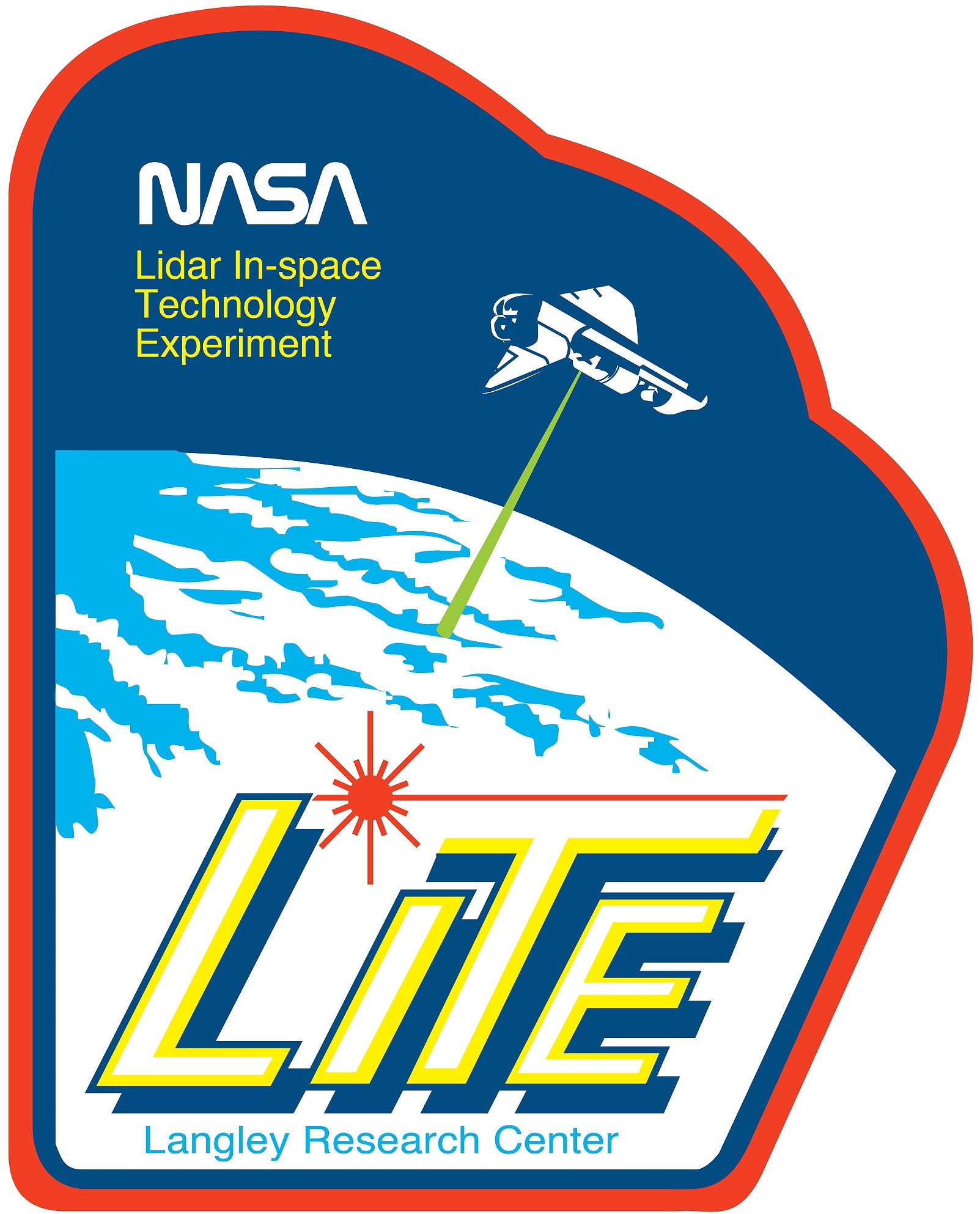
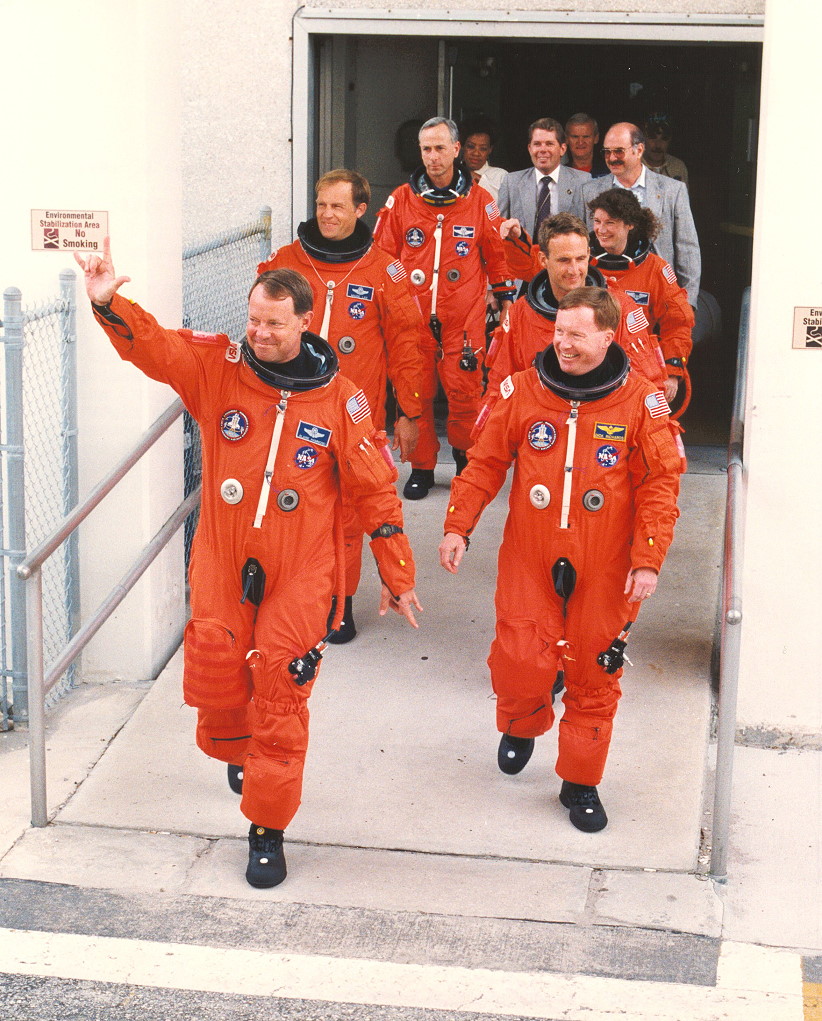
The STS-64 crew patch Official photo of the STS-64 crew The patch for the Lidar In-space Technology Experiment
Left: The STS-64 crew patch. Middle: Official photo of the STS-64 crew of L. Blaine Hammond, front row left, Richard “Dick” N. Richards, and Susan J. Helms; Mark C. Lee, back row left, Jerry M. Linenger, and Carl J. Meade. Right: The patch for the Lidar In-space Technology Experiment.

In November 1993, NASA announced the five-person all-veteran STS-64 crew. Richards, selected as an astronaut in 1980, had made three previous spaceflights, STS-28, STS-41, and STS-50. Lee, a member of the astronaut class of 1984, had two flights to his credit, STS-30 and STS-47, as did Meade, selected in 1985 and a veteran of STS-38 and STS-50. Each making their second trip into space, Hammond, selected in 1984 had flown on STS-39, and Helms, from the class of 1990 had flown on STS-54. In February 1994, NASA added first time space flyer Linenger to the crew, partly to make him eligible for a flight to Mir. He holds the distinction as the first member of his astronaut class of 1992 to fly in space.
Workers tow Discovery from the Orbiter Processing Facility to the Vehicle Assembly Building at NASA’s Kennedy Space Center (KSC) in Florida Space shuttle Discovery arrives at Launch Pad 39B, left, with space shuttle Endeavour still on Launch Pad 39A The STS-64 crew exits crew quarters at KSC on their way to the launch
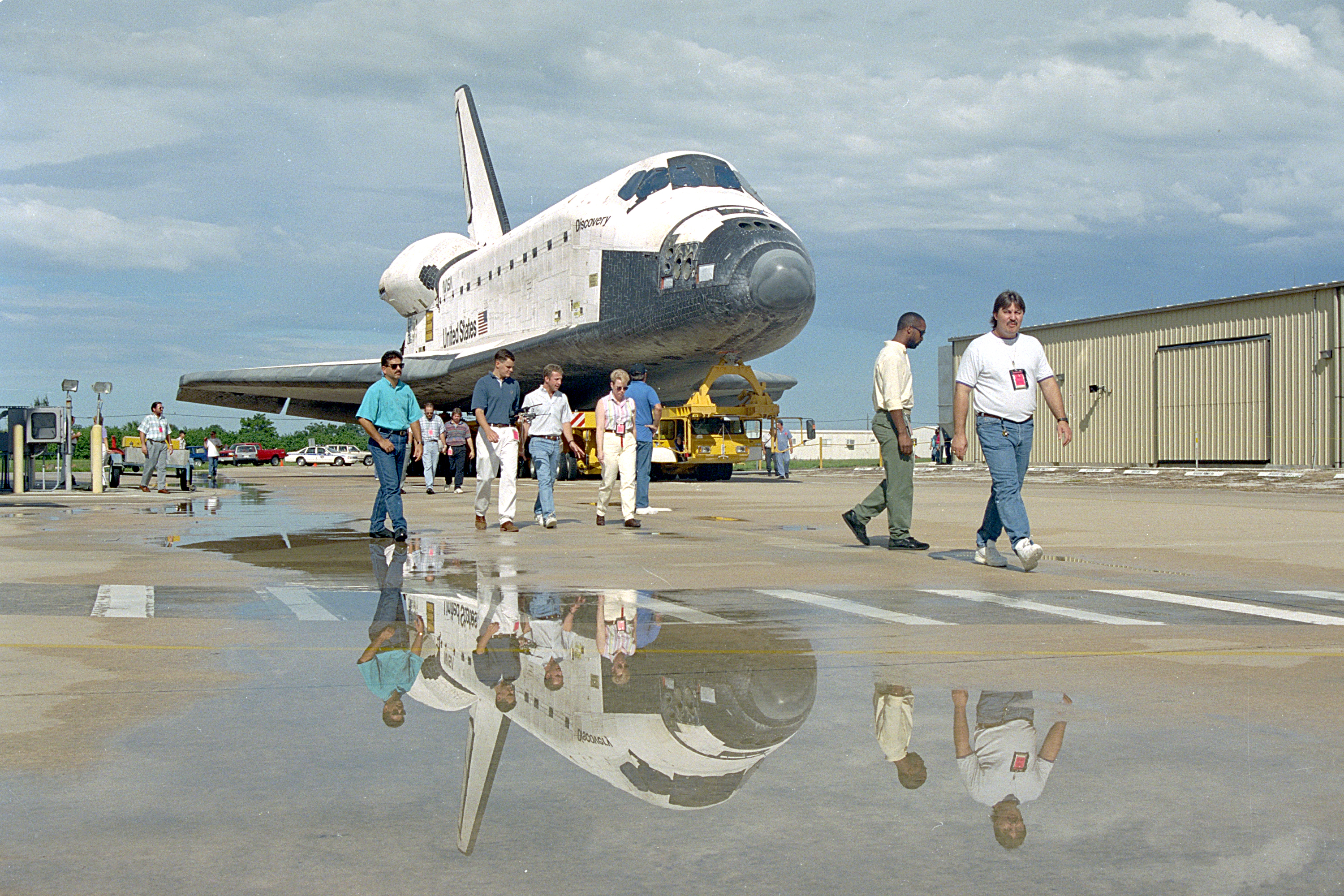
Left: Workers tow Discovery from the Orbiter Processing Facility to the Vehicle Assembly Building at NASA’s Kennedy Space Center (KSC) in Florida. Middle: Space shuttle Discovery arrives at Launch Pad 39B, left, with space shuttle Endeavour still on Launch Pad 39A. Right: The STS-64 crew exits crew quarters at KSC on their way to the launch.

Discovery returned to NASA’s Kennedy Space Center (KSC) in Florida following its previous flight, the STS-60 mission, in February 1994. Workers in KSC’s Orbiter Processing Facility (OPF) removed the previous payload and began to service the orbiter. On May 26, workers moved Discovery into the Vehicle Assembly Building for temporary storage to make room in the OPF for Atlantis, just returned from Palmdale, California, where it underwent modifications to enable extended duration flights and dockings with space stations. Discovery returned to the OPF for payload installation in July, and rolled back to the VAB on Aug. 11 for mating with its external tank and solid rocket boosters. Discovery rolled out to Launch Pad 39B on Aug. 19, with its sister ship Endeavour still on Launch Pad 39A following the previous day’s launch abort. The six-person crew traveled to KSC to participate in the Terminal Countdown Demonstration Test, essentially a dress rehearsal for the launch countdown, on Aug. 24.

Liftoff of Discovery on the STS-64 mission
Liftoff of Discovery on the STS-64 mission.

On Sept. 9, 1994, after a more than two-hour delay caused by inclement weather, Discovery thundered into the sky to begin the STS-64 mission. Eight and a half minutes later, the orbiter and its crew reached space, and with a firing of the shuttle’s Orbiter Maneuvering System (OMS) engines they entered a 160-mile orbit inclined 57 degrees to the equator, ideal for Earth and atmospheric observations. The crew opened the payload bay doors, deploying the shuttle’s radiators, and removed their bulky launch and entry suits, stowing them for the remainder of the flight. They began to convert their vehicle into a science platform.
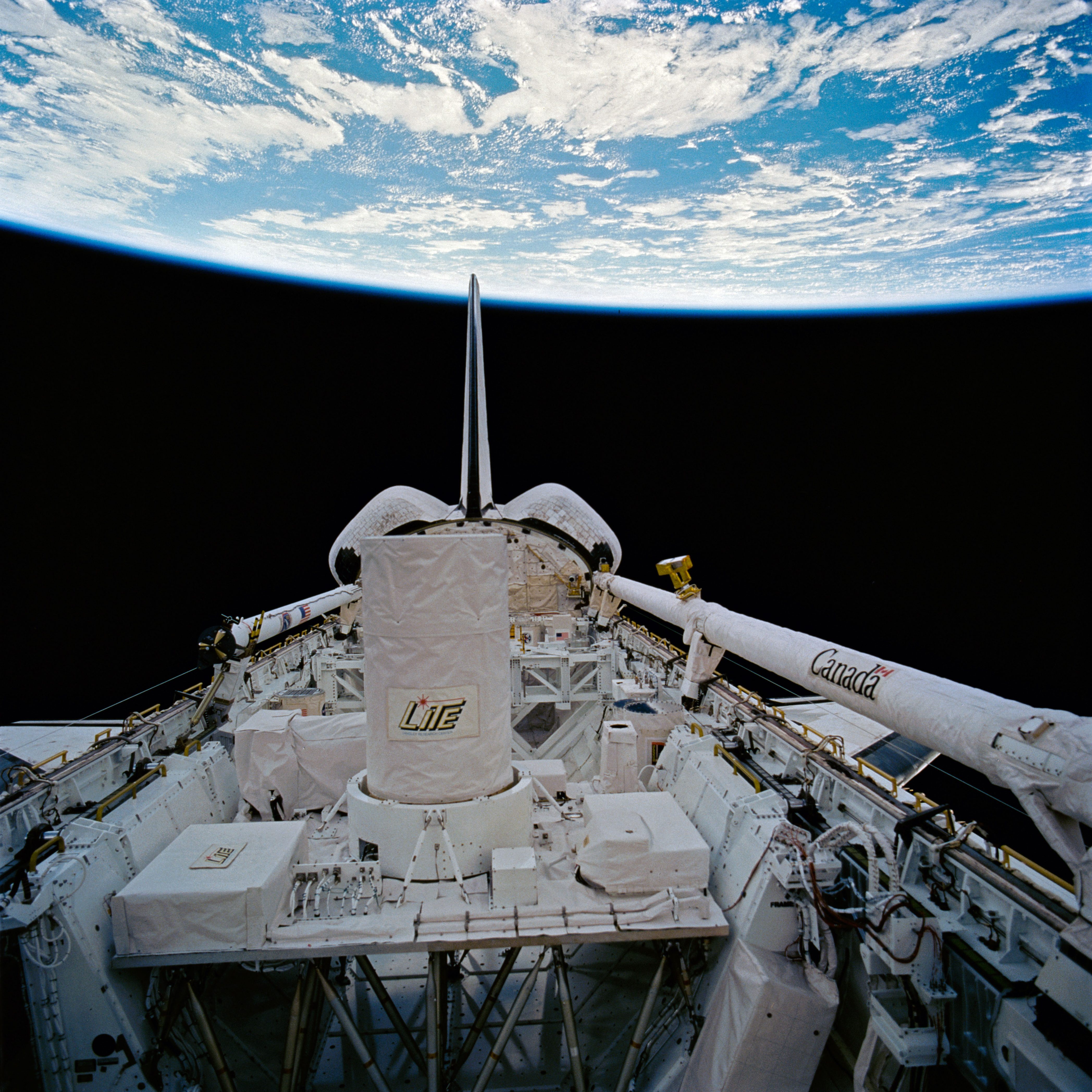
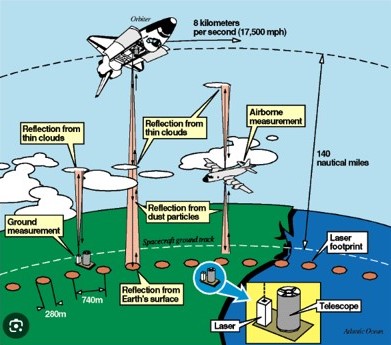
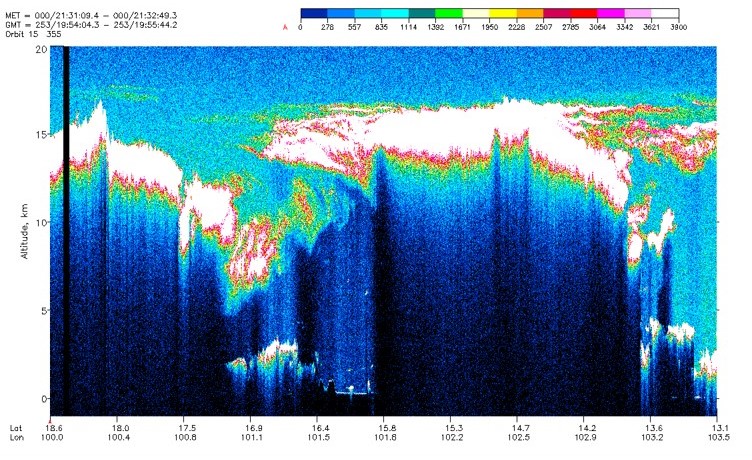
LIDAR (light detection and ranging) In-space Technology Experiment (LITE) telescope in Discovery’s payload bay Schematic of LITE data acquisition Image created from LITE data of clouds over southeast Asia
Left: LIDAR (light detection and ranging) In-space Technology Experiment (LITE) telescope in Discovery’s payload bay. Middle: Schematic of LITE data acquisition. Right: Image created from LITE data of clouds over southeast Asia.

One of the primary payloads on STS-64, the LIDAR (light detection and ranging) In-space Technology Experiment (LITE), mounted in Discovery’s forward payload bay, made the first use of a laser to study Earth’s atmosphere, cloud cover, and airborne dust from space. Lee, with help from Richards and Meade, activated LITE, built at NASA’s Langley Research Center in Hampton, Virginia, on the flight’s first day. The experiment operated for 53 hours during the mission, gathering 43 hours of high-rate data shared with 65 groups in 20 countries.
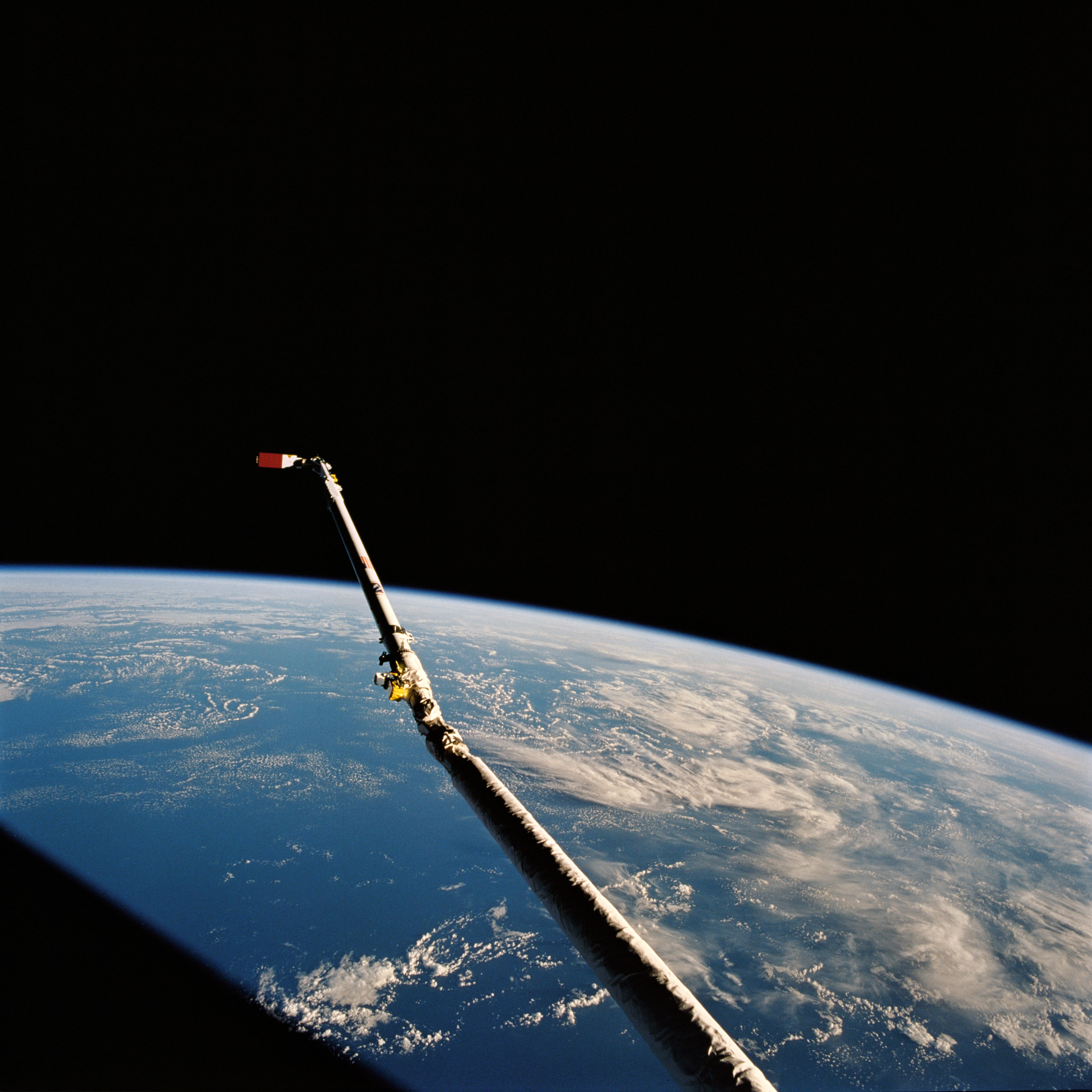
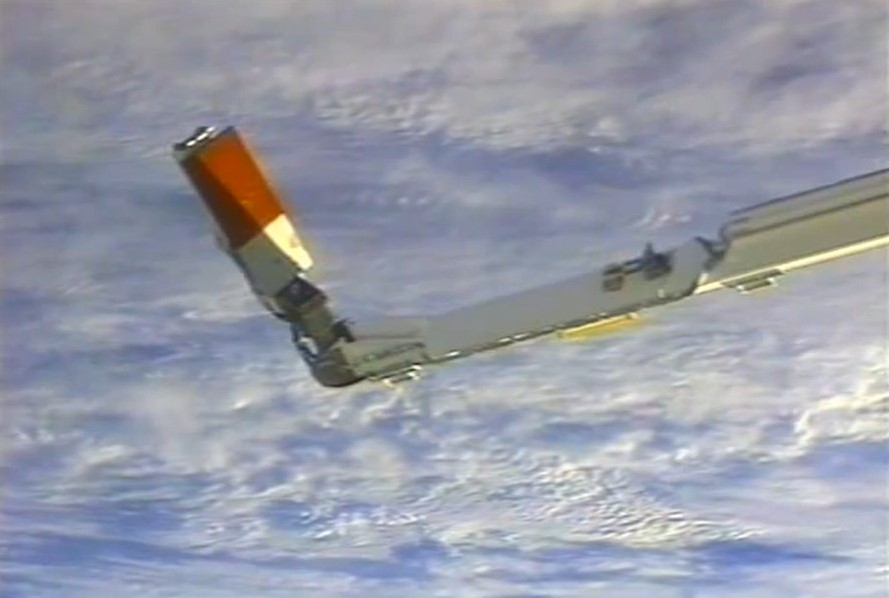
View of the shuttle’s Remote Manipulator System Closeup view of SPIFEX A video camera view of Discovery from SPIFEX
Left: View of the shuttle’s Remote Manipulator System, or robotic arm, holding the 33-foot long Shuttle Plume Impingement Flight Experiment (SPIFEX). Middle: Closeup view of SPIFEX. Right: A video camera view of Discovery from SPIFEX.

The Shuttle Plume Impingement Flight Experiment (SPIFEX), built at NASA’s Johnson Space Center (JSC) in Houston, consisted of a package of instruments positioned on the end of a 33-foot boom, to characterize the behavior of the shuttle’s Reaction Control System (RCS) thrusters. On the flight’s second day, Helms used the shuttle’s Remote Manipulator System (RMS), or robotic arm, to pick up SPIFEX. Over the course of the mission, she, Lee, and Hammond took turns operating the arm to obtain 100 test points during various thruster firings. A video camera on SPIFEX returned images of Discovery from several unusual angles.
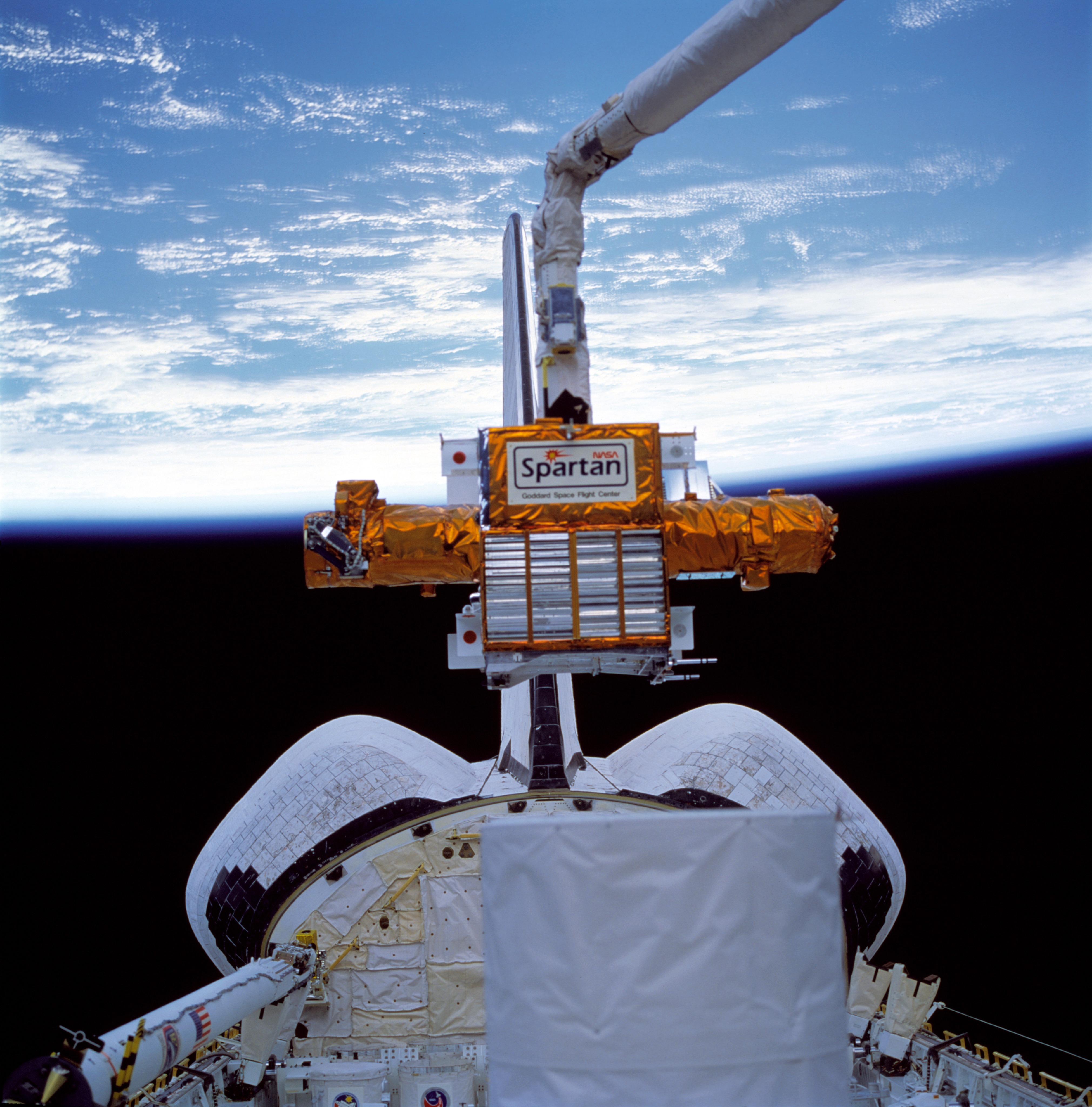
Astronaut Susan J. Helms lifts the Shuttle Pointed Autonomous Research Tool for Astronomy-201 (SPARTAN-201) out of Discovery’s payload bay prior to its release Discovery approaches SPARTAN during the rendezvous Astronaut Susan J. Helms operating the Shuttle’s Remote Manipulator System prepares to grapple SPARTAN
Left: Astronaut Susan J. Helms lifts the Shuttle Pointed Autonomous Research Tool for Astronomy-201 (SPARTAN-201) out of Discovery’s payload bay prior to its release. Middle: Discovery approaches SPARTAN during the rendezvous. Right: Astronaut Susan J. Helms operating the Shuttle’s Remote Manipulator System prepares to grapple SPARTAN.

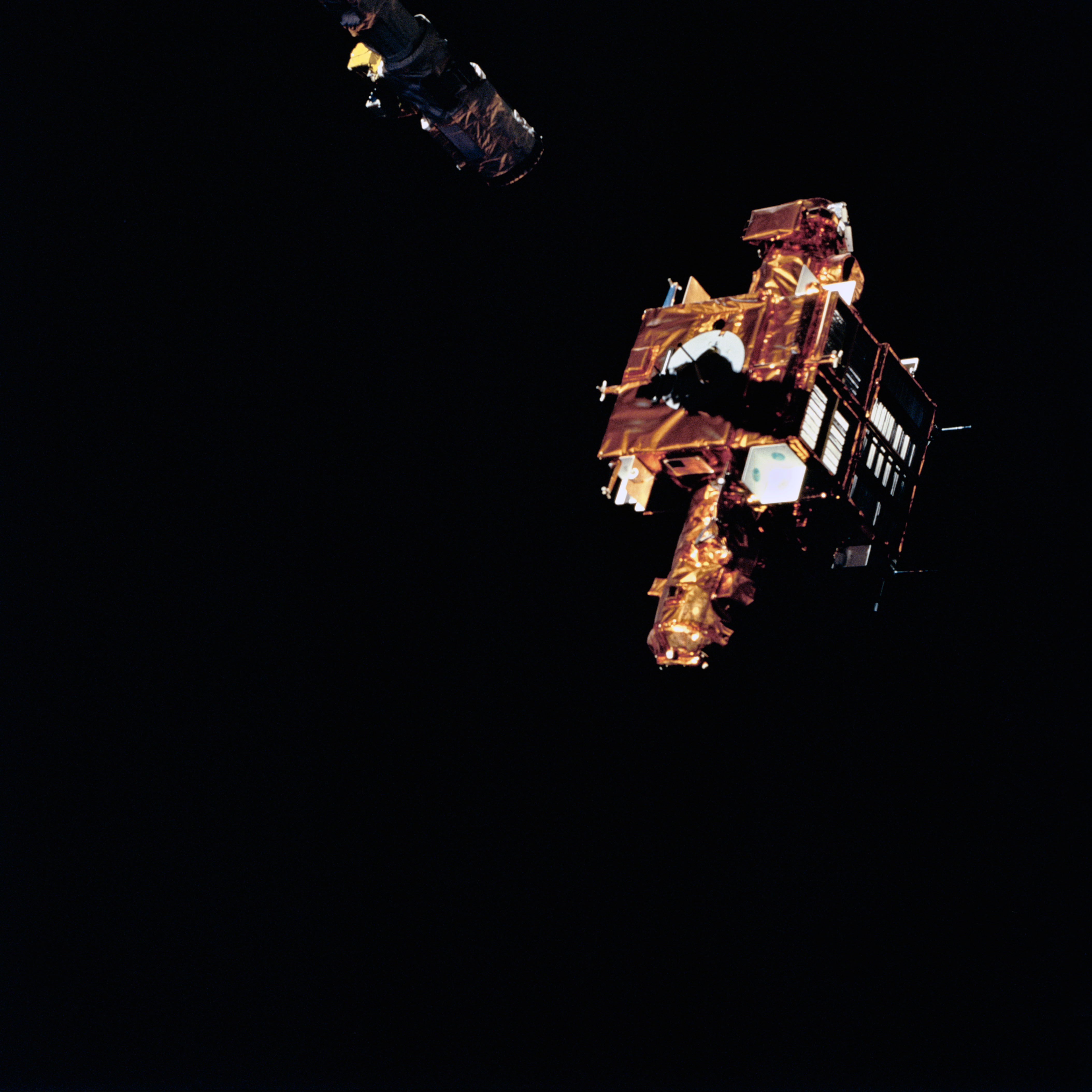
On the mission’s fifth day, Helms used the RMS to lift the Shuttle Pointed Autonomous Research Tool for Astronomy-201 (SPARTAN-201) satellite out of the payload bay and released it. Two and a half minutes later, SPARTAN activated itself, and Richards maneuvered Discovery away from the satellite so it could begin its science mission. On flight day seven, Discovery began its rendezvous with SPARTAN, and Hammond flew the shuttle close enough for Helms to grapple it with the arm and place it back in the payload bay. During its two-day free flight, SPARTAN’s two telescopes studied the acceleration and velocity of the solar wind and measured aspects of the Sun’s corona or outer atmosphere.
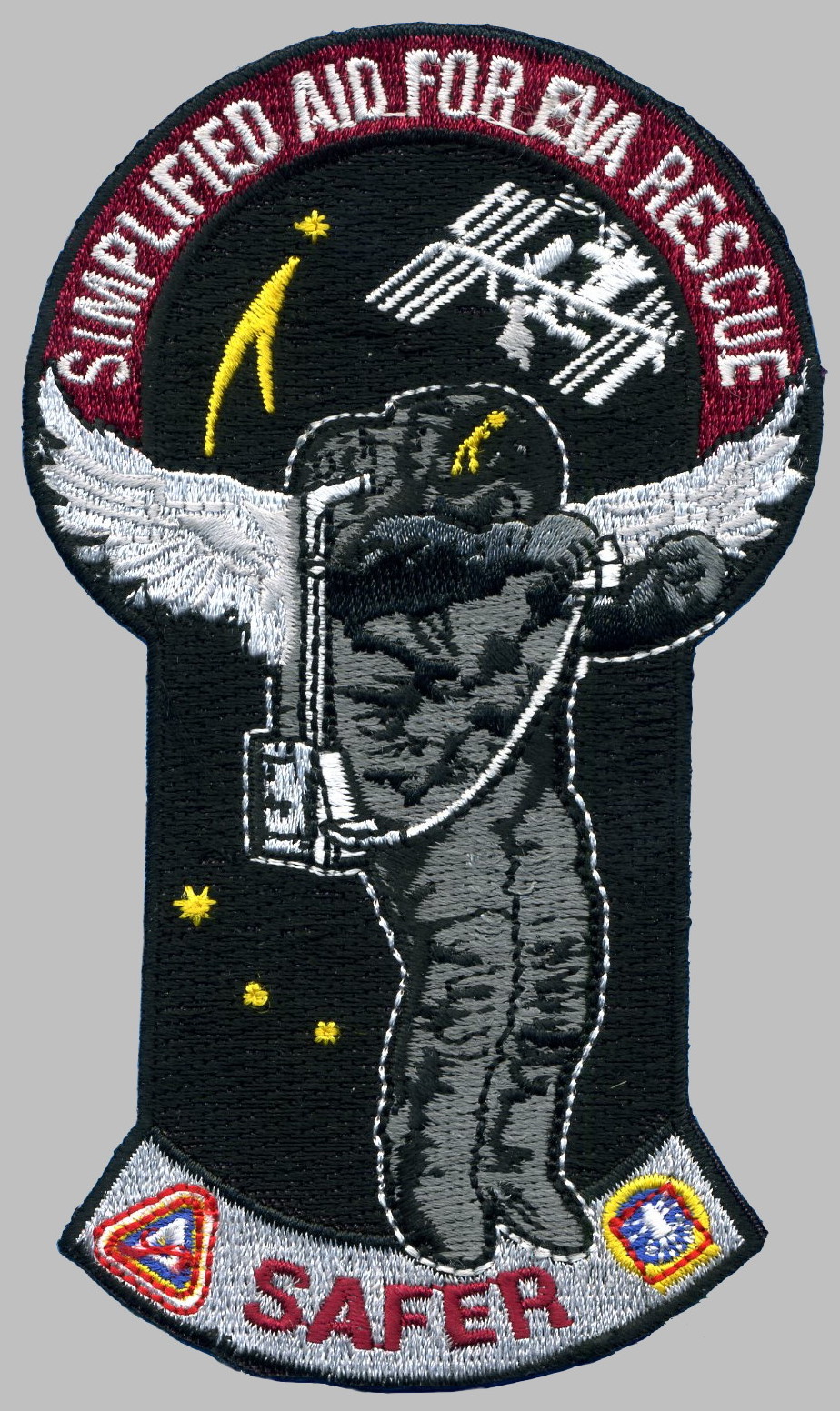
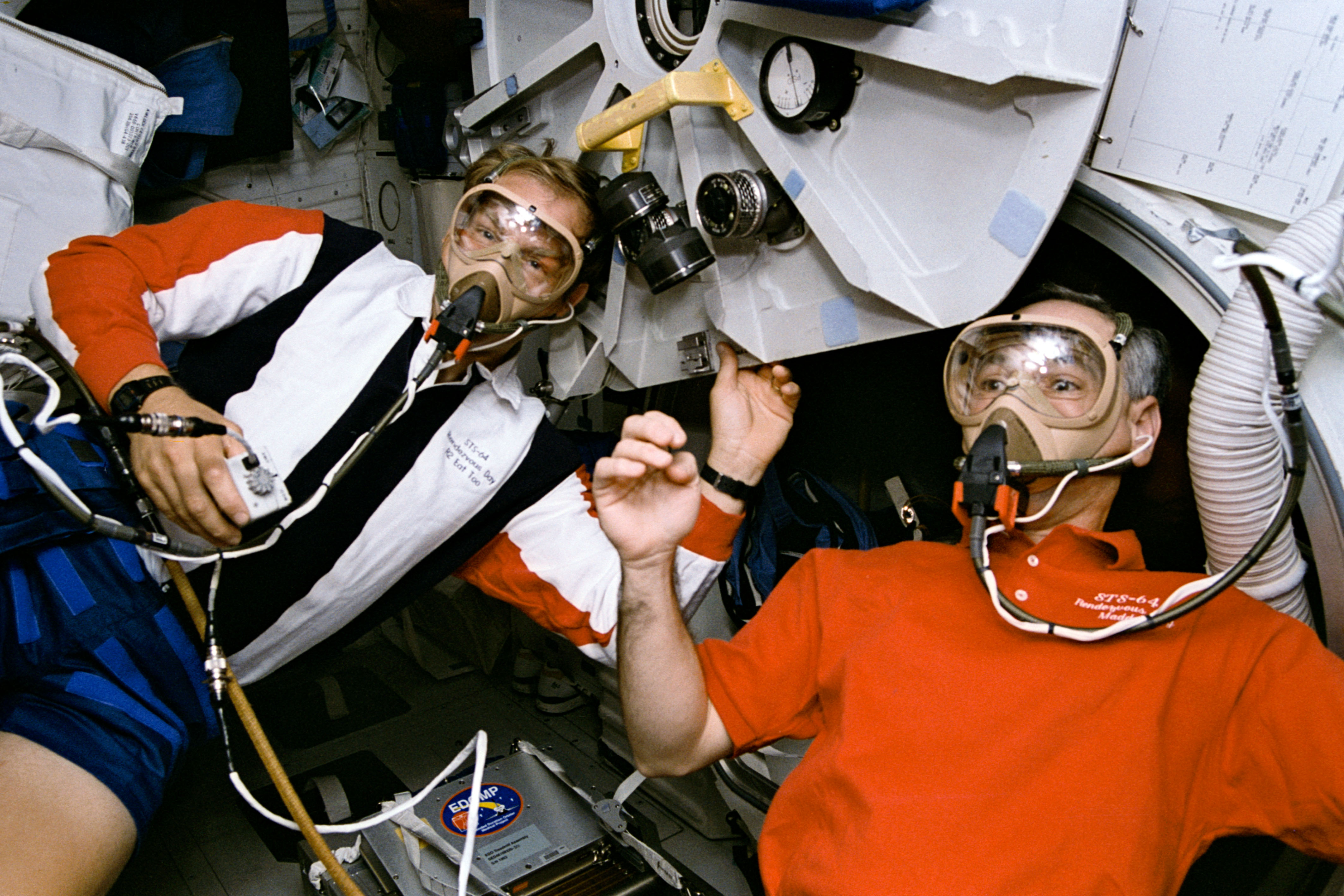
Patch for the Simplified Aid for EVA (Extravehicular Activity) Rescue (SAFER) Astronauts Mark C. Lee, left, and Carl J. Meade during the 15-minute prebreathe prior to their spacewalk Lee, left, tests the SAFER while Meade works on other tasks in the payload bay
Left: Patch for the Simplified Aid for EVA (Extravehicular Activity) Rescue (SAFER). Middle: Astronauts Mark C. Lee, left, and Carl J. Meade during the 15-minute prebreathe prior to their spacewalk. Right: Lee, left, tests the SAFER while Meade works on other tasks in the payload bay.

On flight day seven, in preparation for the following day’s spacewalk, the astronauts lowered the pressure in the shuttle from 14.7 pounds per square inch (psi) to 10.2 psi to reduce the likelihood of the spacewalkers, Lee and Meade, from developing decompression sickness, also known as the bends. As an added measure, the two spent 15 minutes breathing pure oxygen before donning their spacesuits and exiting the shuttle’s airlock.
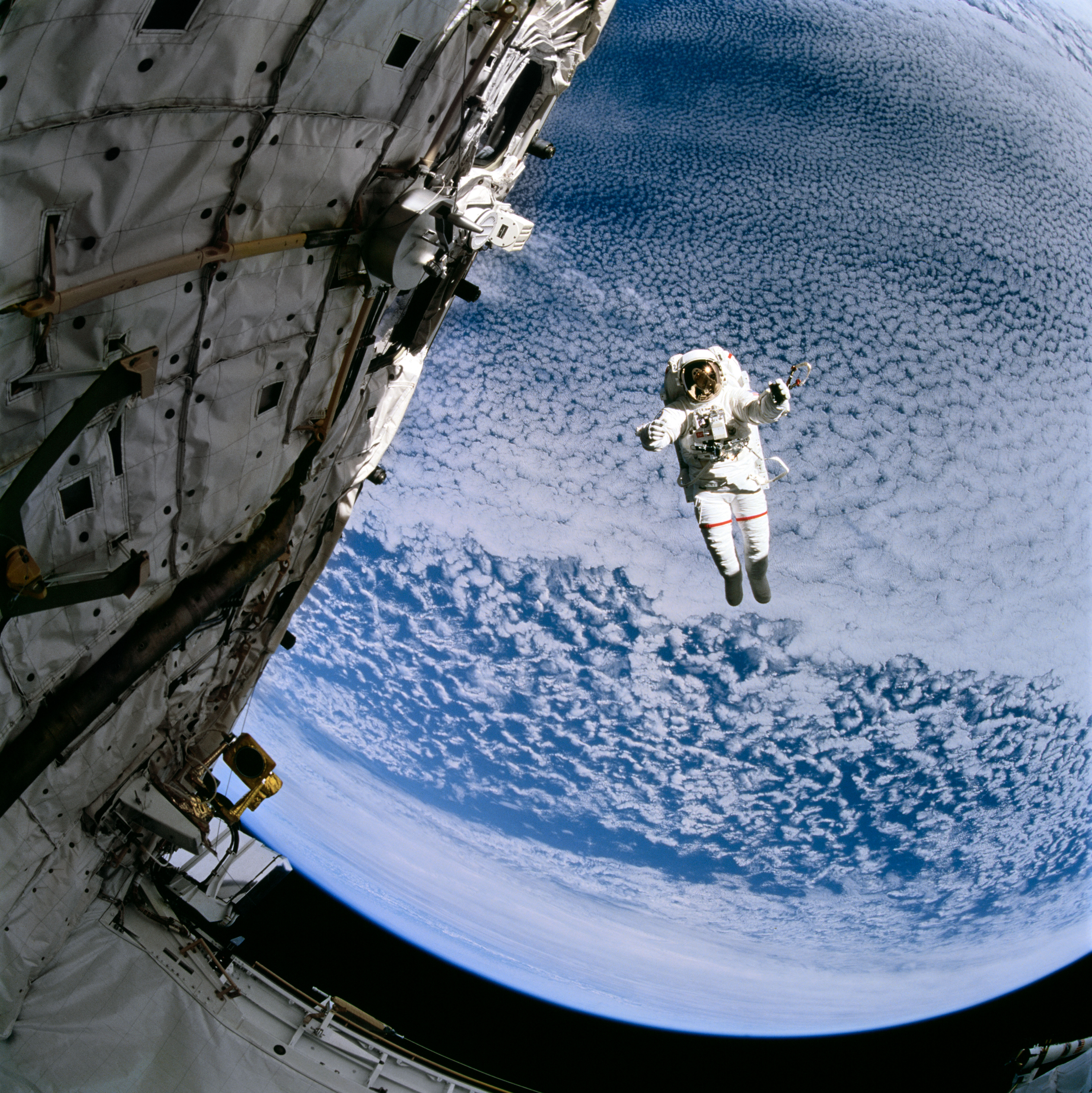
Astronaut Mark C. Lee tests the Simplified Aid for EVA (Extravehicular Activity) Rescue (SAFER) during an untethered spacewalk Astronaut Carl J. Meade tests the SAFER during an untethered spacewalk Meade, left, tests the ability of the SAFER to stop his spinning as Lee looks on
Left: Astronaut Mark C. Lee tests the Simplified Aid for EVA (Extravehicular Activity) Rescue (SAFER) during an untethered spacewalk. Middle: Astronaut Carl J. Meade tests the SAFER during an untethered spacewalk. Right: Meade, left, tests the ability of the SAFER to stop his spinning as Lee looks on.

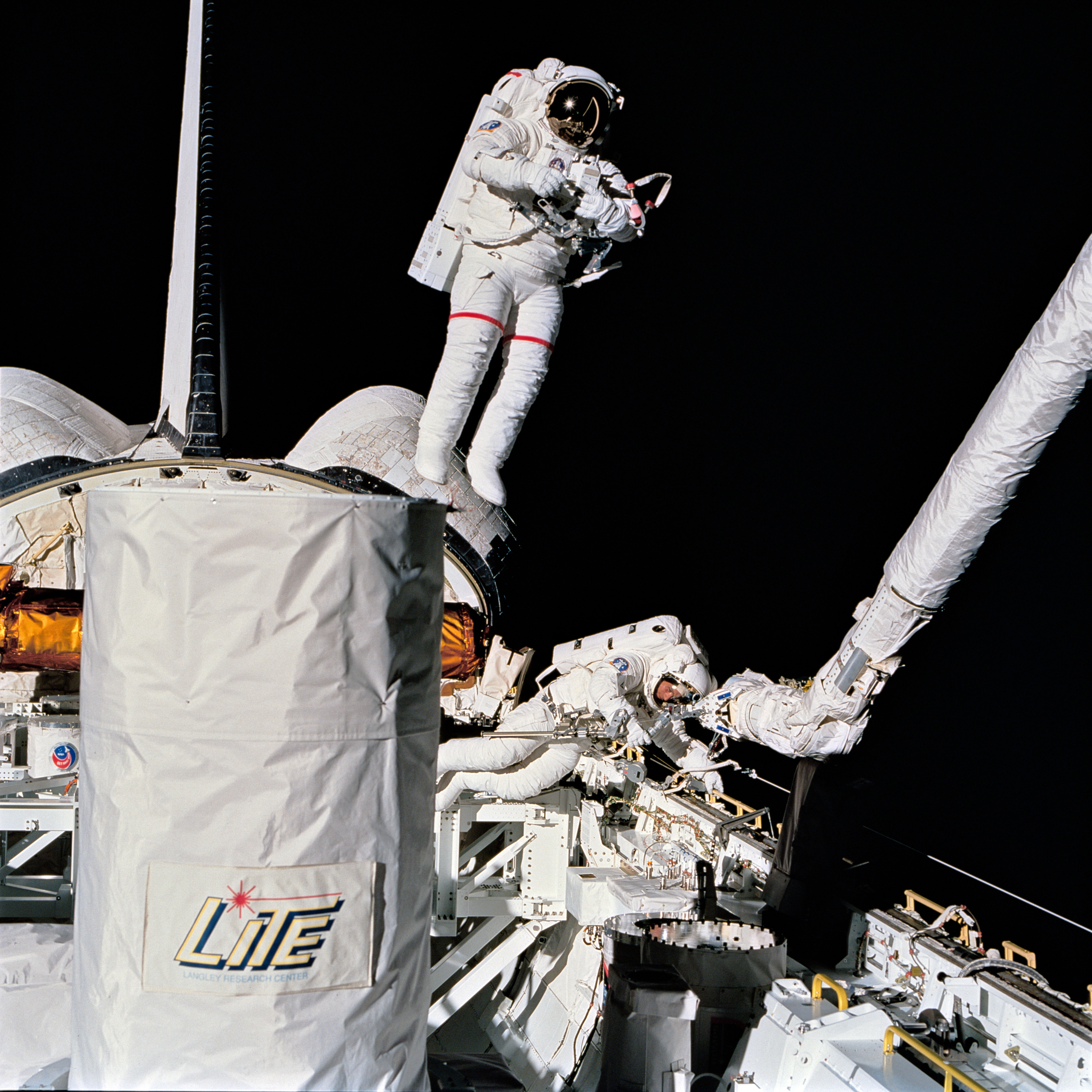
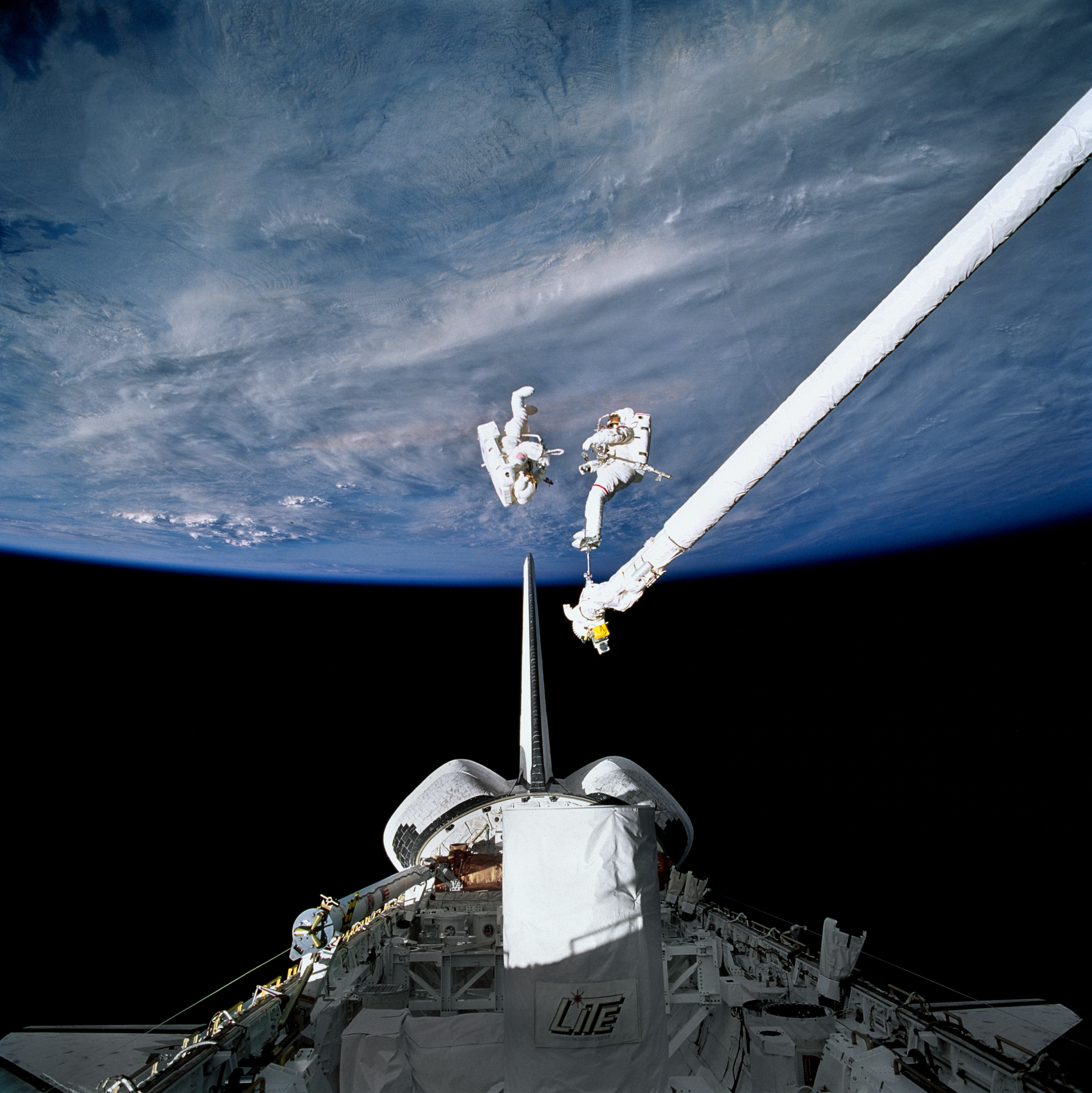
The main tasks of the spacewalk involved testing the Simplified Aid for EVA (Extravehicular Activity) Rescue (SAFER), a device designed at JSC that attaches to the spacesuit’s Portable Life Support System backpack. The SAFER contains nitrogen jets that an astronaut can use, should he or she become untethered, to fly back to the vehicle, either the space shuttle or the space station. The two put the SAFER through a series of tests, including a familiarization, a system engineering evaluation, a crew rescue evaluation, and a precision flight evaluation. During the tests, Lee and Meade remained untethered from the shuttle, the first untethered spacewalk since STS-51A in November 1984. Lee and Meade successfully completed all the tests and gave the SAFER high marks. Astronauts conducting spacewalks from the space station use the SAFER as a standard safety device. Following the 6-hour 51-minute spacewalk, the astronauts raised the shuttle’s atmosphere back to 14.7 psi.
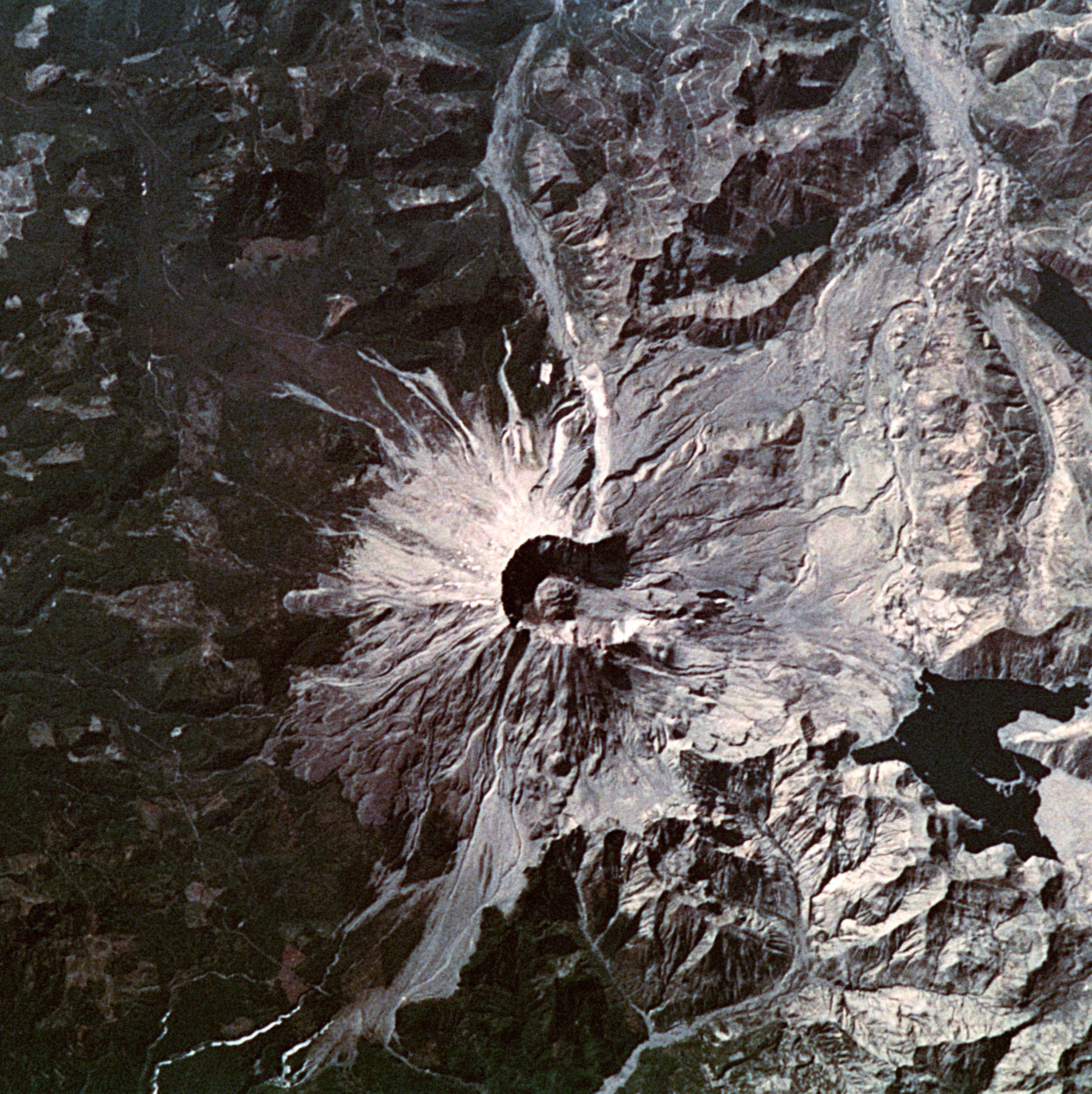
Mt. St. Helens in Washington State Cleveland, Ohio Rabaul Volcano, Papua New Guinea Banks Peninsula, New Zealand
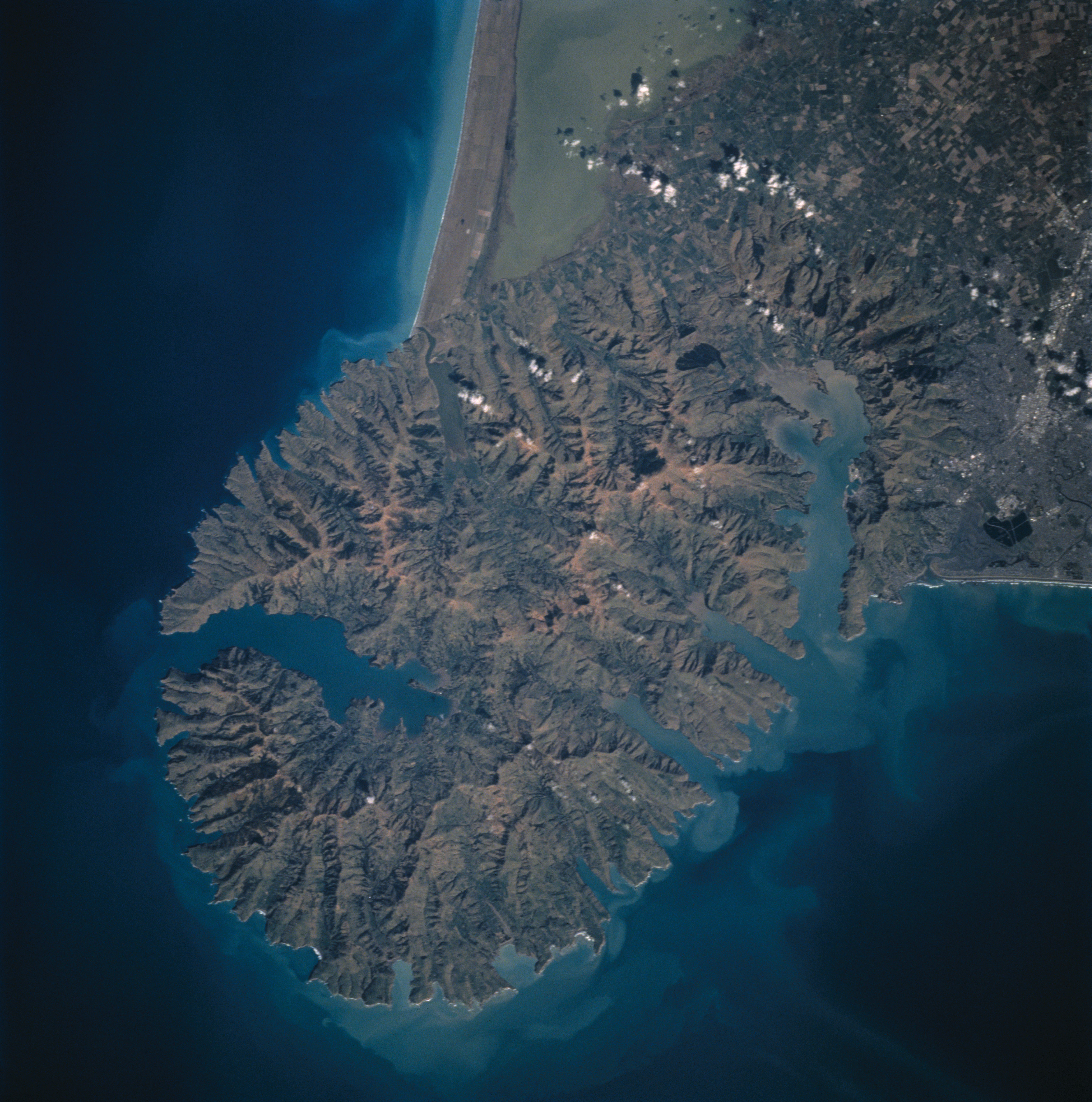
A selection of STS-64 crew Earth observation photographs. Left: Mt. St. Helens in Washington State. Middle left: Cleveland, Ohio. Middle right: Rabaul Volcano, Papua New Guinea. Right: Banks Peninsula, New Zealand.

Like on all space missions, the STS-64 astronauts spent their spare time looking out the window. They took numerous photographs of the Earth, their high inclination orbit allowing them views of parts of the planet not seen during typical shuttle missions.

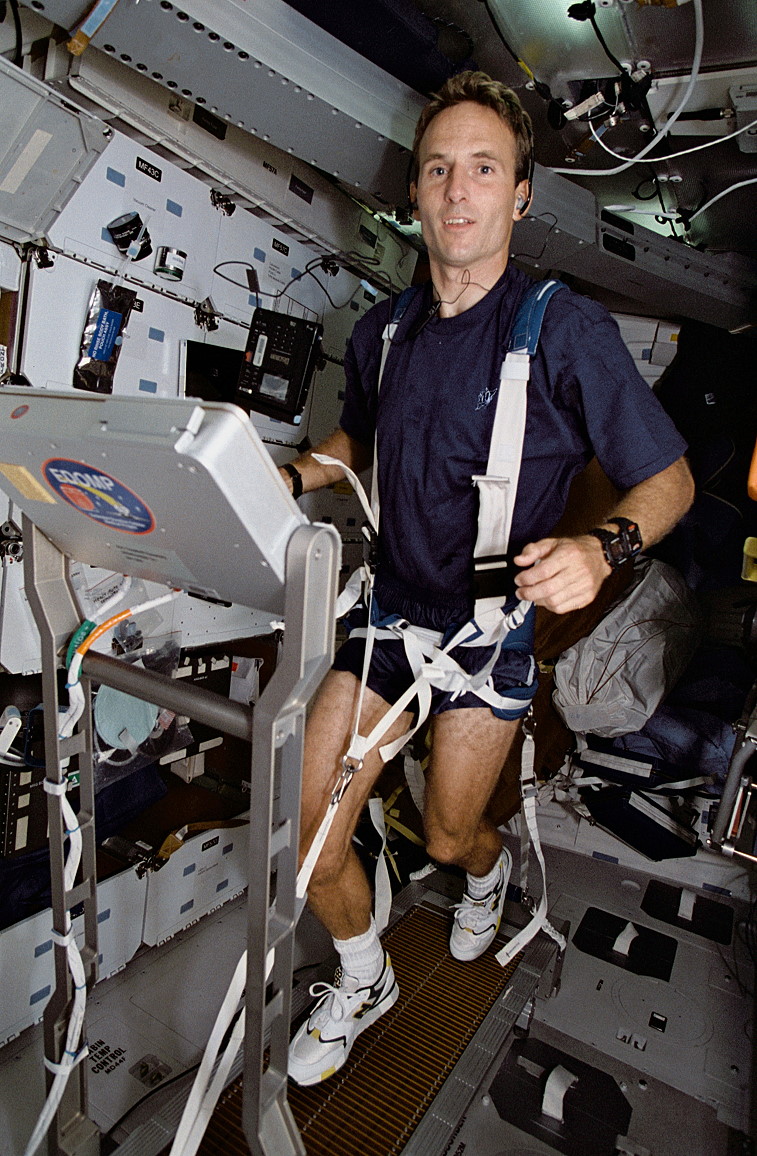
The Solid Surface Combustion Experiment middeck payload Jerry M. Linenger gets in a workout while also evaluating the treadmill Inflight photograph of the STS-64 crew
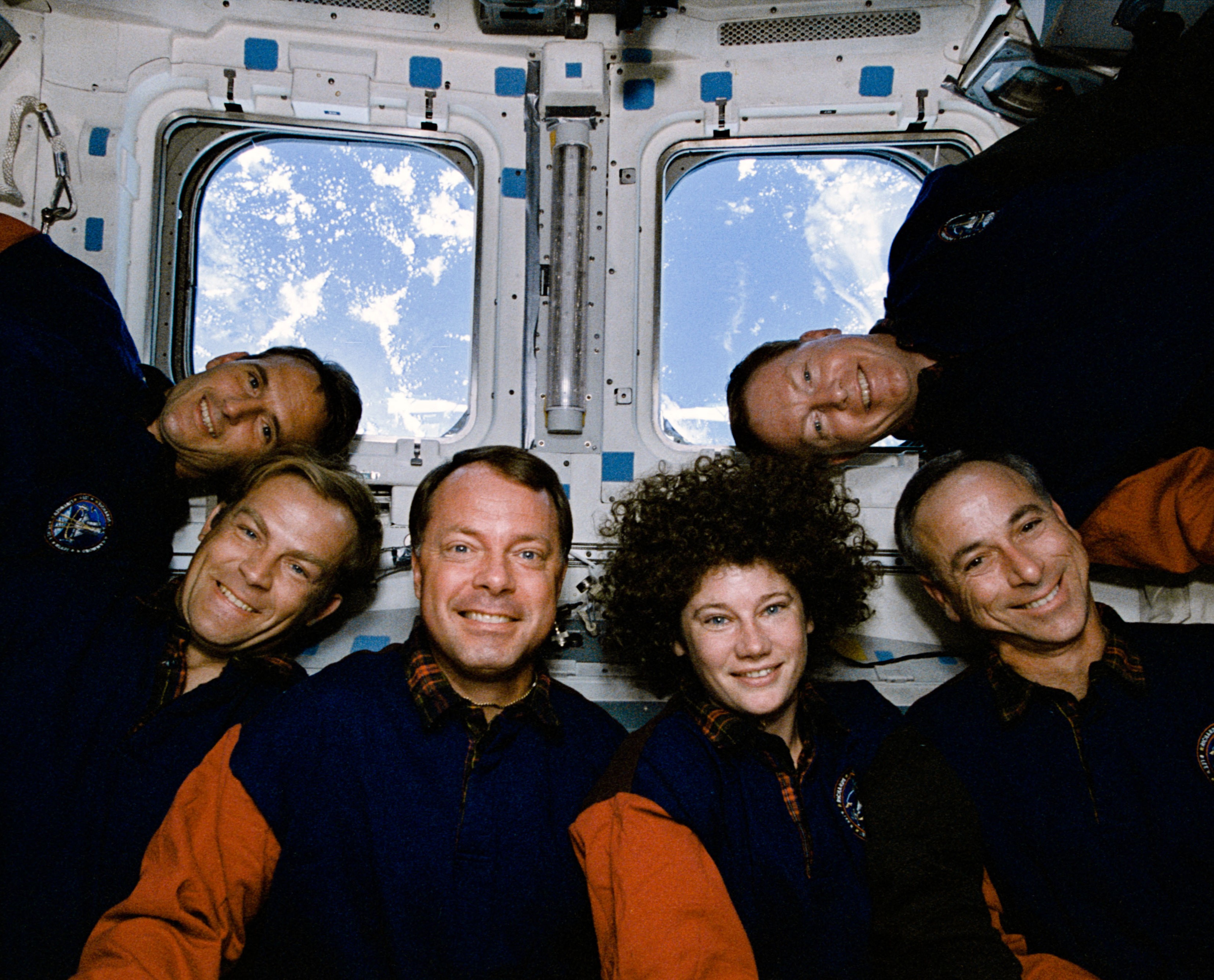
Left: The Solid Surface Combustion Experiment middeck payload. Middle: Jerry M. Linenger gets in a workout while also evaluating the treadmill. Right: Inflight photograph of the STS-64 crew.

In addition to their primary tasks, the STS-64 crew also conducted a series of middeck experiments and tested hardware for future use on the space shuttle and space station.
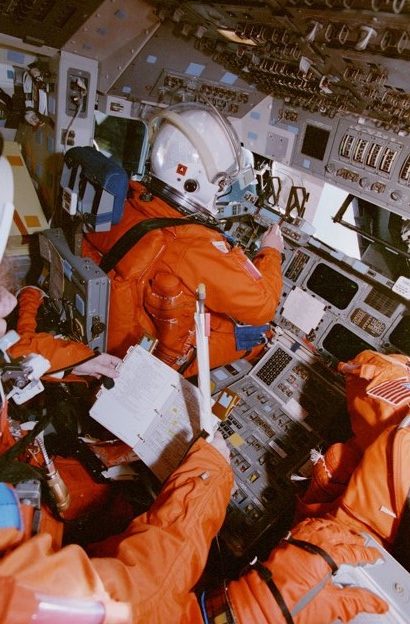
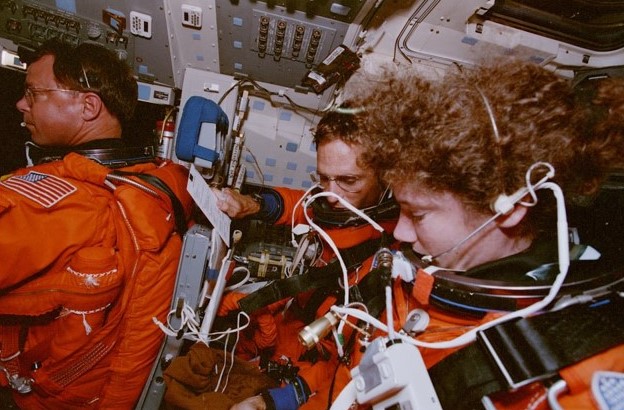
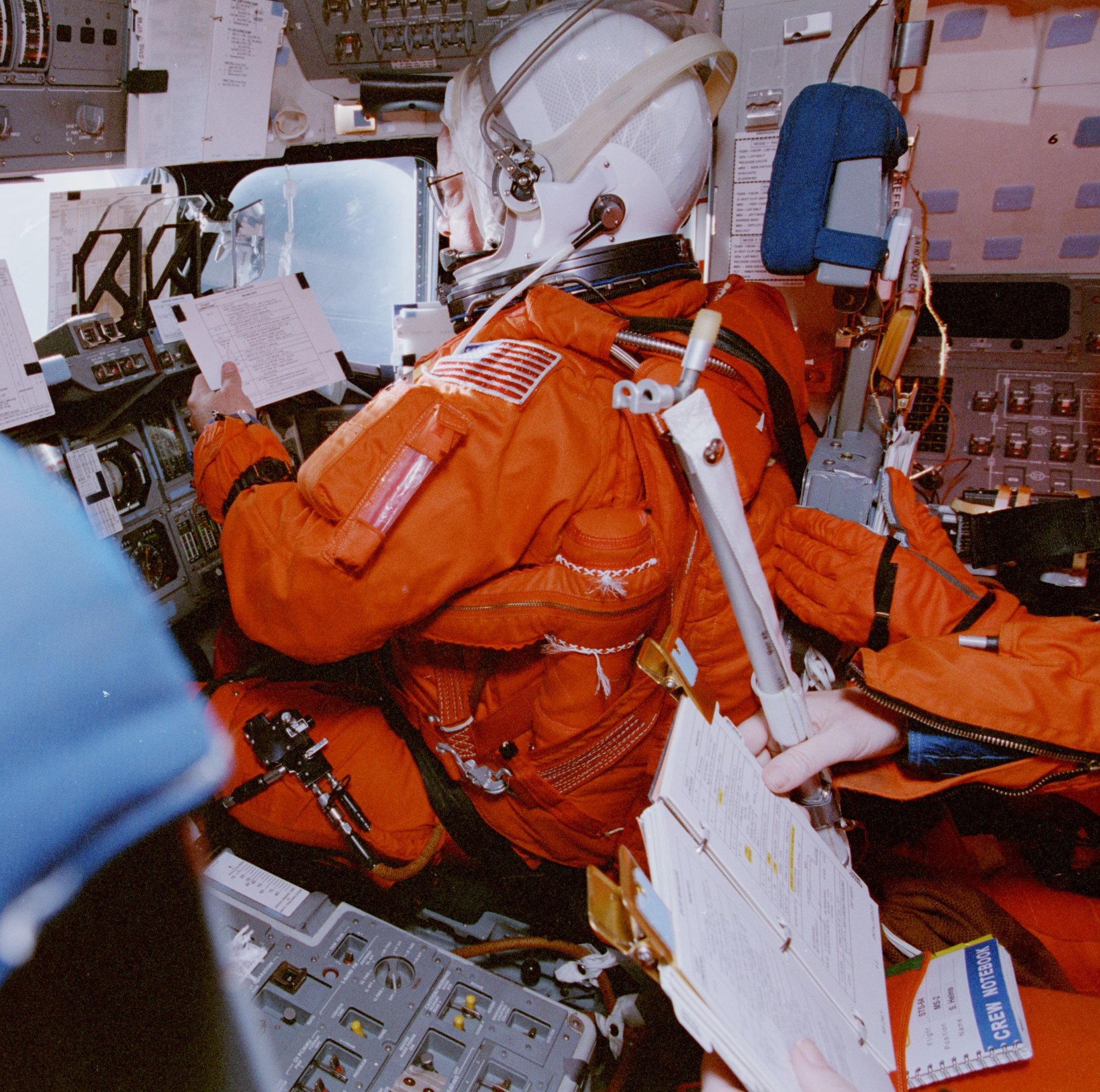
Commander Richard “Dick” Richards suited up for reentry Pilot L. Blaine Hammond, left, and Mission Specialists Carl J. Meade and Susan J. Helms prepare for reentry Hammond fully suited for entry and landing
Left: Commander Richard “Dick” Richards suited up for reentry. Middle: Pilot L. Blaine Hammond, left, and Mission Specialists Carl J. Meade and Susan J. Helms prepare for reentry. Right: Hammond fully suited for entry and landing.

Mission managers had extended the original flight duration by one day for additional data collection for the various payloads. On the planned reentry day, Sept. 19, bad weather at KSC forced the crew to spend an additional day in space. The next day, continuing inclement weather caused them to wave off the first two landing attempts at KSC and diverted to Edwards Air Force Base (AFB) in California.
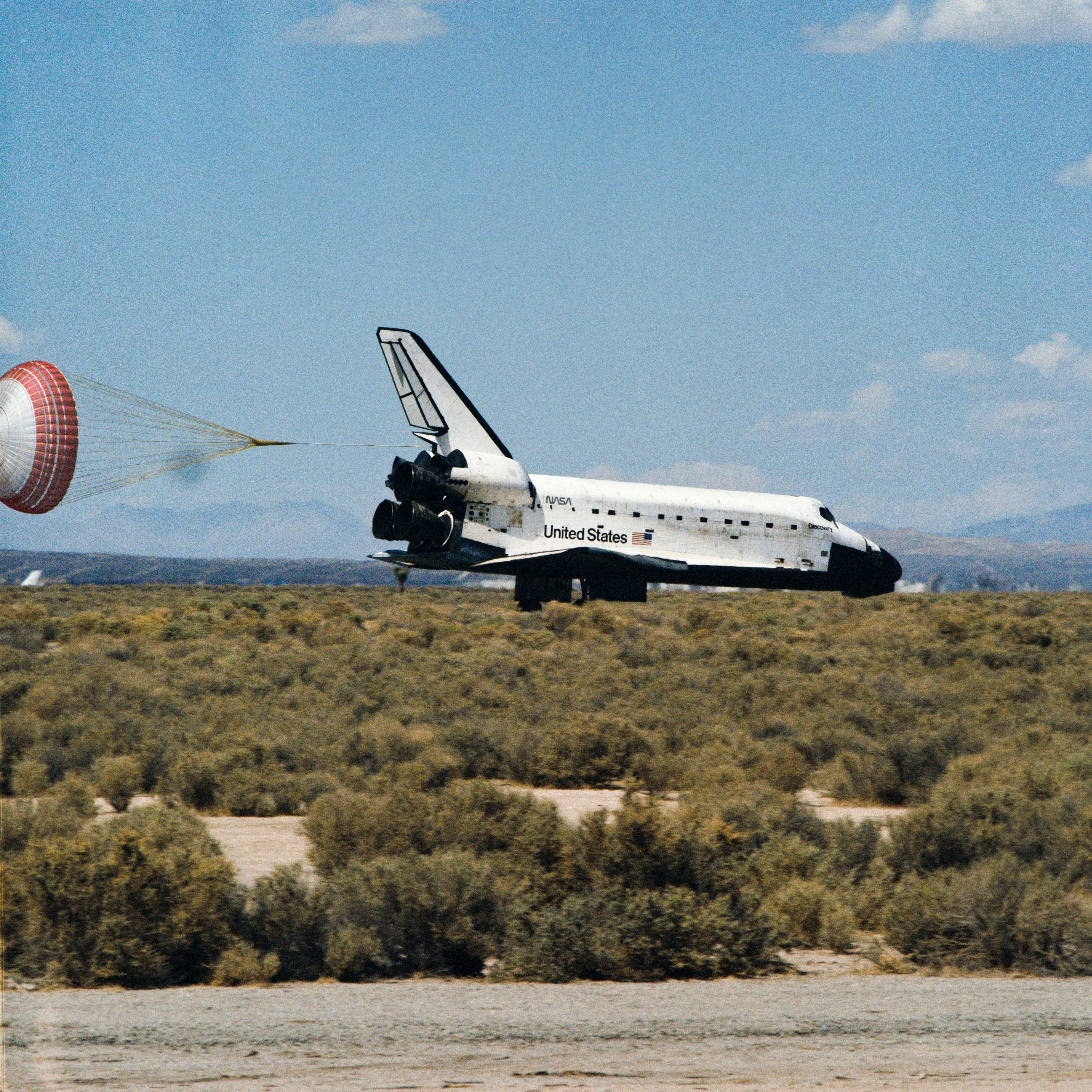
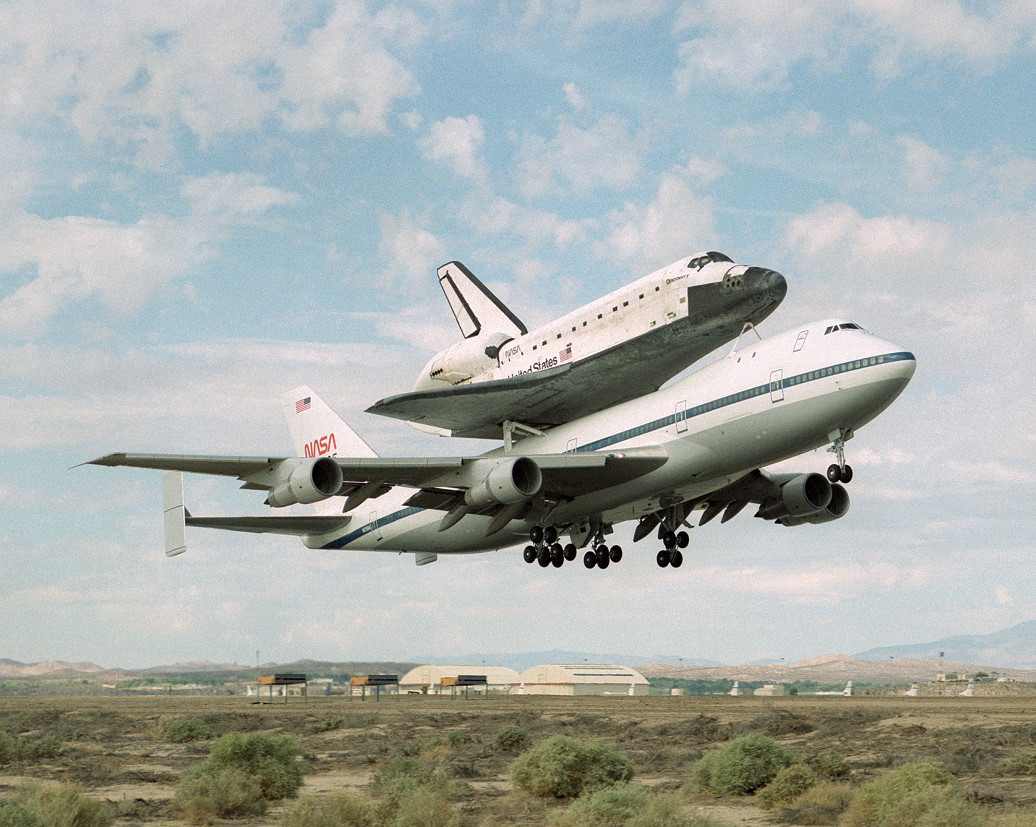
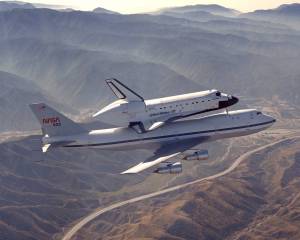
Richard Richards brings Discovery home at California’s Edwards Air Force Base Workers at Edwards safe Discovery after its return from STS-64 Discovery takes off from Edwards atop a Shuttle Carrier Aircraft for the ferry flight to NASA’s Kennedy Space Center in Florida
Left: Richard Richards brings Discovery home at California’s Edwards Air Force Base. Middle: Workers at Edwards safe Discovery after its return from STS-64. Right: Discovery takes off from Edwards atop a Shuttle Carrier Aircraft for the ferry flight to NASA’s Kennedy Space Center in Florida.

On Sept. 20, they closed Discovery’s payload bay doors, donned their launch and entry suits, and strapped themselves into their seats for entry and landing. They fired Discover’s OMS engines to drop them out of orbit. Richards piloted Discovery to a smooth landing at Edwards, ending the 10-day 22-hour 50-minute flight. The crew had orbited the Earth 176 times. Workers at Edwards safed the vehicle and placed it atop a Shuttle Carrier Aircraft for the ferry flight back to KSC. The duo left Edwards on Sept. 26, and after an overnight stop at Kelly AFB in San Antonio, arrived at KSC the next day. Workers there began preparing Discovery for its next flight, the STS-63 Mir rendezvous mission, in February 1995.

Enjoy the crew narrate a video about the STS-64 mission. Read Richards’ recollections of the mission in his oral history with the JSC History Office.

Powered by WPeMatico

Get The Details…
Kelli Mars

Kyle Helson Finds EXCITE-ment in Exoplanet Exploration

Kyle Helson Finds EXCITE-ment in Exoplanet Exploration

Almost a decade ago, then-grad student Kyle Helson contributed to early paperwork for NASA’s EXCITE mission. As a scientist at Goddard, Helson helped make this balloon-based telescope a reality: EXCITE launched successfully on Aug. 31.

Name: Kyle Helson
Title: Assistant Research Scientist
Organization: Observational Cosmology Lab (Code 665), via UMBC and the GESTAR II cooperative agreement with NASA Goddard

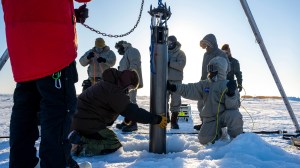
Kyle Helson stands in front of large grey C-17 airplane with "U.S. Airforce" in large black letters on the side. Kyle and the plane are on a snow and ice-covered ground. He wears a red coat with black pants. There are seven people working in the background.
Dr. Kyle Helson is an assistant research scientist at NASA’s Goddard Space Flight Center in Greenbelt, Md.
Photo credit: Dr. Amy Bender

How did you know you wanted to work at NASA Goddard?

When I was finishing my physics Ph.D. at Brown University in 2016, I was talking to Ed Wollack and Dave Chuss at Goddard about the NASA postdoc program, and they suggested I apply. Luckily, I got the postdoc fellowship to come here to Goddard to work on cosmic microwave background detector testing and other related research.

I don’t think I would have realized or been interested in coming here had I not had that NASA Space Technology Research Fellowship when I was in grad school and gotten the opportunity to spend some time here and work with Ed and Dave.

What is the name of your team that you’re working with right now?

One of the projects I work on is the Exoplanet Climate Infrared TELescope (EXCITE). EXCITE is a scientific balloon-borne telescope that is designed to measure the spectra of hot, Jupiter-like exoplanet atmospheres in near-infrared light.

What is your role for that?

I do a little bit of everything. During grad school, I worked on the first few iterations of the proposal for EXCITE back in 2015 and 2016.

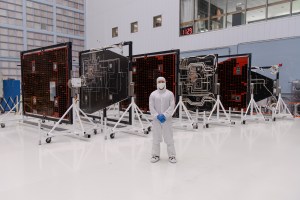
Over the past few years here at Goddard, I’ve been responsible for parts of a lot of the different subsystems like the cryogenic receiver, the gondola, the electronics, and integration and testing of the whole payload.

Last year, we went to Fort Sumner, New Mexico, for an engineering flight. Unfortunately, we were not able to fly for weather reasons. We went back last month, and I was again part of the field deployment team. We take the whole instrument, break it down, carefully ship it all out to New Mexico, put it back together, test it, and get it ready for a flight.

Six people wearing hard hats and yellow safety vests stand in front of a large spacecraft on a crane with large wheels on either side.
Kyle Helson (far right) and part of the EXCITE team stand in front of EXCITE Fort Sumner, New Mexico in Oct. 2023. EXCITE successfully launched on Aug. 31, 2024.
Photo credit: Annalies Kleyheeg

What is most interesting to you about your role here at Goddard?

What I like about working on a project like EXCITE is that we get to kind of do a little bit of everything.

We’ve been able to see the experiment from concept and design to actually getting built, tested and hopefully flown and then subsequent data analysis after the flight. What I think is really fun is being able be with an experiment for the entire life cycle.

How do you help support Goddard’s mission?

We’re studying exoplanets, which definitely fits within the scientific mission of Goddard. We’re also a collaboration between Goddard other academic institutions, like Arizona State, like Brown University, Cornell, and several other places, and so we’re also members of the larger scientific research community beyond NASA.

We also have a number of graduate students working on EXCITE. Ballooning is a good platform for training students and young researchers to learn how to build and design instruments, do data analysis, etc. One of the missions of NASA and Goddard is to train early career scientists like graduate students and post docs, and balloons provide a good platform for that as well.

Balloon missions like EXCITE also provide a good platform for technology advancement and demonstration in preparation for future satellite missions.

How did you know cosmology was what you wanted to pursue?

When I was a kid, I loved space. I wanted to be an astronaut when I was a kid. I even went to space camp.

The first time I ever got to see physics was a middle-school science class. That was the first time we ever learned physics or astronomy that was deeper than just identifying planets or constellations. We started to learn how we could use math to measure or predict experiments.

When I was in college, I remember talking to my undergraduate academic adviser, Glenn Starkman, and talking about what research I might like to do over the summer between sophomore and junior year of college. I wasn’t really sure what I wanted to do or what I was interested in, and he suggested I talk to some of the professors doing astrophysics and cosmology research and see if they had space for me in their lab.

I ended up finding a great opportunity working in a research lab in college — so it was working in the physics department in Case Western.
That’s where I first started learning about computer-aided design (CAD), and designing things in CAD, and that’s where I first learned how things get made in a machine shop, like on a mill, or a lathe. These skills have come in handy ever since, because I do a lot of design work in the lab. And I was lucky growing up that my dad was really hands-on and liked to fix things and build things and he taught me a lot of those skills as well.

A young Kyle Helson sits in front of a control panel wearing a headset at space camp.
“When I was a kid, I loved space,” said Kyle Helson. “I wanted to be an astronaut when I was a kid. I even went to space camp.”
Photo courtesy of Kyle Helson

Who has influenced you in your life?

My dad had a big influence. I think all the different people I’ve had the opportunity to learn from and work with who have been mentors along the way. My research advisers, professor John Ruhl in college, professor Greg Tucker in grad school, and Dr. Ed Wollack as a postdoc have all been very influential. Additionally, I have had the opportunity to work with a lot of very good post docs and research scientists during my career, Dr. Asad Aboobaker, Dr. Britt Reichborn-Kjennerud, Dr. Michele Limon, among others.

Throughout a career, there are tons of other people on the way from whom you pick up little things here and there that stick with you. You look back and you realize five years later you still do this one thing a certain way because someone helped you and taught you this skill or technique.

Where is a place you’d like to travel to?

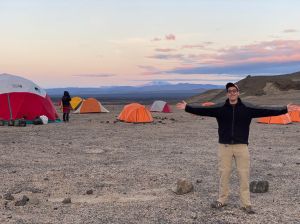
Since I was lucky enough to go to Antarctica in graduate school, I figured that is the hardest continent to travel to, so now I have a mission to go to every continent. I’ve been to North America, I’ve been to South America, I’ve been to Asia, Europe, and Australia and New Zealand, but I’ve never been to Africa.

Four men on racing bikes during a keirin race on a track. They are in a single file line behind a man on a motorized bike wearing a blue helmet.
Kyle Helson (second from left) races the keirin at the Valley Preferred Cycling Center in Breinigsville, PA.
Photo Credit Dr. Vishrut Garg

What are your hobbies, or what do you enjoy doing?

I’m a competitive track cyclist. I started racing bikes in collegiate racing as a grad student at Brown. Many summers I’ve spent many weekends driving and flying all over the U.S. to race in the biggest track cycling events in the country.

What would be your three-word-memoir?

Curious, compassionate, cat-dad.

By Tayler Gilmore
NASA’s Goddard Space Flight Center in Greenbelt, Md

A banner graphic with a group of people smiling and the text "Conversations with Goddard" on the right. The people represent many genders, ethnicities, and ages, and all pose in front of a soft blue background image of space and stars.

Conversations With Goddard is a collection of Q&A profiles highlighting the breadth and depth of NASA’s Goddard Space Flight Center’s talented and diverse workforce. The Conversations have been published twice a month on average since May 2011. Read past editions on Goddard’s “Our People” webpage.

Share

Details

Last Updated

Sep 10, 2024

Editor
Madison Olson
Contact
Rob Garner
Location
Goddard Space Flight Center

Powered by WPeMatico

Get The Details…
Madison Olson

NASA to Test Telemedicine, Gather Essential Health Data with Polaris Dawn Crew

NASA to Test Telemedicine, Gather Essential Health Data with Polaris Dawn Crew

The four-person crew of the Polaris Dawn mission pictured wearing their SpaceX extravehicular activity suits
The four-person crew of the Polaris Dawn mission pictured wearing their SpaceX extravehicular activity suits.
Credit: SpaceX

NASA researchers will soon benefit from a suite of experiments flying aboard a new fully-commercial human spaceflight mission, strengthening future agency science as we venture to the Moon, Mars and beyond.

The experiments are flying as part of the Polaris Dawn mission which launched aboard a SpaceX Dragon spacecraft and Falcon 9 rocket earlier today.

The four-person Polaris Dawn crew of Jared Isaacman, Scott “Kidd” Poteet, Sarah Gillis, and Anna Menon will conduct science during the mission including essential health and human performance research for NASA’s Human Research Program. The research will help NASA scientists better understand how exposure to space conditions affects the human body. The crew will test new medical approaches and technology on telemedicine capabilities, gather data on space motion sickness, and better characterize flight-associated injury risks.

“Each mission, whether the crew is comprised of commercial or NASA astronauts, provides a key opportunity to expand our knowledge about how spaceflight affects human health,” said Jancy McPhee, associate chief scientist for human research at NASA. “Information gathered from Polaris Dawn will give us critical insights to help NASA plan for deeper space travel to the Moon and Mars.”

The crew will test drive, a commercial device that can collect and integrate measurements of health, including blood pressure, heart rate, respiration rate, and temperature. The technology also provides ultrasound imaging and larynx and throat-focused video camera capabilities, and includes an experimental telemedicine feature that could help diagnose crew members in near-real time.

To test this technology during the mission, crew members will compare vital sign collection from the device with data gathered from standard periodic health status exams. The technology’s telemedicine feature, which relies on SpaceX’s Starlink communications system to connect with doctors and specialists on Earth, will also be tested during a simulation. During the test, the device will attempt to offer an appropriate diagnosis based on crew inputs and available documentation.

“Crew members will need to be more self-reliant during lengthy missions, and we hope that telemedicine can provide crews with assistance,” said McPhee.

Another research project aims to better understand and prevent the motion sickness symptoms that many astronauts experience in space. Participating crew members will describe their motion sickness symptoms, what interventions they tried to alleviate their symptoms, and whether any approaches helped.

A separate NASA-based research project will survey crew members after their mission to see whether they experienced any injuries or discomfort during re-entry to Earth.

“Our team will take the crew’s survey data and combine it with information gathered from sensors on the spacecraft. This will allow us to link crews’ reported experiences and health outcomes with the spacecraft’s dynamics and landing loads,” said Preston Greenhalgh, an injury biomechanist at NASA who is leading this work.

Crew members also will participate in a variety of other health studies on behalf of the NASA-funded TRISH (Translational Research Institute for Health), a consortium with various academic institutions. As part of that work, the Polaris Dawn mission will set a new baseline for collecting standard health data on commercial spaceflights, creating a complement to the datasets  routinely collected from NASA astronauts and missions.

Polaris Dawn crew members participating in these TRISH studies will provide data about how spaceflight affects mental and physical health through a rigorous set of medical tests and scans completed before, after, and during the mission. The work will include assessments of behavior, sleep, bone density, eye health, cognitive function, and other factors, as well as analysis of blood, urine, and respiration.

“We’re so grateful to the crew members who volunteer to be part of NASA’s work. The insights that we gain from each study may trigger breakthroughs that will help ensure future mission success,” said McPhee.

____

NASA’s Human Research Program pursues the best methods and technologies to support safe, productive human space travel. Through science conducted in laboratories, ground-based analogs, commercial missions, and the International Space Station, the program scrutinizes how spaceflight affects human bodies and behaviors. Such research continues to drive NASA’s mission to innovate ways that keep astronauts healthy and mission-ready as space exploration expands to the Moon, Mars, and beyond.

Powered by WPeMatico

Get The Details…
Dina F. Maron

Sols 4297-4299: This Way to Tungsten Hills

Sols 4297-4299: This Way to Tungsten Hills

2 min read

Sols 4297-4299: This Way to Tungsten Hills

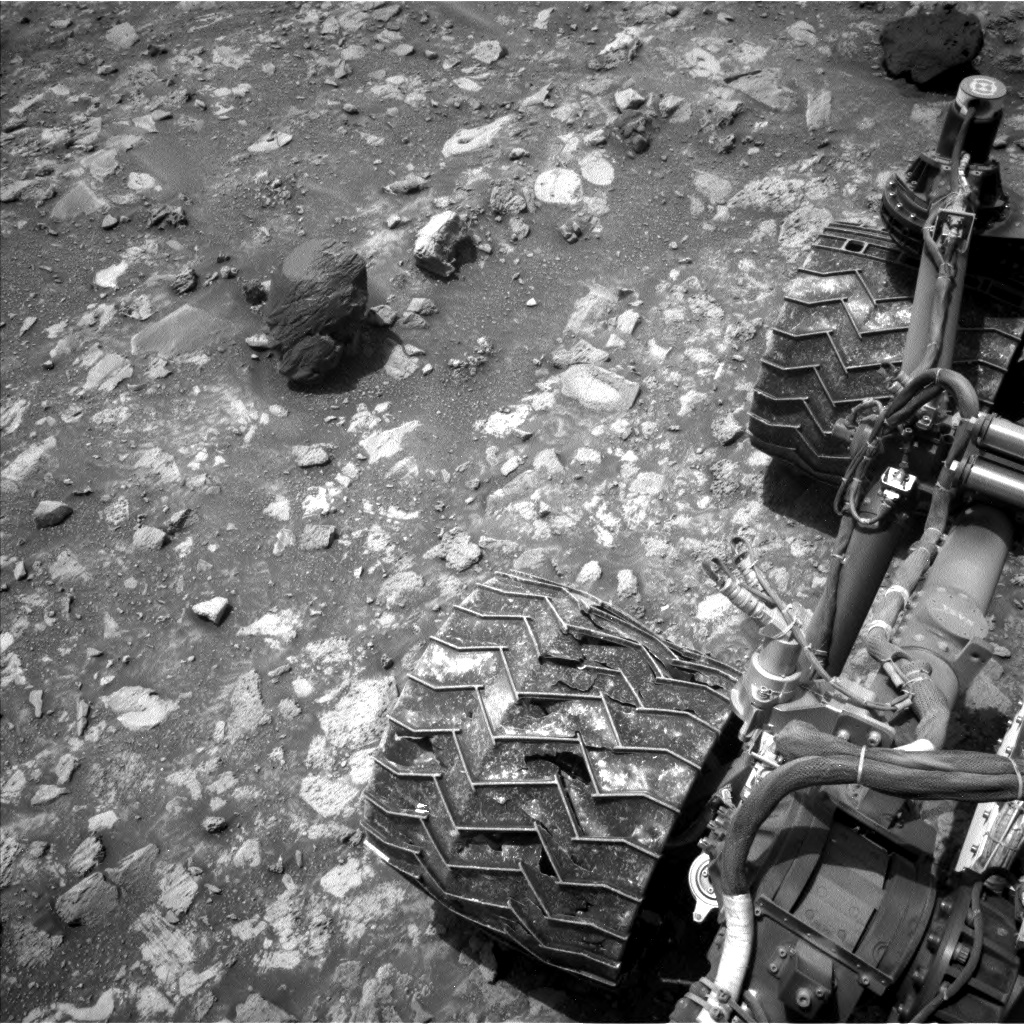
A grayscale photograph of the Martian surface shows medium gray soil interspersed with numerous light-colored rocks poking up from beneath the surface, on the left side of the frame, where one, much larger and darker rock, sits alone near the top of the frame. The right side of the image shows part of the rover, including two of its zig-zag treaded wheels, themselves covered in rocks and dust of various shades of gray.
This image was taken by Left Navigation Camera aboard NASA’s Mars rover Curiosity on Sol 4296 — Martian day 4,296 of the Mars Science Laboratory mission — on Sept. 6, 2024, at 06:47:03 UTC.
NASA/JPL-Caltech

Earth planning date: Friday, Sept. 6, 2024

Contact science in our immediate workspace includes a joint effort by MAHLI and APXS to characterize a gray rock with two targets named “Big Baldy” and “Big Bird Lake.” ChemCam focused its Laser Induced Breakdown Spectroscopy (LIBS) instrument on a rock with a reddish coating, “Purple Creek,” and a light-toned rock, “Garlic Meadow,” to determine their chemical composition. ChemCam included a long distance RMI image of the yardang unit that caps Mount Sharp as well as a standard post-drive AEGIS activity, which allows autonomous target selection for upcoming geochemical spectrometry.

The Mastcam team assembled several beautiful mosaics to document Curiosity’s surroundings. One mosaic will extend the imaging of the current workspace and is planned at dusk to take advantage of the diffuse lighting. Two separate mosaics, one of which is in stereo, will characterize the floor of the depression in front of Tungsten Hills to investigate the exposed light rocks and document depositional processes. Finally, a stereo mosaic will image Tungsten Hills and the surrounding terrain in advance of our approach over the weekend.

With the weekend plan in place the science team will now patiently wait for data to be returned and for planning to resume on Monday!

Curiosity completed an impressive 60-meter drive (about 197 feet) across the channel floor within Gediz Vallis and parked along the edge of a shallow linear depression. Just about 20 meters (66 feet) away, an intriguing dark, textured rock named “Tungsten Hills” is the destination for our weekend drive and our contact science on Monday. Today I served as the “Keeper of the Plan” for the Geology theme group and worked with the science team to compile a variety of contact science and targeted science in this three-sol plan.

Written by Sharon Wilson Purdy, Planetary Geologist at the Smithsonian National Air and Space Museum

Share

Details

Last Updated
Sep 10, 2024

Related Terms

Powered by WPeMatico

Get The Details…

NASA JPL Scientists, Engineers Collaborate With Artists for Exhibition

NASA JPL Scientists, Engineers Collaborate With Artists for Exhibition

5 min read

Preparations for Next Moonwalk Simulations Underway (and Underwater)

Artist David Bowen
Artist David Bowen works on “tele-present wind,” featuring grass stalks that move in response to Martian wind data previously collected by NASA’s Perseverance rover mission. Behind him sits JPL data systems architect Rishi Verma.
NASA/JPL-Caltech

Works in ‘Blended Worlds: Experiments in Interplanetary Imagination,’ an exhibit in Glendale, California, help shrink the universe into something tangible.

The universe is vast and filled with countless worlds, but a new exhibit at the Brand Library & Art Center in Glendale, California, aims to shrink time and space. For “Blended Worlds: Experiments in Interplanetary Imagination,” artists collaborated with scientists and engineers from NASA’s Jet Propulsion Laboratory to create cross-disciplinary works that help illuminate the universe by bringing art and science together.

On view from Sept. 21, 2024, to Jan. 4, 2025, the exhibition is part of “PST ART: Art & Science Collide,” an event presented by the Getty and involving more than 70 exhibitions from museums and institutions across Southern California exploring the intersection of art and science.

“The magic of art is that it enhances our experiences and interactions with the world — and in this case, our universe,” said Dr. Laurie Leshin, director of JPL in Southern California. “We’re honored to work with great artists to bring the wonders of space to our community through this exhibition, which invites us all to be part of a grand journey of exploration and discovery.”

126 grass stalks
The 126 grass stalks of “tele-present wind” are attached to mechanical tilting devices that move in response to Martian wind data.
NASA/JPL-Caltech

David Bowen’s installation “tele-present wind” features grass stalks attached to tilting mechanical devices that move in response to Martian wind data previously collected by NASA’s Perseverance rover mission. Helping make the effort possible were Rishi Verma, a data systems architect at JPL, and José Antonio Rodríguez-Manfredi, the principal investigator of the Mars Environmental Dynamics Analyzer (MEDA) system on Perseverance.

For “Seismic Percussion,” artist Moon Ribas creates an interplanetary drum score by translating seismic data from Earth, the Moon, and Mars. For Mars data, JPL’s Verma worked with Nobuaki Fuji of the Institut de Physique du Globe de Paris, who collaborated on NASA’s now-retired InSight lander. Ceri Nunn, a JPL planetary scientist, assisted with moonquake data.

Also featured is a handwritten version of U.S. Poet Laureate Ada Limón’s “In Praise of Mystery: A Poem for Europa,” the poem she dedicated to NASA’s Europa Clipper mission, which is targeting an October launch and will make multiple flybys of Jupiter’s icy moon Europa. The poem has been etched onto a metal plate on the spacecraft and will ride with the orbiter on its long journey.

Additional works allow visitors to experience Earth’s wonders through scents, use sound to convey the vast distances between our planet and those beyond our solar system, and blend heartbeats and other Earthly sounds with sonified data from Europa’s magnetic field.  

“We were looking to create imaginative opportunities for people to connect with each other as they connect with the awe-inspiring science being conducted today,” said David Delgado, a cultural strategist and the project lead at JPL. “I know this experience has really opened the eyes of everyone collaborating on the project, and we hope it does the same for people who come to see ‘Blended Worlds.’”

As part of PST ART, a number of public programs and community events will also accompany the “Blended Worlds” gallery exhibition, including “Blended Worlds: An Evening of Art, Theater, and Science” hosted by Reggie Watts at the Alex Theatre in Glendale on Oct. 5, and “Earth Data: The Musical,” an original musical developed by Theater Arts at Caltech exploring the challenges of climate research and science as a human pursuit at Caltech’s Ramo Auditorium Nov. 1 to 3.

Artists’ collaborations with JPL and the display of their works at Glendale’s Brand Library were made possible by the generous support of the Glendale Arts and Culture Commission and the Glendale Library, Arts & Culture Trust.

More About JPL

A division of Caltech in Pasadena, California, JPL began in 1936 and ultimately built and helped launch America’s first satellite, Explorer 1, in 1958. By the end of that year, Congress established NASA and JPL became a part of the agency. Since then, JPL has managed such historic missions as Voyager, Galileo, Cassini, the Mars Exploration Rover program, the Perseverance Mars rover, and many more.

More About Glendale Library, Arts & Culture

Founded in 1907, the Glendale Library, Arts & Culture Department includes eight neighborhood libraries including the Brand Library & Art Center, a regional visual arts and music library and performance venue housed in the historic 1904 mansion of Glendale pioneer Leslie C. Brand, and the Central Library, a 93,000-square-foot center for individuals and groups to convene, collaborate, and create. The department also serves as the chief liaison to the Glendale Arts and Culture Commission which works to continually transform Glendale into an ever-evolving arts destination. Glendale Library Arts & Culture is supported in part through the efforts of the Glendale Library Arts & Culture Trust (GLACT). For more information visit GlendaleLAC.org, or contact Library, Arts & Culture at 818-548-2021 or via email at LibraryInfo@GlendaleCA.gov. Follow on Instagram, Facebook, and X at @MyGlendaleLAC.

For more information about PST ART: Art & Science Collide, visit: pst.art

News Media Contact

Matthew Segal / Melissa Pamer
Jet Propulsion Laboratory, Pasadena, Calif.
818-354-8307 / 626-314-4928
matthew.j.segal@jpl.nasa.gov / melissa.pamer@jpl.nasa.gov

2024-120

Share

Details

Last Updated

Sep 09, 2024

Powered by WPeMatico

Get The Details…
Anthony Greicius