Margin’ up the Crater Rim!

Margin’ up the Crater Rim!

2 min read

Margin’ up the Crater Rim!

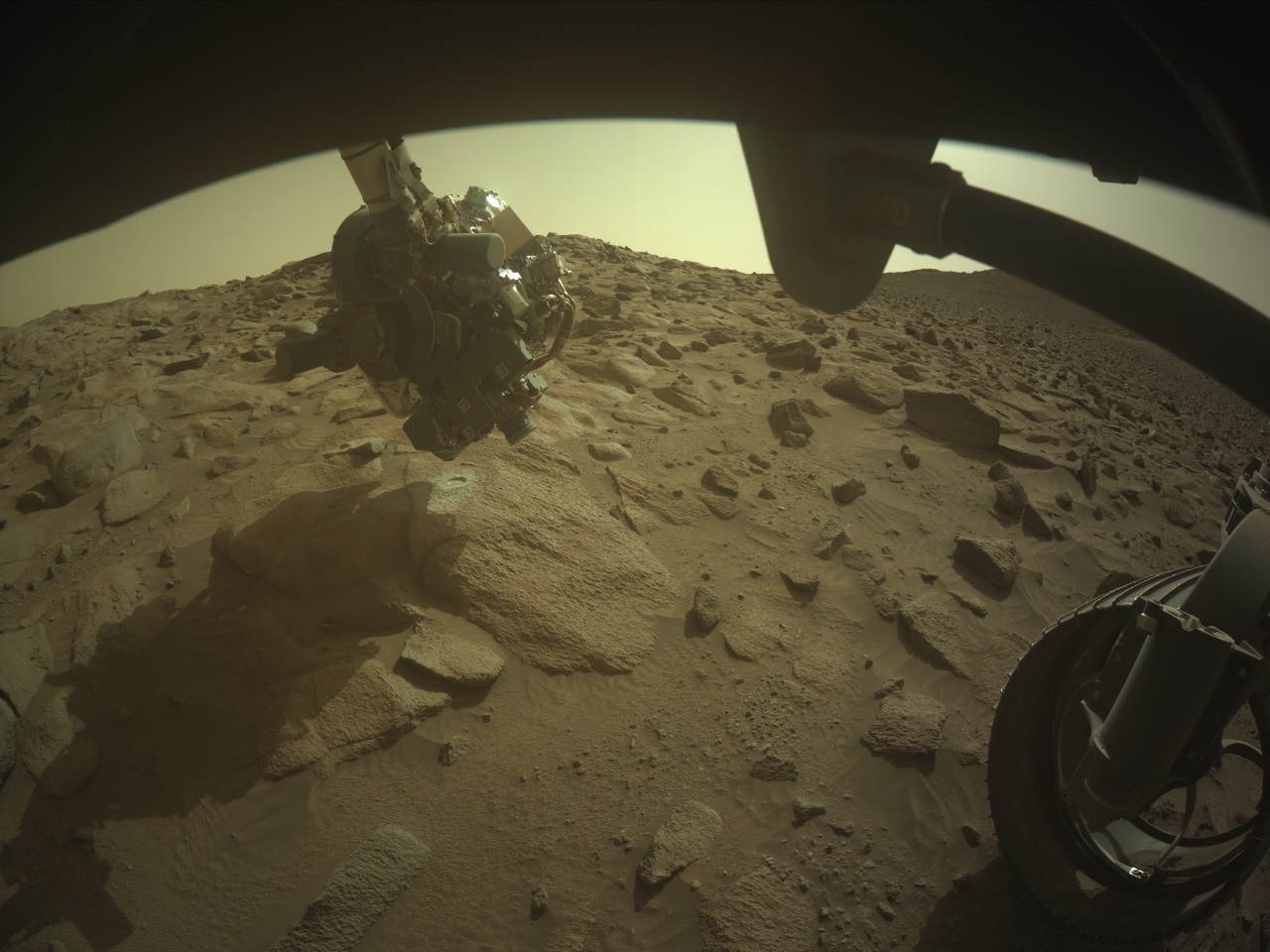
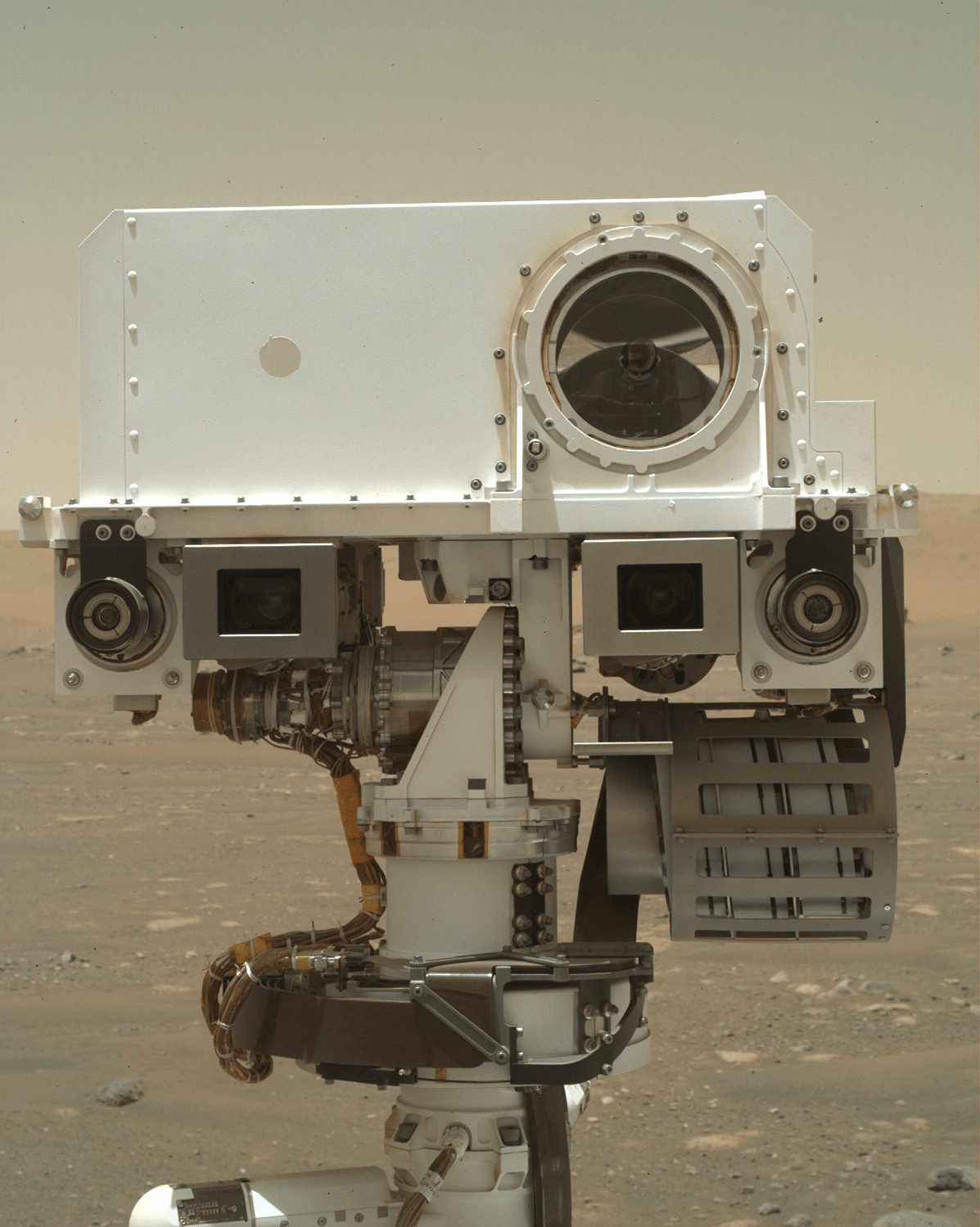
An image from the Martian surface shows light beige, rocky terrain under a sky that’s a cool, pale yellow and casts a haze across the scene. The camera’s-eye view from below the rover shows the robotic arm reaching for a large, flat rock just left of image center, and atop the rock is a circular indentation where it looks like a medium-sized coin was pressed into the dirt. A section of the rover blocks off the top quarter of the image frame, while a support rod stretches toward one of the rover’s wheels, at the right edge of the frame, where it’s viewed edge-on, so you can see the swirl of its spokes, and the ribbed tread of its wheel.
NASA’s Mars rover Perseverance conducts proximity science on the Eremita Mesa abrasion patch in the Margin Unit on Sept. 6, 2024, as it continues its traverse up the rim of Jezero Crater. Perseverance acquired the image using its Front Left Hazard Avoidance Camera A (Hazcam) on sol 1261 — Martian day 1,261 of the Mars 2020 mission — at the local mean solar time of 13:53:53.
NASA/JPL-Caltech

To conclude its exploration of the mysterious margin unit before it ascends the rim of Jezero Crater, Perseverance made one last stop this past week to investigate these strange rocks at “Eremita Mesa.”

Since beginning its steep drive up the crater rim, Perseverance has been traversing along the edge of the margin unit (the margin of the margin!), an enigmatic unit rich in carbonates, a mineral group closely linked to habitability. Here, the rover team scouted out a mound of rock called “Specter Chasm,” where Perseverance cleared away the dusty, weathered surface with its trusty abrading bit. The resulting abraded patch, called Eremita Mesa, is pictured above being investigated by Perseverance’s proximity science instruments mounted on its robotic arm. This includes taking close-up images to examine the millimeter-scale particles that make up the rock, using the WATSON (Wide Angle Topographic Sensor for Operations and eNgineering) camera, which functions as Perseverance’s magnifying glass.

Before the rover began exploring, investigations using orbital satellite data had suggested the margin unit rocks may have formed in several different ways. Theories the team has been exploring include that the unit formed on the shoreline of the ancient lake that once filled Jezero Crater, or instead that it was produced by volcanic processes such as pyroclastic flows or ashfall, or ancient lavas flowing into the crater. Since Perseverance began its investigation of the unit in September 2023, more than 350 sols ago (1 sol = 1 Mars day), the Science Team has been scouring data collected by the rover’s instruments to help constrain the unit’s origin. So far, this has remained largely a mystery, with the original rock textures potentially heavily affected by alteration since it formed more than 3 billion years ago. Perseverance has already collected three exciting samples of this curious rock unit for future Earth return: “Pelican Point,” “Lefroy Bay,” and “Comet Geyser,” and the team is hoping the data collected at Eremita Mesa could help further constrain the ancient processes on Mars that formed these strange rocks.

Next, it’s onwards and upwards for Perseverance as it faces a steep climb up the crater rim, where perhaps even more exotic and exciting rocks await!

Written by Alex Jones, Ph.D. student at Imperial College London

Share

Details

Last Updated
Sep 10, 2024

Related Terms

Powered by WPeMatico

Get The Details…

Astronaut Frank Culbertson Letter from September 11, 2001

Astronaut Frank Culbertson Letter from September 11, 2001

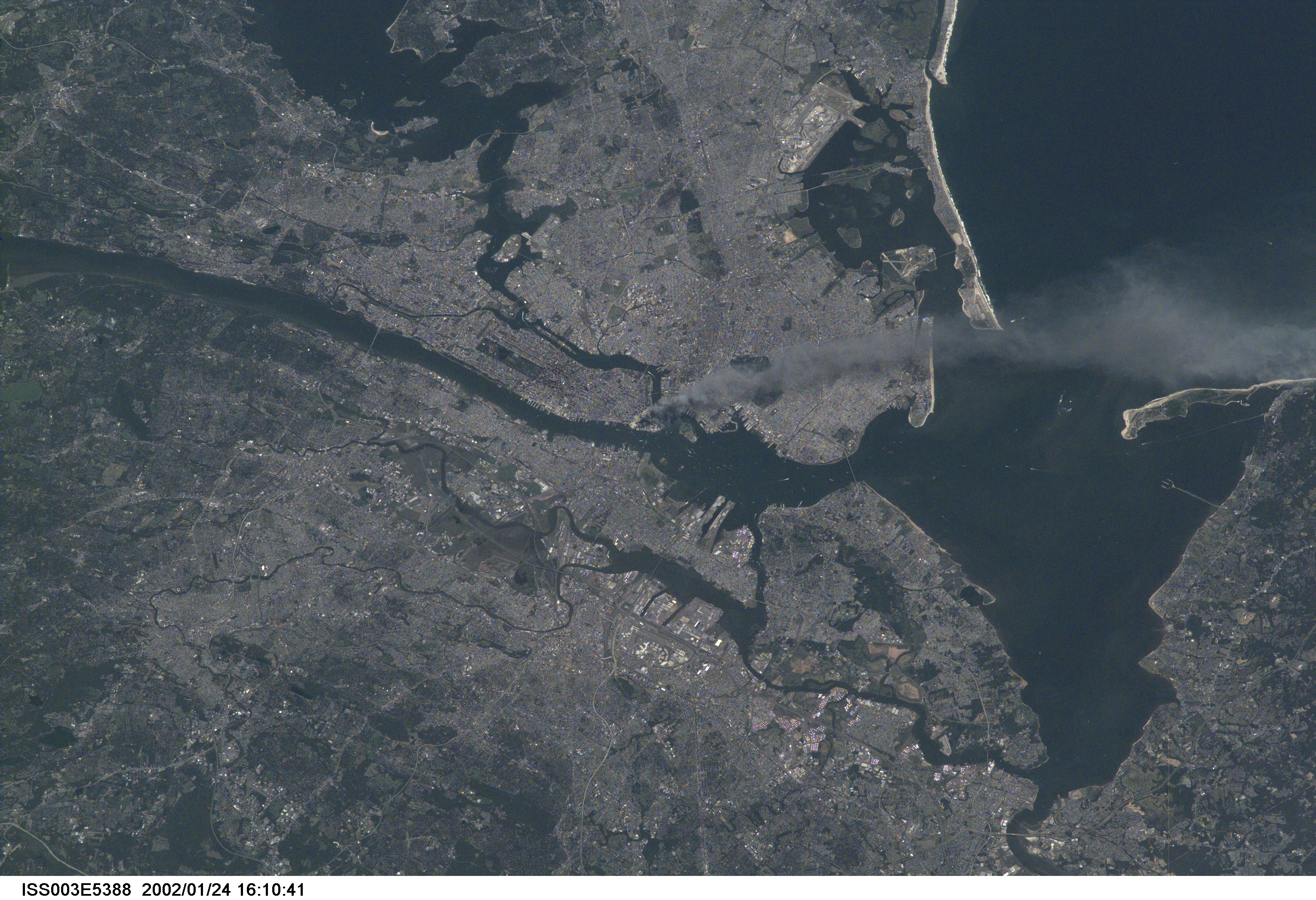
One of a series of pictures taken of metropolitan New York City (and other parts of New York as well as New Jersey) by one of the Expedition Three crew members onboard the International Space Station (ISS) at various times during the day of September 11, 2001. The image shows a smoke plume rising from the Manhattan area. The orbital outpost was flying at an altitude of approximately 250 miles. The image was recorded with a digital still camera. Please note: The date identifiers on some frames (other than those that indicate Sept. 11, 2001) are not accurate due to a technical problem with one of the Expedition Three cameras.
ISS003-E-5388 (11 September 2001) — One of a series of pictures taken of metropolitan New York City (and other parts of New York as well as New Jersey) by one of the Expedition Three crew members onboard the International Space Station (ISS) at various times during the day of September 11, 2001. The image shows a smoke plume rising from the Manhattan area. The orbital outpost was flying at an altitude of approximately 250 miles. The image was recorded with a digital still camera. Please note: The date identifiers on some frames (other than those that indicate Sept. 11, 2001) are not accurate due to a technical problem with one of the Expedition Three cameras.
NASA

Editor’s Note:The following is the text of a letter from Expedition Three Commander Frank L. Culbertson (Captain, USN Retired), reflecting on the events of September 11.

September 12, 2001; 7:34 p.m.

I haven’t written very much about specifics of this mission during the month I’ve been here, mainly for two reasons: the first being that there has been very little time to do that kind of writing, and secondly because I’m not sure how comfortable I am sharing thoughts I share with family and friends with the rest of the world.

Well, obviously the world changed today. What I say or do is very minor compared to the significance of what happened to our country today when it was attacked by …. by whom? Terrorists is all we know, I guess. Hard to know at whom to direct our anger and fear…

I had just finished a number of tasks this morning, the most time-consuming being the physical exams of all crew members. In a private conversation following that, the flight surgeon told me they were having a very bad day on the ground. I had no idea…

He described the situation to me as best he knew it at ~0900 CDT. I was flabbergasted, then horrified. My first thought was that this wasn’t a real conversation, that I was still listening to one of my Tom Clancy tapes. It just didn’t seem possible on this scale in our country. I couldn’t even imagine the particulars, even before the news of further destruction began coming in.

Vladimir came over pretty quickly, sensing that something very serious was being discussed. I waved Michael into the module as well. They were also amazed and stunned. After we signed off, I tried to explain to Vladimir and Michael as best I could the potential magnitude of this act of terror in downtown Manhattan and at the Pentagon. They clearly understood and were very sympathetic.

I glanced at the World Map on the computer to see where over the world we were and noticed that we were coming southeast out of Canada and would be passing over New England in a few minutes. I zipped around the station until I found a window that would give me a view of NYC and grabbed the nearest camera. It happened to be a video camera, and I was looking south from the window of Michael’s cabin.

The smoke seemed to have an odd bloom to it at the base of the column that was streaming south of the city. After reading one of the news articles we just received, I believe we were looking at NY around the time of, or shortly after, the collapse of the second tower. How horrible…

I panned the camera all along the East Coast to the south to see if I could see any other smoke around Washington, or anywhere else, but nothing was visible.

It was pretty difficult to think about work after that, though we had some to do, but on the next orbit we crossed the US further south. All three of us were working one or two cameras to try to get views of New York or Washington. There was haze over Washington, but no specific source could be seen. It all looked incredible from two to three hundred miles away. I can’t imagine the tragic scenes on the ground.

Other than the emotional impact of our country being attacked and thousands of our citizens and maybe some friends being killed, the most overwhelming feeling being where I am is one of isolation.

Next day….

I guess the fatigue and emotional strain got the best of me. I couldn’t stay awake and continue to write. Today was still difficult, but we started getting more information, plus we had the honor of talking directly with the Center Director, Roy Estess, who assured us that the ground teams would continue to work and ensure our safety, as well as the safe operation of the Station. We also heard from our Administrator, Mr. Goldin, who added that the partners in the Program are all totally committed to continuing safe operations and support. These were never questions for me. I know all these people! The ground teams have been incredibly supportive, very understanding of the impact of the news, and have tried to be as helpful as possible. They have all been very professional and focused though I can’t imagine the distraction of this type of news coming in and the thought that government buildings might be at risk. They never skipped a beat, even when relocating control centers. And a group of senior personnel and friends gave us a pretty thorough briefing on what was known and what was being done in the government and at NASA on Tuesday afternoon, which was very helpful and kind of them to do in the midst of all the turmoil. The Russian TsUP has also been supportive and helpful, trying to uplink news articles when our own assets were inoperable, and saying kind words…

My crewmates have been great, too. They know it’s been a tough day for me and the folks on the ground, and they’ve tried to be as even keeled and helpful as possible. Michael even fixed me my favorite Borscht soup for dinner. And they give me plenty of room to think when I needed it. They are very sympathetic and of course outraged at whoever would do this.

I know so many people in Washington, so many people who travel to DC and NYC, so many who are pilots, that I felt sure I would receive at least a few pieces of bad news over the next few days. I got the first one today when I learned that the Captain of the American Airlines jet that hit the Pentagon was Chic Burlingame, a classmate of mine. I met Chic during plebe summer when we were in the D&B together, and we had lots of classes together. I can’t imagine what he must of gone through, and now I hear that he may have risen further than we can even think of by possibly preventing his plane from being the one to attack the White House. What a terrible loss, but I’m sure Chic was fighting bravely to the end. And tears don’t flow the same in space…

It’s difficult to describe how it feels to be the only American completely off the planet at a time such as this. The feeling that I should be there with all of you, dealing with this, helping in some way, is overwhelming. I know that we are on the threshold (or beyond) of a terrible shift in the history of the world. Many things will never be the same again after September 11, 2001. Not just for the thousands and thousands of people directly affected by these horrendous acts of terrorism, but probably for all of us. We will find ourselves feeling differently about dozens of things, including probably space exploration, unfortunately.

It’s horrible to see smoke pouring from wounds in your own country from such a fantastic vantage point. The dichotomy of being on a spacecraft dedicated to improving life on the earth and watching life being destroyed by such willful, terrible acts is jolting to the psyche, no matter who you are. And the knowledge that everything will be different than when we launched by the time we land is a little disconcerting. I have confidence in our country and in our leadership that we will do everything possible to better defend her and our families, and to bring justice for what has been done. I have confidence that the good people at NASA will do everything necessary to continue our mission safely and return us safely at the right time. And I miss all of you very much. I can’t be there with you in person, and we have a long way to go to complete our mission, but be certain that my heart is with you, and know you are in my prayers.

Humbly,
Frank

September 14, 2001; 10:49 p.m.

An update to the last letter… Fortunately, it’s been a busy week up here. And to prove that, like our country, we are continuing on our intended path with business as usual (as much as possible). Tonight the latest addition to the station, the Russian Docking Compartment will be launched from Baikonur, Kazakhstan. On Saturday night (US time), it will dock with us, at a port never used before on the nadir side of the Service Module. This new module will give us another place to dock a Progress or Soyuz and will provide a large airlock with two useable hatches for conducting EVA’s in Russian Orlan suits, which we will do a few of before we come home.

The problem before in dealing with this week was too little news. The problem now is too much. It came all at once when email was restored, and there’s not enough time to read it all! Plus it’s too hard to deal with all of it at once. But I appreciate getting it, and I really appreciate the great letters of support and friendship I am receiving.

We are doing well on board, getting our work done, and talking about things. Last night we had a long discussion over dinner about the significance of these events, the possible actions to follow, and what should be done. After dinner, Michael made a point of telling me that every email he received from friends in Russia said specifically to tell me how sorry they were that this happened, extending their condolences, and asking how I was doing. Vladimir taught me the Russian word for “condolences” after talking to the previous CDR, Yuri Usachev, on the phone in Star City. (Both the Russian and the English words are much too long to pronounce easily.) Very kind people.

For the last two days, the Russian MCC has been good enough to transmit live broadcasts of radio news about the event and associated stories, to make sure I was well informed. Every specialist who has come on the line to discuss a procedure or a problem has at some point extended greetings to me with kind words. Tonight the Russian capcom told us that because of the special day of remembrance in the US, all day people had been bringing flowers and lining all the walls of the US embassy in Moscow, and this evening they were lighting candles in the street outside the embassy. How the world has changed.

People everywhere seem to recognize the senselessness and horror in this attack. And the tremendous loss. Moscow has dealt with these kind of problems in the last few years with apartment and subway bombings, so they are as anxious to get rid of this threat as we are. But the bottom line is that there are good people everywhere who want to live in peace. I read that a child asked, “America is so good to other countries, we always help everyone, how can they hate us so much?”

I hope the example of cooperation and trust that this spacecraft and all the people in the program demonstrate daily will someday inspire the rest of the world to work the same way. They must!

Unfortunately, we won’t be flying over the US during the time people are lighting candles. Don’t know if we could see that anyway. We did, however, see a very unusual and beautiful sight a few minutes ago: the launch of our Docking Compartment on a Soyuz booster. We were overtaking it and it came into view about three minutes after its launch from Baikonur as the sun hit our station, so it was still in the dark. It looked like a large comet with a straight, wide tail silhouetted against the dark planet beneath. Despite some bad lighting for a while as the sun hit our window at a low angle, I managed some video of it as first we passed the rocket, and then watched it begin to catch up as it gained altitude and speed. I filmed until main engine cutoff and booster separation occurred just as we approached sunrise on the Himalayas. An unforgettable sight in an unforgettable week…

Life goes on, even in space. We’re here to stay…
Frank

Powered by WPeMatico

Get The Details…
Gary Daines

Starship Super Heavy Breezes Through Wind Tunnel Testing at NASA Ames

Starship Super Heavy Breezes Through Wind Tunnel Testing at NASA Ames

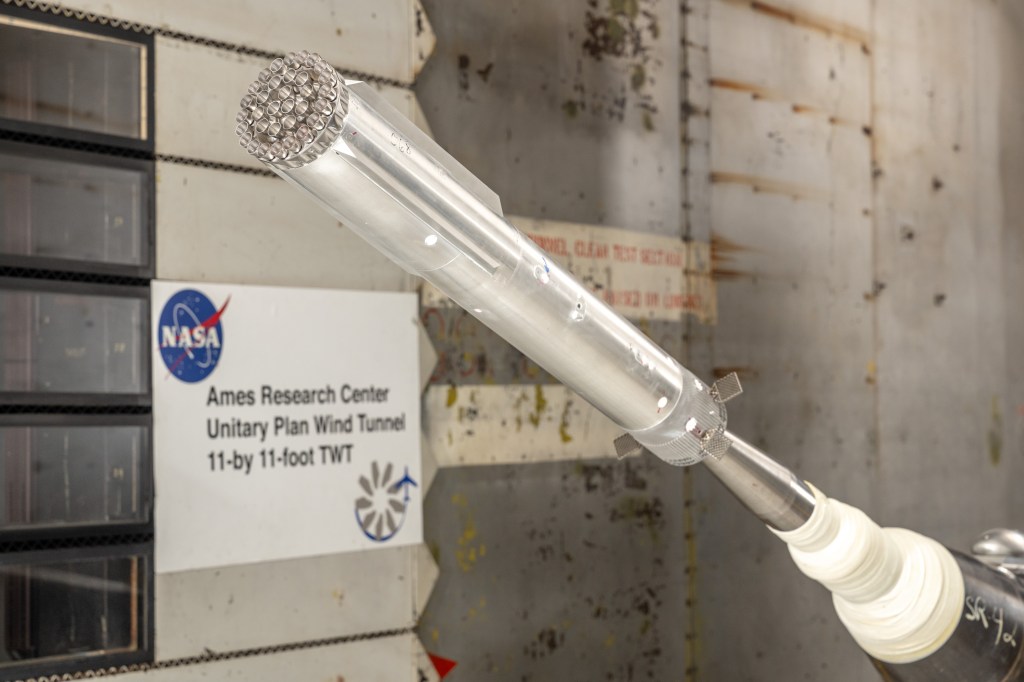
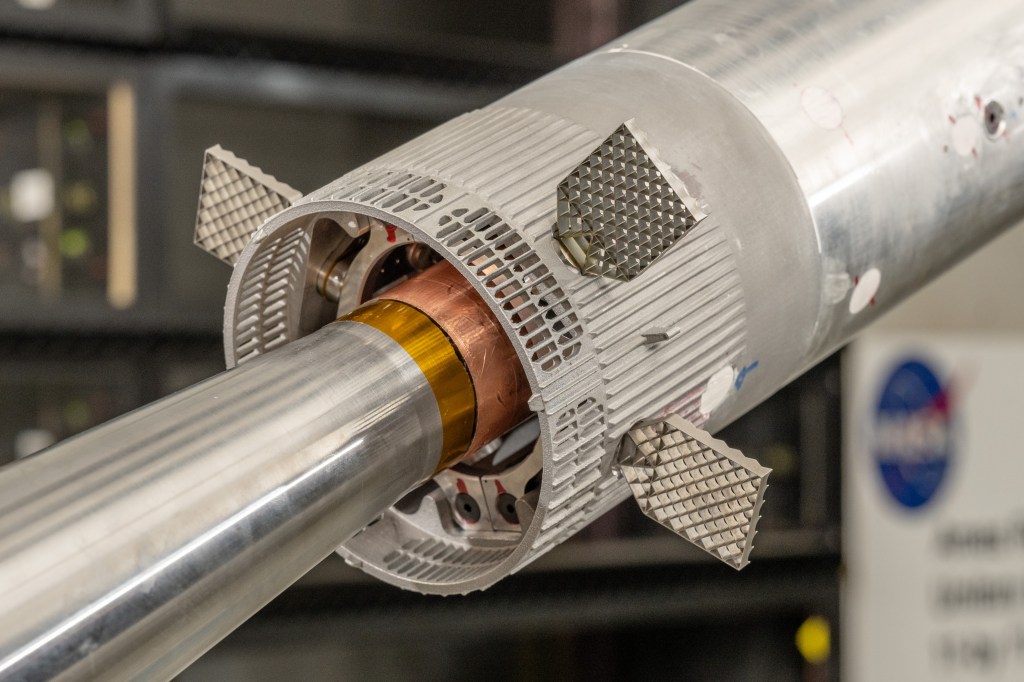
NASA and its industry partners continue to make progress toward Artemis III and beyond, the first crewed lunar landing missions under the agency’s Artemis campaign. SpaceX, the commercial Human Landing System (HLS) provider for Artemis III and Artemis IV, recently tested a 1.2% scale model of the Super Heavy rocket, or booster, in the transonic Unitary Plan Wind Tunnel at NASA’s Ames Research Center in California’s Silicon Valley. The Super Heavy rocket will launch the Starship human landing system to the Moon as part of Artemis.

During the tests, the wind tunnel forced an air stream at the Super Heavy scale model at high speeds, mimicking the air resistance and flow the booster experiences during flight. The wind tunnel subjected the Super Heavy model, affixed with pressure-measuring sensors, to wind speeds ranging from Mach .7, or about 537 miles per hour, to Mach 1.4, or about 1,074 miles per hour. Mach 1 is the speed that sound waves travel, or 761 miles per hour, at sea level.

Engineers then measured how Super Heavy model responded to the simulated flight conditions, observing its stability, aerodynamic performance, and more. Engineers used the data to update flight software for flight 3 of Super Heavy and Starship and to refine the exterior design of future versions of the booster. The testing lasted about two weeks and took place earlier in 2024.

After Super Heavy completes its ascent and separation from Starship HLS on its journey to the Moon, SpaceX plans to have the booster return to the launch site for catch and reuse. The Starship HLS will continue on a trajectory to the Moon.

To get to the Moon for the Artemis missions, astronauts will launch in NASA’s Orion spacecraft aboard the SLS (Space Launch System) rocket from the agency’s Kennedy Space Center in Florida. Once in lunar orbit, Orion will dock with the Starship HLS or with Gateway. Once the spacecraft are docked, the astronauts will move from Orion or Gateway to the Starship HLS, which will bring them to the surface of the Moon. After surface activities are complete, Starship will return the astronauts to Orion or Gateway waiting in lunar orbit. The astronauts will transfer to Orion for the return trip to Earth. 

With Artemis, NASA will explore more of the Moon than ever before, learn how to live and work away from home, and prepare for future human exploration of the Red Planet. NASA’s SLS, exploration ground systems, and Orion spacecraft, along with the human landing system, next-generation spacesuits, Gateway lunar space station, and future rovers are NASA’s foundation for deep space exploration.

For more information about Artemis, visit:

https://www.nasa.gov/artemis

News Media Contact

Corinne Beckinger 
Marshall Space Flight Center, Huntsville, Ala. 
256.544.0034  
corinne.m.beckinger@nasa.gov 

Powered by WPeMatico

Get The Details…
Lee Mohon

A Starry View

A Starry View

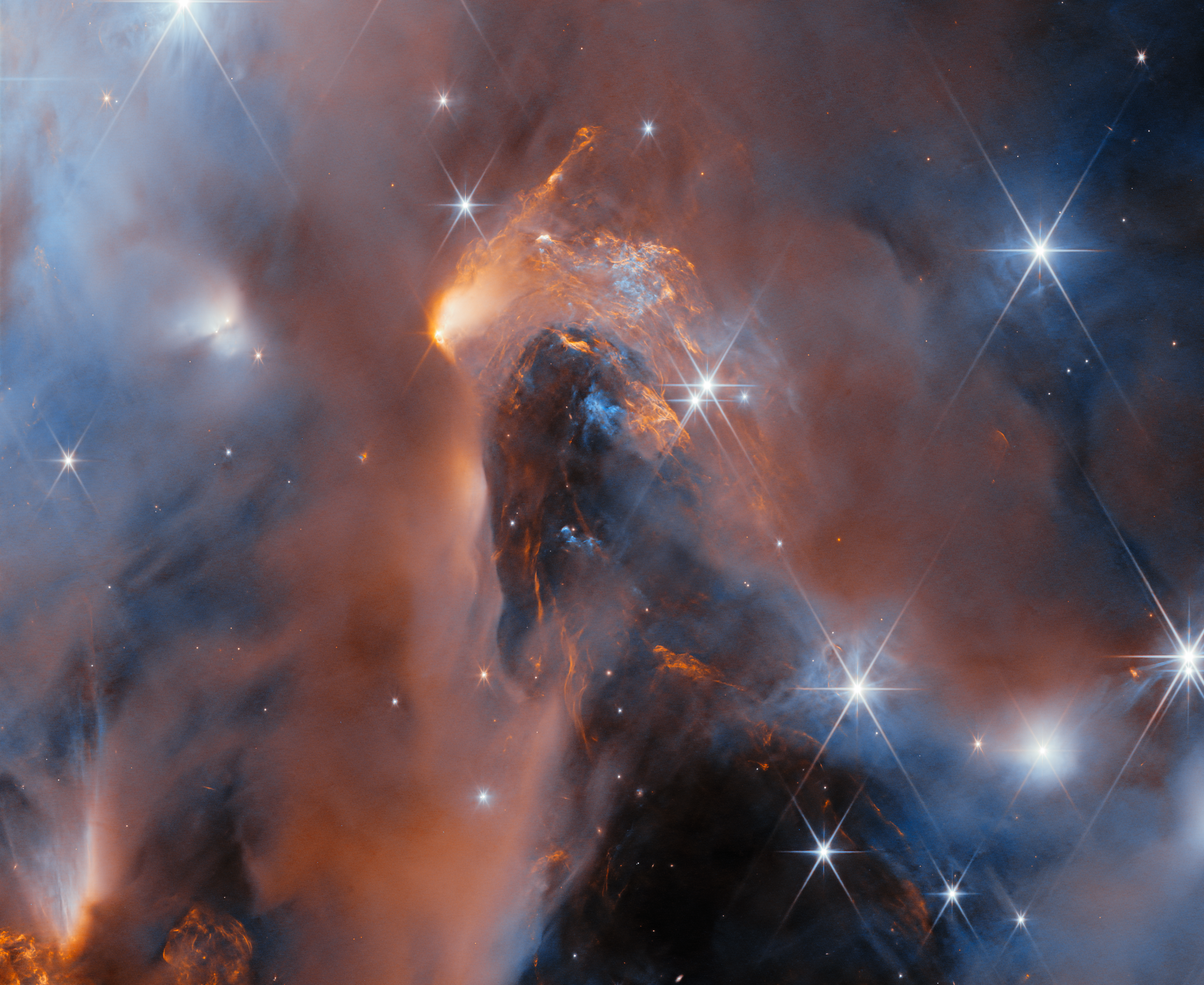
A nebula made up of cloudy gas and dust in the form of soft and wispy clouds and, in the center, thin and highly detailed layers pressed close together. Large, bright stars surrounded by six long points of light are dotted over the image, as well as some small, point-like stars embedded in the clouds. The clouds are lit up in blue close to the stars; orange colors show clouds that glow in infrared light.
ESA/Webb, NASA & CSA, A. Scholz, K. Muzic, A. Langeveld, R. Jayawardhana

NASA’s James Webb Space Telescope has infrared vision that lets us peer through the dusty veil of nearby star-forming region NGC 1333. We can see planetary mass objects, newborn stars, and brown dwarfs; some of the faintest ‘stars’ in this mosaic image are in fact newly born free-floating brown dwarfs with masses comparable to those of giant planets. The images were captured as part of a Webb observation program to survey a large portion of NGC 1333. These data constitute the first deep spectroscopic survey of the young cluster.

See Hubble’s view of the same nebula.

Image credit: ESA/Webb, NASA & CSA, A. Scholz, K. Muzic, A. Langeveld, R. Jayawardhana

Powered by WPeMatico

Get The Details…
Monika Luabeya

Voyager 1 Team Accomplishes Tricky Thruster Swap

Voyager 1 Team Accomplishes Tricky Thruster Swap

5 min read

Voyager 1 Team Accomplishes Tricky Thruster Swap

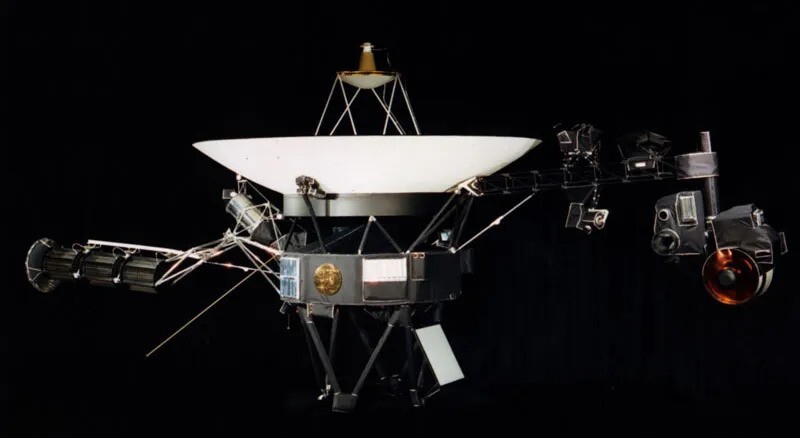
A model of NASA’s Voyager spacecraft. The twin Voyagers have been flying since 1977 and are exploring the outer regions of our solar system.

NASA/JPL-Caltech

The spacecraft uses its thrusters to stay pointed at Earth, but after 47 years in space some of the fuel tubes have become clogged.

Engineers working on NASA’s Voyager 1 probe have successfully mitigated an issue with the spacecraft’s thrusters, which keep the distant explorer pointed at Earth so that it can receive commands, send engineering data, and provide the unique science data it is gathering.

After 47 years, a fuel tube inside the thrusters has become clogged with silicon dioxide, a byproduct that appears with age from a rubber diaphragm in the spacecraft’s fuel tank. The clogging reduces how efficiently the thrusters can generate force. After weeks of careful planning, the team switched the spacecraft to a different set of thrusters.

The thrusters are fueled by liquid hydrazine, which is turned into gases and released in tens-of-milliseconds-long puffs to gently tilt the spacecraft’s antenna toward Earth. If the clogged thruster were healthy it would need to conduct about 40 of these short pulses per day.

Both Voyager probes feature three sets, or branches, of thrusters: two sets of attitude propulsion thrusters and one set of trajectory correction maneuver thrusters. During the mission’s planetary flybys, both types of thrusters were used for different purposes. But as Voyager 1 travels on an unchanging path out of the solar system, its thruster needs are simpler, and either thruster branch can be used to point the spacecraft at Earth.

In 2002 the mission’s engineering team, based at NASA’s Jet Propulsion Laboratory in Southern California, noticed some fuel tubes in the attitude propulsion thruster branch being used for pointing were clogging, so the team switched to the second branch. When that branch showed signs of clogging in 2018, the team switched to the trajectory correction maneuver thrusters and have been using that branch since then.

Now those trajectory correction thruster tubes are even more clogged than the original branches were when the team swapped them in 2018. The clogged tubes are located inside the thrusters and direct fuel to the catalyst beds, where it is turned into gases. (These are different than the fuel tubes that send hydrazine to the thrusters.) Where the tube opening was originally only 0.01 inches (0.25 millimeters) in diameter, the clogging has reduced it to 0.0015 inches (0.035 mm), or about half the width of a human hair. As a result, the team needed to switch back to one of the attitude propulsion thruster branches.

Warming Up the Thrusters

Switching to different thrusters would have been a relatively simple operation for the mission in 1980 or even 2002. But the spacecraft’s age has introduced new challenges, primarily related to power supply and temperature. The mission has turned off all non-essential onboard systems, including some heaters, on both spacecraft to conserve their gradually shrinking electrical power supply, which is generated by decaying plutonium.

While those steps have worked to reduce power, they have also led to the spacecraft growing colder, an effect compounded by the loss of other non-essential systems that produced heat. Consequently, the attitude propulsion thruster branches have grown cold, and turning them on in that state could damage them, making the thrusters unusable.

The team determined that the best option would be to warm the thrusters before the switch by turning on what had been deemed non-essential heaters. However, as with so many challenges the Voyager team has faced, this presented a puzzle: The spacecraft’s power supply is so low that turning on non-essential heaters would require the mission to turn off something else to provide the heaters adequate electricity, and everything that’s currently operating is considered essential.

Studying the issue, they ruled out turning off one of the still-operating science instruments for a limited time because there’s a risk that the instrument would not come back online. After additional study and planning, the engineering team determined they could safely turn off one of the spacecraft’s main heaters for up to an hour, freeing up enough power to turn on the thruster heaters.

It worked. On Aug. 27, they confirmed that the needed thruster branch was back in action, helping point Voyager 1 toward Earth.

“All the decisions we will have to make going forward are going to require a lot more analysis and caution than they once did,” said Suzanne Dodd, Voyager’s project manager at the Jet Propulsion Laboratory which manages Voyager for NASA.

The spacecraft are exploring interstellar space, the region outside the bubble of particles and magnetic fields created by the Sun, where no other spacecraft are likely to visit for a long time. The mission science team is working to keep the Voyagers going for as long as possible, so they can continue to reveal what the interstellar environment is like.

News Media Contact

Calla Cofield
Jet Propulsion Laboratory, Pasadena, Calif.
626-808-2469
calla.e.cofield@jpl.nasa.gov

2024-121

Share

Details

Last Updated

Sep 10, 2024

Powered by WPeMatico

Get The Details…