NASA Data Reveals Role of Green Spaces in Cooling Cities

NASA Data Reveals Role of Green Spaces in Cooling Cities

As any urban dweller who has lived through a heat wave knows, a shady tree can make all the difference. But what happens when there’s no shade available?

A recent study in Nature Communications used NASA satellite data to identify a major gap in global resilience to climate change: cities in the Global South have far less green space — and therefore less cooling capacity — than cities in the Global North. The terms Global North and Global South were used in the study to distinguish developed countries (mostly in the Northern Hemisphere) from developing nations (mostly in the Southern Hemisphere).

Cities tend to be hotter than nearby rural areas because of the urban heat island effect. Heat-trapping dark surfaces such as sidewalks, buildings, and roads absorb heat from the Sun’s rays, which raises the temperature of the city. Extreme heat poses serious health threats for urban residents, including dehydration, heat stroke, and even death. Though not a cure-all, greenery provides shade and releases moisture into the air, cooling the surroundings.

“Cities can strategically prioritize developing new green spaces in areas that have less green space,” said Christian Braneon, a climate scientist at NASA’s Goddard Institute for Space Studies in New York who was not affiliated with this study. “Satellite data can be really helpful for this.”

As seen from space: Sanaa, Yemen, and surrounding regions, including an airport to the north and mountains on either side. The image is mostly brown and gray, with very little green space in or around Sanaa.
The Operational Land Imager (OLI) on the NASA and U.S. Geological Survey’s Landsat 8 satellite captured this natural color image of Sanaa, Yemen, on June 8, 2024. Sanaa, which has a hot, dry climate and little green space, had the second-lowest cooling capacity of 500 cities studied in a paper recently published in the journal Nature Communications.
Wanmei Liang, NASA Earth Observatory

An international team of researchers led by Yuxiang Li, a doctoral student at Nanjing University, analyzed the 500 largest cities in the world to compare their cooling capacities. They used data from the Landsat 8 satellite, jointly managed by NASA and the U.S. Geological Survey, to determine how effective green space was at cooling each city.

First, they calculated the average land surface temperature for the hottest month of 2018 for each city, as well as the average of the hottest months from 2017 to 2019. Next, the researchers used a metric called the Normalized Difference Vegetation Index (NDVI) to map how much green space each city had. The NDVI relies on the fact that healthy vegetation absorbs red light and reflects infrared light: the ratio of these wavelengths can show the density of healthy vegetation in a given satellite image.

Researchers found that cities in the Global South have just 70% of the greenery-related cooling capacity of cities in the Global North. The green spaces in an average Global South city cool the temperature by about 4.5 F (2.5 C). In an average Global North city, that cooling capacity is 6.5 F (3.6 C). This compounds an existing problem: cities in the South tend to be at lower latitudes (that is, nearer to the Equator), which are predicted to see more heat extremes in the coming years.

“It’s already clear that Global South countries will be impacted by heat waves, rising temperatures, and climatic extremes more than their Global North counterparts,” said Chi Xu, a professor of ecology at Nanjing University and a co-author of the study. The Global South has less capacity to adapt to heat because air conditioning is less common and power outages are more frequent.

Why do cities in the Global South struggle to stay cool? Cities in the Global South tend to have less green space than cities in the Global North. This mirrors studies of the disparities within cities, sometimes referred to as the “luxury effect”: wealthier neighborhoods tend to have more green space than poorer neighborhoods. “Wealthier cities also have more urban green spaces than the poorest cities,” Chi said.

It’s unlikely that urban planners can close the gap between the study’s worst-performing city (Mogadishu, Somalia) and the best-performing one (Charlotte, North Carolina).

Mogadishu is a dense city with a dry climate that limits vegetation growth. Still, there’s a lot that each city can learn from its neighbors. Within a given region, the researchers identified the city with the greatest cooling capacity and used that as a goal. They calculated the difference between the best-performing city in the region and every city nearby to get the potential additional cooling capacity. They found that cities’ average cooling capacity could be increased substantially — to as much as 18 F (10 C) — by systematically increasing green space quantity and quality.

“How you utilize green space is really going to vary depending on the climate and the urban environment you’re focused on,” said Braneon, whose research at NASA focuses on climate change and urban planning.

Greener cities in the U.S. and Canada have lower population densities. However, fewer people per square mile isn’t necessarily good for the environment: residents in low-density cities rely more on cars, and their houses tend to be bigger and less efficient. Braneon noted that there’s a suite of solutions beyond just planting trees or designating parks: Cities can increase cooling capacity by creating water bodies, seeding green roofs, and painting roofs or pavement lighter colors to reflect more light.

With a global study like this, urban planners can compare strategies for cities within the same region or with similar densities. “For newly urbanized areas that aren’t completely built out, there’s a lot of room to still change the design,” Braneon said.

By Madeleine Gregory
NASA’s Goddard Space Flight Center, Greenbelt, Md.

Share

Details

Last Updated
Nov 26, 2024
Editor
Rob Garner
Contact
Rob Garner
Location
Goddard Space Flight Center

Powered by WPeMatico
Get The Details…

Art Meets Exploration: Cosmic Connections in Galveston

Art Meets Exploration: Cosmic Connections in Galveston

The Texas Art Education Association hosted its annual conference from Nov. 14–16 at Moody Gardens Hotel & Convention Center in Galveston, Texas, drawing nearly 3,000 educators, administrators, and artists.  

This year’s theme, “Cosmic Connections: SPACE, the Last Frontier and the Element of Art,” celebrated the fusion of creativity and space exploration, with NASA’s Johnson Space Center participating for the first time to inspire the Artemis Generation art educators.  

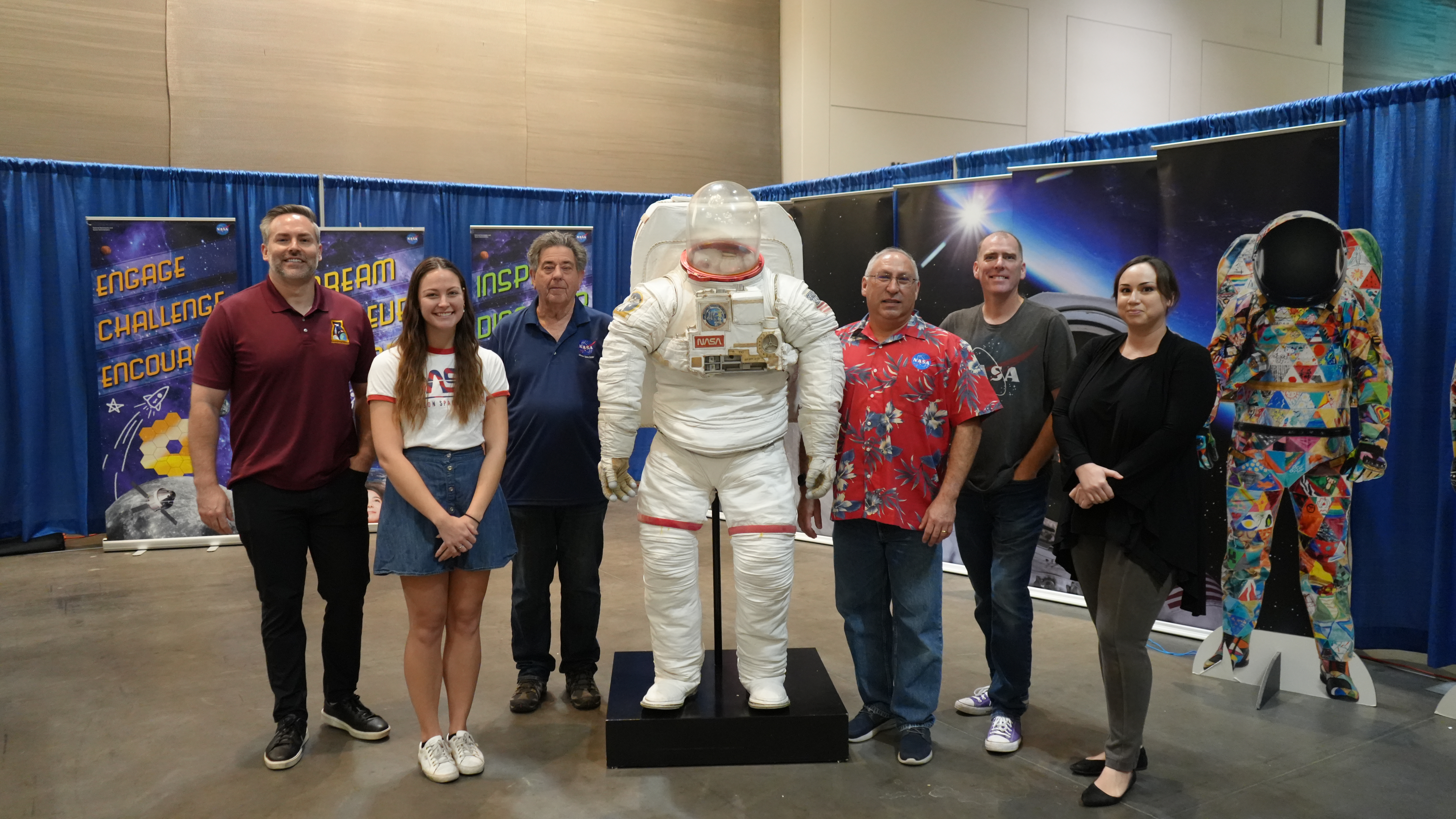
Johnson Space Center volunteers Raul Tijerina (left), building graphics lead for the International Space Station Program; Gary Johnson (middle), technical manager in NASA’s International Space Station Mission Integration and Operations Office; and Christian Getteau, Imagery Integration and Multimedia producer with the Human Space Flight Technical Integration Contract, participate in the NASA booth at the Texas Art Education Association annual conference held Nov. 14–16 at Moody Gardens Hotel & Convention Center in Galveston, Texas.
NASA

From astronauts crafting in orbit to collaborative art projects on Earth, NASA continues to showcase how creativity can capture the wonder of the cosmos. This event allowed educators to connect with NASA, explore teaching resources, and discover innovative ways to merge the arts with science and space exploration in their classrooms. 

A group photo at a NASA booth features six individuals standing alongside an astronaut suit display.
Johnson volunteers pose with an astronaut spacesuit at the Texas Art Education Association conference.
NASA/Sumer Loggins

“We have seen our astronauts bring the art of painting, music, photography, and more to orbit aboard the space shuttle and the International Space Station,” said Gary Johnson, NASA’s International Space Station Mission Integration and Operations Office technical manager. “Our mission is to inspire the next generation of artists and explorers to capture the beauty of space through any medium they choose.” 

“Everyone has a place at NASA,” added Raul Tijerina, International Space Station Program building graphics lead. “This collaboration celebrates the diversity of talents needed to explore the universe, including those who bring ideas to life through art.” 

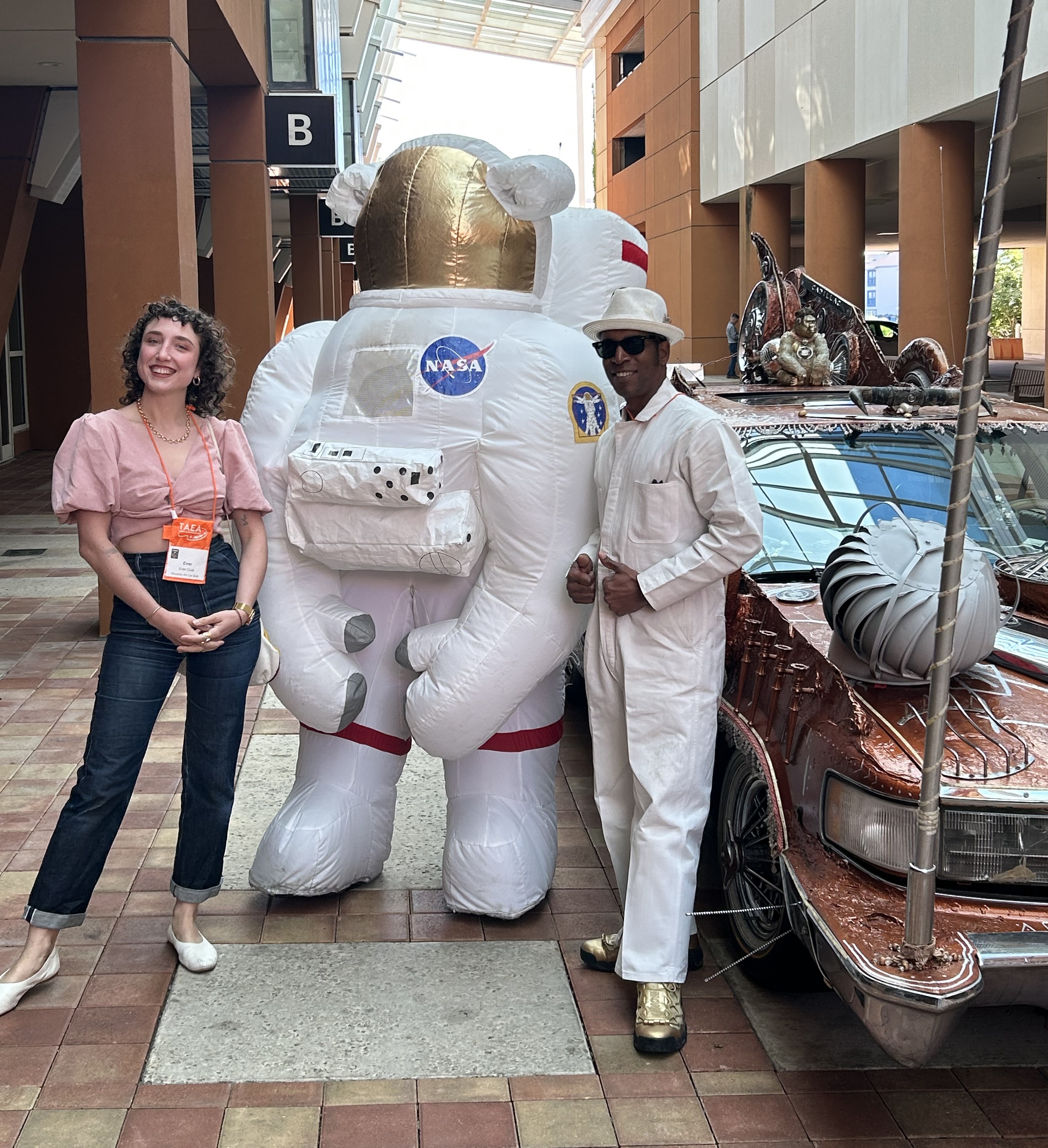
Two individuals stand on either side of an inflatable NASA astronaut suit. The setting is an indoor venue with high ceilings and modern architecture.
NASA’s inflatable mascot, Cosmo, greets attendees and poses for photos during the art car show at the conference.
NASA

Guests immersed themselves in a variety of stellar experiences, including interacting with NASA’s inflatable mascot, Cosmo, taking selfies at the NASA booth, and viewing artwork that shares the past and celebrates the future of space exploration.  

The nonprofit SciArt Exchange provided teachers with details about its space art competitions, aimed at sparking curiosity across all ages. These competitions include the Project Mars Competition, where adults compete to have their artwork featured at Johnson, and the Moon Youth Art Competition, which highlights lunar-themed creations from students around the world. 

Attendees also explored infographics and had the chance to download NASA’s Spot the Station app to track the orbiting laboratory in real-time.  

A group photo of attendees in a conference room with warm lighting. At the center, two individuals in professional attire, including one wearing a NASA flight jacket.
NASA astronaut Michael Foreman (middle left) and Gordon Andrews, a strategic communications specialist for the International Space Station Program, pose with attendees following a space-themed presentation.
NASA

Gordon Andrews, a strategic communications specialist for the International Space Station Program, and NASA astronaut Michael Foreman introduced the Spacesuit Art Project to conference attendees. They shared the documentary “Space for Art,” which chronicles the project’s mission to inspire hope, courage, and healing through art.  

Andrews and Foreman discussed their experiences working on the project with retired NASA astronaut Nicole Stott, the first person to watercolor in space, and the Space for Art Foundation. Foreman shared stories from his time in space and posed for photos with guests. Andrews also presented to the Visual Art Administrators of Texas, a group of over 200 Texas education leaders.  

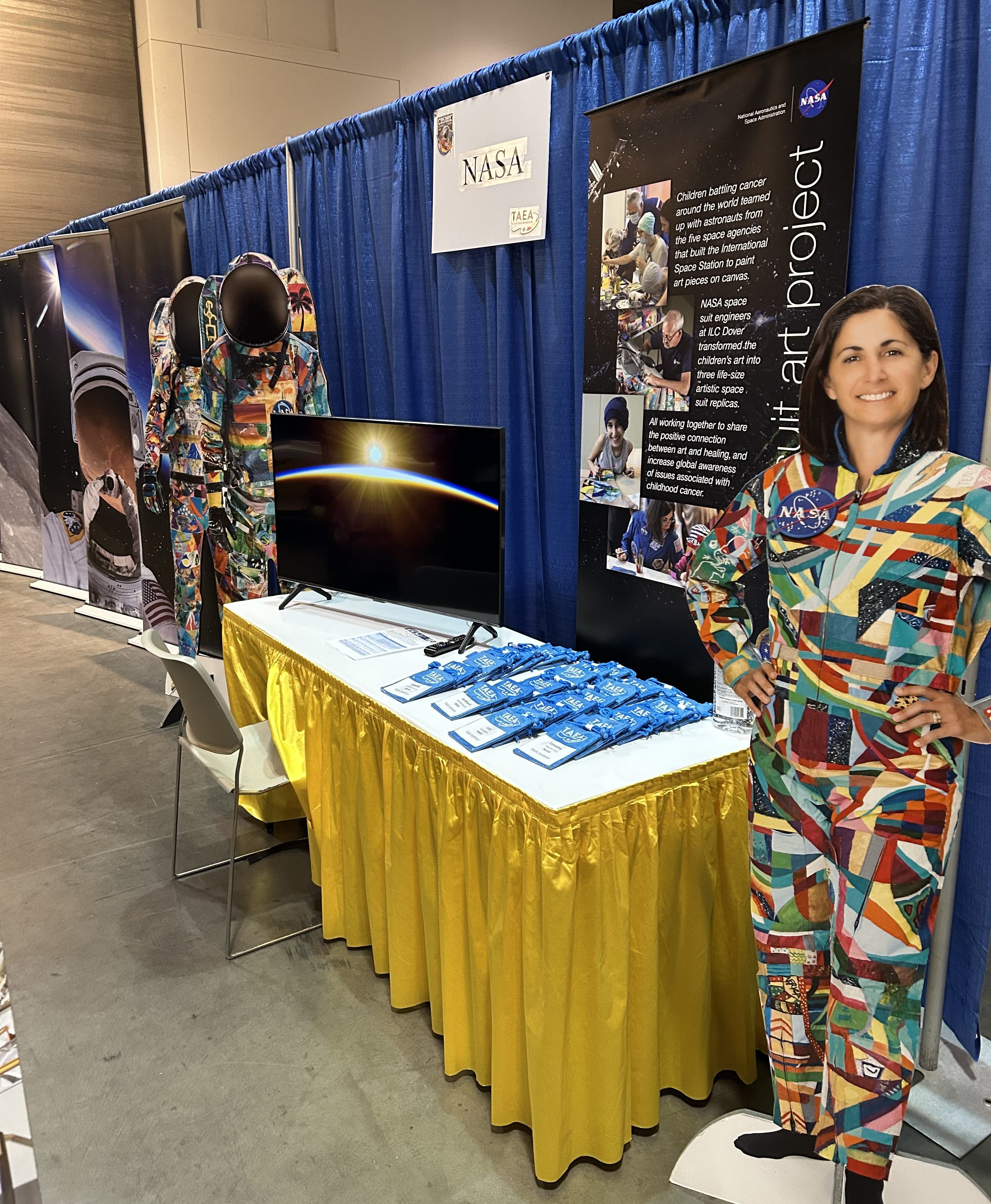
The film played at NASA’s booth, showcasing how the initiative brings hope to children undergoing pediatric cancer treatment by inviting them to create colorful spacesuit artwork. Each suit—Hope, Courage, Unity, Victory, Dreamer, Exploration, Beyond, and Infinity—embodies the resilience and imagination of its creators. Four of these spacesuits have journeyed to and from the microgravity laboratory, inspiring children to dream big as they view their artwork in orbit. 

By raising awareness about pediatric cancer and promoting art therapy worldwide, the project demonstrates the powerful connection between space exploration and the human spirit. 

A NASA booth display features a table with a yellow skirt, showcasing informational materials. Behind the table, colorful artwork-themed astronaut suits and a life-size cutout of a smiling individual wearing a vibrant patchwork suit add visual interest. A TV screen displays an image of the sunrise from space.
The NASA booth featured the Spacesuit Art Project, showcasing a Flat Stanley of NASA astronaut Nicole Stott, the first person to watercolor in space, alongside spacesuits painted by pediatric patients.
NASA

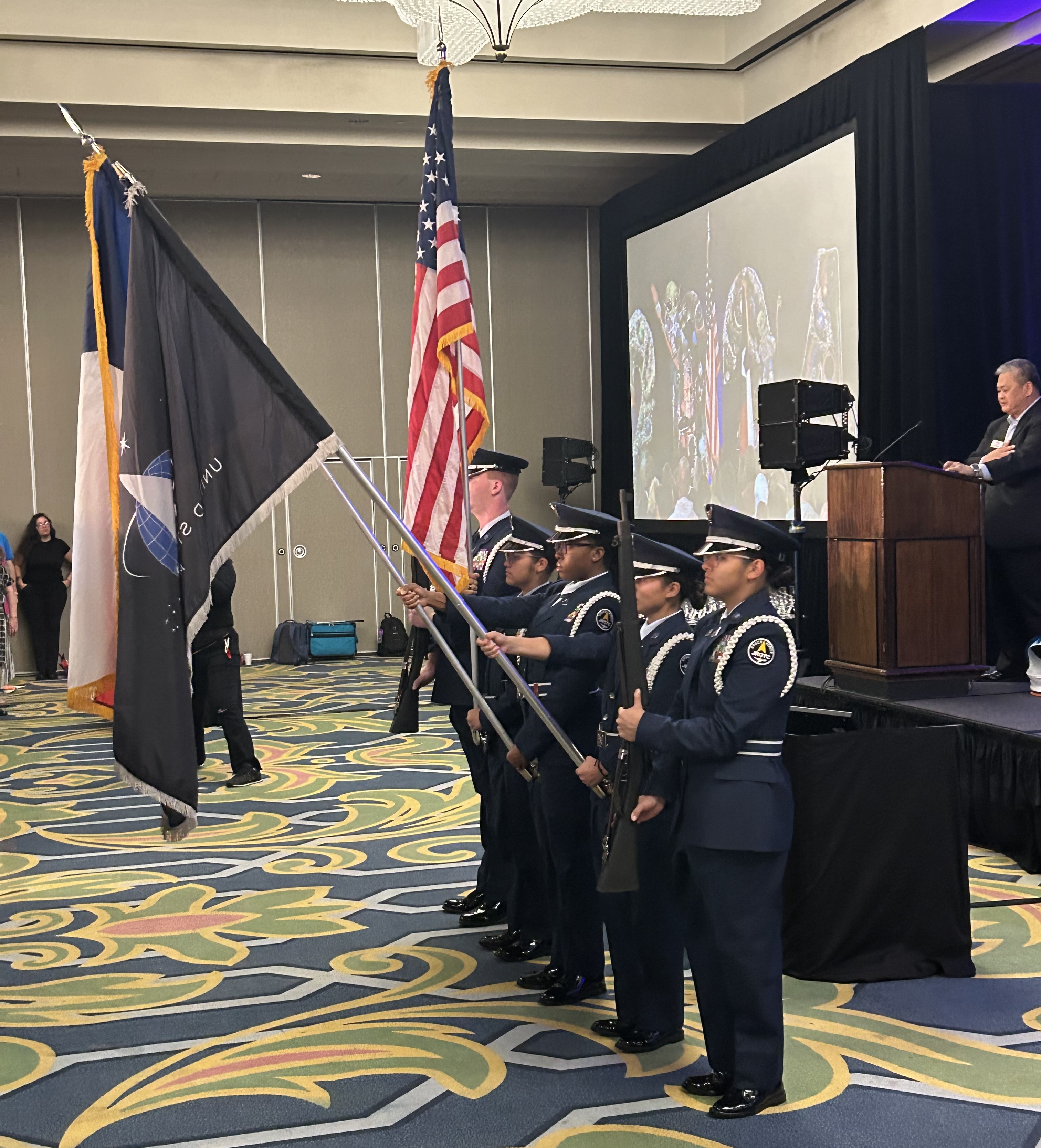
Texas’ first Space Force Junior Reserve Officers’ Training Corps cadets—the only program of its kind in Texas and one of just 10 in the nation—participated in the event, as well. As a NASA rendition of the National Anthem played in the background, the cadets from Klein High School inspired the next generation of dreamers and doers to reach for the stars.  

Texas’ first Space Force Junior Reserve Officers’ Training Corps cadets from Klein High School participate in the ceremony as a NASA rendition of the National Anthem plays in the background.
NASA

The conference also featured three murals that will be added to the art collection in Johnson’s building 4 south. 

The art installation project began in 2022 when Johnson and Tijerina collaborated with Texas high school art programs to create space-themed murals for display at the center. With the help of their teachers, students brainstormed ideas and painted the murals together before visiting Johnson to install them and experience a guided walk-through of NASA’s facilities.  

Led by their shared passion for artistic expression and space exploration, the students bring color, wonder, and creativity to the walls at Johnson. The initiative is part of a long-term effort to engage with students locally and globally to ignite the imagination of all and enhance the visual work environment for Johnson employees. 

A stylized digital artwork featuring two individuals in profile within an astronaut helmet. The helmet’s design incorporates circuitry patterns. In the background, Mars looms with orange and red hues, surrounded by abstract geometric lines and digital elements.
“Absolute Equality: Breaking Boundaries” by Reginald C. Adams, symbolizes unity and humanity’s collective future in space exploration.

The artwork titled “Absolute Equality: Breaking Boundaries,” by artist Reginald C. Adams, will be one of the latest installations in building 4 south. The piece envisions humanity’s shared future, symbolizing unity and the possibilities of interplanetary exploration. 

Adams was a keynote speaker for the conference, and when he learned about the mural project, he wanted to contribute to the initiative. 

The two figures are enclosed within a shared helmet, representing a collective vision for the future of space exploration. The patterns surrounding them signify technology’s role in connecting humanity across cultural and societal divides.  

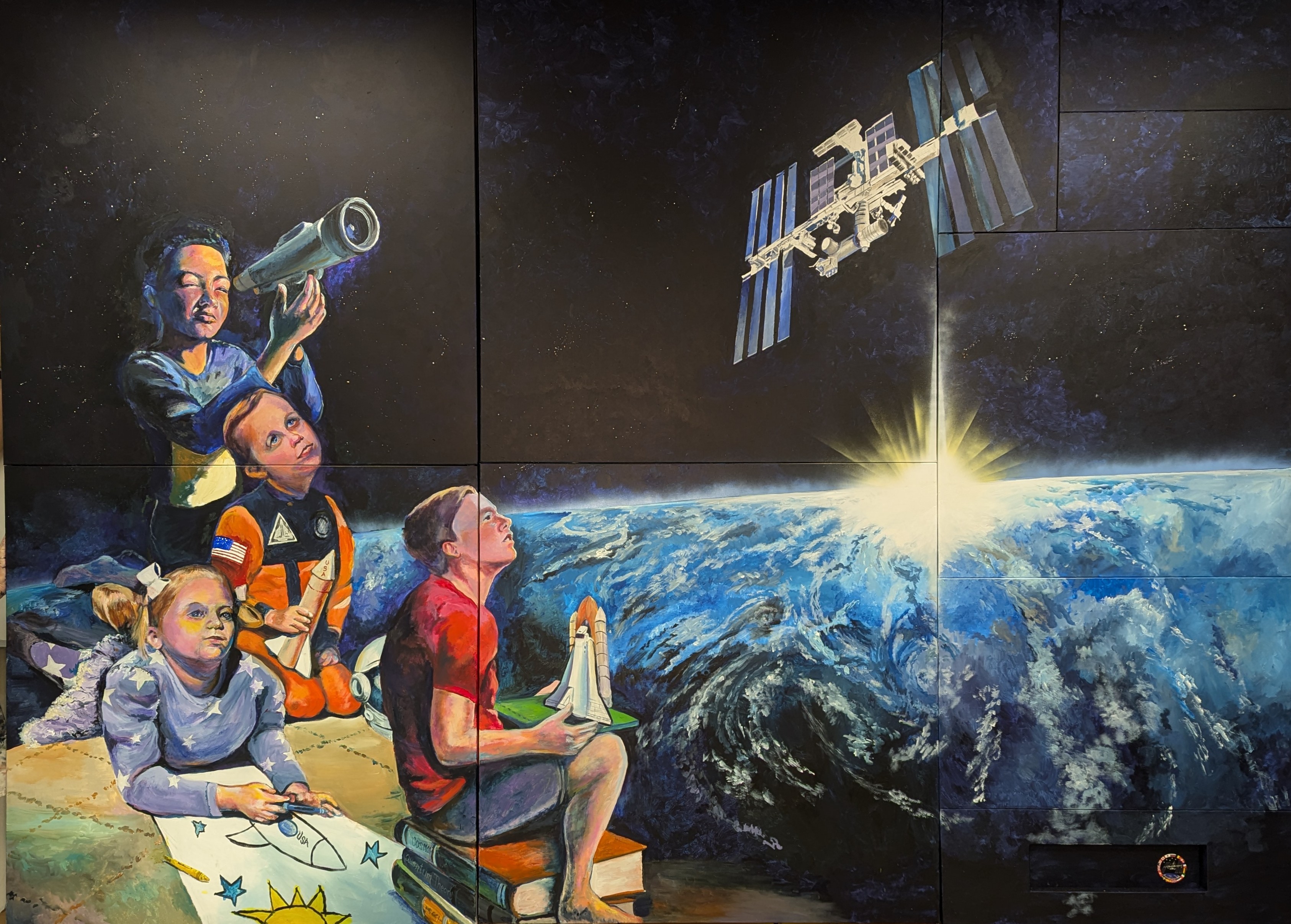
A mural depicts children gazing at the night sky. One child looks through a telescope, while others hold models of rockets and spacecraft. The International Space Station orbits above Earth.
La Marque High School students, art teacher Joan Finn, and artist Cheryl Evans painted a mural highlighting the interconnected roles in space exploration.

A collaborative piece by La Marque High School art students, art teacher Joan Finn, and artist Cheryl Evans depicted the interconnected roles of visionaries, engineers, artists, and astronauts in space exploration. 

Just as the space station was assembled piece by piece over more than 40 missions, the mural was created using 10 separate stretched canvases bolted together. The International Space Station patch at the bottom highlights the collaboration of the 17 countries involved. 

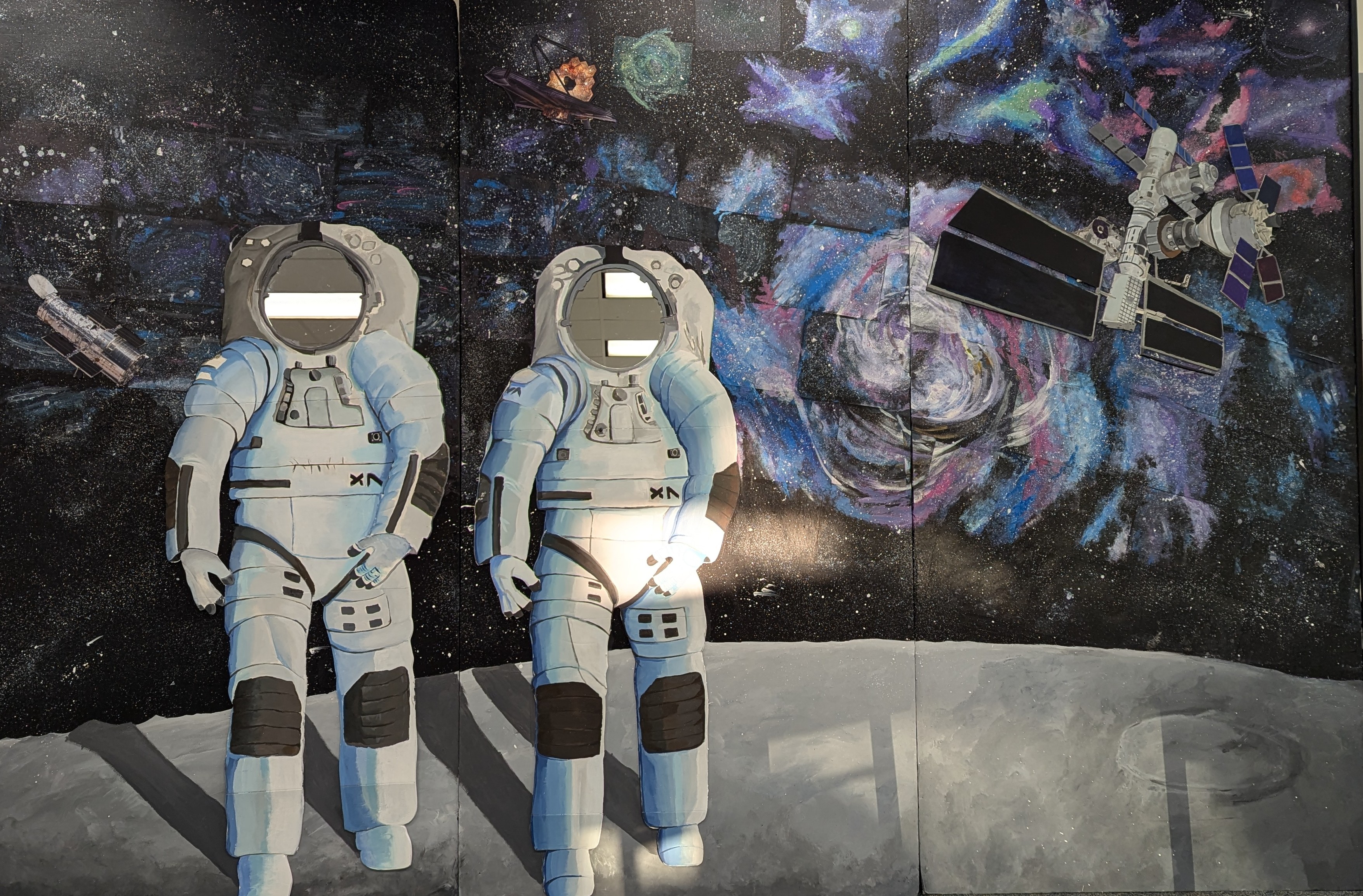
A mural showcases two spacesuit cutouts on a lunar surface, allowing visitors to pose as astronauts. The backdrop features a depiction of space, with colorful galaxies, the Hubble Space Telescope, and a satellite orbiting a distant planet.
“The Moon Now,” created by La Marque High School students, depicts two astronauts on the lunar surface in Axiom spacesuits with mirrored visors.

A student-created vision titled “The Moon Now” showcased two astronauts on the lunar surface wearing Axiom spacesuits, with helmet visors designed as mirrors, signifying the next generation to envision themselves contributing to the next giant leap in space exploration.  

The students created individual pieces depicting the Milky Way and other astronomical objects, which were collaged onto the surface of the artwork. 

Through partnerships like this, NASA continues to embrace STEAM—science, technology, engineering, art, and math—to empower the Artemis Generation to dare, unite, and explore.  

Powered by WPeMatico

Get The Details…
Sumer Loggins

Space Station Research Tests Performance of Self-Healing Quantum Technology 

Space Station Research Tests Performance of Self-Healing Quantum Technology 

1 min read

Preparations for Next Moonwalk Simulations Underway (and Underwater)

The Canadarm2 removes materials science samples from the Kibo laboratory module’s airlock.
NASA

The Materials ISS Experiment Flight Facility mounted on the outside of the International Space Station allows researchers to test the performance and durability of materials and devices. This is done by exposing items of interest to everything that makes the space environment harsh, including radiation, highly reactive atomic oxygen, microgravity, and extreme temperatures.  

Currently, one suite on the platform holds MISSE-20-Commercial, an investigation conducting 12 experiments from different research teams. Among MISSE-20-Commercial is the Space Entanglement and Annealing Quantum Experiment (SEAQUE) which tests two technologies that could advance the field of quantum communications. The first technology is a novel method to transmit quantum data. This method could make way for a scalable quantum information network and provide the foundation of quantum cloud computing, a technology that holds the promise of operating millions of times faster than conventional computers. SEAQUE will also validate technology to “self-heal” its sensitive detectors against radiation damage using laser annealing, prolonging the life of these quantum tools in a space environment. 

Diana Garcia  
International Space Station Research Communications Team 
Johnson Space Center 

Powered by WPeMatico
Get The Details…
Andrea Lloyd

Emerging Engineering Leader Basil Baldauff Emphasizes Osage Values

Emerging Engineering Leader Basil Baldauff Emphasizes Osage Values

Basil Baldauff knew early in his tenure at NASA’s Johnson Space Center that he wanted to become a leader within the agency and make an impact on the future of space exploration.

As a contract electrical design and test engineer working within Johnson’s Energy Systems Test Area, Baldauff had an opportunity to lead small teams in performing battery testing. Exposure to the test director role inspired him to pursue a more permanent leadership position, and today he is the lead facility engineer for the Battery Systems Test Facility. The facility supports hundreds of abuse, performance, and flight tests of batteries and cells for applications ranging from laptops and satellite phones used by astronauts to life-saving equipment used in spacesuits and backup power supplies. Baldauff ensures all battery testing is performed properly and safely while managing facility resources and maintaining the functionality of all test support systems.

Official headshot of Basil Baldauff.
Official portrait of Basil Baldauff.
NASA

To date, one of his favorite projects at Johnson involved serving as test director for thermal runaway testing of the Artemis III Orion Crew Module battery. This test was an engineering evaluation to validate and certify that the battery’s design met requirements for handling a possible internal short circuit and preventing such an event from causing battery failure.

“Being able to lead a team of engineers and technicians to help fulfill NASA’s mission at such an early part of my career is an achievement I take pride in,” he said.

Baldauff is also a proud member of the Osage Nation. “I try to demonstrate some of the Osage core values daily in the workplace such as compassion, cooperation, honesty, and respect,” he said. He has been involved with the American Indian Science and Engineering Society since he was in high school, helping the organization support Indigenous students and professionals in STEM fields. He believes that NASA can further promote diversity by continuing to highlight and celebrate the many different groups and cultures within the agency’s workforce.

Basil Baldauff poses with a friend at a ceremonial indigenous tribal dance.
Basil Baldauff attends Osage I’n-Lon-Schka, a ceremonial tribal dance that takes place each June.
Image courtesy of Basil Baldauff

Reflecting on his three years at Johnson, Baldauff highlighted the value of mentorship. “Finding or having a mentor early on in your career who can help you navigate unencountered situations or lend advice when needed is crucial,” he said. “It is vital to learn as much as you can from your mentor or supervisor, since they have most likely walked in your exact footsteps at some time.” Baldauff noted that challenges can arise in any job. “Staying positive and keeping an open mind when searching for solutions can go a long way,” he said.

Baldauff is excited to see humanity’s return to the Moon and establishment of a long-term presence on the lunar surface. “I look forward to seeing how what I achieved in my career at NASA helped to make that future a reality.” He also encourages the Artemis Generation to never stop learning. “I hope to pass on the eagerness to always keep learning, no matter how old or where you are in your career,” he said.

Powered by WPeMatico
Get The Details…
Linda E. Grimm

NASA’s Commercial Partners Make Progress on Low Earth Orbit Projects

NASA’s Commercial Partners Make Progress on Low Earth Orbit Projects

6 min read

Preparations for Next Moonwalk Simulations Underway (and Underwater)

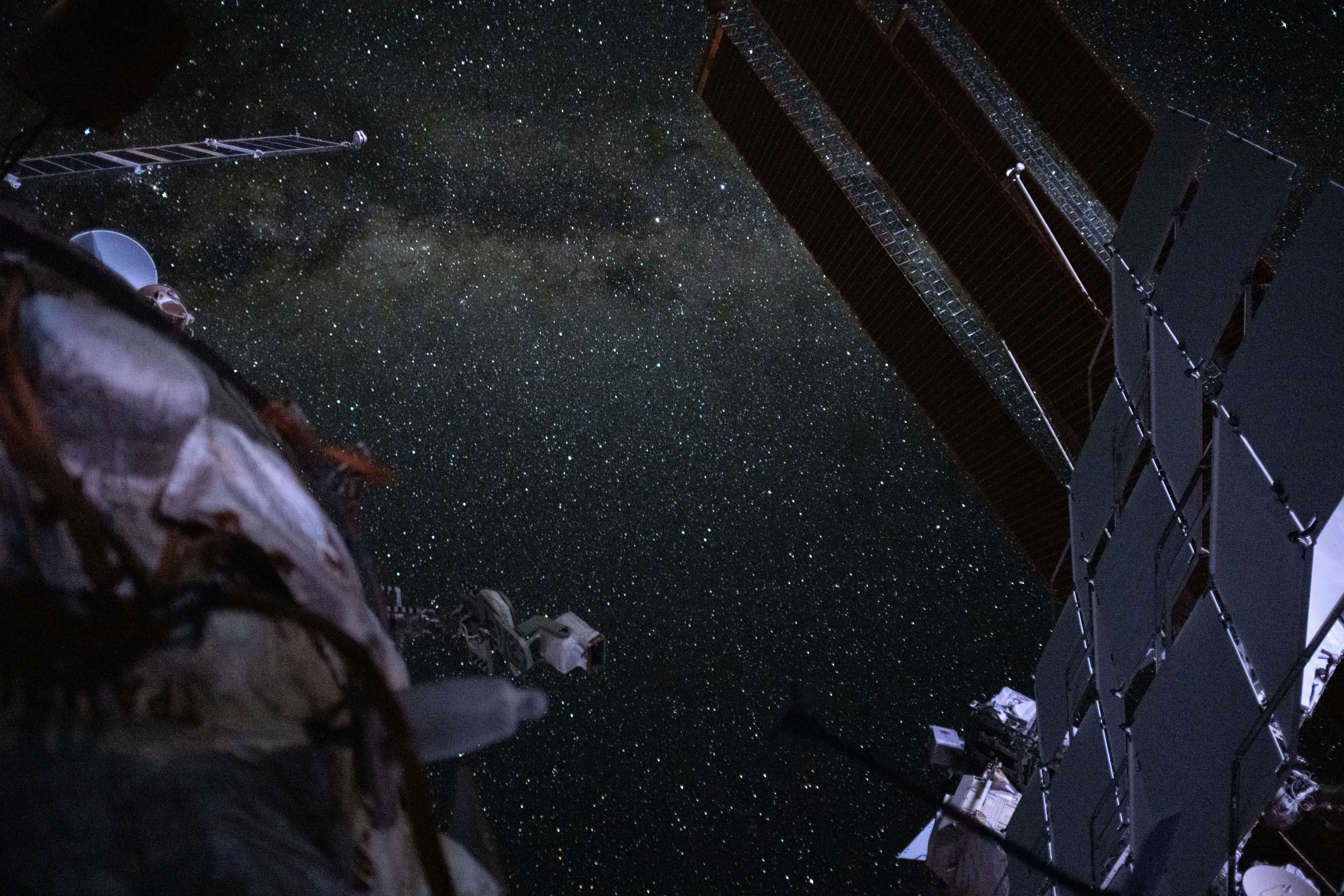
The Milky Way pictured from the International Space Station in a long-duration photograph
Credits: NASA

NASA and its commercial partners continue to drive innovation in space exploration, achieving milestones that will ultimately benefit human spaceflight and commercial low Earth orbit efforts. These recent achievements from NASA’s industry partners include completed safety milestones, successful flight tests, and major technological advancements.

“Our commercial partners’ growing capabilities in low Earth orbit underscore NASA’s commitment to advance scientific discovery, pioneering space technology, and support future deep space exploration,” said Angela Hart, manager of the Commercial Low Earth Orbit Development Program at NASA’s Johnson Space Center in Houston.

As NASA expands opportunities in low Earth orbit, the agency is working with seven U.S. companies to meet future commercial and government needs through the second Collaborations for Commercial Space Capabilities initiative.

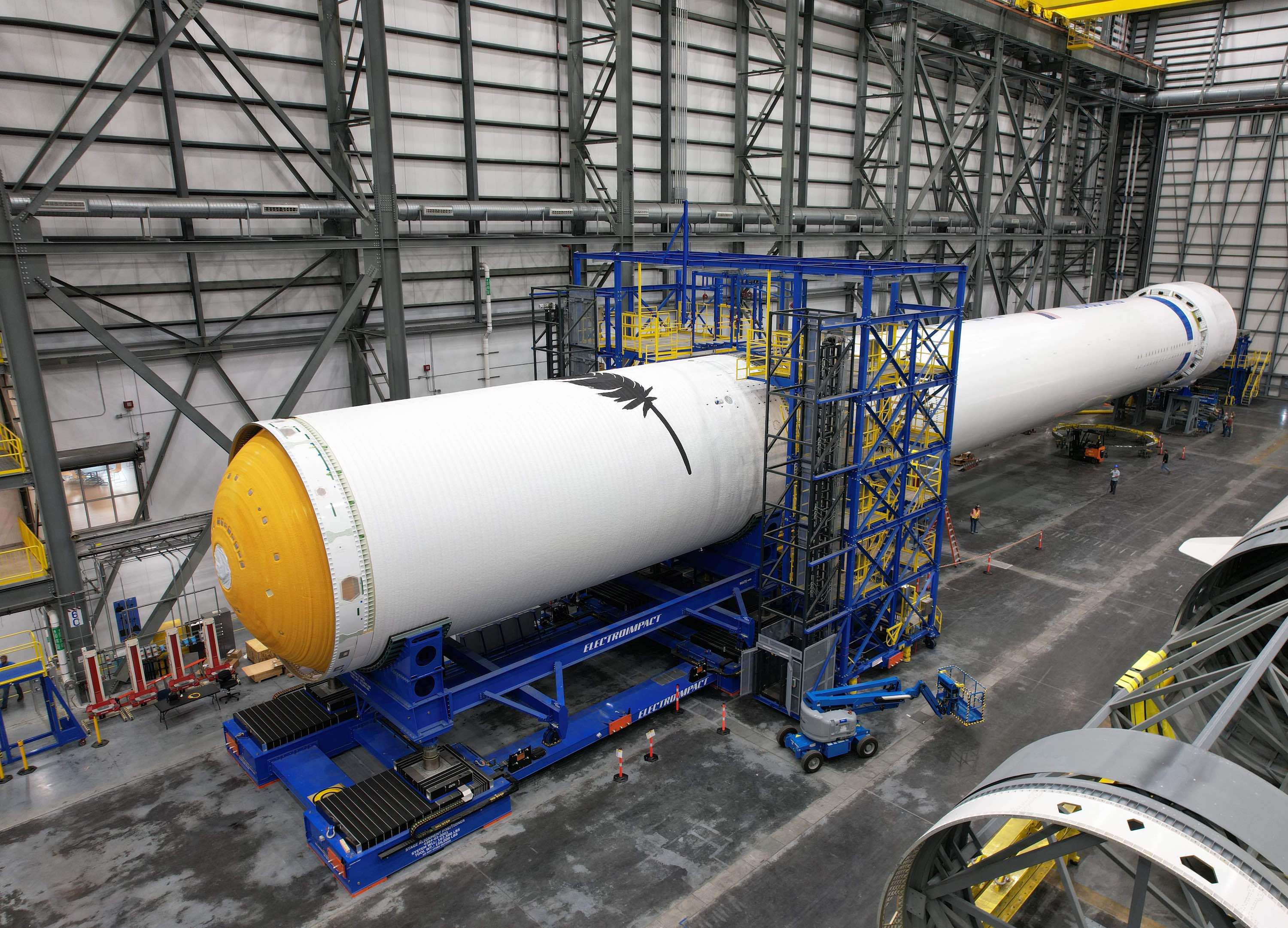
The first and second stages of Blue Origin’s New Glenn test vehicle pictured at the company’s orbital launch vehicle factory in Cape Canaveral, Florida
Credits: Blue Origin

Blue Origin

Blue Origin continues to make progress in the development of an integrated commercial space transportation capability that ensures safe, affordable, and high-frequency U.S. access to orbit for crew and other missions.

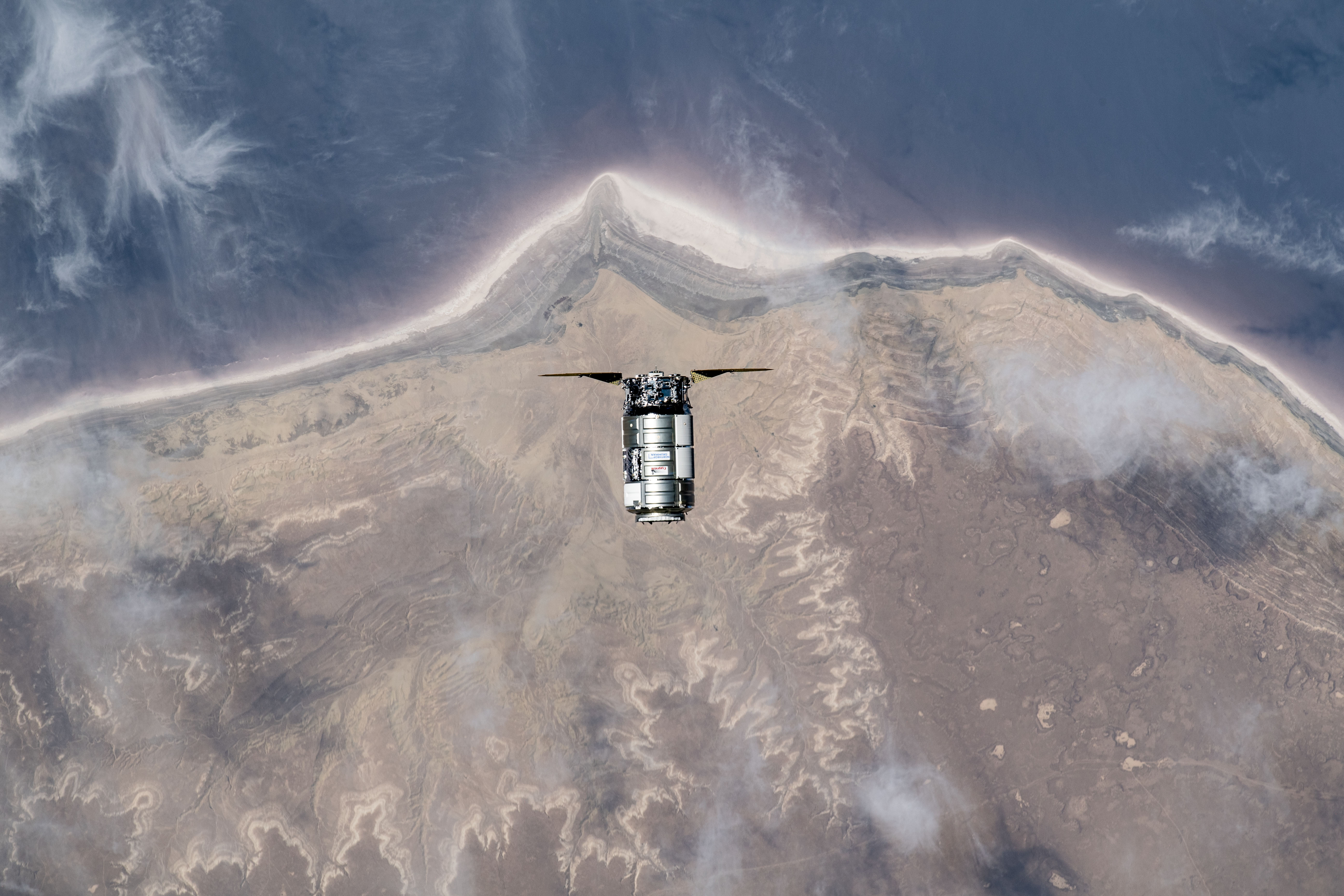
Northrop Grumman's Cygnus spacecraft pictured approaching the International Space Station
Northrop Grumman’s Cygnus spacecraft pictured approaching the International Space Station
Credits: NASA

Northrop Grumman

Northrop Grumman is evolving the company’s Cygnus spacecraft as a foundational logistics and research platform to support NASA’s next generation of low Earth orbit ventures. The company recently completed a project management review with NASA, presenting the roadmap and enhancements to commercialize the spacecraft. Northrop Grumman also continues to make progress toward the implementation of docking capability through a partnership with Starlab Space.

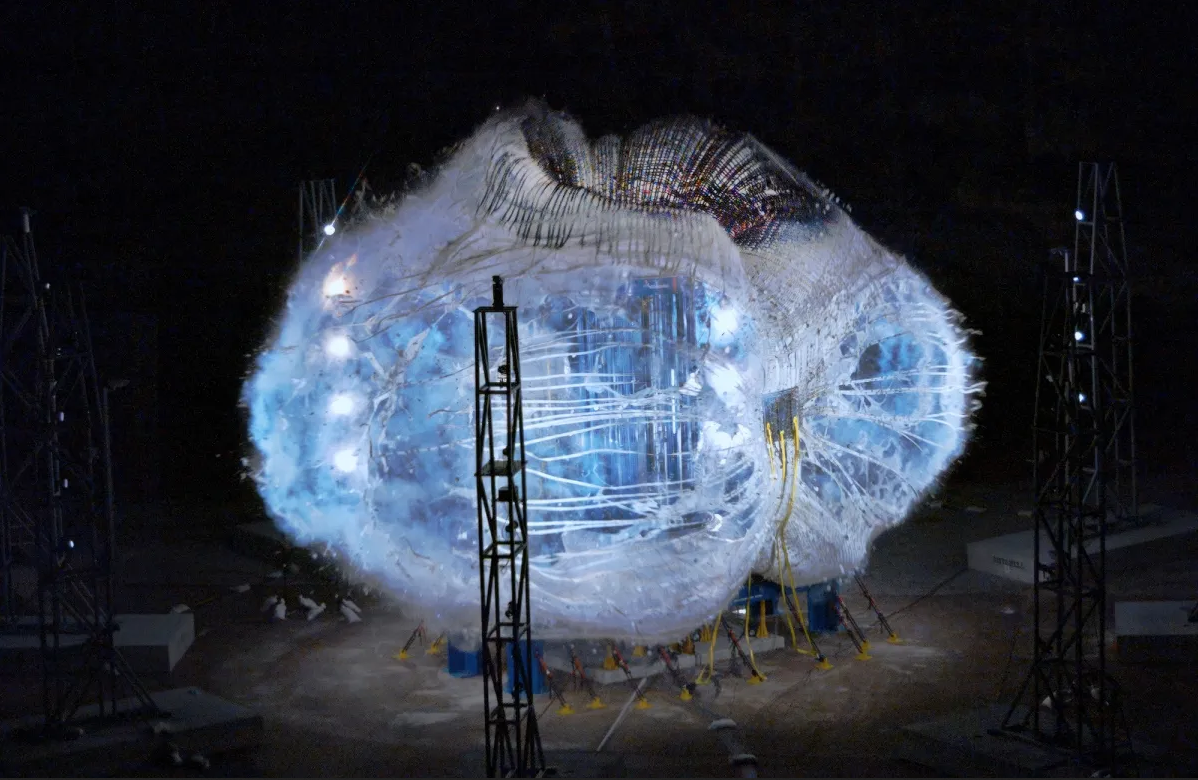
Sierra Space’s LIFE (Large Integrated Flexible Environment) habitat following a full-scale ultimate burst pressure test at NASA’s Marshall Space Flight Center in Huntsville, Alabama
Sierra Space’s LIFE (Large Integrated Flexible Environment) habitat following a full-scale ultimate burst pressure test at NASA’s Marshall Space Flight Center in Huntsville, Alabama.
Credits: Sierra Space

Sierra Space

Sierra Space recently completed two full-scale ultimate burst pressure tests of its LIFE (Large Integrated Flexible Environment) habitat structure, an element of a NASA-funded commercial space station for new destinations in low Earth orbit. The company also has selected and tested materials for the habitat’s air barrier, focusing on permeability and flammability testing to meet the recommended safety standards. The inflatable habitat is designed to expand in orbit, creating a versatile living and working area for astronauts with a flexible, durable structure that allows for compact launch and significant expansion upon deployment.

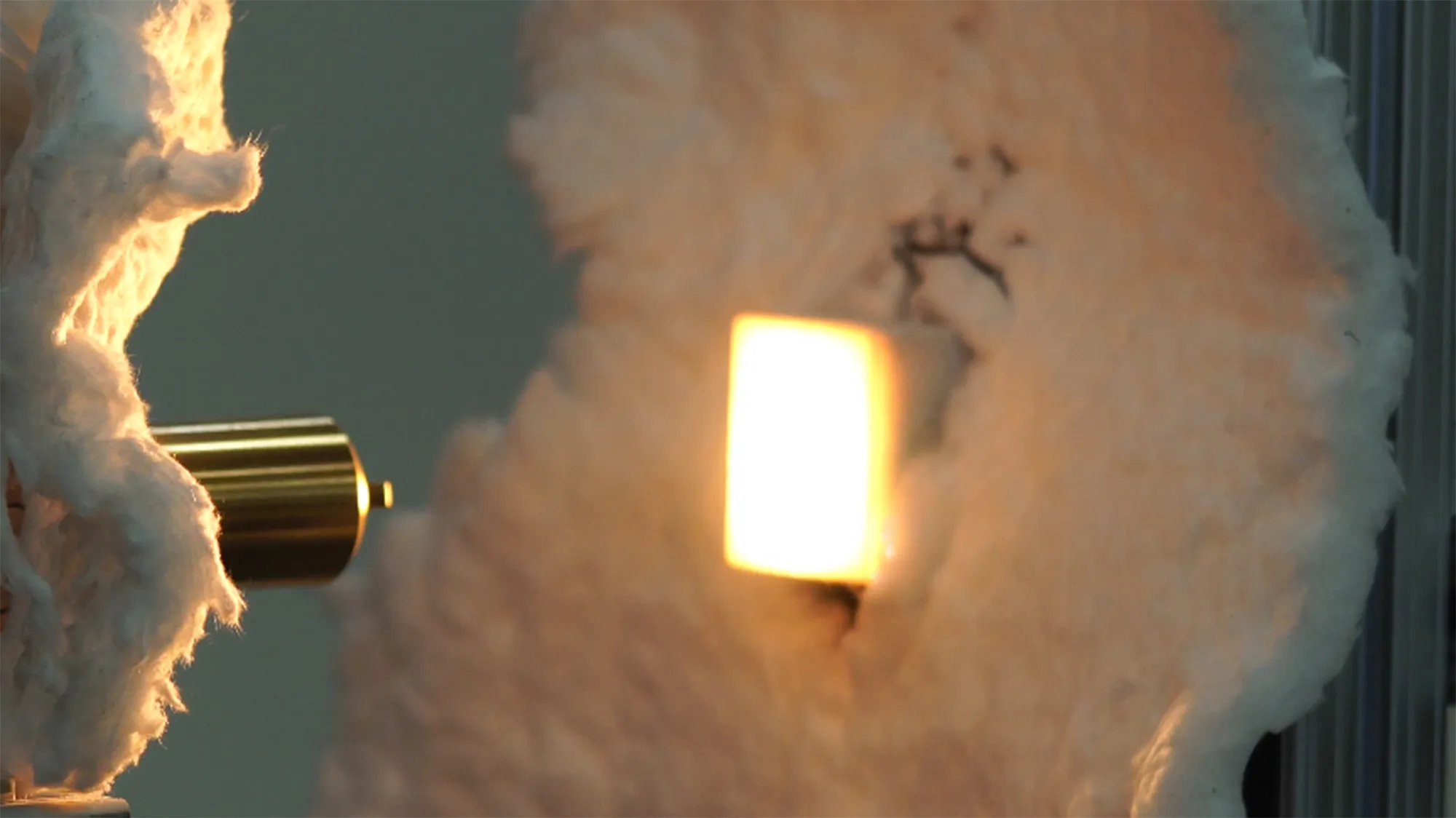
Sierra Space also has advanced in high velocity impact testing and micro-meteoroid and orbital debris configuration and material selection, crucial for ensuring the safety and durability of the company’s space structures, along with advancing radiator designs to optimize thermal management for long-duration missions.

The SpaceX Starship spacecraft, a fully reusable transportation, ahead of a test flight at the company’s Starbase facilities in Boca Chica, Texas
The SpaceX Starship spacecraft, a fully reusable transportation, ahead of a test flight at the company’s Starbase facilities in Boca Chica, Texas.
Credits: SpaceX

SpaceX

SpaceX continues developing the company’s Starship spacecraft, a fully reusable transportation system designed for missions to low Earth orbit, the Moon, Mars, and beyond. SpaceX completed multiple flight tests, launching the spacecraft on the Super Heavy, the launch system’s booster, from the company’s Starbase facility in Boca Chica, Texas. During the tests, SpaceX demonstrated key capabilities needed for the system’s reusability, including landing burns and reentry from hypersonic velocities.

SpaceX is preparing to launch newer generations of the Starship system, powered by upgraded versions of its reusable methane-oxygen staged-combustion Raptor engines, as it works to operationalize the system ahead of the first crewed lunar landing missions under the agency’s Artemis campaign.

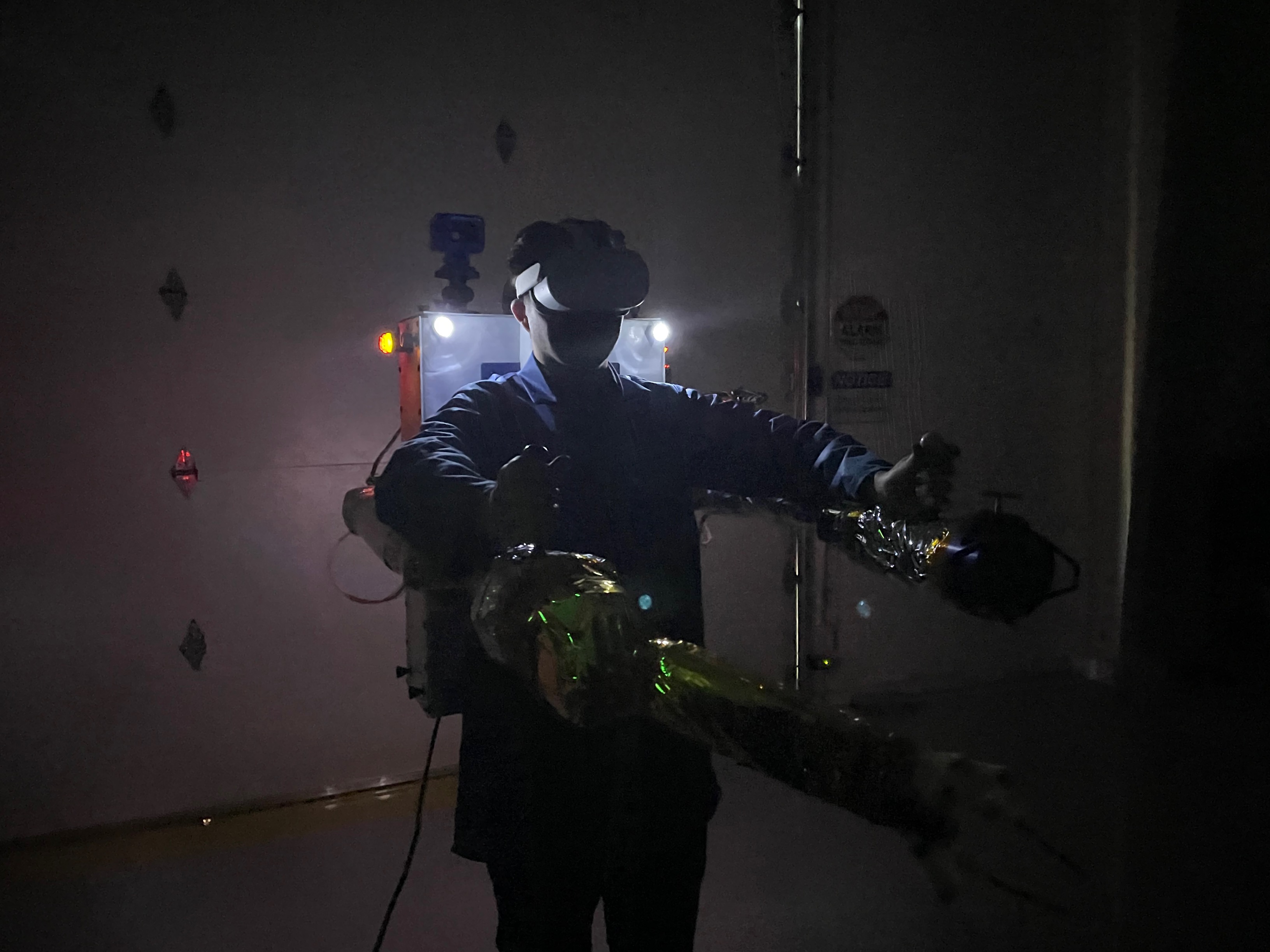
An engineer for Special Aerospace Services tests the company’s Autonomous Maneuvering Unit
Credits: Special Aerospace Services

Special Aerospace Services

Special Aerospace Services is developing an Autonomous Maneuvering Unit that incorporates in-space servicing, propulsion, and robotic technologies. The company is evaluating customer needs and establishing the details and features for the initial flight unit. Special Aerospace Services also is working on a prototype unit at its Special Projects Research Facility in Arvada, Colorado, and has started construction of a new campus and final assembly facility in Huntsville, Alabama. The application of these technologies is intended for the safer assembly of commercial destinations, servicing, retrieval, and inspection of in-space systems.

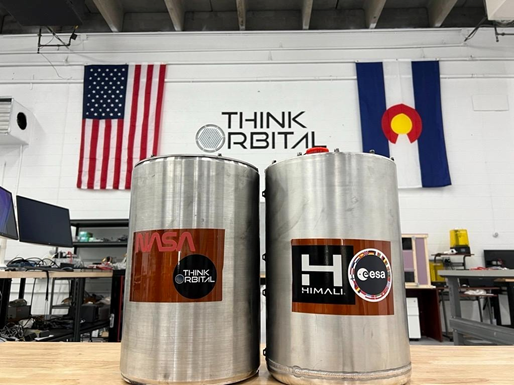
Two twin containers hosting the welding experiment developed by ThinkOrbital, validated by NASA and ESA (European Space Agency)
Two twin containers hosting the welding experiment developed by ThinkOrbital, validated by NASA and ESA (European Space Agency),
Credits: ThinkOrbital

ThinkOrbital

ThinkOrbital recently demonstrated autonomous welding in space, validated by NASA and ESA (European Space Agency). The company will further test in-space welding, cutting, and X-ray inspection technologies on another mission later this year. ThinkOrbital’s third mission, scheduled for late 2025, will focus on developing commercially viable products, including a robotic arm with advanced end-effector solutions and standalone X-ray inspection capabilities. In-space welding technologies could enable building larger structures for future commercial space stations.

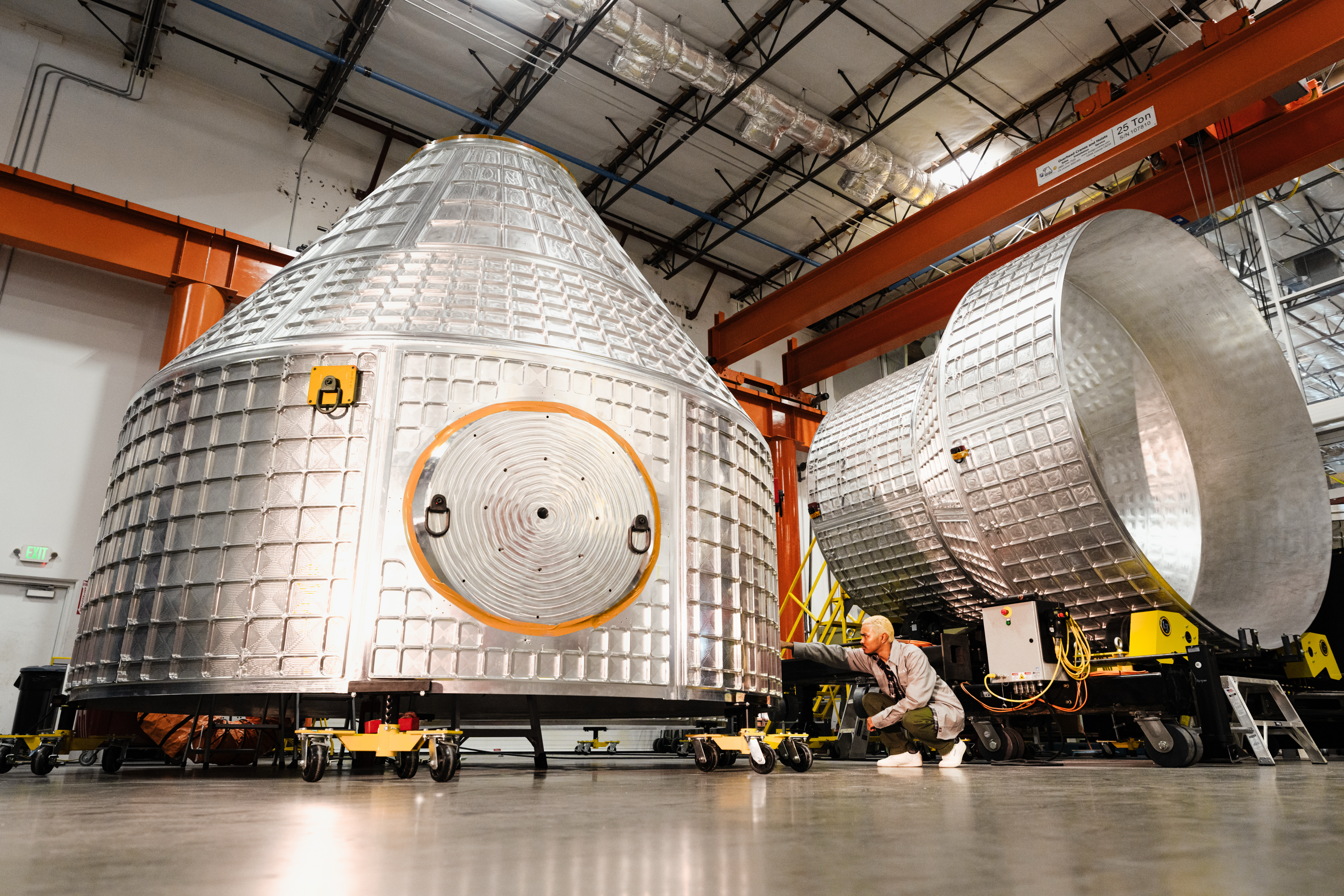
The qualification primary structure of Vast’s Haven-1 commercial space station during final welding stages at the company’s headquarters in Long Beach, California
Credits: Vast

Vast

Vast continues development progress on the Haven-1 commercial space station, targeted to launch in 2025. The company recently completed several technical milestones, including fabricating key components such as the primary structure pathfinder, hatch, battery module, and control moment gyroscope.

Vast also completed a solar array deployment test and the station’s preliminary design review with NASA’s support. While collaborating with the agency on developing and testing the commercial station’s dome-shaped window, Vast performed rigorous pressure testing to meet safety requirements.

In addition to these efforts, NASA also is collaborating with two businesses through its Small Business Innovation Research Ignite initiative, which focuses on commercially viable technology ideas aligned with the agency’s mission needs. Both companies are developing technologies for potential use on the International Space Station and future commercial space stations.

A ceramic heat shield, or thermal protection system, being developed by Canopy Aerospace
Credits: Canopy Aerospace

Canopy Aerospace

Canopy Aerospace is developing a new manufacturing system aimed at improving the production of ceramic heat shields, also known as thermal protection systems. The company recently validated the material properties of a low-density ceramic insulator using an alumina-enhanced thermal barrier formulation.

Canopy Aerospace also continues development of a 3D-printed, low-density ablator designed to provide thermal protection during extreme heating. The company also worked on other 3D-printed materials, such as aluminum nitride and oxide ceramic products, which could be useful in various applications across the energy, space, aerospace, and industrial sectors, including electromagnetic thrusters for satellites. Canopy Aerospace also developed standard layups of fiber-reinforced composites and integrated cork onto composite panels.

The Cargo Ferry, a reusable cargo transportation vehicle, prototype during a recent high-altitude flight test to test its recovery system and range capabilities
The Cargo Ferry, a reusable cargo transportation vehicle, prototype during a recent high-altitude flight test to test its recovery system and range capabilities.
Credits: Outpost Technologies

Outpost Technologies

Outpost Technologies completed a high-altitude flight test of its Cargo Ferry, a reusable cargo transportation vehicle. The company dropped a full-scale prototype from 82,000 feet via weather balloon to test its recovery system and range capabilities. The key innovation is a robotic paraglider that guides the vehicle to a precise landing. The paraglider deployed at a record-setting altitude of 65,000 feet, marking the highest flight ever for such a system.

During the test, the vehicle autonomously flew 165 miles before it was safely recovered at the landing site, demonstrating the system’s reliability. The company’s low-mass re-entry system can protect payload mass and volume for future space cargo return missions and point-to-point delivery.

NASA’s low Earth orbit microgravity strategy builds on the agency’s extensive human spaceflight experience to advance future scientific and exploration goals. As the International Space Station nears the end of operations, NASA plans to transition to a new low Earth orbit model to continue leveraging microgravity benefits. Through commercial partnerships, NASA aims to maintain its leadership in microgravity research and ensure continued benefits for humanity.

Learn more about NASA’s low Earth orbit microgravity strategy at:

https://www.nasa.gov/leomicrogravitystrategy

News Media Contacts

Claire O’Shea
Headquarters, Washington
202-358-1100
claire.a.o’shea@nasa.gov

Anna Schneider
Johnson Space Center, Houston
281-483-5111
anna.c.schneider@nasa.gov

Powered by WPeMatico
Get The Details…
Roger Weiss