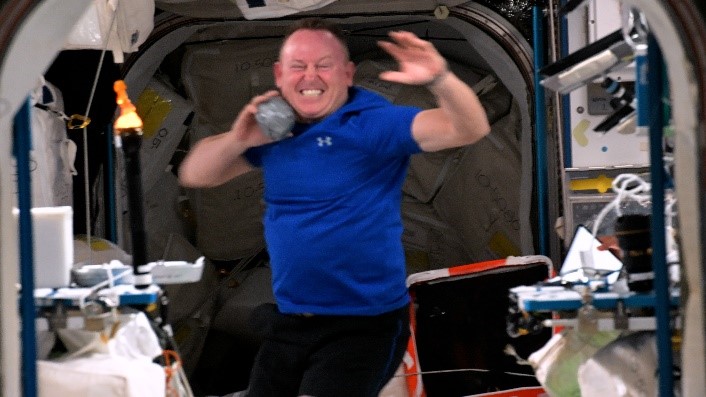
Matt Dominick’s X Account: A Visual Journey from Space

Matt Dominick’s X Account: A Visual Journey from Space
3 Min Read

Matt Dominick’s X Account: A Visual Journey from Space

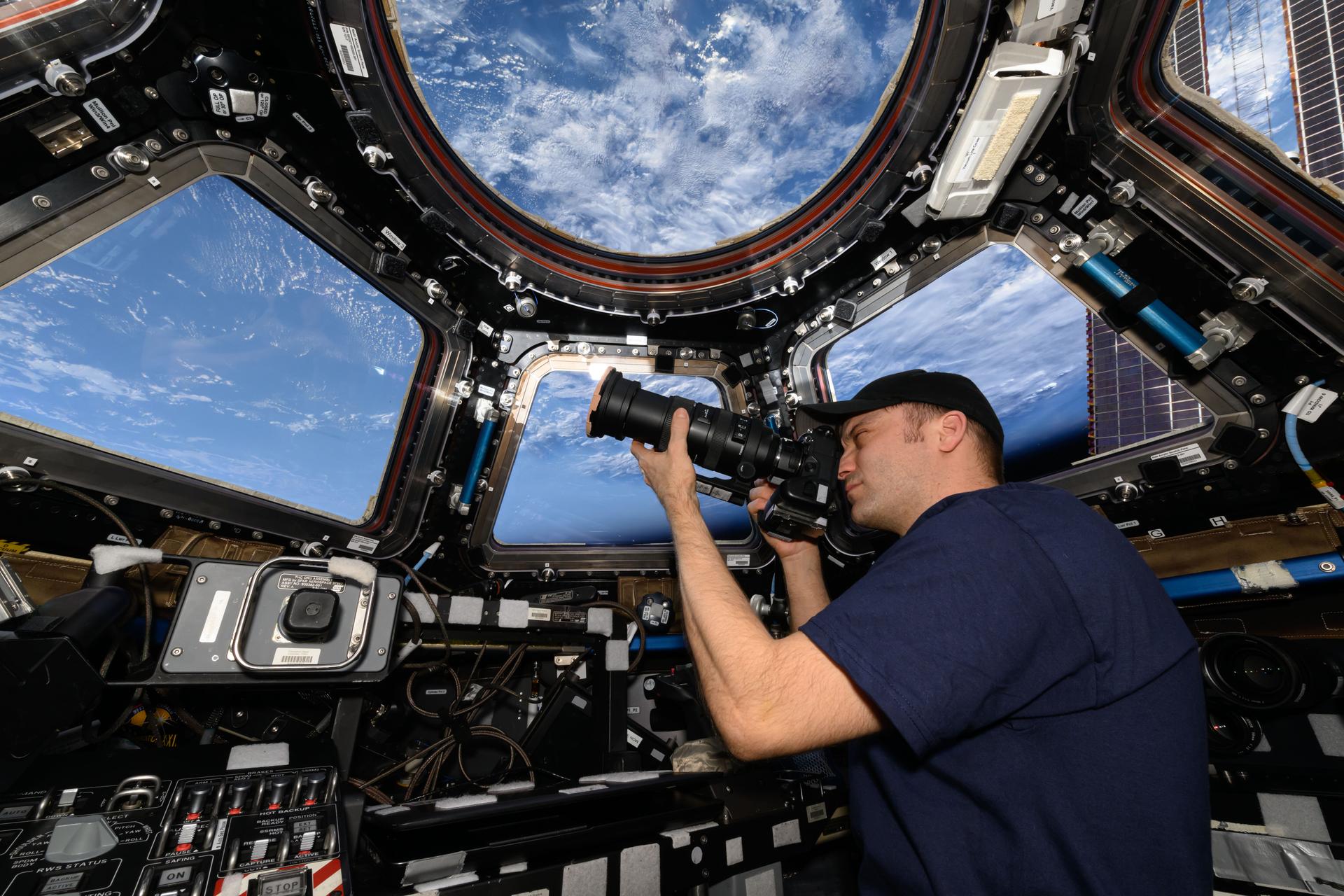
NASA astronaut and Expedition 72 Flight Engineer Matt Dominick points his camera out a window on the cupola as the International Space Station orbited 262 miles above the Atlantic Ocean off the coast of Africa.

We are lucky to have had the opportunity to fly in space and feel a responsibility to share with humanity the incredible views of the Earth and the cosmos.
Matt dominick

Matt dominick

NASA Astronaut

NASA astronaut and Expedition 72 Flight Engineer Matthew Dominick launched to the International Space Station on March 3, 2024 as the commander of NASA’s SpaceX Crew-8 mission. As a flight engineer aboard the orbiting laboratory, Dominick conducted scientific research while capturing breathtaking views of Earth and beyond from the ultimate vantage point—250 miles above the planet.

Dominick’s X account (@dominickmatthew) has become a visual diary, showcasing the beauty of our planet captured from low Earth orbit during his 235 days in space. From the ethereal glow of auroras dancing across the atmosphere to comets rising up over the horizon during an orbital sunrise, each meticulously captured image reflects his dedication to sharing the wonders of space exploration through social media. He goes beyond simply posting pictures; he reveals the techniques behind his astrophotography, including camera settings and insights into his creative process, inviting followers to appreciate the artistry involved.

Matt Dominick shared this timelapse video to his X account in August 2024, showing the Moon setting into streams of red and green aurora.
Matt Dominick

See the full X post here.

Amid his daily astronaut duties, Dominick dedicated personal time to this endeavor, amassing nearly 500,000 captivating photos of Earth and snapshots of life aboard the International Space Station, while having traveled 99,708,603 total statue miles around our home planet. Through his lens(es), he invited us to experience the awe of space while highlighting the realities of life in orbit, fostering an authentic connection with those who engage with his work.

Building on this commitment to connect, Dominick participated in the first-ever live X Spaces event from space, marking a new way for NASA astronauts to connect personally with followers. He shared insider tips on astrophotography from orbit and discussed the challenges and joys of capturing stunning images in microgravity. Concluding the event, he vividly narrated his live experience floating into the Cupola at sunset while orbiting over Paris just days before the 2024 Summer Olympic Games.

A screen recording of the first X Spaces event from space featuring NASA astronaut Matt Dominick.
NASA

Dominick’s journey as an astronaut unfolds in real-time on his X account. He has captured the arrivals and departures of various spacecraft, documented dynamic weather events, and even participated in Olympic festivities. His stunning timelapses and behind-the-scenes videos offer an intimate look at life aboard the space station, beautifully illustrating the intricate interplay between science and wonder.

What sets Dominick’s account apart is his playful perspective. He invites his audience into lighthearted moments—whether he’s cleaning his retainer in microgravity, relishing the arrival of fresh fruit, or sharing insights from the ISS toolbox. By documenting and sharing these experiences, he demystifies the complexities of space travel, making it an accessible and relatable journey for all. Through his engaging posts, Dominick cultivates a deeper connection with his followers, encouraging them to share in the beauty and reality of life beyond our planet.

Matt Dominick shared this video video to his X account in August 2024 after receiving fresh fruit aboard the International Space Station.
Matt Dominick

See the full X post here.

Visit Dominick’s X account (@dominickmatthew) to experience the wonders of space through his eyes, enriched by his remarkable journey of orbiting the Earth 3,760 times.

Share

Details

Last Updated

Dec 05, 2024

Powered by WPeMatico

Get The Details…
Abby Graf
NASA Astronauts Compete in ISS “Olympics”

NASA Astronauts Compete in ISS “Olympics”

2 Min Read

NASA Astronauts Compete in ISS “Olympics”

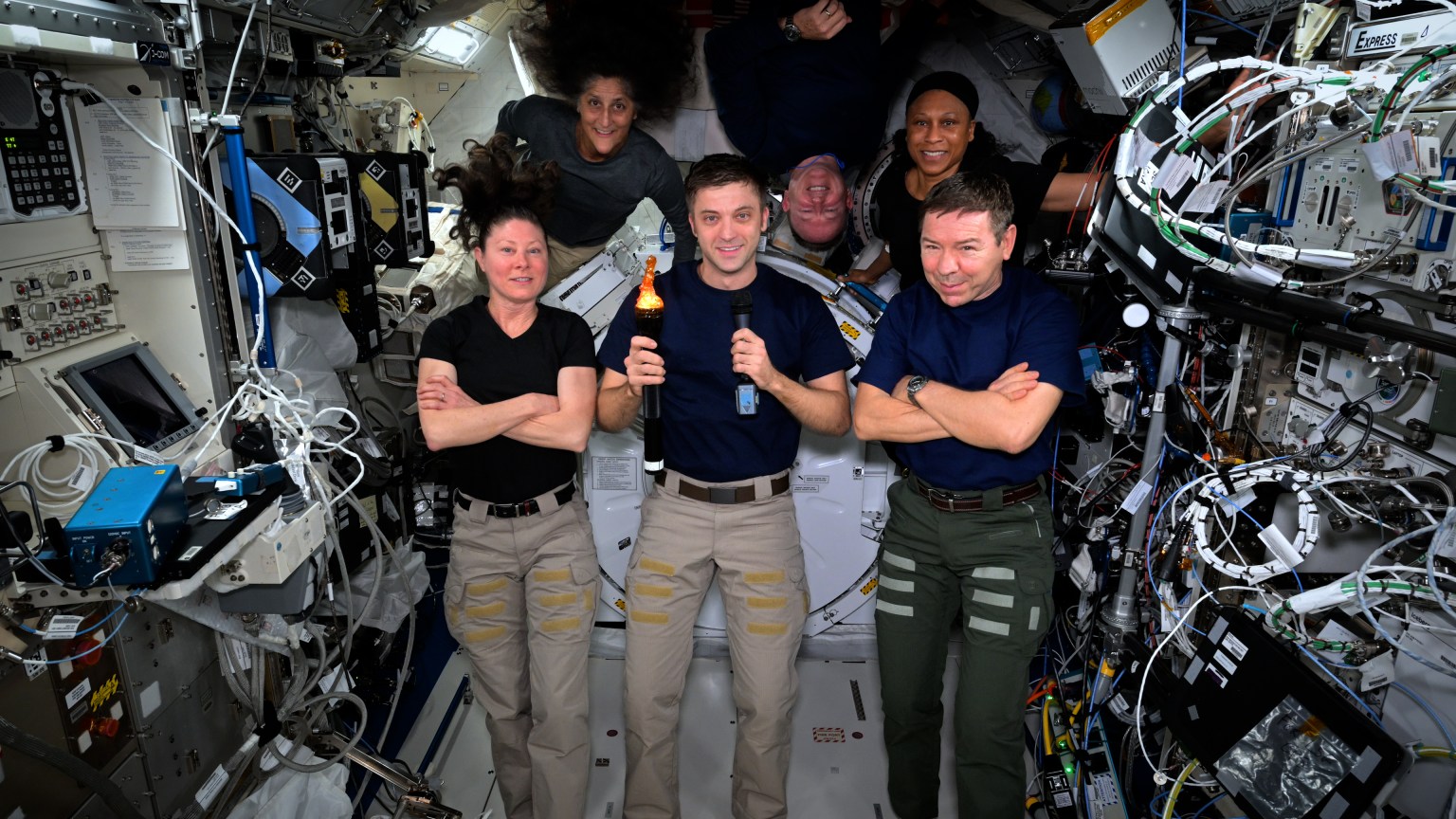
NASA astronauts, as part of Expedition 71, pose for a portrait during their ISS "Olympics" games.

The International Space Station Olympics.
NASA

See the Content Online: Olympics Instagram | Olympics X | Olympics Website | NASA HQ YouTube | NASA Facebook | FLOTUS Instagram

“Over the past few days on the International Space Station, we’ve had an absolute blast pretending to be Olympic athletes,” astronaut Matt Dominick started off in a crew message. “We, of course, have had the benefits of weightlessness…We can’t imagine how hard this must be, to be such a world-class athlete doing your sports under actual gravity. So from all of us aboard the International Space Station to every single athlete in the Olympic Games, Godspeed!”

250 miles above Earth, NASA astronauts aboard the International Space Station (ISS) held their own version of the 2024 Summer Olympics. Before the athletes competed on the ground in Paris, astronauts Matthew Dominick, Suni Williams, Butch Wilmore, Jeanette Epps, Tracy Dyson, and Mike Barratt brought the spirit of the Games to space, showcasing their own unique series of sports.

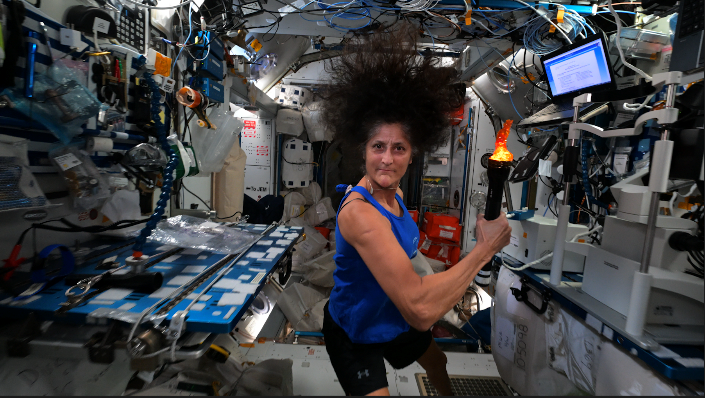
The two-minute epic montage, released on July 26, begins with crew members passing a uniquely orbital Olympic torch, crafted right aboard the space station. Each astronaut warms up for their event, with a standout moment featuring Butch Wilmore taking a sip from a floating sphere of water.

Let the games begin!

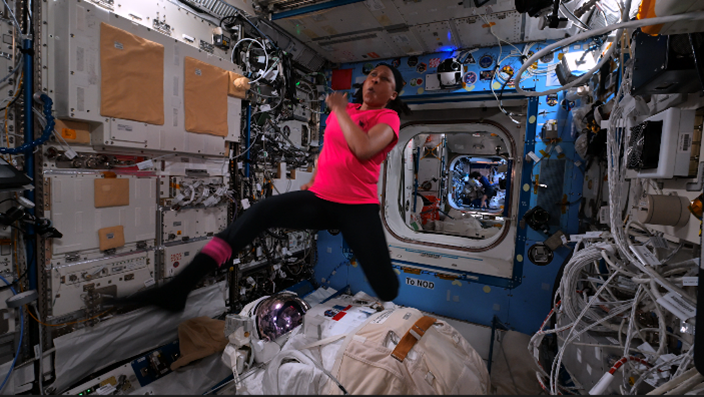
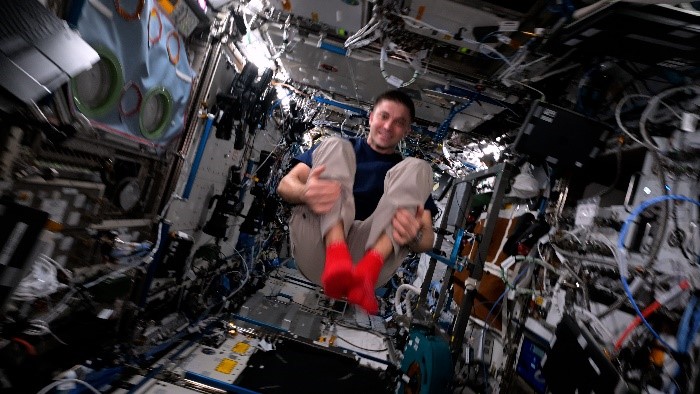
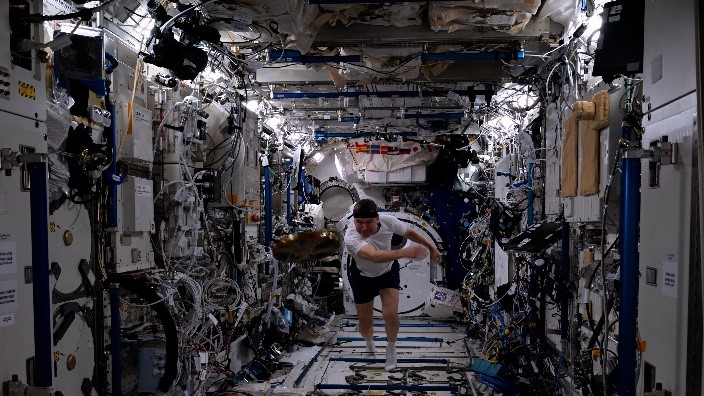
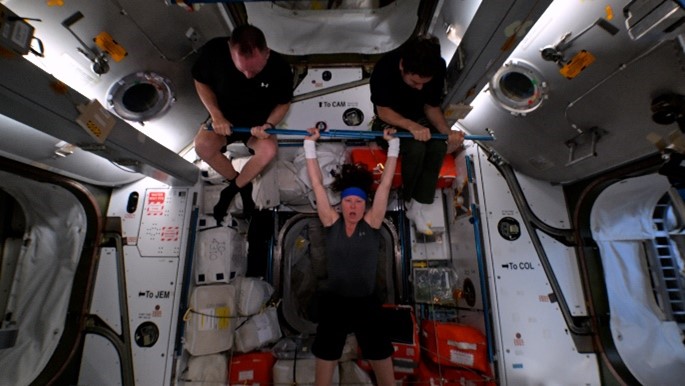
NASA astronaut Tracy Dyson kicked things off by powerlifting two of her fellow astronauts. Then Jeanette Epps went for the gold in the long jump. Matthew Dominick defied microgravity, executing a flawless gymnastics routine as he flew through the station. Suni Williams showcased her focus and strength, becoming the first to compete on the pommel horse in space. Mike Barratt gave it his all in the discus. And finally, Butch Wilmore set a record with his shotput throw!

The crew ended the video with a heartfelt message to all Olympic athletes, celebrating the spirit of international cooperation—a core principle of space station operations. The video was shared collaboratively across multiple social media channels, amplifying its reach and impact. Both NASA and the official Olympics social media accounts posted the video, showcasing the astronauts’ unique tribute to the Games. A special version of the video was also shared on the First Lady’s Instagram account, further emphasizing the spirit of international unity and the connection between space exploration and global events. This coordinated effort highlighted the collaboration between NASA and the Olympics, bringing attention to the shared values of teamwork, perseverance, and global cooperation.

Share

Details

Last Updated

Dec 05, 2024

Powered by WPeMatico

Get The Details…
Abby Graf
NASA Flips Efficient Wing Concept for Testing

NASA Flips Efficient Wing Concept for Testing

3 min read

Preparations for Next Moonwalk Simulations Underway (and Underwater)

NASA/Quincy Eggert

Upside down can be right side up. That’s what NASA researchers determined for tests of an efficient wing concept that could be part of the agency’s answer to making future aircraft sustainable.

Research from NASA’s Advanced Air Transport Technology project involving a 10-foot model could help NASA engineers validate the concept of the Transonic Truss-Braced Wing (TTBW),  an aircraft using long, thin wings stabilized by diagonal struts. The TTBW concept’s efficient wings add lift and could result in reduced fuel use and emissions for future commercial single-aisle aircraft. A team at the Flight Loads Laboratory at NASA’s Armstrong Flight Research Center in Edwards, California, are using the model, called the Mock Truss-Braced Wing, to verify the concept and their testing methods.

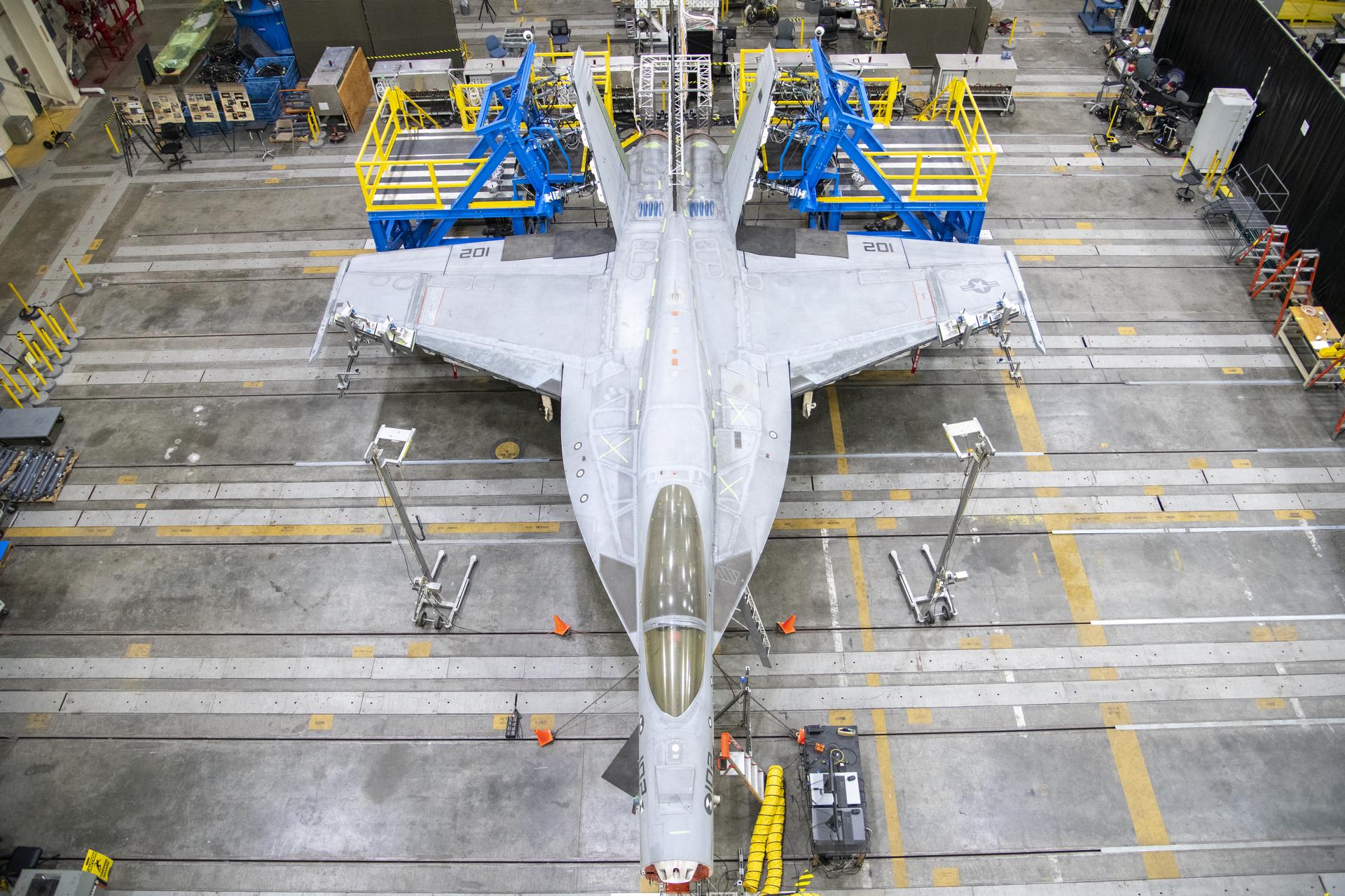
The model wing and the strut have instruments installed to measure strain, then attached to a rigid vertical test frame. Wire hanging from an overhead portion of the frame stabilizes the model wing for tests. For these tests, researchers chose to mount the 10-foot-long aluminum wing upside down, adding weights to apply stress. The upside-down orientation allows gravity to simulate the lift a wing would experience in flight.

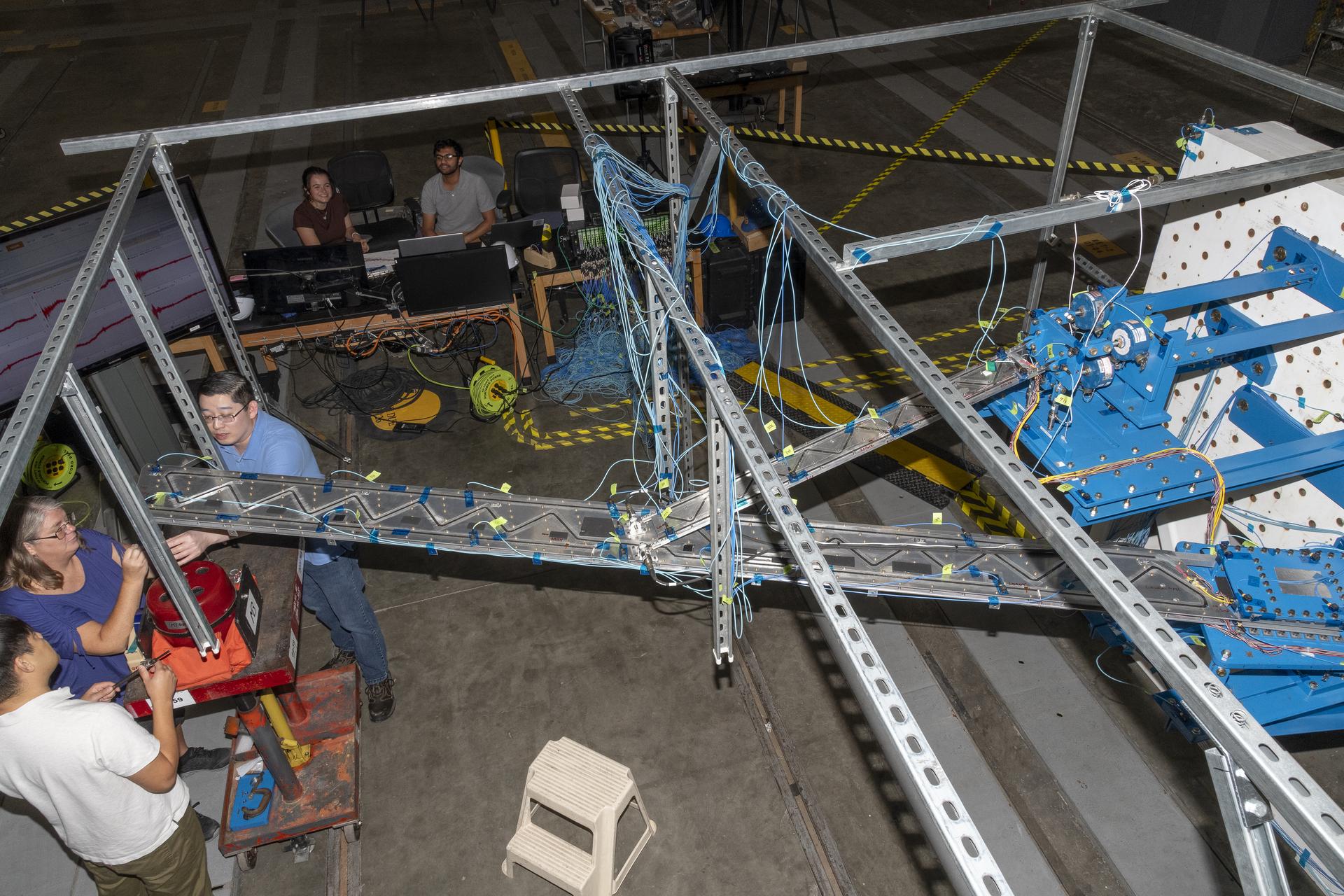
A view from above shows the wing test article and the tests structure developed for successfully obtaining data.
Researchers test a 10-foot Mock Truss-Braced Wing at NASA’s Armstrong Flight Research Center in Edwards, California. A view from above shows the test structure, the wing, and the strut. The aircraft concept involves a wing braced on an aircraft using diagonal struts that also add lift and could result in significantly improved aerodynamics.
NASA/Steve Freeman

“A strut reduces the structure needed on the main wing, and the result is less structural weight, and a thinner wing,” said Frank Pena, NASA mock wing test director. “In this case, the test measured the reaction forces at the base of the main wing and at the base of the strut. There is a certain amount of load sharing between the wing and the strut, and we are trying to measure how much of the load stays in the main wing and how much is transferred to the strut.”

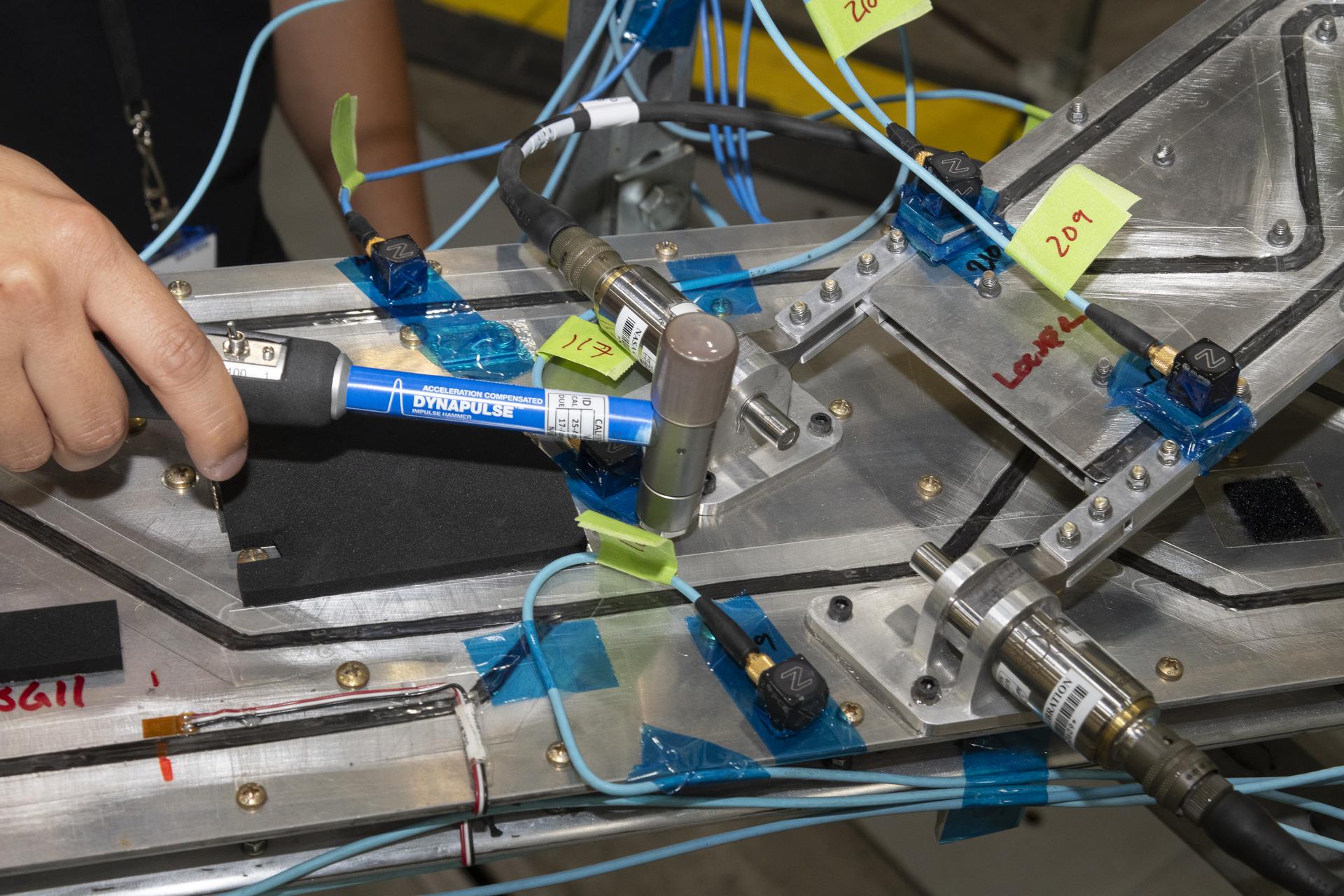
To collect those measurements, the team added weights one at a time to the wing and the truss. In another series of tests, engineers tapped the wing structure with an instrumented hammer in key locations, monitoring the results with sensors.

“The structure has natural frequencies it wants to vibrate at depending on its stiffness and mass,” said Ben Park, NASA mock wing ground vibration test director. “Understanding the wing’s frequencies, where they are and how they respond, are key to being able to predict how the wing will respond in flight.”

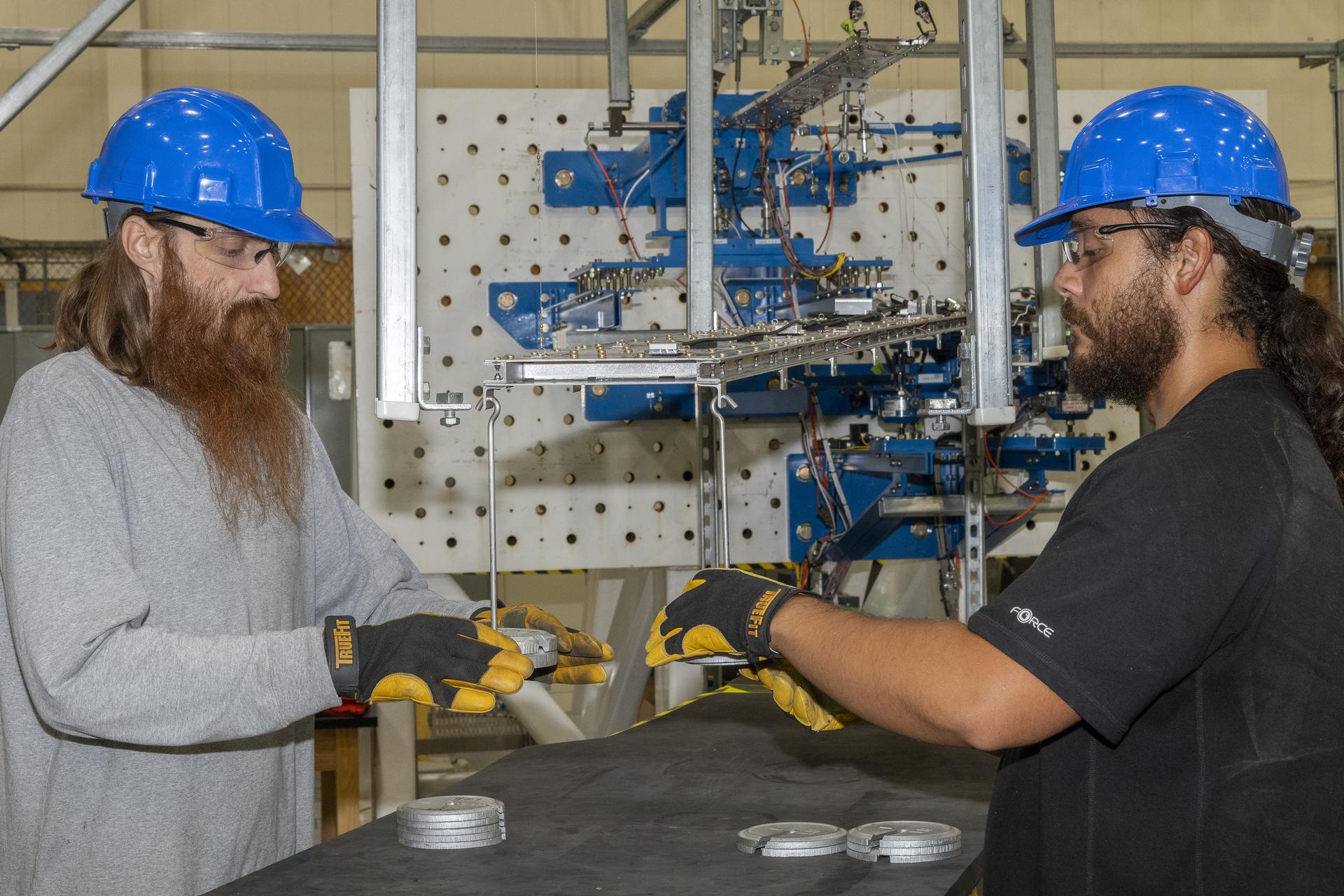
Two men add weight to a wing test article at the same time.
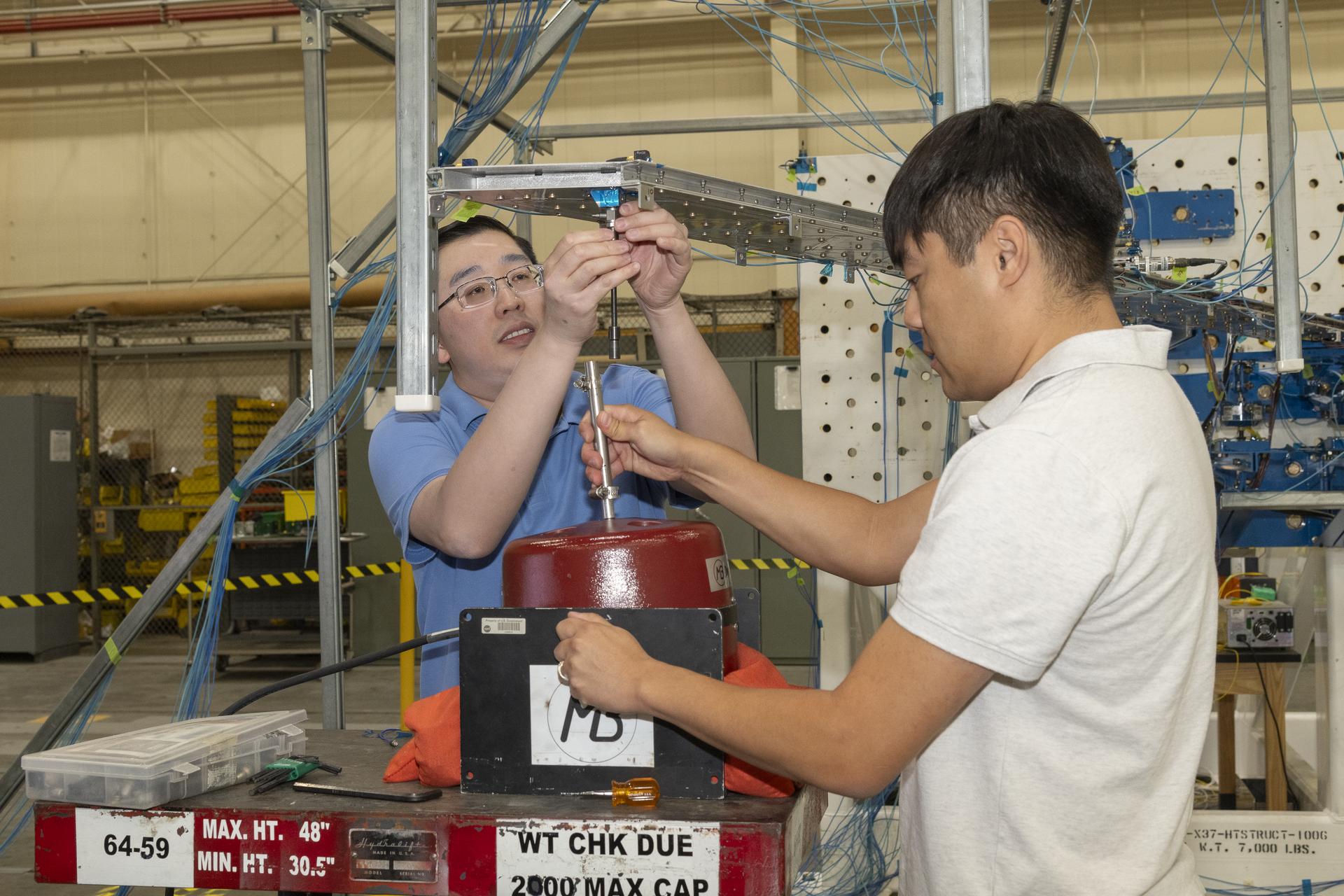
Researchers test a 10-foot Mock Truss-Braced Wing at NASA’s Armstrong Flight Research Center in Edwards, California. Charlie Eloff, left, and Lucas Oramas add weight to the test wing to apply stress used to determine its limits. The aircraft concept involves a wing braced on an aircraft using diagonal struts that also add lift and could result in significantly improved aerodynamics.
NASA/Steve Freeman

Adding weights to the wingtip, tapping the structure with a hammer, and collecting the vibration response is an unusual testing method because it adds complexity, Park said.  The process is worth it, he said, if it provides the data engineers are seeking. The tests are also unique because NASA Armstrong designed, built, and assembled the wing, strut, and test fixture, and conducted the tests.

With the successful loads calibration and vibration tests nearly complete on the 10-foot wing, the NASA Armstrong Flight Loads Laboratory team is working on designing a system and hardware for testing a 15-foot model made from graphite-epoxy composite. The Advanced Air Transport Technology TTBW team at NASA’s Langley Research Center in Hampton, Virginia, is designing and constructing the model, which is called the Structural Wing Experiment Evaluating Truss-bracing.

The larger wing model will be built with a structural design that will more closely resembles what could potentially fly on a future commercial aircraft. The goals of these tests are to calibrate predictions with measured strain data and learn how to test novel aircraft structures such as the TTBW concept.

NASA’s Advanced Air Transport Technology project falls under NASA’s Advanced Air Vehicles Program, which evaluates and develops technologies for new aircraft systems and explores promising air travel concepts.

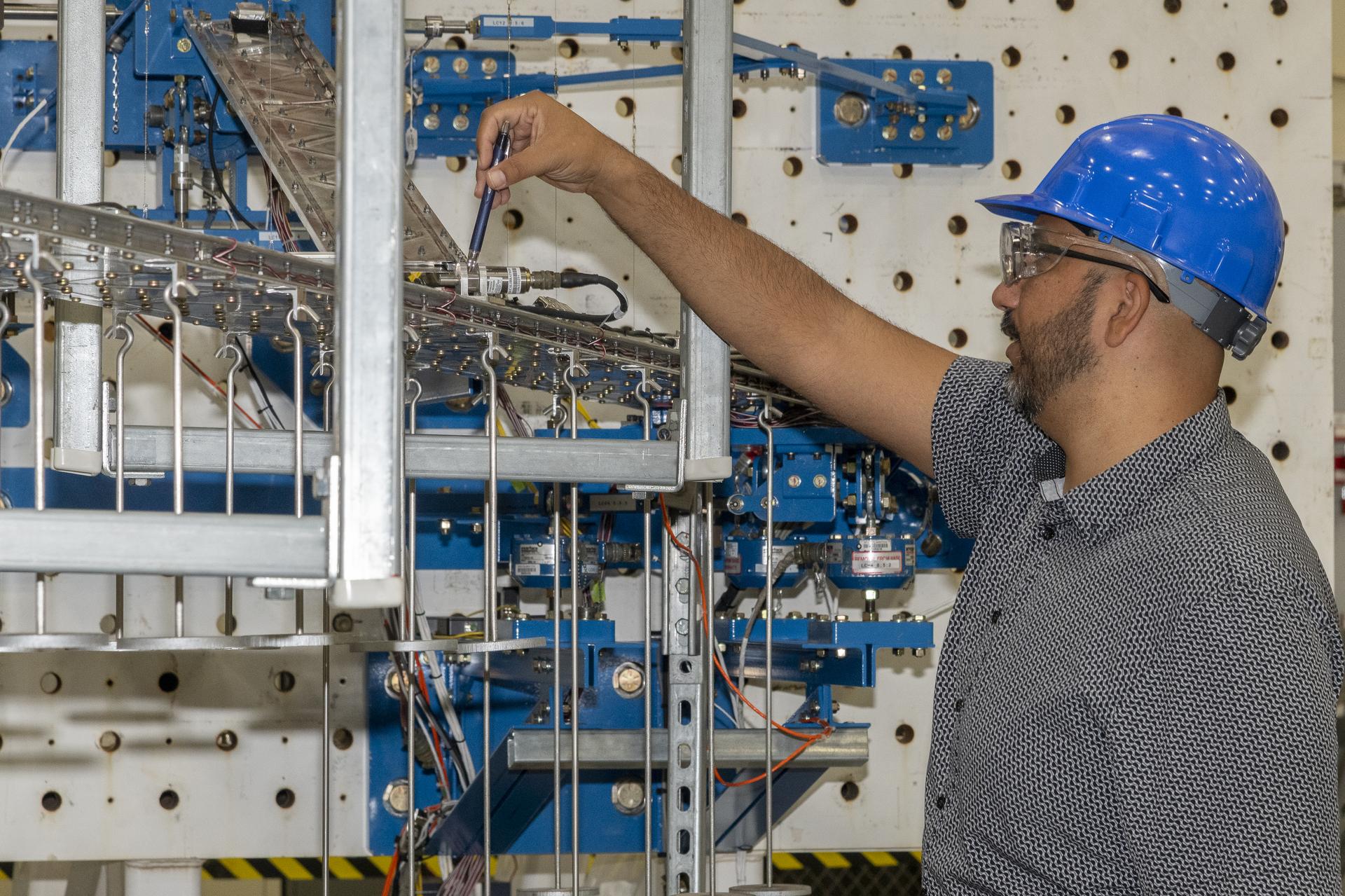
A man checks a wing test article.
Researchers test a 10-foot Mock Truss-Braced Wing at NASA’s Armstrong Flight Research Center in Edwards, California. Frank Pena, test director, checks the mock wing. The aircraft concept involves a wing braced on an aircraft using diagonal struts that also add lift and could result in significantly improved aerodynamics.
NASA/Steve Freeman
Two men prepare a wing test article for obtaining vibration data.
Researchers test a 10-foot Mock Truss-Braced Wing at NASA’s Armstrong Flight Research Center in Edwards, California. Samson Truong, from left, and Ben Park, NASA mock wing ground vibration test director, prepare for a vibration test. The aircraft concept involves a wing braced on an aircraft using diagonal struts that also add lift and could result in significantly improved aerodynamics.
NASA/Steve Freeman
A wing test article is tapped with an instrumented hammer.
Researchers test a 10-foot Mock Truss-Braced Wing at NASA’s Armstrong Flight Research Center in Edwards, California. Ben Park, NASA mock wing ground vibration test director, taps the wing structure with an instrumented hammer in key locations and sensors monitor the results. The aircraft concept involves a wing braced on an aircraft using diagonal struts that also add lift and could result in significantly improved aerodynamics.
NASA/Steve Freeman

Powered by WPeMatico

Get The Details…
Dede Dinius

I am Artemis: Mike Lauer

I am Artemis: Mike Lauer

Mike Lauer manages production of the RS-25 main engines for NASA’s heavy-lift SLS (Space Launch System), which will launch U.S. astronauts back to the Moon as part of the agency’s Artemis campaign.
L3 Harris Technologies

Mike Lauer, an engineer who works for the Aerojet Rocketdyne segment of L3Harris Technologies, found his career inspiration in science fiction, but for the perspective it takes to execute complex space programs, he draws on real-world experience.

Growing up, Lauer spent many cold winter nights in the basement of his Sioux Falls, South Dakota, home, creating pictures of iconic space hardware from Hollywood space movies. “That really is what got me into it,” he says.

Fast forward to today, and he’s managing production of the RS-25 main engines for NASA’s heavy-lift SLS (Space Launch System), which will launch U.S. astronauts back to the Moon as part of the agency’s Artemis campaign. When the scale and complexity of the undertaking appear daunting, Lauer thinks back to early in his career, when he designed hardware for the International Space Station, now in its third decade on orbit.

“It just seemed to me that there’s no way this was going to work, but we just kept building and solving problems and the next thing you know, we’re launching space station parts,” Lauer says. “Having that experience of seeing a program that seemed too big, too complex, and it worked, gives me great hope and confidence that we can do it again with Artemis.”

Lauer has family ties to space. His father, Don Lauer, ran the U.S. Geological Survey’s Earth Resources Observation and Science Center in Sioux Falls, a repository for data collected by NASA’s long-running Landsat series of land imaging satellites. Lauer’ father even spent time at NASA’s Johnson Space Center in Houston, home to the Agency’s human spaceflight program, exploring the role of astronauts in Earth observation from space.

But it was an artist’s fascination with fictional hardware –– that ultimately led Mike Lauer to earn his bachelor and master’s degrees in Aeronautical & Astronautical engineering from Stanford University in Palo Alto, California. “With engineering in general, there’s a connection with art,” Lauer says. “We create these things that have an artistic aesthetic to them, which is really cool.”

Cool is a word Lauer, a licensed pilot, deploys frequently in describing his career journey, understandably so. For example, he once participated in a space station assembly rehearsal with veteran astronaut Jerry Ross at Johnson’s Neutral Buoyancy Facility, a giant pool used to help train astronauts for spacewalks. “I’m in this spacesuit and Jerry Ross is in this spacesuit and we’re plugging in elements of the space station,” Lauer says, almost in disbelief. “Oh my gosh!”

While serving as Aerojet Rocketdyne’s lead engineer on the Multi Mission Radioisotope Thermo-electric Generator program, Lauer visited the U.S. Department of Energy’s Idaho National Laboratory to observe the loading of Plutonium 238 nuclear fuel into the device, which continues to power NASA’s car-sized Curiosity rover on the Martian surface. “Super cool,” he says.

For his next move, Lauer figured that, being at Aerojet Rocketdyne (now L3Harris), builder of the engines on NASA’s legendary Saturn V Moon rocket, he should get into the propulsion side of the business. He began on the J-2X, a modified version of the Saturn V’s second stage engine that NASA had planned at one point to use on the SLS. Working from 1960s era drawings, Lauer and his team created a modern, easier-to-produce design with more power that had a successful series of hot-fire tests before being replaced in favor of a different upper stage design.

Now, as RS-25 program director, Lauer works on another engine, this one originally designed for NASA’s now-retired Space Shuttle, updating and redesigning key components to meet new requirements and reduce production costs. The SLS flew its first mission without a crew, but upcoming flights will have astronauts aboard, which gives Lauer a huge sense of pride and responsibility.

“I’m awed and inspired by what we’re doing,” he says. “Really cool.”

Also really cool: Lauer serves as a volunteer pilot for the Civil Air Patrol, supporting the U.S. Air Force on search and rescue, disaster relief, and fire damage assessment missions. That keeps him busy on many weekends when he’s not refereeing youth soccer.

Aside from that, Lauer most looks forward to the day four NASA astronauts are safely aboard their recovery ship at the successful conclusion of the first human moon landing in more than five decades.

Read other I am Artemis features.

Powered by WPeMatico

Get The Details…
Beth Ridgeway

Directivos de la NASA ofrecerán información actualizada sobre Artemis

Directivos de la NASA ofrecerán información actualizada sobre Artemis

A waxing gibbous moon rises over the blue glow of Earth's horizon as the International Space Station orbited 264 miles above the Indian Ocean.
Una luna gibosa creciente se eleva sobre el resplandor azul del horizonte terrestre mientras la Estación Espacial Internacional orbitaba a 264 millas sobre el Océano Índico el 13 de Noviembre de 2024.
Crédito: NASA

Read this release in English here.

El administrador de la NASA, Bill Nelson, y otros directivos darán una rueda de prensa el jueves 5 de diciembre a la 1 p.m. EST (hora del este de EE.UU.) en la sede de la agencia en Washington para proporcionar información sobre la campaña Artemis de la agencia.

El evento para los medios de comunicación estará disponible en NASA+. Aprende a transmitir contenidos de la NASA a través de diversas plataformas, incluidas las redes sociales.

Los participantes incluyen:

  • Bill Nelson, administrador de la NASA
  • Pam Melroy, administradora adjunta de la NASA
  • Jim Free, administrador asociado de la NASA
  • Catherine Koerner, administradora asociada, Dirección de Misión de Desarrollo de Sistemas de Exploración, Sede de la NASA
  • Amit Kshatriya, administrador asociado adjunto, Oficina del Programa de la Luna a Marte, Dirección de Misión de Desarrollo de Sistemas de Exploración
  • Reid Wiseman, astronauta de la NASA y comandante del Artemis II

Los medios de comunicación interesados en participar en persona o por teléfono deben confirmar su asistencia antes de las 11 a.m. EST del 5 de diciembre a: hq-media@mail.nasa.gov. La conferencia de prensa tendrá lugar en el Auditorio James E. Webb de la sede central de la NASA, en el edificio Mary W. Jackson, 300 E St. SW, Washington. La política de acreditación de medios de comunicación de la NASA está disponible en línea (en inglés).

A través de la campaña Artemis, la agencia establecerá una presencia a largo plazo en la Luna para la exploración científica conjuntamente con nuestros socios comerciales e internacionales, aprenderá a vivir y trabajar lejos de nuestro hogar y se preparará para la futura exploración humana de Marte. El cohete Sistema de Lanzamiento Espacial de la NASA, los sistemas terrestres de exploración y la nave espacial Orion, junto con el sistema de aterrizaje humano, los trajes espaciales de próxima generación, la estación espacial lunar, Gateway y los futuros vehículos exploradores son la base de la NASA para la exploración del espacio profundo.

Para más información sobre Artemis (en inglés), visita:

https://www.nasa.gov/artemis

-fin-

Meira Bernstein / Rachel Kraft / María José Viñas
Sede, Washington
202-358-1600
meira.b.bernstein@nasa.gov / rachel.h.kraft@nasa.gov / maria-jose.vinasgarcia@nasa.gov

Powered by WPeMatico

Get The Details…
Tiernan P. Doyle