Langley Laboratory Apprentice at Work

Langley Laboratory Apprentice at Work

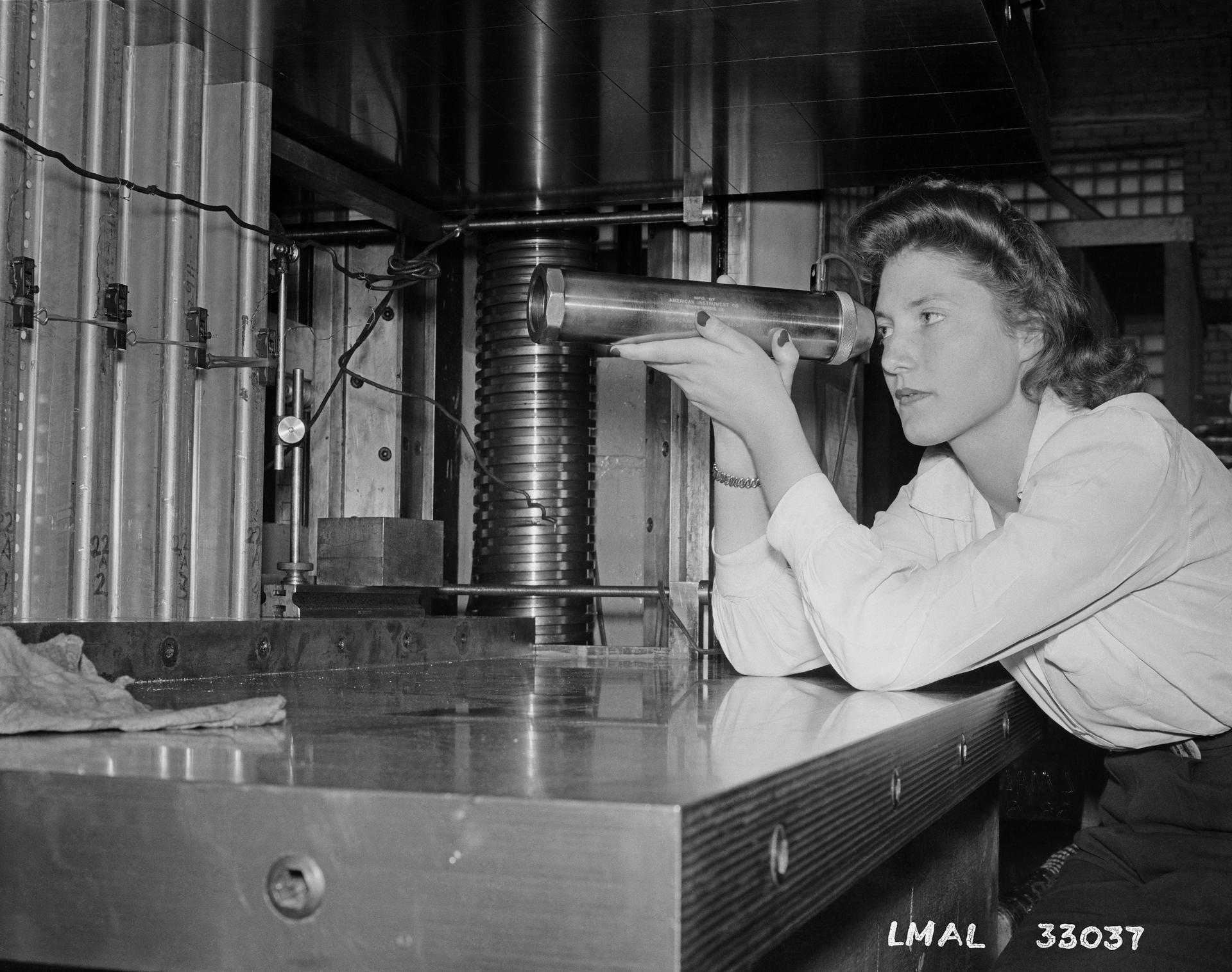
A woman looks through a metal tube that she is holding up. Her elbows rest on the table in front of her. The photo is in black and white. There is text at the bottom that reads "LMAL 33037."
NASA

An apprentice at Langley Laboratory (now NASA’s Langley Research Center in Hampton, Virginia) inspects wind tunnel components in this image from May 15, 1943. During World War II, the National Advisory Committee for Aeronautics (NACA), the precursor to NASA, employed apprentices (which NASA has since transitioned into internships) to support meaningful jobs in data computing, testing, and mechanical work.

Make your own mark on NASA history. Apply to the agency’s summer internships by 11:59 p.m. EST Feb. 28.

Image credit: NASA

Powered by WPeMatico

Get The Details…
Monika Luabeya

Hubble Captures New View of Colorful Veil

Hubble Captures New View of Colorful Veil

1 min read

Hubble Captures New View of Colorful Veil

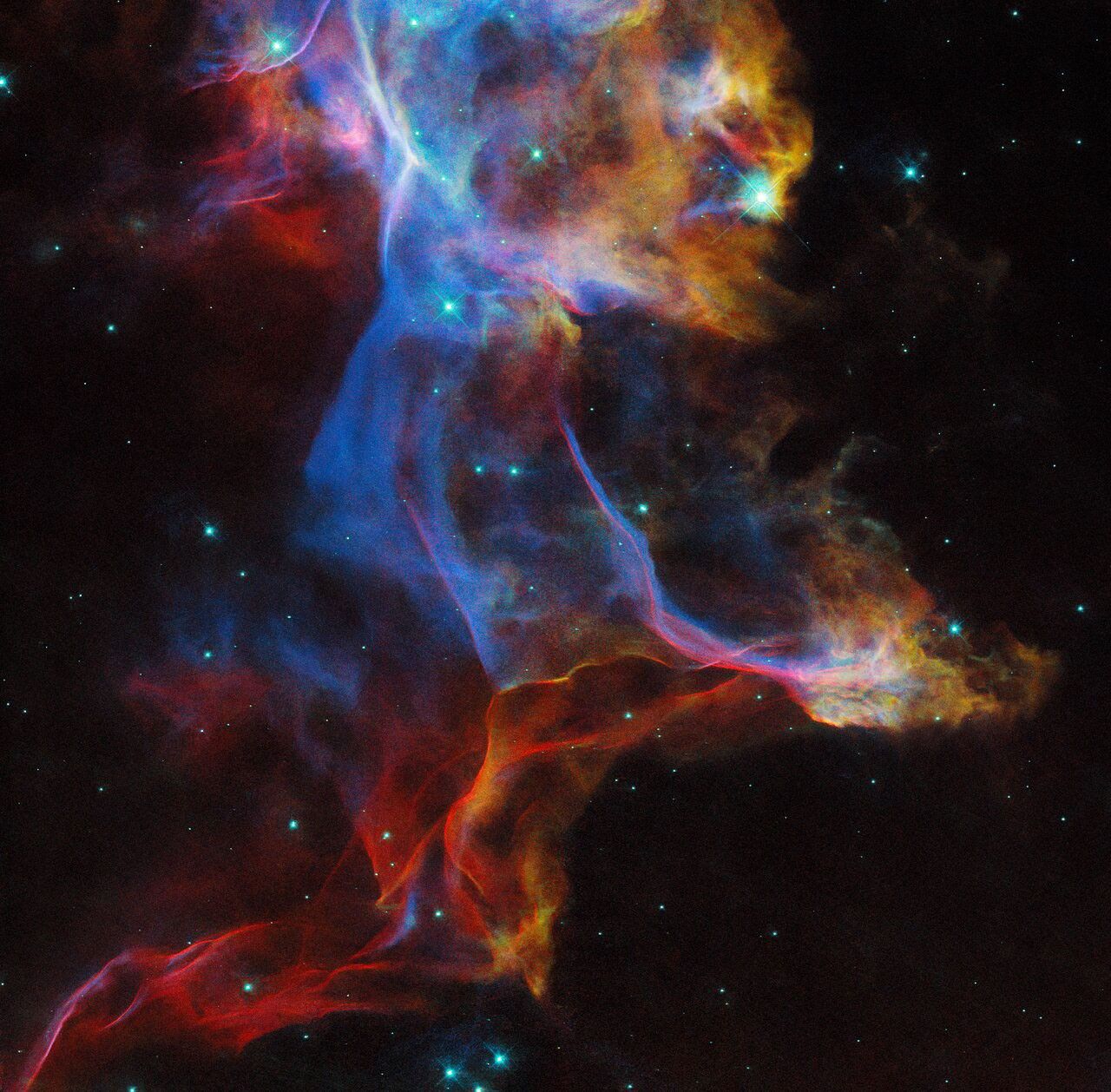
A colorful, glowing nebula that reaches beyond the top and bottom of the image. This translucent cloud of gas holds wispy and thin filaments with hard edges in some places, and puffy and opaque in others. Blue, red, and yellow colors mix together, showing light emitted by different types of atoms in the hot gas. Scattered across the colorful nebula are bright and point-like foreground and background stars. The background is black.
This NASA/ESA Hubble Space Telescope image a supernova remnant called the Veil Nebula.
ESA/Hubble & NASA, R. Sankrit

In this NASA/ESA Hubble Space Telescope image, Hubble once again lifts the veil on a famous — and frequently photographed — supernova remnant: the Veil Nebula. The remnant of a star roughly 20 times as massive as the Sun that exploded about 10,000 years ago, the Veil Nebula is situated about 2,400 light-years away in the constellation Cygnus. Hubble images of this photogenic nebula were first taken in 1994 and 1997, and again in 2015.

This view combines images taken in three different filters by Hubble’s Wide Field Camera 3, highlighting emission from hydrogen, sulfur, and oxygen atoms. The image shows just a small fraction of the Veil Nebula; if you could see the entire nebula without the aid of a telescope, it would be as wide as six full Moons placed side-by-side.

Although this image captures the Veil Nebula at a single point in time, it helps researchers understand how the supernova remnant evolves over decades. Combining this snapshot with Hubble observations from 1994 will reveal the motion of individual knots and filaments of gas over that span of time, enhancing our understanding of this stunning nebula.

Explore More

Media Contact:

Claire Andreoli (claire.andreoli@nasa.gov)
NASA’s Goddard Space Flight Center, Greenbelt, MD

Powered by WPeMatico

Get The Details…

Commodity Classic Hyperwall Schedule

Commodity Classic Hyperwall Schedule

1 min read

Commodity Classic Hyperwall Schedule

NASA Science at Commodity Classic Hyperwall Schedule, March 2-4, 2025

Join NASA in the Exhibit Hall (Booth #839) for Hyperwall Storytelling by NASA experts. Full Hyperwall Agenda below.

separater line

MONDAY, MARCH 3

11:30 – 12:00 PM NASA Earth Science at Work for American Agriculture Dr. Karen St. Germain
12:00 – 12:30 PM Connecting NASA Ag Resources in A Virtual Agricultural Innovations Laboratory (AVAIL) Alex Ruane
12:30 – 1:00 PM Panel on Extreme Weather Events in Agriculture Chris Hain
Eric Snodgrass

TUESDAY, MARCH 4

11:30 – 12:00 PM OpenET Farm and Ranch Management Support Tools Forrest Melton
12:00 – 12:30 PM Harnessing NASA Data for Agriculture: Education Resources from My NASA Data Desiray Wilson
12:30 – 1:00 PM Intro to Understanding Landsat and Helping Build the Future STEM Workforce with an Open Source, Low-Cost Handheld DIY Educational Tool, STELLA Mike Taylor

Share

Details

Last Updated
Feb 27, 2025

Related Terms

Powered by WPeMatico

Get The Details…

NASA Installs Heat Shield on First Private Spacecraft Bound for Venus

NASA Installs Heat Shield on First Private Spacecraft Bound for Venus

NASA/Brandon Torres Navarrete

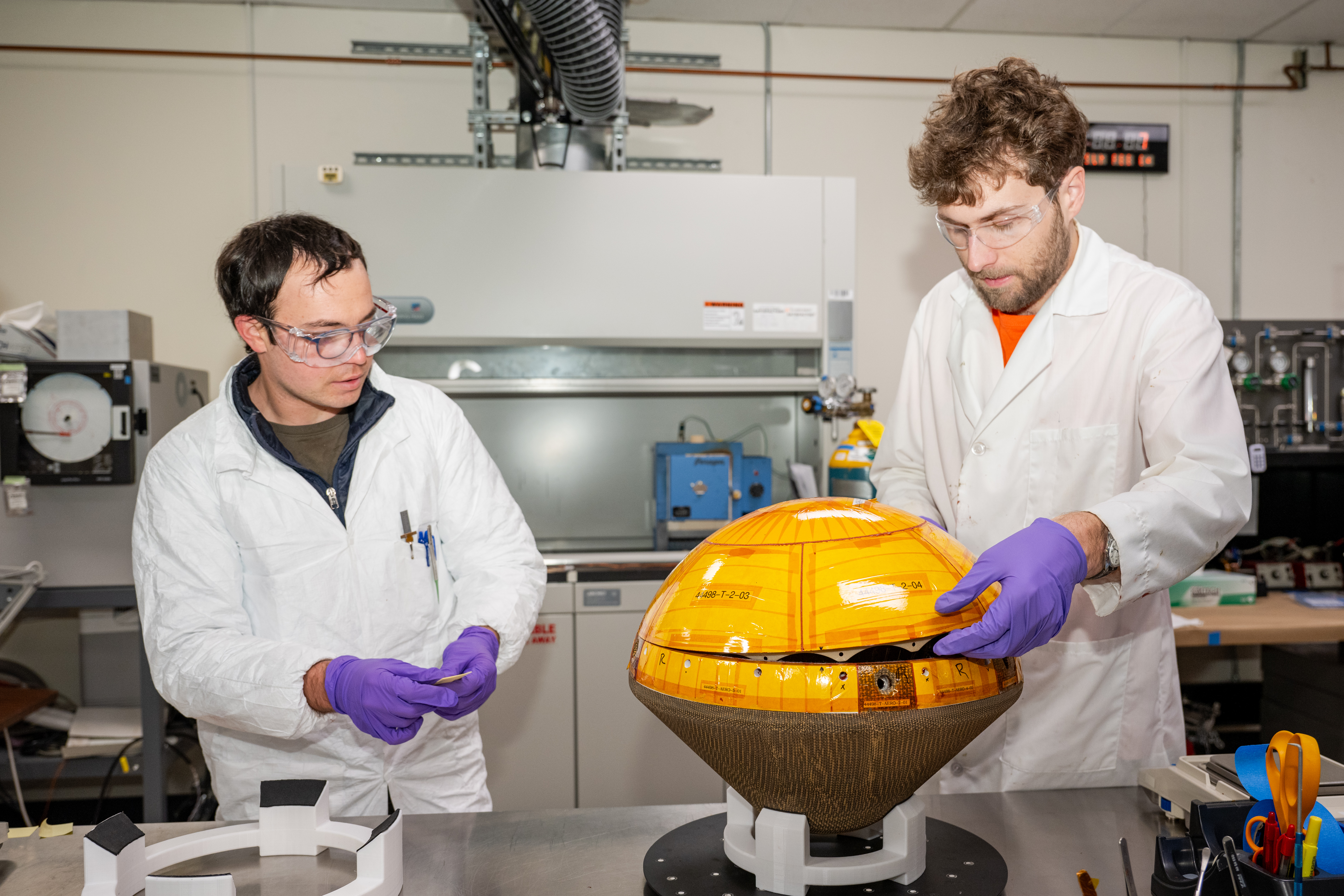
Engineers at NASA’s Ames Research Center in California’s Silicon Valley, Bohdan Wesely, right, and Eli Hiss, left, complete a fit check of the two halves of a space capsule that will study the clouds of Venus for signs of life.

Led by Rocket Lab of Long Beach, California, and their partners at the Massachusetts Institute of Technology in Cambridge, Rocket Lab’s Venus mission will be the first private mission to the planet.

NASA’s role is to help the commercial space endeavor succeed by providing expertise in thermal protection of small spacecraft. Invented at Ames, NASA’s Heatshield for Extreme Entry Environment Technology (HEEET) – the brown, textured material covering the bottom of the capsule in this photo – is a woven heat shield designed to protect spacecraft from temperatures up to 4,500 degrees Fahrenheit. The probe will deploy from Rocket Lab’s Photon spacecraft bus, taking measurements as it descends through the planet’s atmosphere.

Teams at Ames work with private companies, like Rocket Lab, to turn NASA materials into solutions such as the heat shield tailor-made for this spacecraft destined for Venus, supporting growth of the new space economy. NASA’s Small Spacecraft Technology program, part of the agency’s Space Technology Mission Directorate, supported development of the heat shield for Rocket Lab’s Venus mission.

Powered by WPeMatico

Get The Details…
Abby Tabor

Intuitive Machines-2 Lifts Off

Intuitive Machines-2 Lifts Off

Leaving a golden streak in the sky, a SpaceX Falcon 9 rocket lifts off from NASA's Kennedy Space Center in Florida in the evening. The light from the rocket flames illuminates the misty night sky. NASA Kennedy's Vehicle Assembly Building, a massive rectangular building, is visible at left.
NASA/Cory S Huston

A SpaceX Falcon 9 rocket carrying Intuitive Machines’ Nova-C lunar lander (IM-2) soars upward after liftoff from Launch Complex 39A at NASA’s Kennedy Space Center in Florida on Wednesday, Feb. 26, 2025. The lander is set to land on the Moon on March 6.

The NASA science and technology demonstrations aboard the lander will, once on the Moon, gather data to support future human missions. NASA’s Lunar Trailblazer spacecraft, which launched as a rideshare with the IM-2 mission, also began its journey to lunar orbit, where it will map the distribution of the different forms of water on the Moon.

Image credit: NASA/Cory S Huston

Powered by WPeMatico

Get The Details…
Monika Luabeya