NASA Selects Four Commercial Companies to Support Near Space Network

NASA Selects Four Commercial Companies to Support Near Space Network

NASA has selected multiple companies to expand the agency’s Near Space Network’s commercial direct-to-Earth capabilities services, which is a mission-critical communication capability that allows spacecraft to transmit data directly to ground stations on Earth.

The work will be awarded under new Near Space Network services contracts that are firm-fixed-price, indefinite-delivery/indefinite-quantity contracts. Project timelines span from February 2025 to September 2029, with an additional five-year option period that could extend a contract through Sept. 30, 2034. The cumulative maximum value of all Near Space Network Services contracts is $4.82 billion.

Some companies received multiple task orders for subcategories identified in their contracts. Awards are as follows:

  • Intuitive Machines of Houston will receive two task order awards on its contract for Subcategory 1.2 GEO to Cislunar Direct to Earth (DTE) Services and Subcategory 1.3 xCislunar DTE Services to support NASA’s Lunar Exploration Ground Segment, providing additional capacity to alleviate demand on the Deep Space Network and to meet the mission requirements for unique, highly elliptical orbits. The company also previously received a task order award for Subcategory 2.2 GEO to Cislunar Relay Services.
  • Kongsberg Satellite Services of Tromsø, Norway, will receive two task order awards on its contract for Subcategory 1.1 Earth Proximity DTE and Subcategory 1.2 to support science missions in low Earth orbit and NASA’s Lunar Exploration Ground Segment, providing additional capacity to alleviate demand on the Deep Space Network.
  • SSC Space U.S. Inc. of Horsham, Pennsylvania, will receive two task order awards on its contract for Subcategories 1.1 and 1.3 to support science missions in low Earth orbit and to meet the mission requirements for unique, highly elliptical orbits.
  • Viasat, Inc. of Duluth, Georgia, will be awarded a task order on its contract for Subcategory 1.1 to support science missions in low Earth orbit.

The Near Space Network’s direct-to-Earth capability supports many of NASA’s missions ranging from climate studies on Earth to research on celestial objects. It also will play a role in NASA’s Artemis campaign, which calls for long-term exploration of the Moon.

NASA’s goal is to provide users with communication and navigation services that are secure, reliable, and affordable, so that all NASA users receive the services required by their mission within their latency, accuracy, and availability requirements.

These awards demonstrate NASA’s ongoing commitment to fostering strong partnerships with the commercial space sector, which plays an essential role in delivering the communications infrastructure critical to the agency’s science and exploration missions.

As part of the agency’s SCaN (Space Communications and Navigation) Program, teams at NASA’s Goddard Space Flight Center in Greenbelt, Maryland, will carry out the work of the Near Space Network. The Near Space Network provides missions out to 1.2 million miles (2 million kilometers) with communications and navigation services, enabling spacecraft to exchange critical data with mission operators on Earth. Using space relays in geosynchronous orbit and a global system of government and commercial direct-to-Earth antennas on Earth, the network brings down terabytes of data each day.

Learn more about NASA’s Near Space Network:

https://www.nasa.gov/near-space-network

-end-

Joshua Finch
Headquarters, Washington
202-358-1100
joshua.a.finch@nasa.gov

Jeremy Eggers
Goddard Space Flight Center, Greenbelt, Maryland
757-824-2958
jeremy.l.eggers@nasa.gov

Powered by WPeMatico

Get The Details…
Abbey A. Donaldson

NASA’s New Deep Space Network Antenna Has Its Crowning Moment

NASA’s New Deep Space Network Antenna Has Its Crowning Moment

4 min read

Preparations for Next Moonwalk Simulations Underway (and Underwater)

Deep Space Station 23’s 133-ton reflector dish was recently installed, marking a key step in strengthening NASA’s Deep Space Network.

NASA’s Deep Space Network, an array of giant radio antennas, allows agency missions to track, send commands to, and receive scientific data from spacecraft venturing to the Moon and beyond. NASA is adding a new antenna, bringing the total to 15, to support increased demand for the world’s largest and most sensitive radio frequency telecommunication system.

Installation of the latest antenna took place on Dec. 18, when teams at NASA’s Goldstone Deep Space Communications Complex near Barstow, California, installed the metal reflector framework for Deep Space Station 23, a multifrequency beam-waveguide antenna. When operational in 2026, Deep Space Station 23 will receive transmissions from missions such as Perseverance, Psyche, Europa Clipper, Voyager 1, and a growing fleet of future human and robotic spacecraft in deep space.

“This addition to the Deep Space Network represents a crucial communication upgrade for the agency,” said Kevin Coggins, deputy associate administrator of NASA’s SCaN (Space Communications and Navigation) program. “The communications infrastructure has been in continuous operation since its creation in 1963, and with this upgrade we are ensuring NASA is ready to support the growing number of missions exploring the Moon, Mars, and beyond.”

This time-lapse video shows the entire day of construction activities for the Deep Space Station 23 antenna at the NASA Deep Space Network’s Goldstone Space Communications Complex near Barstow, California, on Dec. 18. NASA/JPL-Caltech

Construction of the new antenna has been under way for more than four years, and during the installation, teams used a crawler crane to lower the 133-ton metal skeleton of the 112-foot-wide (34-meter-wide) parabolic reflector before it was bolted to a 65-foot-high (20-meter-high) alidade, a platform above the antenna’s pedestal that will steer the reflector during operations.

“One of the biggest challenges facing us during the lift was to ensure that 40 bolt-holes were perfectly aligned between the structure and alidade,” said Germaine Aziz, systems engineer, Deep Space Network Aperture Enhancement Program of NASA’s Jet Propulsion Laboratory in Southern California. “This required a meticulous emphasis on alignment prior to the lift to guarantee everything went smoothly on the day.”

Following the main lift, engineers carried out a lighter lift to place a quadripod, a four-legged support structure weighing 16 1/2 tons, onto the center of the upward-facing reflector. The quadripod features a curved subreflector that will direct radio frequency signals from deep space that bounce off the main reflector into the antenna’s pedestal, where the antenna’s receivers are housed.

A crane looms over the 112-foot-wide (34-meter-wide) steel framework for Deep Space Station 23 reflector dis
In the early morning of Dec. 18, a crane looms over the 112-foot-wide (34-meter-wide) steel framework for Deep Space Station 23 reflector dish, which will soon be lowered into position on the antenna’s base structure.
NASA/JPL-Caltech

Engineers will now work to fit panels onto the steel skeleton to create a curved surface to reflect radio frequency signals. Once complete, Deep Space Station 23 will be the fifth of six new beam-waveguide antennas to join the network, following Deep Space Station 53, which was added at the Deep Space Network’s Madrid complex in 2022.

“With the Deep Space Network, we are able to explore the Martian landscape with our rovers, see the James Webb Space Telescope’s stunning cosmic observations, and so much more,” said Laurie Leshin, director of JPL. “The network enables over 40 deep space missions, including the farthest human-made objects in the universe, Voyager 1 and 2. With upgrades like these, the network will continue to support humanity’s exploration of our solar system and beyond, enabling groundbreaking science and discovery far into the future.”

NASA’s Deep Space Network is managed by JPL, with the oversight of NASA’s SCaN Program. More than 100 NASA and non-NASA missions rely on the Deep Space Network and Near Space Network, including supporting astronauts aboard the International Space Station and future Artemis missions, monitoring Earth’s weather and the effects of climate change, supporting lunar exploration, and uncovering the solar system and beyond. 

For more information about the Deep Space Network, visit:

https://www.nasa.gov/communicating-with-missions/dsn

News Media Contact

Ian J. O’Neill
Jet Propulsion Laboratory, Pasadena, Calif.
818-354-2649
ian.j.oneill@jpl.nasa.gov

2024-179

Powered by WPeMatico

Get The Details…
Anthony Greicius

NASA Welcomes Liechtenstein as Newest Artemis Accords Signatory

NASA Welcomes Liechtenstein as Newest Artemis Accords Signatory

From left to right, Ambassador of the Principality of Liechtenstein to the United States of America Georg Sparber, Director of the Office for Communications of the Principality of Liechtenstein Dr. Rainer Schnepfleitner, NASA Deputy Administrator Pam Melroy, and Ambassador Extraordinary and Plenipotentiary to the Swiss Confederation and to the Principality of Liechtenstein Scott Miller, pose for a group photo during an Artemis Accords signing ceremony, Friday, Dec. 20, 2024, at the Mary W. Jackson NASA Headquarters building in Washington. The Principality of Liechtenstein is the 52nd country to sign the Artemis Accords, which establish a practical set of principles to guide space exploration cooperation among nations participating in NASA’s Artemis program. Photo Credit: (NASA/Keegan Barber)
From left to right, Ambassador of the Principality of Liechtenstein to the United States of America Georg Sparber, Director of the Office for Communications of the Principality of Liechtenstein Dr. Rainer Schnepfleitner, NASA Deputy Administrator Pam Melroy, and Ambassador Extraordinary and Plenipotentiary to the Swiss Confederation and to the Principality of Liechtenstein Scott Miller, pose for a group photo during an Artemis Accords signing ceremony, Friday, Dec. 20, 2024, at the Mary W. Jackson NASA Headquarters building in Washington. The Principality of Liechtenstein is the 52nd country to sign the Artemis Accords, which establish a practical set of principles to guide space exploration cooperation among nations participating in NASA’s Artemis program.
Credit: NASA/Keegan Barber

Liechtenstein signed the Artemis Accords Friday during a ceremony hosted by NASA Deputy Administrator Pam Melroy at the agency’s headquarters in Washington, becoming the 52nd nation to commit to the responsible exploration of space for all humanity.

“Today, as Liechtenstein signs the Artemis Accords, we take another step forward together, united by the promise of international cooperation and discovery,” said Melroy. “Liechtenstein’s commitment strengthens our vision, where space is explored with peace, transparency, and sustainability as guiding principles. With each new signatory, the Artemis Accords community adds fresh energy and capabilities to ensure the benefits of space reach the entire world.”

Director of Liechtenstein’s Office for Communications Rainer Schnepfleitner signed the Artemis Accords on behalf of Liechtenstein. The Ambassador of the Principality of Liechtenstein to the United States Georg Sparber and U.S. Ambassador to the Swiss Confederation and the Principality of Liechtenstein Scott Miller also participated in the event.   

“With its participation in the Artemis Accords, Liechtenstein looks forward to advancing space exploration among a strong group of like-minded countries committed to the peaceful use of space for the benefit of all humanity,” Sparber said.

The United States, led by NASA and the U.S. Department of State, and seven other initial signatory nations established the Artemis Accords in 2020, identifying a set of principles promoting the beneficial use of space for humanity. Since then, signatories have expanded to represent a quarter of the world’s countries, with 19 countries signing in 2024.

In addition to an increase in numbers, the Artemis Accords signatories, representing every region of the world, continued to build consensus this year and make significant progress in implementing the accords principles.

NASA co-chaired the Artemis Accords Principals’ Meeting in October, which brought together 42 nations and furthered discussions on the safe and responsible use of space. They agreed on recommendations for non-interference, interoperability, release of scientific data, long-term sustainability guidelines, and registration of space objects to advance implementation.

The Artemis Accords are grounded in the Outer Space Treaty and other agreements including the Registration Convention, the Rescue and Return Agreement, as well as best practices for responsible behavior that NASA and its partners have supported, including the public release of scientific data. 

Learn more about the Artemis Accords at:

https://www.nasa.gov/artemis-accords

-end-

Amber Jacobson / Elizabeth Shaw
Headquarters, Washington
202-358-1600
amber.c.jacobson@nasa.gov / elizabeth.a.shaw@nasa.gov

Share

Details

Last Updated

Dec 20, 2024

Powered by WPeMatico

Get The Details…
Roxana Bardan

NASA’s Ames Research Center Celebrates 85 Years of Innovation

NASA’s Ames Research Center Celebrates 85 Years of Innovation

5 Min Read

NASA’s Ames Research Center Celebrates 85 Years of Innovation

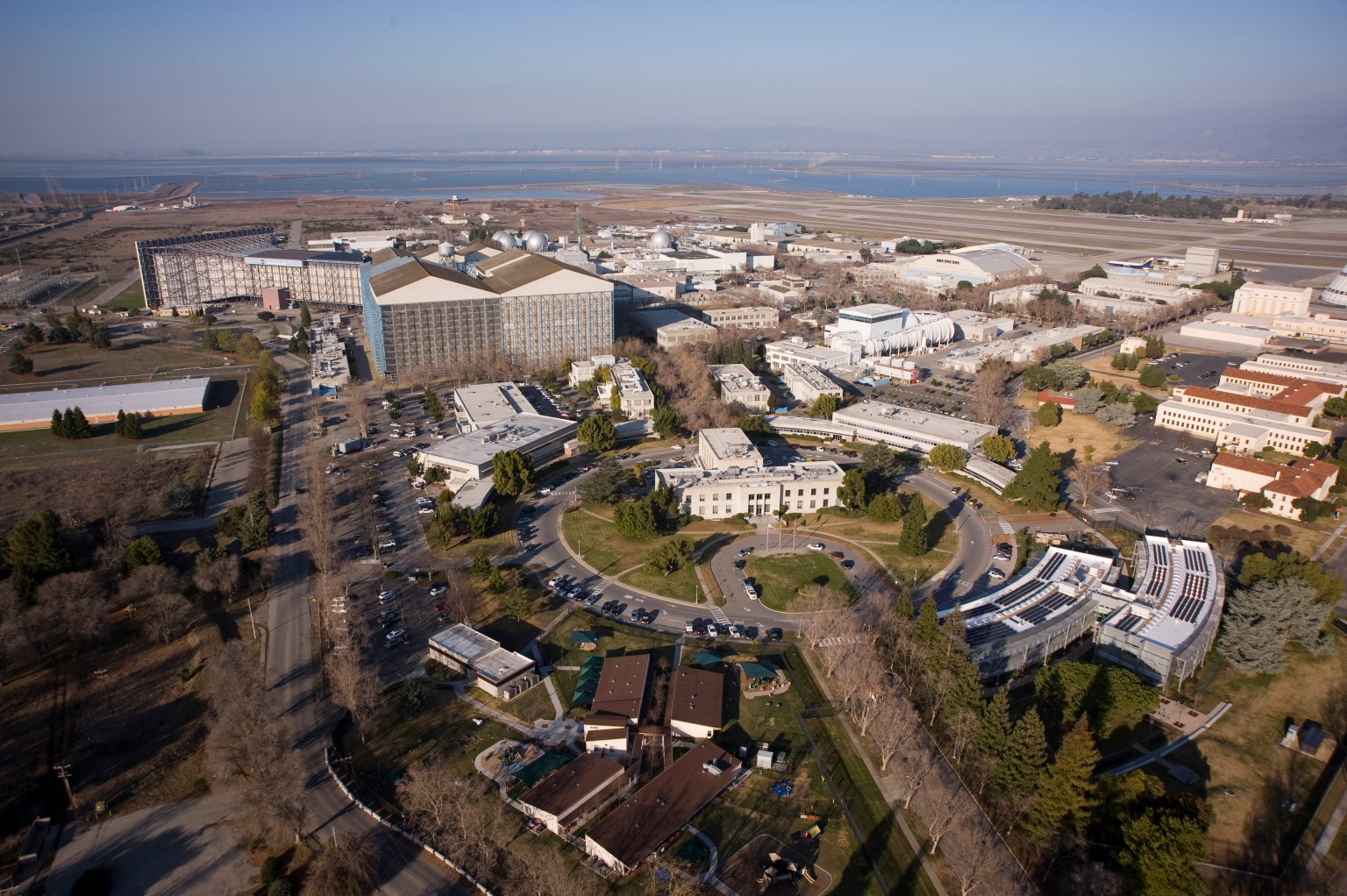
Aerial photo of Ames campus.

The NACA Ames laboratory in 1944

Credits:
NASA

Ames Research Center in California’s Silicon Valley pre-dates a lot of things. The center existed before NASA – the very space and aeronautics agency it’s a critical part of today. And of all the marvelous advancements in science and technology that have fundamentally changed our lives over the last 85 years since its founding, one aspect has remained steadfast; an enduring commitment to what’s known by some on-center simply as, “an atmosphere of freedom.” 

Years before breaking ground at the site that would one day become home to the world’s preeminent wind tunnelssupercomputerssimulators, and brightest minds solving some of the world’s toughest challenges, Joseph Sweetman Ames, the center’s namesake, described a sentiment that would guide decades of innovation and research: 

My hope is that you have learned or are learning a love of freedom of thought and are convinced that life is worthwhile only in such an atmosphere

Joseph sweetman ames

Founding member of the N.A.C.A.

“My hope is that you have learned or are learning a love of freedom of thought and are convinced that life is worthwhile only in such an atmosphere,” he said in an address to the graduates of Johns Hopkins University in June 1935.

That spirit and the people it attracted and retained are a crucial part of how Ames, along with other N.A.C.A. research centers, ultimately made technological breakthroughs that enabled humanity’s first steps on the Moon, the safe return of spacecraft through Earth’s atmosphere, and many other discoveries that benefit our day-to-day lives.

Black and white photo of the original groundbreaking for Ames in 1939. Five men stand in a field. Two of them each have a shovel, one has a pickaxe. The other two men stand in the foreground observing.
Russell Robinson momentarily looks to the camera while supervising the first excavation at what would become Ames Research Center.
NACA

“In the context of my work, an atmosphere of freedom means the freedom to pursue high-risk, high-reward, innovative ideas that may take time to fully develop and — most importantly — the opportunity to put them into practice for the benefit of all,” said Edward Balaban, a researcher at Ames specializing in artificial intelligence, robotics, and advanced mission concepts.

Balaban’s career at Ames has involved a variety of projects at different stages of development – from early concept to flight-ready – including experimenting with different ways to create super-sized space telescopes in space and using artificial intelligence to help guide the path a rover might take to maximize off-world science results. Like many Ames researchers over the years, Balaban shared that his experience has involved deep collaborations across science and engineering disciplines with colleagues all over the center, as well as commercial and academic partners in Silicon Valley where Ames is nestled and beyond. This is a tradition that runs deep at Ames and has helped lead to entirely new fields of study and seeded many companies and spinoffs.

Before NASA, Before Silicon Valley: The 1939 Founding of Ames Aeronautical Laboratory

“In the fields of aeronautics and space exploration the cost of entry can be quite high. For commercial enterprises and universities pursuing longer term ideas and putting them into practice often means partnering up with an organization such as NASA that has the scale and multi-disciplinary expertise to mature these ideas for real-world applications,” added Balaban.

“Certainly, the topics of inquiry, the academic freedom, and the benefit to the public good are what has kept me at Ames,” reflected Ross Beyer, a planetary scientist with the SETI Institute at Ames. “There’s not a lot of commercial incentive to study other planets, for example, but maybe there will be soon. In the meantime, only with government funding and agencies like NASA can we develop missions to explore the unknown in order to make important fundamental science discoveries and broadly share them.”

For Beyer, his boundary-breaking moment came when he searched – and found – software engineers at Ames capable and passionate about open-source software to generate accurate, high-resolution, texture-mapped, 3D terrain models from stereo image pairs. He and other teams of NASA scientists have since applied that software to study and better understand everything from changes in snow and ice characteristics on Earth, as well as features like craters, mountains, and caves on Mars or the Moon. This capability is part of the Artemis campaign, through which NASA will establish a long-term presence at the Moon for scientific exploration with commercial and international partners. The mission is to learn how to live and work away from home, promote the peaceful use of space, and prepare for future human exploration of Mars. 

“As NASA and private companies send missions to the Moon, they need to plan landing sites and understand the local environment, and our software is freely available for anyone to use,” Beyer said. “Years ago, our management could easily have said ‘No, let’s keep this software to ourselves; it gives us a competitive advantage.’ They didn’t, and I believe that NASA writ large allows you to work on things and share those things and not hold them back.” 

When looking forward to what the next 85 years might bring, researchers shared a belief that advancements in technology and opportunities to innovate are as expansive as space itself, but like all living things, they need a healthy atmosphere to thrive. Balaban offered, “This freedom to innovate is precious and cannot be taken for granted. It can easily fall victim if left unprotected. It is absolutely critical to retain it going forward, to ensure our nation’s continuing vitality and the strength of the other freedoms we enjoy.”

Black and white photo of the original Ames welcome sign, with the NACA insignia, National Advisory Committee for Aeronautics, Ames Aeronautical Laboratory.
Ames Aeronautical Laboratory.
NACA

Powered by WPeMatico

Get The Details…
Rachel Hoover

NASA’s Terra Satellite Captures 2015 Eclipse Shadow

NASA’s Terra Satellite Captures 2015 Eclipse Shadow

Clouds over the Arctic Ocean almost look like the sea's waves in this image from NASA's Terra satellite. The right side of the image has a brown-orange hue, almost like coffee with a little cream in it, due to the eclipse's shadow passing over them.
NASA Goddard MODIS Rapid Response Team

During the morning of March 20, 2015, a total solar eclipse was visible from parts of Europe, and a partial solar eclipse from northern Africa and northern Asia. NASA’s Terra satellite passed over the Arctic Ocean on March 20 at 10:45 UTC (6:45 a.m. EDT) and captured the eclipse’s shadow over the clouds in the Arctic Ocean.

Terra launched 25 years ago on Dec. 18, 1999. Approximately the size of a small school bus, the Terra satellite carries five instruments that take coincident measurements of the Earth system: Advanced Spaceborne Thermal Emission and Reflection Radiometer (ASTER), Clouds and Earth’s Radiant Energy System (CERES), Multi-angle Imaging Spectroradiometer (MISR), Measurements of Pollution in the Troposphere (MOPITT), and Moderate Resolution Imaging Spectroradiometer (MODIS).

On Nov. 28, 2024, one of Terra’s power-transmitting shunt units failed. A response team reviewed Terra’s status and discussed potential impacts and options.  Consequently, the team placed ASTER into Safe Mode.  As a result, ASTER data are not currently being collected. All other instruments continue uninterrupted.

Image Credit: NASA Goddard MODIS Rapid Response Team

Powered by WPeMatico

Get The Details…
Monika Luabeya