Fusion-Enabled Comprehensive Exploration of the Heliosphere

Fusion-Enabled Comprehensive Exploration of the Heliosphere

2 min read

Preparations for Next Moonwalk Simulations Underway (and Underwater)

Artist concept highlighting the novel approach proposed by the 2025 NIAC awarded selection of the Fusion-Enabled Comprehensive Exploration of the Heliosphere concept
NASA/Ryan Weed

Ryan Weed
Helicity Space LLC

This proposal aims to revolutionize space exploration by developing a constellation of spacecraft powered by the Helicity Drive, a compact and scalable fusion propulsion system. This innovative technology will enable rapid, multi-directional exploration of the heliosphere and beyond, providing unprecedented insights into the Sun’s vast influence on our solar system and its interaction with interstellar space. We will conduct a comprehensive feasibility study, including advanced modeling and experimental validation of the Helicity Drive’s thrust and power generation capabilities. We will also design a realistic spacecraft architecture that integrates the propulsion system with scientific instruments capable of measuring key properties of the heliosphere and interstellar medium. Each spacecraft will carry a suite of state-of-the-art scientific instruments to comprehensively measure plasma properties, magnetic fields, dust, and energetic particles, providing in-situ data from regions never before explored. This will address critical scientific questions, such as the true shape of the heliosphere and heliopause, the origin of anomalous cosmic rays, and the mechanisms driving turbulence in the heliospheric tail. Finally, we will develop a mission concept of operations that leverages the Helicity Drive’s variable specific impulse and high delta-V capability to speed-up and slow-down in order to capture key scientific data in different heliosphere regions, and the local interstellar medium along 6 different trajectories, maximizing scientific return. The successful implementation of this mission will not only revolutionize our understanding of the heliosphere and its implications for space radiation and habitability but also pave the way for future interstellar missions. By demonstrating the feasibility of fusion propulsion for deep-space exploration, including outer solar system probes and crewed missions to Mars, it will open new frontiers for scientific discovery and inspire future generations. The technological advancements and potential spinoffs resulting from this mission will also contribute significantly to the national economy.

2025 Selections

Share

Details

Last Updated

Jan 10, 2025

Editor
Loura Hall

Powered by WPeMatico
Get The Details…
Loura Hall

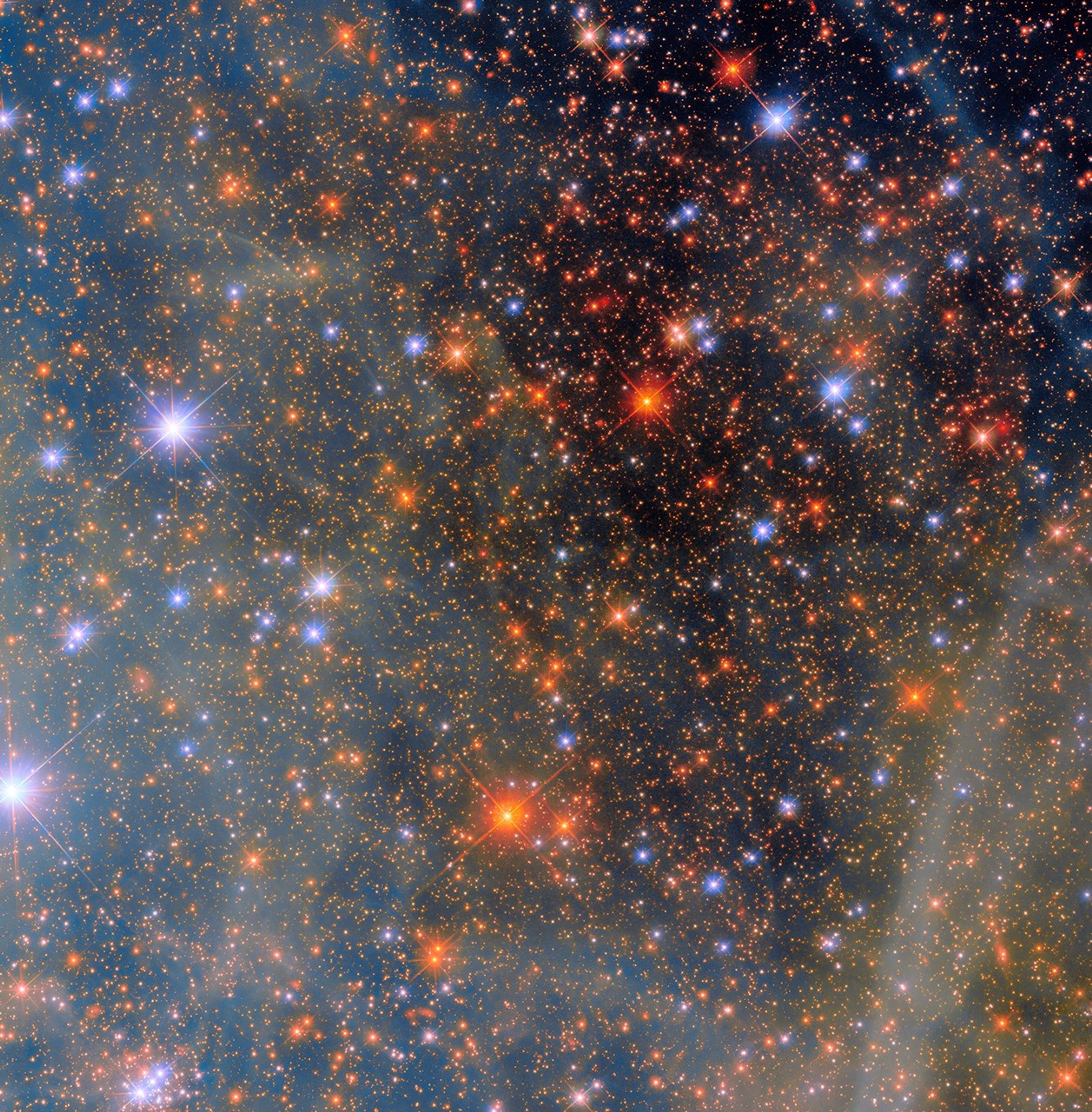
Beholding Black Hole Power with the Accretion Explorer Interferometer

Beholding Black Hole Power with the Accretion Explorer Interferometer

3 min read

Preparations for Next Moonwalk Simulations Underway (and Underwater)

Artist concept highlighting the novel approach proposed by the 2025 NIAC awarded selection of Beholding Black Hole Power with the Accretion Explorer Interferometer concept.
NASA/Kimberly Weaver

Kimberly Weaver
NASA Goddard Space Flight Center

Some of the most enigmatic objects in the Universe are giant supermassive black holes (SMBH). Yet after 30 years of study, we don’t know precisely how these objects produce their power. This requires observations at X-ray wavelengths. The state-of-the-art for X-ray images is Chandra (~0.5-1 arcsecond resolution) but this is insufficient to image regions near SMBH where the most energetic behavior occurs. The Accretion Explorer (AE) is a mission architecture that will shatter new ground by creating X-ray images at scientifically crucial energies of 0.7-1.2 keV, 1.5-2.5 keV, 6-7 keV, up to 6 orders of magnitude better than Chandra, and will offer imaging at 4-5 orders of magnitude better than JWST (IR) and HST(optical/UV). The specific X-ray energy bands we are proposing to cover contain vital X-ray line signatures that can distinguish between SMBH activity and stellar processes. The AE NIAC concept would be a game changer for NASA and astrophysics. X-ray interferometry will challenge and change the conversation around future mission possibilities for NASA’s flagships. It will also influence the Astrophysics 2030 Decadal Survey and will significantly contribute to our scientific knowledge base in astrophysics and other fields. AE has tremendous potential to generate enthusiasm for future missions and the potential to build advocacy to support it within NASA, society, and the aerospace community.

Alternative approaches to ultra high-resolution X-ray imaging technology are not currently being funded. Our study will focus on a large free-flying X-ray interferometer. We will design a multiple spacecraft system that provides the architecture to align individual mirror pair baseline groupings provided by individual collector spacecraft, with the pointing precision to achieve micro-arcsecond resolution. Our study will assess the required pointing stability and determine optimal ways to nest and mount the collecting mirror flats within mirror modules. We will assess the required size for the detector array(s) to accommodate the wavelength coverage for detecting fringes, study how images will be created from fringes, and produce a simulated image from a design with accompanying optical element tolerance tables. We will document alternative approaches, how new factors substantially differentiate AE from prior efforts for X-ray interferometry, and identify technical hurdles.

As a result of performing this study, there are notable engineering benefits that can contribute to space missions, even if the concept is shown to be infeasible. These include establishing how small baseline interferometers can be flown with less risk in terms of spacing and tethering mirror modules, studies of very high levels of pointing precision for space-based interferometers, and extreme stability on target. Producing a simulated image from this design with accompanying tolerance tables can inform other space-based interferometry designs.

2025 Selections

Share

Details

Last Updated

Jan 10, 2025

Editor
Loura Hall

Powered by WPeMatico
Get The Details…
Loura Hall

Thermo-Photo-Catalysis of Water for Crewed Mars Transit Spacecraft Oxygen Supply

Thermo-Photo-Catalysis of Water for Crewed Mars Transit Spacecraft Oxygen Supply

2 min read

Preparations for Next Moonwalk Simulations Underway (and Underwater)

Artist concept highlighting the novel approach proposed by the 2025 NIAC awarded selection of the Thermo-Photo-Catalysis of Water for Crewed Mars Transit Spacecraft Oxygen Supply concept.
NASA/Saurabh Vilekar

Saurabh Vilekar
Precision Combustion

Precision Combustion, Inc. (PCI) proposes to develop a uniquely compact, lightweight, low-power, and durable Microlith® Thermo-Photo-Catalytic (TPC) Reactor for crewed Mars transit spacecraft O2 supply. As crewed space exploration mission destinations move from low Earth orbit to sustained lunar surface habitation toward Mars exploration, the need becomes more intense to supplant heritage physico-chemical unit operations employed for crewed spacecraft cabin CO2 removal, CO2 reduction, and O2 supply. The primary approach to date has been toward incremental improvement of the heritage, energy intensive process technologies used aboard the International Space Station (ISS), particularly for water electrolysis-based O2 generation. A major breakthrough is necessary to depose these energy intensive process technologies either partly or completely. This is achievable by considering the recent advances in photocatalysis. Applications are emerging for converting CO2 to useful commodity products and generating H2 from atmospheric water vapor. Considering these developments, a low power thermo-photo-catalytic process to replace the heritage high-power water electrolysis process is proposed for application to a Mars transit vehicle life support system (LSS) functional architecture. A key component in realizing this breakthrough is utilizing a catalyst substrate such as Microlith that affords high surface area and promotes mass transport to the catalyst surface. The proposed TPC oxygenator is expected to operate passively to continually renew the O2 content of the cabin atmosphere. The targeted mission for the proposed TPC oxygenator technology deployment is a 2039 Long Stay, Earth-Mars-Earth mission opportunity. This mission as defined by the Moon to Mars (M2M) 2024 review consists of 337.9 days outbound, 348.5 days in Mars vicinity, and 295.8 days return for a total 982.2-day mission. The proposed Microlith oxygenator technology, if successful, is envisioned to replace the OGA technology in the LSS process architecture with significant weight and power savings. In Phase I, we will demonstrate technical feasibility of Microlith TPC for O2 generation, interface requirements, and integration trade space and a clear path towards a prototype demonstration in Phase II will also be described in the final report.

2025 Selections

Share

Details

Last Updated

Jan 10, 2025

Editor
Loura Hall

Powered by WPeMatico
Get The Details…
Loura Hall

SUPREME-QG: Space-borne Ultra-Precise Measurement of the Equivalence Principle Signature of Quantum Gravity

SUPREME-QG: Space-borne Ultra-Precise Measurement of the Equivalence Principle Signature of Quantum Gravity

4 min read

Preparations for Next Moonwalk Simulations Underway (and Underwater)

Artist concept highlighting the novel approach proposed by the 2025 NIAC awarded selection of SUPREME-QG: Space-borne Ultra-Precise Measurement of the Equivalence Principle Signature of Quantum Gravity
NASA/Selim Shahriar

Selim Shahriar
Northwestern University, Evanston

Progress in physics has largely been driven by the development and verification of new theories that unify different fundamental forces of nature. For example, Maxwell revolutionized physics with his unified theory of electricity and magnetism, and the Standard Model of particle physics provides a consistent description of all fundamental forces (electromagnetic, strong, and weak) except for gravity. The major barrier to completing the quest for unification is that General Relativity (GR), the current theory of gravity, cannot be reconciled with QM. Theories of Quantum Gravity (TQG), which are yet untested, prescribe modifications of both GR and QM in a manner that makes them consistent with each other. Tests of TQG represent arguably the greatest challenge facing our understanding of the Universe. The most promising way to test TQG is to search for violation of the Equivalence Principle (EP), a fundamental tenet of GR which states that all objects experience the same acceleration in a gravitational field. Violation of EP is characterized by a nonzero Eotvos parameter, Eta, defined as the ratio of the relative acceleration to the mean acceleration experienced by two objects with different inertial masses in a gravitational field. EP violations at the level of Eta < 10^(-18) arise in many versions of TQG (e.g., string theory). The most precise test of the EP to date has been carried out under the space-borne MICROSCOPE experiment employing classical accelerometers, constraining the value of Eta to <1.5×10^(-15). We propose to investigate the use of a radically new method that leverages quantum entanglement to test the EP with extreme precision, at the level of Eta ~ 10^(-20), using a space-borne platform. This method is described in a recent paper by us (PRD 108, 024011, ’23). It makes use of simultaneous Schroedinger Cat (SC) state atom interferometers (AIs) with two isotopes of Rb. Consisting of N=10^6 atoms, the SC state, which is a maximally entangled quantum state generated via spin-squeezing of cold atoms in an optical cavity, acts as a single particle, in a superposition of two collective states, enhancing the sensitivity by a factor of ~root(N)=10^3. Such large-N SC states are difficult to create and have not been observed yet, let alone leveraged for precision metrology. In another recent paper, we described a novel protocol, namely the generalized echo squeezing protocol (GESP), to overcome the challenges of creating such a state (PRA 107, 032610, ’23). We will demonstrate the functionality of this method in a testbed to enable a follow-on space-borne mission capable of testing the EP at the level of Eta ~ 10^(-20). If EP violation is observed, the version of TQG that agrees most closely with the result would form the foundation for a complete theory governing the universe, including its birth: the Big Bang. A null result would force physicists to conceive an entirely new approach to addressing the irreconcilability of GR and QM, fundamentally altering the course of theoretical physics. Either outcome would represent one of the greatest developments in our quest for understanding nature. The SC-state AI (SCAI), also holds the promise of revolutionary improvements in the precision of gravitational cartography and inertial navigation, when configured for simultaneous accelerometry and rotation sensing. The sensitivity of such a sensor, for one second averaging time, would be ~0.9 femto-g for accelerometry, and ~0.5 pico-degree/hour for rotation sensing. This would represent an improvement by a factor of ~10^5 over the best conventional accelerometer, and a factor of ~10^4 over the best conventional gyroscopes. As such, the SCAI would find widespread usage in defense as well as non-defense sectors, including deep-space exploration, for inertial navigation. A space-borne SCAI would be able to carry out gravitational cartography with a resolution far greater than that achieved using the GRACE-FO satellites.

2025 Selections

Share

Details

Last Updated

Jan 10, 2025

Editor
Loura Hall

Powered by WPeMatico
Get The Details…
Loura Hall

PULSAR: Planetary pULSe-tAkeR

PULSAR: Planetary pULSe-tAkeR

1 min read

Preparations for Next Moonwalk Simulations Underway (and Underwater)

Artist concept highlighting the novel approach proposed by the 2025 NIAC awarded selection of the PULSAR: Planetary pULSe-tAkeR concept.
Artist concept highlighting the novel approach proposed by the 2025 NIAC awarded selection of PULSAR: Planetary pULSe-tAkeR concept.
NASA/Marco Quadrelli

Marco Quadrelli
NASA Jet Propulsion Laboratory

There is a strong coupling mechanism between the lithosphere, ionosphere, magnetosphere, atmosphere, and the plasmasphere of many planetary bodies. For example, the ionosphere has been shown to respond to space weather events induced by Solar activity, as well as to atmospheric events, and events in the surface and interior of a planet. PULSAR (Planetary pULSe-tAkeR) is a stable spacecraft constellation that enables large and reconfigurable detector baselines to sense a wide range of frequencies in this coupled domain, and distributed spatial and temporal measurements on a global scale, leading to new planetary science measurements. Like a doctor taking vitals and monitoring the health state of a patient, PULSAR literally “takes the pulse of the planet”.

2025 Selections

Share

Details

Last Updated

Jan 10, 2025

Editor
Loura Hall

Powered by WPeMatico

Get The Details…
Loura Hall