NASA Astronaut Chris Williams Assigned to First Space Station Mission
NASA astronaut Christopher Williams poses for a portrait at NASA’s Johnson Space Center in Houston, Texas.
Credit: NASA
NASA astronaut Chris Williams will embark on his first mission to the International Space Station, serving as a flight engineer and Expedition 74 crew member.
Williams will launch aboard the Roscosmos Soyuz MS-28 spacecraft in November, accompanied by Roscosmos cosmonauts Sergey Kud-Sverchkov and Sergei Mikaev. After launching from the Baikonur Cosmodrome in Kazakhstan, the trio will spend approximately eight months aboard the orbiting laboratory.
During his expedition, Williams will conduct scientific investigations and technology demonstrations that help prepare humans for future space missions and benefit humanity.
Selected as a NASA astronaut in 2021, Williams graduated with the 23rd astronaut class in 2024. He began training for his first space station flight assignment immediately after completing initial astronaut candidate training.
Williams was born in New York City, and considers Potomac, Maryland, his hometown. He holds a bachelor’s degree in Physics from Stanford University in California and a doctorate in Physics from the Massachusetts Institute of Technology in Cambridge, where his research focused on astrophysics. Williams completed Medical Physics Residency training at Harvard Medical School in Boston. He was working as a clinical physicist and researcher at the Brigham and Women’s Hospital in Boston when he was selected as an astronaut.
For more than two decades, people have lived and worked continuously aboard the International Space Station, advancing scientific knowledge and making research breakthroughs not possible on Earth. The station is a critical testbed for NASA to understand and overcome the challenges of long-duration spaceflight and to expand commercial opportunities in low Earth orbit. As commercial companies focus on providing human space transportation services and destinations as part of a robust low Earth orbit economy, NASA is able to more fully focus its resources on deep space missions to the Moon and Mars.
Learn more about International Space Station research and operations at:
Perseverance Rover Witnesses One Martian Dust Devil Eating Another
5 min read
Preparations for Next Moonwalk Simulations Underway (and Underwater)
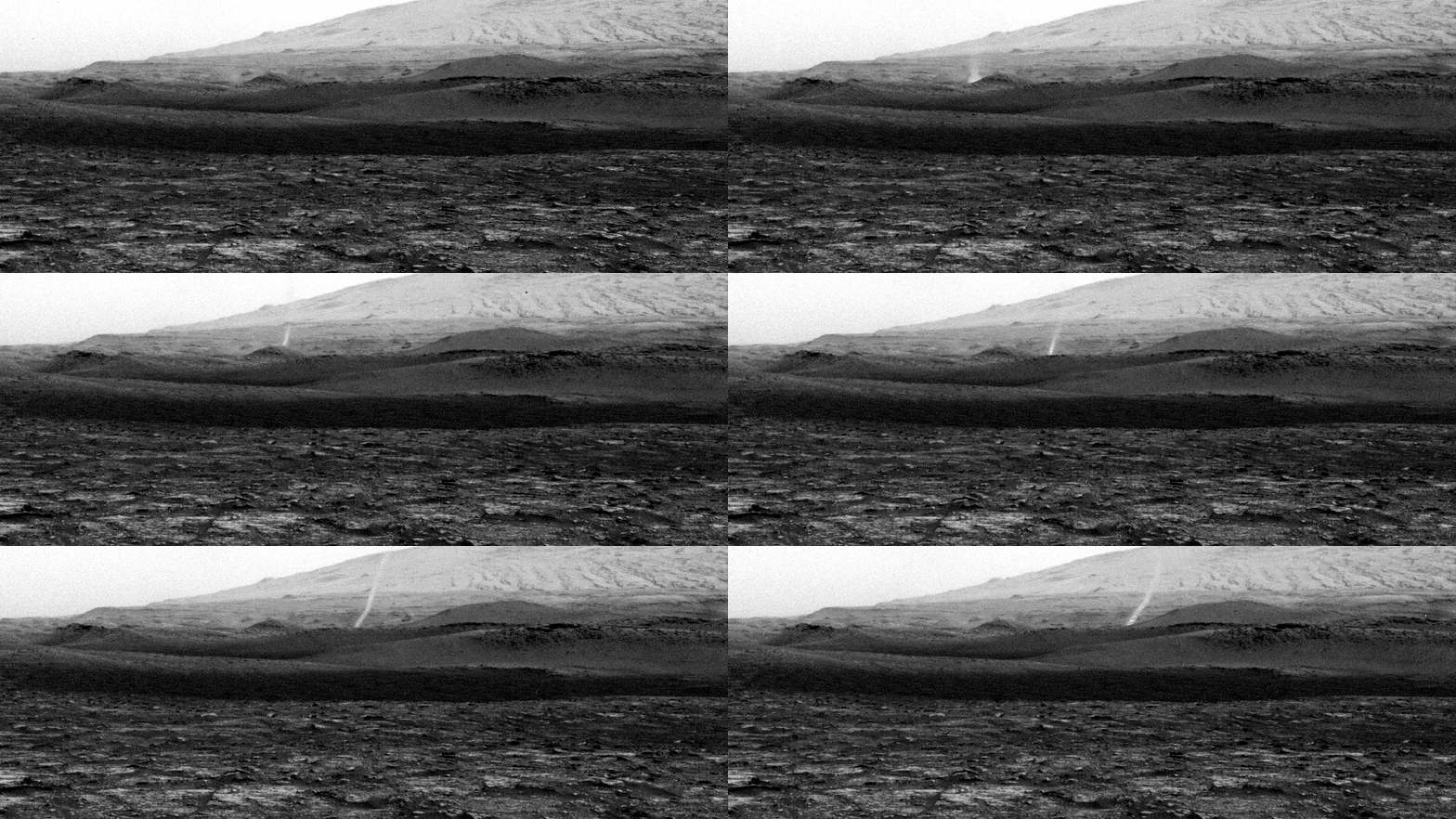
A Martian dust devil can be seen consuming its smaller friend in this short video made of images taken at the rim of Jezero Crater by NASA’s Perseverance Mars rover on Jan. 25, 2025.
NASA/JPL-Caltech/SSI
The six-wheeled explorer recently captured several Red Planet mini-twisters spinning on the rim of Jezero Crater.
A Martian dust devil can be seen consuming a smaller one in this short video made of images taken by a navigation camera aboard NASA’s Perseverance Mars rover. These swirling, sometimes towering columns of air and dust are common on Mars. The smaller dust devil’s demise was captured during an imaging experiment conducted by Perseverance’s science team to better understand the forces at play in the Martian atmosphere.
When the rover snapped these images from about 0.6 miles (1 kilometer) away, the larger dust devil was approximately 210 feet (65 meters) wide, while the smaller, trailing dust devil was roughly 16 feet (5 meters) wide. Two other dust devils can also be seen in the background at left and center. Perseverance recorded the scene Jan. 25 as it explored the western rim of Mars’ Jezero Crater at a location called “Witch Hazel Hill.”
“Convective vortices — aka dust devils — can be rather fiendish,” said Mark Lemmon, a Perseverance scientist at the Space Science Institute in Boulder, Colorado. “These mini-twisters wander the surface of Mars, picking up dust as they go and lowering the visibility in their immediate area. If two dust devils happen upon each other, they can either obliterate one another or merge, with the stronger one consuming the weaker.”
While exploring the rim of Jezero Crater on Mars, NASA’s Perseverance rover captured new images of multiple dust devils in January 2025. These captivating phenomena have been documented for decades by the agency’s Red Planet robotic explorers. NASA/JPL-Caltech/LANL/CNES/CNRS/INTA-CSIC/Space Science Institute/ISAE-Supaero/University of Arizona
Science of Whirlwinds
Dust devils are formed by rising and rotating columns of warm air. Air near the planet’s surface becomes heated by contact with the warmer ground and rises through the denser, cooler air above. As other air moves along the surface to take the place of the rising warmer air, it begins to rotate. When the incoming air rises into the column, it picks up speed like a spinning ice skater bringing their arms closer to their body. The air rushing in also picks up dust, and a dust devil is born.
“Dust devils play a significant role in Martian weather patterns,” said Katie Stack Morgan, project scientist for the Perseverance rover at NASA’s Jet Propulsion Laboratory in Southern California. “Dust devil study is important because these phenomena indicate atmospheric conditions, such as prevailing wind directions and speed, and are responsible for about half the dust in the Martian atmosphere.”
NASA’s Viking 1 orbiter captured this Martian dust devil casting a shadow on Aug. 1, 1978. During the 15-second interval between the two images, the dust devil moved toward the northeast (toward the upper right) at a rate of about 59 feet (18 meters) per second.
NASA/JPL-Caltech/MSSS
Since landing in 2021, Perseverance has imaged whirlwinds on many occasions, including one on Sept. 27, 2021, where a swarm of dust devils danced across the floor of Jezero Crater and the rover used its SuperCam microphone to record the first sounds of a Martian dust devil.
NASA’s Viking orbiters, in the 1970s, were the first spacecraft to photograph Martian dust devils. Two decades later, the agency’s Pathfinder mission was the first to image one from the surface and even detected a dust devil passing over the lander. Twin rovers Spirit and Opportunity managed to capture their fair share of dusty whirlwinds. Curiosity, which is exploring a location called Mount Sharp in Gale Crater on the opposite side of the Red Planet as Perseverance, sees them as well.
Capturing a dust devil image or video with a spacecraft takes some luck. Scientists can’t predict when they’ll appear, so Perseverance routinely monitors in all directions for them. When scientists see them occur more frequently at a specific time of day or approach from a certain direction, they use that information to focus their monitoring to try to catch additional whirlwinds.
“If you feel bad for the little devil in our latest video, it may give you some solace to know the larger perpetrator most likely met its own end a few minutes later,” said Lemmon. “Dust devils on Mars only last about 10 minutes.”
More About Perseverance
A key objective of Perseverance’s mission on Mars is astrobiology, including caching samples that may contain signs of ancient microbial life. The rover is characterizing the planet’s geology and past climate, to help pave the way for human exploration of the Red Planet and as the first mission to collect and cache Martian rock and regolith.
NASA’s Mars Sample Return Program, in cooperation with ESA (European Space Agency), is designed to send spacecraft to Mars to collect these sealed samples from the surface and return them to Earth for in-depth analysis.
The Mars 2020 Perseverance mission is part of NASA’s Mars Exploration Program (MEP) portfolio and the agency’s Moon to Mars exploration approach, which includes Artemis missions to the Moon that will help prepare for human exploration of the Red Planet.
NASA’s Jet Propulsion Laboratory, which is managed for the agency by Caltech, built and manages operations of the Perseverance rover.
La NASA aumenta su eficiencia con un piso modificado para el avión X-66
3 min read
Preparations for Next Moonwalk Simulations Underway (and Underwater)
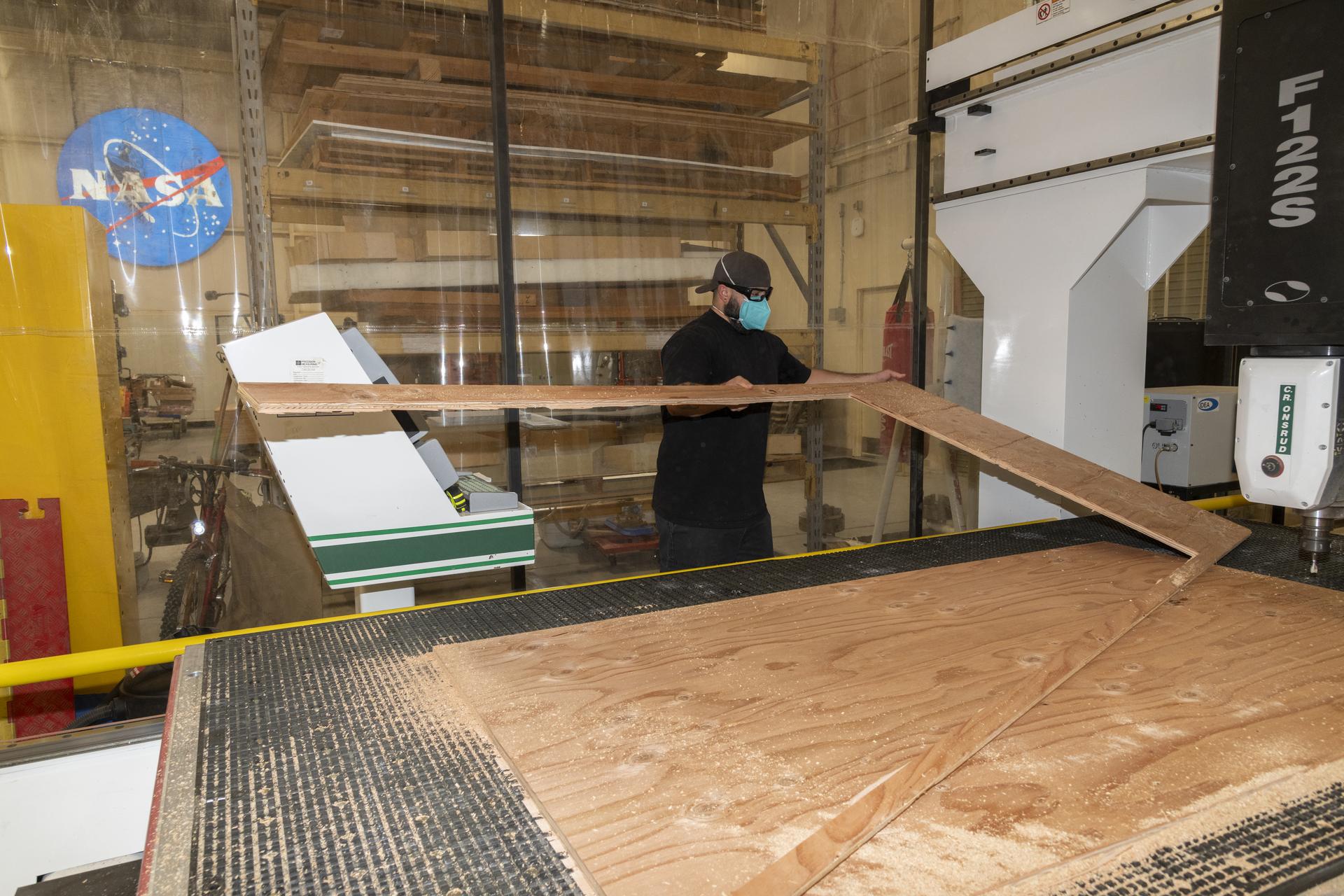
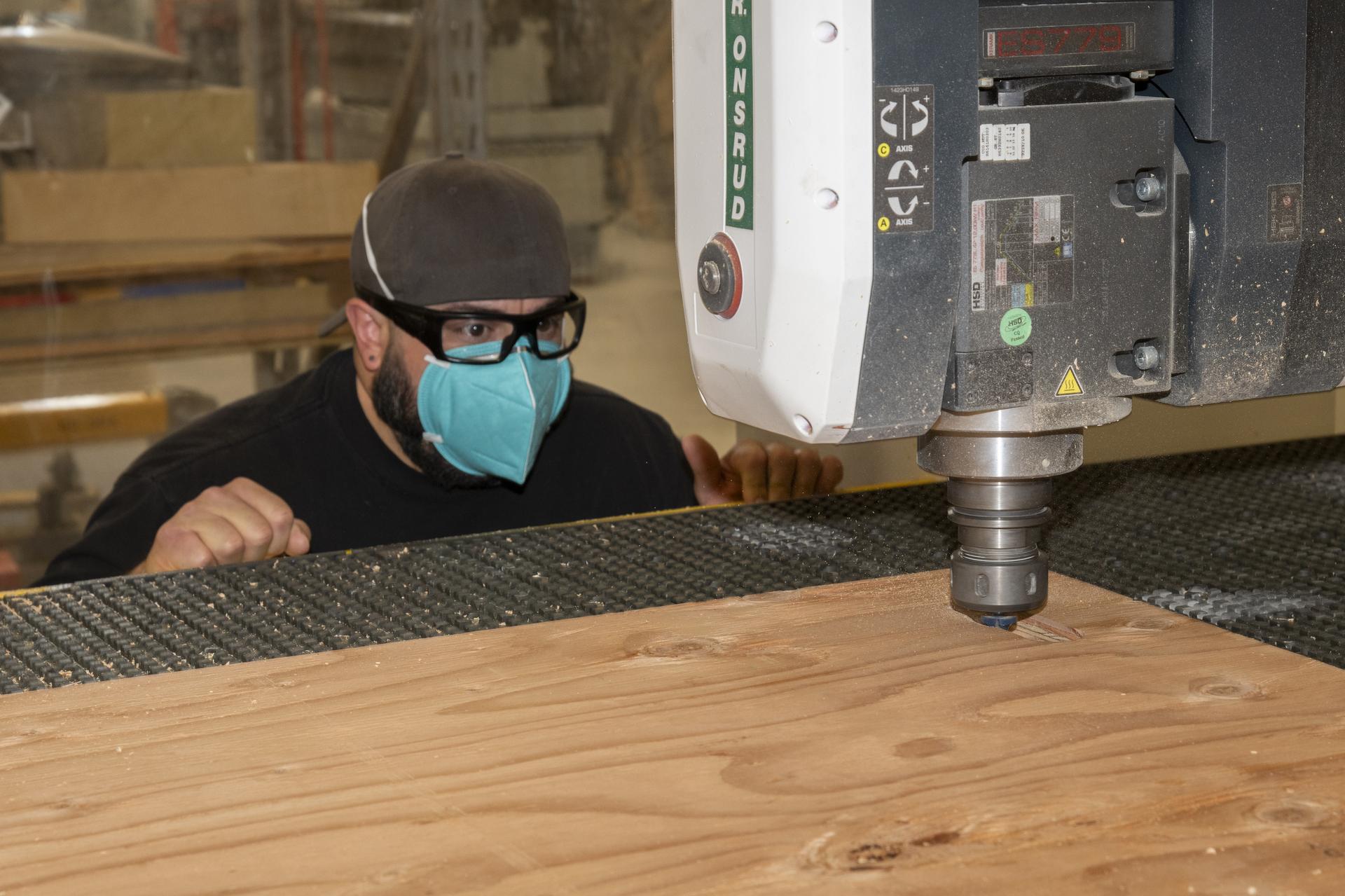
Eric Garza, técnico de ingeniería en el Taller de Fabricación Experimental del Centro de Investigación de Vuelos Armstrong de la NASA en Edwards, California, corta madera contrachapada a medida para las tablas del piso temporal del avión demostrador experimental X-66 el 26 de agosto de 2024.
La NASA diseño unas tablas de piso temporales para el avión MD-90, que se utilizaran mientras el avión se transforma en el demostrador experimental X-66. Estas tablas de piso protegerán el piso original y agilizarán el proceso de modificación.
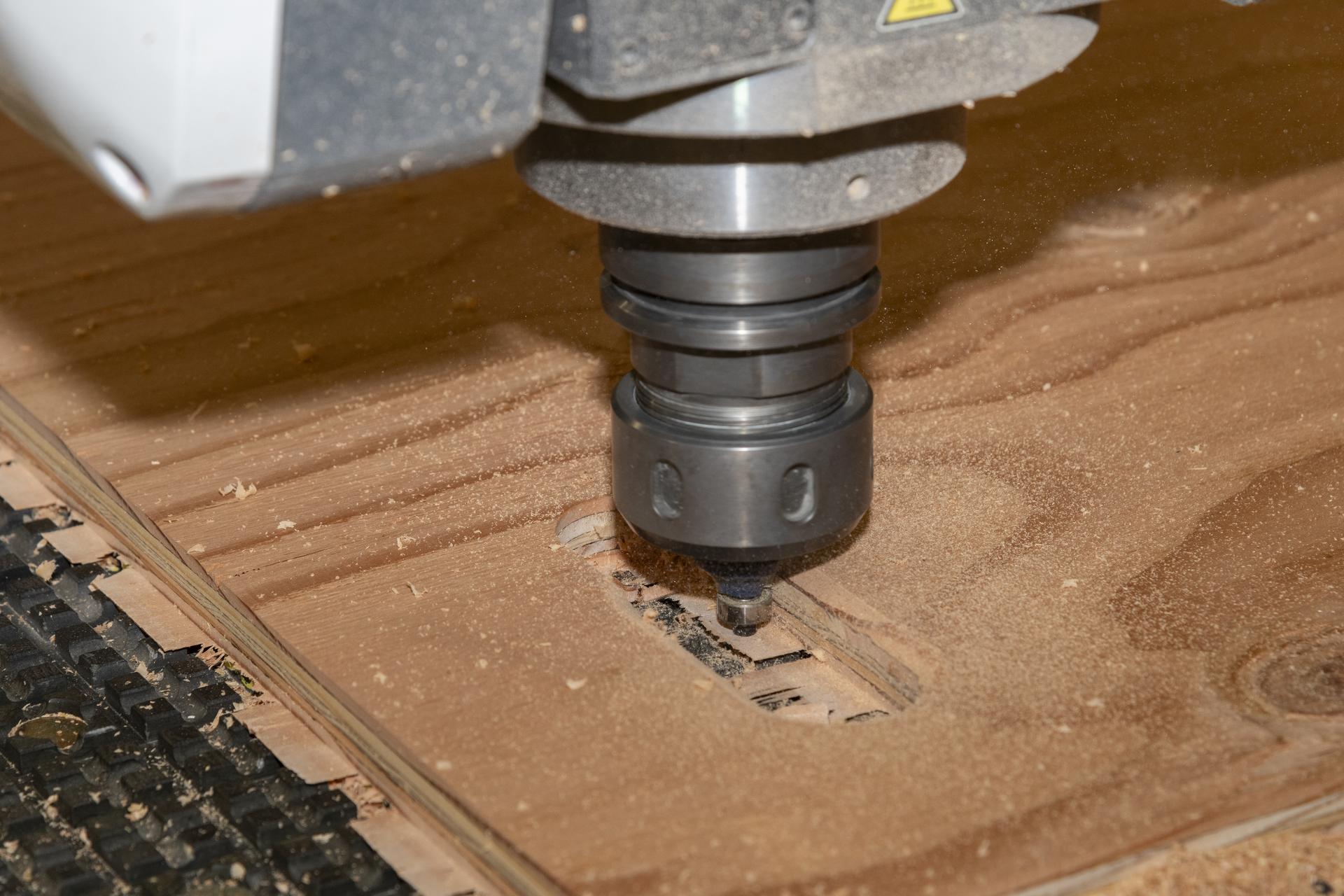
En apoyo al proyecto Demostrador de Vuelo Sostenible de la agencia, un pequeño equipo del Taller de Fabricación Experimental del Centro de Investigación de Vuelos Armstrong de la NASA en Edwards, California, construyó tablas de piso temporales para ahorrarle tiempo y recursos al proyecto. La retirada e instalación repetidas del piso original durante el proceso de modificación requería mucho tiempo. El uso de paneles temporales también garantiza la protección de las tablas del piso original y su aptitud para el vuelo cuando se finalicen las modificaciones y se vuelva a instalar el piso original.
“La tarea de crear las tablas de piso temporales para el MD-90 implica un proceso meticuloso dirigido a facilitar las modificaciones, manteniendo la seguridad y la eficacia. La necesidad de estas tablas de piso temporales surge del detallado procedimiento necesario para retirar y reinstalar los pisos originales del fabricante (OEM, por su acrónimo inglés),” explica Jason Nelson, jefe de fabricación experimental. Él es uno de los dos miembros del equipo de fabricación – un técnico de ingeniería y un inspector – que fabrica acerca de 50 tablas de piso temporales, con dimensiones que varían entre 20 pulgadas por 36 pulgadas y 42 pulgadas por 75 pulgadas.
Una máquina de madera corta agujeros precisos en madera contrachapada para las tablas del piso temporal el 26 de agosto de 2024, en el Taller de Fabricación Experimental del Centro de Investigación de Vuelo Armstrong de la NASA en Edwards, California. El piso fue diseñado para el avión de demonstración experimental X-66.
NASA/Steve Freeman
Nelson continuó, “Como estas tablas OEM se quitarán y volverán a instalar varias veces para acomodar las modificaciones necesarias, las tablas temporales ahorrarán al equipo tiempo y recursos valiosos. También proporcionarán el mismo nivel de seguridad y resistencia que las tablas OEM, garantizando que el proceso se desarrolle sin problemas y sin comprometer la calidad.”
El diseño y la creación de prototipos del piso fue un proceso meticuloso, pero la solución temporal desempeña un papel crucial en la optimización del tiempo y los recursos en los esfuerzos de la NASA por avanzar en la seguridad y la eficiencia de los viajes aéreos. El proyecto Demostrador de Vuelo Sostenible de la agencia busca informar la próxima generación de aviones pasajeros de un solo pasillo, que son las aeronaves más comunes de aviación comercial de todo el mundo. La NASA se asoció con Boeing para desarrollar el avión de demostración experimental X-66. El Taller de Fabricación Experimental de Armstrong de la NASA lleva a cabo modificaciones y trabajos de reparación en aeronaves, que van desde la creación de algo tan pequeño como un soporte de aluminio hasta la modificación de la estructura principal de las alas, las costillas del fuselaje, las superficies de control y otras tareas de apoyo a las misiones.
Eric Garza, técnico de ingeniería en el Taller de Fabricación Experimental del Centro de Investigación de Vuelo Armstrong de la NASA en Edwards, California, observa cómo una máquina de madera corta agujeros para las tablas del piso temporal el 26 de agosto de 2024. El piso fue diseñado para el avión de demostración experimental X-66.
The first image of the Moon taken by the cameras on the Lunar Orbiter in 1966.
Credits: NASA
Landing safely on the surface of another planetary body, like the Moon or Mars, is one of the most important milestones of any given space mission. From the very beginning, NASA’s Langley Research Center has been at the heart of the entry, descent and landing (EDL) research that enables our exploration. Today, NASA Langley’s legacy of landing continues at the forefront of present day lunar missions and as NASA prepares for future travel to more distant worlds.
Project Mercury: 1958
Project Mercury was the United States’ first human-in-space program, led by NASA’s Space Task Group located at NASA Langley. There were five major programs of study and experimentation.
An airdrop study that helped us understand the characteristics of the Mercury capsule as it returned to Earth.
A group of study focused on the escape systems, ultimately becoming known as the launch abort system.
Exhaustive wind-tunnel studies of the blunt-nosed capsule design and its aerodynamic stability at various altitudes and speeds and angles of reentry, all with a focus on making the capsule safe and stable.
A study on the problem of landing impact, resulting in the development of absorption systems that minimized the shock of impact to the capsule’s pilot.
Studies into the use of drogue parachutes and their characteristics at high altitudes and speeds, ensuring that they would be able to stabilize and slow the capsule’s descent for a safe landing. All of this research went on to inform the subsequent Gemini and Apollo programs.
All of this research went on to inform the subsequent Gemini and Apollo programs.
Apollo Program: 1962
In 1961, President John F. Kennedy committed to putting Americans on the surface of the Moon and shortly after that historic declaration, NASA’s Apollo program was born. In the years that followed, the original team of NASA astronauts completed their basic training at NASA Langley’s Lunar Landing Research Facility (LLRF). When Apollo 11 successfully landed the first humans on the Moon in 1969, NASA Langley had played a pivotal role in the monumental success.
Lunar Orbiter: 1966
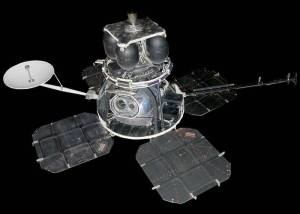
The Lunar Orbiter missions launched with the purpose of mapping the lunar surface and identifying potential landing sites ahead of the Apollo landings. From 1966 to 1967, the five successful Lunar Orbiter missions, led and managed by Langley Research Center, resulted in 99% of the moon photographed and a suitable site selected for the upcoming human landings.
Viking: 1976
After the success of Apollo, NASA set its sights further across the solar system to Mars. Two Viking missions aimed to successfully place landers on the Red Planet and capture high resolution images of the Martian surfaces, assisting in the search for life. Langley Research Center was chosen to lead this inaugural Mars mission and went on to play key roles in the missions to Mars that followed.
HIAD: 2009 – Present
Successful landings on Mars led to more ambitious dreams of landing larger payloads, including those that could support future human exploration. In order to land those payloads safely, a new style of heat shield would be needed. Hypersonic Inflatable Aerodynamic Decelerator (HIAD) technology was positioned as an answer to the payload problem, enabling missions to use inflatable heat shields to slow down and protect a payload as it enters a planet’s atmosphere at hypersonic speeds.
IRVE – 2009-2012
Two successful Inflatable Reentry Vehicle Experiments (IRVE) proved the capability of inflatable heat shield technology and opened the door for larger iterations.
LOFTID – 2022
The Low Earth Orbit Flight Test of an Inflatable Decelerator (LOFTID) followed in the footsteps of its predecessor IRVE with a larger aeroshell that could be deployed to a scale much larger than the shroud. The 2022 successful test of this technology further proved the capability of HIAD technology.
MEDLI 1 and 2: 2012 & 2020
As a part of the Mars Science Laboratory (MSL) mission, NASA Langley’s Mars Entry, Descent and Landing Instrument (MEDLI) was designed to gather data from the MSL entry vehicle’s heatshield during its entry and descent to the surface of Mars. MEDLI2 expanded on that groundbreaking data during the Mars 2020 mission which safely landed the Perseverance rover after successfully entering the planet’s arid atmosphere, and enabling improvements on the design for future entry systems.
Curiosity Rover
Curiosity was the largest and most capable rover ever sent to Mars when it launched in 2011. Leading up the mission, Langley engineers performed millions of simulations of the entry, descent and landing phase — or the so-called “Seven Minutes of Terror” — that determines success or failure. Curiosity continues to look for signs that Mars once was – or still is – a habitable place for life as we know it.
CLPS: 2023 – Present
The Commercial Lunar Payload Services initiative takes the Artemis mission further by working with commercial partners to advance the technology needed to return humans to the Moon and enable humanity to explore Mars.
NDL
Navigation Doppler Lidar (NDL) technology, developed at Langley Research Center, uses lasers to assist spacecraft in identifying safe locations to land. In 2024, NDL flew on the Intuitive Machines’ uncrewed Nova-C lander, with its laser instruments designed to measure velocity and altitude to within a few feet. While NASA planetary landers have traditionally relied on radar and used radio waves, NDL technology has proven more accurate and less heavy, both major benefits for cost and space savings as we continue to pursue planetary missions.
SCALPSS
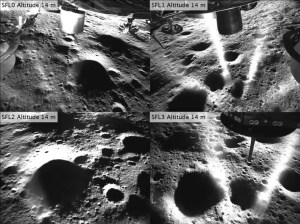
Like Lunar Orbiter and the Viking missions before it, Stereo Cameras for Lunar Plume Surface Studies (SCALPSS) set out to better understand the surface of another celestial body. These cameras affixed to the bottom of a lunar lander focus on the interaction between the lander’s rocket plumes and the lunar surface. The SCALPSS 1.1 instrument captured first-of-its-kind imagery as the engine plumes of Firefly’s Blue Ghost lander reached the Moon’s surface. These images will serve as key pieces of data as trips to the Moon increase in the coming years.
NASA Makes Progress on Advanced Drone Safety Management System
4 min read
Preparations for Next Moonwalk Simulations Underway (and Underwater)

A Massachusetts Institute of Technology Lincoln Laboratory pilot controls a drone during NASA’s In-Time Aviation Safety Management System test series in collaboration with a George Washington University team July 17-18, 2024, at the U.S. Army’s Fort Devens in Devens, Massachusetts.
MIT Lincoln Laboratory/Jay Couturier
From agriculture and law enforcement to entertainment and disaster response, industries are increasingly turning to drones for help, but the growing volume of these aircraft will require trusted safety management systems to maintain safe operations.
NASA is testing a new software system to create an improved warning system – one that can predict hazards to drones before they occur. The In-Time Aviation Safety Management System (IASMS) will monitor, assess, and mitigate airborne risks in real time. But making sure that it can do all that requires extensive experimentation to see how its elements work together, including simulations and drone flight tests.
“If everything is going as planned with your flight, you won’t notice your in-time aviation safety management system working,” said Michael Vincent, NASA acting deputy project manager with the System-Wide Safety project at NASA’s Langley Research Center in Hampton, Virginia. “It’s before you encounter an unusual situation, like loss of navigation or communications, that the IASMS provides an alert to the drone operator.”
The team completed a simulation in the Human-Autonomy Teaming Laboratory at NASA’s Ames Research Center in California’s Silicon Valley on March 5 aimed at finding out how critical elements of the IASMS could be used in operational hurricane relief and recovery.
During this simulation, 12 drone pilots completed three 30-minute sessions where they managed up to six drones flying beyond visual line of sight to perform supply drops to residents stranded after a severe hurricane. Additional drones flew scripted search and rescue operations and levee inspections in the background. Researchers collected data on pilot performance, mission success, workload, and perceptions of the experiences, as well as the system’s usability.
This simulation is part of a longer-term strategy by NASA to advance this technology. The lessons learned from this study will help prepare for the project’s hurricane relief and recovery flight tests, planned for 2027.
As an example of this work, in the summer of 2024 NASA tested its IASMS during a series of drone flights in collaboration with the Ohio Department of Transportation in Columbus, Ohio, and in a separate effort, with three university-led teams.
For the Ohio Department of Transportation tests, a drone flew with the NASA-developed IASMS software aboard, which communicated back to computers at NASA Langley. Those transmissions gave NASA researchers input on the system’s performance.
Students from the Ohio State University participate in drone flights during NASA’s In-Time Aviation Safety Management System test series in collaboration with the Ohio Department of Transportation from March to July 2024 at the Columbus Aero Club in Ohio.
NASA/Russell Gilabert
NASA also conducted studies with The George Washington University (GWU), the University of Notre Dame, and Virginia Commonwealth University (VCU). These occurred at the U.S. Army’s Fort Devens in Devens, Massachusetts with GWU; near South Bend, Indiana with Notre Dame; and in Richmond, Virginia with VCU. Each test included a variety of types of drones, flight scenarios, and operators.
Students from Virginia Commonwealth University walk toward a drone after a flight as part of NASA’s In-Time Aviation Safety Management System (IASMS) test series July 16, 2024, in Richmond, Virginia.
NASA/Dave Bowman
Each drone testing series involved a different mission for the drone to perform and different hazards for the system to avoid. Scenarios included, for example, how the drone would fly during a wildfire or how it would deliver a package in a city. A different version of the NASA IASMS was used to fit the scenario depending on the mission, or depending on the flight area.
Students from the University of Notre Dame prepare a small drone for takeoff as part of NASA’s In-Time Aviation Safety Management System (IASMS) university test series, which occurred on August 21, 2024 in Notre Dame, Indiana.
University of Notre Dame/Wes Evard
When used in conjunction with other systems such as NASA’s Unmanned Aircraft System Traffic Management, IASMS may allow for routine drone flights in the U.S. to become a reality. The IASMS adds an additional layer of safety for drones, assuring the reliability and trust if the drone is flying over a town on a routine basis that it remains on course while avoiding hazards along the way.
“There are multiple entities who contribute to safety assurance when flying a drone,” Vincent said. “There is the person who’s flying the drone, the company who designs and manufactures the drone, the company operating the drone, and the Federal Aviation Administration, who has oversight over the entire National Airspace System. Being able to monitor, assess and mitigate risks in real time would make the risks in these situations much more secure.”