Another First: NASA Webb Identifies Frozen Water in Young Star System

Another First: NASA Webb Identifies Frozen Water in Young Star System

5 Min Read

Another First: NASA Webb Identifies Frozen Water in Young Star System

An illustration of Sun-like star HD 181327 and its surrounding debris disk. The star is at top right. It is surrounded by a far larger debris disk that forms an incomplete ellpitical path and is cut off at right. There’s a huge cavity between the star and the disk. The debris disk is shown in shades of light gray. Toward the top and left, there are finer, more discrete points in a range of sizes. The disk appears hazier and smokier at the bottom. The star is bright white at center, with a hazy blue region around it. The background of space is black. The label Artist's Concept appears at lower left.
For the first time, researchers confirmed the presence of crystalline water ice in a dusty debris disk that orbits a Sun-like star, using NASA’s James Webb Space Telescope. The full artist’s concept illustration and full caption is shown below.
Credits:
NASA, ESA, CSA, Ralf Crawford (STScI)

Is frozen water scattered in systems around other stars? Astronomers have long expected it is, partially based on previous detections of its gaseous form, water vapor, and its presence in our own solar system.

Now there is definitive evidence: Researchers confirmed the presence of crystalline water ice in a dusty debris disk that orbits a Sun-like star 155 light-years away using detailed data known as spectra from NASA’s James Webb Space Telescope. (The term water ice specifies its makeup, since many other frozen molecules are also observed in space, such as carbon dioxide ice, or “dry ice.”) In 2008, data from NASA’s retired Spitzer Space Telescope hinted at the possibility of frozen water in this system.

“Webb unambiguously detected not just water ice, but crystalline water ice, which is also found in locations like Saturn’s rings and icy bodies in our solar system’s Kuiper Belt,” said Chen Xie, the lead author of the new paper and an assistant research scientist at Johns Hopkins University in Baltimore, Maryland.

All the frozen water Webb detected is paired with fine dust particles throughout the disk — like itsy-bitsy “dirty snowballs.” The results published Wednesday in the journal Nature.

Astronomers have been waiting for this definitive data for decades. “When I was a graduate student 25 years ago, my advisor told me there should be ice in debris disks, but prior to Webb, we didn’t have instruments sensitive enough to make these observations,” said Christine Chen, a co-author and associate astronomer at the Space Telescope Science Institute in Baltimore. “What’s most striking is that this data looks similar to the telescope’s other recent observations of Kuiper Belt objects in our own solar system.”

Water ice is a vital ingredient in disks around young stars — it heavily influences the formation of giant planets and may also be delivered by small bodies like comets and asteroids to fully formed rocky planets. Now that researchers have detected water ice with Webb, they have opened the door for all researchers to study how these processes play out in new ways in many other planetary systems.

Image: Debris Disk Around Star HD 181327 (Artist’s Concept)

An illustration of Sun-like star HD 181327 and its surrounding debris disk. The star is at top right. It is surrounded by a far larger debris disk that forms an incomplete ellpitical path and is cut off at right. There’s a huge cavity between the star and the disk. The debris disk is shown in shades of light gray. Toward the top and left, there are finer, more discrete points in a range of sizes. The disk appears hazier and smokier at the bottom. The star is bright white at center, with a hazy blue region around it. The background of space is black. The label Artist's Concept appears at lower left.
For the first time, researchers confirmed the presence of crystalline water ice in a dusty debris disk that orbits a Sun-like star, using NASA’s James Webb Space Telescope. All the frozen water detected by Webb is paired with fine dust particles throughout the disk. The majority of the water ice observed is found where it’s coldest and farthest from the star. The closer to the star the researchers looked, the less water ice they found.
NASA, ESA, CSA, Ralf Crawford (STScI)

Rocks, Dust, Ice Rushing Around

The star, cataloged HD 181327, is significantly younger than our Sun. It’s estimated to be 23 million years old, compared to the Sun’s more mature 4.6 billion years. The star is slightly more massive than the Sun, and it’s hotter, which led to the formation of a slightly larger system around it.

Webb’s observations confirm a significant gap between the star and its debris disk — a wide area that is free of dust. Farther out, its debris disk is similar to our solar system’s Kuiper Belt, where dwarf planets, comets, and other bits of ice and rock are found (and sometimes collide with one another). Billions of years ago, our Kuiper Belt was likely similar to this star’s debris disk.

“HD 181327 is a very active system,” Chen said. “There are regular, ongoing collisions in its debris disk. When those icy bodies collide, they release tiny particles of dusty water ice that are perfectly sized for Webb to detect.”

Frozen Water — Almost Everywhere

Water ice isn’t spread evenly throughout this system. The majority is found where it’s coldest and farthest from the star. “The outer area of the debris disk consists of over 20% water ice,” Xie said.

The closer in the researchers looked, the less water ice they found. Toward the middle of the debris disk, Webb detected about 8% water ice. Here, it’s likely that frozen water particles are produced slightly faster than they are destroyed. In the area of the debris disk closest to the star, Webb detected almost none. It’s likely that the star’s ultraviolet light vaporizes the closest specks of water ice. It’s also possible that rocks known as planetesimals have “locked up” frozen water in their interiors, which Webb can’t detect.

This team and many more researchers will continue to search for — and study — water ice in debris disks and actively forming planetary systems throughout our Milky Way galaxy. “The presence of water ice helps facilitate planet formation,” Xie said. “Icy materials may also ultimately be ‘delivered’ to terrestrial planets that may form over a couple hundred million years in systems like this.”

The researchers observed HD 181327 with Webb’s NIRSpec (Near-Infrared Spectrograph), which is super-sensitive to extremely faint dust particles that can only be detected from space.

The James Webb Space Telescope is the world’s premier space science observatory. Webb is solving mysteries in our solar system, looking beyond to distant worlds around other stars, and probing the mysterious structures and origins of our universe and our place in it. Webb is an international program led by NASA with its partners, ESA (European Space Agency) and CSA (Canadian Space Agency).

To learn more about Webb, visit:

https://science.nasa.gov/webb

Downloads

Click any image to open a larger version.

View/Download all image products at all resolutions for this article from the Space Telescope Science Institute.

View/Download the research results from the journal Nature.

Media Contacts

Laura Betz – laura.e.betz@nasa.gov
NASA’s Goddard Space Flight Center, Greenbelt, Md.

Claire Blome – cblome@stsci.edu
Space Telescope Science Institute, Baltimore, Md.

Christine Pulliam – cpulliam@stsci.edu
Space Telescope Science Institute, Baltimore, Md.

Related Information

View Webb images of other debris disks around Vega, Fomalhaut, Beta Pictoris, and AU Microscopii

Learn more about spectroscopy

Read more: Webb’s Near-infrared Spectrograph (NIRSpec)

More Webb News

More Webb Images

Webb Science Themes

Webb Mission Page

Related For Kids

What is the Webb Telescope?

SpacePlace for Kids

En Español

Ciencia de la NASA

NASA en español 

Space Place para niños

Share

Details

Last Updated
May 14, 2025
Editor
Marty McCoy
Contact

Powered by WPeMatico

Get The Details…

NASA Glenn Showcases Stirling Engine Technology at Piston Powered Auto-Rama

NASA Glenn Showcases Stirling Engine Technology at Piston Powered Auto-Rama

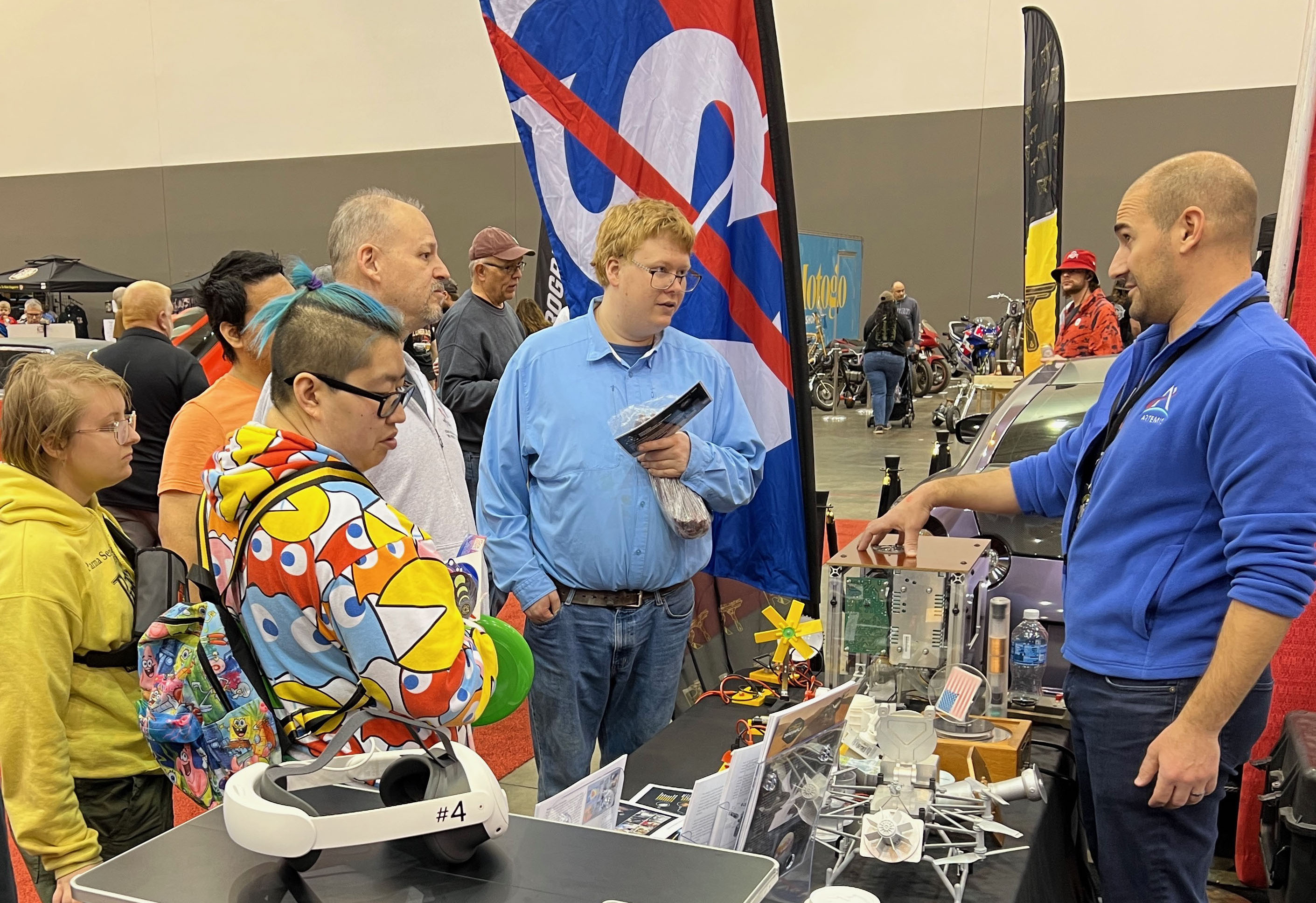
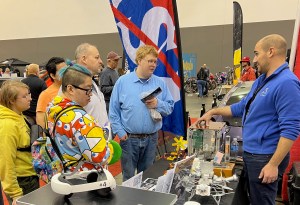
A NASA subject matter expert stands behind a display table and explains the technology behind free-standing piston Stirling engines to a group of people.
During the Piston Powered Auto-Rama at the I-X Center in Cleveland on Monday, March 31, 2025, NASA Glenn Research Center’s Salvadore Oriti, right, discusses the technology behind free-piston Stirling cycle machines.
Credit: NASA/Kristin Jansen 

NASA Glenn Research Center’s work in power and propulsion was on full display at the Piston Powered Auto-Rama at the I-X Center in Cleveland, March 28-30. The event is the largest indoor showcase of cars, trucks, motorcycles, tractors, and other engine-powered vehicles. 

Center staff introduced guests to NASA’s Stirling engine technology, a free-piston Stirling power convertor that set records for accomplishing 14 years of maintenance-free operation at NASA Glenn in 2020. Attendees also explored how NASA is using space nuclear power to reach the deepest, dustiest, darkest, and most distant regions of our solar system through radioisotope power systems.  

More than 57,500 people attended the event. 

Powered by WPeMatico

Get The Details…
Kelly M. Matter

NASA Glenn Engineer Highlights Research for Hubble Servicing Missions 

NASA Glenn Engineer Highlights Research for Hubble Servicing Missions 

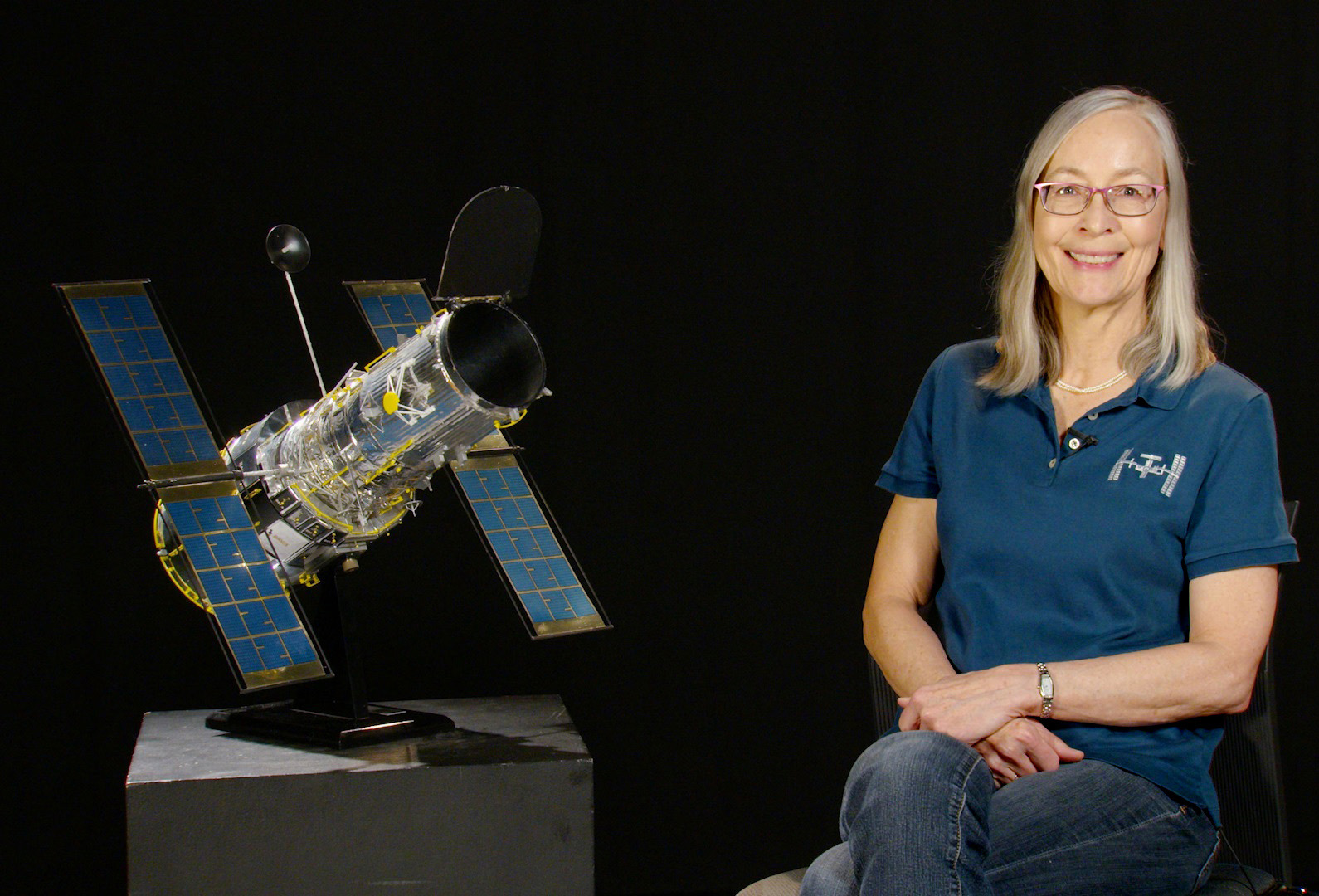
NASA research engineer Kim de Groh, right, sits next to a model of the Hubble Space Telescope atop a black wooden stand.
NASA Glenn Research Center senior materials research engineer Kim de Groh, who conducted research for Hubble Space Telescope servicing missions, shared her experiences during a presentation at Great Lakes Science Center, home of the NASA Glenn Visitor Center, in Cleveland on Thursday, May 8, 2025.
Credit: NASA/Dennis Brown 

April 24 marked the 35th anniversary of the launch of NASA’s Hubble Space Telescope. The iconic space observatory remains a household name —the most well-recognized and scientifically productive telescope in history. Engineers at NASA’s Glenn Research Center in Cleveland played a significant role in how the telescope functions today.  

Glenn Visitor Center, in Cleveland on Thursday, May 8, 2025. Alt Text: NASA research engineers Kim de Groh, left, and Joyce Dever, pose for a photo with various interactive displays behind them at NASA Glenn Research Center’s Visitor Center.
NASA’s Glenn Research Center researchers Kim de Groh, left, and Joyce Dever conducted research for Hubble Space Telescope servicing missions. De Groh shared her experiences during a presentation at Great Lakes Science Center, home of the NASA Glenn Visitor Center, in Cleveland on Thursday, May 8, 2025.
Credit: NASA/Sara Lowthian-Hanna 

NASA Glenn researchers assisted in all five Hubble servicing missions by testing damaged insulation, determining why it degraded in space, and recommending replacement materials.  

One of those researchers, Kim de Groh, senior materials research engineer, shared some of that research in a special presentation at Great Lakes Science Center, home of the NASA Glenn Visitor Center, in Cleveland on May 8. She chronicled her Hubble experience with a presentation, a show-and-tell with samples directly from the telescope, and a Q&A addressing the audience’s Hubble-related questions. 

Powered by WPeMatico

Get The Details…
Kelly M. Matter

NASA Glenn Hosts Slovenian Delegation and Ohio Governor’s Office

NASA Glenn Hosts Slovenian Delegation and Ohio Governor’s Office

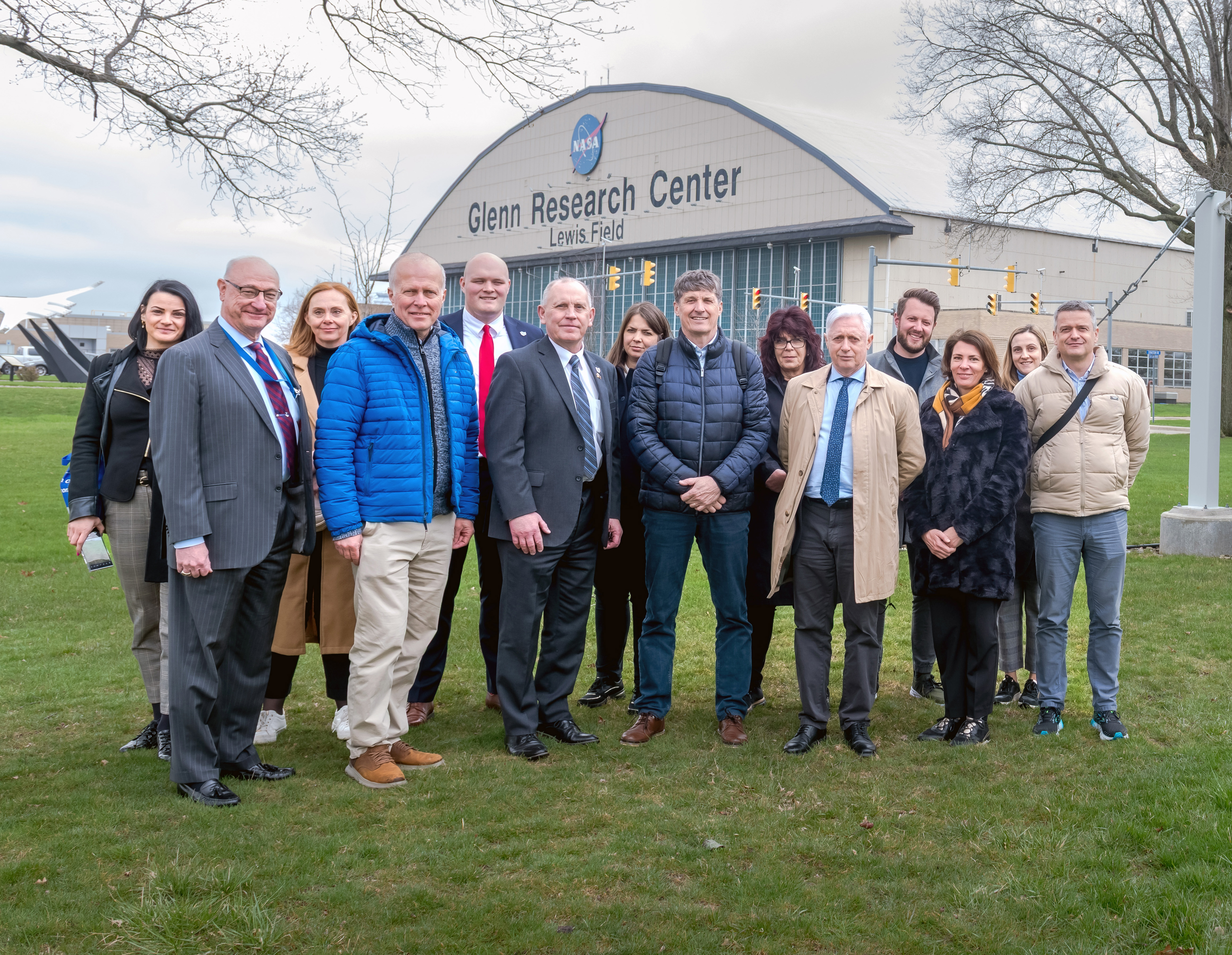
A group of 14 guests pose on the lawn of NASA’s Glenn Research Center. An airplane hangar with the NASA logo and the words, “Glenn Research Center at Lewis Field,” is pictured in the background.
NASA Glenn Research Center’s Associate Director Larry Sivic, front row, third from left, joins in a group photo with Slovenian government officials and representatives from the Ohio Governor’s Office during a visit to the center on Friday, April 11, 2025.
Credit: NASA/Jef Janis 

NASA’s Glenn Research Center in Cleveland hosted a delegation of Slovenian government officials and representatives from the Ohio Governor’s Office on April 11. NASA Glenn leadership provided the group with an overview of the center’s vital role within the agency. The delegation also visited key space-related and aeronautics facilities, including tours of the Zero Gravity Research Facility, Simulated Lunar Operations Laboratory, and Icing Research Tunnel. 

Republic of Slovenia Minister of Defense Borut Sajovic and Ambassador of the Republic of Slovenia to the United States Iztok Mirosic headed the delegation. Joe Zeis, who is the senior advisor for Aerospace and Defense for the Office of the Governor, and Tobias Engel, who is with the Ohio Department of Development International Affairs, also attended. 

A group of visitors inside a narrow, short tunnel listen as a NASA representative points to features in the tunnel.
Facility Manager Dennis Eck, second from left, points out features of NASA Glenn Research Center’s Icing Research Tunnel to a delegation of Slovenian government officials and representatives from the Ohio Governor’s Office during a tour to the center on Friday, April 11, 2025.
Credit: NASA/Jef Janis 

The Slovenia Space Office — under the Ministry of the Economy, Industry, and Sport — coordinates Slovenia’s space activities within ESA (European Space Agency). Slovenia recently became a member state of ESA, enabling more international opportunities for Slovenian scientists and engineers. Last year, Slovenia joined the Artemis Accords, which provides a common set of principles to enhance the governance of the civil exploration and use of outer space, as the 39th participant.  

Powered by WPeMatico

Get The Details…
Kelly M. Matter

Specialty NASA Glenn License Plates Available  

Specialty NASA Glenn License Plates Available  

A license plate with the words, “NASAOH” and the NASA logo to the left. The bottom of the plate reads “NASA Glenn Research Center.” The top shows the Wright brothers’ original airplane, along with a banner displaying the shape of Ohio and the words “Ohio Birthplace of Aviation.”
A specialty license plate showcasing NASA’s Glenn Research Center in Cleveland is now available on the Ohio Bureau of Motor Vehicles website.
Credit: Courtesy of Ohio Bureau of Motor Vehicles 

Ohio residents can now take their vehicle to new heights with a specialty license plate showcasing NASA’s Glenn Research Center in Cleveland. 

It is available on the Ohio Bureau of Motor Vehicles (BMV) website under the “Special Interest Plates” section. Click the “Organizational Plates” drop-down tab for details on NASA Glenn’s plate. 

The Ohio BMV will collect an additional $10 above the regular license plate fee. NASA will not receive any money from the sale. 

NASA Glenn makes space exploration and aviation possible. This incredible work is happening right here in Northeast Ohio. The specialty license plate allows fans to show support for their community and Ohio’s NASA center. 

Powered by WPeMatico

Get The Details…
Kelly M. Matter