NASA’s SPHEREx Mission Maps Water Ice Throughout Cygnus X

NASA’s SPHEREx Mission Maps Water Ice Throughout Cygnus X

3 Min Read

NASA’s SPHEREx Mission Maps Water Ice Throughout Cygnus X

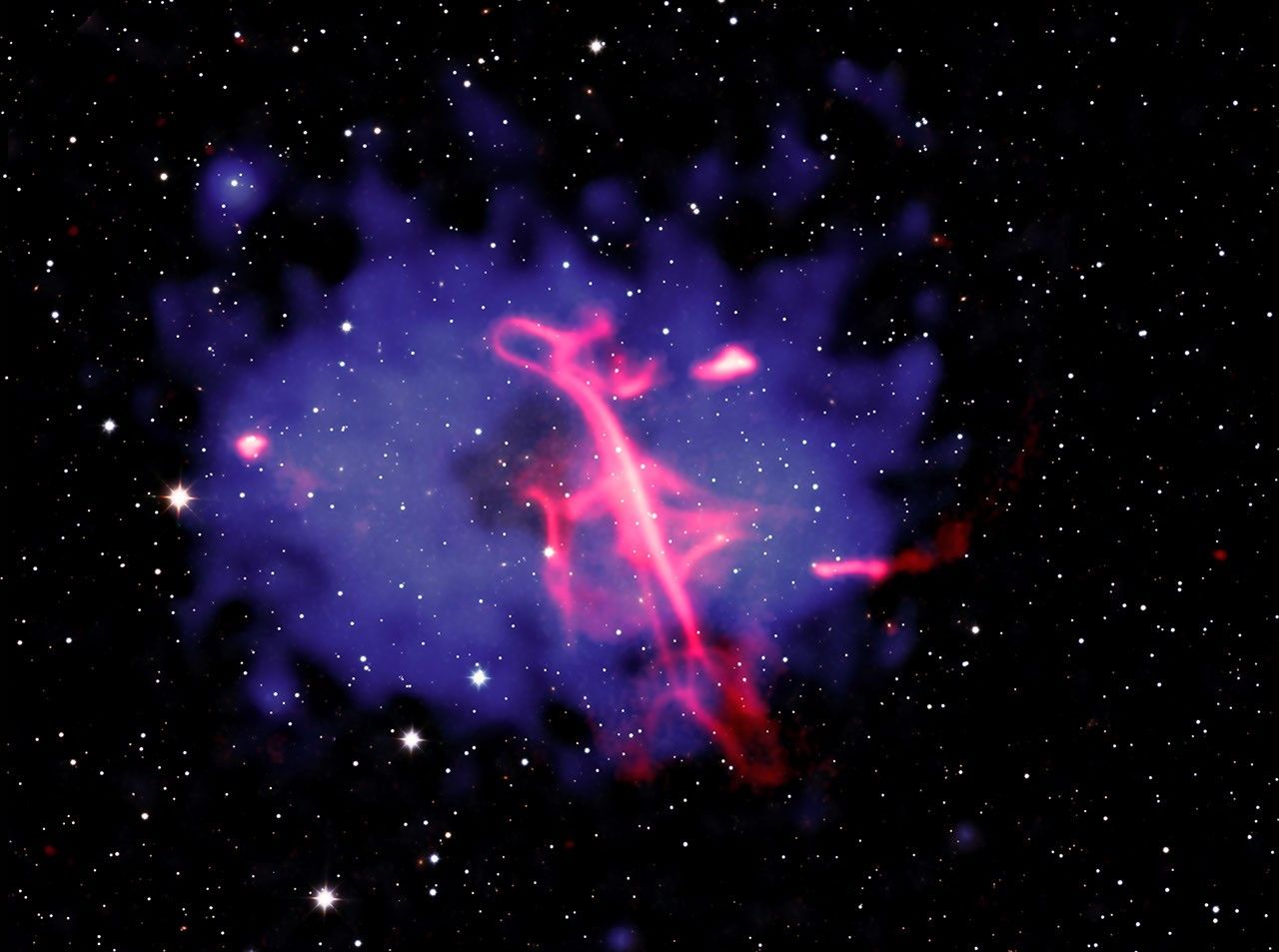
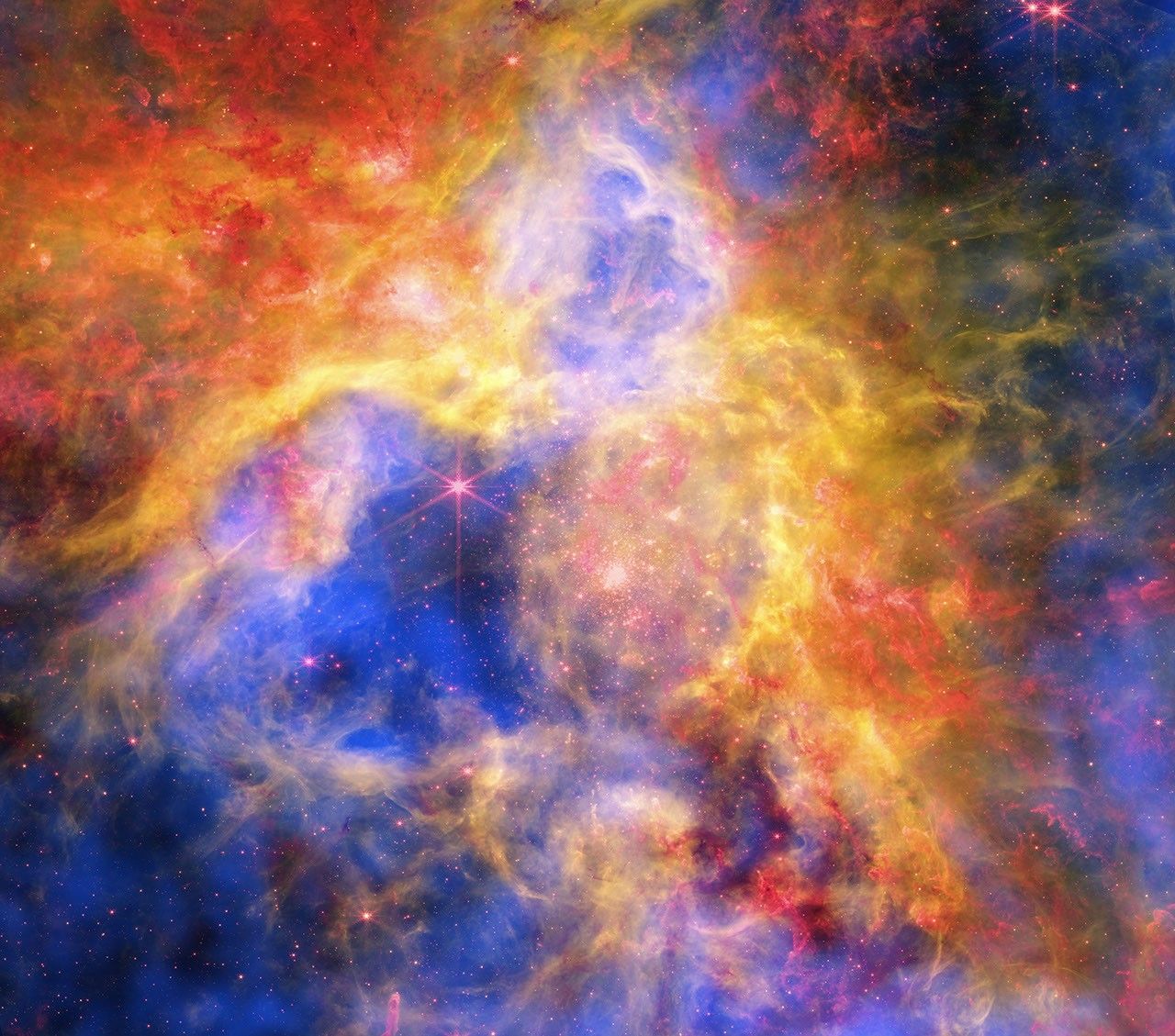
An observation made by NASA’s SPHEREx shows the chemical signatures of water ice and polycyclic aromatic hydrocarbons in Cygnus X, one of the most active and turbulent regions of star birth in our Milky Way galaxy.
PIA26748
Credits:
NASA/JPL-Caltech/IPAC/Hora et al.

Description

An observation made by NASA’s SPHEREx (Spectro-Photometer for the History of the Universe, Epoch of Reionization, and Ices Explorer) shows the chemical signatures of water ice (shown in bright blue) and polycyclic aromatic hydrocarbons (orange) in Cygnus X, one of the most active and turbulent regions of star birth in our Milky Way galaxy.

One of several maps of molecular clouds made by SPHEREx, this observation is detailed in a study published April 15, 2026, in The Astrophysical Journal. The study supports the hypothesis that interstellar ice forms on the surface of tiny dust particles no larger than particles found in the smoke from a candle. The findings show the densest regions of ice coincide with the densest regions of dust, and the dust shields the ice from the intense ultraviolet radiation emitted by newborn stars.

An observation made by NASA’s SPHEREx shows the chemical signatures of water ice and polycyclic aromatic hydrocarbons in Cygnus X, one of the most active and turbulent regions of star birth in our Milky Way galaxy.
Figure A

Figure A shows the same region, but in three different wavelengths assigned the colors green, blue, and red. This SPHEREx observation highlights the dark, dusty lanes that protect the water molecules from the intense radiation generated by newborn stars.

Although space telescopes such as NASA’s James Webb Space Telescope and the agency’s retired Spitzer have detected water, carbon dioxide, carbon monoxide, and other icy molecules throughout our galaxy, the SPHEREx observatory is the first infrared mission specifically designed to find such molecules over the entire sky, via the mission’s large-scale spectral survey.

Managed by NASA’s Jet Propulsion Laboratory in Southern California, the SPHEREx observatory launchedMarch 11, 2025, and has the unique ability to see the sky in 102 colors, each representing a different wavelength of infrared light that offers distinctive information about galaxies, stars, planet-forming regions, and other cosmic features. By late 2025, SPHEREx had completed the first of four all-sky infrared maps of the universe, charting the positions of hundreds of millions of galaxies in 3D to help answer major questions about the cosmos, including those about the origins of water and life. 

The mission is managed by JPL for the agency’s Astrophysics Division within the Science Mission Directorate in Washington. The telescope and the spacecraft bus were built by BAE Systems in Boulder, Colorado. The science analysis of the SPHEREx data is being conducted by a team of scientists at 13 institutions across the U.S. and in South Korea and Taiwan, led by Principal Investigator Jamie Bock, who is based at Caltech with a joint JPL appointment, and by JPL Project Scientist Olivier Doré. Data is processed and archived at IPAC at Caltech in Pasadena, which manages JPL for NASA. The SPHEREx dataset is freely available to scientists and the public.

For more information about the SPHEREx mission visit: https://science.nasa.gov/mission/spherex/

Powered by WPeMatico

Get The Details…

‘Interstellar Glaciers’: NASA’s SPHEREx Maps Vast Galactic Ice Regions

‘Interstellar Glaciers’: NASA’s SPHEREx Maps Vast Galactic Ice Regions

6 min read

Preparations for Next Moonwalk Simulations Underway (and Underwater)


Water ice highlighted
Interstellar dust highlighted

Wispy filaments of vibrant orange and electric blue cosmic dust and gas weave through a dark, star-studded expanse of outer space, creating a chaotic and intricate web of celestial matter.
These observations made by NASA’s SPHEREx mission reveal vast frozen complexes in the Cygnus X star-forming region of the Milky Way galaxy. Water ice, shown as bright blue structures at left, exactly overlays the dark lanes of interstellar dust, shown in different wavelengths at right.
NASA/JPL-Caltech/IPAC/Hora et al

A dense tapestry of countless colorful stars fills the frame, punctuated by larger, brilliant points of light and faint, wispy veins of dark cosmic dust stretching across the deep space background.
These observations made by NASA’s SPHEREx mission reveal vast frozen complexes in the Cygnus X star-forming region of the Milky Way galaxy. Water ice, shown as bright blue structures at left, exactly overlays the dark lanes of interstellar dust, shown in different wavelengths at right.

Wispy filaments of vibrant orange and electric blue cosmic dust and gas weave through a dark, star-studded expanse of outer space, creating a chaotic and intricate web of celestial matter.
These observations made by NASA’s SPHEREx mission reveal vast frozen complexes in the Cygnus X star-forming region of the Milky Way galaxy. Water ice, shown as bright blue structures at left, exactly overlays the dark lanes of interstellar dust, shown in different wavelengths at right.
NASA/JPL-Caltech/IPAC/Hora et al

A dense tapestry of countless colorful stars fills the frame, punctuated by larger, brilliant points of light and faint, wispy veins of dark cosmic dust stretching across the deep space background.
These observations made by NASA’s SPHEREx mission reveal vast frozen complexes in the Cygnus X star-forming region of the Milky Way galaxy. Water ice, shown as bright blue structures at left, exactly overlays the dark lanes of interstellar dust, shown in different wavelengths at right.


Water ice highlighted

Interstellar dust highlighted


These observations made by NASA’s SPHEREx mission reveal vast frozen complexes in the Cygnus X star-forming region of the Milky Way galaxy. Water ice, shown as bright blue structures at left, exactly overlays the dark lanes of interstellar dust, shown in different wavelengths at right.

NASA’s SPHEREx (Spectro-Photometer for the History of the Universe, Epoch of Reionization, and Ices Explorer) mission has mapped interstellar ice at an unprecedented scale. Covering regions in our Milky Way galaxy more than 600 light-years across, the ice was found inside giant molecular clouds — vast regions of gas and dust where dense clumps of matter collapse under gravity, giving birth to stars. A study describing these findings published Wednesday in The Astrophysical Journal.

One of SPHEREx’s main goals is to map the chemical signatures of various types of interstellar ice. This ice includes molecules like water, carbon dioxide, and carbon monoxide, which are vital to the chemistry that allows life to develop. Researchers believe these ice reservoirs, attached to the surfaces of tiny dust grains, are where most of the universe’s water is formed and stored. The water in Earth’s oceans — and the ices in comets and on other planets and moons in our galaxy — originates from these regions.

“These vast frozen complexes are like ‘interstellar glaciers’ that could deliver a massive water supply to new solar systems that will be born in the region,” said study coauthor Phil Korngut, the instrument scientist for SPHEREx at Caltech in Pasadena, California. “It’s a profound idea that we are looking at a map of material that could rain on nascent planets and potentially support future life.” 

Thanks to its spectral capabilities, SPHEREx can measure the amounts of various ices and molecules, such as polycyclic aromatic hydrocarbons, in and around molecular clouds, helping scientists better understand their composition and environment.  

Although space telescopes such as NASA’s James Webb Space Telescope and the agency’s retired Spitzer have detected water, carbon dioxide, carbon monoxide, and other icy molecules throughout our galaxy, the SPHEREx observatory is the first infrared mission specifically designed to find such molecules over the entire sky via the mission’s large-scale spectral survey. 

“We expected to detect these ices in front of individual bright stars: The light from a star acts like a spotlight, revealing any ice in the space between us and that star. But this is something different,” said lead author Joseph Hora, an astronomer at the Center for Astrophysics (CfA) at Harvard & Smithsonian in Cambridge, Massachusetts. “When looking along the galactic plane — where most of the stars, gas, and dust of our galaxy are concentrated — there’s a lot of diffuse background light shining through entire dust clouds, and SPHEREx can see the spatial distribution of the ices they contain in incredible detail.” 

Managed by NASA’s Jet Propulsion Laboratory in Southern California, the SPHEREx observatory launched March 11, 2025, and has the unique ability to see the sky in 102 colors, each representing a different wavelength of infrared light that offers distinctive information about galaxies, stars, planet-forming regions, and other cosmic features. By late 2025, SPHEREx had completed the first of four all-sky infrared maps of the universe, charting the positions of hundreds of millions of galaxies in 3D to help answer major questions about the cosmos, including those about the origins of water and life.

Icy origins

Using the SPHEREx maps of various icy molecules, the study’s authors were able to look deep into many molecular clouds in the Cygnus X and North American Nebula regions of the Milky Way. In the densest areas, where the amount of dust is greatest, dark filamentary lanes block the visible light from the stars behind. With its infrared eye, the space telescope also revealed where the different ices — which absorb specific wavelengths of infrared light that would pass through the clouds if they consisted only of dust — are at their densest.  

This finding supports the hypothesis that interstellar ice forms on the surface of tiny dust particles, which are no larger than particles found in candle smoke, and that the dense regions of dust shield the ices from the intense ultraviolet radiation emitted by newborn stars. However, not all ices are treated the same way in the interstellar medium.

“We can investigate the environmental factors that contribute to different ice formation rates across large areas of interstellar space,” said study coauthor Gary Melnick, also an astronomer at the CfA. “The SPHEREx mission’s ‘big picture’ view provides valuable new information you can’t get when zooming in on a small region.” 

Within this broad perspective, adds Melnick, SPHEREx can do something ground-based observatories cannot: detect varying amounts of water and carbon dioxide, two ices that respond differently to environmental factors. For example, the presence of intense ultraviolet light from nearby massive young stars or the heating of these dust grains by that light affects the abundances of different ices in distinct ways. 

This is just the beginning for the mission. Observations from SPHEREx will provide scientists with a powerful tool to explore the various components of our galaxy, the physics of the interstellar medium that lead to star and planet formation, and the chemical processes that deliver molecules essential for life to newly formed planets.

More about SPHEREx

The mission is managed by JPL for the agency’s Astrophysics Division within the Science Mission Directorate in Washington. The telescope and the spacecraft bus were built by BAE Systems in Boulder, Colorado. The science analysis of the SPHEREx data is being conducted by a team of scientists at 13 institutions across the U.S. and in South Korea and Taiwan, led by Principal Investigator Jamie Bock, who is based at Caltech with a joint JPL appointment, and by JPL Project Scientist Olivier Doré. Data is processed and archived at IPAC at Caltech in Pasadena, which manages JPL for NASA. The SPHEREx dataset is freely available to scientists and the public. 

For more information about the SPHEREx mission visit:

https://science.nasa.gov/mission/spherex/

Media Contacts 

Ian J. O’Neill
Jet Propulsion Laboratory, Pasadena, Calif.
818-354-2649
ian.j.oneill@jpl.nasa.gov 

Alise Fisher
NASA Headquarters, Washington
202-617-4977
alise.m.fisher@nasa.gov 

Amy C. Oliver, FRAS
Public Affairs Officer
Smithsonian Astrophysical Observatory
amy.oliver@cfa.harvard.edu

2026-022

Powered by WPeMatico

Get The Details…
scarney1

Artemis II Crew Returns to Houston

Artemis II Crew Returns to Houston

CSA (Canadian Space Agency) astronaut Jeremy Hansen and NASA astronauts Reid Wiseman, Victor Glover, and Christina Koch smile at the crowd during a news conference. They are all wearing blue jumpsuits with patches on the arms and chest areas. Wiseman raises his right fist in a victorious pose.
NASA/Helen Arase Vargas

NASA’s Artemis II crew – NASA astronauts Reid Wiseman, Victor Glover, and Christina Koch, and CSA (Canadian Space Agency) astronaut Jeremy Hansen – smile at friends, family, and colleagues. They shared brief remarks with the crowd after landing at Ellington Airport near NASA’s Johnson Space Center in Houston on Saturday, April 11, 2026, after a nearly 10-day journey around the Moon and back to Earth.

View the latest imagery from the Artemis II mission on our Artemis II Multimedia Resource Page.

Image credit: NASA/Helen Arase Vargas

Powered by WPeMatico

Get The Details…
Monika Luabeya

Honoring Alex Goetz, a Landsat Legend 

Honoring Alex Goetz, a Landsat Legend 

Members of the 1996-2001 Landsat Science Team standing outside against a background to trees.
The Landsat 7 Science Team at the launch of the Landsat 7 satellite, April 15, 1999. 

In the more than five decades of the Landsat program, there have been many visionaries who have changed the course of remote sensing history. One such figure is Alexander Goetz, a physicist and planetary scientist who pioneered imaging spectrometry from space.

Goetz was part of the Landsat Program from the very beginning, working as a principal investigator for Landsats 1 and 2. Years later, he returned to the program as a member of the first formal Landsat Science Team on Landsat 7. This diverse group of researchers, technologists, and calibration and applications specialists helped advance Landsat science goals, refined algorithms, and supported on-the-ground calibration. Crucially, the team advised on the creation of the long-term acquisition plan (LTAP), which ensured consistent global, seasonal coverage of Landsat data. Goetz, for his part, led a study titled “Land and Land-Use Change in the Climate Sensitive High Plains: An Automated Approach with Landsat”. 

Goetz, who passed away in 2025 at age 86, was an innovator in the field of spectrometry. According to a 2009 special issue of Remote Sensing of Environment, Goetz was “one of the few remote sensing scientists in the early days of the Landsat program to recognize the Multispectral Scanner (MSS) and later the Thematic Mapper (TM) for what they really were: quantitative spectral measuring instruments, not just ‘cameras in space’ that made pretty pictures.” 

True to that vision, in 1974—just two years after the launch of Landsat 1—Goetz developed a portable field spectrometer to acquire ground truth surface reflectance data to calibrate data from the MSS. Building on the success of the field spectrometer experiment, he worked with a team to develop the Shuttle Multispectral Infrared Radiometer (SMIRR), which flew on the Space Shuttle in 1981. SMIRR, which collected data across ten bands, enabled scientists to map mineral composition from space for the first time. Data from SMIRR contributed to the case for adding band 7 to the TM on Landsat 4. By measuring data in the shortwave-infrared (SWIR) part of the electromagnetic spectrum, band 7 allowed geological researchers to better map rock types. Goetz was awarded the prestigious William T. Pecora Award and the NASA Medal for Exceptional Scientific Achievement for his pioneering work on imaging spectrometry. 

Today, 27 years after the launch of Landsat 7, we honor the legacy of Alexander Goetz, one of the key figures in Landsat history.

Explore More

Honoring Alex Goetz, a Landsat Legend 

2 min read

Dr. Alex Goetz, who passed away in 2025, was a member of the Landsat 7 Science Team and a key…

Apr 15, 2026
Article

Megaberg Ends Its Long Odyssey at Sea

5 min read

Antarctic Iceberg A-23A’s journey ends in fragmentation in the South Atlantic Ocean, after a 40-year lifespan documented by satellites.

Apr 13, 2026
Article

Snow in the Shadow of the Andes

2 min read

An early autumn storm left higher elevations in southern Argentina with a fresh and fleeting coat of white.

Apr 9, 2026
Article

Powered by WPeMatico

Get The Details…

Contours of the James Bay Lowlands

Contours of the James Bay Lowlands

A snowy landscape in northern Canada reveals frozen river channels as well as ridges parallel to the shore of an icy bay in the upper right.
March 26, 2026

Early spring around Hudson Bay in northern Canada is largely indistinguishable from winter. Sea ice still clings to land, and the boggy lowlands remain frozen. In the dulled tones of the boreal landscape, however, snow helps accentuate the area’s subtle topography. In late March 2026, an astronaut aboard the International Space Station captured this photo of frozen channels feeding Hannah Bay—a southern offshoot of James Bay, which is itself an extension of Hudson Bay.

Some of the patterns visible in the photo relate to the region’s ice age history. During the Pleistocene Epoch, the Laurentide Ice Sheet covered most of present-day Canada. It centered on Hudson Bay, where its immense weight depressed the land. Since the Last Glacial Maximum about 20,000 years ago, the ice has retreated and the land has been bouncing back. Glacial isostatic adjustment, or isostatic rebound, is relatively rapid around southern Hudson Bay; the surface continues to rise about 10 millimeters (0.4 inches) per year, or 1 meter per century.

The process has left a fingerprint on the newly emerged land. In this photo, faint, closely spaced ridges parallel the shore of ice-covered James Bay at the terminus of the Harricana river. These beach ridges formed from tidal action reworking sands and silts along the shore, with newer ridges developing along the water as land rises and relative sea level drops.

The Harricana and adjacent waterways flow through boreal peat bogs, or muskeg, in the Hudson Bay Lowlands on their journey out to sea. As the world’s second largest peatland complex, the lowlands store significant amounts of soil carbon. Elsewhere around the bay, the landscape retains features carved by glaciers, such as drumlins and eskers.

With the approach of summer, the muted colors of the frozen months give way to a more varied palette. Peatlands take on a lush, green appearance, and partially decayed organic matter in the peat releases tannins that stain the water dark brown like a strong tea. Sea ice that has remained attached to the James Bay shoreline for several months typically begins to break up in mid- to late-May, with melting complete by the end of July.

Astronaut photograph ISS074-E-417241 was acquired on March 26, 2026, with a Nikon Z9 digital camera using a focal length of 200 millimeters. It was provided by the ISS Crew Earth Observations Facility and the Earth Science and Remote Sensing Unit at NASA Johnson Space Center. The image was taken by a member of the Expedition 74 crew. The image has been cropped and enhanced to improve contrast, and lens artifacts have been removed. The International Space Station Program supports the laboratory as part of the ISS National Lab to help astronauts take pictures of Earth that will be of the greatest value to scientists and the public, and to make those images freely available on the Internet. Additional images taken by astronauts and cosmonauts can be viewed at the NASA/JSC Gateway to Astronaut Photography of Earth. Story by Lindsey Doermann.

References & Resources

You may also be interested in:

Stay up-to-date with the latest content from NASA as we explore the universe and discover more about our home planet.
Chesapeake Bay Locked in Ice

3 min read

Nearly 50 years ago, the first Landsat satellite captured the rare sight of Mid-Atlantic waterways frozen over.

Article

Antarctic Sea Ice Saw Its Third-Lowest Maximum

2 min read

Sea ice around the southernmost continent hit one of its lowest seasonal highs since the start of the satellite record.

Article

Chilled New York City

3 min read

Ice in the Hudson River hugged the shore of Manhattan amid a deep freeze.

Article

Powered by WPeMatico

Get The Details…