Indonesia’s Anak Krakatau

Indonesia’s Anak Krakatau

A white volcanic plume streams left over a tan ash cloud that fills most of the image. A small green island and blue water are visible in the upper right.
NASA/Michala Garrison

Anak Krakatau erupts ash and volcanic gases in this Sept. 5, 2026, image acquired with the OLI (Operational Land Imager) on Landsat 8. Eruptions are a regular occurrence at Anak Krakatau, a small volcano between the Indonesian islands of Java and Sumatra. Much of its activity remains relatively mild, but it occasionally puts on more impressive and hazardous shows of force. In early September 2026, a booming eruption lasting more than 24 hours sent gas and ash high into the atmosphere, disrupting thousands of flights and degrading air quality in parts of the country, including the capital city of Jakarta.

Learn more about the recent eruption.

Image credit: NASA/Michala Garrison

Powered by WPeMatico

Get The Details…
HQ Web Team

Curiosity Postcard Celebrates Rover’s 5,000th Day on Mars

Curiosity Postcard Celebrates Rover’s 5,000th Day on Mars

2 Min Read

Curiosity Postcard Celebrates Rover’s 5,000th Day on Mars

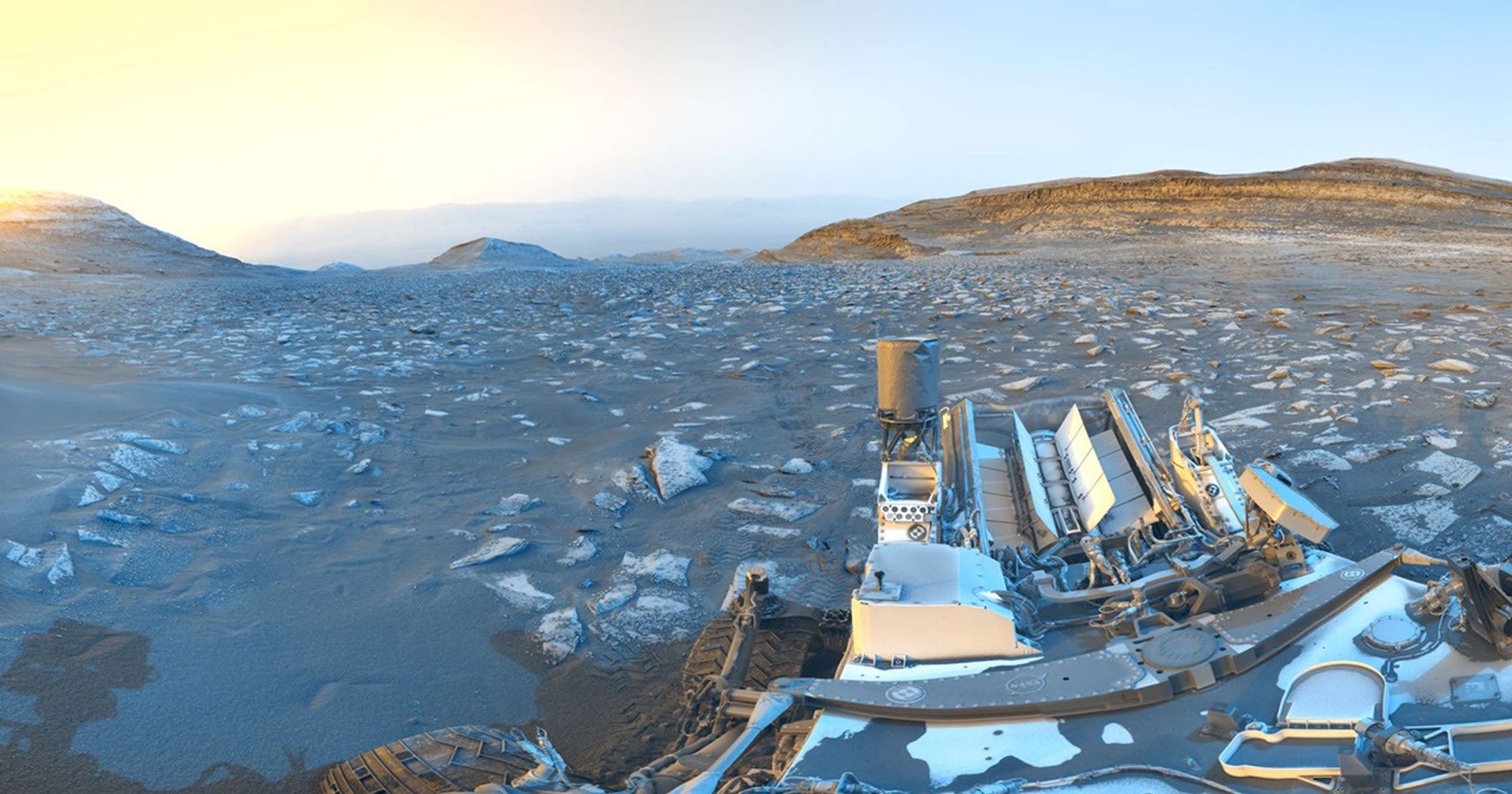
NASA’s Curiosity rover traverses the rocky, desert landscape of Mars beneath a soft sky. The scene is captured in striking blue and yellow hues.

PIA26700

Credits:
NASA/JPL-Caltech

Description

While parked at a sand ridge nicknamed “Chocolatal,” NASA’s Curiosity Mars rover used its black-and-white navigation cameras to capture panoramas at two times of day. The first was taken on Aug. 30, 2026, at 9:56 a.m. local Mars time; the second was taken on Sep. 2, 2026, at 5:39 p.m. local Mars time. Those dates correspond to the 5,000th and 5,003rd Martian days, or sols, of the mission.

After being sent back to Earth, the two images were merged together. Color was added for an artistic interpretation of the scene, with blue representing the morning panorama and yellow representing the afternoon one. The resulting “postcard” is similar to past examples created with rover images, such as one taken in November 2021.

The rover’s deck can be seen in the foreground, including its can-shaped UHF antenna, used for sending data to orbiting spacecraft, and its finned Multi-Mission Radioisotope Thermoelectric Generator (MMRTG), a nuclear power source, at its rear. The rover’s tracks can be seen trailing off in the distance. 

Curiosity is in the lower foothills of Mount Sharp, a 3-mile-tall (5-kilometer-tall) mountain that sits within Gale Crater. This image looks down toward the crater floor, with the crater rim barely perceptible on the horizon.

Curiosity was built by NASA’s Jet Propulsion Laboratory, which is managed by Caltech in Pasadena, California. JPL leads the mission on behalf of NASA’s Science Mission Directorate in Washington as part of NASA’s Mars Exploration Program portfolio.

To learn more about Curiosity, visit:

https://science.nasa.gov/mission/msl-curiosity/

Powered by WPeMatico

Get The Details…

NASA Visits Schools Strengthening Florida’s Skilled Workforce

NASA Visits Schools Strengthening Florida’s Skilled Workforce

NASA recently awarded $10.5 million to seven organizations nationwide through its new State Hubs initiative. Space Florida was selected for Project ORBIT, which aims to expand opportunities for middle and high school students, boost enrollment in key career and technical programs, and create a statewide portal connecting skilled workers with aerospace employers.

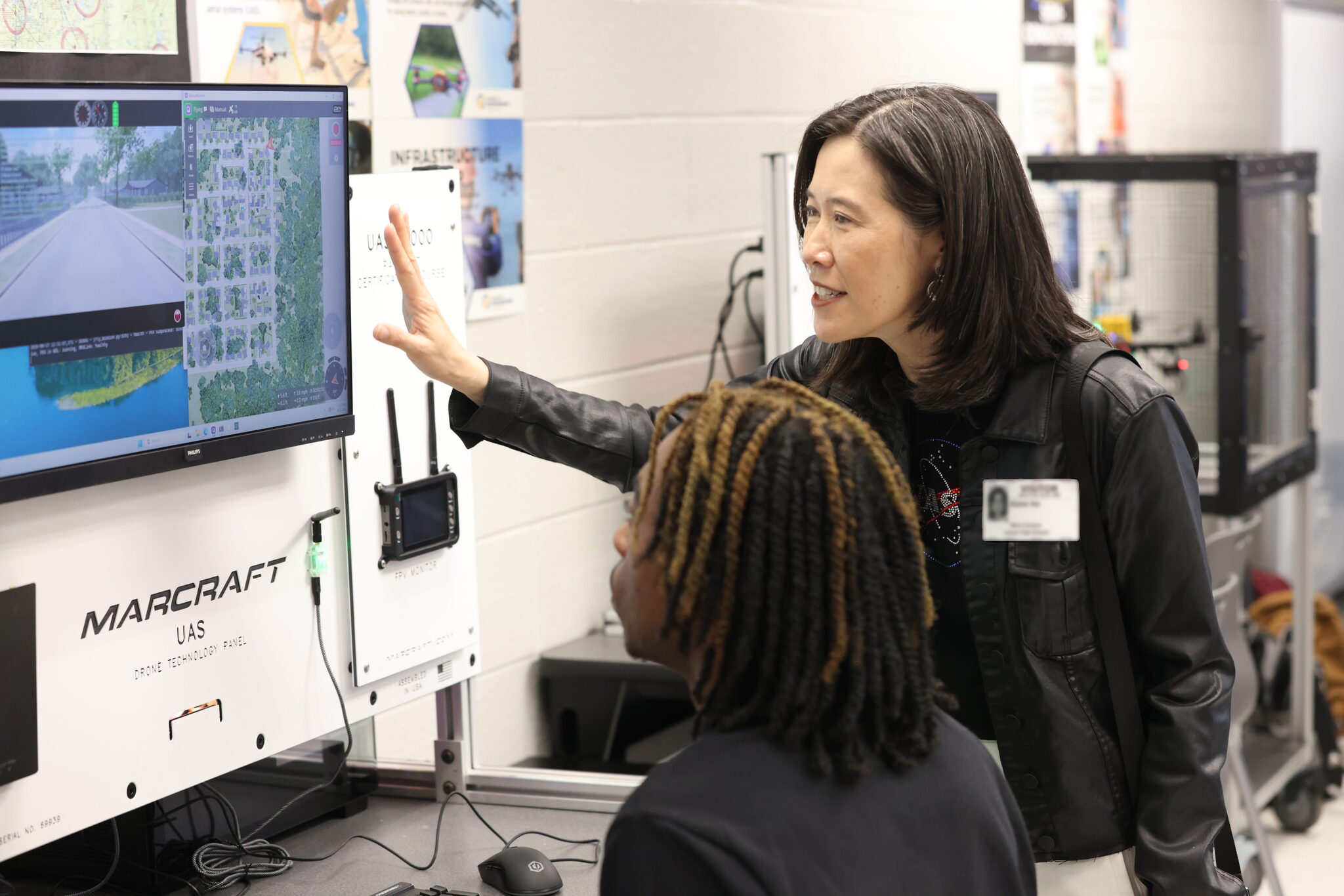
Two people looking at a computer screen
Elaine Ho, right, associate administrator for NASA’s Office of STEM Engagement, discusses training software with a student at Lyman High School in Longwood, Florida on on Aug. 27, 2026.
Credit: NASA/Clayton Rougelot

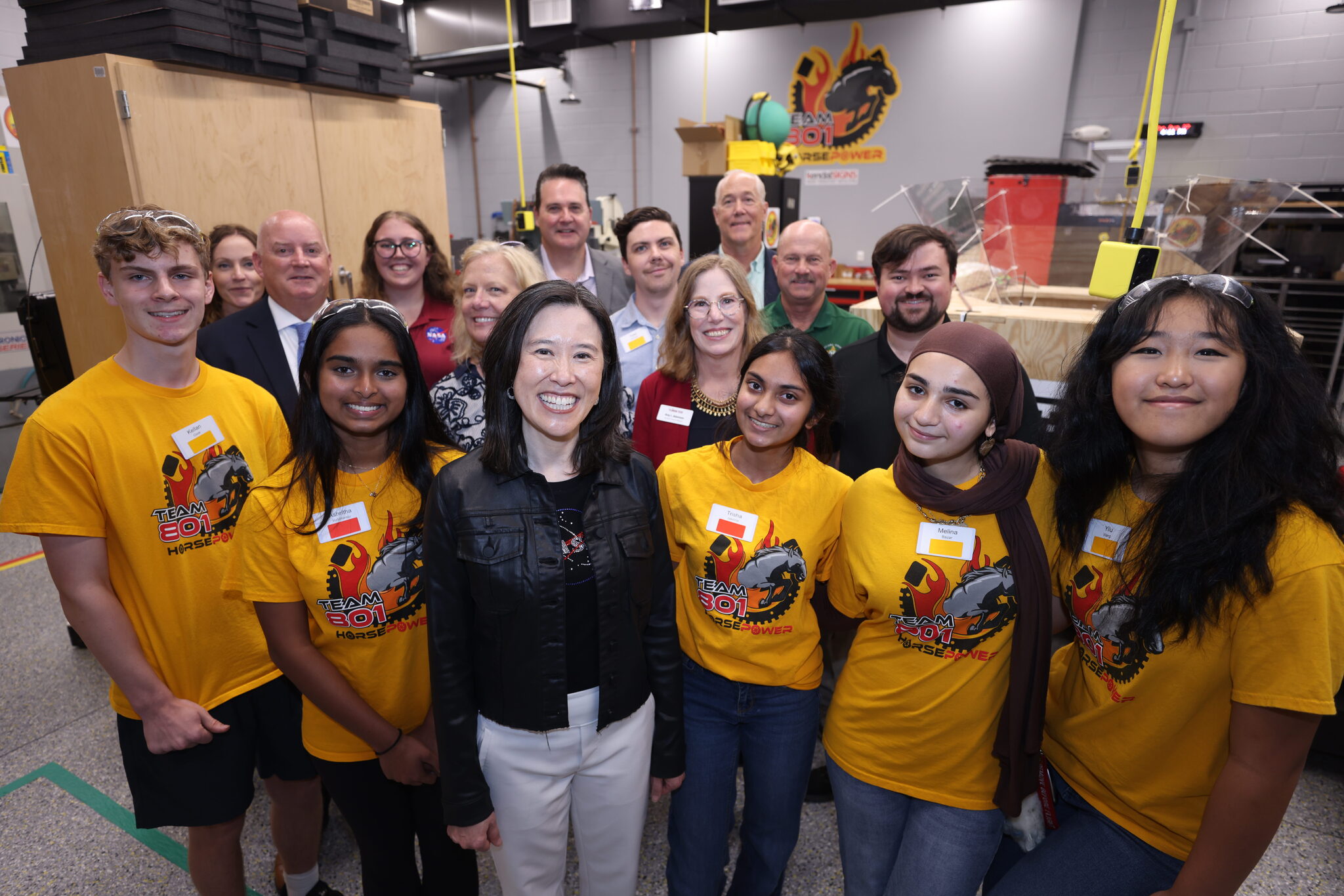
Elaine Ho, associate administrator for NASA’s Office of STEM Engagement, joined local leaders and industry partners recently to see Space Florida Academy students in action at three Central Florida schools. Students at Lyman High School in Longwood, Florida, demonstrated their skills in aerospace engineering, robotics, building trades, welding, and more. Later, in Merritt Island, Florida, Ho and the other leaders stopped by the Aeronautics & Flight Exploration (AFEX) program and cloud computing classrooms at Merritt Island High School and the robotics lab at nearby Edgewood Junior/Senior High School.

Since its launch in August 2024, the Space Florida Academy has expanded from 23 to 42 participating school districts, preparing students for careers in aviation and aerospace, advanced manufacturing, construction, cybersecurity, logistics, and semiconductors.

A group of students posing with Elaine Ho wearing matching t-shirts
Elaine Ho, center, poses for a photo with Space Florida representatives, public school officials, aerospace industry partners, and students at Edgewood Junior/Senior High School in Merritt Island, Florida on Aug. 27, 2026.
Credit: NASA/Clayton Rougelot

“It’s all about showing students what’s possible and then giving them the tools to achieve it,” said Dean Cuke, Merritt Island High School AFEX astronautics and aviation flight instructor. “There are far more possible pathways to be part of the space industry than I think they realize. We’re showing them ways that they can attain that, through learning, through motivation and chasing after their dreams. I’m excited for them.”

Merritt Island High School juniors and student pilots Olivia Street and Troy Wallenburg have both benefited from the program.

“It makes you feel like you’re a part of something way bigger than just a high school class. I learned what I want to do when I grow up – to be a pilot,” Street said.

“My entire life, I’ve just loved space,” Wallenburg said. “It’s great knowing that I’m actually somewhat involved in it, too.”

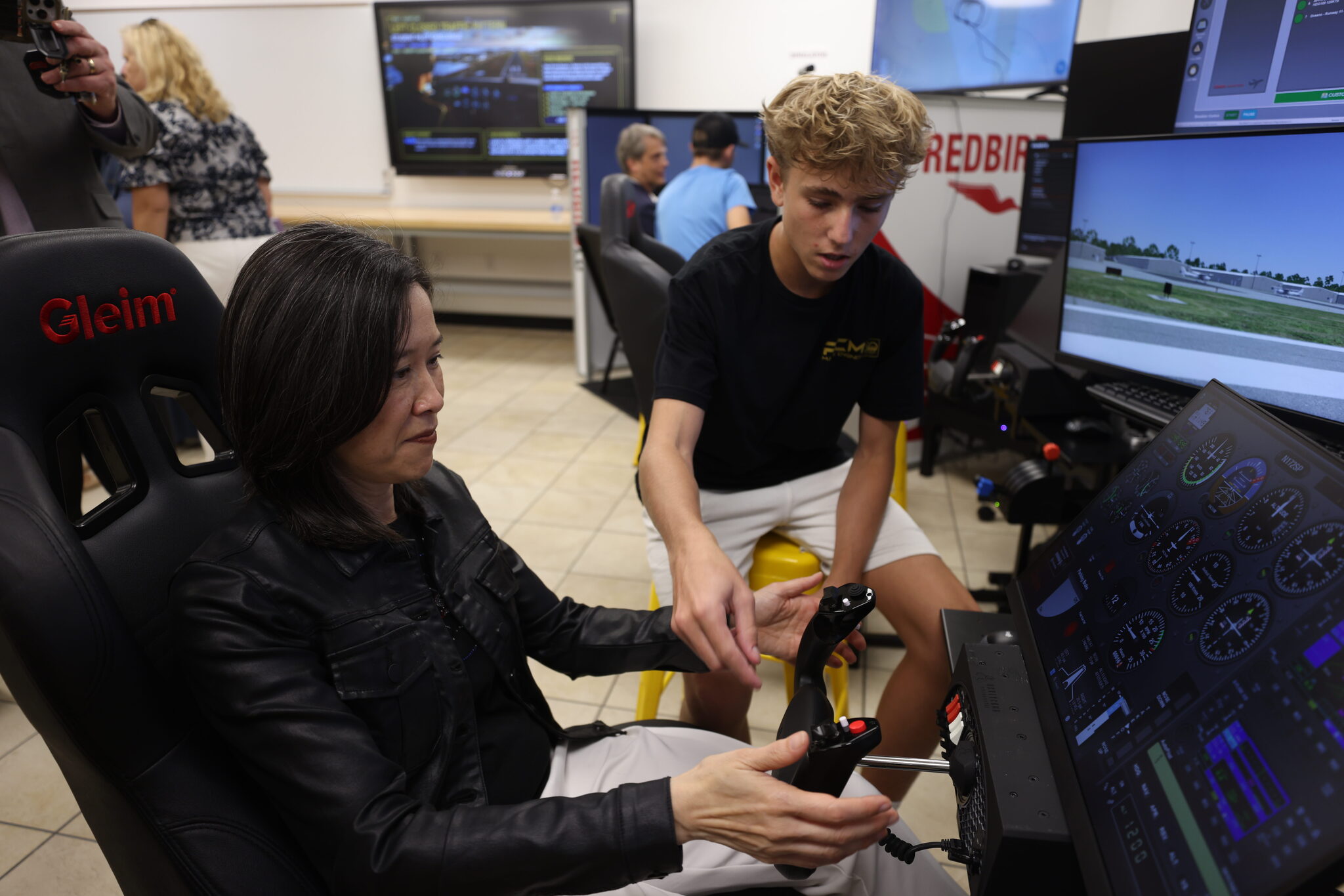
Elaine Ho sitting in a chair with her hands on controller with a student helping set up the simulator
A student in the Merritt Island High School Aeronautics and Flight Exploration program shows Elaine Ho, left, how to use a flight simulator on Aug. 27, 2026.
Credit: NASA/Clayton Rougelot

“I’m so impressed by how this region holds so many opportunities for our students, who are incredibly capable of solving hard problems, who can build our hardware, who want to be part of something bigger than themselves,” Ho said. “NASA is really focused on ensuring that those opportunities are easier to reach.”

Powered by WPeMatico

Get The Details…
Sandra May

NASA Astronaut Reid Wiseman to Join NFL Fans in Baltimore

NASA Astronaut Reid Wiseman to Join NFL Fans in Baltimore

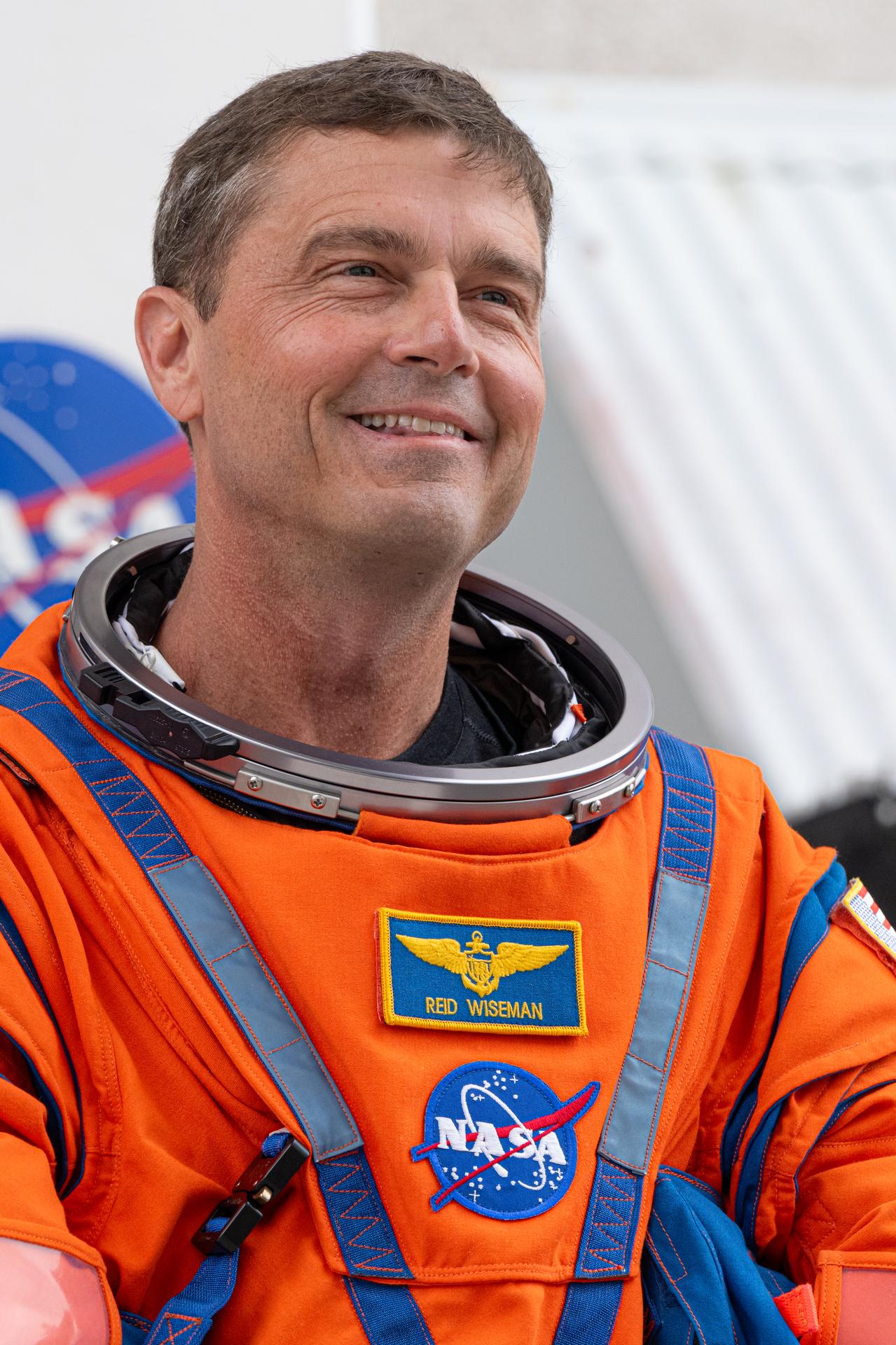
Reid Wiseman looks toward supporters, smiling, wearing an orange spacesuit with his name and a NASA meatball patch.
NASA astronaut Reid Wiseman prepares to depart the Neil A. Armstrong Operations and Checkout Building for Launch Complex 39B at the agency’s Kennedy Space Center in Florida to board NASA’s Artemis II SLS (Space Launch System) rocket and Orion spacecraft for the agency’s Artemis II launch on April 1, 2026.
Credit: NASA/John Kraus

As part of NASA’s new Inspiration Tour, Reid Wiseman, NASA astronaut and commander of the agency’s Artemis II mission, will highlight America’s strengths in space exploration and aeronautics innovation at the Baltimore Ravens vs. New Orleans Saints game in Baltimore on Sunday, Sept. 20.

A Baltimore native, Wiseman is a 27-year Navy veteran and NASA astronaut who spent 175 days in space over two missions. On April 1, Wiseman launched from NASA’s Kennedy Space Center in Florida on a SLS (Space Launch System) rocket as part of the Artemis II mission. Wiseman and his fellow Artemis II crew members completed a historic lunar flyby, marking humanity’s return to the vicinity of the Moon for the first time in more than 50 years.

Wiseman also will be available for media interviews inside the stadium at 12:20 p.m. To RSVP for the media availability, please contact Shaneequa Vereen at: shaneequa.y.vereen@nasa.gov.

NASA team members will engage with fans at the agency’s Experience Zone, located outside the stadium from 10 a.m. to 1 p.m. before the game. Fans can learn more about NASA’s return to the Moon through the agency’s Artemis program, enjoy interactive games, and capture photos at a selfie station and with a large, inflatable NASA logo.

With stops across the nation, NASA’s Inspiration Tour convenes academic, industry, and public sector stakeholders to connect the agency with the people, technologies, and organizations that drive American leadership in space.

The tour will culminate in MAX POWER, a public exposition of American air and space innovation, Saturday, Nov. 7, and Sunday, Nov. 8, on and near the agency’s Kennedy Space Center in Florida. Held in honor of America’s historic 250th anniversary, the multi-day, family-friendly event will showcase the next-generation aircraft, spacecraft, autonomous vehicles, and technologies that will help define the future of transportation in air and space.

For more information about MAX POWER and the agency’s missions, visit:

https://www.nasa.gov/maxpower

-end-

Camille Gallo / Jessica Taveau
Headquarters, Washington
202-358-1600
camille.m.gallo@nasa.gov / jessica.c.taveau@nasa.gov

Share

Details

Last Updated

Sep 16, 2026

Editor
Jessica Taveau

Powered by WPeMatico

Get The Details…
Jessica Taveau

NASA’s Integrated Medical Model (IMM)

NASA’s Integrated Medical Model (IMM)

2 min read

Preparations for Next Moonwalk Simulations Underway (and Underwater)

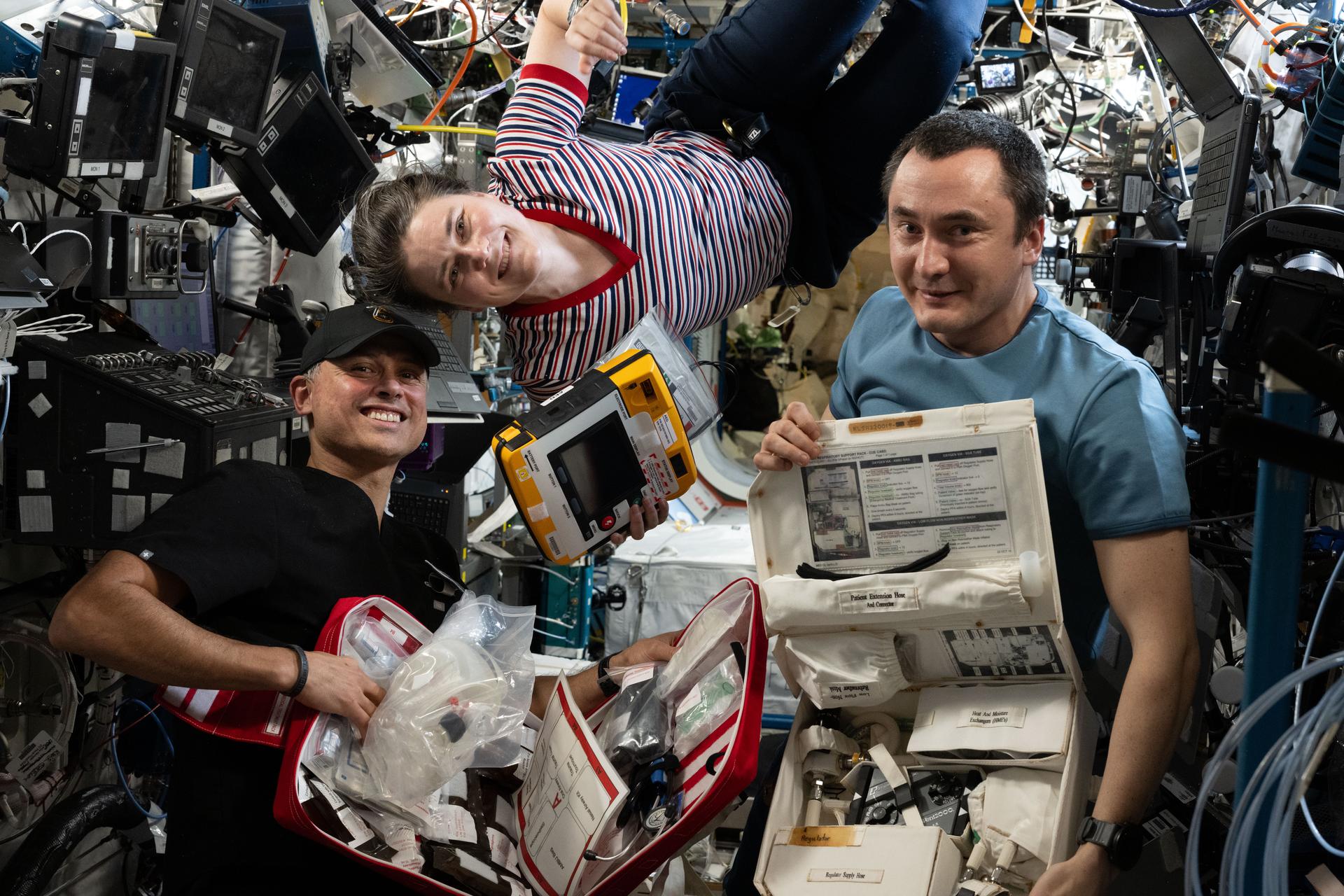
Expedition 75 flight engineers Anil Menon of NASA and Anna Kikina and Pyotr Dubrov of Roscosmos smile for a portrait as they check out emergency medical equipment inside the International Space Station's Destiny laboratory module.
iss075e0088825 (Sept. 4, 2026) — Expedition 75 flight engineers Anil Menon of NASA and Anna Kikina and Pyotr Dubrov of Roscosmos smile for a portrait as they check out emergency medical equipment inside the International Space Station’s Destiny laboratory module.
NASA

Planning crewed missions to the Moon and Mars involves preparing for the medical realities of long-duration space travel. Factors like cosmic radiation, microgravity, and distance from Earth create unique health considerations for astronauts. To anticipate these needs ahead of time, NASA developed the Integrated Medical Model (IMM).

The IMM is a decision-support tool that uses medical evidence and computational modeling to forecast health risks before a mission launches.

How the Model Works

The IMM pulls from decades of flight records and clinical research compiled in NASA’s Integrated Medical Evidence Database (iMED).

Using Monte Carlo simulations, the tool models thousands of potential mission paths. Each run accounts for specific mission parameters, such as crew size, flight duration, planned spacewalks, and the spacecraft environment. This approach allows planners to evaluate risks for new mission profiles that lack historical precedents.

The model evaluates more than 100 medical conditions, ranging from common health concerns to hazards specific to spaceflight, like:

  • Decompression sickness
  • Radiation sickness
  • Space motion sickness
  • Smoke inhalation and barotrauma
  • Routine conditions like infections and kidney stones

Practical Applications for Mission Planning

The model generates several quantitative metrics to help teams prepare:

  • Total Medical Events (TME): The projected number of illnesses or injuries during the mission.
  • Crew Health Index (CHI): An indicator of the crew’s overall functional capacity.
  • Quality-Adjusted Time Lost (QTL): The estimated time spent diagnosing conditions, treating patients, and recovering.
  • Probability of Evacuation and Loss of Crew Life (EVAC / LOCL): The likelihood of a medical emergency requiring a mission abort or resulting in a fatality.
  • Resource Utilization: Projections of which medical consumables, medications, and tools the crew will need.

Because spacecraft carry strict mass and volume constraints, these outputs guide the composition of onboard medical kits (MedCap). Mission planners can balance necessary medical coverage against available cargo space with clear data in hand.

Planning for Greater Distances

On the International Space Station, emergency medical evacuation back to Earth can happen within hours. Deep-space exploration changes that timeline significantly, introducing communication delays and eliminating the option for a rapid return.

The IMM provides the data flight surgeons and engineers need to build resilient, self-sufficient medical systems for long journeys ahead.

Explore More

To dig deeper into how NASA prepares for the medical realities of space travel, explore the full IMM overview and supporting documentation:

Powered by WPeMatico

Get The Details…
Kim Lowe