NASA’s Webb Finds New Evidence for Planet Around Closest Solar Twin

NASA’s Webb Finds New Evidence for Planet Around Closest Solar Twin

6 Min Read

NASA’s Webb Finds New Evidence for Planet Around Closest Solar Twin

Illustration of a large spherical object that looks like a gas giant planet. The object appears to have bands of tan, orange, and dark red horizontal lines forming patterns similar to those in the atmosphere of Jupiter. The background is filled with thousands of distant stars that form a Milky Way-like band running from left to right. The host star, Alpha Centauri A, appears as a glowing white circle to the upper left of the planet. Further off in the distance above and to the right of the planet is a smaller glowing circle, nearby Alpha Centauri B. The words “Artist’s Concept” are in the lower left corner.
This artist’s concept shows what a gas giant orbiting Alpha Centauri A could look like. Observations of the triple star system Alpha Centauri using NASA’s James Webb Space Telescope indicate the potential gas giant, about the mass of Saturn, orbiting the star by about two times the distance between the Sun and Earth. Full illustration and caption shown below.
Credits:
Artwork: NASA, ESA, CSA, STScI, R. Hurt (Caltech/IPAC)

Astronomers using NASA’s James Webb Space Telescope have found strong evidence of a giant planet orbiting a star in the stellar system closest to our own Sun. At just 4 light-years away from Earth, the Alpha Centauri triple star system has long been a compelling target in the search for worlds beyond our solar system.

Alpha Centauri, located in the far southern sky, is made up of the binary Alpha Centauri A and Alpha Centauri B, both Sun-like stars, and the faint red dwarf star Proxima Centauri. Alpha Centauri A is the third brightest star in the night sky. While there are three confirmed planets orbiting Proxima Centauri, the presence of other worlds surrounding Alpha Centauri A and Alpha Centauri B has proved challenging to confirm.

Now, Webb’s observations from its Mid-Infrared Instrument (MIRI) are providing the strongest evidence to date of a gas giant orbiting Alpha Centauri A. The results have been accepted in a series of two papers in The Astrophysical Journal Letters.

If confirmed, the planet would be the closest to Earth that orbits in the habitable zone of a Sun-like star. However, because the planet candidate is a gas giant, scientists say it would not support life as we know it.

“With this system being so close to us, any exoplanets found would offer our best opportunity to collect data on planetary systems other than our own. Yet, these are incredibly challenging observations to make, even with the world’s most powerful space telescope, because these stars are so bright, close, and move across the sky quickly,” said Charles Beichman, NASA’s Jet Propulsion Laboratory and the NASA Exoplanet Science Institute at Caltech’s IPAC astronomy center, co-first author on the new papers. “Webb was designed and optimized to find the most distant galaxies in the universe. The operations team at the Space Telescope Science Institute had to come up with a custom observing sequence just for this target, and their extra effort paid off spectacularly.”

Image A: Alpha Centauri 3 Panel (DSS, Hubble, Webb)
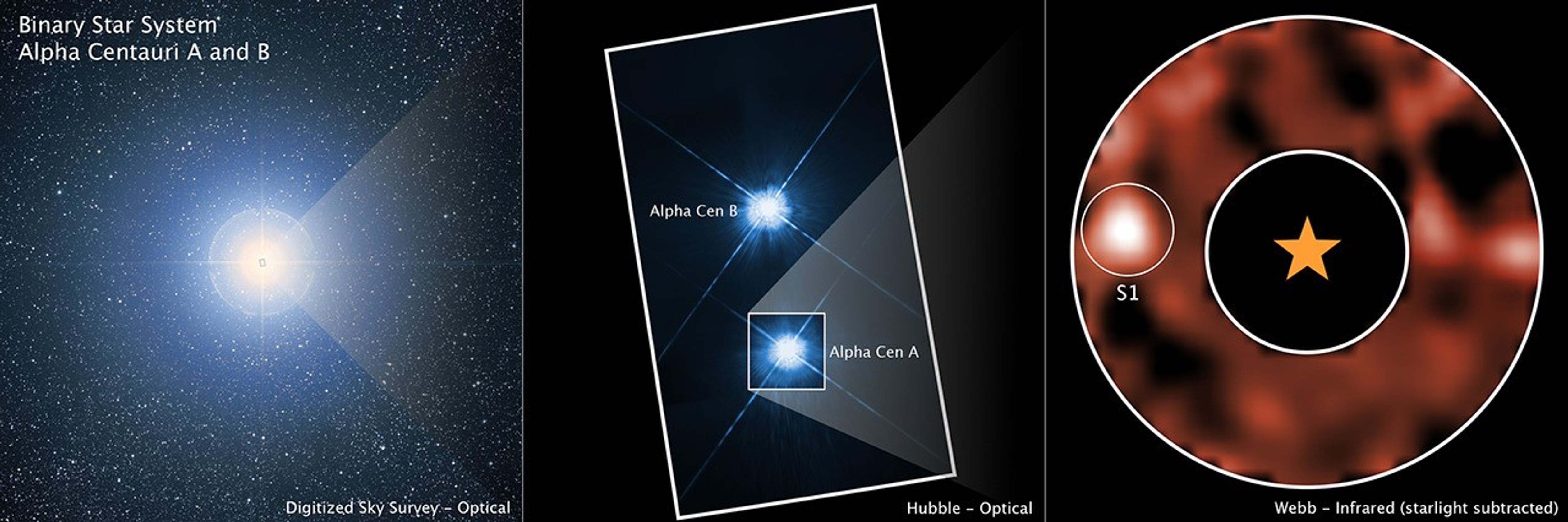
Three panels, each showing a different view of the binary star system Alpha Centauri. The panel at the left is a Digitized Sky Survey image showing a single bright point source at the center of a black image with small stars scattered throughout. The very center of this bright source is outlined with a vertical box, tilted slightly to the left, with two diagonal lines leading to the second panel. The Hubble Space Telescope image shows two white stars with 4 diffraction spikes each against a black background. The top star is labeled Alpha Cen B and the bottom Alpha Cen A. Alpha Cen A is outlined with a white square with two diagonal lines leading to the third panel at the furthest right, which shows a James Webb Space Telescope image of the star. Within a large white circle there is a blurry red-toned field with an orange star icon and central black circle outlined in white marking the location of Alpha Cen A. A bright orange blob at 9 o’clock in relation to the star is labeled “S1” and circled.
This image shows the Alpha Centauri star system from several different ground- and space-based observatories: the Digitized Sky Survey (DSS), NASA’s Hubble Space Telescope, and NASA’s James Webb Space Telescope. Alpha Centauri A is the third brightest star in the night sky, and the closest Sun-like star to Earth. The ground-based image from DSS shows the triple system as a single source of light, while Hubble resolves the two Sun-like stars in the system, Alpha Centauri A and Alpha Centauri B. The image from Webb’s MIRI (Mid-Infrared Instrument), which uses a coronagraphic mask to block the bright glare from Alpha Centauri A, reveals a potential planet orbiting the star.
Science: NASA, ESA, CSA, STScI, DSS, A. Sanghi (Caltech), C. Beichman (NExScI, NASA/JPL-Caltech), D. Mawet (Caltech); Image Processing: J. DePasquale (STScI)

Several rounds of meticulously planned observations by Webb, careful analysis by the research team, and extensive computer modeling helped determine that the source seen in Webb’s image is likely to be a planet, and not a background object (like a galaxy), foreground object (a passing asteroid), or other detector or image artifact.

The first observations of the system took place in August 2024, using the coronagraphic mask aboard MIRI to block Alpha Centauri A’s light. While extra brightness from the nearby companion star Alpha Centauri B complicated the analysis, the team was able to subtract out the light from both stars to reveal an object over 10,000 times fainter than Alpha Centauri A, separated from the star by about two times the distance between the Sun and Earth.

Image B: Alpha Centauri 3 Panel (Webb MIRI Image Detail)
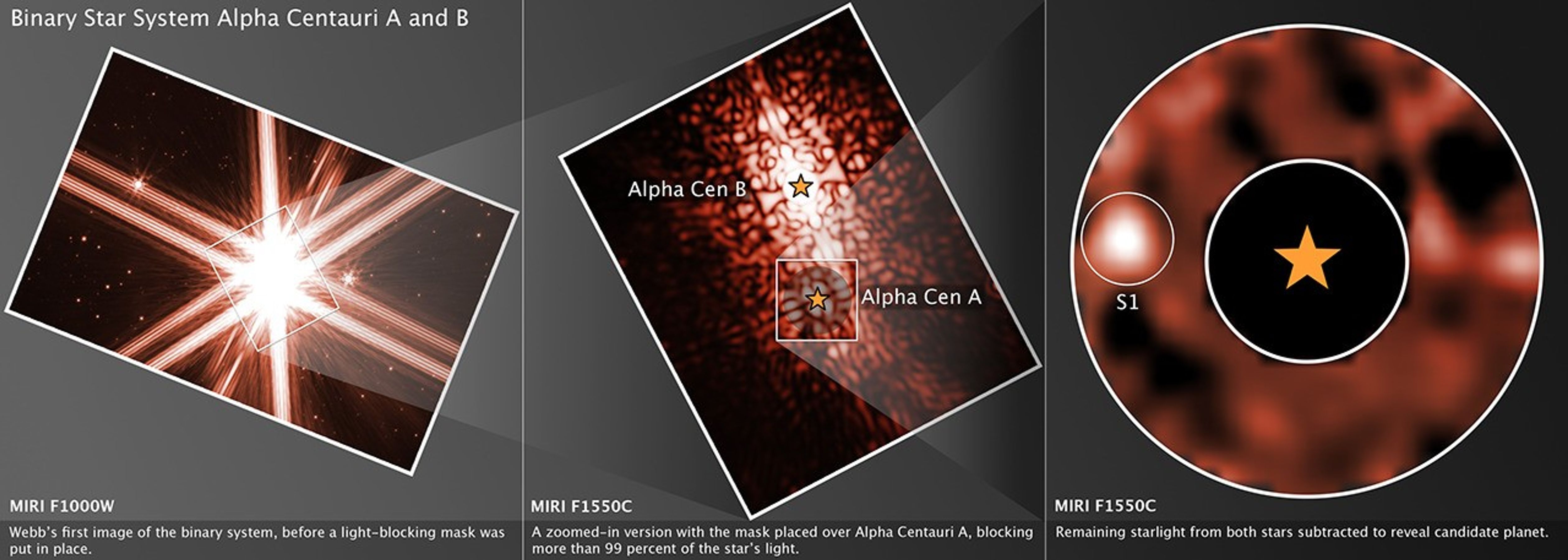
Three panels, each showing a different view of the binary star system Alpha Centauri from the Webb. The left panel shows a rectangular image tilted at a 45 degree angle outlined in white on a grey background. The image is a blown-out bright source at the center, with 8, double columned reddish white diffraction spikes. The center of this bright source is outlined with a vertical box, tilted slightly to the left, with two diagonal lines leading to the second panel. This shows a view of both Alpha Centauri A at the bottom and Alpha Centauri B at the top, both with orange star icons over each star. The star icons are surrounded by mottled red and white blotches. The bottom star is outlined with a white square with two diagonal lines leading to the third panel. Within a large white circle there is a blurry red-toned field with an orange star icon and central black circle outlined in white marking the location of Alpha Cen A. A bright orange blob at 9 o’clock in relation to the star is labeled “S1” and circled.
This three-panel image captures NASA’s James Webb Space Telescope’s observational search for a planet around the nearest Sun-like star, Alpha Centauri A. The initial image shows the bright glare of Alpha Centauri A and Alpha Centauri B, and the middle panel then shows the system with a coronagraphic mask placed over Alpha Centauri A to block its bright glare. However, the way the light bends around the edges of the coronagraph creates ripples of light in the surrounding space. The telescope’s optics (its mirrors and support structures) cause some light to interfere with itself, producing circular and spoke-like patterns. These complex light patterns, along with light from the nearby Alpha Centauri B, make it incredibly difficult to spot faint planets. In the panel at the right, astronomers have subtracted the known patterns (using reference images and algorithms) to clean up the image and reveal faint sources like the candidate planet.
Science: NASA, ESA, CSA, STScI, A. Sanghi (Caltech), C. Beichman (NExScI, NASA/JPL-Caltech), D. Mawet (Caltech); Image Processing: J. DePasquale (STScI)

While the initial detection was exciting, the research team needed more data to come to a firm conclusion. However, additional observations of the system in February 2025 and April 2025 (using Director’s Discretionary Time) did not reveal any objects like the one identified in August 2024.

“We are faced with the case of a disappearing planet! To investigate this mystery, we used computer models to simulate millions of potential orbits, incorporating the knowledge gained when we saw the planet, as well as when we did not,” said PhD student Aniket Sanghi of Caltech in Pasadena, California. Sanghi is a co-first author on the two papers covering the team’s research.

In these simulations, the team took into account both a 2019 sighting of the potential exoplanet candidate by the European Southern Observatory’s Very Large Telescope, the new data from Webb, and considered orbits that would be gravitationally stable in the presence of Alpha Centauri B, meaning the planet wouldn’t get flung out of the system.

Researchers say a non-detection in the second and third round of observations with Webb isn’t surprising.

“We found that in half of the possible orbits simulated, the planet moved too close to the star and wouldn’t have been visible to Webb in both February and April 2025,” said Sanghi.

Image C: Alpha Centauri A Planet Candidate (Artist’s Concept)

Illustration of a large spherical object that looks like a gas giant planet. The object appears to have bands of tan, orange, and dark red horizontal lines forming patterns similar to those in the atmosphere of Jupiter. The background is filled with thousands of distant stars that form a Milky Way-like band running from left to right. The host star, Alpha Centauri A, appears as a glowing white circle to the upper left of the planet. Further off in the distance above and to the right of the planet is a smaller glowing circle, nearby Alpha Centauri B. The words “Artist’s Concept” are in the lower left corner.
This artist’s concept shows what a gas giant orbiting Alpha Centauri A could look like. Observations of the triple star system Alpha Centauri using NASA’s James Webb Space Telescope indicate the potential gas giant, about the mass of Saturn, orbiting the star by about two times the distance between the Sun and Earth. In this concept, Alpha Centauri A is depicted at the upper left of the planet, while the other Sun-like star in the system, Alpha Centauri B, is at the upper right. Our Sun is shown as a small dot of light between those two stars.
Artwork: NASA, ESA, CSA, STScI, R. Hurt (Caltech/IPAC)

Based on the brightness of the planet in the mid-infrared observations and the orbit simulations, researchers say it could be a gas giant approximately the mass of Saturn orbiting Alpha Centauri A in an elliptical path varying between 1 to 2 times the distance between Sun and Earth.

“If confirmed, the potential planet seen in the Webb image of Alpha Centauri A would mark a new milestone for exoplanet imaging efforts,” Sanghi says. “Of all the directly imaged planets, this would be the closest to its star seen so far. It’s also the most similar in temperature and age to the giant planets in our solar system, and nearest to our home, Earth,” he says. “Its very existence in a system of two closely separated stars would challenge our understanding of how planets form, survive, and evolve in chaotic environments.”

If confirmed by additional observations, the team’s results could transform the future of exoplanet science.

“This would become a touchstone object for exoplanet science, with multiple opportunities for detailed characterization by Webb and other observatories,” said Beichman.

For example, NASA’s Nancy Grace Roman Space Telescope, set to launch by May 2027 and potentially as early as fall 2026, is equipped with dedicated hardware that will test new technologies to observe binary systems like Alpha Centauri in search of other worlds. Roman’s visible light data would complement Webb’s infrared observations, yielding unique insights on the size and reflectivity of the planet.

The James Webb Space Telescope is the world’s premier space science observatory. Webb is solving mysteries in our solar system, looking beyond to distant worlds around other stars, and probing the mysterious structures and origins of our universe and our place in it. Webb is an international program led by NASA with its partners, ESA (European Space Agency) and CSA (Canadian Space Agency).

To learn more about Webb, visit:

https://science.nasa.gov/webb

Downloads

Click any image to open a larger version.

View/Download all image products at all resolutions for this article from the Space Telescope Science Institute.

View/Download the science paper by C. Beichman et al.

View/Download the science paper by A. Sanghi et al.

Media Contacts

Laura Betz – laura.e.betz@nasa.gov
NASA’s Goddard Space Flight Center, Greenbelt, Md.

Hannah Braun – hbraun@stsci.edu
Space Telescope Science Institute, Baltimore, Md.

Christine Pulliam – cpulliam@stsci.edu
Space Telescope Science Institute, Baltimore, Md.

Related Information

Video: How to Study Exoplanets: Webb and Challenges

Webb Blog: NASA’s Webb Takes Its First-Ever Direct Image of Distant World

Webb Blog: How Webb’s Coronagraphs Reveal Exoplanets in the Infrared

Video: Eclipse/Coronagraph Animation

More Webb News

More Webb Images

Webb Science Themes

Webb Mission Page

Related For Kids

What is the Webb Telescope?

SpacePlace for Kids

En Español

Ciencia de la NASA

NASA en español 

Space Place para niños

Powered by WPeMatico

Get The Details…

Three NASA Langley Employees Win Prestigious Silver Snoopy Awards 

Three NASA Langley Employees Win Prestigious Silver Snoopy Awards 

3 min read

Preparations for Next Moonwalk Simulations Underway (and Underwater)

From left to right, Astronaut Tracy Dyson, Jeremy Shidner, Sara R. Wilson, and Christopher Broadaway pose for a photo after the 2025 Silver Snoopy Awards ceremony.
NASA/Mark Knopp

Three employees from NASA’s Langley Research Center in Hampton, Virginia recently earned the Silver Snoopy award, a prestigious honor given to NASA employees and contractors across the agency for exceptional achievements related to spaceflight safety or mission success. Christopher Broadaway, Jeremy Shidner, and Sara Wilson received the awards during a ceremony held at the center on July 22. 

The Silver Snoopy award is given personally by NASA astronauts and is presented to less than one percent of the agency’s workforce annually. The award is one of several overseen by the Space Flight Awareness (SFA) Program at NASA. Established in 1963, the SFA Program is vital in ensuring quality and flight safety of America’s space program. The SFA Program works to highlight the individuals behind the success of NASA’s programs as well as motivate the next generation of innovators and cosmic explorers. 

Astronaut Tracy Dyson visited Langley to present the Silver Snoopy lapel pin and a framed Silver Snoopy certificate. Dyson flew aboard the space shuttle Endeavor on STS-118, served as flight engineer for Expedition 23/24, and conducted hundreds of hours of scientific investigations aboard the International Space Station for Expedition 70/71. She has spent a total of 373 days in space and dedicated over 23 hours to spacewalks. 

As a flight engineer with substantial experience, Dyson understands the importance of space flight safety.  

“Those who are receiving this award didn’t do it because they came nine to five and left. It’s not because it was just their job,” she said. “It’s because it’s their life, and our lives are safer and better for it.” 

Astronaut Tracy Dyson signs certificates of appreciation prior to the 2025 Silver Snoopy Awards ceremony.
NASA/Mark Knopp

Silver Snoopy recipient and aerospace engineer Jeremey Shidner echoed Dyson’s perspective. 

“This level of trust is particularly profound because astronauts understand better than anyone the countless systems, procedures, and people that must work flawlessly for a mission to succeed,” he said. “When astronauts single someone out for recognition, it reflects their confidence that this person embodies the same commitment to excellence and safety that they themselves must maintain.” 

The prestigious award consists of a certificate of appreciation signed by Dyson, an authentication letter, and a miniature sterling silver lapel pin in the shape of the well-loved character Snoopy from the comic strip “Peanuts.” Each pin awarded has flown in space. The pins awarded to Langley’s recipients flew aboard STS-118. 

The three 2025 Silver Snoopy Award pins
The 2025 Silver Snoopy Award pins
NASA/Mark Knopp

Here are the three award recipients from Langley and their achievements: 

Christopher Broadaway: For exemplary support in assisting the Commercial Crew Program ensure safety and mission success in industry partners’ human spaceflight missions. 

Jeremy Shidner: For significant contributions to the Commercial Crew Program to ensure flight safety and mission success for Entry, Descent, and Landing. Collaborating closely with the Crew Flight Test team and Mission Operations Flight Dynamics Officers, he refined the simulation model to incorporate real pilot performance data, which resulted in increased entry accuracy, eliminating an elevated risk to crew safety. 

Sara R. Wilson: For engineering excellence in the application of advanced statistical tools and methods characterizing NASA’s human spaceflight missions. She also played a key role in developing standardized tests for advanced lunar spacesuit gloves, creating consistency in evaluating materials for extreme lunar environments. 

Sarah Reeps and Layla Smith
NASA Langley Research Center

Share

Details

Last Updated

Aug 07, 2025

Powered by WPeMatico

Get The Details…
Joseph Scott Atkinson

As NASA Missions Study Interstellar Comet, Hubble Makes Size Estimate

As NASA Missions Study Interstellar Comet, Hubble Makes Size Estimate

4 min read

As NASA Missions Study Interstellar Comet, Hubble Makes Size Estimate

At the center of the image is a comet that appears as a teardrop-shaped bluish cocoon of dust coming off the cometu2019s solid, icy nucleus and seen against a black background. The comet appears to be heading to the bottom left corner of the image. About a dozen short, light blue diagonal streaks are seen scattered across the image, which are from background stars that appeared to move during the exposure because the telescope was tracking the moving comet.
Hubble captured this image of the interstellar comet 3I/ATLAS on July 21, 2025, when the comet was 277 million miles from Earth. Hubble shows that the comet has a teardrop-shaped cocoon of dust coming off its solid, icy nucleus. 
Image: NASA, ESA, David Jewitt (UCLA); Image Processing: Joseph DePasquale (STScI)

A team of astronomers has taken the sharpest-ever picture of the unexpected interstellar comet 3I/ATLAS using the crisp vision of NASA’s Hubble Space Telescope. Hubble is one of many missions across NASA’s fleet of space telescopes slated to observe this comet, together providing more information about its size and physical properties. While the comet poses no threat to Earth, NASA’s space telescopes help support the agency’s ongoing mission to find, track, and better understand near-Earth objects.

Hubble’s observations allow astronomers to more accurately estimate the size of the comet’s solid, icy nucleus. The upper limit on the diameter of the nucleus is 3.5 miles (5.6 kilometers), though it could be as small as 1,000 feet (320 meters) across, researchers report. Though the Hubble images put tighter constraints on the size of the nucleus compared to previous ground-based estimates, the solid heart of the comet presently cannot be directly seen, even by Hubble. Observations from other NASA missions including the James Webb Space Telescope, TESS (Transiting Exoplanet Survey Satellite), and the Neil Gehrels Swift Observatory, as well as NASA’s partnership with the W.M. Keck Observatory, will help further refine our knowledge about the comet, including its chemical makeup.

Hubble also captured a dust plume ejected from the Sun-warmed side of the comet, and the hint of a dust tail streaming away from the nucleus. Hubble’s data yields a dust-loss rate consistent with comets that are first detected around 300 million miles from the Sun. This behavior is much like the signature of previously seen Sun-bound comets originating within our solar system.

The big difference is that this interstellar visitor originated in some other solar system elsewhere in our Milky Way galaxy.

3I/ATLAS is traveling through our solar system at a staggering 130,000 miles (209,000 kilometers) per hour, the highest velocity ever recorded for a solar system visitor. This breathtaking sprint is evidence that the comet has been drifting through interstellar space for many billions of years. The gravitational slingshot effect from innumerable stars and nebulae the comet passed added momentum, ratcheting up its speed. The longer 3I/ATLAS was out in space, the higher its speed grew.

“No one knows where the comet came from. It’s like glimpsing a rifle bullet for a thousandth of a second. You can’t project that back with any accuracy to figure out where it started on its path,” said David Jewitt of the University of California, Los Angeles, science team leader for the Hubble observations.

The paper will be published in The Astrophysical Journal Letters. It is already available on Astro-ph.

New Evidence for Population of Wandering Space Relics

“This latest interstellar tourist is one of a previously undetected population of objects bursting onto the scene that will gradually emerge,” said Jewitt. “This is now possible because we have powerful sky survey capabilities that we didn’t have before. We’ve crossed a threshold.”

This comet was discovered by the NASA-funded Asteroid Terrestrial-impact Last Alert System (ATLAS) on July 1, 2025, at a distance of 420 million miles from the Sun. ATLAS is an asteroid impact early warning system developed by the University of Hawai’i. 

In the meantime, other NASA missions will provide new insight into this third interstellar interloper, helping refine our understanding of these objects for the benefit of all. 3I/ATLAS should remain visible to ground-based telescopes through September, after which it will pass too close to the Sun to observe, and is expected to reappear on the other side of the Sun by early December.

The Hubble Space Telescope has been operating for more than three decades and continues to make ground-breaking discoveries that shape our fundamental understanding of the universe. Hubble is a project of international cooperation between NASA and ESA (European Space Agency). NASA’s Goddard Space Flight Center in Greenbelt, Maryland, manages the telescope and mission operations. Lockheed Martin Space, based in Denver, also supports mission operations at Goddard. The Space Telescope Science Institute in Baltimore, which is operated by the Association of Universities for Research in Astronomy, conducts Hubble science operations for NASA.

To learn more about Hubble, visit: https://science.nasa.gov/hubble


Share

Details

Last Updated
Aug 07, 2025
Editor
Andrea Gianopoulos
Contact
Media

Claire Andreoli
NASA’s Goddard Space Flight Center
Greenbelt, Maryland
claire.andreoli@nasa.gov

Ray Villard
Space Telescope Science Institute
Baltimore, Maryland

Powered by WPeMatico

Get The Details…

Wade Sisler: Aficionado of Wonder Serving the Cosmos

Wade Sisler: Aficionado of Wonder Serving the Cosmos

Across 42 years at NASA, Wade Sisler — executive producer at NASA’s Goddard Space Flight Center in Greenbelt, Maryland—watched the edge of human knowledge progress. During that time, the tools for visualizing and communicating those discoveries evolved just as rapidly.

A selfie of Wade Sisler
Executive Producer Wade Sisler has worked at NASA for 42 years, starting at the agency’s Ames Research Center in California’s Silicon Valley, and now at Goddard Space Flight Center in Greenbelt, Md.
Credit: Courtesy of Wade Sisler

“I’ve spent my career surrounded by people with amazing curiosity and intellect, pursuing questions that could change the way we see the universe, both literally and metaphorically,” Sisler said.

From his start as a student photographer at NASA’s Ames Research Center in California’s Silicon Valley, Sisler ultimately became a creative force behind some of NASA’s most iconic science storytelling. He transitioned to videography when he realized the wonder and understanding the medium could convey.

Gif of photos by Wade Sisler
Photos taken by Sisler between 1985 and 1992 that showcase emerging NASA technologies.
Credit: NASA/Wade Sisler

“The fidelity of the story you could tell with pictures through video was so impactful,” he said. “It was just pure awe. So I gave up my Hasselblads, trading the sheer beauty of imagery for the much more powerful storytelling tools that came with the emerging field of video — specifically the ability to take the audience with you to experience the mission.”

From Space Frogs to the Eagle Nebula 

In the 1980s and ’90s, Sisler worked as a producer on a wide range of projects, translating complex research into short documentaries and educational broadcasts.

“We were helping people see things that had never been seen before, and showing them relationships that they never knew existed,” he said.

In one of his favorite early assignments, Sisler worked with astronaut Mae Jemison for a video project on space frogs. Jemison was studying how frog embryos develop in microgravity on the space shuttle. Sisler also had a hand in early virtual reality systems, producing one of the first videos depicting how VR could work.

Photo of a young Wade Sisler with three coworkers
Sisler (left) stands alongside coworkers Marty Curry, Eric James, and branch chief Roland Michealis — fellow members of the photography team at NASA Ames.
Credit: Courtesy of Wade Sisler

Sisler eventually moved from NASA Ames to NASA Headquarters in Washington. There, he helped modernize NASA TV.

“They were shifting it from just mission-oriented content to a television news feed, exploring ideas to align with national news interests,” he said.

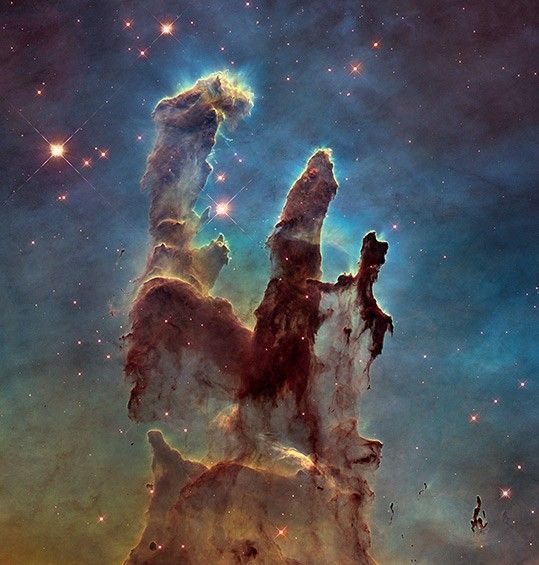
In one of his pilot stories, he produced a video and story news package about the Hubble Space Telescope’s observations of the Eagle Nebula.

“They handed me a 16-by-20-inch print of the Eagle Nebula right after Hubble imaged it,” he said. His team used a robotic camera to pan around the image while narration explained what viewers were seeing. “We wondered if we put that little microcosm of a story into a news feed, would anybody use it? And it ended up being used thousands and thousands of times, validating the NASA TV model with a bona fide science story and giving me a glimpse of the exciting stuff I could do.”

While at NASA Headquarters, Sisler also negotiated an IMAX agreement that led to new 3D films (including ones Sisler worked on, like the 1997 “Mission to Mir” and 2002 “Space Station 3D”). After a few years, he moved on to NASA’s Goddard Space Flight Center in Greenbelt, Maryland, in 1997 as an executive producer. Goddard’s communications team was small and had little experience in visual storytelling, so he joined the team to nurture its growth.

Wade and two coworkers stand in an immersive exhibit
Sisler stands alongside Office of Communications collaborators Laura Betz and Thaddeus Cesari at the immersive “Beyond the Light” exhibit of James Webb Space Telescope imagery at ARTECHOUSE in Washington, D.C.
Credit: Courtesy of Wade Sisler

Science for the Senses 

In the late ’90s, Wade teamed up with NASA’s Scientific Visualization Studio (based at NASA Goddard) and lead visualizer Horace Mitchell to explore a new frontier in science storytelling. While NASA was already known for its iconic space imagery, much of its data deals with invisible phenomena or abstract processes that aren’t inherently visual. By bringing together scientists, artists, and producers, Sisler helped transform data into visualizations and animations for broader audiences.

“We had to invent ways of visualizing the invisible so meaning was more easily conveyed,” he said. “The result was stories that were not just newsworthy—they were often stunningly beautiful and showed the connections and workings of the Earth and universe in ways we had never seen before.”

The team had a breakout hit in 1998 with an El Niño visualization, which helped drive public understanding of the phenomenon. Sisler also helped launch a NASA Goddard program to link scientific experts with news stations around the world.

“We wanted to put the authentic voices of scientists in the chair to convey their sense of awe while telling people scientifically why it matters,” he said. “Pairing their voices with great visualizations was an unbeatable combination and that became the fundamental way we tell science stories.”

Sisler’s storytelling journey evolved into increasingly ambitious creative partnerships that brought NASA science to new cultural spaces. With “Cosmic Cycles,” a collaboration with the National Philharmonic, Wade helped create a program that paired music from a live symphony with high-resolution NASA imagery, inviting viewers to experience the celestial scenery emotionally, not just intellectually.

Instead of the NASA Goddard team creating a video to go along with music, “The composer drew inspiration from video produced by Goddard,” Sisler said. “It’s one of the best examples of science and art in mutual orbit.”

A photo of Wade and collaborators on stage for a Cosmic Cycles panel discussion
From left: Multimedia Producer Scott Wiessinger of NASA Goddard, Sisler, maestro Piotr Gajewski of the National Philharmonic, and composer Henry Dehlinger participate in a panel discussion about “Cosmic Cycles: A Space Symphony,” a collaboration between NASA Goddard and the National Philharmonic.
Credit: NASA/Joel Kowsky

That blending of science and artistic expression reached a new scale in “Beyond the Light,” an art show developed with ARTECHOUSE and James Webb Space Telescope communications lead Laura Betz. Sisler linked artists with NASA scientists to turn cutting-edge astrophysics into a gallery-scale sensory experience. Most recently, Sisler championed a major documentary on Webb called “Cosmic Dawn.” The 1.5-hour film brings viewers on an unprecedented journey through Webb’s delicate assembly, rigorous testing, and triumphant launch.

Many of NASA’s flagship communication programs trace their roots to small teams that Sisler helped assemble and guide. He took a builder’s approach, rolling up his sleeves, testing ideas, and empowering others to scale them. From science storytelling and satellite media tours to the rise of NASA’s audio storytelling, Spanish-language content, Conceptual Image Laboratory animations, social media presence, and live broadcast programming, Sisler played a key role in turning bright ideas into enduring agency assets.

For each of these projects, Sisler worked behind the scenes as a creative force and a connector, bringing together filmmakers, animators, composers, scientists, engineers, astronauts, museum curators, data visualizers, and educators.

Lighting the Way

Despite many accolades, Sisler said his proudest accomplishment is the success of the internship program he has led for NASA Goddard’s Office of Communications.

Wade and a student and another coworker at a poster session
Sisler has served as a mentor for many interns over the years, including students like Talya Lerner, center, standing next to Ed Campion, then-Goddard news chief. Sisler has referred to his own career as “the internship that never ended” because he had so many opportunities to explore different areas of communications. 
Credit: NASA/Bill Hrybyk

“The thing that stays with me most is seeing where our former interns have landed,” he said. Many now lead their own programs within NASA, shaping the next generation of science storytelling from inside the agency. Others have taken their skills beyond NASA, contributing to science and technology literacy through media, education, and public engagement. “It’s been a privilege to help launch so many of these careers. I’ve always believed that when you combine mentorship, meaningful work, and a little creative freedom, you create a ripple effect that lasts for decades.”

Sisler’s own NASA journey began with a Pathways internship at NASA Ames while he was studying journalism at Baylor University in Texas. His work there drew him into visual storytelling, which led him to pursue photography, video, and science photography at the Rochester Institute of Technology in New York. As he alternated semesters between school and NASA Ames, he refined both his interests and his skills.

Sisler’s goal as an internship program coordinator was to help give the next generation of science communicators the same opportunity. He developed a communication “boot camp” to help interns develop their storytelling chops in many areas and figure out which were their favorites.

“All the interesting stuff happens at the intersections of people’s passions,” he said. “The best, most powerful thing I think I’ve done in my time at NASA is to help guide the next wave of science communicators. Seeing their success is the gift that keeps on giving.”

By Ashley Balzer
NASA’s Goddard Space Flight Center, Greenbelt, Md.

Share

Details

Last Updated

Aug 07, 2025

Editor
Ashley Balzer
Contact
Ashley Balzer
Location
Goddard Space Flight Center

Powered by WPeMatico

Get The Details…
Ashley Balzer

Curiosity Blog, Sols 4622-4623: Kicking Off (Earth) Year 14 With an Investigation of Veins

Curiosity Blog, Sols 4622-4623: Kicking Off (Earth) Year 14 With an Investigation of Veins

3 min read

Curiosity Blog, Sols 4622-4623: Kicking Off (Earth) Year 14 With an Investigation of Veins

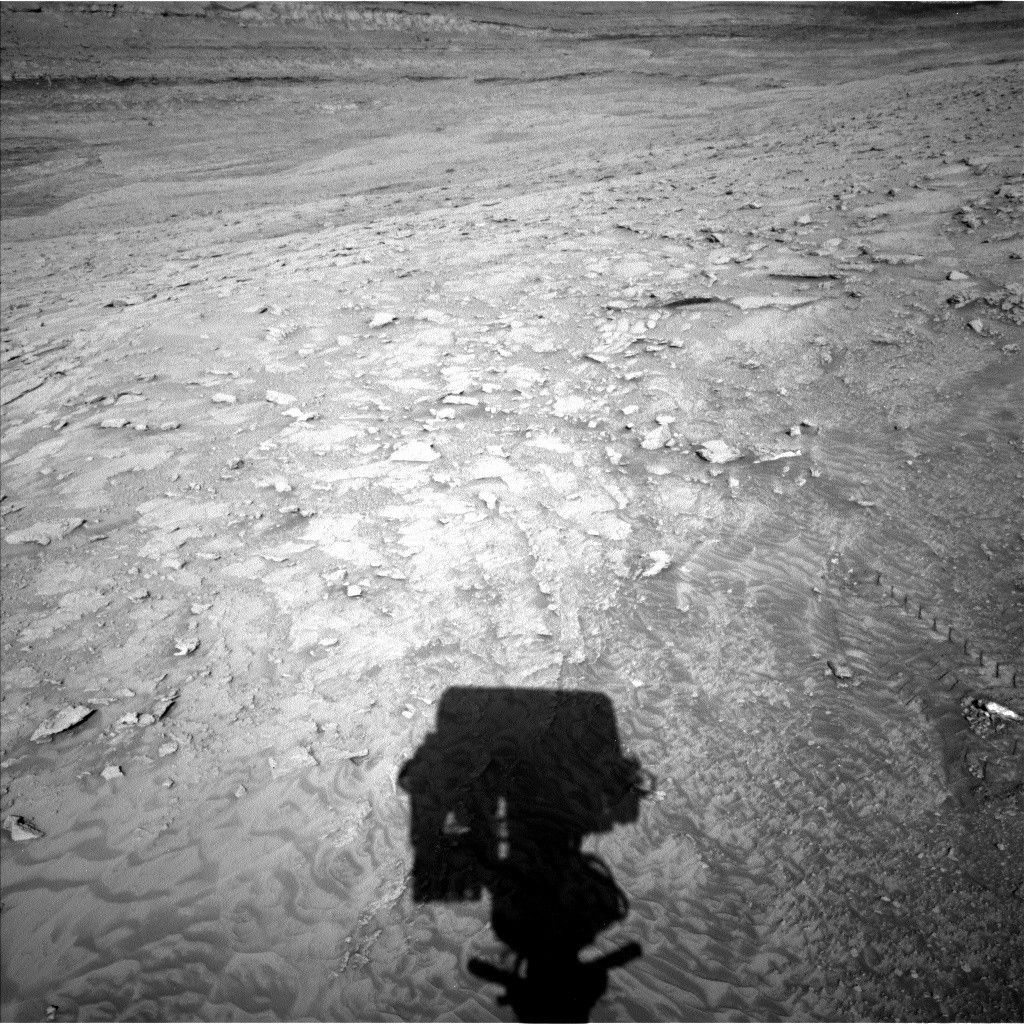
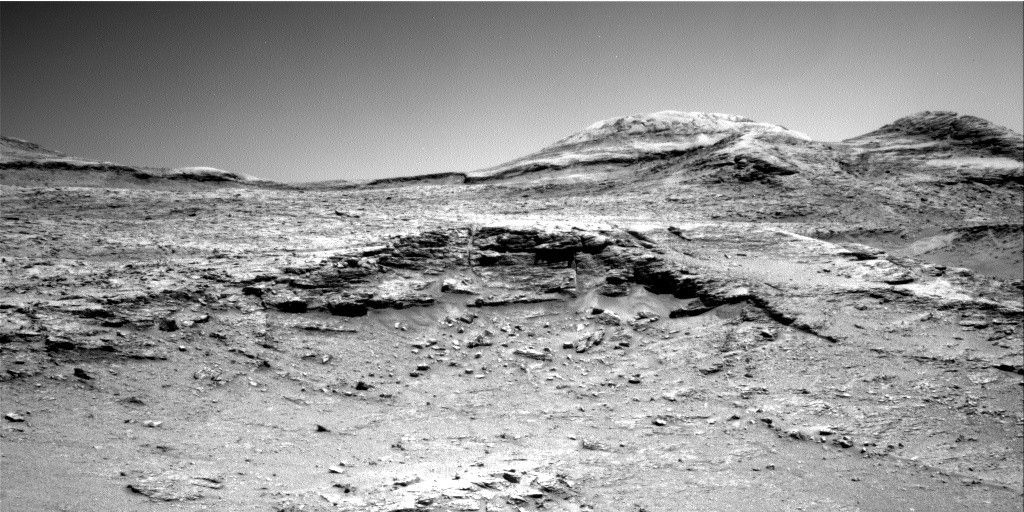
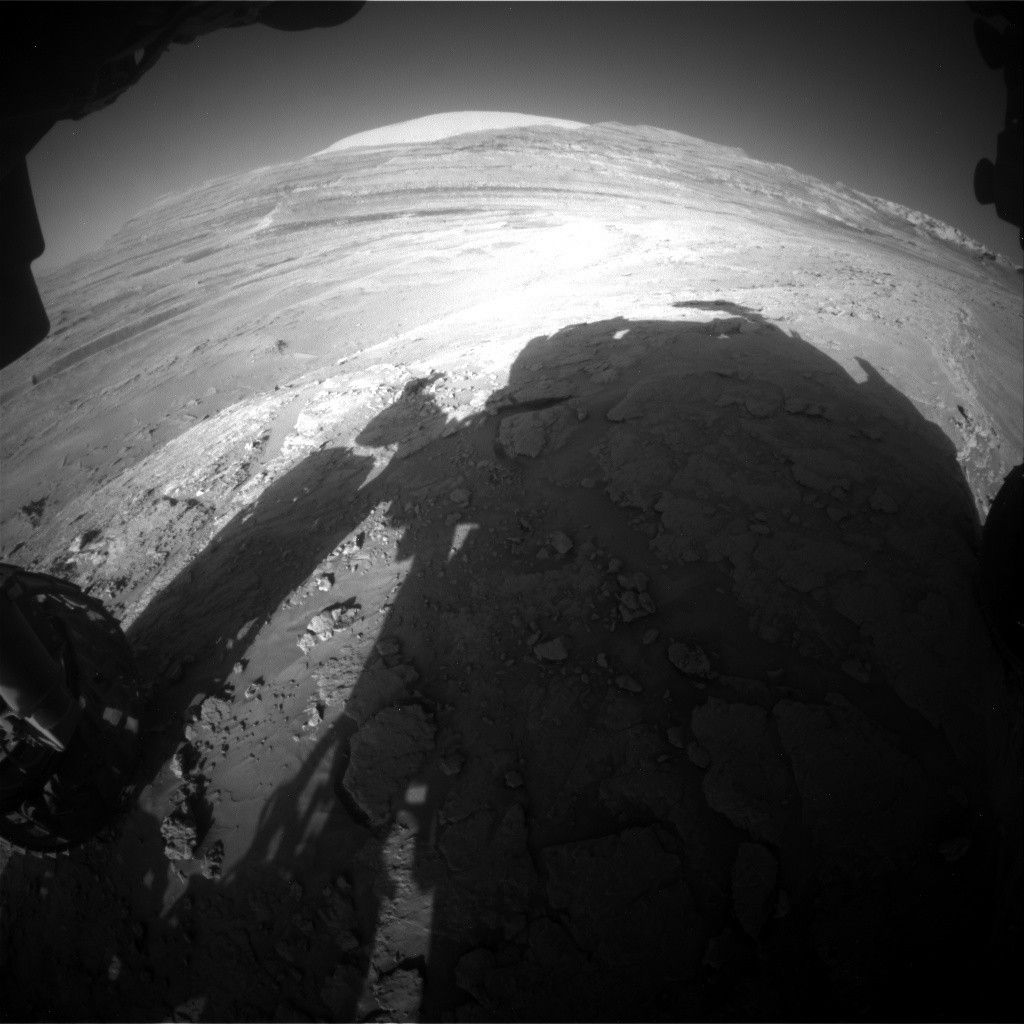
A grayscale photo from the Martian surface shows a rough, rocky landscape in medium gray, with a shadow of the Curiosity rover’s boxy masthead showing at the bottom center of the frame.
NASA’s Mars rover Curiosity, using its Left Navigation Camera, caught the shadow of the rover’s mast looking ahead to new terrain as the mission started its 14th Earth year on Mars. Curiosity acquired this image on Aug. 6, 2025 — Sol 4621, or Martian day 4,621 of the Mars Science Laboratory mission — at 06:24:09 UTC.
NASA/JPL-Caltech

Written by Abigail Fraeman, Deputy Project Scientist at NASA’s Jet Propulsion Laboratory

Earth planning date: Wednesday, Aug. 6, 2025.

Today was a very special day for Curiosity as the rover celebrated the start of a 14th year on Mars. Curiosity is currently exploring the mysterious boxwork formations. On Monday, the rover positioned itself at the side of one of the ridges, where the team had spotted tantalizing hints of a complex network of razor-thin veins that may give insight into what is holding the ridges up, compared to the surrounding hollows. 

In this plan, the team will use the instruments on Curiosity’s arm and mast to investigate the geometry and composition of these veins to learn more about them. APXS and MAHLI will both observe “Repechón,” a loose block with dark-toned, mottled material exposed on top, as well as “Lago Poopó,” a bright, relatively clean vein network. MAHLI will also collect a side view of “Repechón.” ChemCam will use its laser to analyze two targets, “Vicguna,” a protruding vein edge with nodular texture, and “Ibare,” which has some exposed light-toned veins. Outside of the vein investigation, ChemCam’s telescopic RMI camera will observe layering in a nearby butte and the Mishe Mokwa feature, while Mastcam will take mosaics on “Cachiniba,” a broken block, “Yapacani,” the side of another large boxwork ridge, and “Llullaillaco,” a faraway feature that we imaged from a slightly different location in a previous plan. Additional environmental monitoring observations will round out the plan, followed by a straight-line drive to the east, to an area where several large boxwork ridges intersect that the team has been informally calling “the peace sign” because of its shape.

I usually get nostalgic around landing anniversaries, or “landiversaries,” and this year, I found myself looking back through pictures of landing night. One of my favorites shows me standing next to science team member Kirsten Siebach right after we received the first images from Curiosity. The two of us have the biggest, most excited grins on our faces. We were both graduate students at the time, and both of us were writing thesis chapters analyzing orbital data over regions we hoped to explore with Curiosity one day. I was studying a layer in Mount Sharp that contained hematite, and the team named this feature “Vera Rubin ridge” when Curiosity reached it in 2017. Kirsten, who is now a professor at Rice University, was focused on the boxwork structures, pondering how they formed and hypothesizing what they might tell us about the history of Martian habitability when we reached them.

Thirteen years later, I had another big grin on my face today, as I listened to Kirsten and our incredible science team members excitedly discussing Curiosity’s new images of these same boxwork structures. I was also filled with gratitude for the thousands of people it took to get us to this moment. It was the absolute best way to spend a landiversary.

Share

Details

Last Updated
Aug 07, 2025

Related Terms

Powered by WPeMatico

Get The Details…