Laine Havens: Melding Science and Storytelling

Laine Havens: Melding Science and Storytelling

Science Communication Intern – Goddard Space Flight Center

Laine Havens — now a senior at Cornell University and three-time NASA intern — grew up with a deep curiosity about how the universe works and a family that encouraged her to explore it. Throughout her childhood, Laine was immersed in science and exposed to wonderful science communicators by her mother and grandfather. 

Her grandfather, a retired Kodak engineer, encouraged inquisition into all matters — whether it be the inner workings of a telescope or an abandoned hornet’s nest. Laine spent summer evenings watching Mythbusters or Cosmos, and her mother’s favorite science podcast soundtracked car trips. Inspired by the likes of Carl Sagan, Laine originally intended to become a scientist.

“I fell in love with physics in high school,” she says. “I figured I would study it in college all the way through to a Ph.D.”

A headshot of Laine Havens
As a three-time NASA communications intern, Laine Havens has translated science for an audience of millions of people around the globe through science writing, social media, and video production.
Credit: Kristin Rutkowski Photography

Laine enrolled at Cornell and originally majored in physics as planned. But then she discovered an even more exciting option serendipitously while browsing an academic catalog: science and technology studies.

“I was scrolling through looking for a different class, but then I saw science and technology studies and began reading more about what it involved,” Laine says. “It was all about studying science — the philosophy of what it is, and how it interacts with social, political, ethical, and historical dimensions.”

Seeing the new program made Laine realize she could connect her love for critical analysis with her interest in science. She changed her program to a double-major in science and technology studies and astronomy, resolving to not only study and communicate science but to better understand the factors that influence it.

A photo of Laine and two classmates
Laine (left) is a senior at Cornell University, where she double-majors in astronomy and science and technology studies. She served as the student newspaper’s science editor and president of the Pants Improv Comedy group. Laine channeled her comedic skills for some of her NASA projects, including a reel that used puns to discuss the agency’s upcoming Nancy Grace Roman Space Telescope.
Credit: Courtesy of Laine Havens

Laine began by working as a science writer at her university’s student-run newspaper, The Cornell Daily Sun, where she later became the science editor. Meanwhile, she volunteered with The Physics Bus — basically a mini science museum on wheels with experiments for kids — and the Free Science Workshop, an after school program offering kids an opportunity to build things or craft using all sorts of materials and gadgets.

“When you first hear about physics there’s a huge stigma, so we aimed to expose kids to it at a young age so they would associate it with fun,” Laine says.

A photo of Laine Havens and a child at the Physics Bus
Laine volunteered with The Physics Bus to introduce kids to the subject in a fun environment, helping them see the magic of how the world works before they learn to associate physics with boredom or intimidation.
Credit: Courtesy of Laine Havens

During her junior year, Laine started searching for science communication internships and found one at NASA’s Goddard Space Flight Center in Greenbelt, Maryland. She applied and was accepted to one focusing on NASA’s upcoming Nancy Grace Roman Space Telescope. Following her first internship, Laine came back for two more with the same team. 

“Every day here at NASA is inspiring,” Laine says. “I’ve learned so much about both hard and soft skills involved in science communication.”

During her first internship, Laine leaned into her background as a science writer to cover engineering milestones and craft a Tumblr post that walks readers through the universe’s different stages. She also produced videos, including one about Goddard’s biggest clean room.

“Everybody let me take that and run,” Laine says. “I got to write the script, host the video, and edit it.” The video, which garnered millions of views on social media, was the first of several Laine created to engage NASA’s traditional audience while drawing in others who don’t typically follow NASA or science very closely.

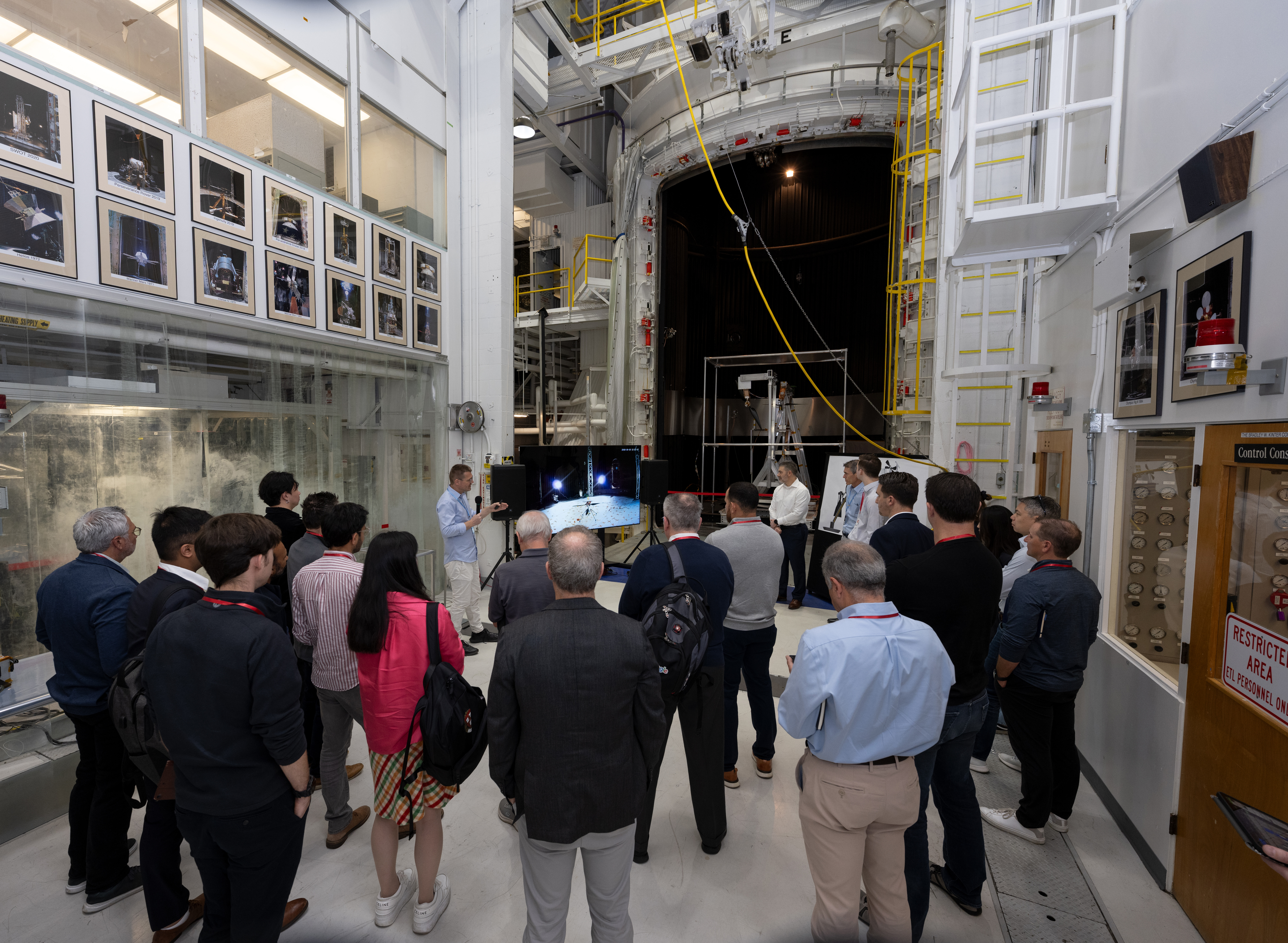
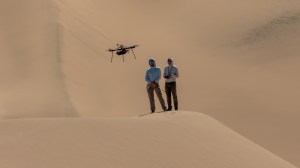
In addition to her usual assigned tasks, Laine took opportunities to be involved in many different aspects of science storytelling. This photo was taken while Laine worked as a drone spotter, helping to ensure a camera-equipped drone wouldn’t damage sensitive space hardware.
Credit: NASA/Sophia Roberts

Throughout her internships, Laine also led tours to teach people more about Roman, helped manage a celebrity visit with John Rhys-Davies, wrote Roman team member profiles, helped gather drone footage, contributed to the release of the NASA documentary Cosmic Dawn, emceed an intern day event, and supported Live Shots — short, live TV interviews with NASA experts. 

“It’s been cool to see a different side of things,” Laine says. “I ultimately want to keep doing what I’ve been doing, but also become engaged in how to make it better — the science of science communication.”

To others who are interested in interning at NASA, Laine recommends speaking up.

“Just ask people things, whether it’s for help or an opportunity,” she says. “Sometimes you don’t want to impose or risk looking dumb, but for the most part everyone wants to help you and see you succeed. I’m very grateful to the Roman team for making it feel like a safe space where I could speak up.” 

A photo of Laine in the big Goddard clean room
In preparation for a clean room “Get Ready With Me” video, Laine shadowed NASA videographer Sophia Roberts in the clean room at the agency’s Goddard Space Flight Center, where she supported documentation of integration milestones for NASA’s Nancy Grace Roman Space Telescope. 
Credit: NASA/Sophia Roberts

Sometimes that meant pitching ideas that were ultimately rejected, but that still provided an opportunity for discussion. “Not everything works, but in talking about it you might think of something else that does work,” she says. “There’s no consequence to it, because either way you’re learning something from it — either from the process of seeing it through or figuring out why you can’t do it.”

The same advice applies to securing an internship in the first place.

“Don’t be afraid to advocate for yourself,” Laine says. “If you find something you love, you can’t wait for it to happen on its own — you have to decide to go for it and find a way to make it happen.”

By Ashley Balzer
NASA’s Goddard Space Flight Center, Greenbelt, Md.

Share

Details

Last Updated

Jul 30, 2025

Editor
Ashley Balzer
Contact
Ashley Balzer
Location
Goddard Space Flight Center

Powered by WPeMatico

Get The Details…
Ashley Balzer

Curiosity Blog, Sols 4614-4615: Driving Along the Boxwork

Curiosity Blog, Sols 4614-4615: Driving Along the Boxwork

2 min read

Curiosity Blog, Sols 4614-4615: Driving Along the Boxwork

A grayscale photo from the Martian surface shows a landscape of dark gray, slightly uneven, desert-like terrain stretching off into the distance, where a line of peaks that look like sand dunes create a hazy horizon line. Part of the rover is dimly visible in the bottom of the frame, and a pair of wheel tracks, darker than the surrounding ground, extend backward from there, scratched into the soil at the center of the frame.
NASA’s Mars rover Curiosity acquired this image, looking out in the direction from where it came, with the rover’s tracks visible through the dust and sand covering the ground. Curiosity acquired this image using its Left Navigation Camera on July 28, 2025 — Sol 4612, or Martian day 4,612 of the Mars Science Laboratory mission — at 00:27:23 UTC.
NASA/JPL-Caltech

Written by Conor Hayes, Graduate Student at York University

Earth planning date: Monday, July 28, 2025

Today was a pretty straightforward day of planning. Our drive over the weekend completed successfully, and we quickly confirmed that we are parked in a stable position. Thus, we were able to unstow the rover’s arm to poke around in our new workspace, which features a large sand-filled fracture. Aside from all of the good geology work to be done, the view from our current location is quite spectacular. 

We’re still in the time of year where the atmosphere at Gale is reasonably dust-free (at least, compared to later in the year), allowing us to look all the way out to and beyond the Gale crater rim. The upper slopes of Mount Sharp have also re-emerged to our east after spending months hidden behind the walls of Gediz Vallis. There’s a bit more sand and dust in this location than we’ve seen recently, so we can also see the trail left behind by the rover’s wheels as we drove to this location (see the image above).

We’re still deep in our examination of the boxwork structures that we’re now driving through, so most of Curiosity’s attention in this plan is focused much closer to the rover than any of the scenic vista surrounding us. APXS, DRT, and MAHLI will all take a look at “Cañón de Palca,” some bedrock close to the large fracture in this workspace. Mastcam and ChemCam RMI will image some boxwork ridges at “Caine,” and will also collaborate on imaging of the weekend’s post-drive AEGIS target and a LIBS bedrock target “Doña Ines.” Mastcam’s solo activities include taking a look at some layering at “Paniri butte” and at MAHLI to examine a speck of dust that may have fallen on the lens.

We’ll be driving away from this location along one of the boxwork ridges, which, at about 5 meters (about 16 feet) wide, is more than large enough to fit our car-sized rover. Post-drive activities are largely focused on environmental monitoring, including Navcam line-of-sight and dust-devil surveys to look at dust, and several Navcam cloud movies. As usual, ChemCam will also join the post-drive fun with an AEGIS observation. More environmental monitoring by REMS, RAD, and DAN fill out the remainder of this plan.

Share

Details

Last Updated
Jul 29, 2025

Related Terms

Powered by WPeMatico

Get The Details…

Spheres in the Sand

Spheres in the Sand

3 min read

Spheres in the Sand

A close-up color photograph from the Martian surface shows an overhead view of a patch of ground covered in what looks like very coarse, rust-colored sand, with numerous rocks in various colors resting atop the sand. Large pale-orange rocks, knobby and lined with small fractures, dominate the upper right and left corners of the frame. Most of the rest of the image is highlighted by dozens of smaller rocks, about half of them pale gray and nearly spherical, resembling dust-covered blueberries or frozen peas.
NASA’s Perseverance rover captured this image of spherule-bearing regolith at Rowsell Hill using its arm-mounted WATSON camera on July 5, 2025 — Sol 1555, or Martian day 1,555 of the Mars 2020 mission — at the local mean solar time of 12:46:29. WATSON (Wide Angle Topographic Sensor for Operations and eNgineering) is a close-range color camera that works with the rover’s SHERLOC instrument (Scanning Habitable Environments with Raman and Luminescence for Organics and Chemicals); both are located on the turret at the end of the rover’s robotic arm.
NASA/JPL-Caltech

Written by Andrew Shumway, Postdoctoral Researcher at the University of Washington

It is not common for a rover to spot nearly perfect spheres in the soil beneath its wheels. Over two decades ago, the Opportunity rover famously discovered spherules made of hematite (nicknamed “blueberries”) near its landing site in Meridiani Planum. More recently, the Perseverance rover has similarly encountered spherules embedded in bedrock and loosely scattered throughout the region informally called “Witch Hazel Hill.” In a previous blog post, we described Perseverance’s investigations of a spherule-bearing outcrop at the “Hare Bay” abrasion patch, where the team later collected a core. With the “Bell Island” sample added to the rover’s collection, the science team next decided to take a closer look at loose spherules in the area, which appear to have eroded out of the nearby bedrock.  

On Sol 1555, while the United States was celebrating the Fourth of July with hotdogs and fireworks, Perseverance was hard at work studying spherule-rich regolith at the target “Rowsell Hill” using the proximity instruments on its robotic arm. SHERLOC’s Autofocus and Context Imager and WATSON camera both captured high resolution pictures of the target (shown above), while PIXL measured the elemental makeup of the spherules and surrounding grains. 

Despite their superficial similarity to Opportunity’s “blueberries”, the spherules at “Rowsell Hill” have a very different composition and likely origin. In Meridiani Planum, the spherules were composed of the mineral hematite and were interpreted to have formed in groundwater-saturated sediments in Mars’ distant past. By comparison, the spherules in “Rowsell Hill” have a basaltic composition and likely formed during a meteoroid impact or volcanic eruption. When a meteoroid crashes into the surface of Mars, it can melt rock and send molten droplets spraying into the air. Those droplets can then rapidly cool, solidifying into spherules that rain down on the surrounding area.  Alternatively, the spherules may have formed from molten lava during a volcanic eruption. 

With these new data in hand, the Perseverance science team continues to search for answers about where these spherules came from. If they formed during an ancient impact, they may be able to tell us about the composition of the meteoroid and the importance of impact cratering in early Mars’s history. If they instead formed during a volcanic eruption, they could preserve clues about past volcanism in the region around Jezero crater. Either way, these spherules are a remnant of an energetic and dynamic period in Mars’ history! 

Share

Details

Last Updated
Jul 29, 2025

Related Terms

Powered by WPeMatico

Get The Details…

NASA Selects Firefly for New Artemis Science, Tech Delivery to Moon

NASA Selects Firefly for New Artemis Science, Tech Delivery to Moon

An artist’s concept of Blue Ghost Mission 4 shows Firefly’s Blue Ghost lunar lander and NASA payloads in the lunar South Pole Region, through NASA’s CLPS (Commercial Lunar Payload Services) initiative.
This artist’s concept of Blue Ghost Mission 4 shows Firefly’s Blue Ghost lunar lander and NASA payloads in the lunar South Pole Region, through NASA’s CLPS (Commercial Lunar Payload Services) initiative.
Credit: Firefly Aerospace

NASA has awarded Firefly Aerospace of Cedar Park, Texas, $176.7 million to deliver two rovers and three scientific instruments to the lunar surface as part of the agency’s CLPS (Commercial Lunar Payload Services) initiative and Artemis campaign to explore more of the Moon than ever before.

This delivery is the first time NASA will use multiple rovers and a variety of stationary instruments, in a collaborative effort with the CSA (Canadian Space Agency) and the University of Bern, to help us understand the chemical composition of the lunar South Pole region and discover the potential for using resources available in permanently shadowed regions of the Moon.

“Through CLPS, NASA is embracing a new era of lunar exploration, with commercial companies leading the way,” said Joel Kearns, deputy associate administrator for exploration, Science Mission Directorate, NASA Headquarters in Washington. “These investigations will produce critical knowledge required for long-term sustainability and contribute to a deeper understanding of the lunar surface, allowing us to meet our scientific and exploration goals for the South Pole region of the Moon for the benefit of all.”

Under the new CLPS task order, Firefly is tasked with delivering end-to-end payload services to the lunar surface, with a period of performance from Tuesday to March 29, 2030. The company’s lunar lander is targeted to land at the Moon’s South Pole region in 2029.

This is Firefly’s fifth task order award and fourth lunar mission through CLPS. Firefly’s first delivery successfully landed on the Moon’s near side in March 2025 with 10 NASA payloads. The company’s second mission, targeting a launch in 2026, includes a lunar orbit drop-off of a satellite combined with a delivery to the lunar surface on the far side. Firefly’s third lunar mission will target landing in the Gruithuisen Domes on the near side of the Moon in 2028, delivering six experiments to study that enigmatic lunar volcanic terrain.

“As NASA sends both humans and robots to further explore the Moon, CLPS deliveries to the lunar South Pole region will provide a better understanding of the exploration environment, accelerating progress toward establishing a long-term human presence on the Moon, as well as eventual human missions to Mars,” said Adam Schlesinger, manager of the CLPS initiative at NASA’s Johnson Space Center in Houston.

The rovers and instruments that are part of this newly awarded flight include:

  • MoonRanger is an autonomous microrover that will explore the lunar surface. MoonRanger will collect images and telemetry data while demonstrating autonomous capabilities for lunar polar exploration. Its onboard Neutron Spectrometer System instrument will study hydrogen-bearing volatiles and the composition of lunar regolith, or soil.
    Lead development organizations: NASA’s Ames Research Center in California’s Silicon Valley, and Carnegie Mellon University and Astrobotic, both in Pittsburgh.
  • Stereo Cameras for Lunar Plume Surface Studies will use enhanced stereo imaging photogrammetry, active illumination, and ejecta impact detection sensors to capture the impact of the rocket exhaust plume on lunar regolith as the lander descends on the Moon’s surface. The high-resolution stereo images will help predict lunar regolith erosion and ejecta characteristics, as bigger, heavier spacecraft and hardware are delivered to the Moon near each other in the future.
    Lead development organization: NASA’s Langley Research Center in Hampton, Virginia. 
  • Laser Retroreflector Array is an array of eight retroreflectors on an aluminum support structure that enables precision laser ranging, a measurement of the distance between the orbiting or landing spacecraft to the reflector on the lander. The array is a passive optical instrument, which functions without power, and will serve as a permanent location marker on the Moon for decades to come.
    Lead development organization: NASA’s Goddard Space Flight Center in Greenbelt, Maryland.
  • A CSA Rover is designed to access and explore remote South Pole areas of interest, including permanently shadowed regions, and to survive at least one lunar night. The CSA rover has stereo cameras, a neutron spectrometer, two imagers (visible to near-infrared), a radiation micro-dosimeter, and a NASA-contributed thermal imaging radiometer developed by the Applied Physics Laboratory. These instruments will advance our understanding of the physical and chemical properties of the lunar surface, the geological history of the Moon, and potential resources such as water ice. It will also improve our understanding of the environmental challenges that await future astronauts and their life support systems.
    Lead development organization: CSA.
  • Laser Ionization Mass Spectrometer is a mass spectrometer that will analyze the element and isotope composition of lunar regolith. The instrument will utilize a Firefly-built robotic arm and Titanium shovel that will deploy to the lunar surface and support regolith excavation. The system will then funnel the sample into its collection unit and use a pulsed laser beam to identify differences in chemistry compared to samples studied in the past, like those collected during the Apollo program. Grain-by-grain analyses will provide a better understanding of the chemical complexity of the landing site and the surrounding area, offering insights into the evolution of the Moon.
    Lead development organization: University of Bern in Switzerland.

Through the CLPS initiative, NASA purchases lunar landing and surface operations services from American companies. The agency uses CLPS to send scientific instruments and technology demonstrations to advance capabilities for science, exploration, or commercial development of the Moon, and to support human exploration beyond to Mars. By supporting a robust cadence of lunar deliveries, NASA will continue to enable a growing lunar economy while leveraging the entrepreneurial innovation of the commercial space industry.

To learn more about CLPS and Artemis, visit:

https://www.nasa.gov/clps

-end-

Alise Fisher
Headquarters, Washington
202-358-2546
alise.m.fisher@nasa.gov

Nilufar Ramji   
Johnson Space Center, Houston
281-483-5111
nilufar.ramji@nasa.gov

Share

Details

Last Updated

Jul 29, 2025

Powered by WPeMatico
Get The Details…
Tiernan P. Doyle

Adam and Hirsa Present Research on the Ring-Sheared Drop

Adam and Hirsa Present Research on the Ring-Sheared Drop

3 min read

Adam and Hirsa Present Research on the Ring-Sheared Drop

A silver laboratory structure with wires and controls, connected to two laptops
Abnormal fibrous, extracellular, proteinaceous deposits found in organs and tissues are associated with neurodegenerative diseases such as Alzheimer’s. (“Amyloid fibril formation in microgravity: Distinguishing interfacial and flow effects” NNX13AQ22G). The Ring Sheared Drop investigation studies the biophysics of protein amyloidogenesis in the absence of gravity in order to study fibril formation at fluid interfaces, in the absence of solid walls.
NASA

Researchers across Space Biology and Physical Sciences come together for a special presentation at the May PSI Users Group.

The Ring-Sheared Drop (RSD) is a Microgravity Science Glovebox experiment that launched in July 2019 to the ISS to study shearing flow in the absence of solid walls. The major goals of this project were to adapt and use the RSD module to develop and test predictive models of non-Newtonian flow of high-concentration proteins at the interface.

At the May Physical Sciences Informatics (PSI) User Group, Dr. Joe Adam, Research Scientist at Rensselaer Polytechnic Institute and University Payload Director of the RSD module, presented, “Protein Solution Hydrodynamic Studies in the Ring-Sheared Drop” detailing the history of RSD, research campaigns and data to be released in PSI. This investigation was led by Principal Investigator, Prof. Amir Hirsa of Rensselaer Polytechnic Institute.

The ring-sheared drop interfacial bioprocessing of pharmaceuticals-I (RSD-IBP-I) campaign aimed to study non-Newtonian interfacial hydrodynamics of the blood transport proteins bovine serum albumin (BSA) and human serum albumin (HSA) in microgravity. Specifically, scientific aims focus on the effects of protein primary structure (BSA or HSA), protein concentration and interfacial shear rate on microgravity fluid flow, measured using velocimetry of hollow glass microsphere tracer particles within protein samples. This campaign intended to confer improved understanding of interfacial protein flows in relation to physiology, the environment, and industry relevant to both spaceflight and Earth. Results from this line of research could have applications to in situ pharmaceutical production, tissue engineering, and diseases such as Alzheimer’s, Parkinson’s, infectious prions, and type 2 diabetes.

To encourage collaboration across common areas of BPS’s Physical Sciences and Biology research, PSI invited Ryan Scott, ALSDA lead Scientist, and members of the ADBR (Alz Disease & Brain Resilience) and Parkinson’s AWG subgroups to attendee this month’s meeting which fueled discussions and led to several connections. During the discussions the two relevant collaborative publications that were shared are:

  • McMackin, P., Adam, J., Griffin, S. et al. Amyloidogenesis via interfacial shear in a containerless biochemical reactor aboard the International Space Station. npj Microgravity 8, 41 (2022). https://doi.org/10.1038/s41526-022-00227-2
  • Nilufar Ali paper resulting in part from a collaboration within the Parkison’s AWG subgroup

Ali, N., Beheshti, A. & Hampikian, G. Space exploration and risk of Parkinson’s disease: a perspective review. npj Microgravity 11, 1 (2025). https://doi.org/10.1038/s41526-024-00457-6

Ring-Sheared Drop – Interfacial Bioprocessing of Pharmaceuticals(RSD-IBP-I) is now accessible in PSI. http://doi.org/10.60555/smat-bb74

Share

Details

Last Updated
Jul 29, 2025

Related Terms

Powered by WPeMatico
Get The Details…