NASA Selects All-American 2025 Class of Astronaut Candidates 

NASA Selects All-American 2025 Class of Astronaut Candidates 

NASA announced its 2025 Astronaut Candidate Class on Sept. 22, 2025. The 10 candidates, pictured here at NASA’s Johnson Space Center in Houston are: U.S. Army CW3 Ben Bailey, U.S. Air Force Maj. Cameron Jones, Katherine Spies, Anna Menon, U.S. Navy Lt. Cmdr. Erin Overcash, U.S. Air Force Maj. Adam Fuhrmann, Dr. Lauren Edgar, Yuri Kubo, Rebecca Lawler, and Dr. Imelda Muller.
Credit: NASA

Lee este comunicado de prensa en español aquí.

NASA’s 10 new astronaut candidates were introduced Monday following a competitive selection process of more than 8,000 applicants from across the United States. The class now will complete nearly two years of training before becoming eligible for flight assignments supporting future science and exploration missions to low Earth orbit, the Moon, and Mars.

Acting NASA Administrator Sean Duffy welcomed the all-American 2025 astronaut candidate class during a ceremony at the agency’s Johnson Space Center in Houston.

“I’m honored to welcome the next generation of American explorers to our agency! More than 8,000 people applied – scientists, pilots, engineers, dreamers from every corner of this nation. The 10 men and women sitting here today embody the truth that in America, regardless of where you start, there is no limit to what a determined dreamer can achieve – even going to space,” said Duffy. “Together, we’ll unlock the Golden Age of exploration.”

The agency’s 24th astronaut class reported for duty at NASA Johnson in mid-September and immediately began their training. Their curriculum includes instruction and skills development for complex operations aboard the International Space Station, Artemis missions to the Moon, and beyond. Specifically, training includes robotics, land and water survival, geology, foreign language, space medicine and physiology, and more, while also conducting simulated spacewalks and flying high-performance jets.

After graduation, the 2025 class will join the agency’s active astronaut corps. Active astronauts are conducting science research aboard the space station while preparing for the transition to commercial space stations and the next great leaps in human exploration at the Moon and Mars. The candidates’ operational expertise, scientific knowledge, and technical backgrounds are essential to advancing NASA’s deep space exploration goals and sustaining a long-term human presence beyond low Earth orbit.

The 2025 astronaut candidates are:

Ben Bailey, 38, chief warrant officer 3, U.S. Army, was born and raised in Charlottesville, Virginia. He has a bachelor’s degree in mechanical engineering from the University of Virginia and is completing a master’s in systems engineering at the Naval Postgraduate School in Monterey, California. Bailey is a U.S. Naval Test Pilot School graduate with more than 2,000 flight hours in more than 30 different rotary and fixed-wing aircraft. At the time of his selection, Bailey was responsible for the developmental testing of emerging technologies aboard Army rotary wing aircraft, specializing in the UH-60 Black Hawk and CH-47F Chinook.

Lauren Edgar, 40, considers Sammamish, Washington, her hometown. She earned a bachelor’s degree in Earth sciences from Dartmouth College, and her master’s and doctorate in geology from the California Institute of Technology. Edgar has served as the deputy principal investigator for the Artemis III Geology Team. In this role, she helped define lunar science goals, geology activities NASA astronauts will conduct, and science operations for NASA’s return to the Moon. She also spent more than 17 years supporting Mars exploration rovers. She was working at the U.S. Geological Survey at the time of her selection.

Adam Fuhrmann, 35, major, U.S. Air Force, is from Leesburg, Virginia, and has accumulated more than 2,100 flight hours in 27 aircraft, including the F-16 and F-35. He holds a bachelor’s degree in aerospace engineering from the Massachusetts Institute of Technology and master’s degrees in flight test engineering and systems engineering from the U.S. Air Force Test Pilot School and Purdue University, respectively. He has deployed in support of Operations Freedom’s Sentinel and Resolute Support, logging 400 combat hours. At the time of his selection, Fuhrmann served as the director of operations for an Air Force flight test unit.

Cameron Jones, 35, major, U.S. Air Force, is a native of Savanna, Illinois. He holds bachelor’s and master’s degrees in aerospace engineering from the University of Illinois at Urbana-Champaign. He is also a graduate of the U.S. Air Force Test Pilot School at Edwards Air Force Base in California and the U.S. Air Force Weapons School at Nellis Air Force Base in Nevada. He’s an experienced test pilot with more than 1,600 flight hours in more than 30 different aircraft, including 150 combat hours. The majority of his flight time is in the F-22 Raptor. At the time of his selection, Jones was an Air Force Academic Fellow at the Defense Advanced Research Projects Agency.

Yuri Kubo, 40, is a native of Columbus, Indiana. He earned a bachelor’s degree in electrical engineering and a master’s in electrical and computer engineering from Purdue University. He spent 12 years working across various teams at SpaceX, including as launch director for Falcon 9 rocket launches, director of avionics for the Starshield program, and director of Ground Segment. Earlier in his career, Kubo was a co-op student at NASA Johnson, where he completed multiple tours supporting the Orion spacecraft, the International Space Station, and the Space Shuttle Program. At the time of his selection, Kubo was the senior vice president of Engineering at Electric Hydrogen.

Rebecca Lawler, 38, is a native of Little Elm, Texas, and a former lieutenant commander in the U.S. Navy. She is a former Navy P-3 pilot and experimental test pilot with more than 2,800 flight hours in more than 45 aircraft. Lawler holds a bachelor’s degree in mechanical engineering from the U.S. Naval Academy and master’s degrees from Johns Hopkins University and the National Test Pilot School. She also is a U.S. Naval Test Pilot School graduate. Lawler also flew as a National Oceanic and Atmospheric Administration hurricane hunter and during NASA’s Operation IceBridge. She was a test pilot for United Airlines at the time of selection.

Anna Menon, 39, is from Houston and earned her bachelor’s degree from Texas Christian University with a double major in mathematics and Spanish. She also holds a master’s in biomedical engineering from Duke University. Menon previously worked in the Mission Control Center at NASA Johnson, supporting medical hardware and software aboard the International Space Station. In 2024, Menon flew to space as a mission specialist and medical officer aboard SpaceX’s Polaris Dawn. The mission saw a new female altitude record, the first commercial spacewalk, and the completion of approximately 40 research experiments. At the time of her selection, Menon was a senior engineer at SpaceX.

Imelda Muller, 34, considers Copake Falls, New York, her hometown. She formerly was a lieutenant in the U.S. Navy and served as an undersea medical officer after training at the Naval Undersea Medical Institute. Muller earned a bachelor’s degree in behavioral neuroscience from Northeastern University and a medical degree from the University of Vermont College of Medicine. Her experience includes providing medical support during Navy operational diving training at NASA’s Neutral Buoyancy Laboratory. At the time of her selection, Muller was completing a residency in anesthesia at Johns Hopkins School of Medicine in Baltimore.

Erin Overcash, 34, lieutenant commander, U.S. Navy, is from Goshen, Kentucky. She holds a bachelor’s degree in aerospace engineering and a master’s in bioastronautics from the University of Colorado, Boulder. A U.S. Naval Test Pilot School graduate, Overcash is an experienced F/A-18E and F/A-18F Super Hornet pilot with multiple deployments. She has logged more than 1,300 flight hours in 20 aircraft, including 249 carrier arrested landings. Overcash was part of the Navy’s World Class Athlete Program and trained full-time at the Olympic Training Center with the USA Rugby Women’s National Team. She was training for a squadron department head tour at the time of selection.

Katherine Spies, 43, is a native of San Diego and holds a bachelor’s degree in chemical engineering from the University of Southern California and a master’s in design engineering from Harvard University. She is a former Marine Corps AH-1 attack helicopter pilot and experimental test pilot, with more than 2,000 flight hours in more than 30 different aircraft. A graduate of the U.S. Naval Test Pilot School, she served as UH-1Y/AH-1Z project officer and AH-1W platform coordinator during her time on active duty. At the time of her selection, Spies was the director of flight test engineering at Gulfstream Aerospace Corporation.

With the addition of these 10 individuals, NASA now has recruited 370 astronaut candidates since selecting the original Mercury Seven in 1959.

“Today, our mission propels us even further as we prepare for our next giant leap with NASA’s newest astronaut candidate class,” said Vanessa Wyche, director of NASA Johnson. “Representing America’s best and brightest, this astronaut candidate class will usher in the Golden Age of innovation and exploration as we push toward the Moon and Mars.”

The astronaut candidates will be available to speak with media virtually and in-person on Tuesday, Oct. 7. Media interested in this limited opportunity should contact the NASA Johnson Newsroom at 281-483-5111 or jsccommu@mail.nasa.gov. NASA’s media accreditation policy is available online. 

Find photos and additional information about the new astronaut candidates at:

https://www.nasa.gov/astronauts

-end-

Bethany Stevens / Jimi Russell
Headquarters, Washington
202-358-1100
bethany.c.stevens@nasa.gov / james.j.russell@nasa.gov

Chelsey Ballarte
Johnson Space Center, Houston
281-483-5111
chelsey.n.ballarte@nasa.gov

Share

Details

Last Updated

Sep 22, 2025

Editor
Jessica Taveau

Powered by WPeMatico

Get The Details…
Jessica Taveau

The Ancient Mars Variety Show

The Ancient Mars Variety Show

Image of the “Peachflya” abrasion spot
Image of the “Peachflya” abrasion spot, from Perseverance’s WATSON Camera on sol 1620.
NASA/JPL-Caltech

Written by Melissa Rice, Professor of Planetary Science at Western Washington University

Perseverance accomplished something unusual this week: abrading two dramatically different rocks within the span of a few days. While exploring the Vernodden area along Jezero crater’s rim, the rover has been studying what might be “megablocks,” a variety of ancient crustal materials with clues to Mars’ early geological history.

The target “Peachflya,” abraded on sol 1618, revealed clasts of different mineral compositions. This could mean the rock is a breccia formed from fragments of even older materials that were broken up, transported, and cemented together – possibly during an impact in Mars’ distant past.

Image of the “Klorne” abrasion spot, from Perseverance’s WATSON Camera on sol 1623.
NASA/JPL-Caltech

Just meters away, the target “Klorne” was abraded on sol 1623 and it tells a completely different story. The fresh surface is greenish, with some dark spots and white veins—evidence of significant chemical alteration. Klorne’s green hue is consistent with the mineral serpentine, and reminiscent of Perseverance’s abrasion of “Serpentine Lake” back on sol 1404.

Next, Perseverance will examine the “Monacofjellet” megablock, which shows yet another distinct spectral signature. Each of these ancient fragments can help the Science Team reconstruct the complex geological processes that shaped early Mars billions of years ago.

Powered by WPeMatico
Get The Details…

NASA Selects Blue Origin to Deliver VIPER Rover to Moon’s South Pole

NASA Selects Blue Origin to Deliver VIPER Rover to Moon’s South Pole

This artist’s concept shows Blue Origin’s Blue Moon Mark 1 lander and NASA’s VIPER (Volatiles Investigating Polar Exploration Rover) on the lunar surface.
Credit: Blue Origin

As part of the agency’s Artemis campaign, NASA has awarded Blue Origin of Kent, Washington, a CLPS (Commercial Lunar Payload Services) task order with an option to deliver a rover to the Moon’s South Pole region. NASA’s VIPER (Volatiles Investigating Polar Exploration Rover) will search for volatile resources, such as ice, on the lunar surface and collect science data to support future exploration at the Moon and Mars.

“NASA is leading the world in exploring more of the Moon than ever before, and this delivery is just one of many ways we’re leveraging U.S. industry to support a long-term American presence on the lunar surface,” said acting NASA Administrator Sean Duffy. “Our rover will explore the extreme environment of the lunar South Pole, traveling to small, permanently shadowed regions to help inform future landing sites for our astronauts and better understand the Moon’s environment – important insights for sustaining humans over longer missions, as America leads our future in space.”

The CLPS task order has a total potential value of $190 million. This is the second CLPS lunar delivery awarded to Blue Origin. Their first delivery – using their Blue Moon Mark 1 (MK1) robotic lander – is targeted for launch later this year to deliver NASA’s Stereo Cameras for Lunar-Plume Surface Studies and Laser Retroreflective Array payloads to the Moon’s South Pole region.

With this new award, Blue Origin will deliver VIPER to the lunar surface in late 2027, using a second Blue Moon MK1 lander, which is in production. NASA previously canceled the VIPER project and has since explored alternative approaches to achieve the agency’s goals of mapping potential off-planet resources, like water.

“NASA is committed to studying and exploring the Moon, including learning more about water on the lunar surface, to help determine how we can harness local resources for future human exploration,” said Nicky Fox, associate administrator, Science Mission Directorate, NASA Headquarters in Washington. “We’ve been looking for creative, cost-effective approaches to accomplish these exploration goals. This private sector-developed landing capability enables this delivery and focuses our investments accordingly – supporting American leadership in space and ensuring our long-term exploration is robust and affordable.”

The task order, called CS-7, has an award base to design the payload-specific accommodations and to demonstrate how Blue Origin’s flight design will off-load the rover to the lunar surface. There is an option on the contract to deliver and safely deploy the rover to the Moon’s surface. NASA will make the decision to exercise that option after the execution and review of the base task and of Blue Origin’s first flight of the Blue Moon MK1 lander. This unique approach will reduce the agency’s cost and technical risk. The rover has a targeted science window for its 100-day mission that requires a landing by late 2027.

Blue Origin is responsible for the complete landing mission architecture and will conduct design, analysis, and testing of a large lunar lander capable of safely delivering the lunar volatiles science rover to the Moon. Blue Origin also will handle end-to-end payload integration, planning and support, and post-landing payload deployment activities. NASA will conduct rover operations and science planning.

“The search for lunar volatiles plays a key role in NASA’s exploration of the Moon, with important implications for both science and human missions under Artemis,” said Joel Kearns, deputy associate administrator for exploration, Science Mission Directorate, NASA Headquarters. “This delivery could show us where ice is most likely to be found and easiest to access, as a future resource for humans. And by studying these sources of lunar water, we also gain valuable insight into the distribution and origin of volatiles across the solar system, helping us better understand the processes that have shaped our space environment and how our inner solar system has evolved.”

Through CLPS, American companies continue to demonstrate leadership in commercial space advancing capabilities and accomplishing NASA’s goal for a commercial lunar economy. NASA’s Ames Research Center in California’s Silicon Valley led the VIPER rover development and will lead its science investigations, and NASA’s Johnson Space Center in Houston provided rover engineering development for Ames.

To learn more about CLPS and Artemis, visit:

https://www.nasa.gov/clps

-end-

Alise Fisher
Headquarters, Washington
202-358-2546
alise.m.fisher@nasa.gov

Kenna Pell / Nilufar Ramji
Johnson Space Center, Houston
281-483-5111
kenna.m.pell@nasa.gov / nilufar.ramji@nasa.gov  

Powered by WPeMatico
Get The Details…
Tiernan P. Doyle

NASA’s Orion Spacecraft Secures Critical Abort System Hardware for Artemis II

NASA’s Orion Spacecraft Secures Critical Abort System Hardware for Artemis II

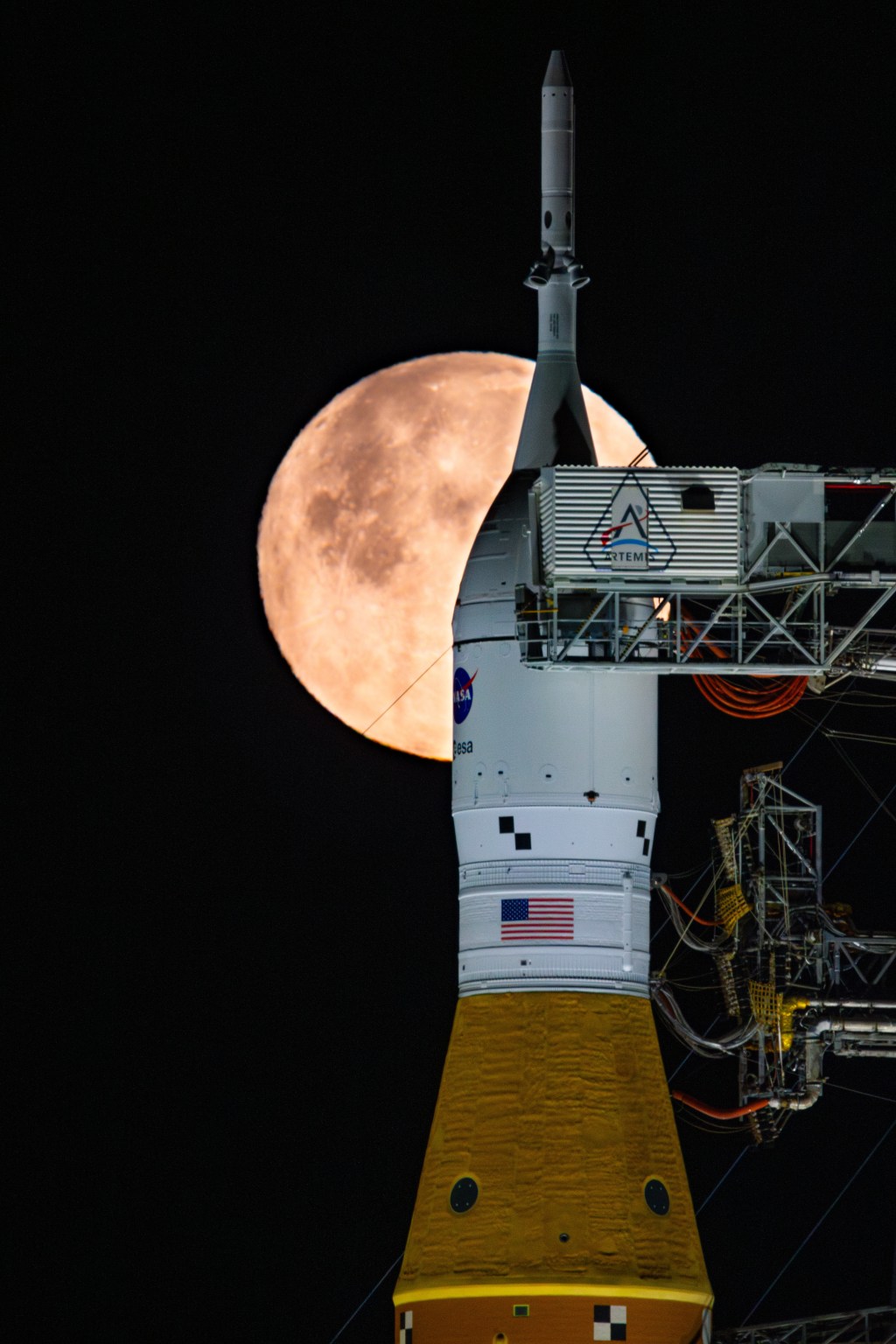
All the pieces are stacking up – literally – for NASA’s first crewed mission of the Artemis program coming in 2026.

Teams are finishing integration of the Orion spacecraft for the Artemis II test flight with its launch abort system on Sept. 17 inside the Launch Abort System Facility at NASA’s Kennedy Space Center in Florida. The 44-foot-tall tower-like abort structure would swiftly carry the four-person crew inside Orion to safety in the unlikely event of an emergency during launch or ascent atop the SLS (Space Launch System) rocket.

Over the next few weeks, teams will complete remaining closeout activities before moving the spacecraft to its final stop before the launch pad: the agency’s Vehicle Assembly Building. There it will be added to the top of the rocket, before the finished stack is rolled out to the launch pad on its way to the Moon.

The abort system is comprised of three solid rocket motors: the jettison, attitude, and abort motors. In the case of an emergency, these motors work together to propel the astronauts inside Orion’s crew module to safety: the abort motor pulls the crew module away from the launch vehicle; the attitude control motor steers and orients the capsule; then the jettison motor ignites to separate the abort system from the crew module prior to parachute deployment. During a normal launch, Orion will shed the abort system and leave it behind once the crew is safely through the most dynamic part of ascent, leaving Orion thousands of pounds lighter for the rest of its journey.

Image credit: NASA/Frank Michaux

Powered by WPeMatico
Get The Details…
Jason Costa

A Beacon to Space

A Beacon to Space

A faint beam stretches up and to the left from the open dome of a laboratory into the sky. The building and surrounding trees are mostly in shadow. The sky is a deep blue with multicolored stars visible; the bottom of the sky where it meets the landscape fades from blue to pink.
NASA/JPL-Caltech

In this infrared photograph taken on June 2, 2025, the Optical Communications Telescope Laboratory at NASA’s Jet Propulsion Laboratory’s Table Mountain Facility near Wrightwood, California, beams its eight-laser beacon to the Deep Space Optical Communications (DSOC) flight laser transceiver aboard NASA’s Psyche spacecraft. At the time, when Psyche was about 143 million miles (230 million kilometers) from Earth.

Managed by JPL, DSOC successfully demonstrated that data encoded in laser photons could be reliably transmitted, received, and then decoded after traveling millions of miles from Earth out to Mars distances. Nearly two years after launching aboard the agency’s Psyche mission in 2023, the demonstration completed its 65th and final “pass” on Sept. 2, 2025, sending a laser signal to Psyche and receiving the return signal from 218 million miles (350 million kilometers) away.

Text credit: Ian J. O’Neill

Image credit: NASA/JPL-Caltech

Powered by WPeMatico
Get The Details…
Monika Luabeya